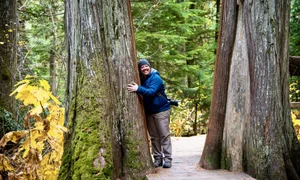

After a day and a half at Crater Lake National Park, we headed south toward Lassen Volcanic National Park. Both parks had been high on our list for a few years, and we were excited to finally explore them during the same trip.
We drove from Crater Lake to Redding and spent the night in a hotel. Fancy stuff in the middle of a camping trip! It was our wedding anniversary, and we were ready for a hot dinner, a hot shower, and a real bed.
Well rested, we woke up the next morning and headed straight for Lassen. Our plan was to check on our campsite, drive to the southern end of the park, and then work our way back along the park road. Thunderstorms eventually interrupted some of our hiking plans, but we still packed quite a bit into our visit.
Manzanita Lake Campground



Our campsite had a sign with our name on it when we arrived, although we were early enough that the previous campers were still there. We only wanted to make sure the site existed and get an idea of where we would be sleeping that night.
The park was booked for the solar eclipse, so we had not been able to choose from many available sites. Ours was better suited to an RV, with a parking area that felt like a wide section of the campground road. It was not especially private or tucked into the trees, but the back of the site bordered the woods and gave us a little separation from the road.
We had initially planned to spend most of the day hiking, but afternoon thunderstorms changed that. Instead, we had time to sit at the picnic table, rest, and enjoy an unhurried evening at camp. After moving through two national parks in just a few days, slowing down for a while felt pretty good.
Manzanita Lake Campground was large, but the sites generally seemed well spaced. Ours worked perfectly well as a place to eat, sleep, and begin exploring the quieter northern end of the park.
Sulphur Works


We drove almost all the way through Lassen before making our first major stop. We wanted to begin near the southern entrance and work our way north, which brought us to Sulphur Works just before the Kohm Yah-mah-nee Visitor Center.
This was our first close look at Lassen’s hydrothermal activity. Steam rose beside the road, mudpots bubbled through gray earth, and pale mineral colors spread across the ground. The sharp sulfur smell reached us before we were very close.
We quickly learned not to stand where the steam drifted across the walkway. One cloud rolled directly over us, filling our noses and lungs with hot, pungent air. The smell was strong enough to take our breath away.
Sulphur Works is a short, paved stop rather than a hike, but it offered an immediate introduction to the forces still at work beneath Lassen. Mud was boiling only a short distance from the road, and the stained, steaming ground looked unlike anything else we had seen on the trip.
Mill Creek Falls Trail
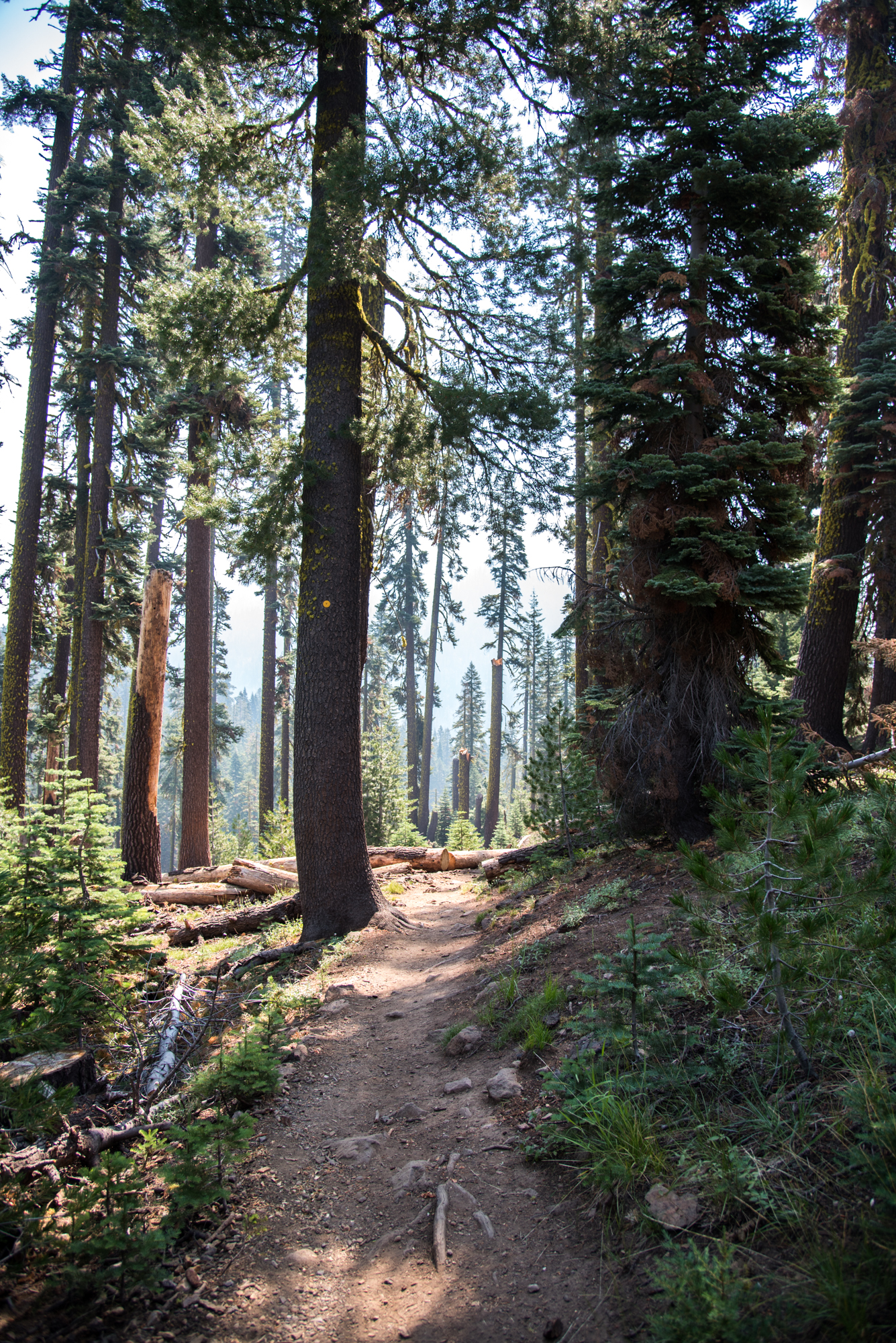

We intended to hike to Mill Creek Falls from the visitor center, but we did not get very far. The beginning of the trail carried us into a thick, quiet forest, and we were enjoying the shade when we noticed warnings about an active bear in the area. One of the signs indicated that the bear might have been behaving aggressively.
I was not comfortable continuing several miles into the woods, so we turned around. We still enjoyed the short section we walked, even though we never made it anywhere near the falls.
We also passed the Southwest Walk-In Campground near the visitor center. The sites were close to the parking area, but the surrounding forest made it look like an appealing place to camp.
Bumpass Hell
Bumpass Hell was my one must-do activity at Lassen. Kim had wanted to swim in Crater Lake, and I wanted to hike through this strange geothermal basin.
The trail led us past steaming vents, bubbling pools, and mineral-streaked ground that looked almost too colorful to be real. A boardwalk crossed the basin, bringing us close enough to hear the water churning beneath the steam.
Chaos Jumbles


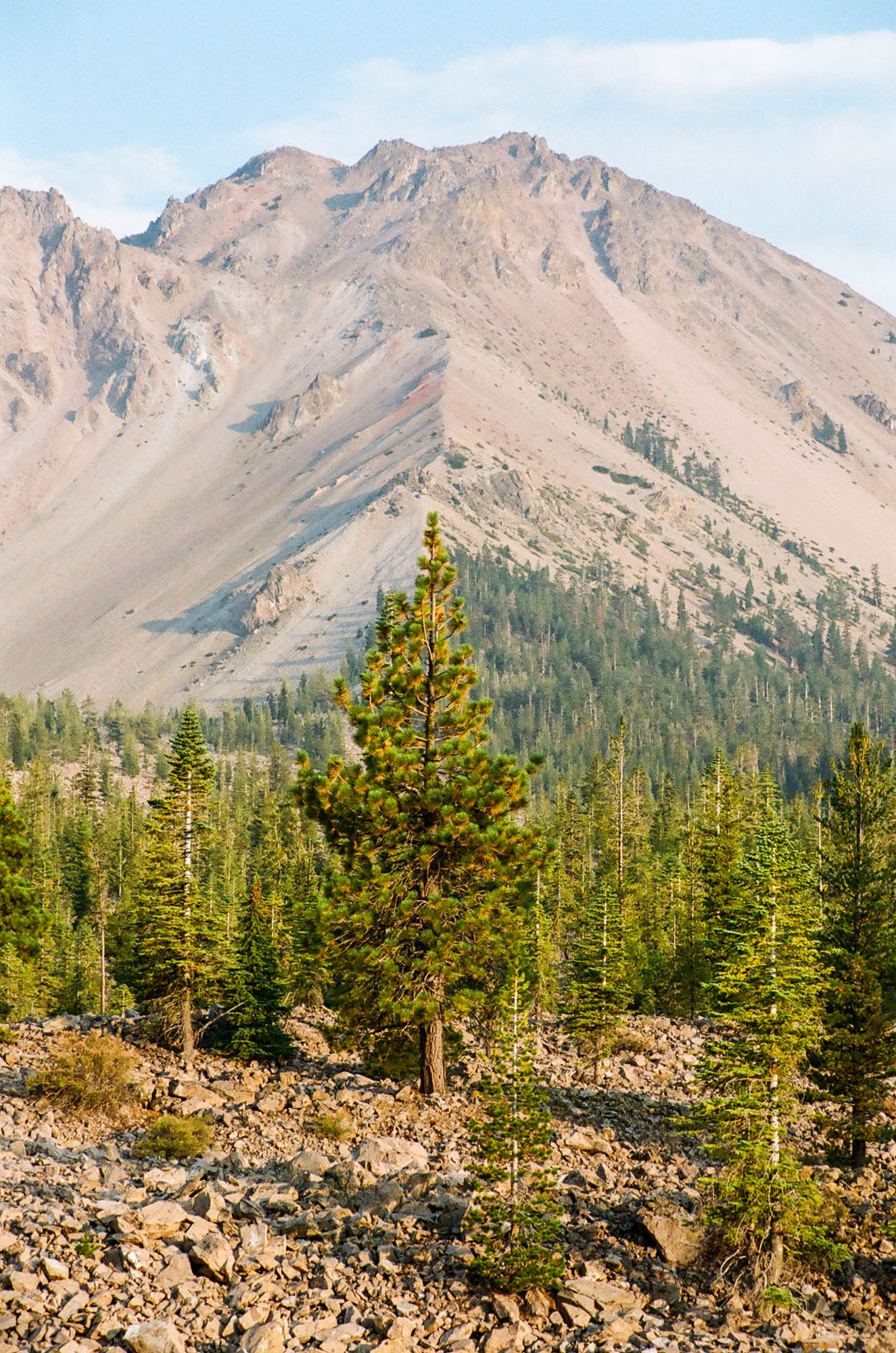


We knew nothing about Chaos Jumbles before driving through the park. The road had been winding through shady forest when the trees suddenly opened onto an enormous field of pale, broken rock. From a distance, some of the boulders looked almost like gravel scattered across the base of Chaos Crags. A sparse forest had begun growing among them, but there was almost no visible soil.
When we returned later, we pulled over to take photographs and found an interpretive sign explaining the landscape around us. Chaos Crags is a group of lava domes formed roughly 1,100 years ago. About 350 years ago, part of the domes collapsed in a series of enormous rock avalanches. The debris raced across the forest at speeds exceeding 100 miles per hour and spread over approximately 2.5 square miles.
The avalanche debris blocked Manzanita Creek and helped form Manzanita Lake. Reflection Lake and Lily Pond also occupy depressions within the rocky deposit.
Chaos Jumbles became one of my favorite parts of Lassen. Lassen Peak dominated the skyline, but the ground beneath us told another volcanic story. These were not the dark, jagged lava rocks I expected to see. Instead, we walked among pale boulders with young trees finding places to grow between them.
Standing in that immense field of broken rock made me feel very small. The scale of the avalanche was difficult to absorb until we were in the middle of what it had left behind.
Terrace and Shadow Lakes
The trail to Terrace and Shadow Lakes was short but steep, descending from the park road through the forest. Hikers with more time and energy could continue to Cliff Lake, but we stopped after reaching the first two.
It was a quiet trail, and we saw few other people along the way. The clear, cold lakes waited below the road, surrounded by trees and mountain slopes. Reaching the water made the steep descent worthwhile, even if it meant climbing all the way back out.
Manzanita Lake


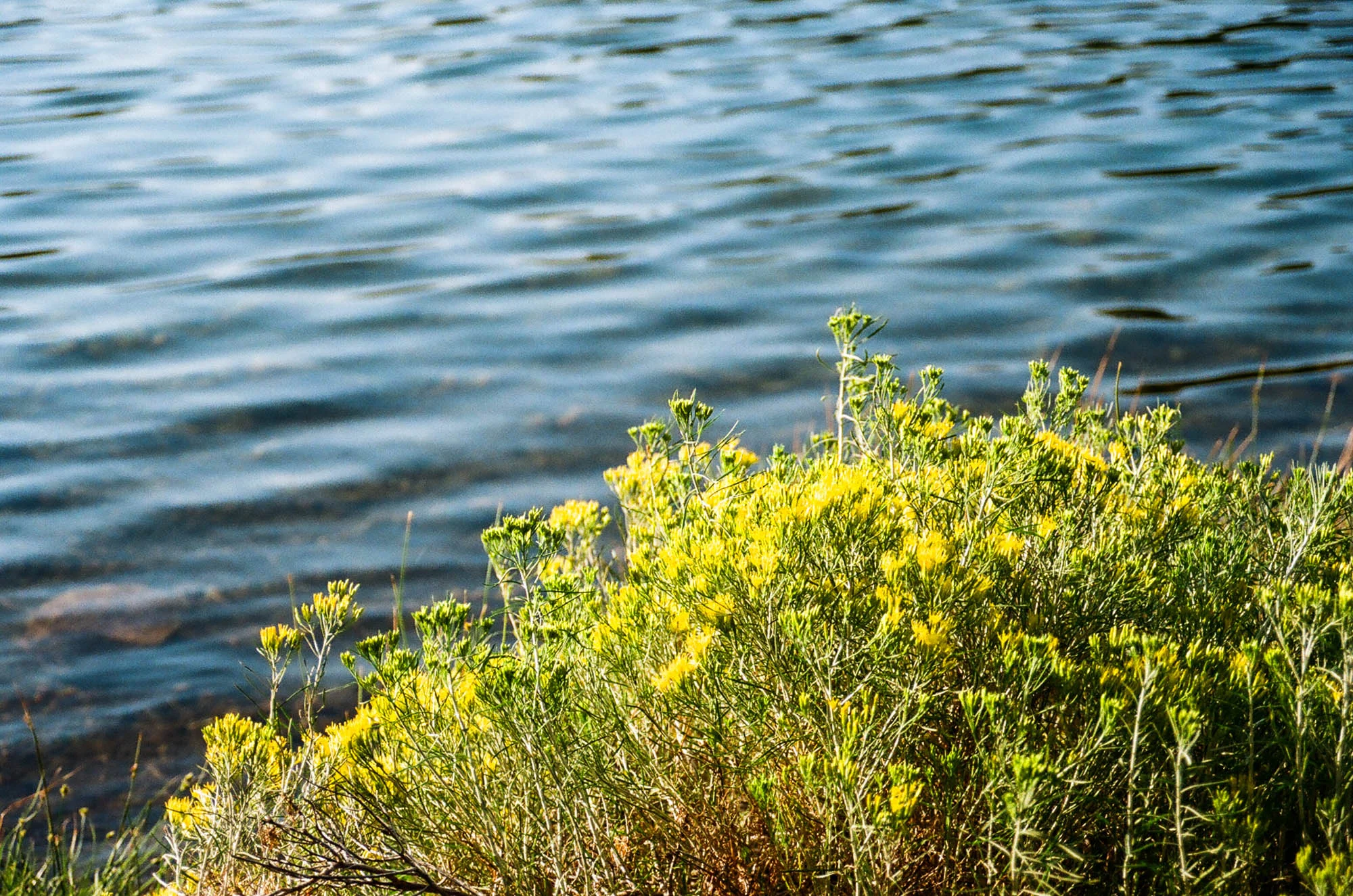
We walked around Manzanita Lake early the next morning. We had miscalculated its size and expected a leisurely half-mile stroll while sipping our coffee. The loop was much longer than it appeared from our campsite.
The first part of the walk was peaceful. Lassen Peak rose above the far side of the lake, and birds moved through the trees and across the water. Reflections shifted as the morning light reached the mountain, giving us plenty of reasons to stop for photographs.
Eventually, we realized that we were not nearly as close to the end of the loop as we had expected, and the solar eclipse would begin soon. We hurried through at least the final third of the trail and reached our campsite just as the eclipse was starting.
This would have been a beautiful sunset hike, with the possibility of warm light on Lassen Peak and its reflection in the water. Our morning walk still gave us calm water, active birds, and a much better wake-up than sitting around camp.
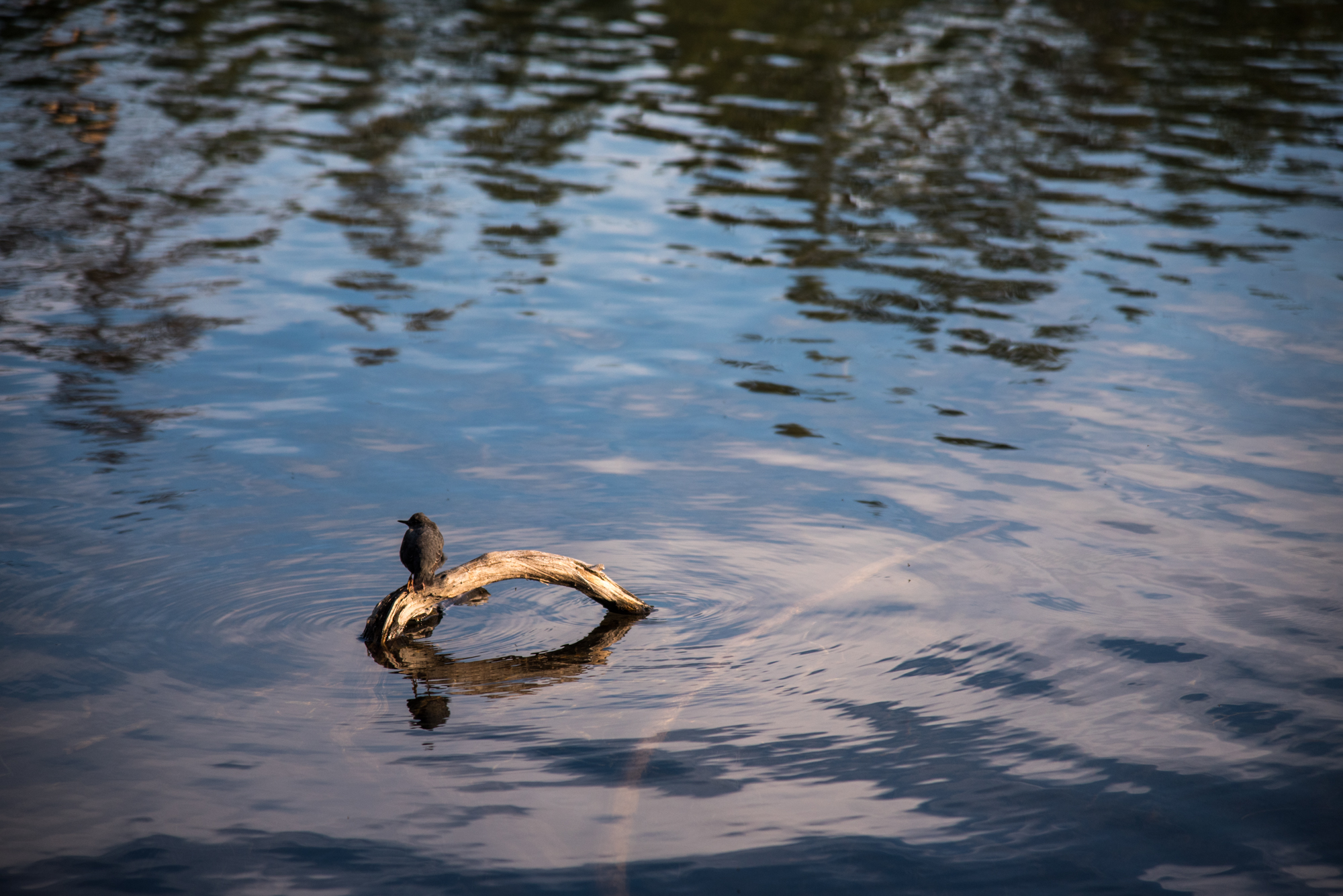

We found a small bird resting on a log in the lake. It tolerated us for a while before deciding that we had watched it long enough and flying away. Little did I know at the time, but it was an American Dipper!
The Solar Eclipse


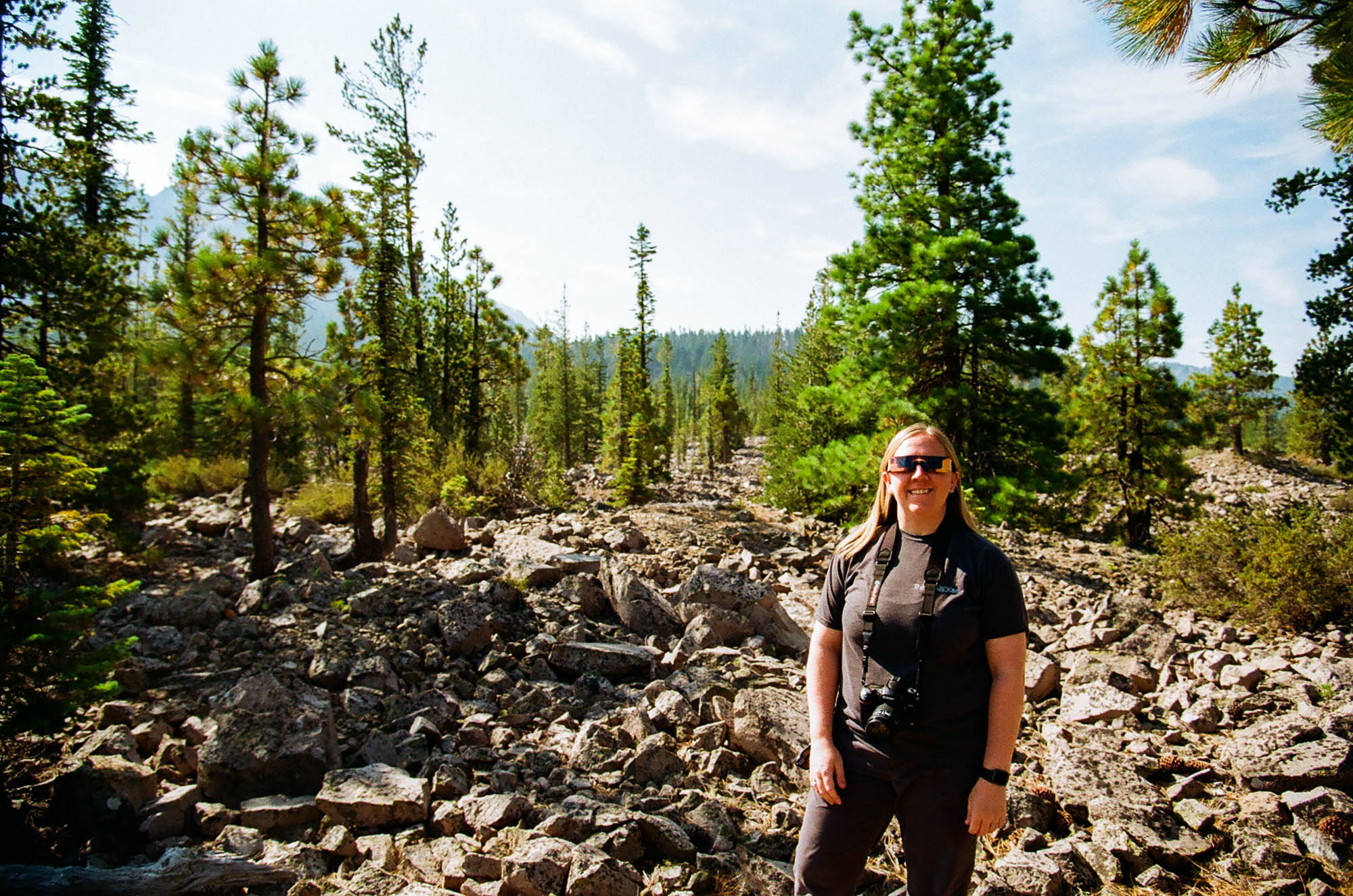
The solar eclipse was a lucky coincidence. We planned our trip through Northern California and Oregon without realizing that the eclipse would happen while we were there. I am usually a bit of a space nerd and would normally plan around something like this, but I had mostly ignored the approaching eclipse and hoped we would see it from wherever we happened to be.
As we packed our campsite, we took turns looking through our very stylish eclipse glasses. We had brought a few extra pairs and gave them to some European visitors nearby. It seemed wrong for anyone to be standing beneath that sky without being able to look up safely.
We returned to Chaos Jumbles as the eclipse approached its peak. Cars pulled onto the shoulder, and even a road construction crew stopped working and climbed out of their vehicles. At 10:18 a.m., nearly everyone around us was looking toward the sun.
The light took on the muted color of a midmorning sunset. Shadows sharpened and changed shape, and the familiar landscape briefly looked strange. We stood among the boulders with Lassen Peak nearby, watching the whole park slip into that dim, filtered light.
Lily Pond Nature Trail and Reflection Lake


Before leaving the park, we stopped at the Loomis Museum and walked the Lily Pond Nature Trail. The short interpretive trail had numbered signs and a story to follow as we moved through the forest.
We caught glimpses of Reflection Lake near the beginning of the walk. Farther along, Lily Pond appeared between the trees, its surface crowded with water lilies.
As the trail curved back toward the museum, the ground became increasingly rocky. We realized we were once again walking across part of the Chaos Jumbles debris field. The avalanche had covered far more land than we understood when we first pulled over beside the road.
Lassen kept revealing its volcanic story in places we did not expect. Sometimes it appeared as steam and boiling mud. Elsewhere, it was a quiet lake, a young tree growing between enormous boulders, or an entire forest rooted in the remains of an avalanche.