Hiking Bumpass Hell in Lassen Volcanic National Park

This was one of the weirdest hikes we had ever taken, leading to one of the strangest places I had ever seen. Bumpass Hell is one of the most popular destinations in Lassen Volcanic National Park, and while crowds would normally make us hesitate, I had wanted to see this place since we first started planning a Lassen trip several years earlier. I could not visit a park filled with volcanic landscapes without walking through its largest hydrothermal area.
The hike began in beautiful mountain terrain, with wide views across the remains of an ancient volcano. It ended in a smelly, steaming basin filled with boiling water, bubbling mud, and ground stained in colors that did not seem entirely real.
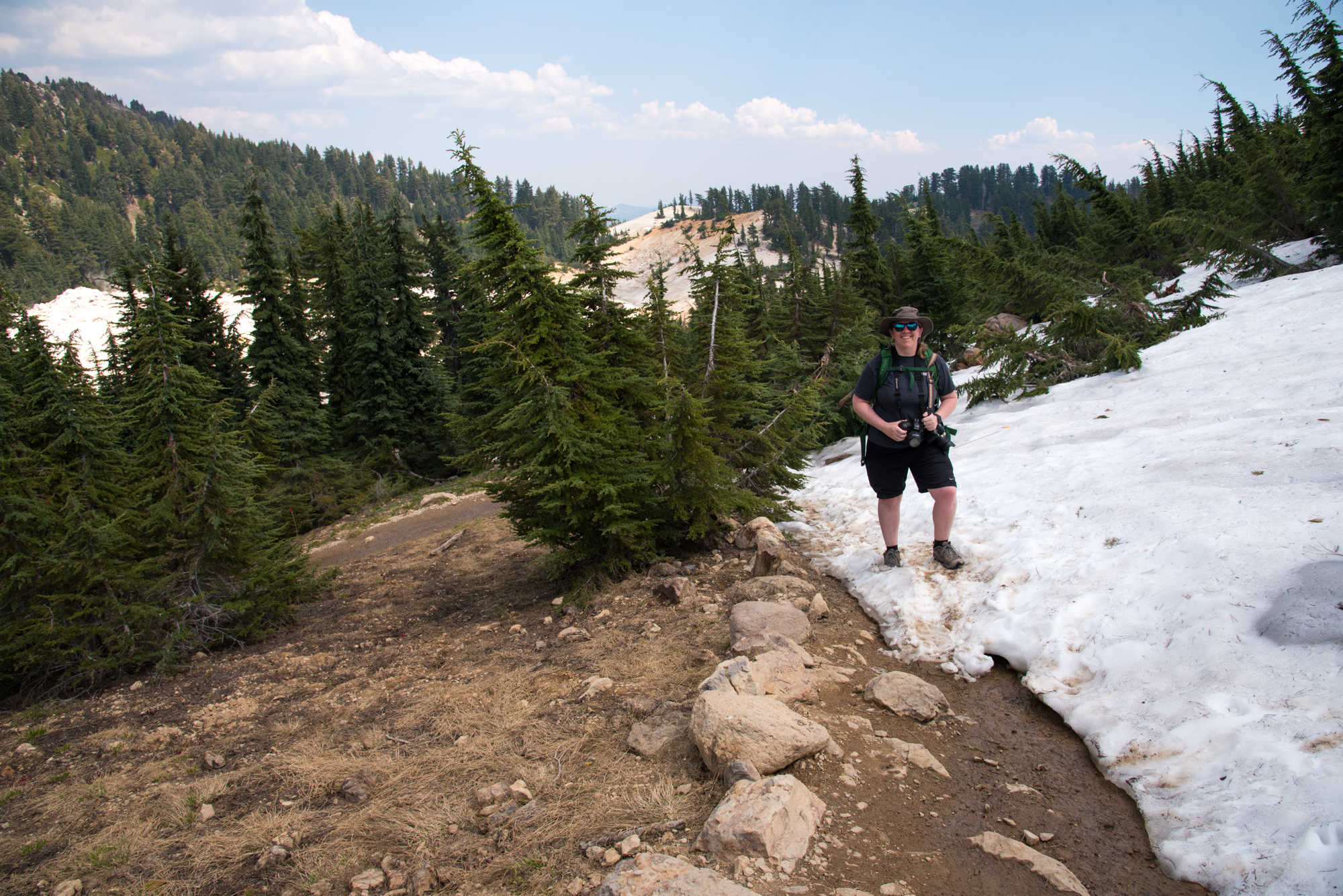
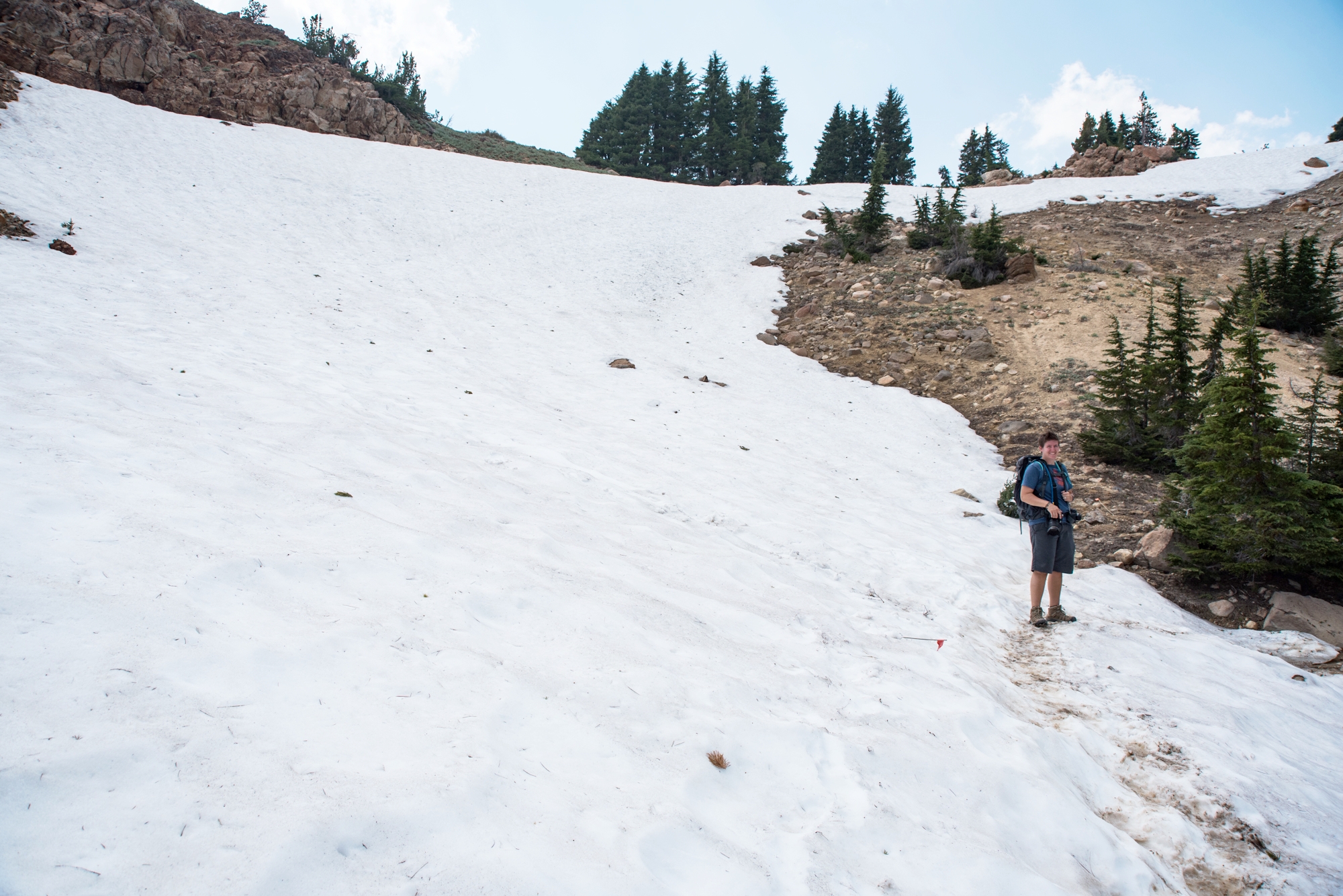
California had received a tremendous amount of snow the previous winter, and patches were still clinging to the trail when we visited in mid-August. The lingering snow made parts of the hike more challenging, but it may also have kept the trail a little quieter than usual.
The trail started at the Bumpass Hell parking area along the park highway. It was easy to find and had restrooms, an overlook, and a large number of parking spaces. We had heard that the lot often filled on summer weekends, but it was not even half full when we arrived on a Sunday.
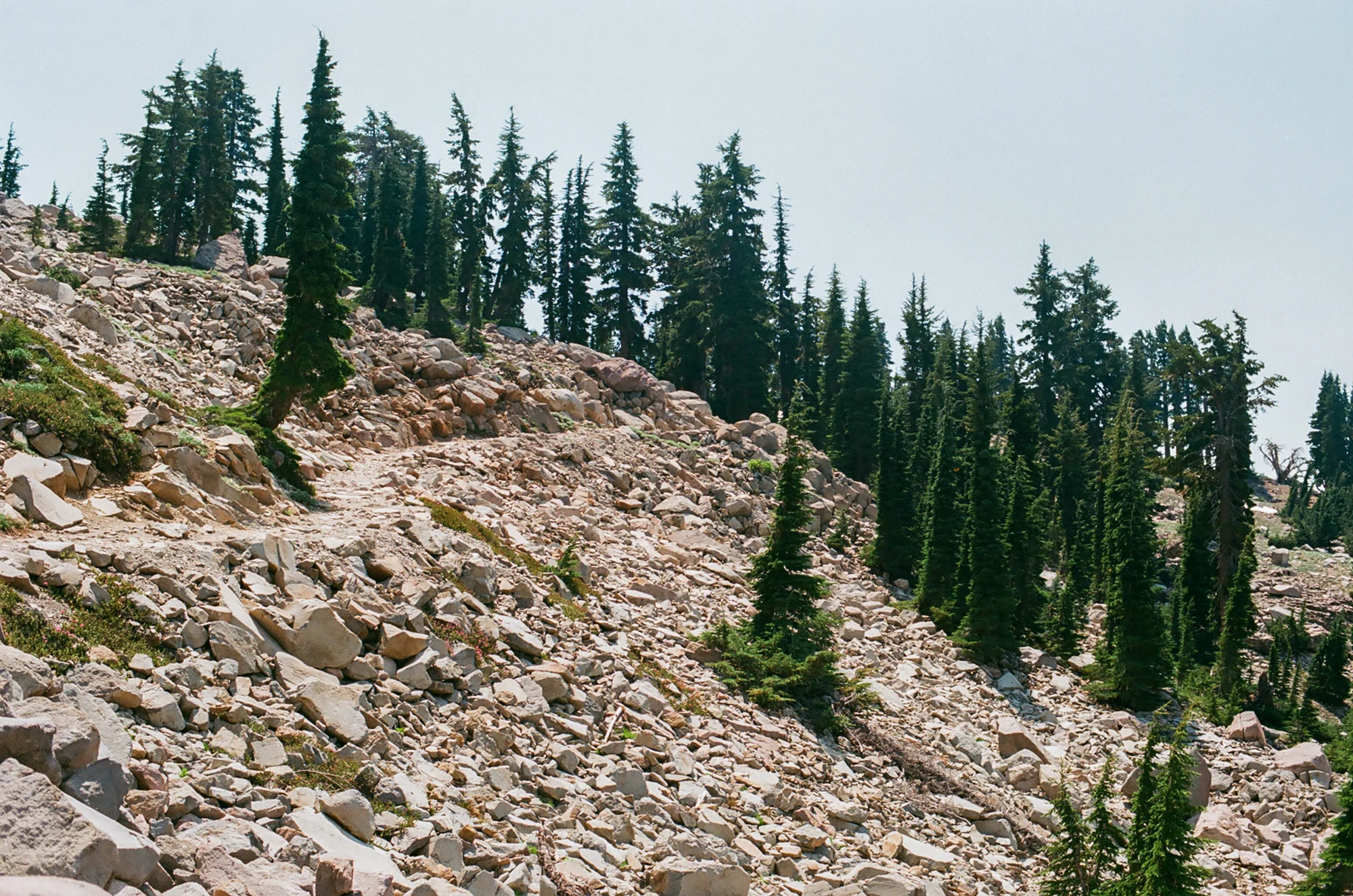
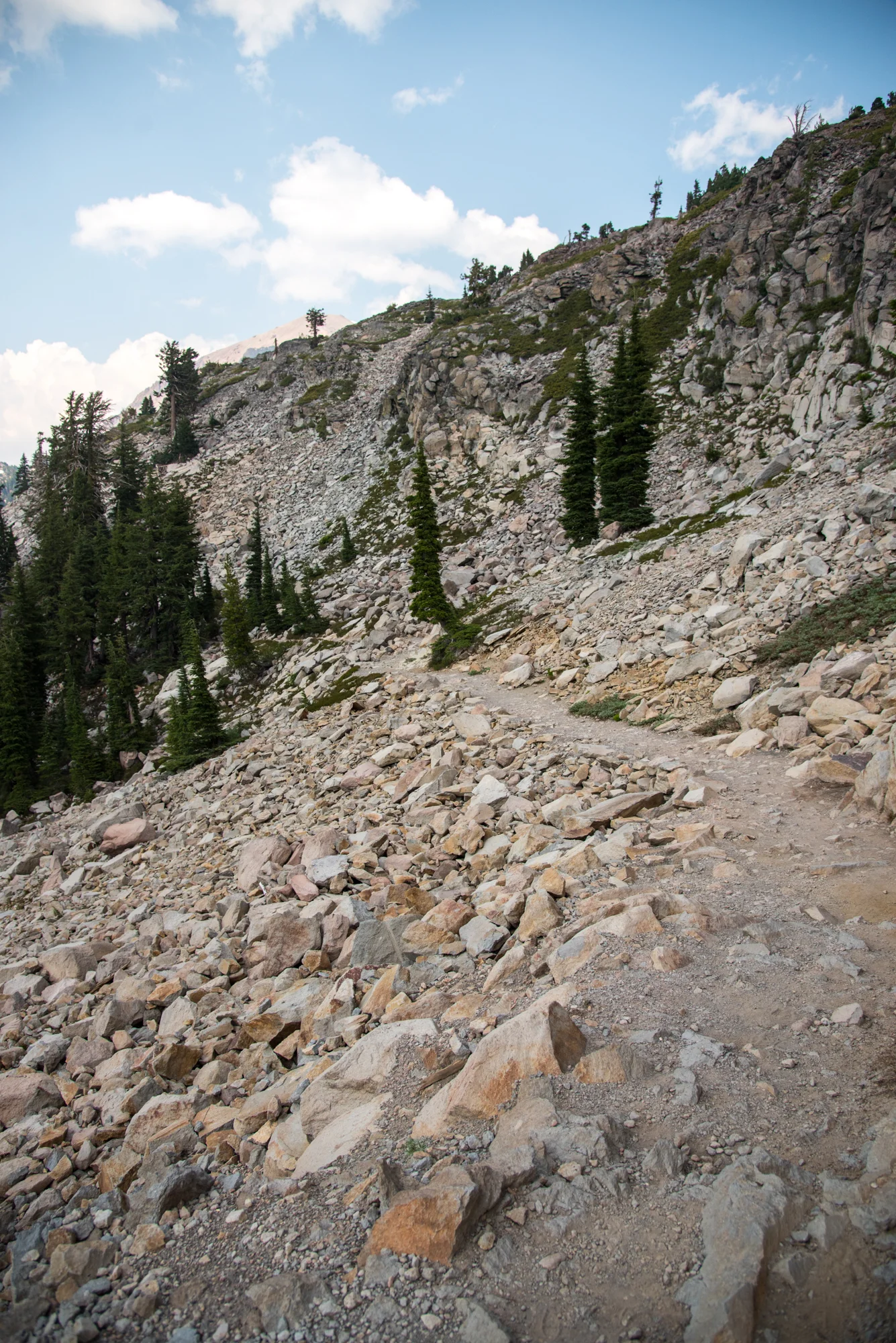

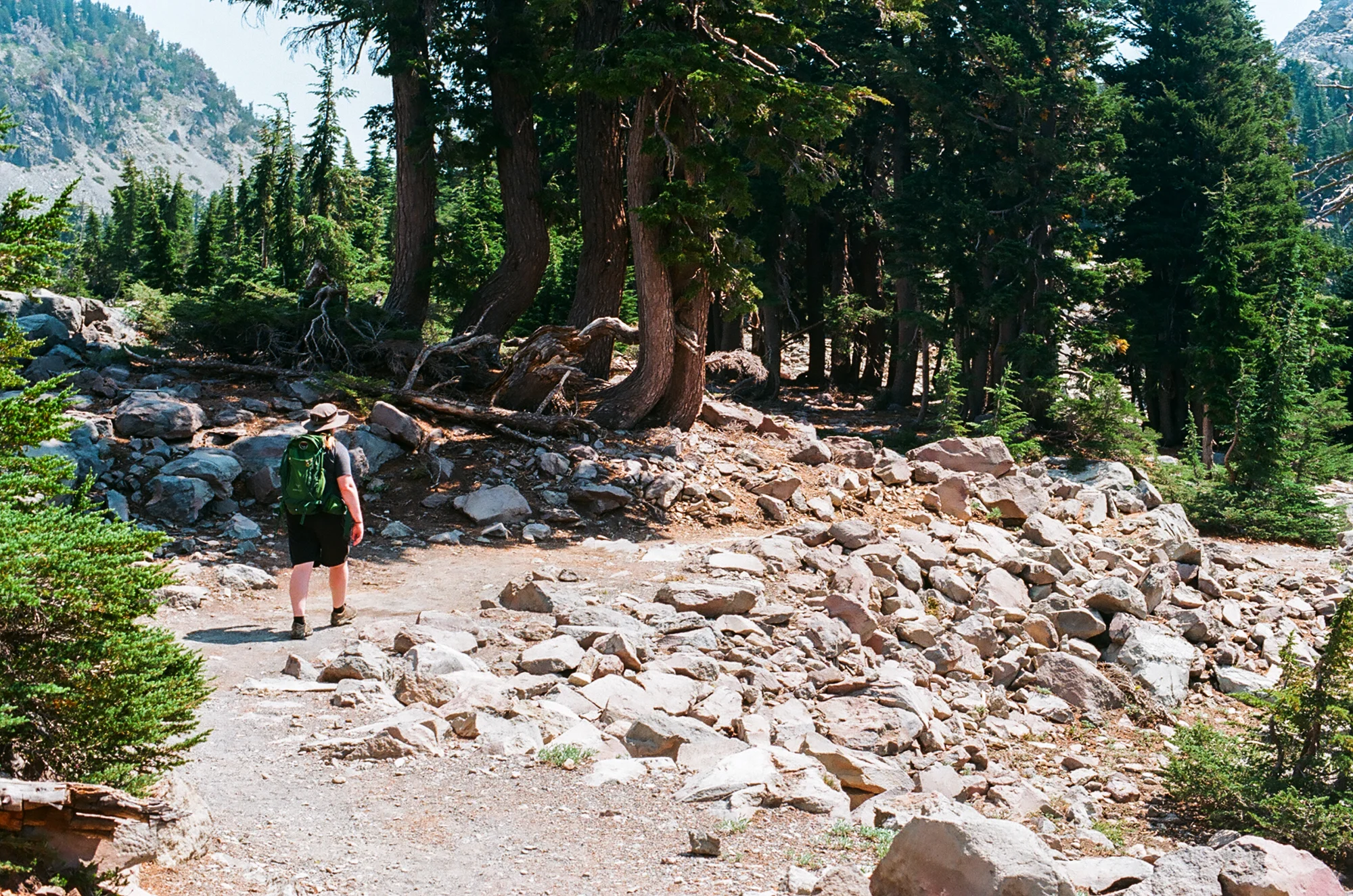
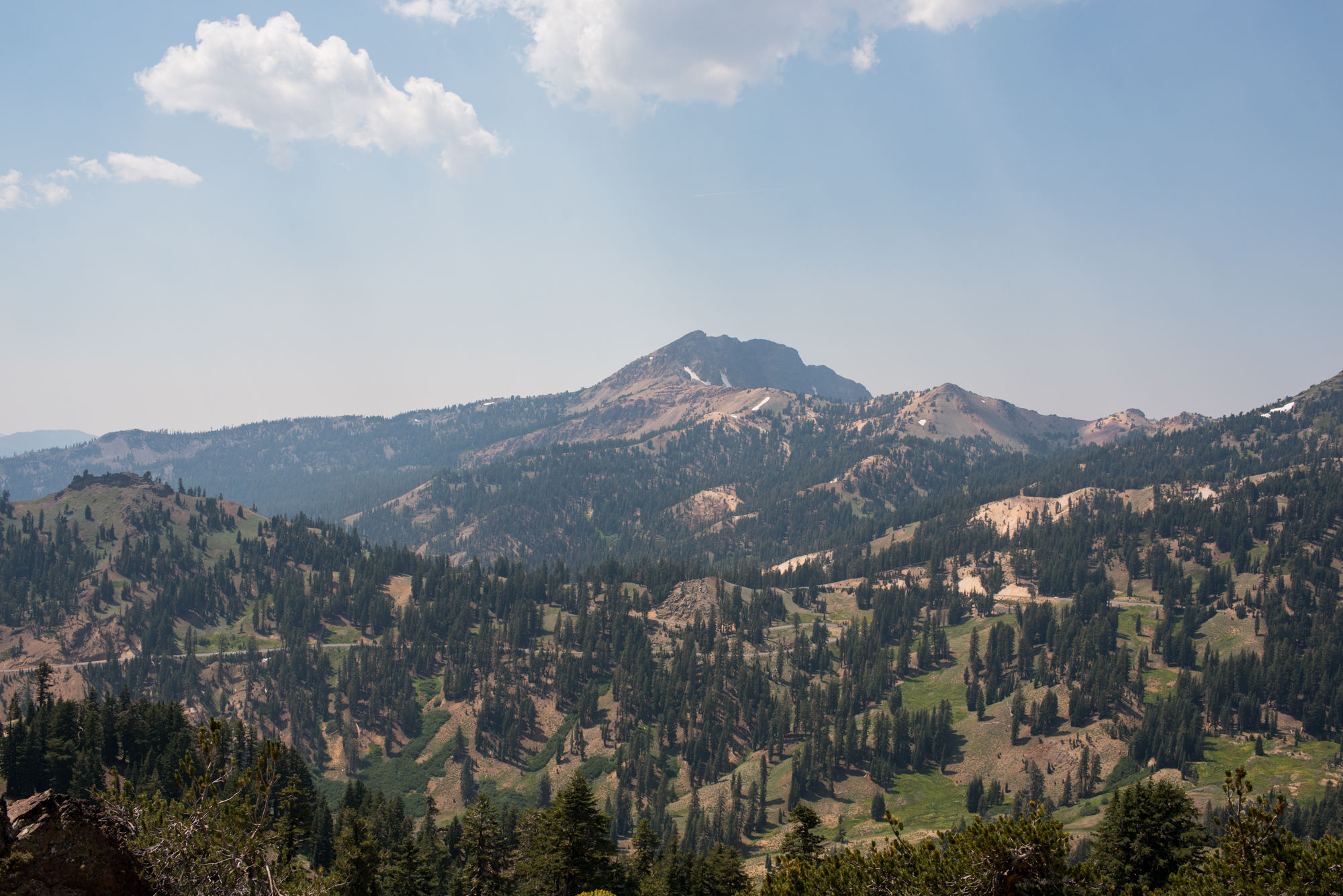
The trail began with a gradual incline along the edge of a steep, rocky canyon. Grasses and scattered trees covered the slopes below us, and the views opened farther across the mountains with nearly every turn. There was plenty to look at before we reached the hydrothermal basin.
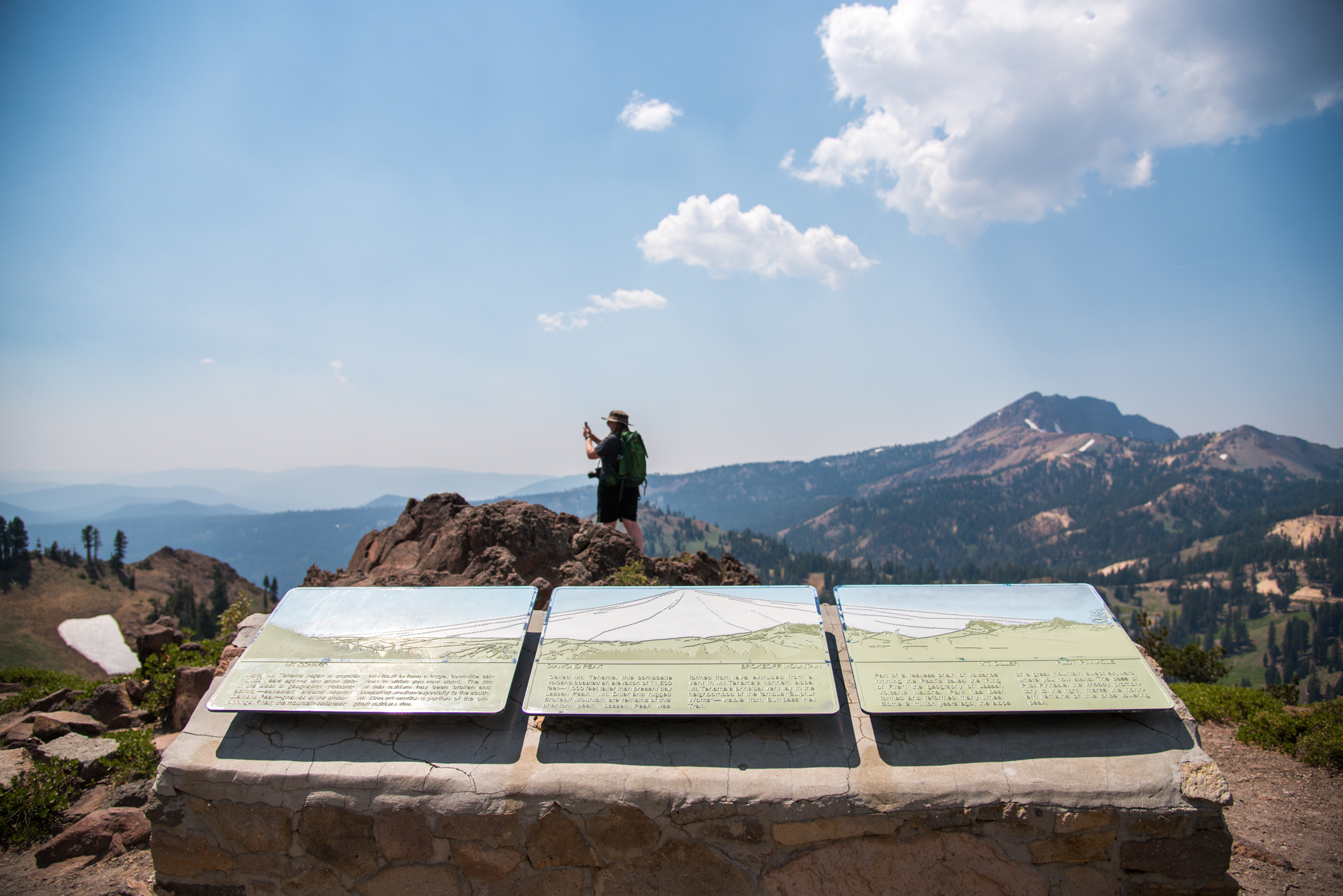
A short distance from the trailhead, a spur on the right led to a panoramic overlook. From there, we could see nearby peaks and the weathered remains of Brokeoff Volcano, also known as Mount Tehama. An interpretive sign explained some of the volcanic activity that shaped the surrounding landscape. It was a worthwhile place to pause, read, and take in the scale of the view.
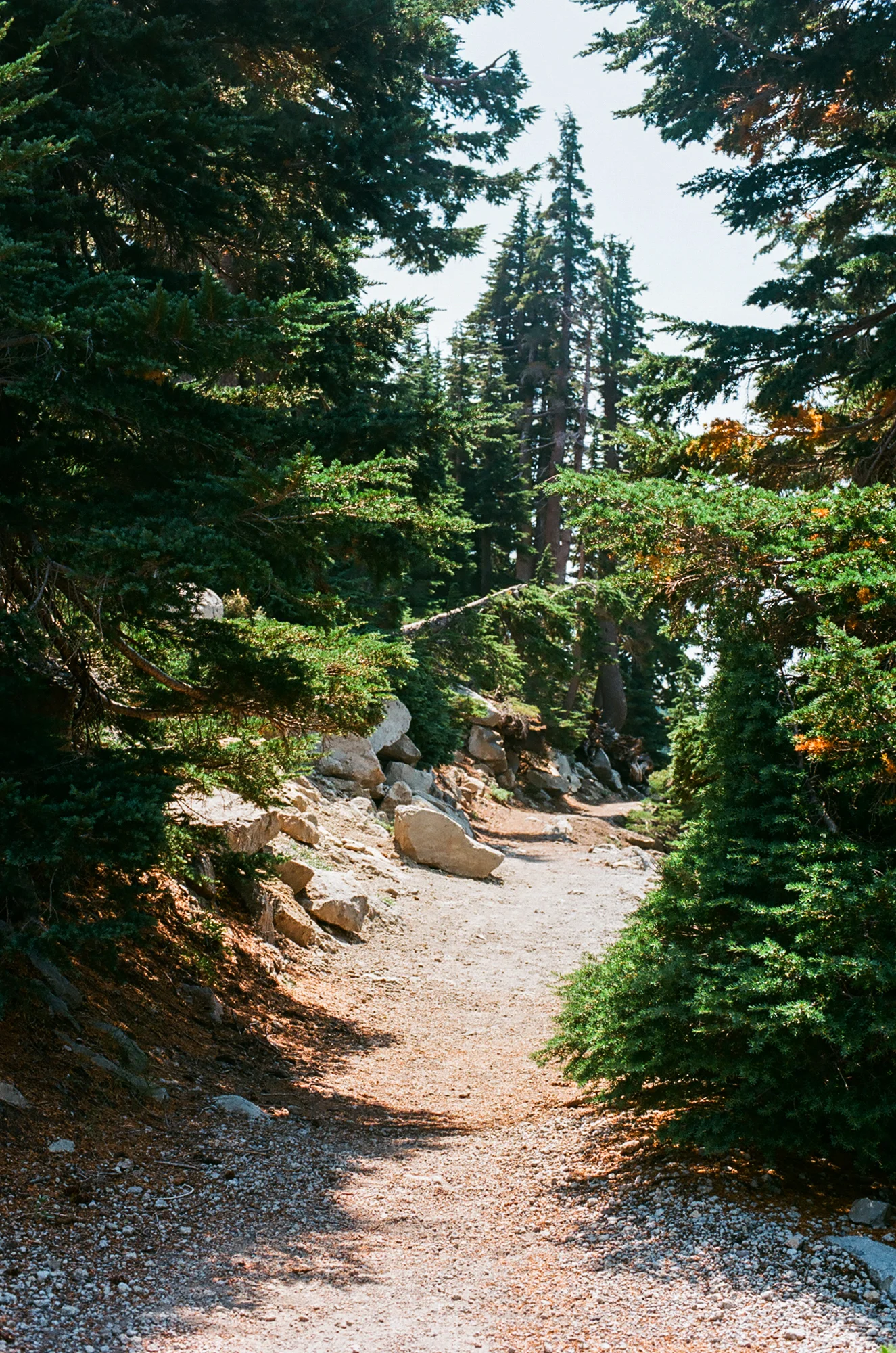
Back on the main trail, we continued along the rocky, well-marked path. There was not much shade, and the trail began at an elevation of around 8,000 feet, making sunscreen, hats, and water especially important.
As the trail curved around the mountainside, we began to smell Bumpass Hell before we could see it. The faint odor of rotten eggs drifted through the trees, letting us know that the basin was getting close.
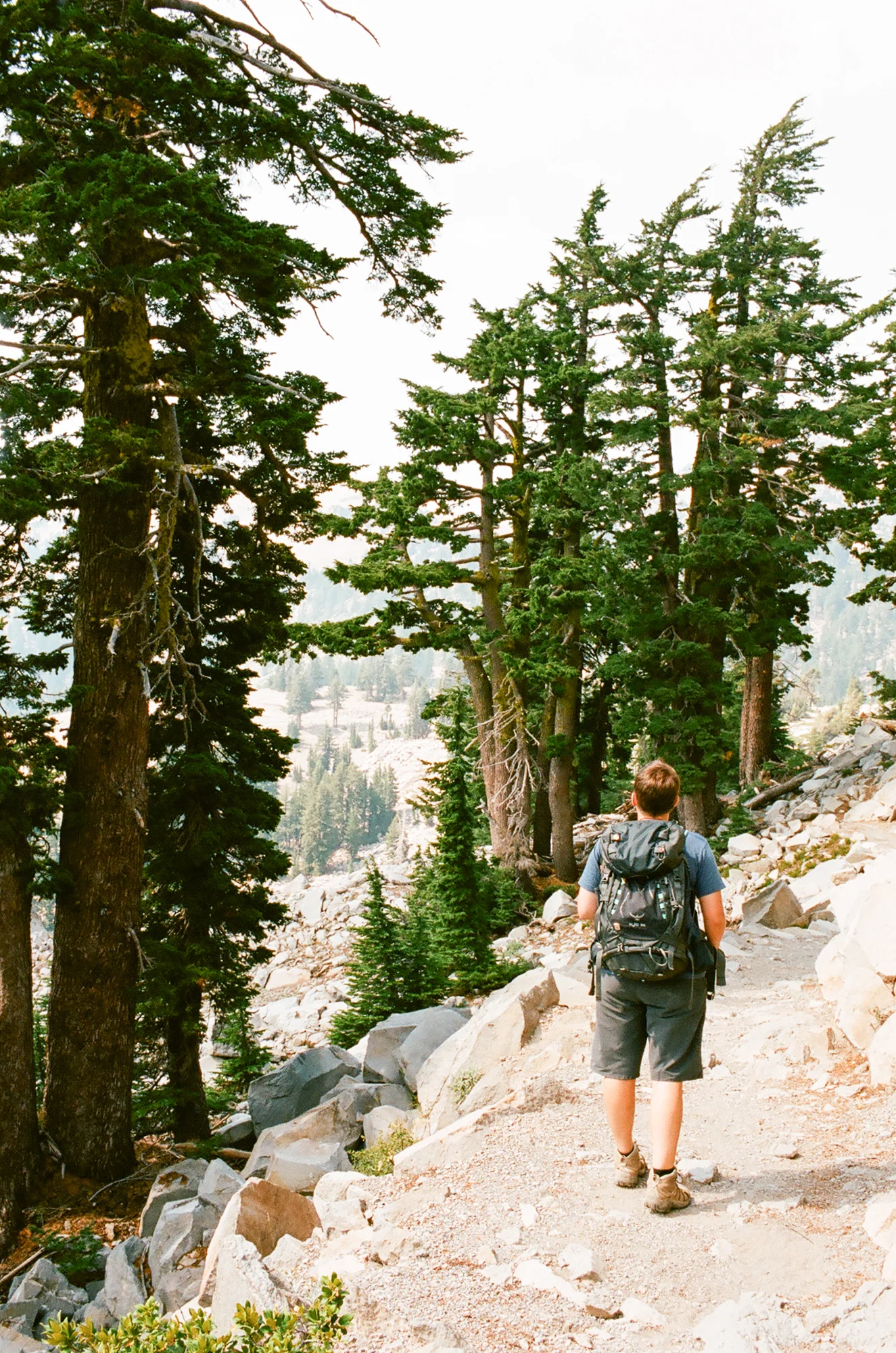


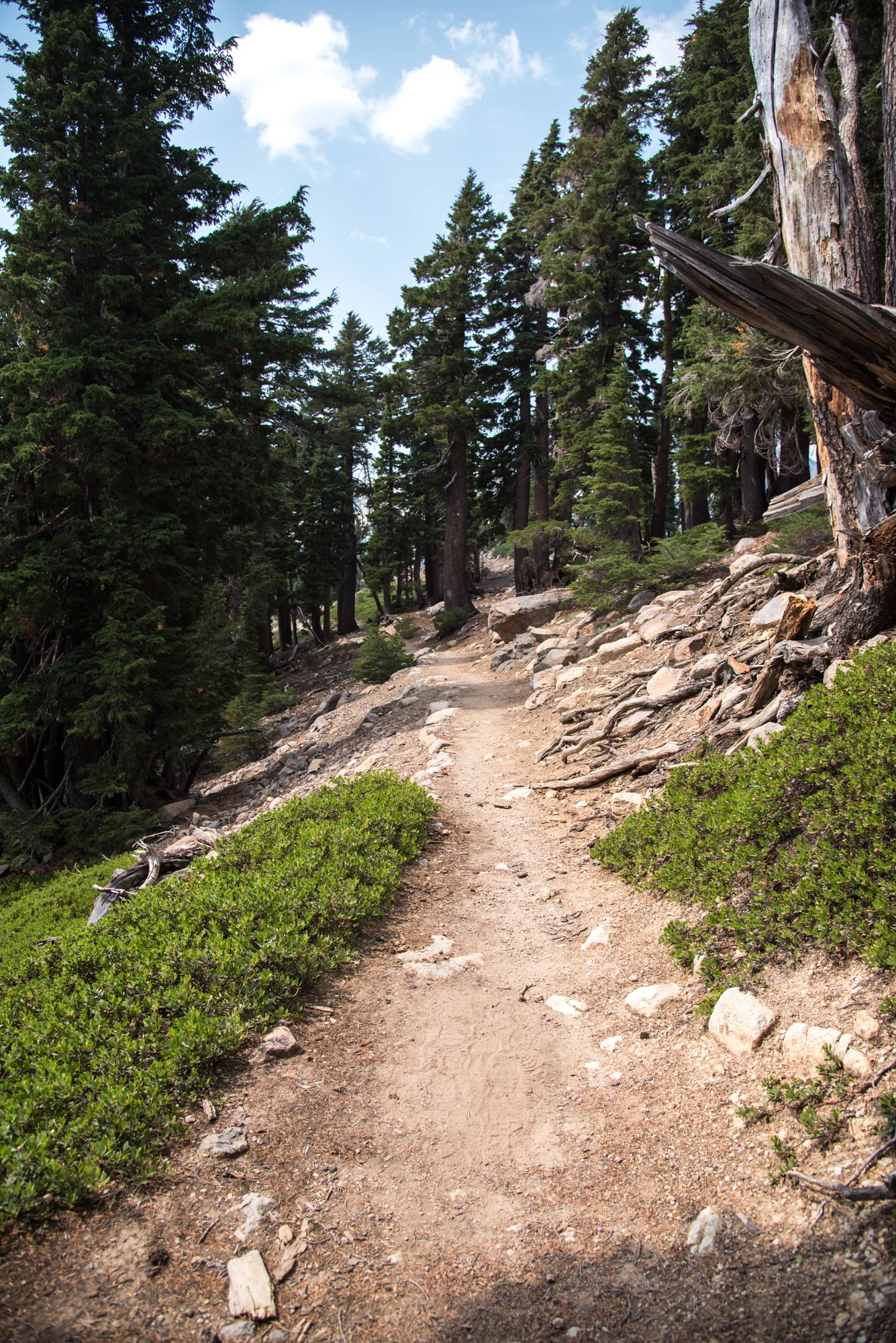
The final approach descended steeply toward the hydrothermal area. This was where we encountered several patches of snow and mud, some beside uncomfortable drop-offs. Hiking boots with good traction were helpful on the loose rock and slippery sections.
Small flashes of pale blue water and mineral-stained ground appeared between the trees as we descended, but the sulfur smell still announced the basin before the view did.
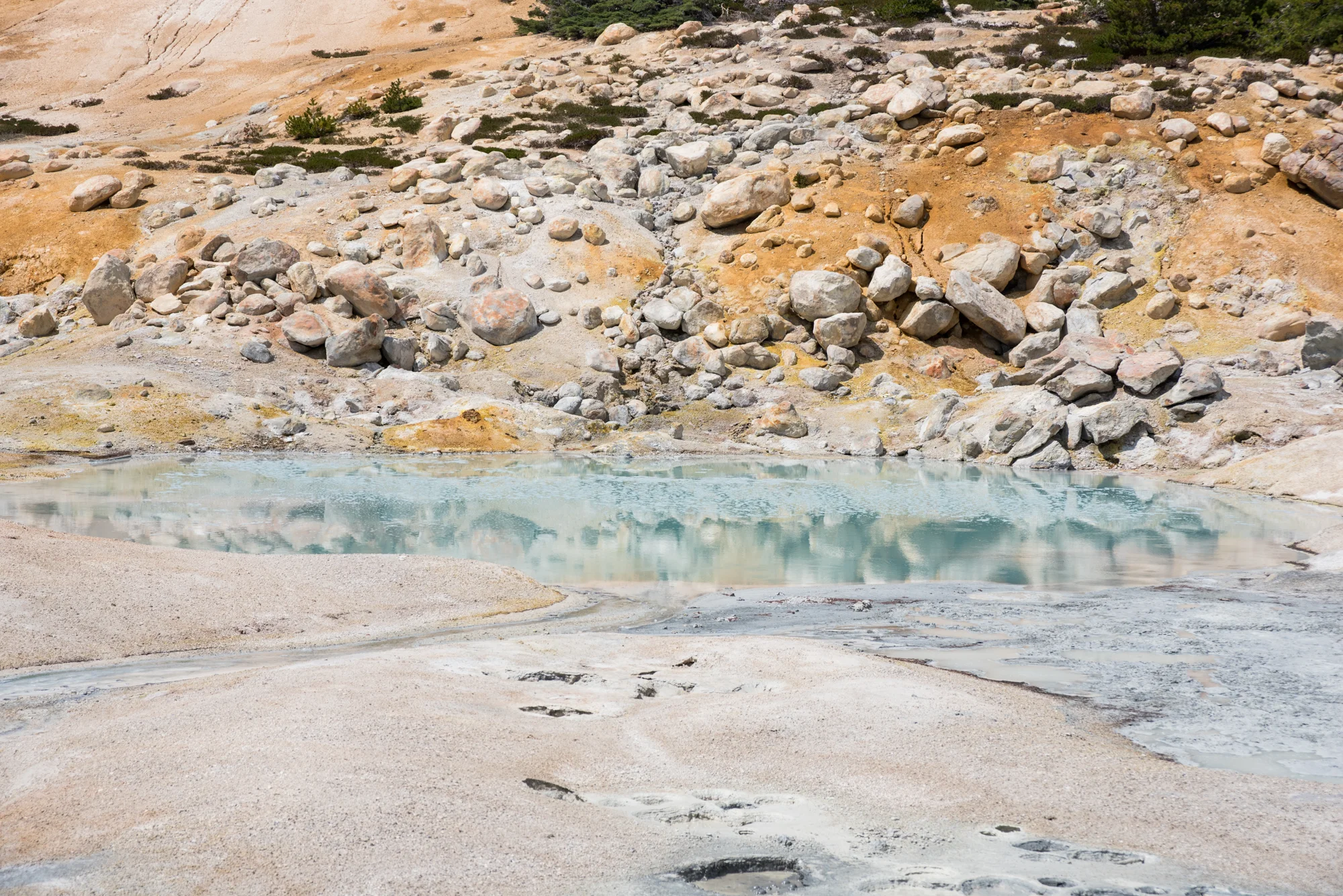
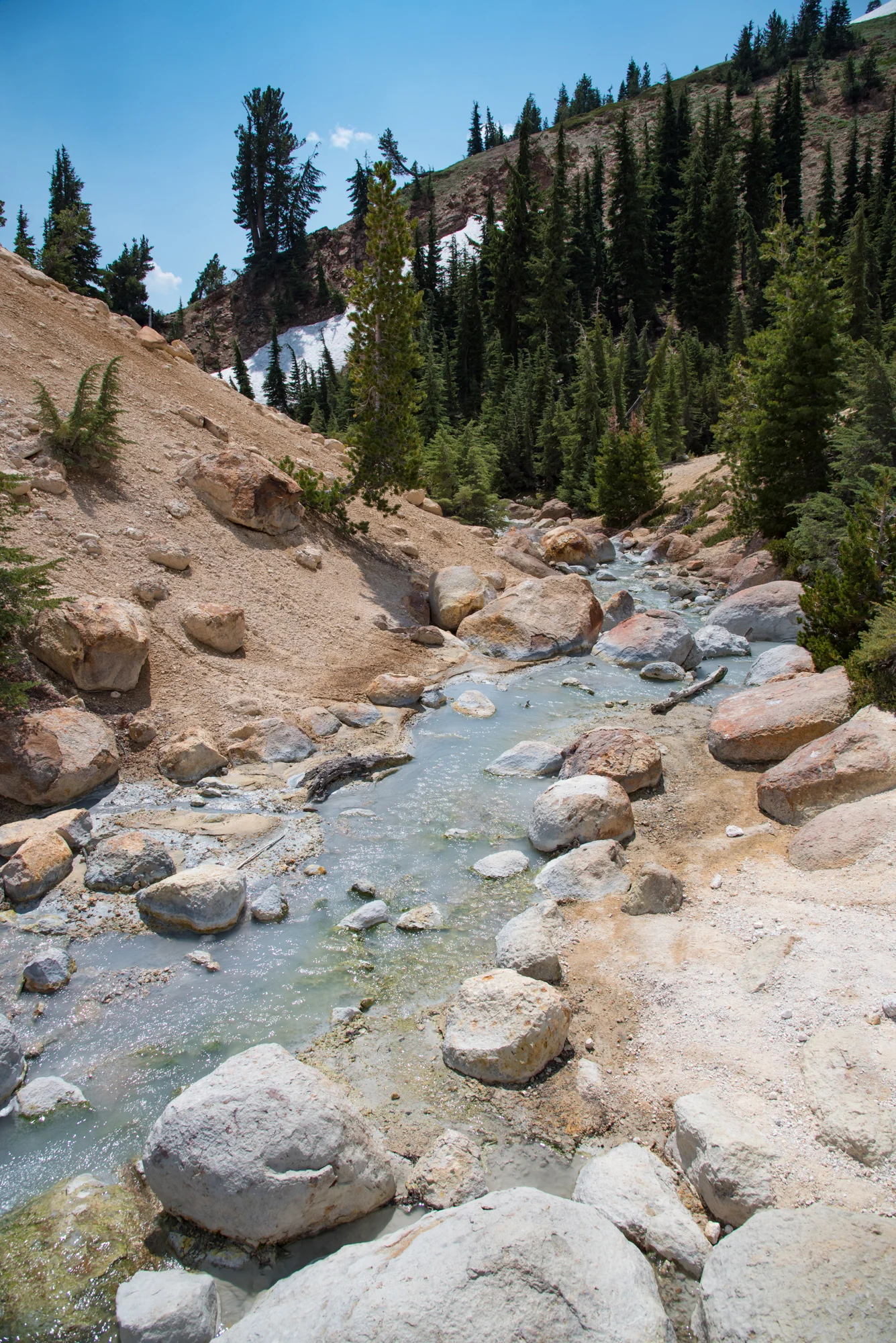
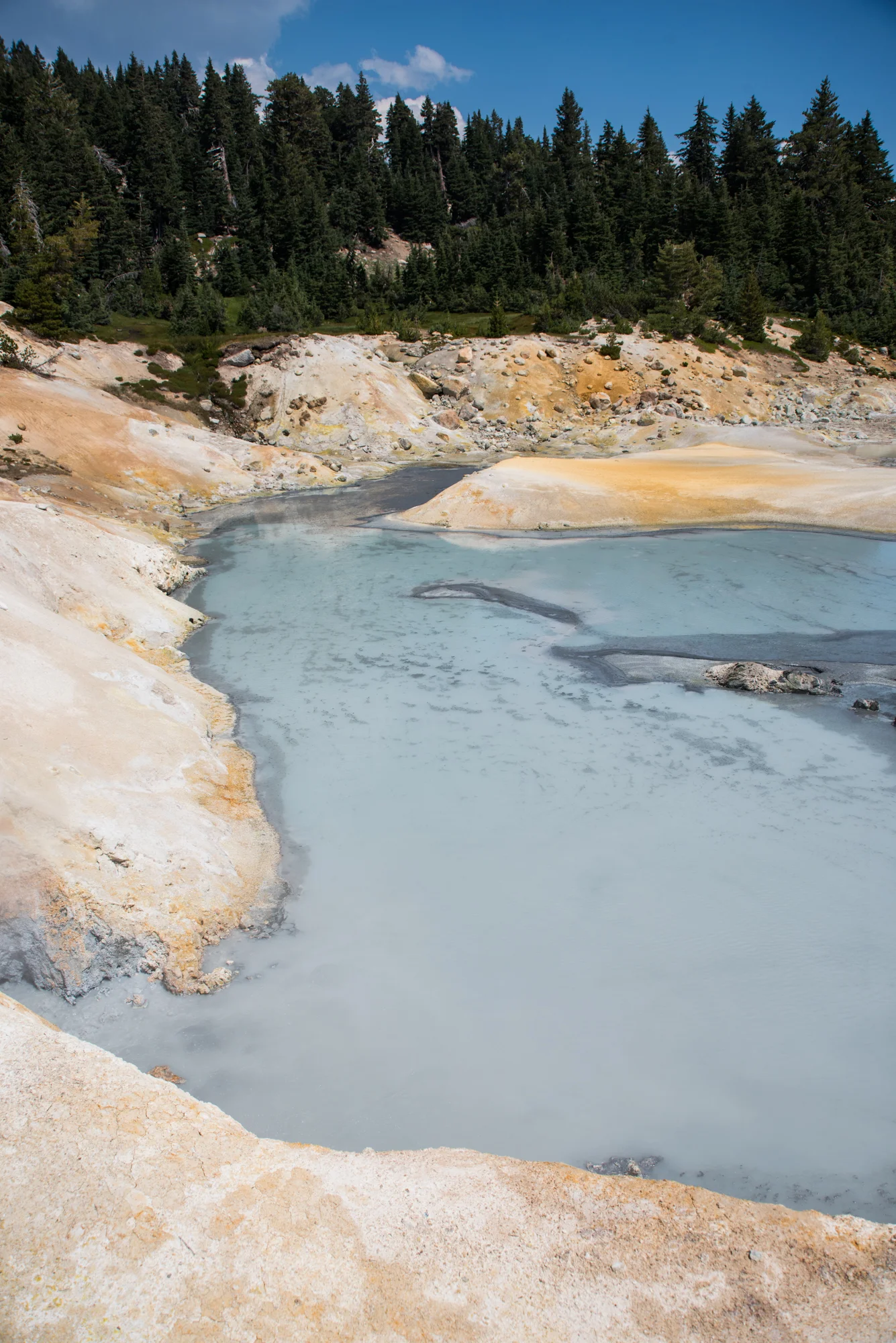
Then we stepped out of the trees and saw the whole strange landscape below us. Steam rose against a bright blue sky while green forest surrounded ground stained white, yellow, orange, and rust. Aquamarine water moved through the basin, and patches of old snow still rested nearby. The combination looked too colorful and active to be natural, yet everything in front of us had been created by water, minerals, heat, and volcanic gases rising from below.
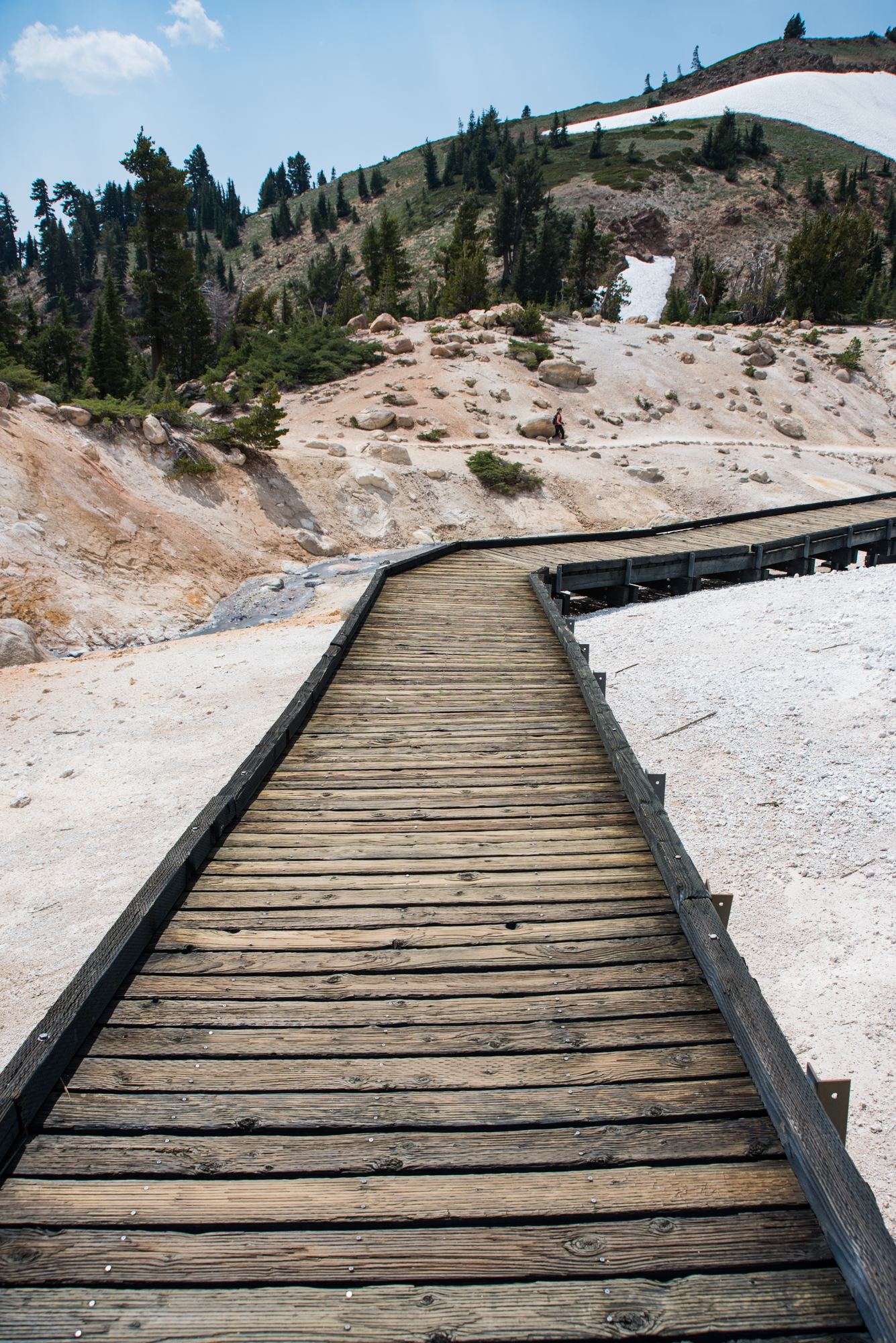
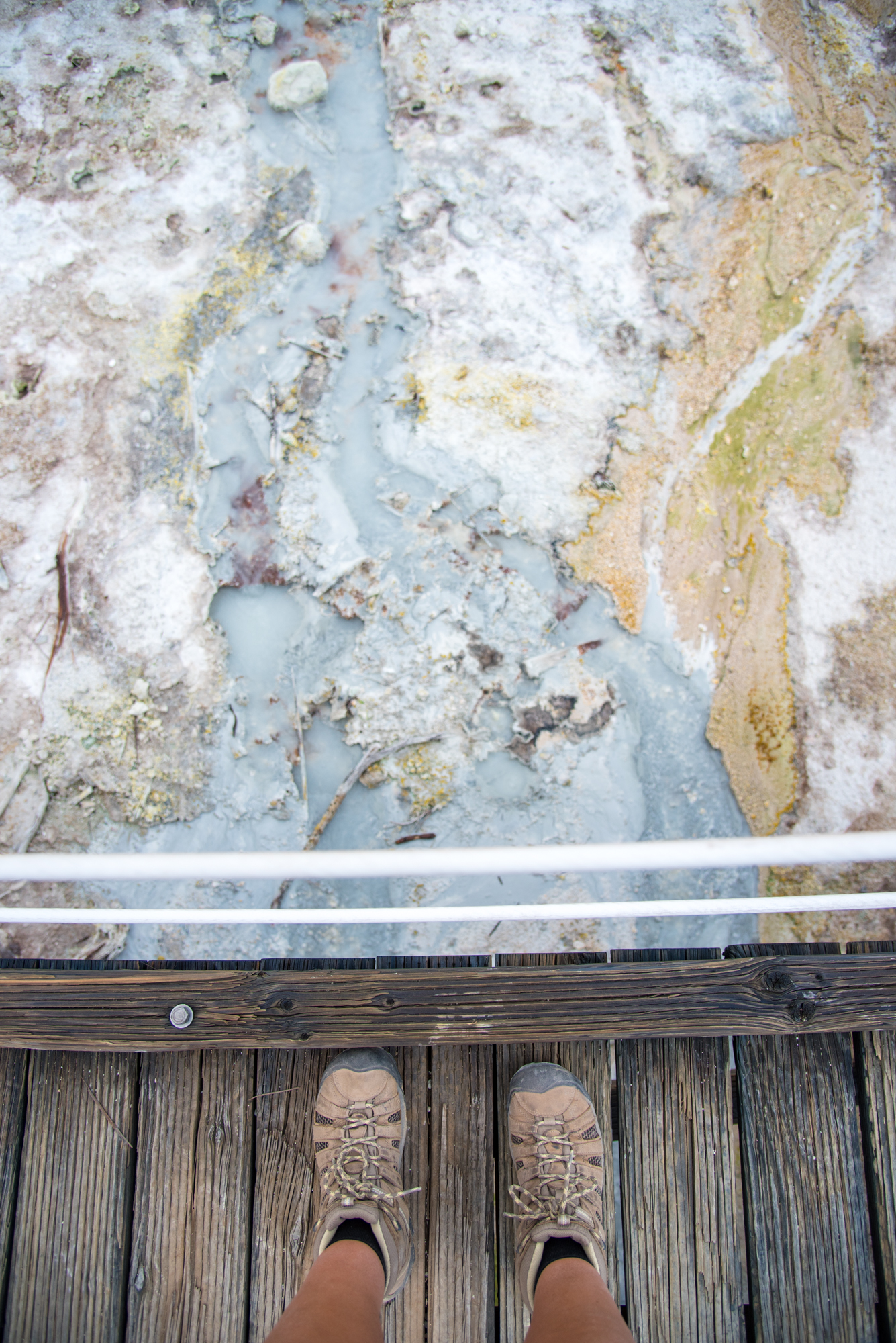
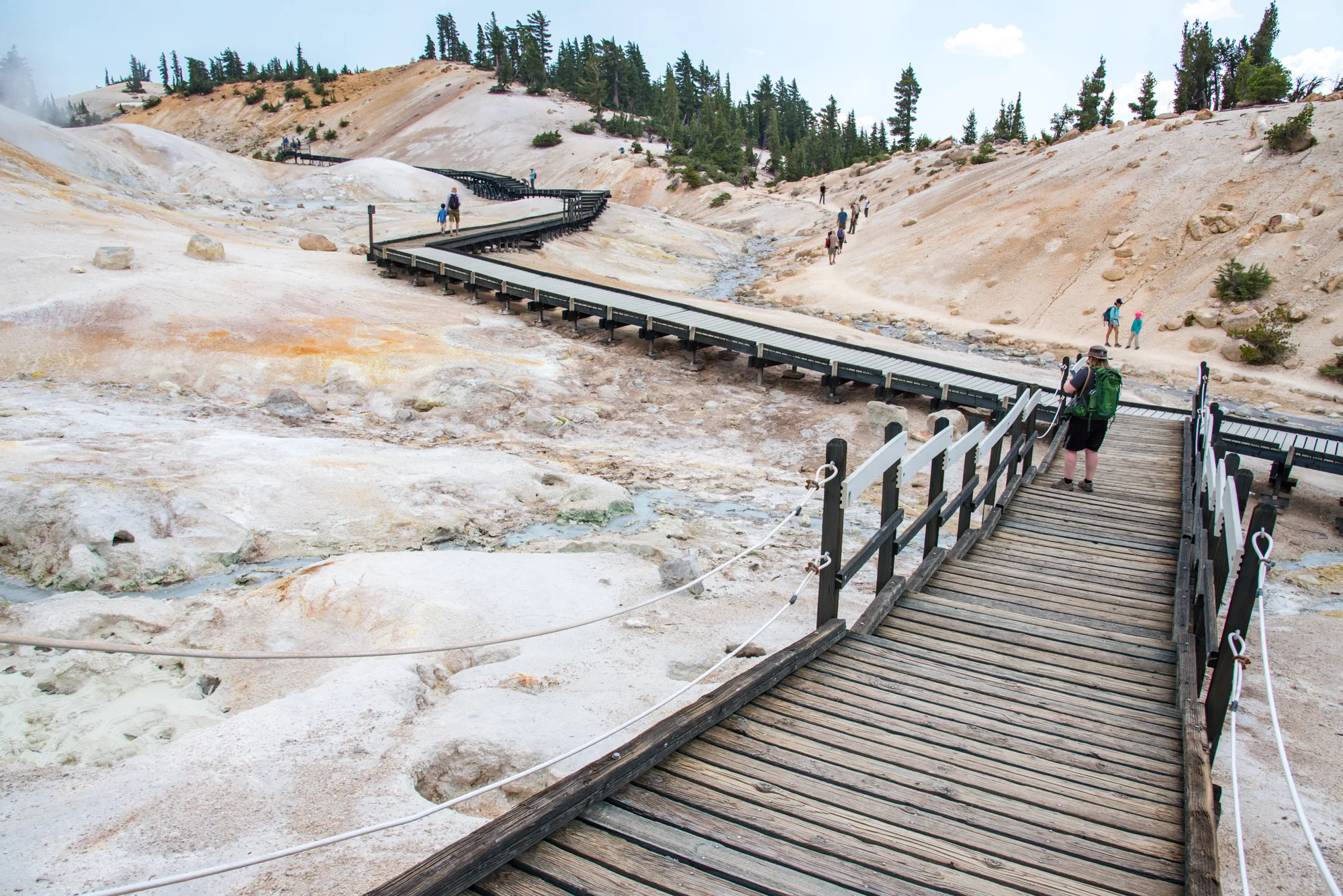
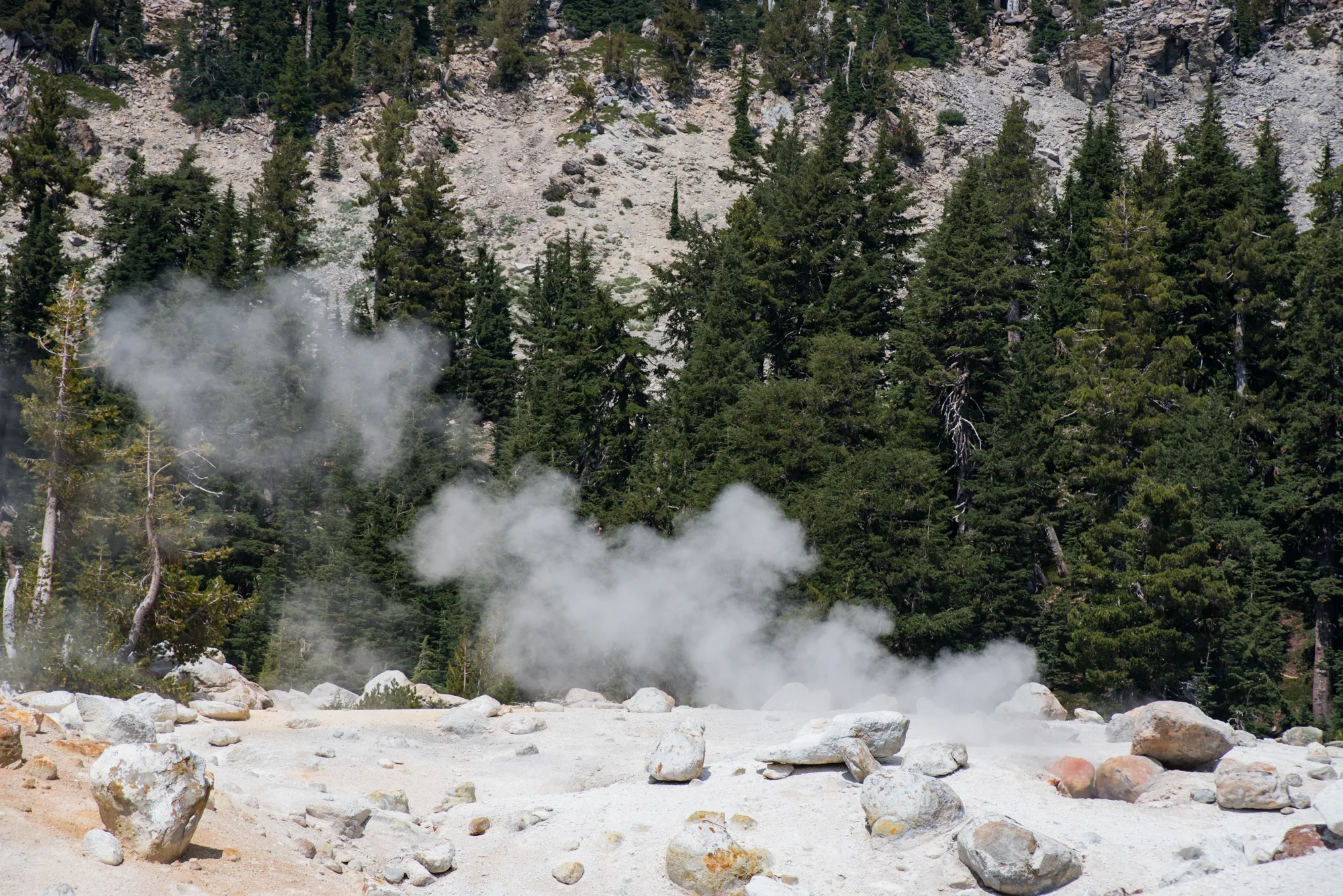

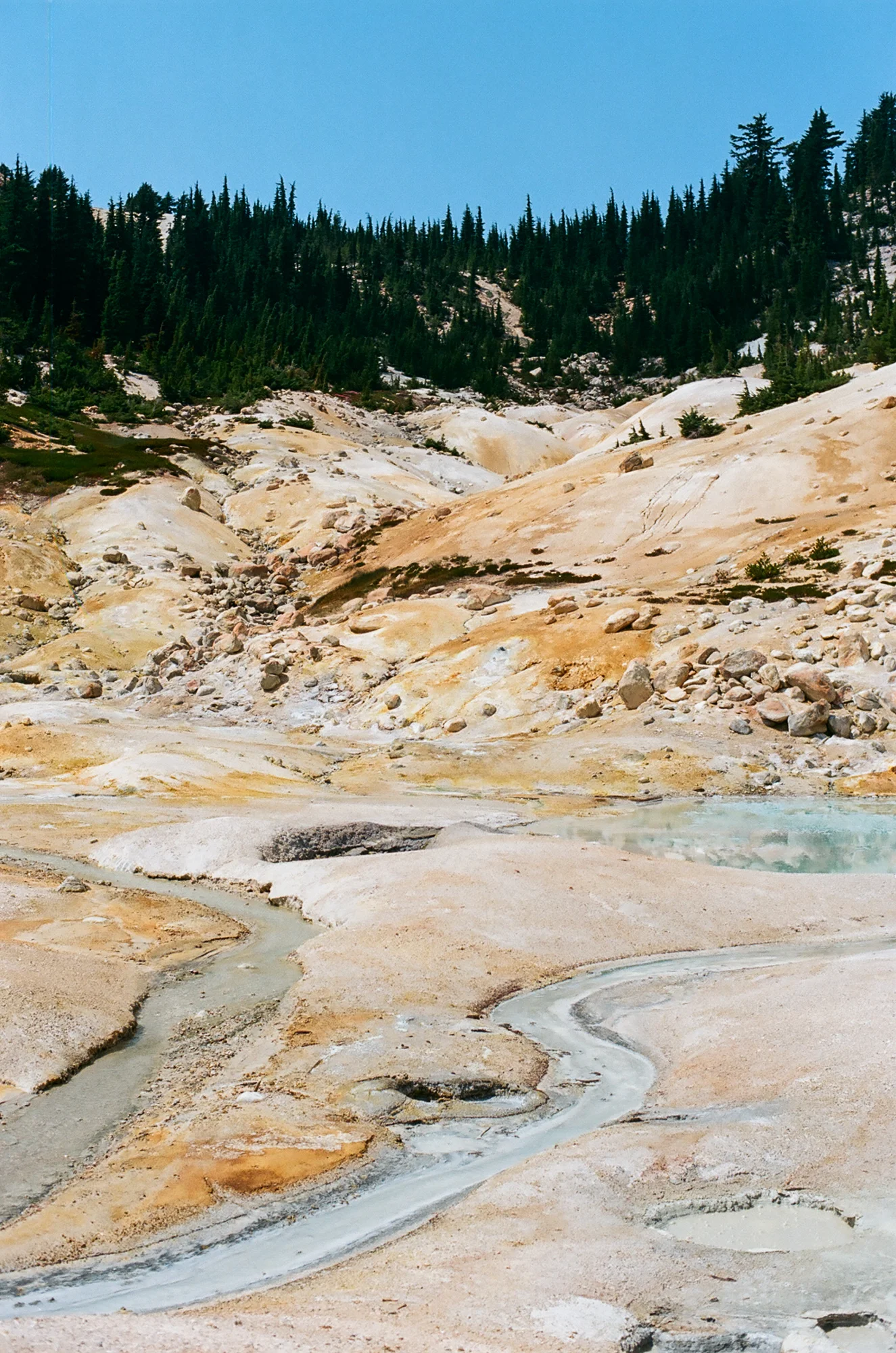
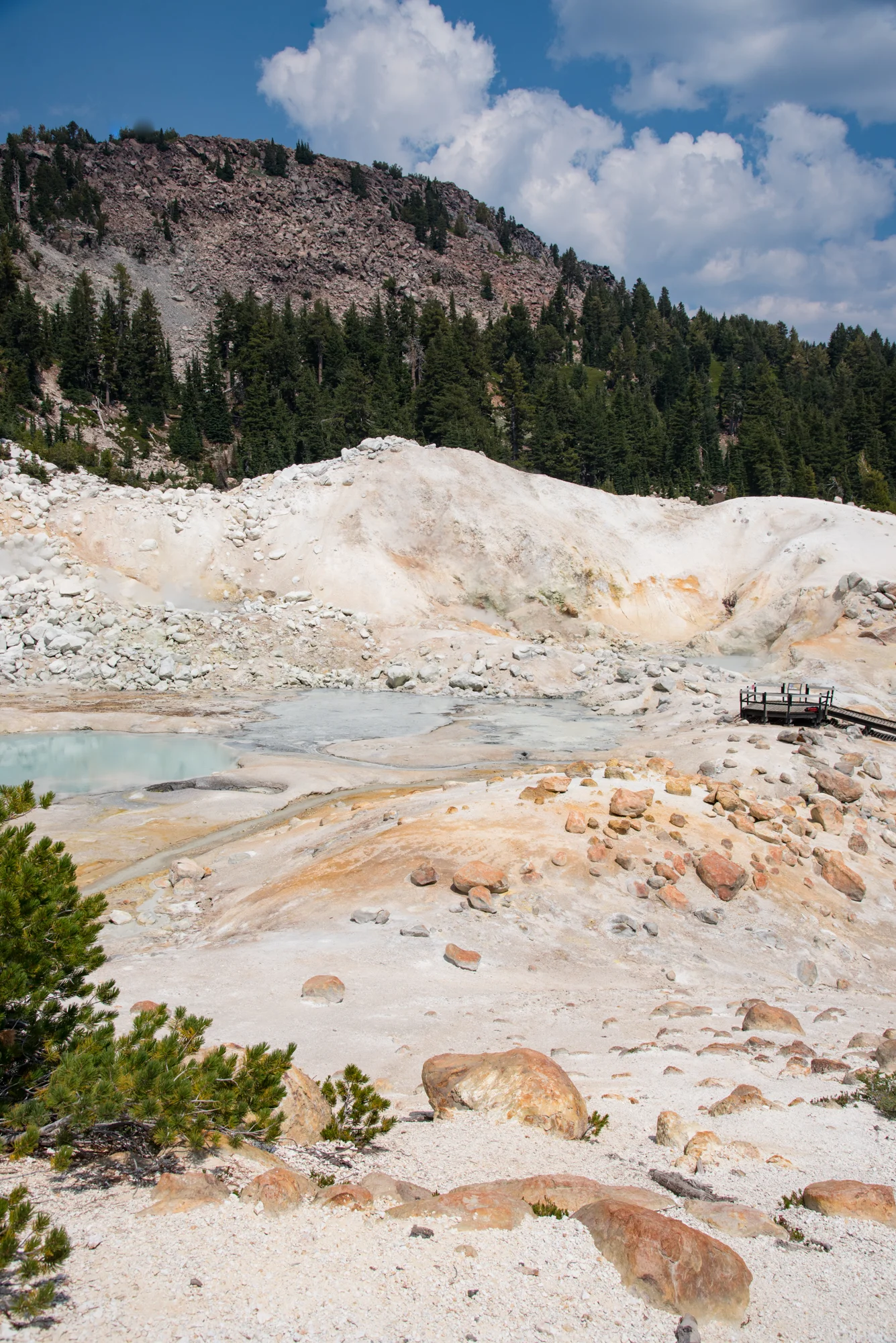

A boardwalk carried us through part of the basin, close enough to hear mudpots burbling and water churning in the pools. Steam drifted across the walkway in hot, pungent clouds that stung our noses when the breeze sent them in our direction.
Staying on the designated trail and boardwalk is especially important at Bumpass Hell. What appears to be solid ground can be only a thin crust over scalding water or mud. The hydrothermal features are fragile, unpredictable, and hot enough to cause severe burns. This is not a place to step off the trail or toss anything into the pools.
The basin was named for Kendall Vanhook Bumpass, a local pioneer who explored the area during the 1860s. While guiding a newspaper editor through the basin, Bumpass broke through the thin crust and plunged one leg into boiling mud. His burns were so severe that the leg was eventually amputated. His experience gave the place its memorable name and remains a vivid warning about why visitors need to stay on the boardwalk.

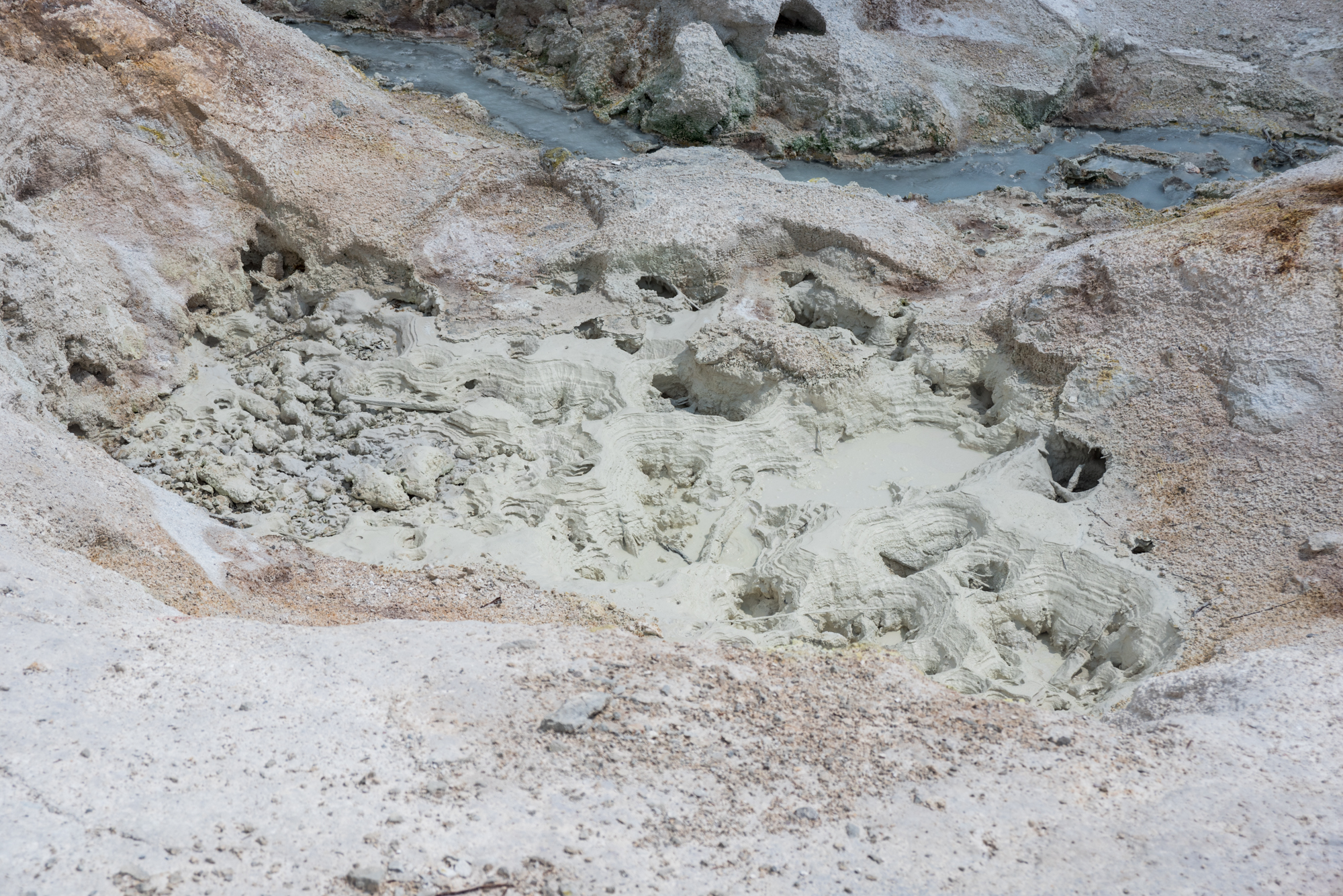
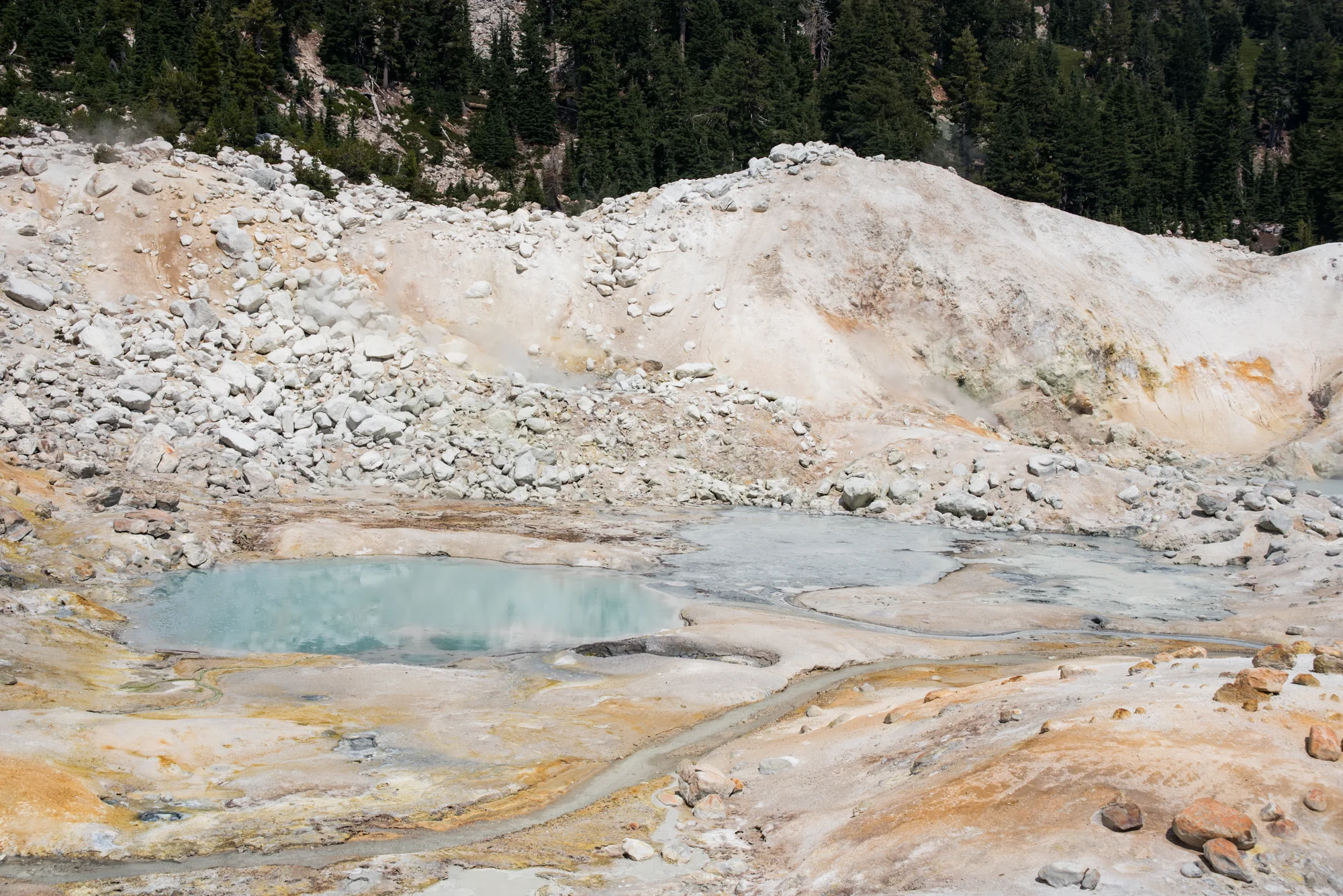

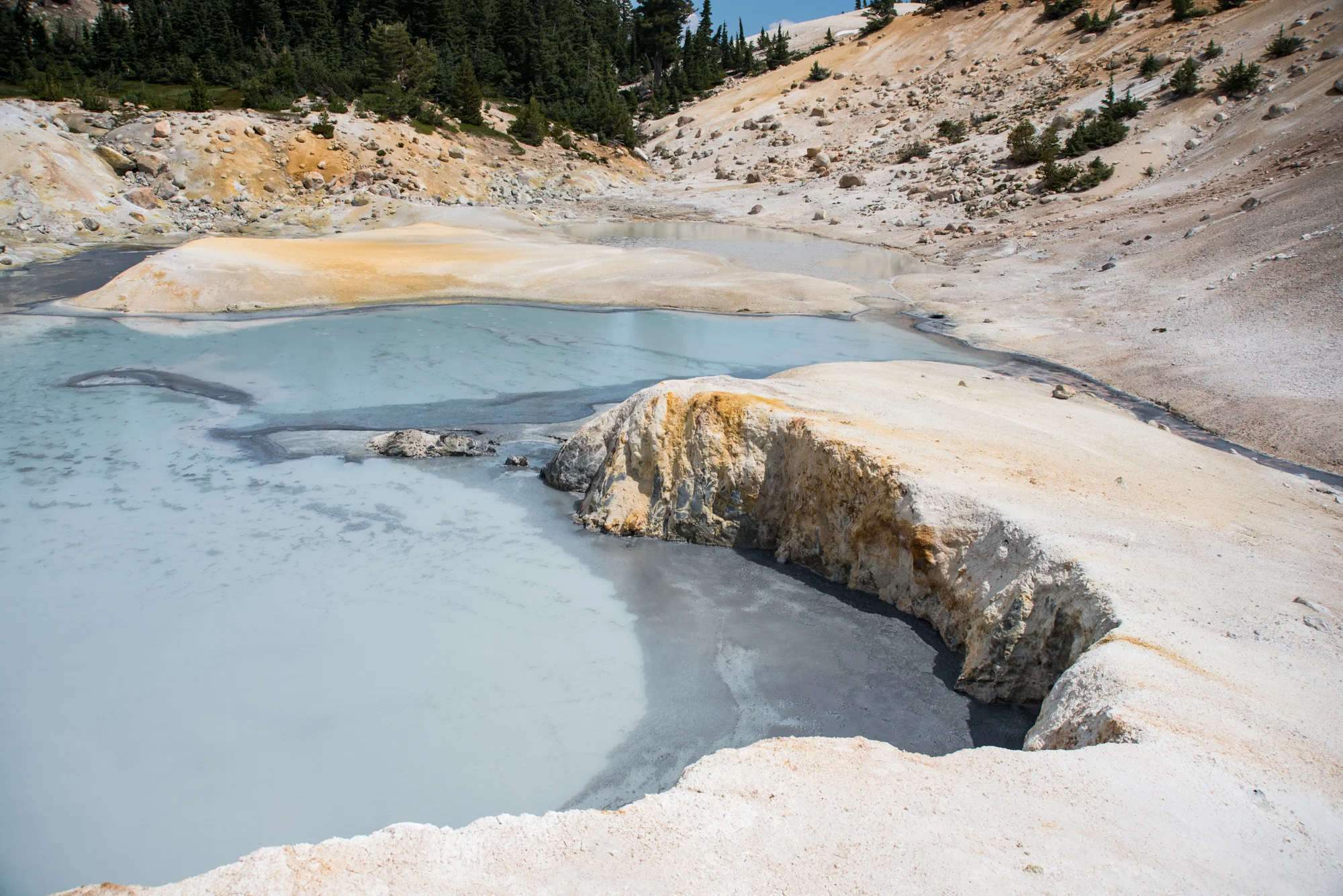
Big Boiler was one of the most impressive features we could see from the walkway. This roaring fumarole releases high-velocity steam that has been measured as hot as 322°F, making it one of the hottest fumaroles in the world. The sound, heat, and strong sulfur smell made the volcanic activity beneath Lassen feel very close.
Interpretive signs throughout the basin explained how the mudpots, pools, and fumaroles formed, but simply standing there was enough to understand that this was not a quiet landscape. Water bubbled, mud shifted, steam hissed, and mineral-rich runoff moved through ground painted in colors I would not have expected to find in the mountains.