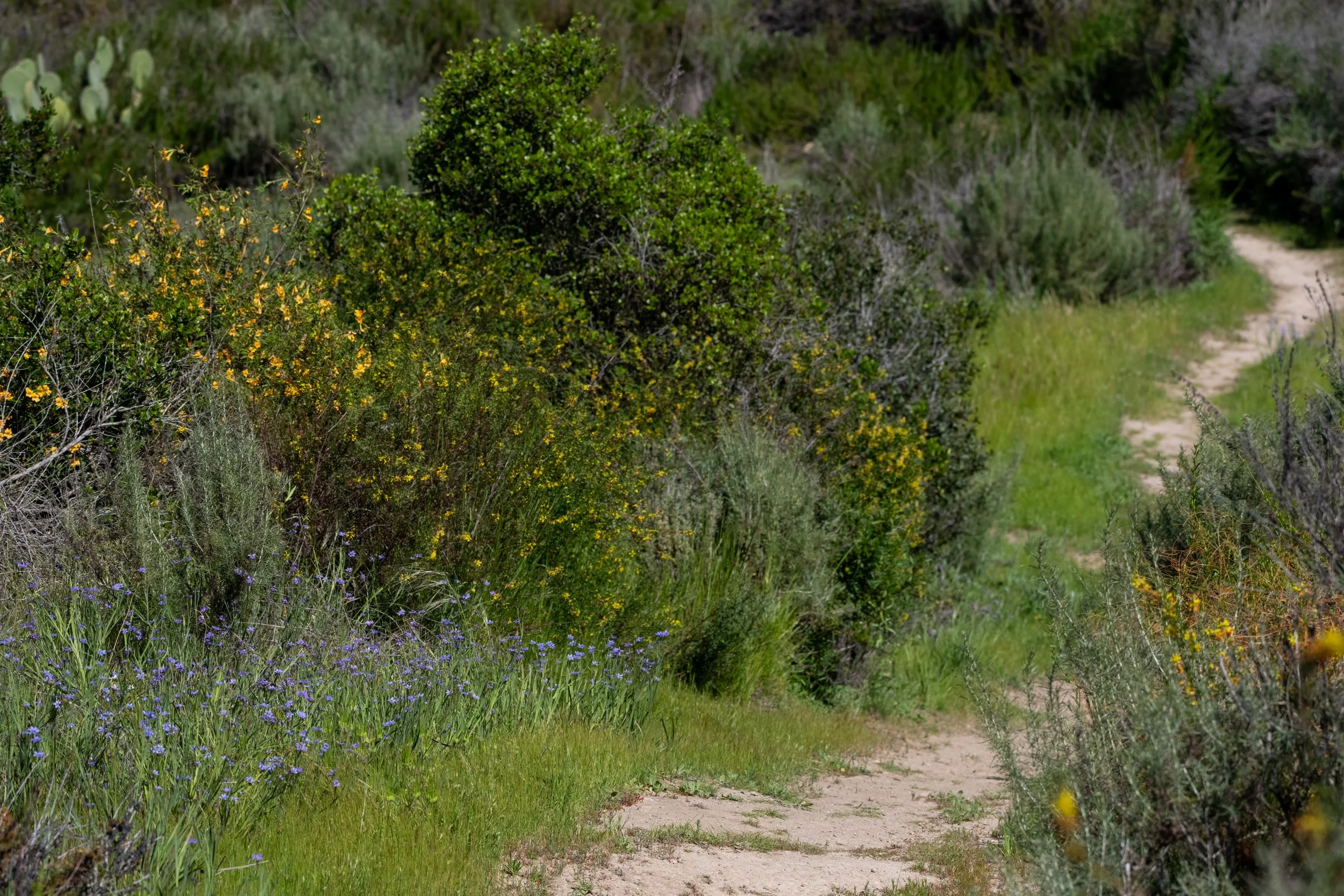
Kim and I went to Dilley Reserve in Laguna Coast Wilderness Park in March with a specific mission. We wanted a fun hike close to home, and the wildflowers and warm weather were already enough to get us outside. This time, though, I was also looking for bird’s nest fungi.
One of the other volunteers on my butterfly surveys had told me about a spot she had found and generously shared the GPS location with me. I had never seen bird’s nest fungi before, so I was curious to find out whether they would still be there and whether I could spot something so tiny among all the leaves and debris along the trail.
The morning began cloudy, but the sun eventually came out and warmed everything up. The trails were unusually quiet, with very few other people around. Dilley Reserve is close enough to home for an easy day outside, but having so much of the trail to ourselves made the hike much more enjoyable.
Canyon Trail to Barbara’s Lake
We started on Canyon Trail, continued onto Gravel Trail, and followed it toward Barbara’s Lake. This is a fairly straightforward route through the reserve, but we were moving slowly because there was plenty to look at along the way.
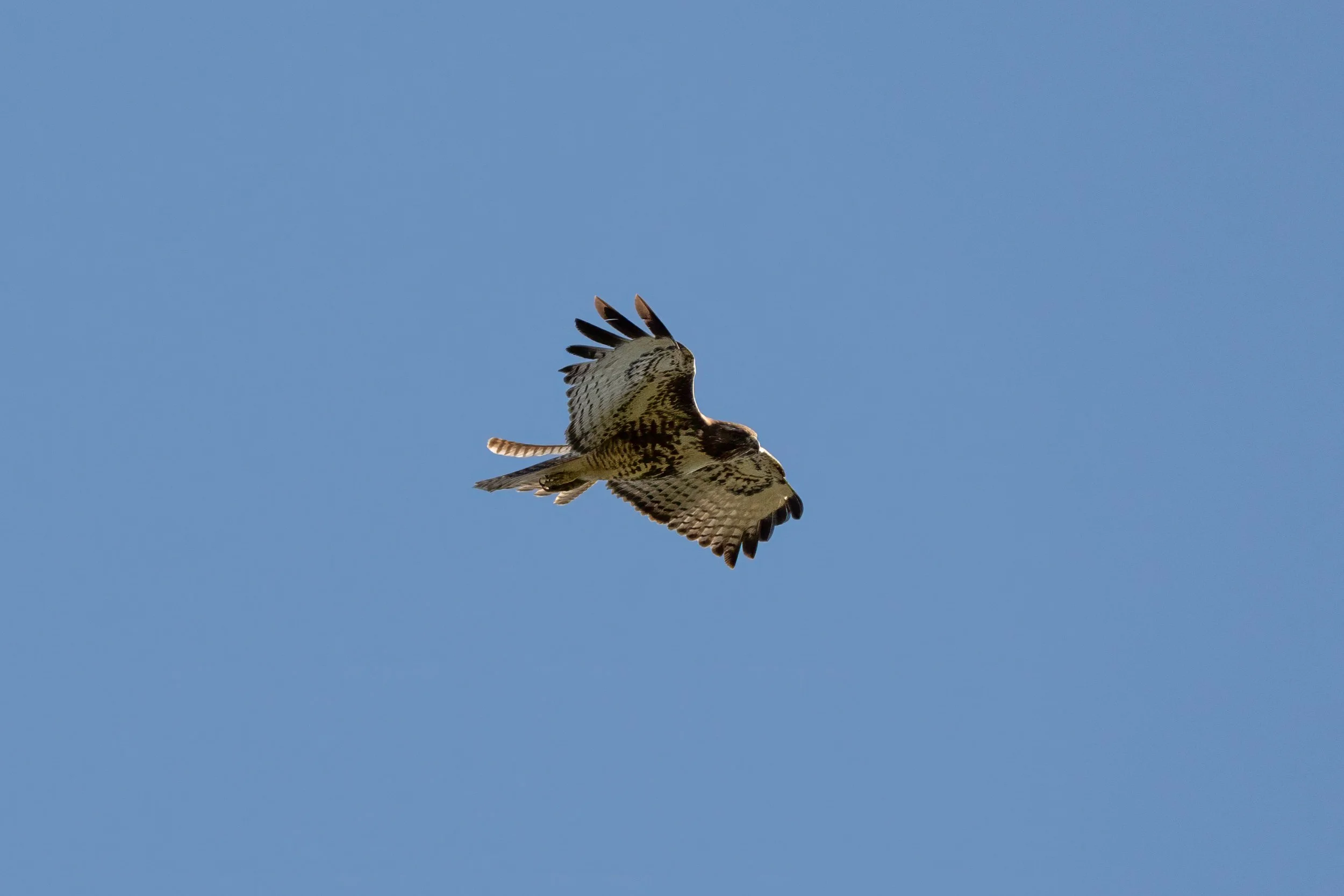
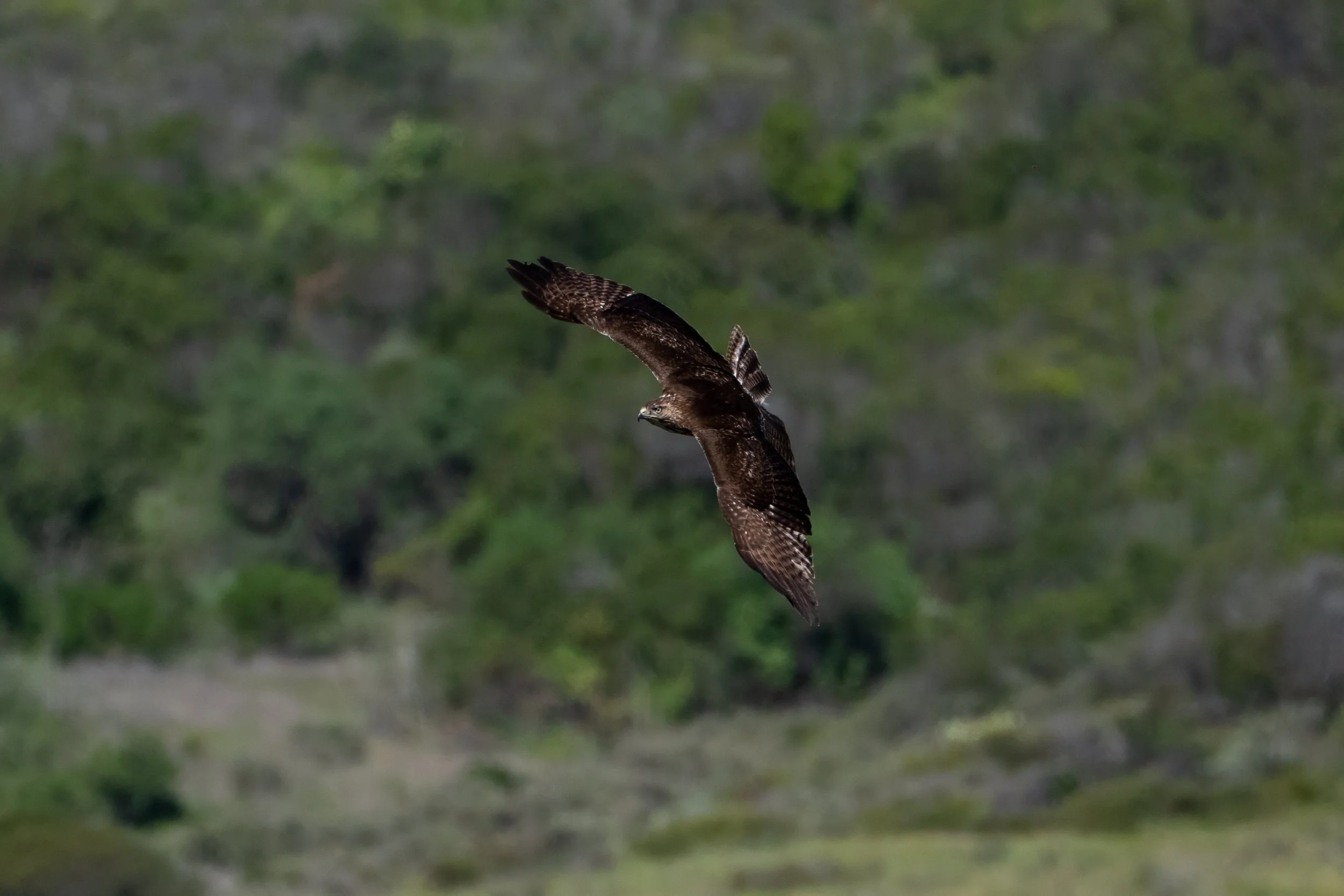
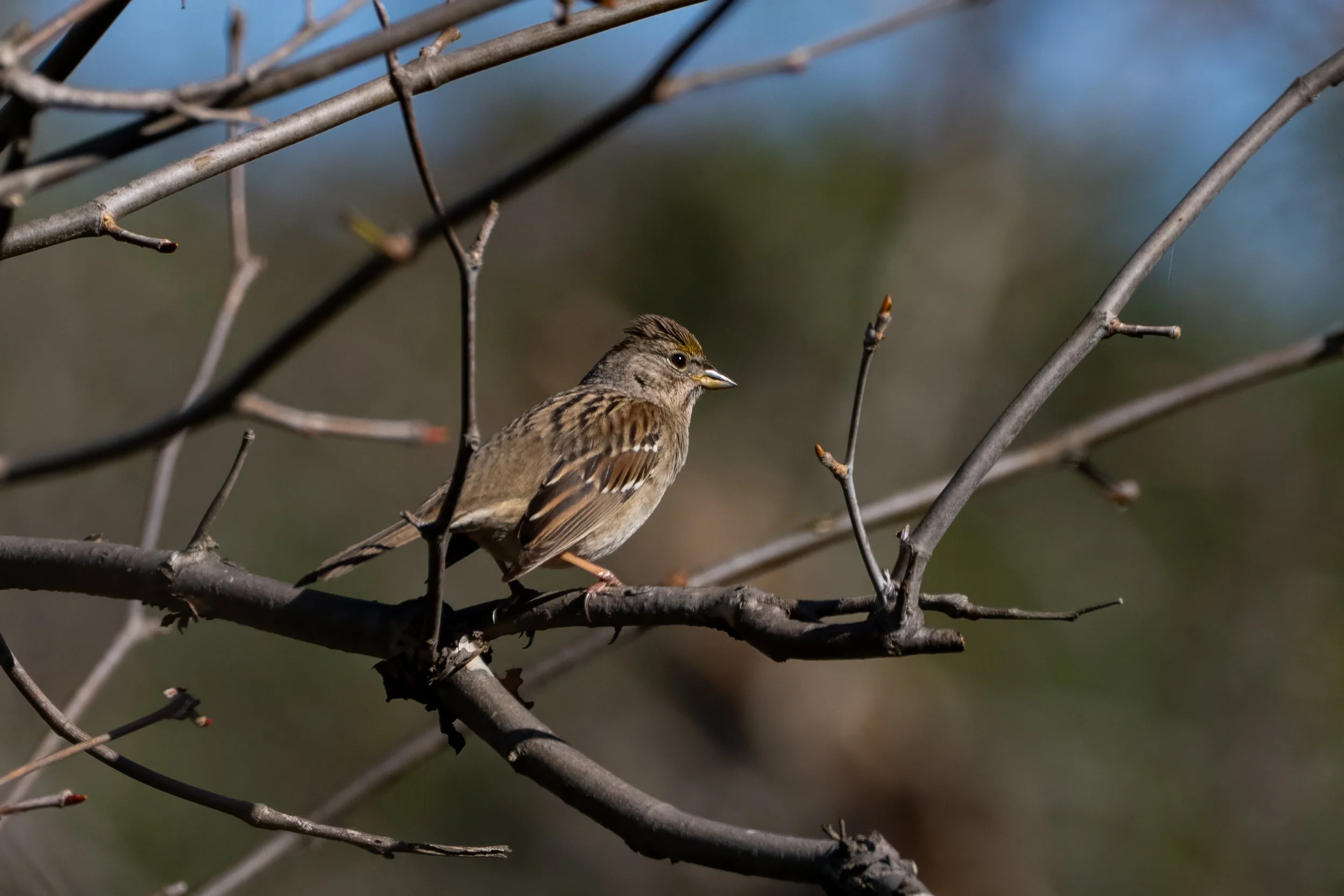
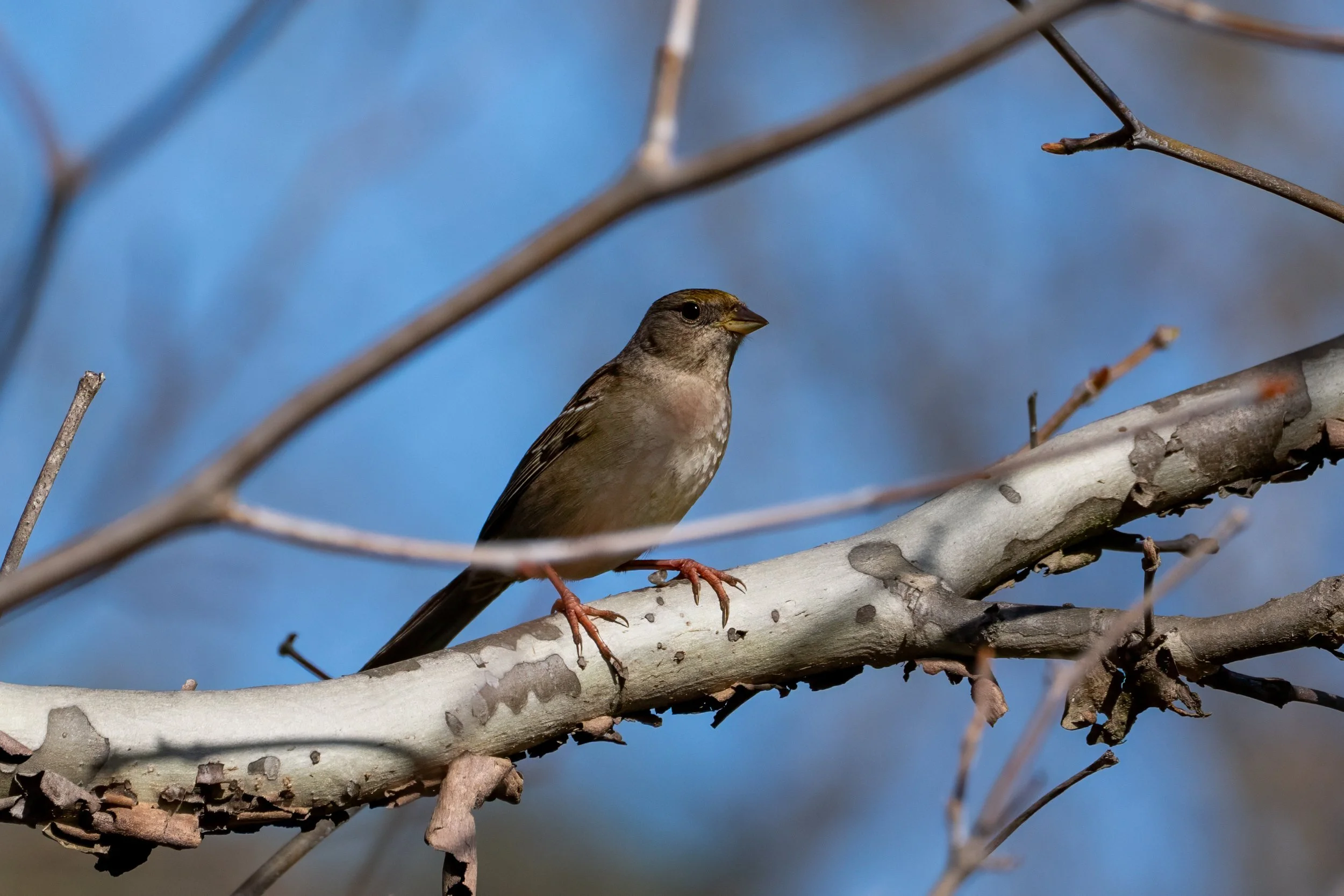
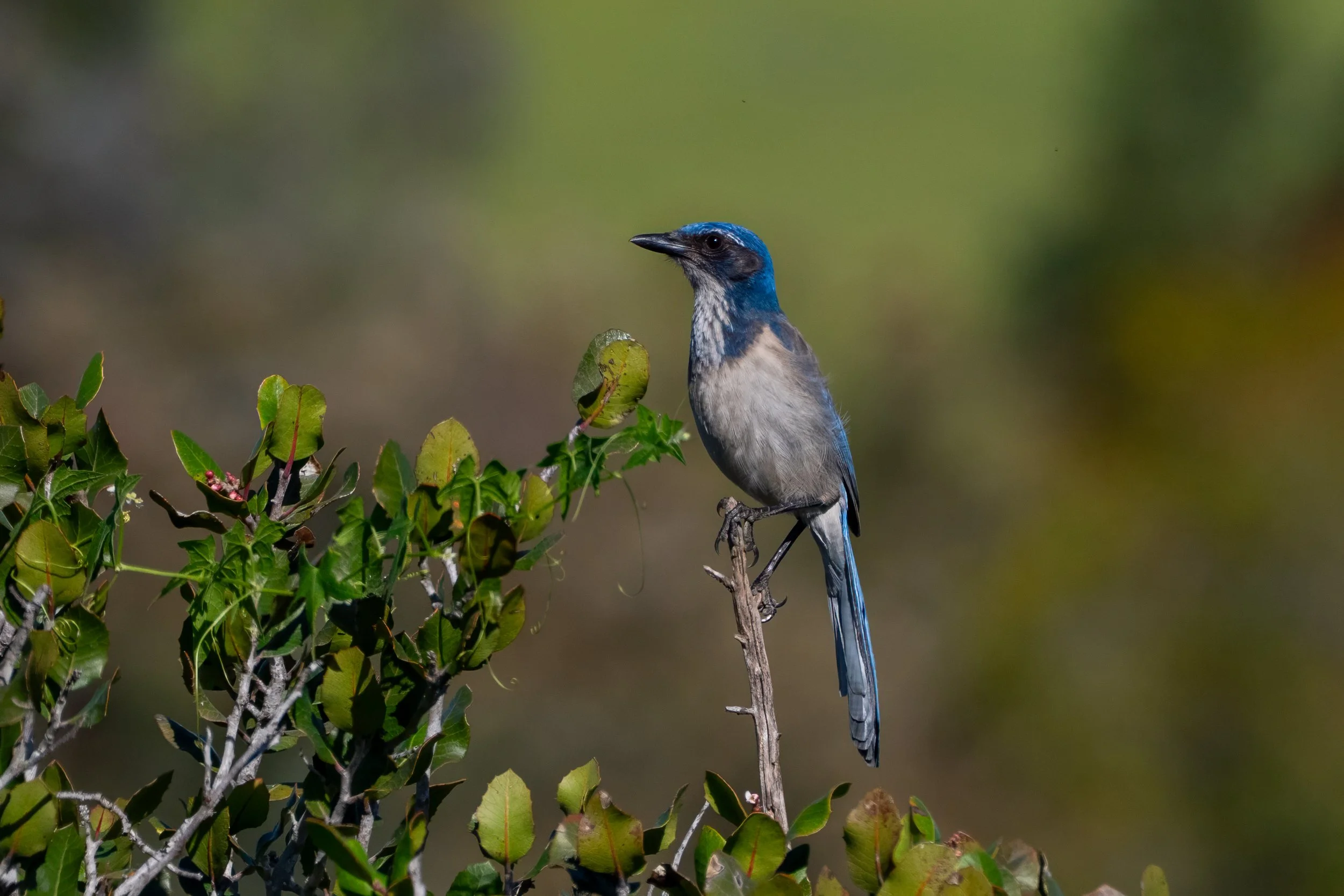
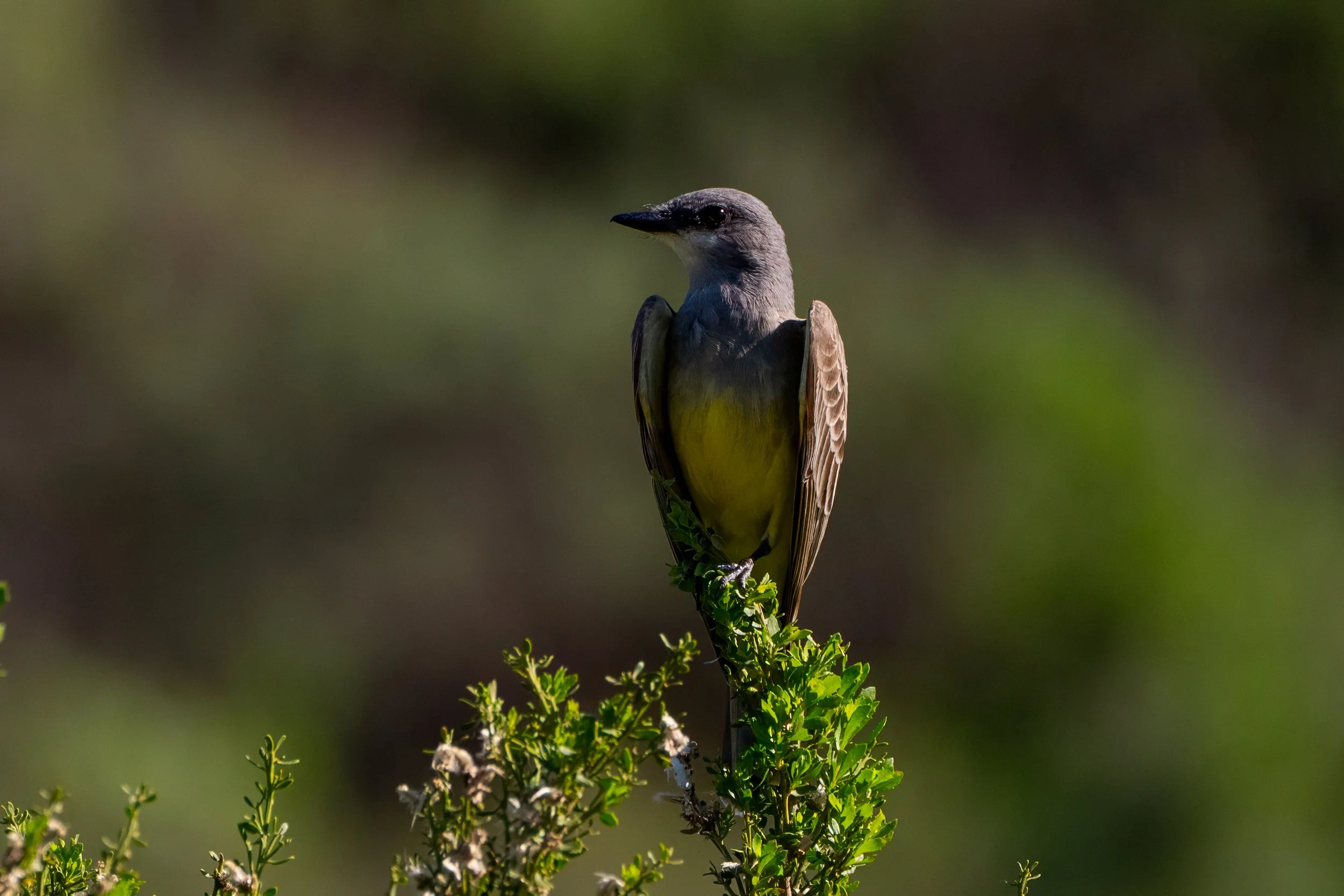
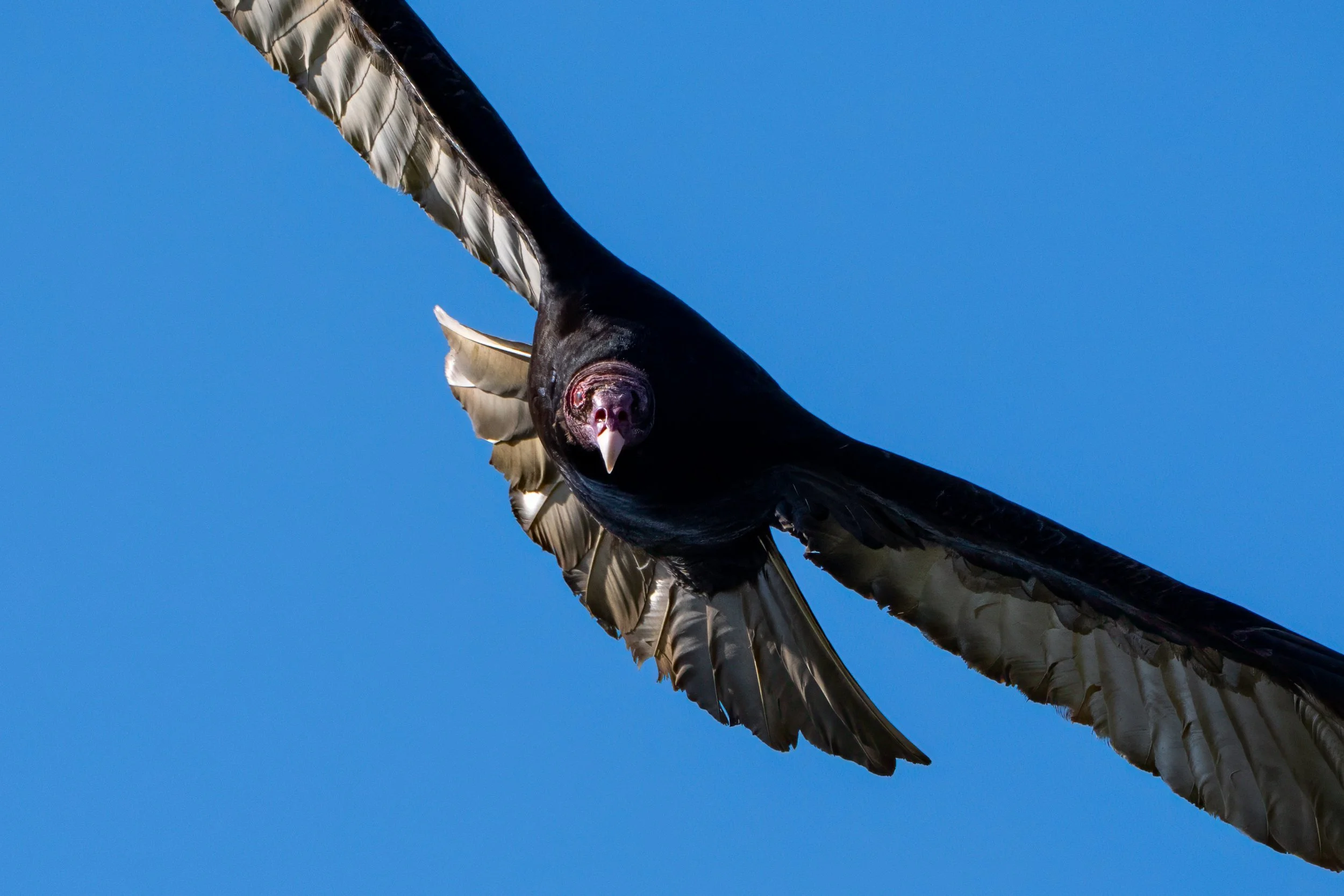
A Red-tailed Hawk circled above us. A couple of Golden-crowned Sparrows perched in a tree and watched us pass by. Cassin’s Kingbirds were flycatching, leaving their perches to grab insects before returning, while a California Scrub-Jay moved through the area nearby and seemed to hop down the trail, tree to tree, in front of us.
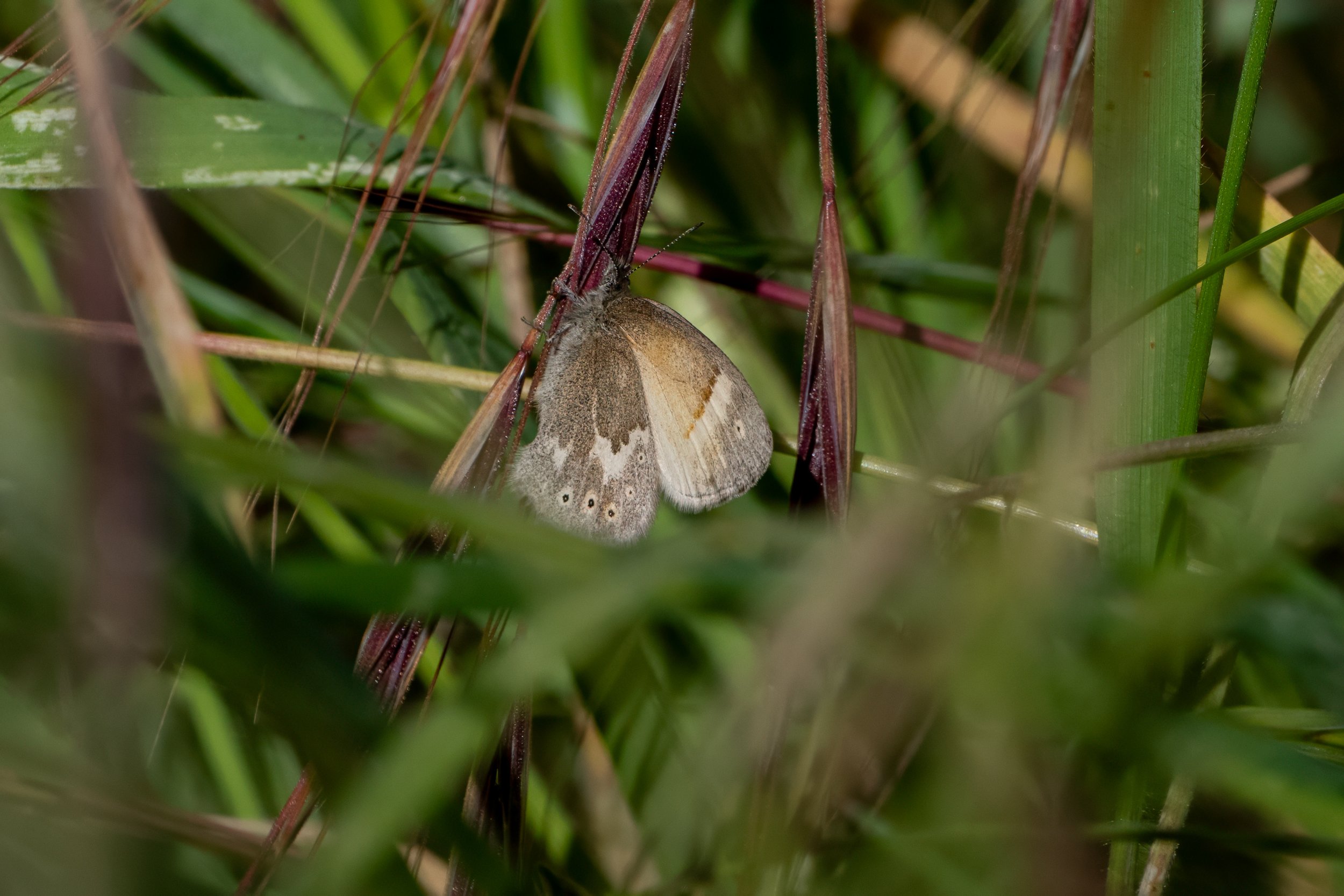
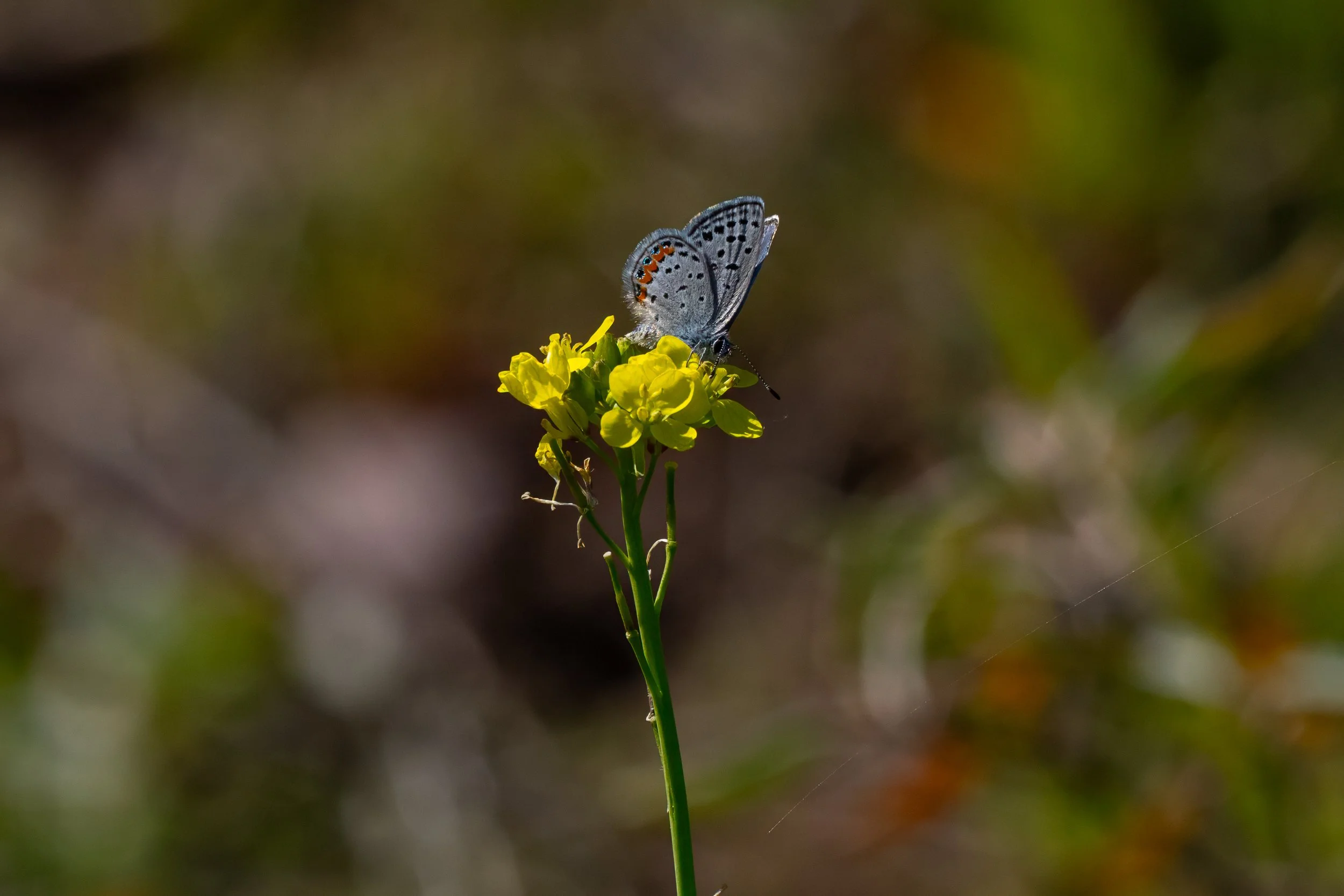
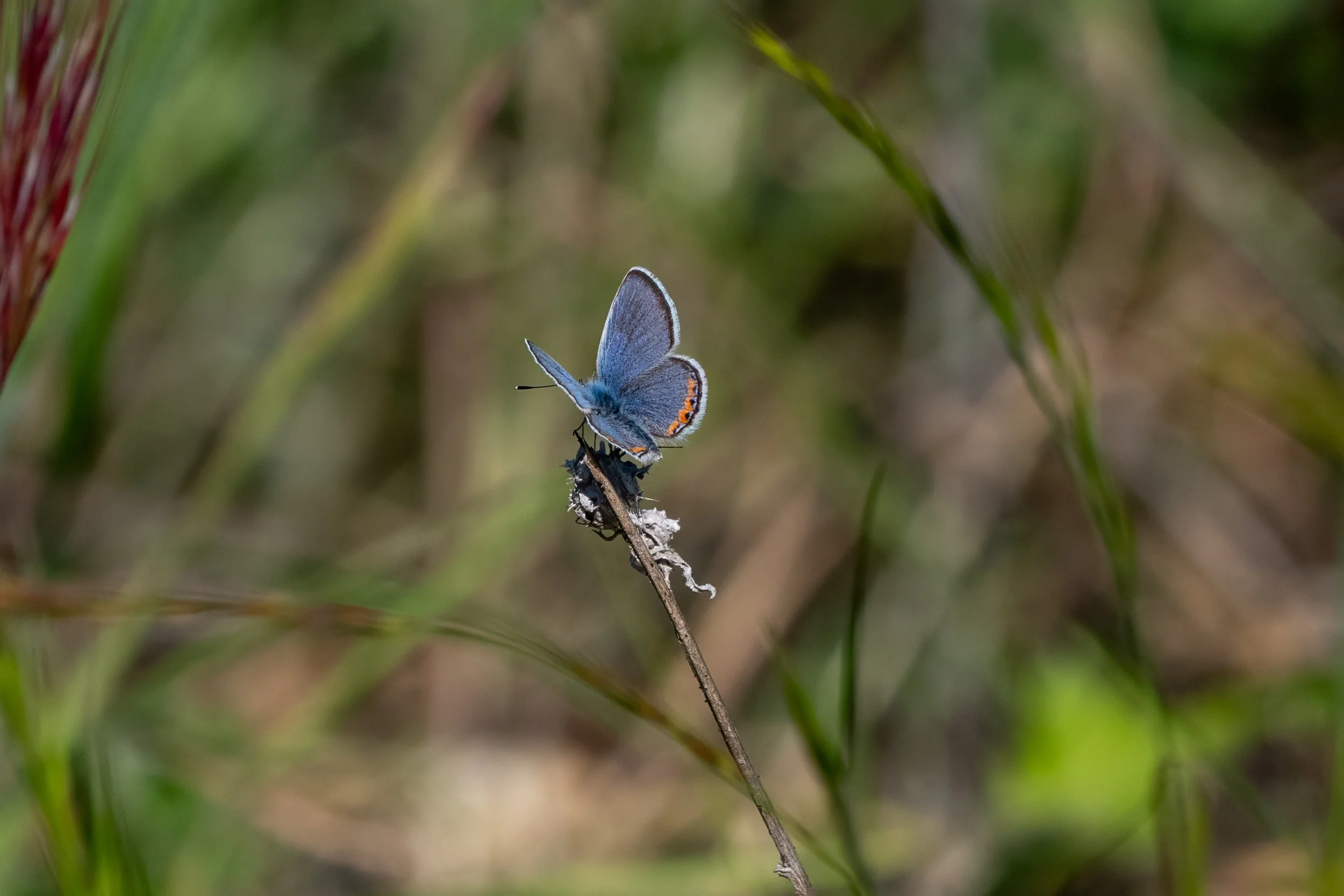
The butterflies were even busier. We found a Common Ringlet, Acmon Blues, Lotus Hairstreaks, a Painted Lady, Behr’s Metalmarks, Gray Hairstreaks, a Gray Buckeye, a Silvery Blue and Funereal Hairstreaks. There was a lot to stop and photograph, which was exactly what I had hoped for on this hike.
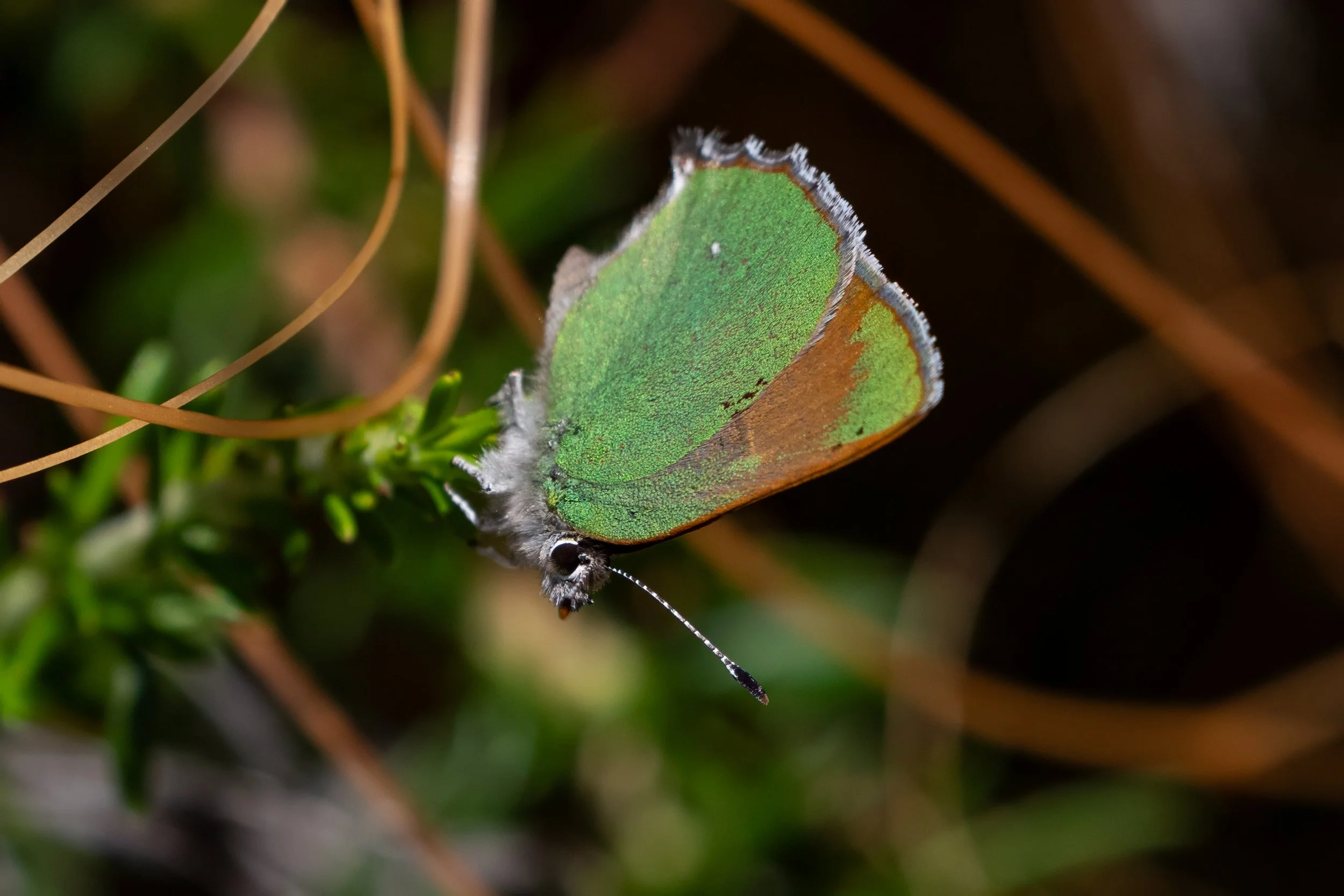
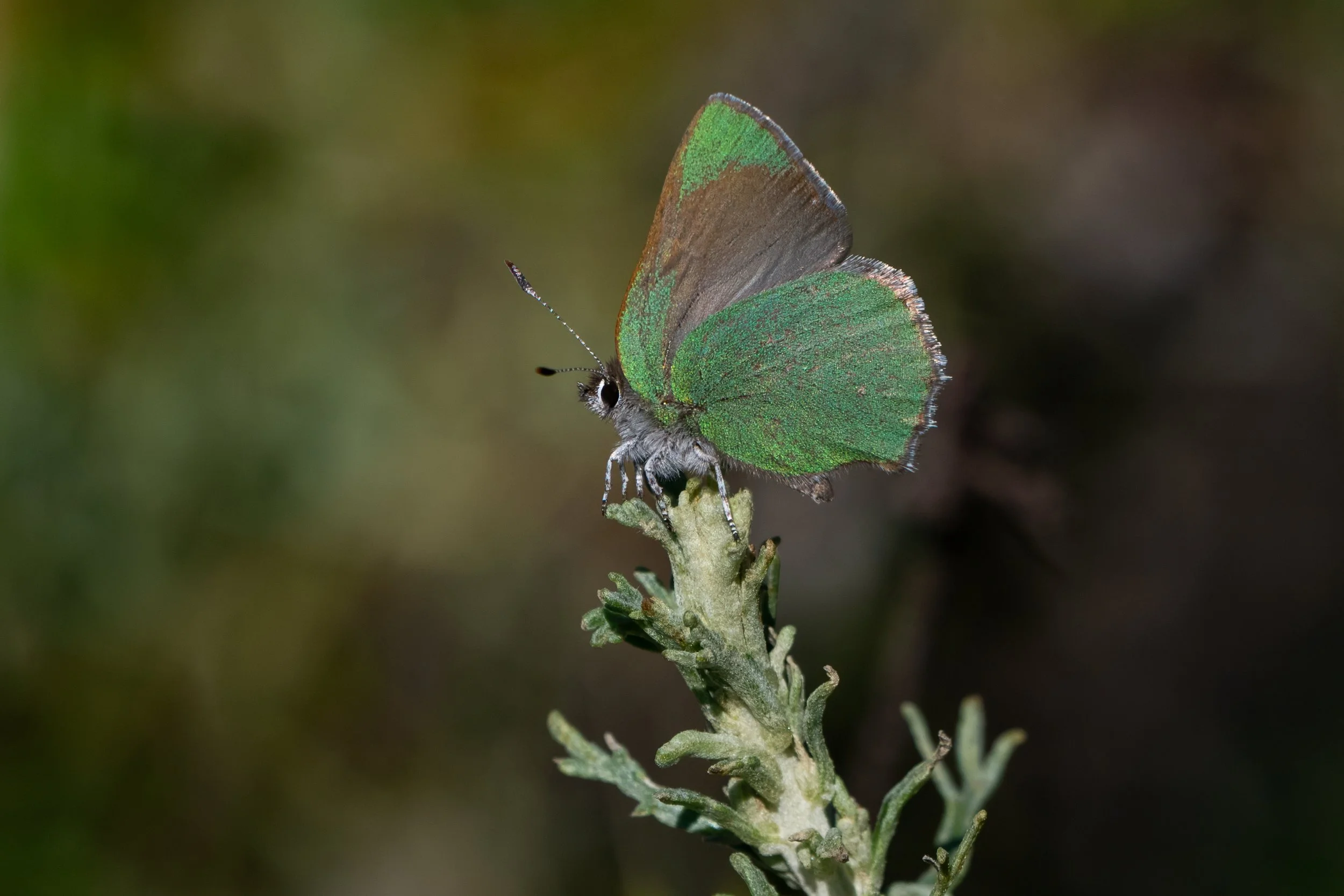
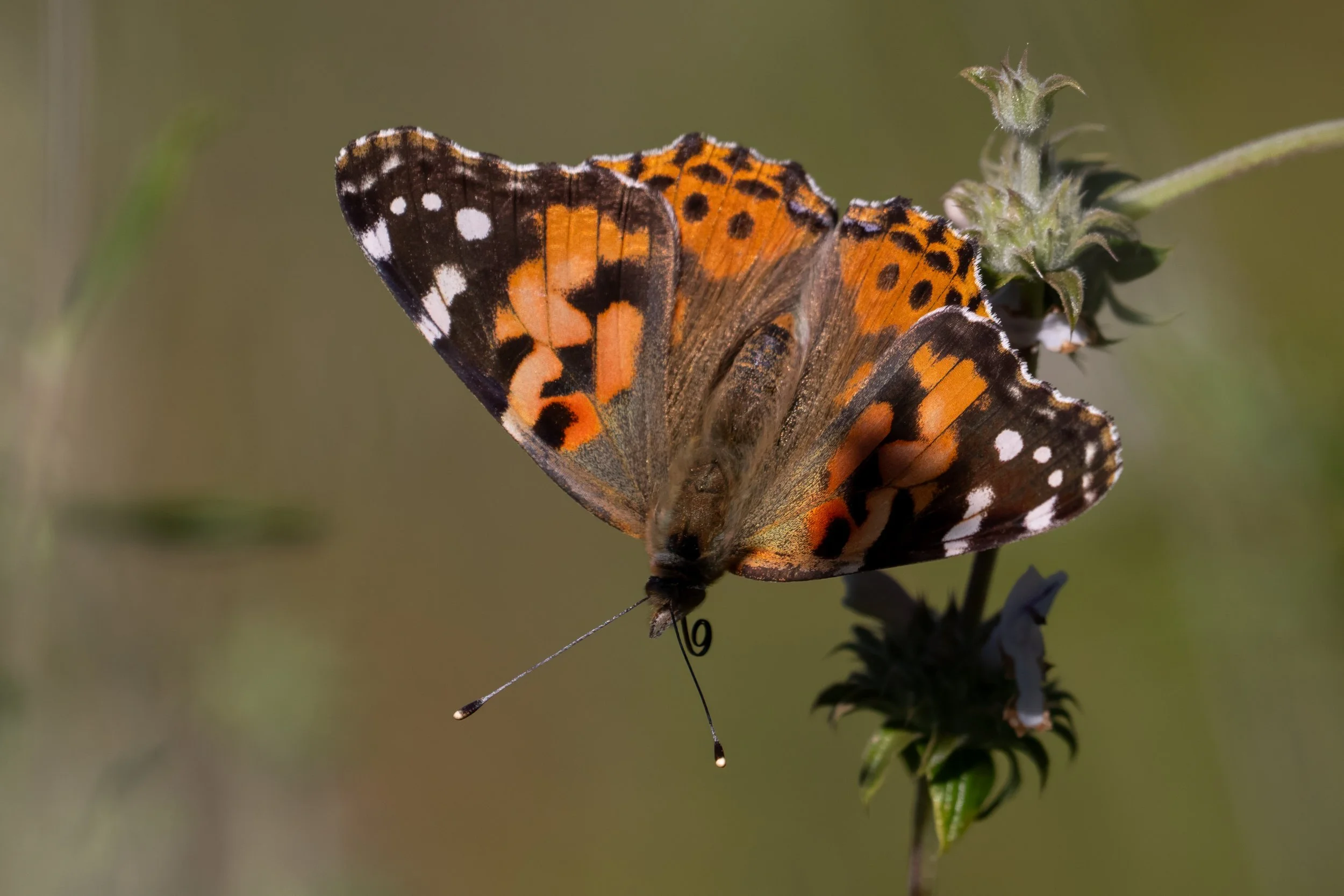
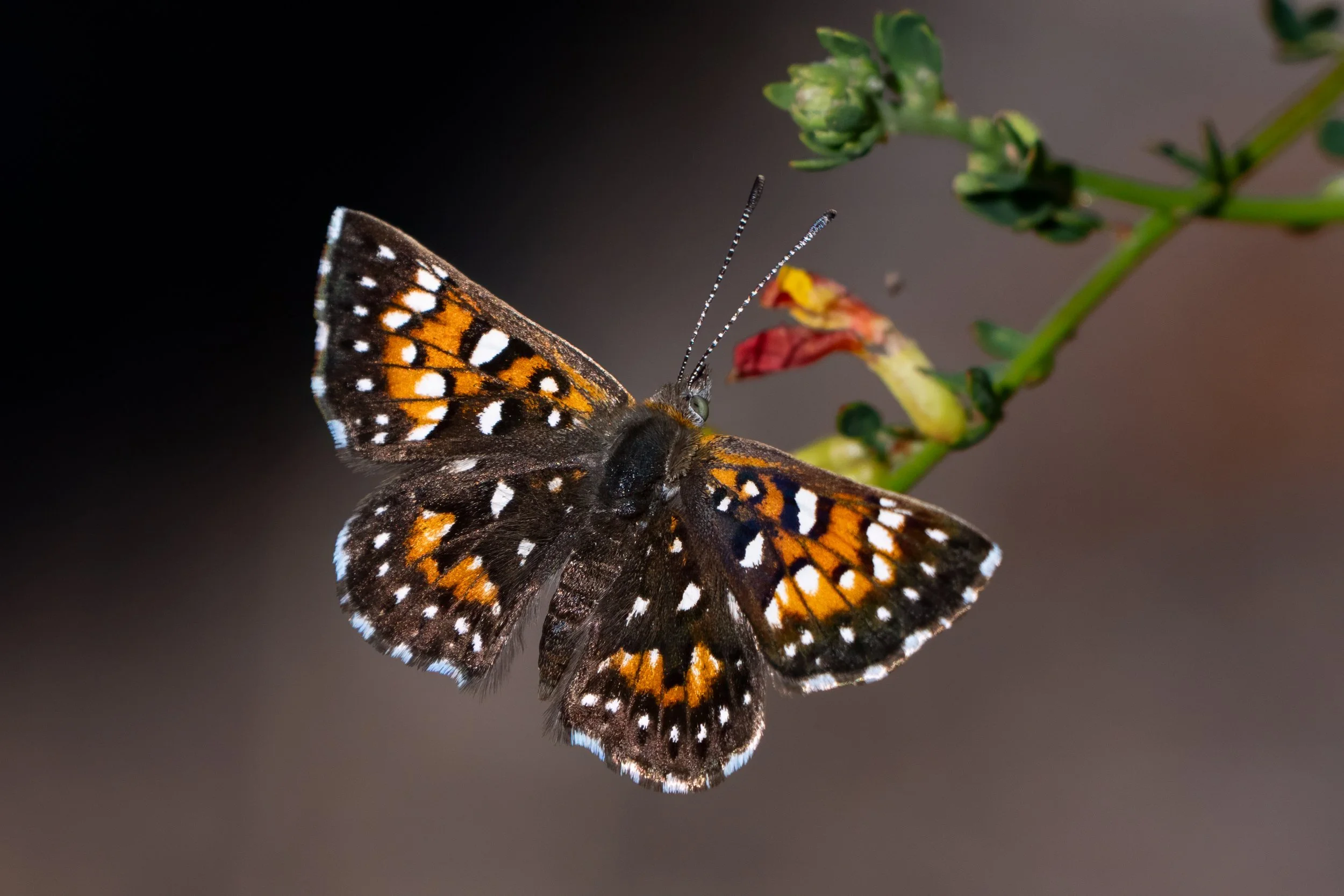
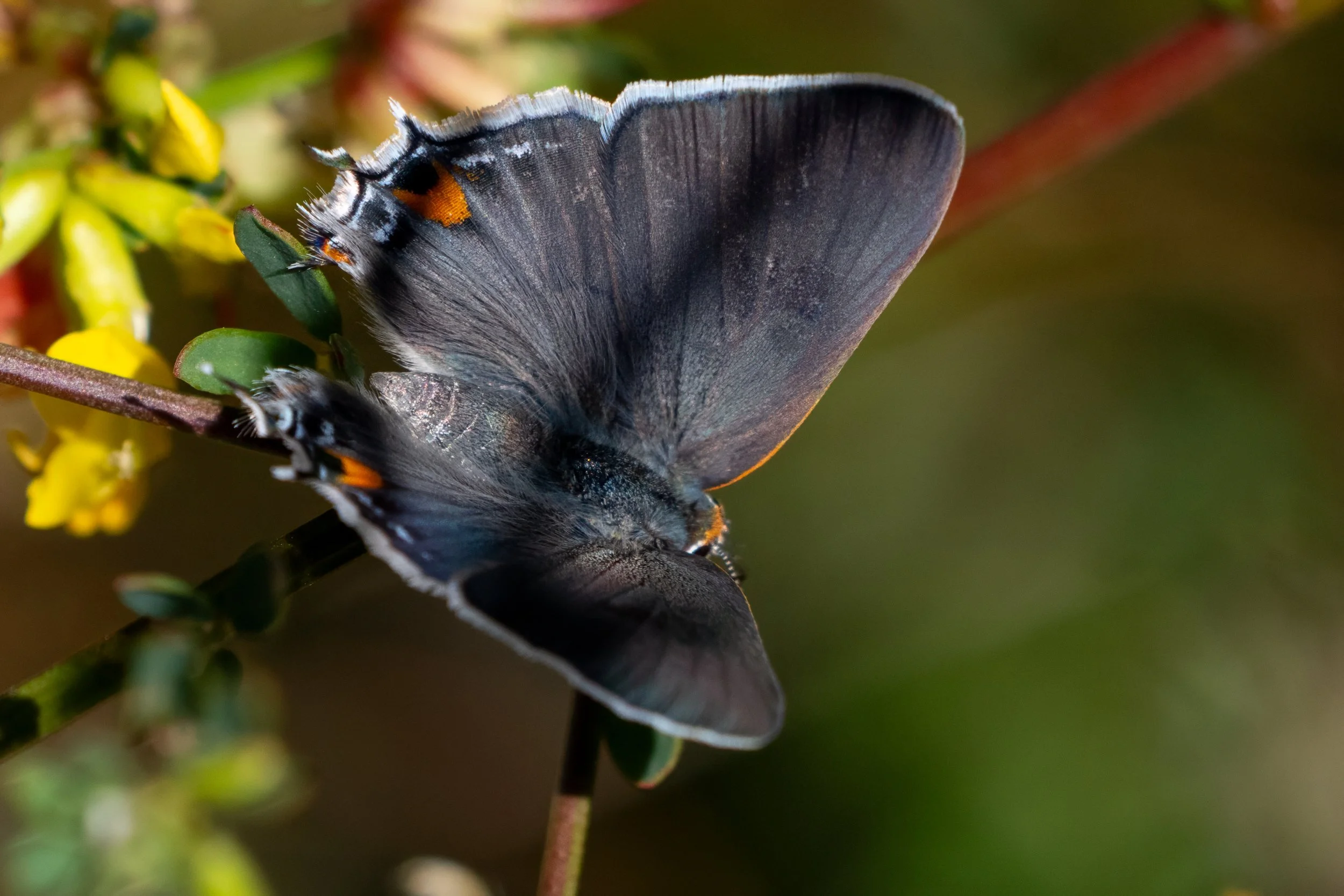
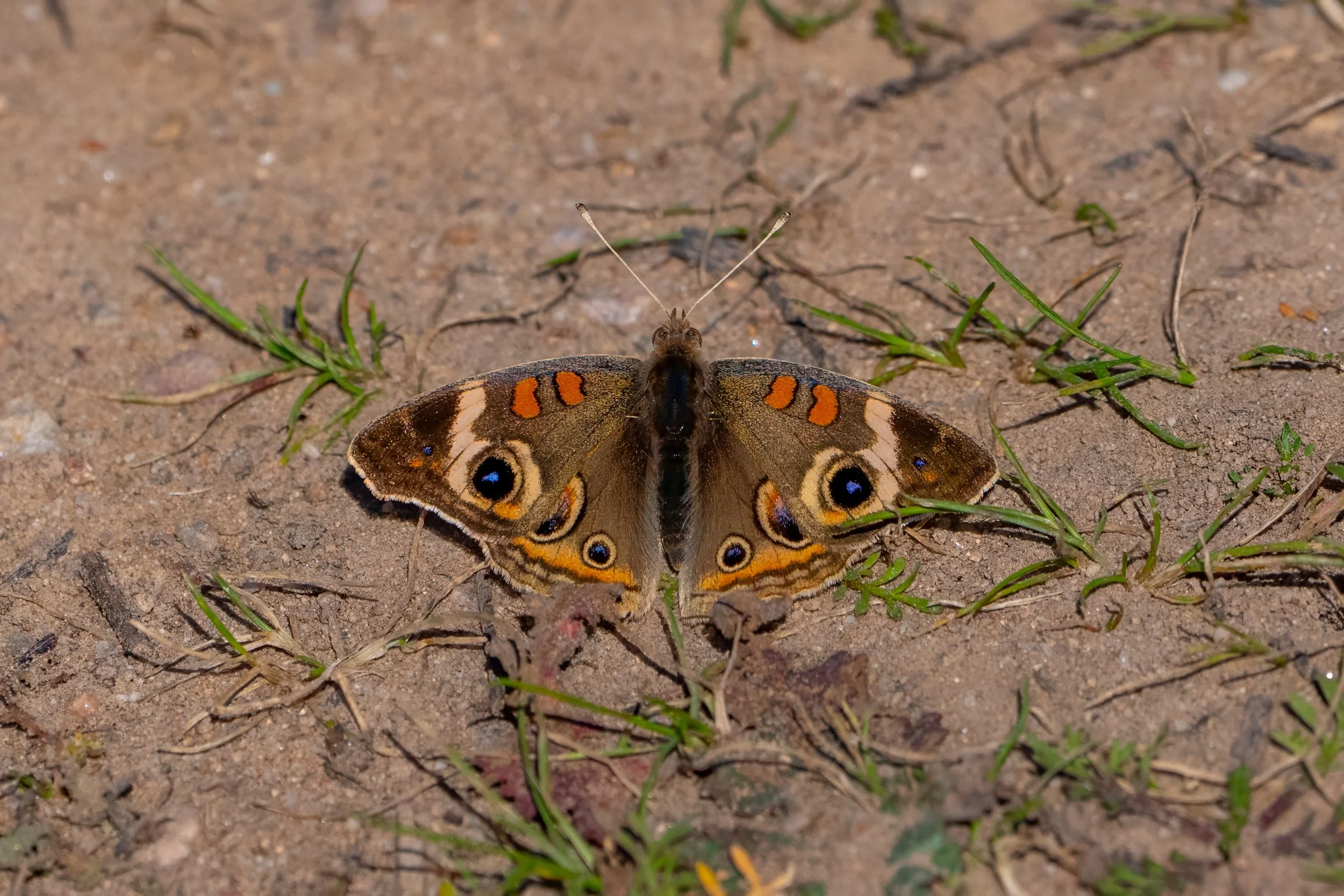
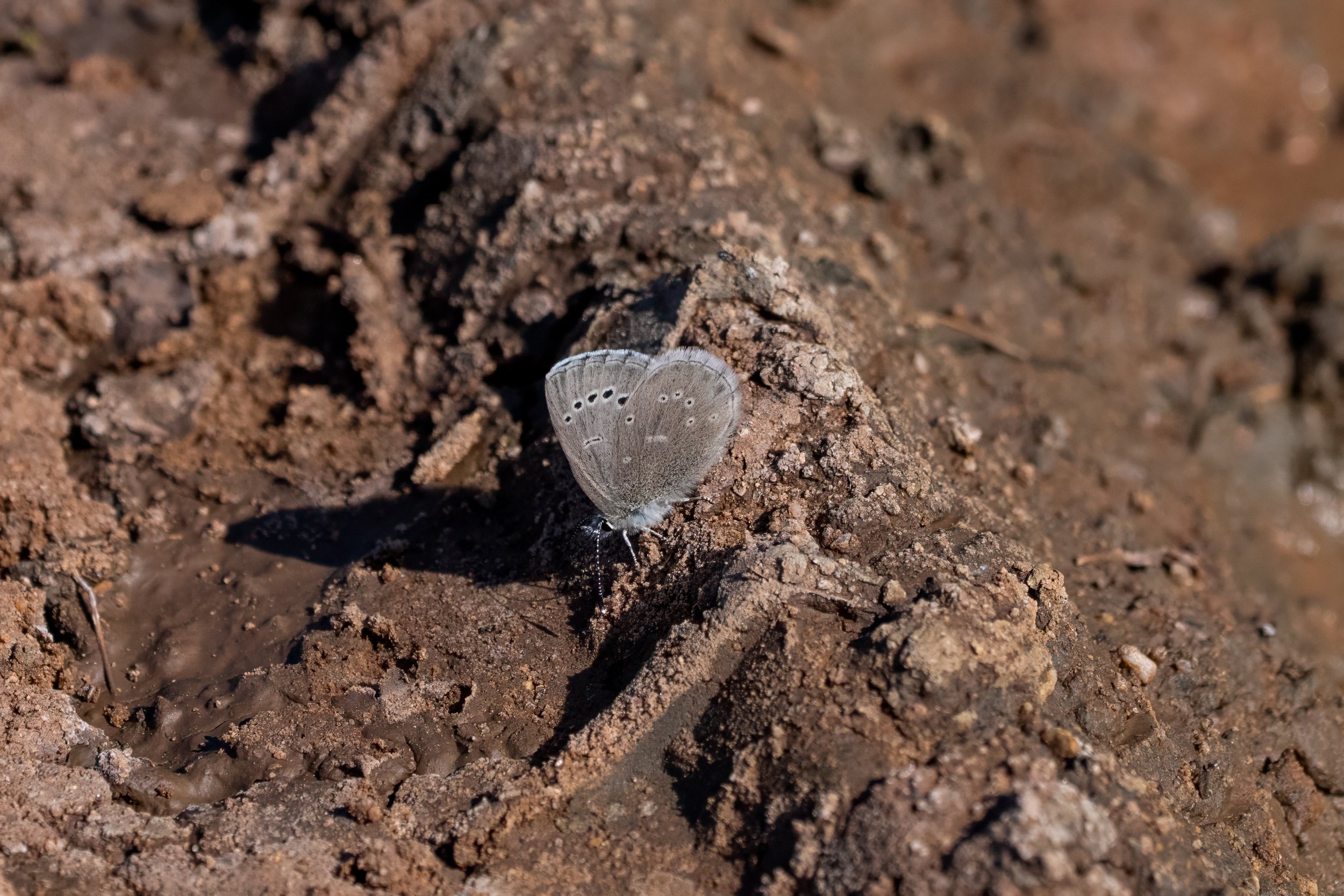
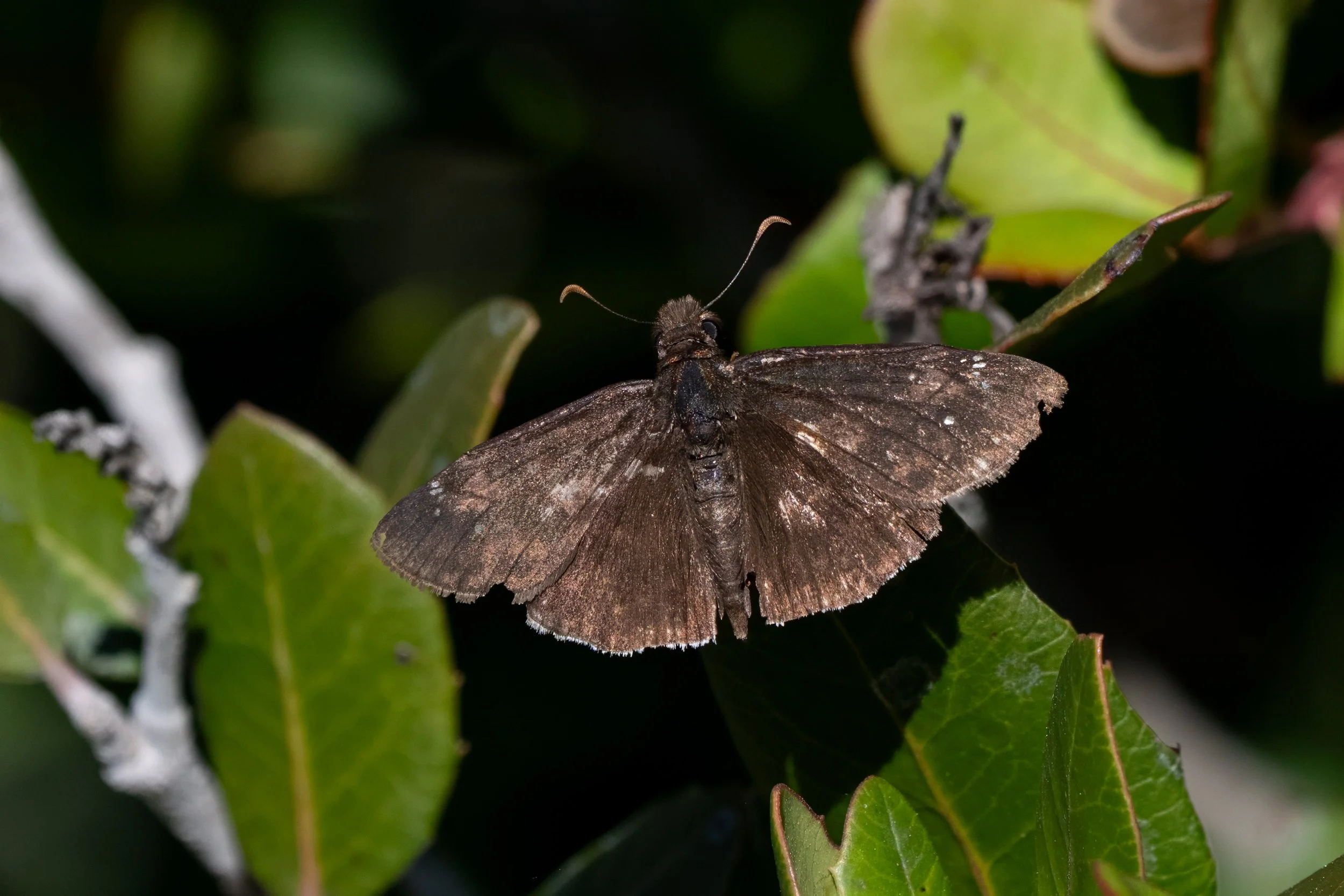
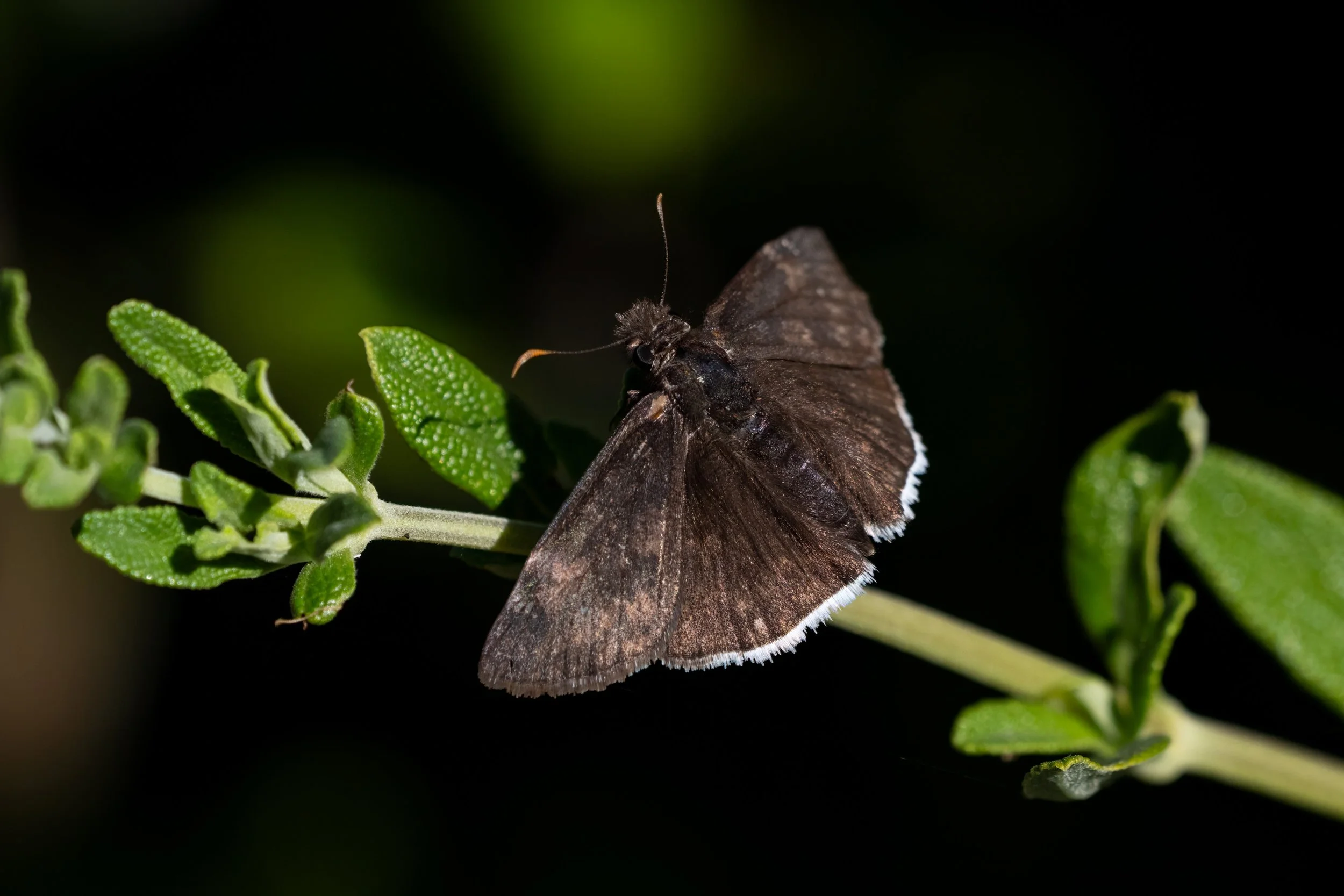
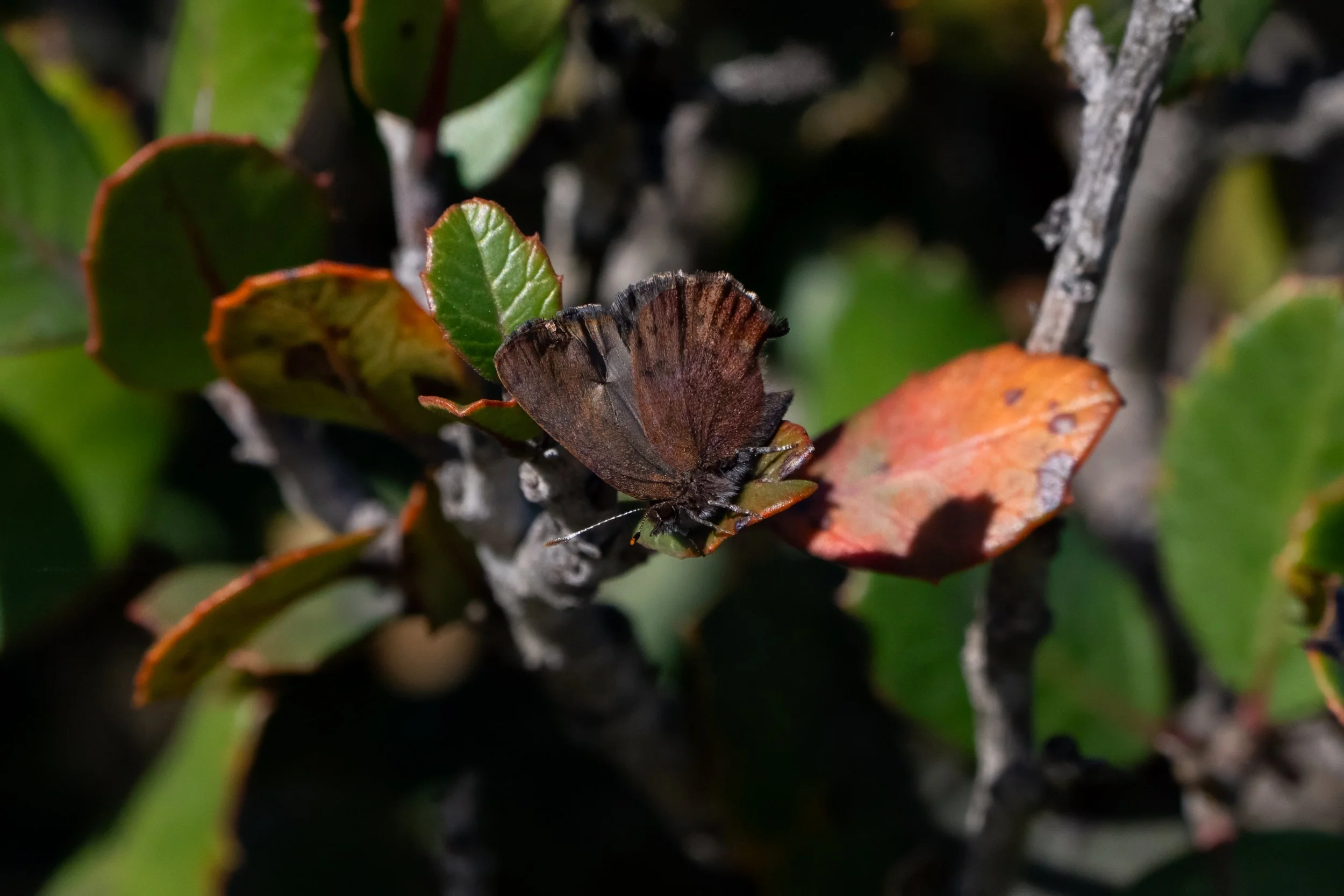
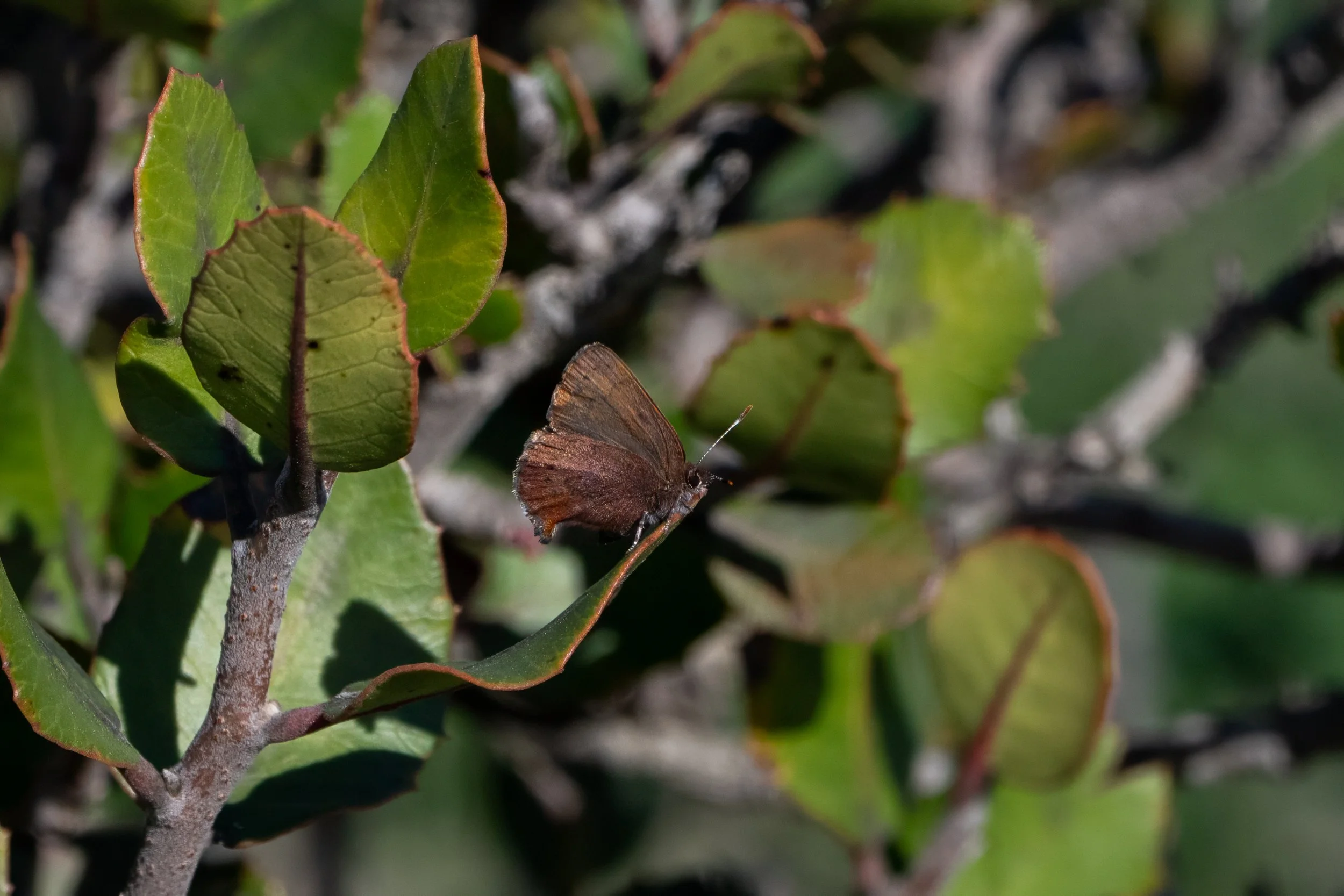
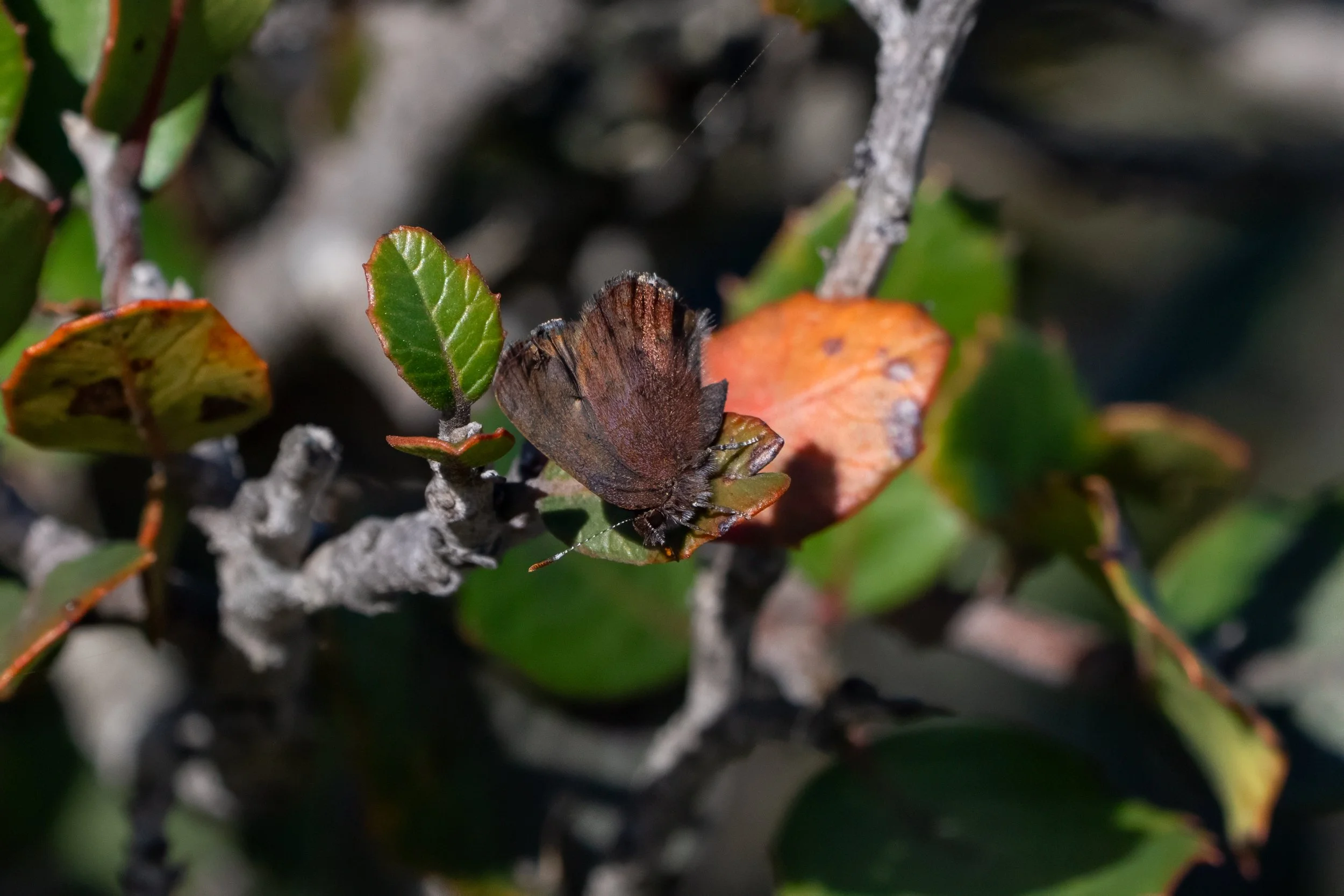
Then I finally found a Brown Elfin. Brown Elfins had been avoiding me, so I was very happy to see one at last. They are small butterflies that can disappear easily against dry leaves and soil, especially when their wings are closed. After looking for them on other outings without any luck, finally finding one made an already productive butterfly day much better.
Finding the Bird’s Nest Fungi
The GPS point gave us a good place to begin searching, but it still took careful looking. Bird’s nest fungi are tiny, like, itty-bitty! They resemble their name surprisingly well, too! Their little cup-shaped fruiting bodies hold even smaller structures that look like eggs sitting inside a nest. So cute.
Once I spotted the first ones, I started seeing more. We eventually found two small patches of bird’s nest fungi. They would have been very easy to walk past without knowing they were there, which made finding them especially satisfying. I had come to Dilley Reserve specifically hoping to see them, and there they were, tucked into the ground so small!
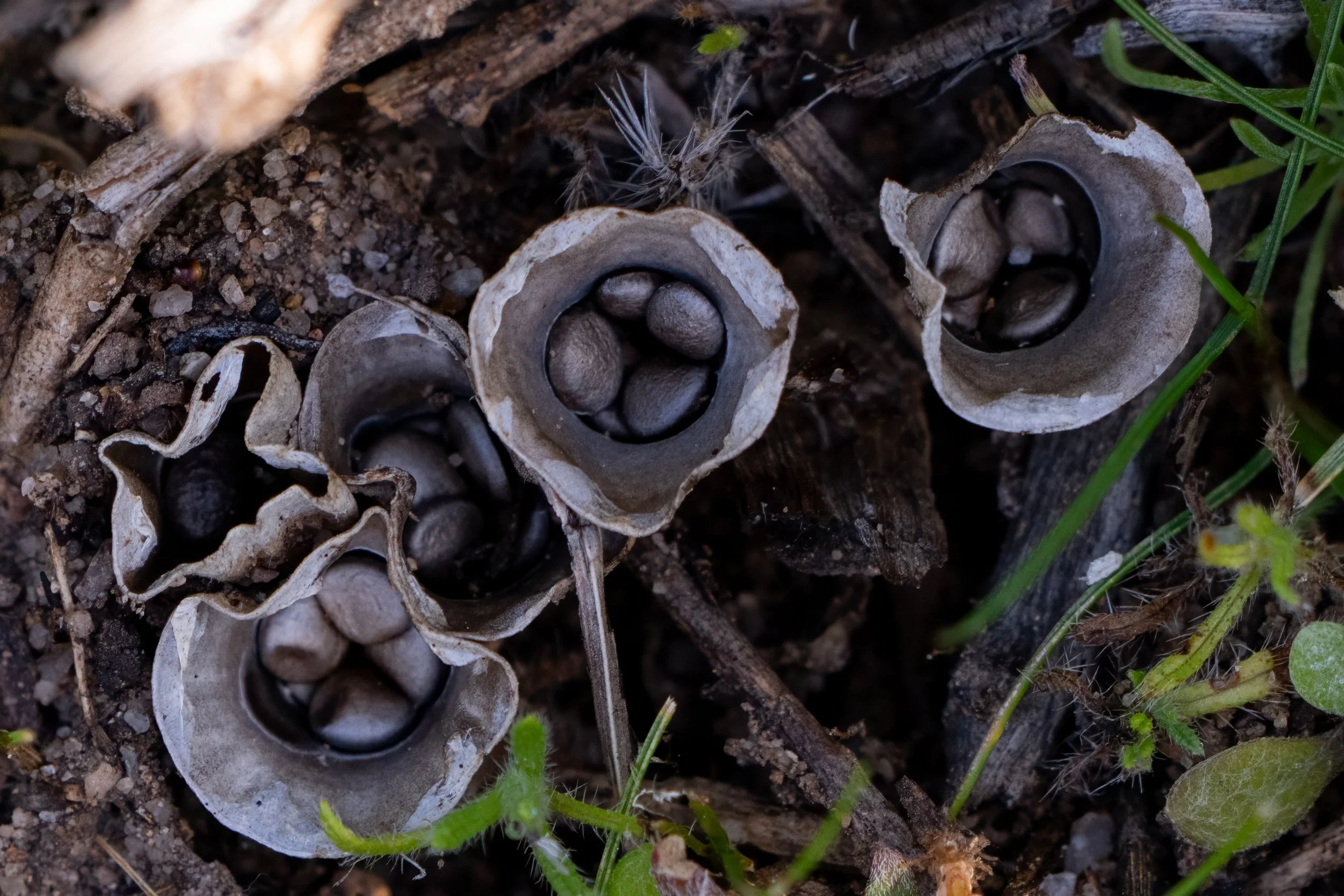
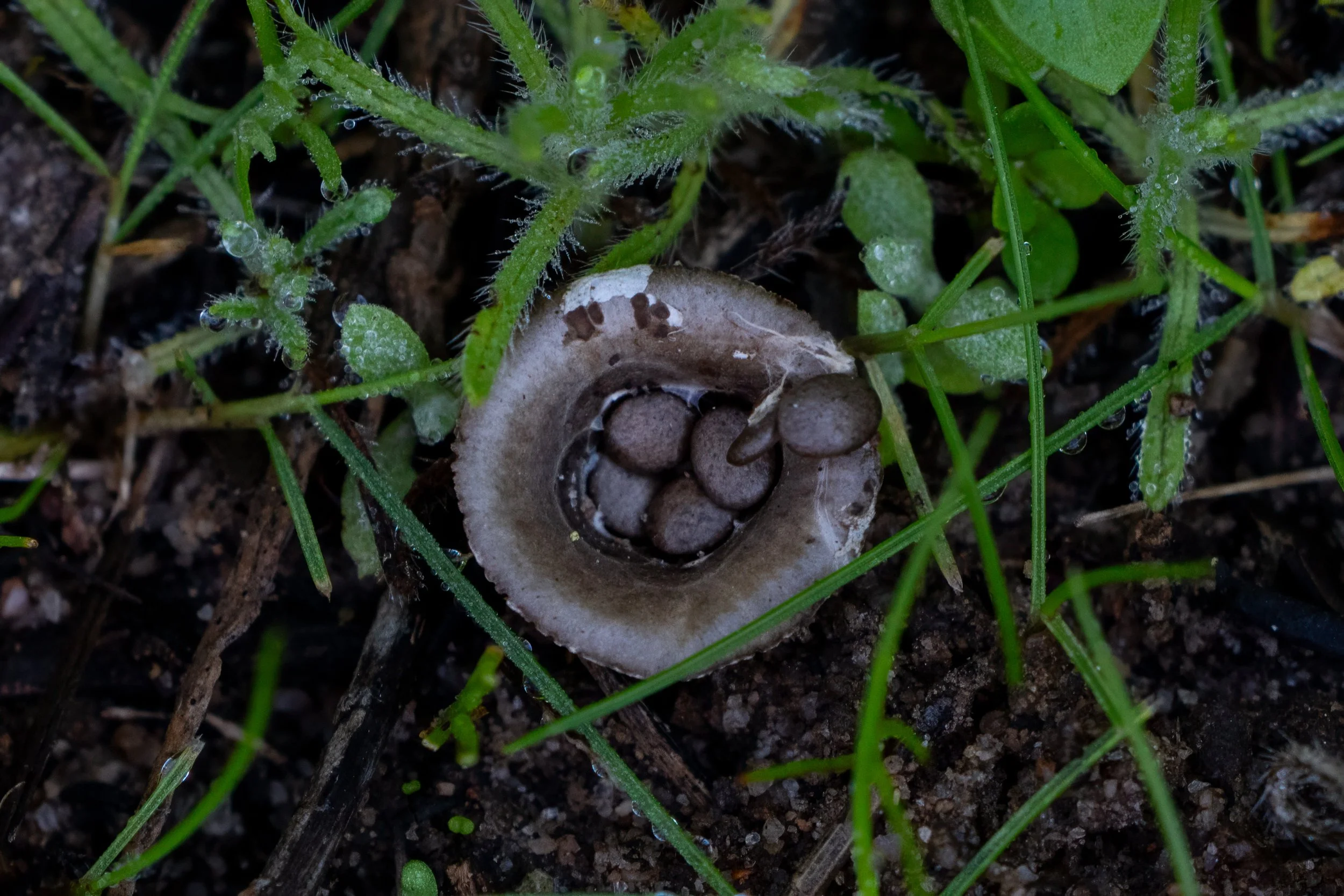
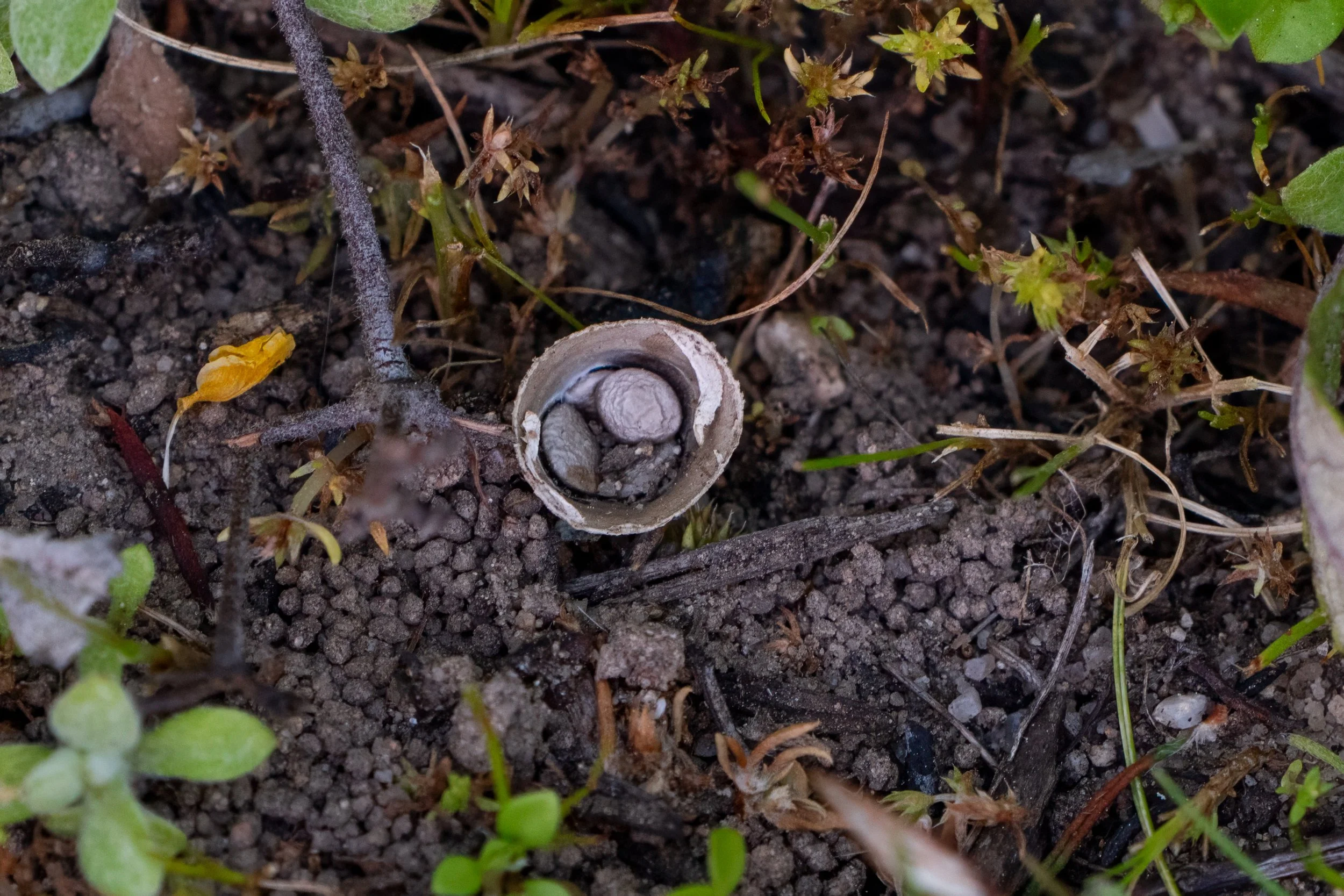
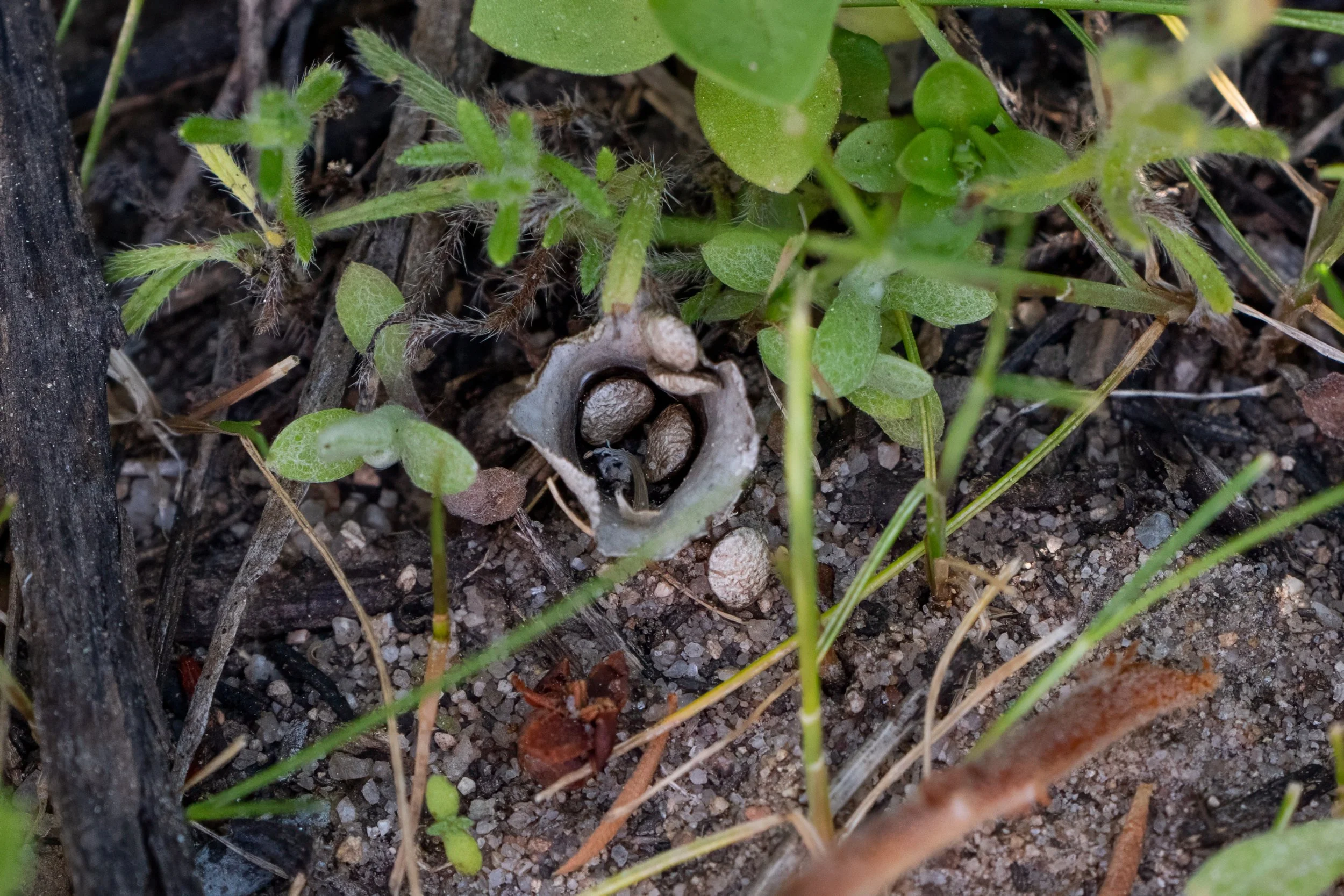
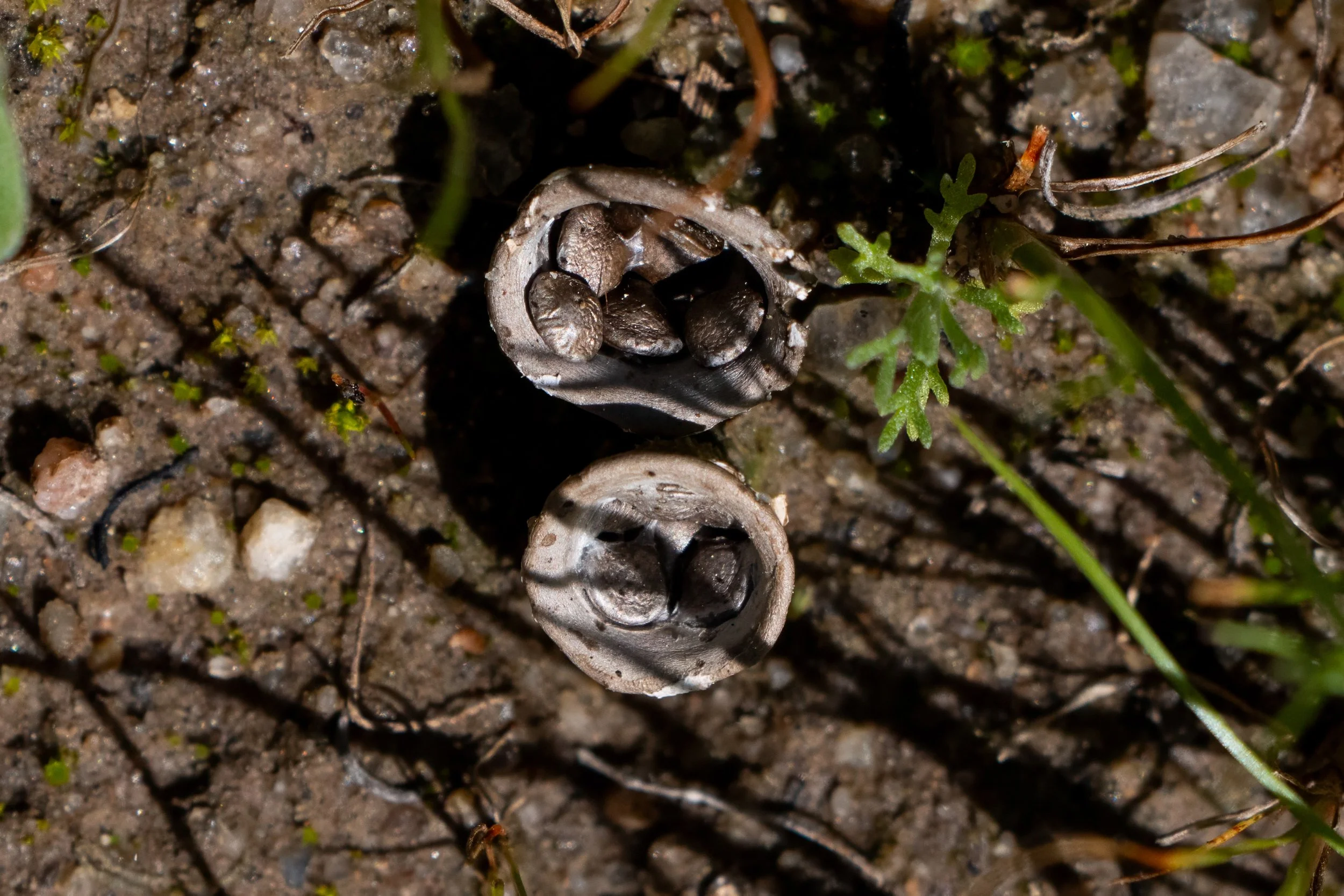
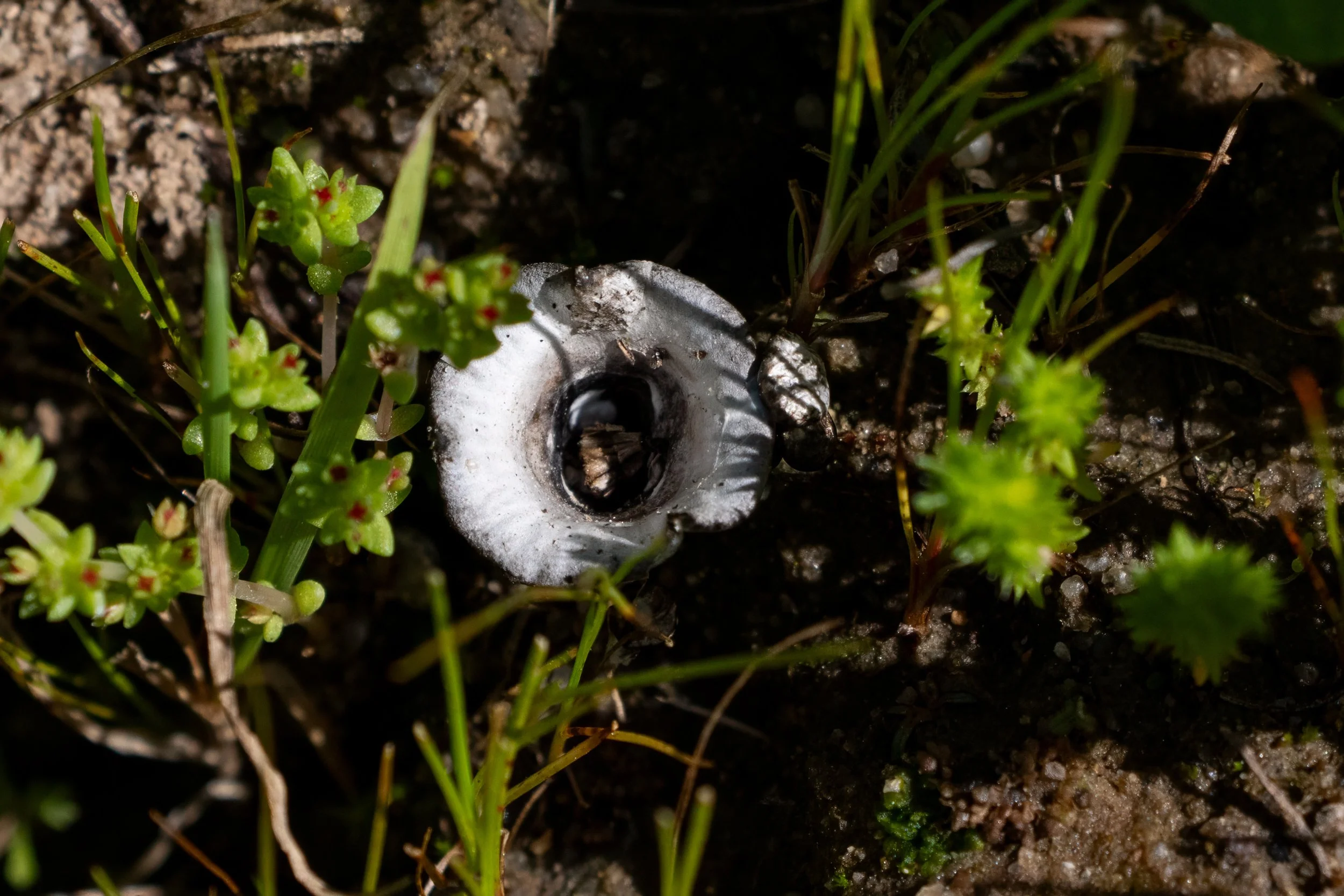
The bird’s nest fungi turned out to be only part of the fungal party along the trail. We also found Southern Candy Caps, a Western Destroying Angel, Dog Vomit Slime Mold, Pebbled Pixie Cups, Common Fieldcap and an Oak-loving Elfin Saddle.
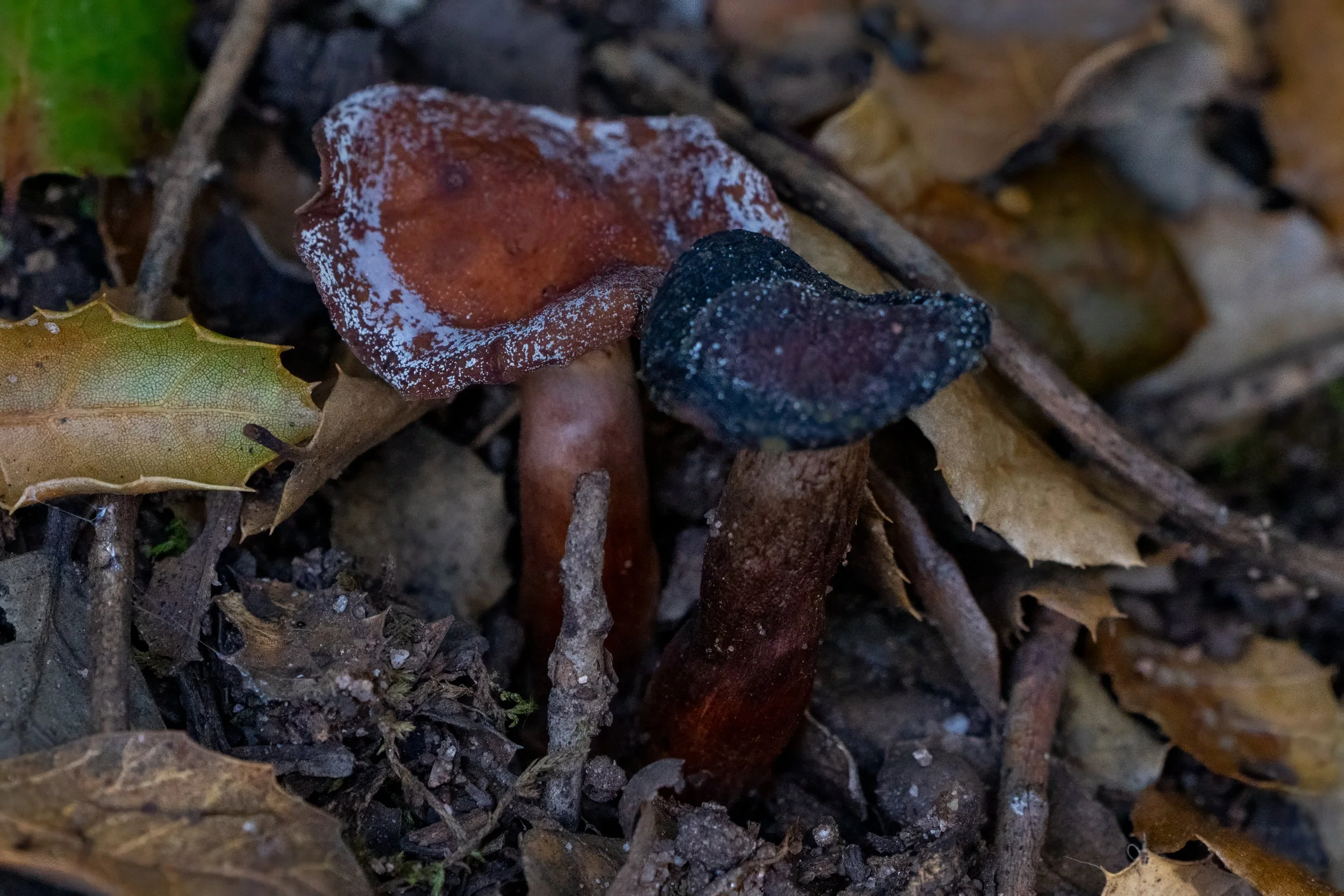
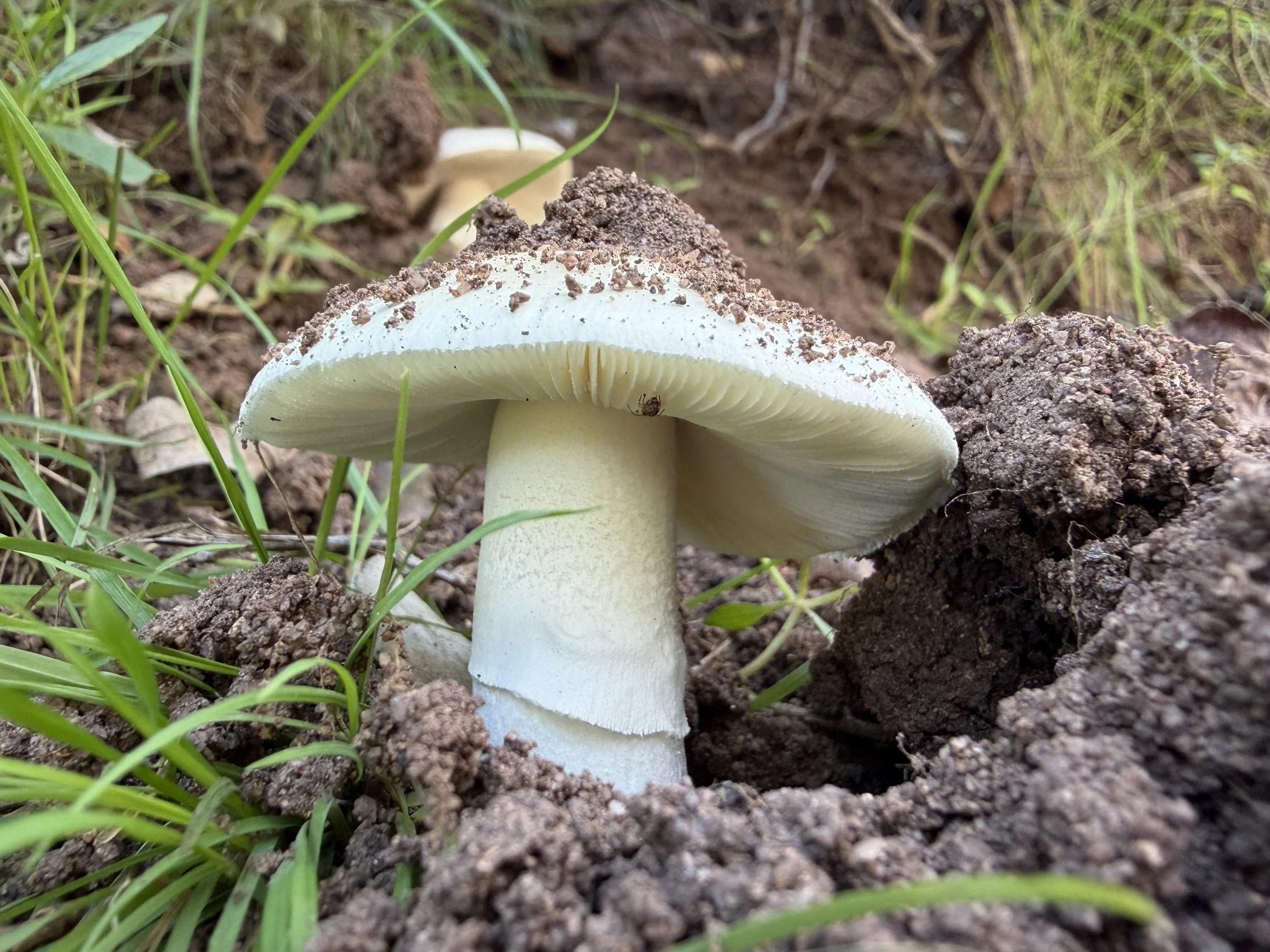
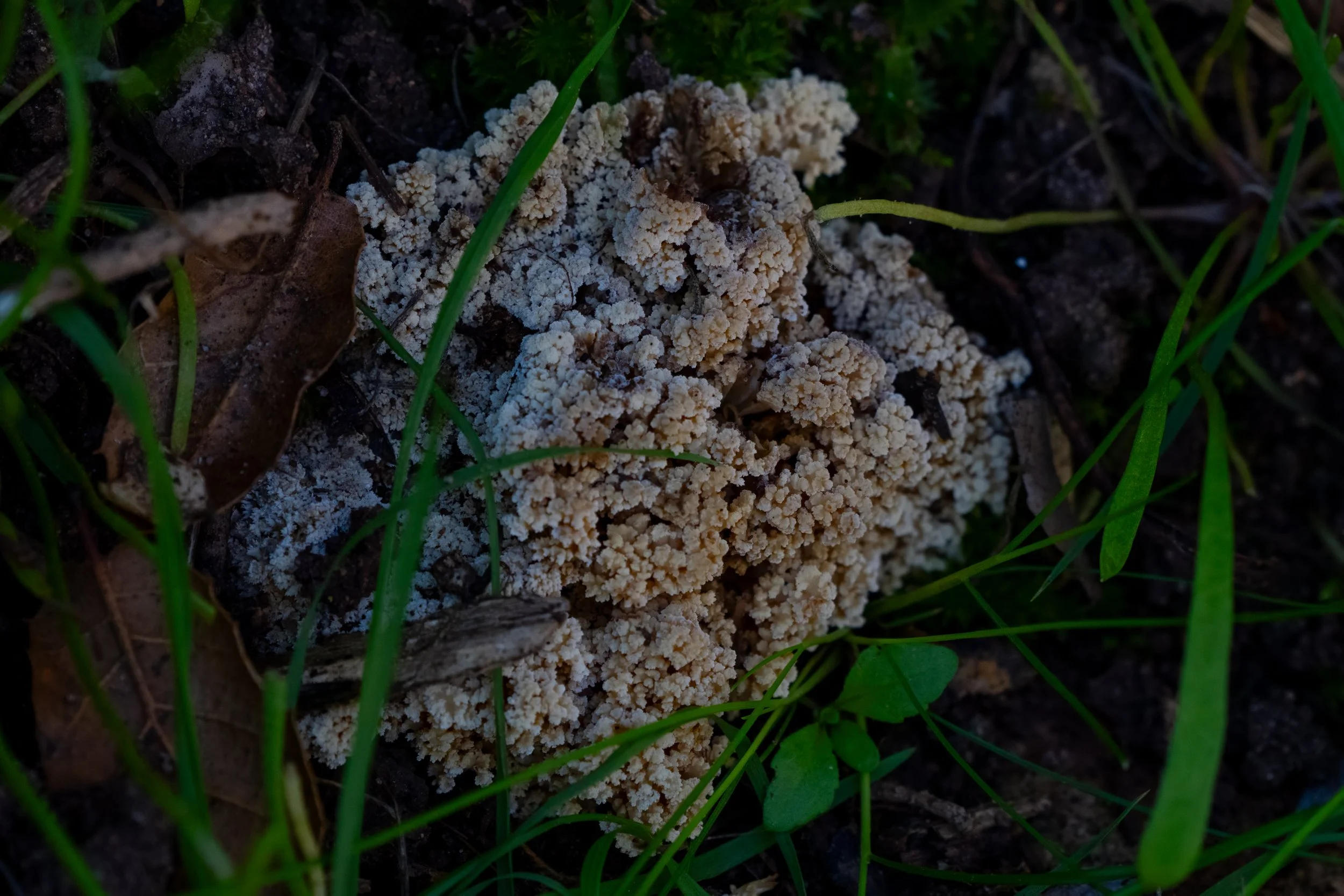
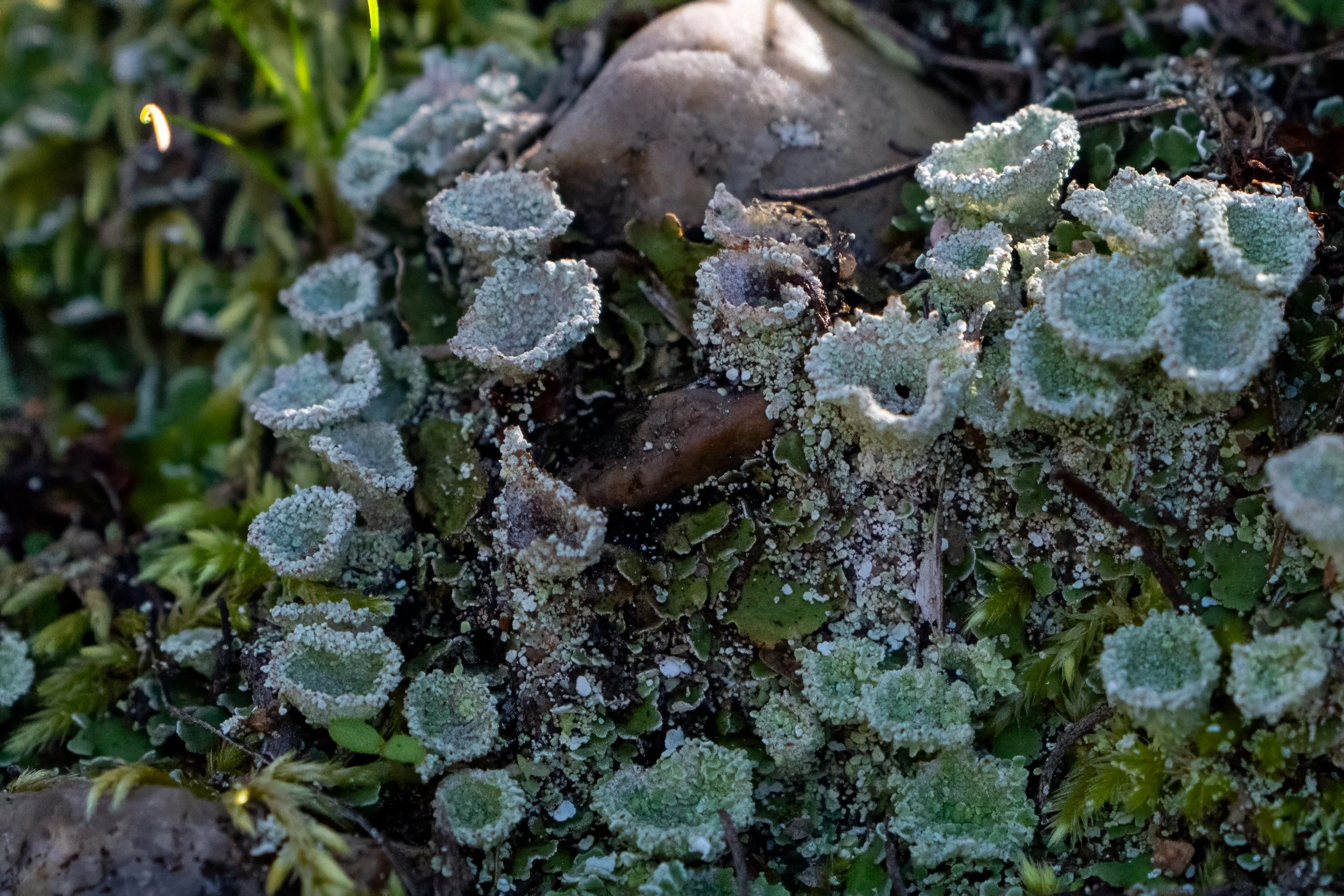
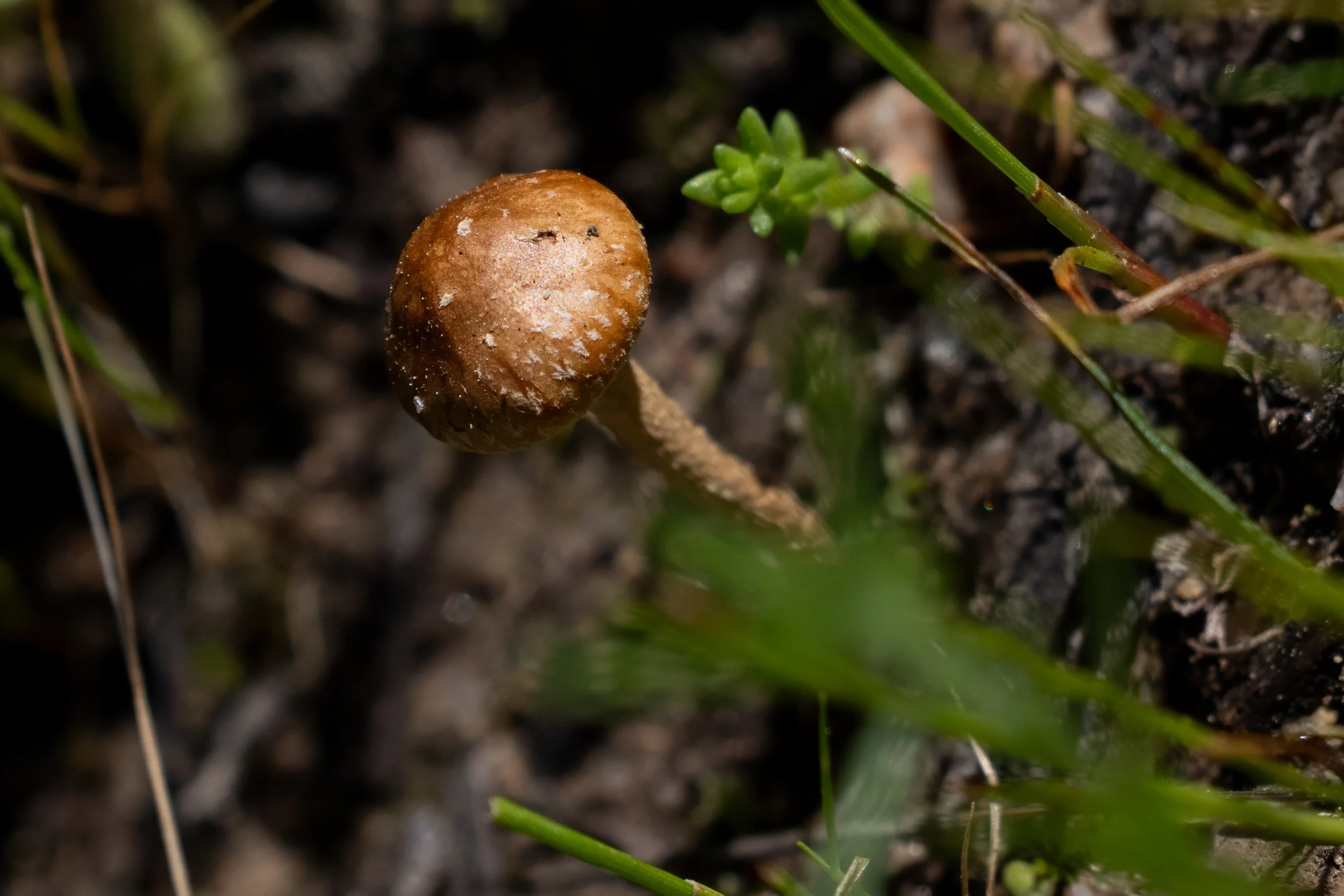
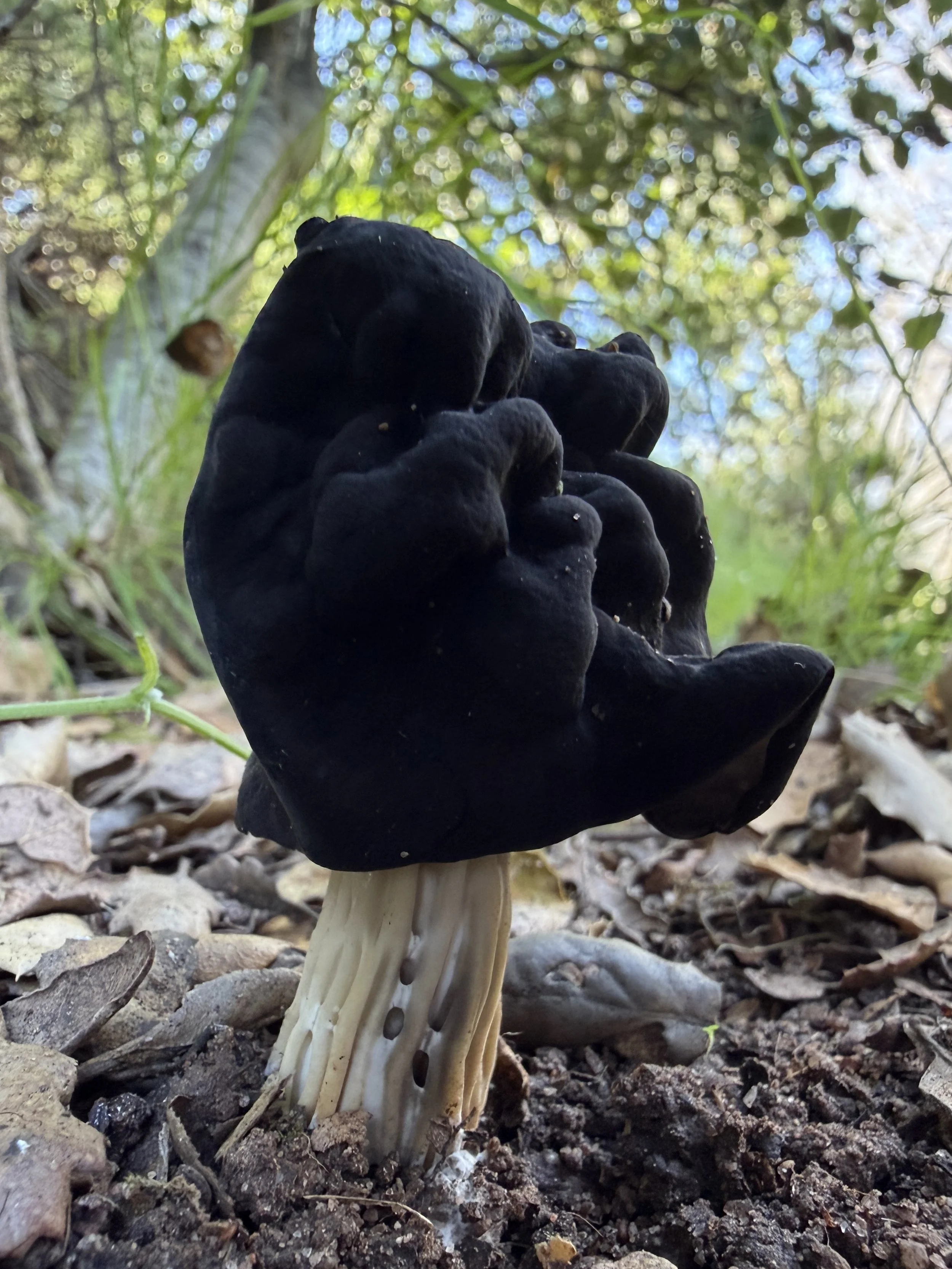
Some fungi have wonderfully descriptive names. Others make you stop and wonder who looked at them and decided that “Dog Vomit Slime Mold” or “Western Destroying Angel” was the right choice. The Western Destroying Angel earns its alarming name because it is dangerously poisonous, but it is still a dramatic name to encounter while identifying photographs from a pleasant local hike.
A Small Puddle of Tadpoles
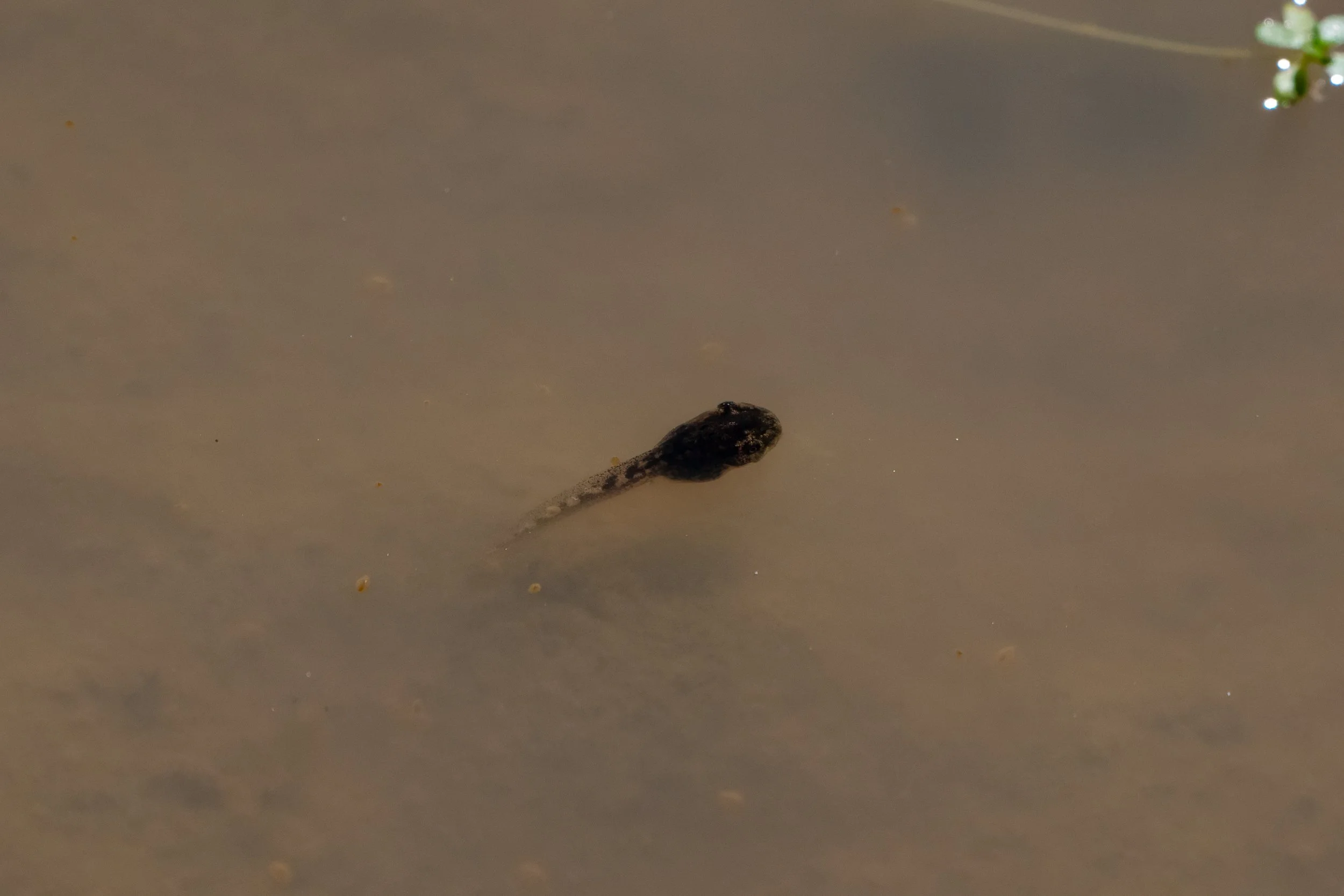
One of the more surprising discoveries came in a puddle left behind by some rain days ago. The day had become warm, and most signs of that forgotten rain were gone, but this one shallow pool remained.
Inside it were Pacific Chorus Frog tadpoles!
The eggs of Pacific Chorus Frogs hatch into tadpoles, which eventually turn into frogs. It was fun to find them using such a temporary-looking patch of water. The puddle did not appear especially important at first, but it had become a tiny nursery.
It also made me wonder how long the water would remain. Temporary pools can give young frogs a place to develop without fish, but the tadpoles are also working against the clock as the water gradually disappears. For now, at least, this puddle still held enough water for them. I secretly hope someone was watering that puddle somehow, because I definitely do not think time was on their side.
Up Sunflower and Down Mariposa
After reaching Barbara’s Lake and following the Lake Trail, we could have finished the hike with the shorter loop. We were not quite satisfied yet, so we added a climb up Sunflower Trail and came back down Mariposa Trail.
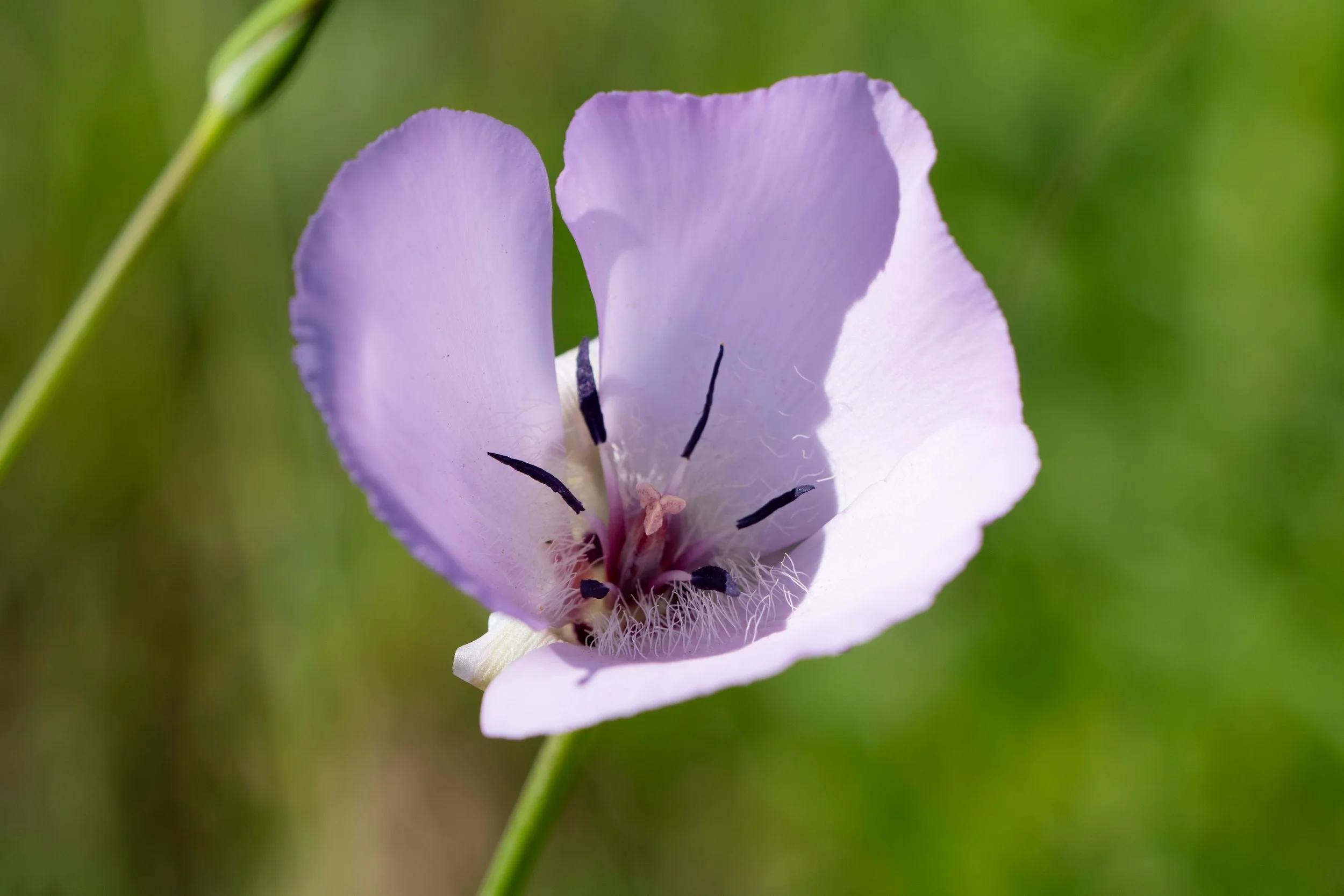
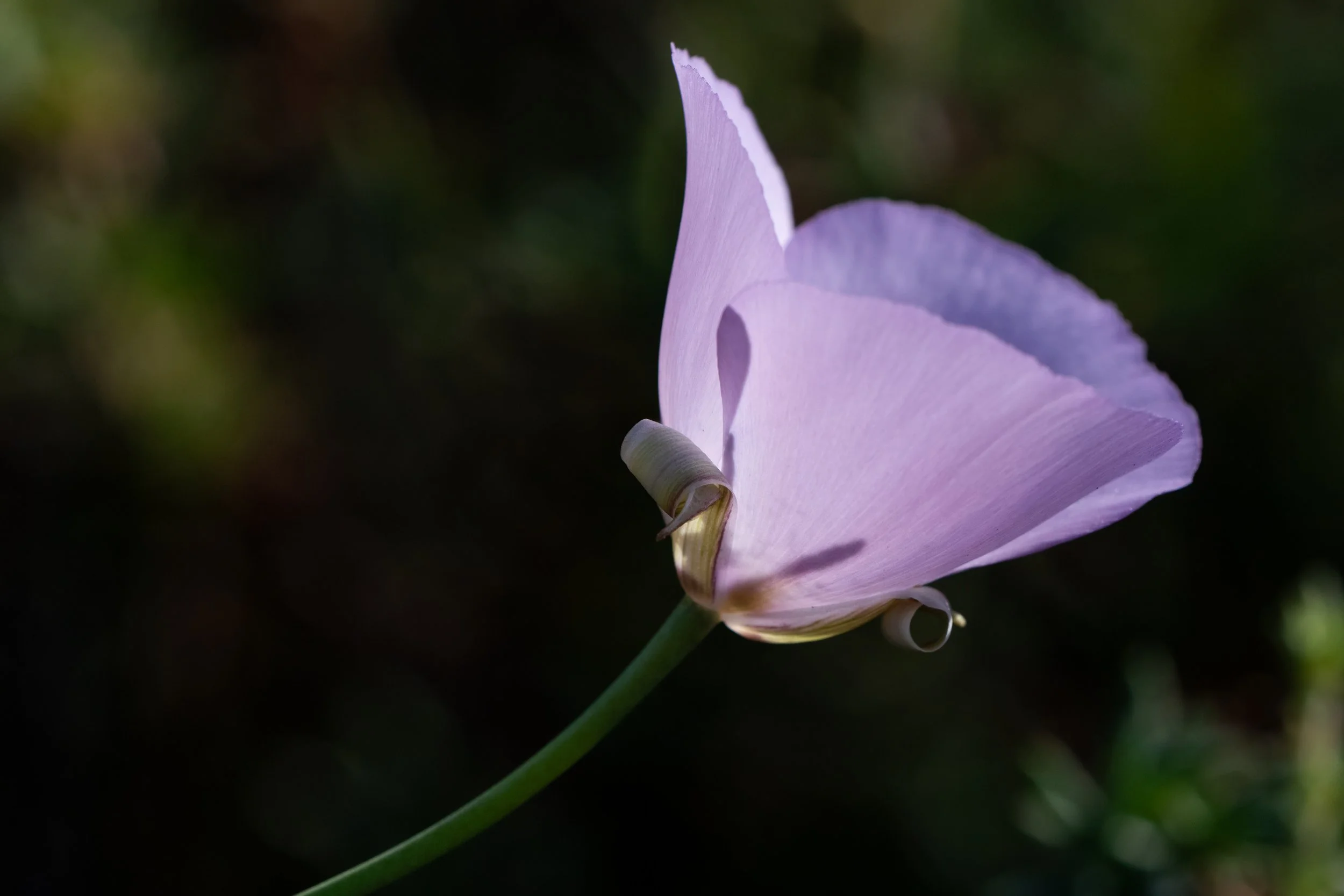
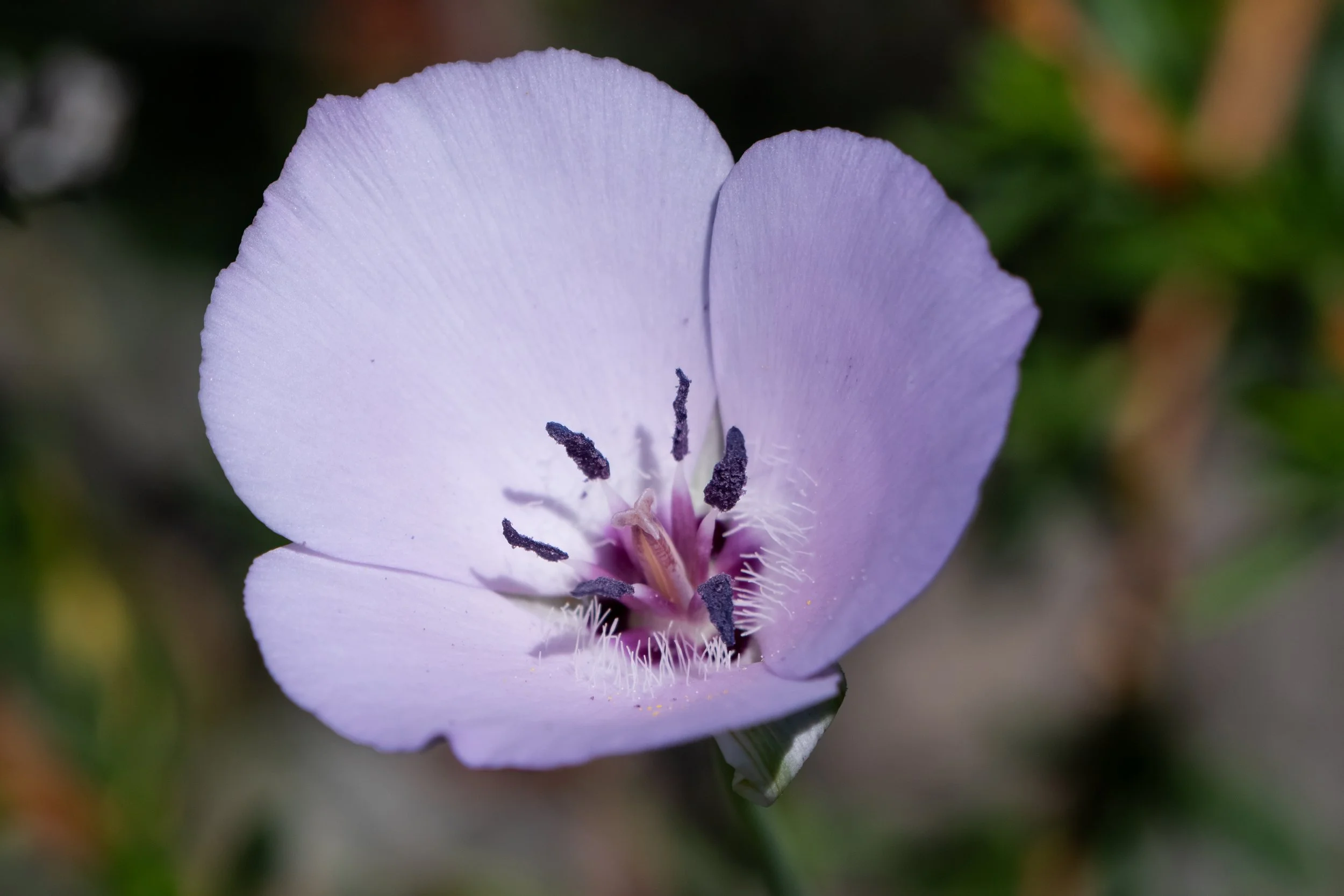
Mariposa is my favorite trail in this part of the reserve, so I was happy to include it. The longer route also gave us more time to look for butterflies and whatever else might be active now that the clouds had cleared. We found some big patches of wildflowers here, including Splendid Mariposa Lilies. In my opinion, those were the best wildflowers of the whole hike!
It was a surprisingly full outing for a quiet place so close to home. The bird’s nest fungi had given us a reason to choose Dilley Reserve, but searching for them slowed us down enough to notice all sorts of smaller things along the way!
Wildflowers Seen at Dilley Reserve
Wildflowers were blooming along all of the trails we hiked, giving us plenty to stop and photograph throughout the day.
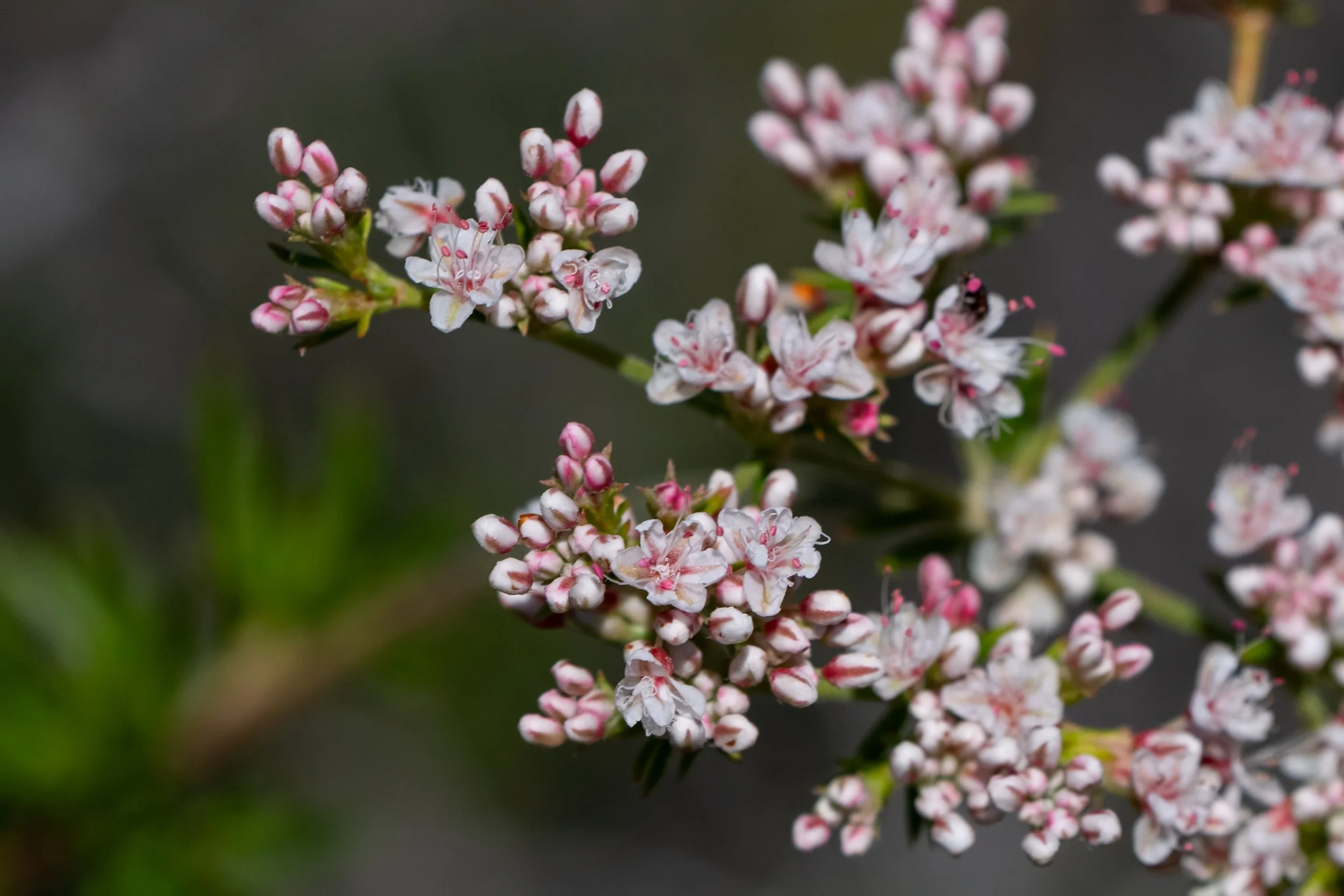
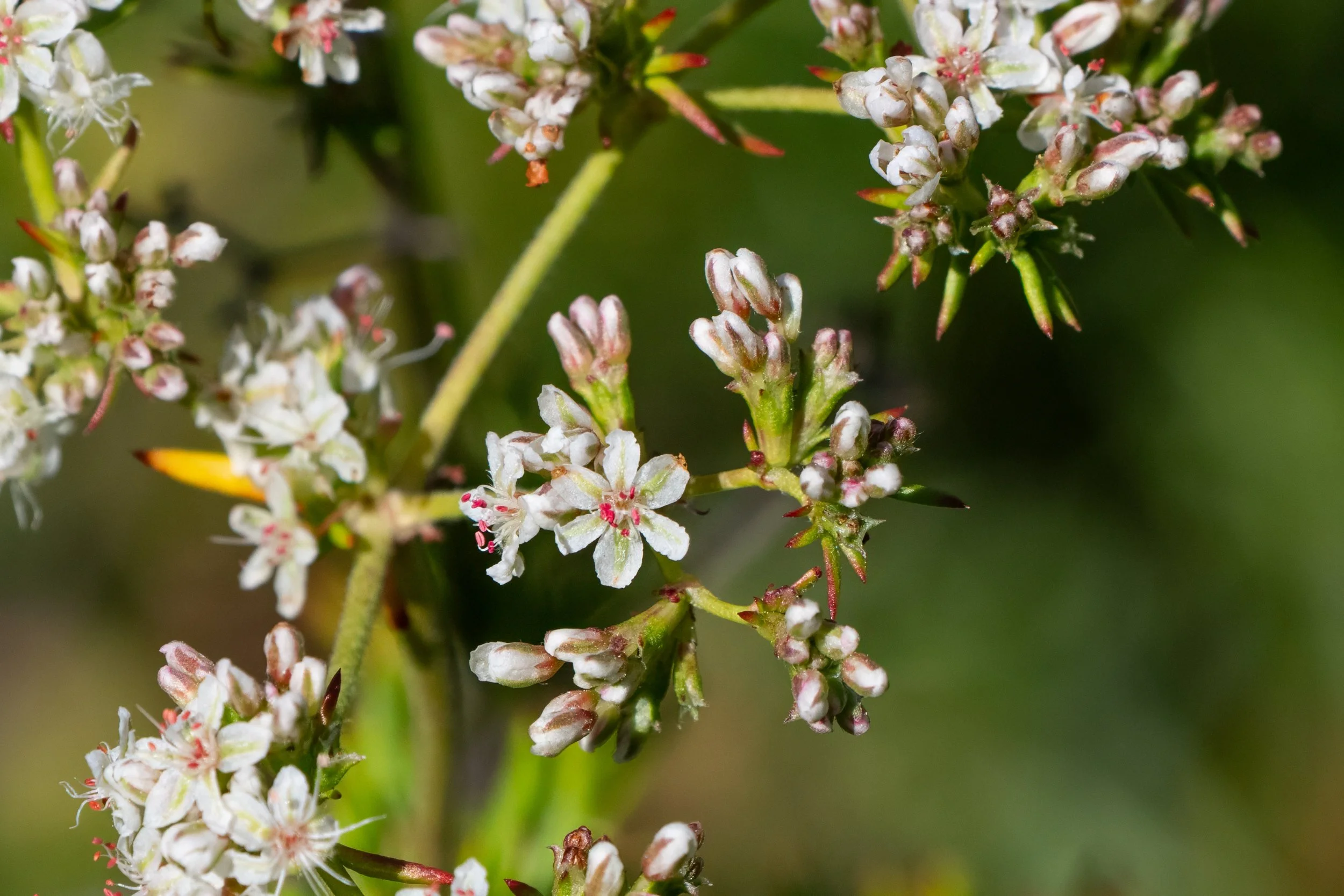
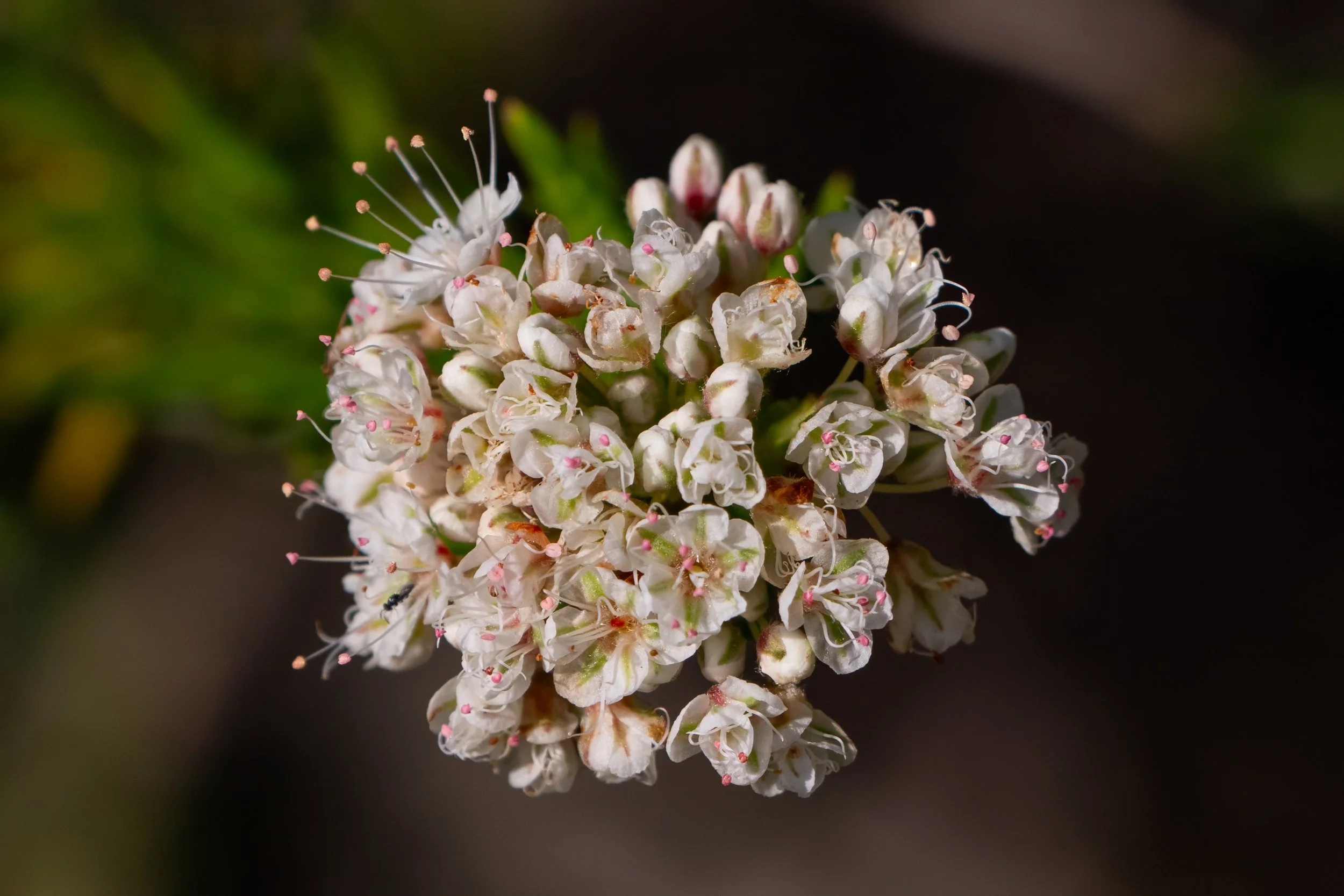
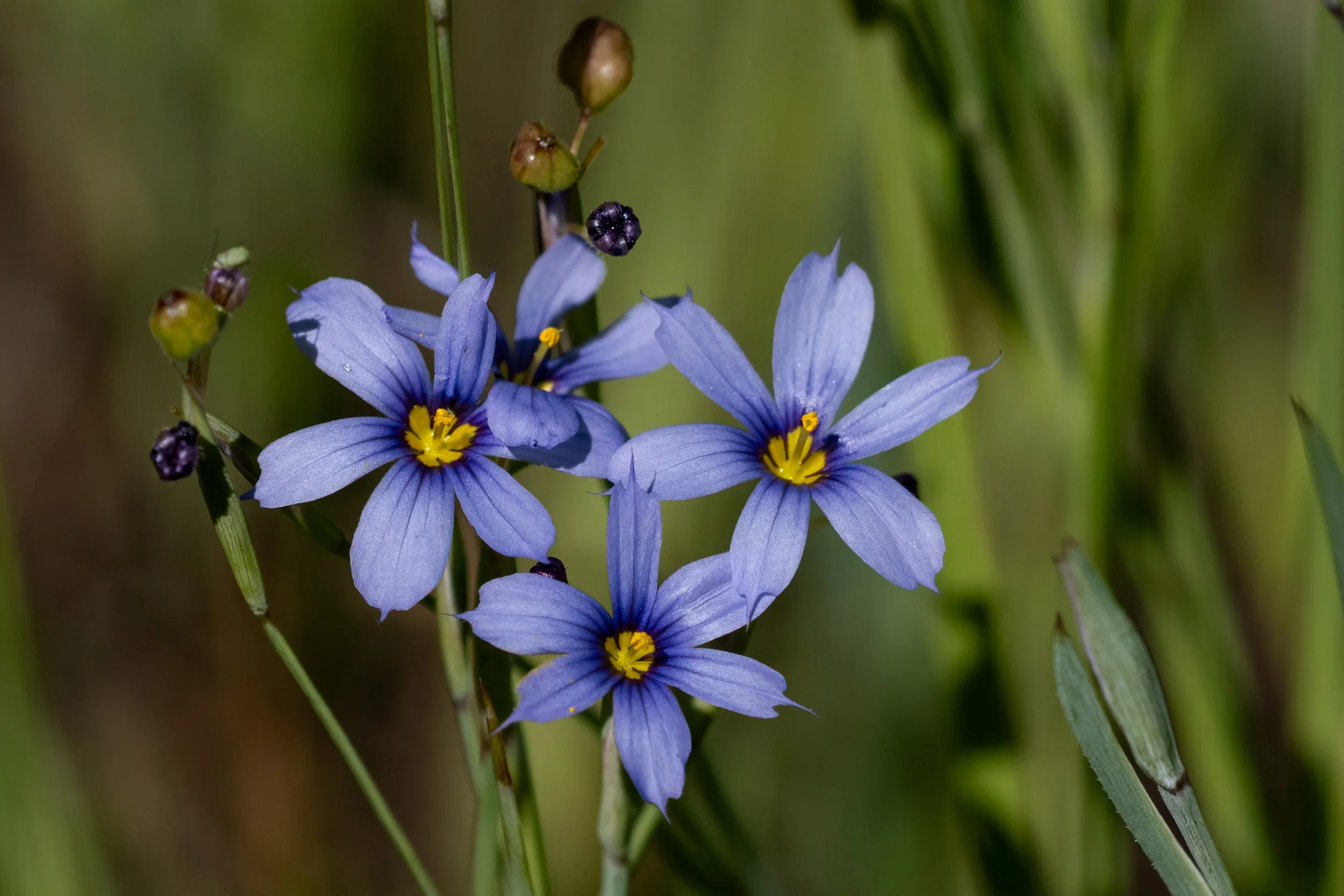
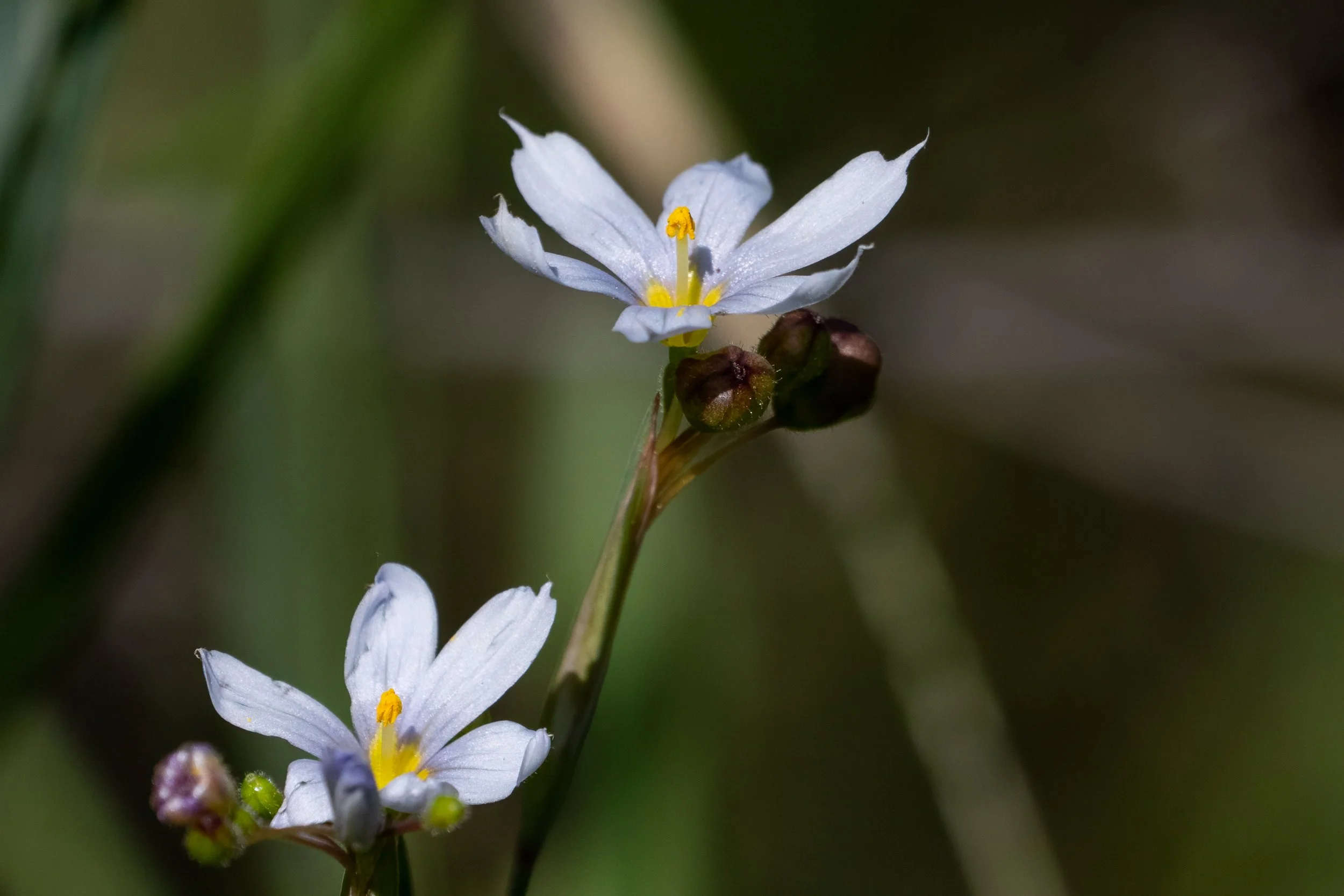
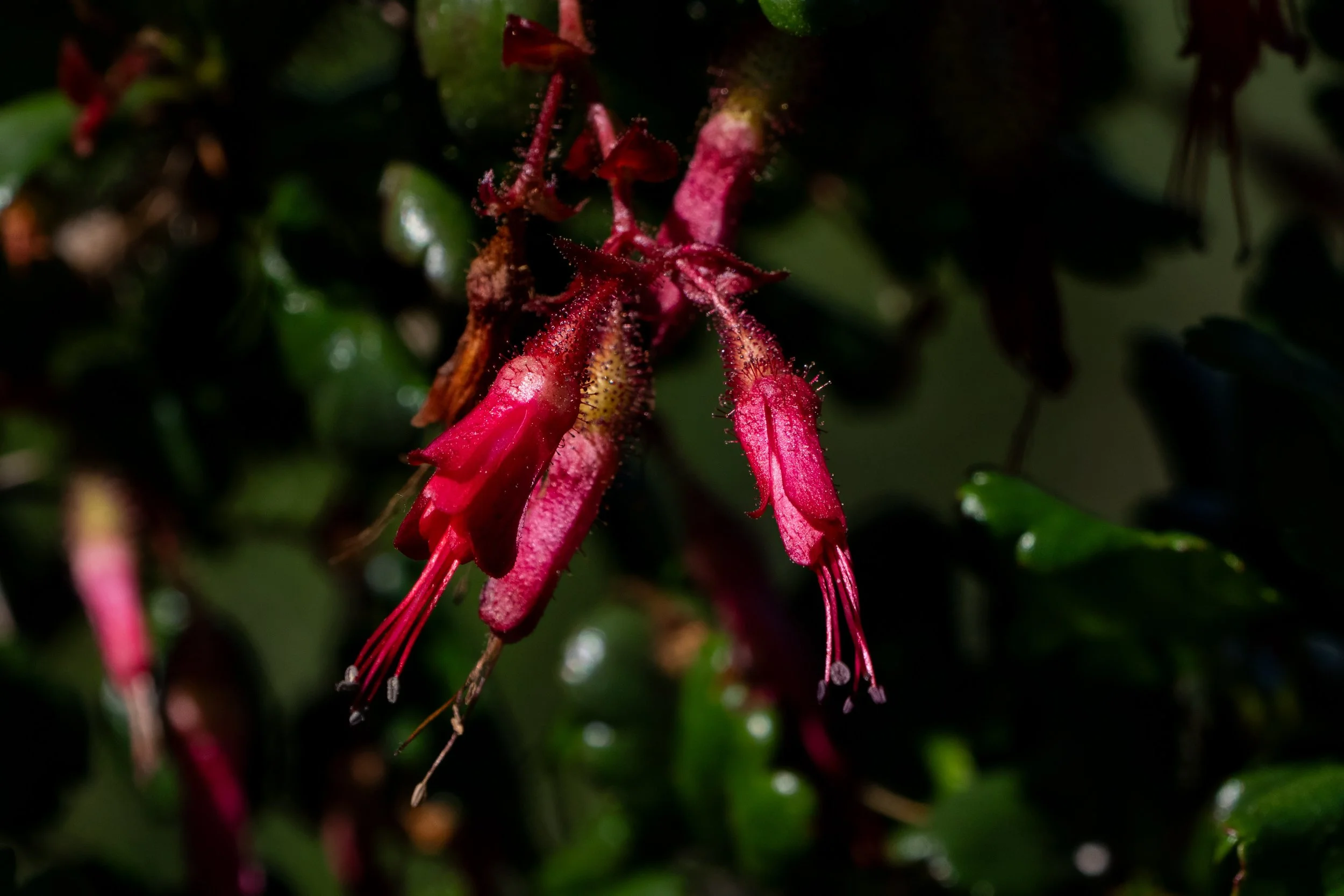
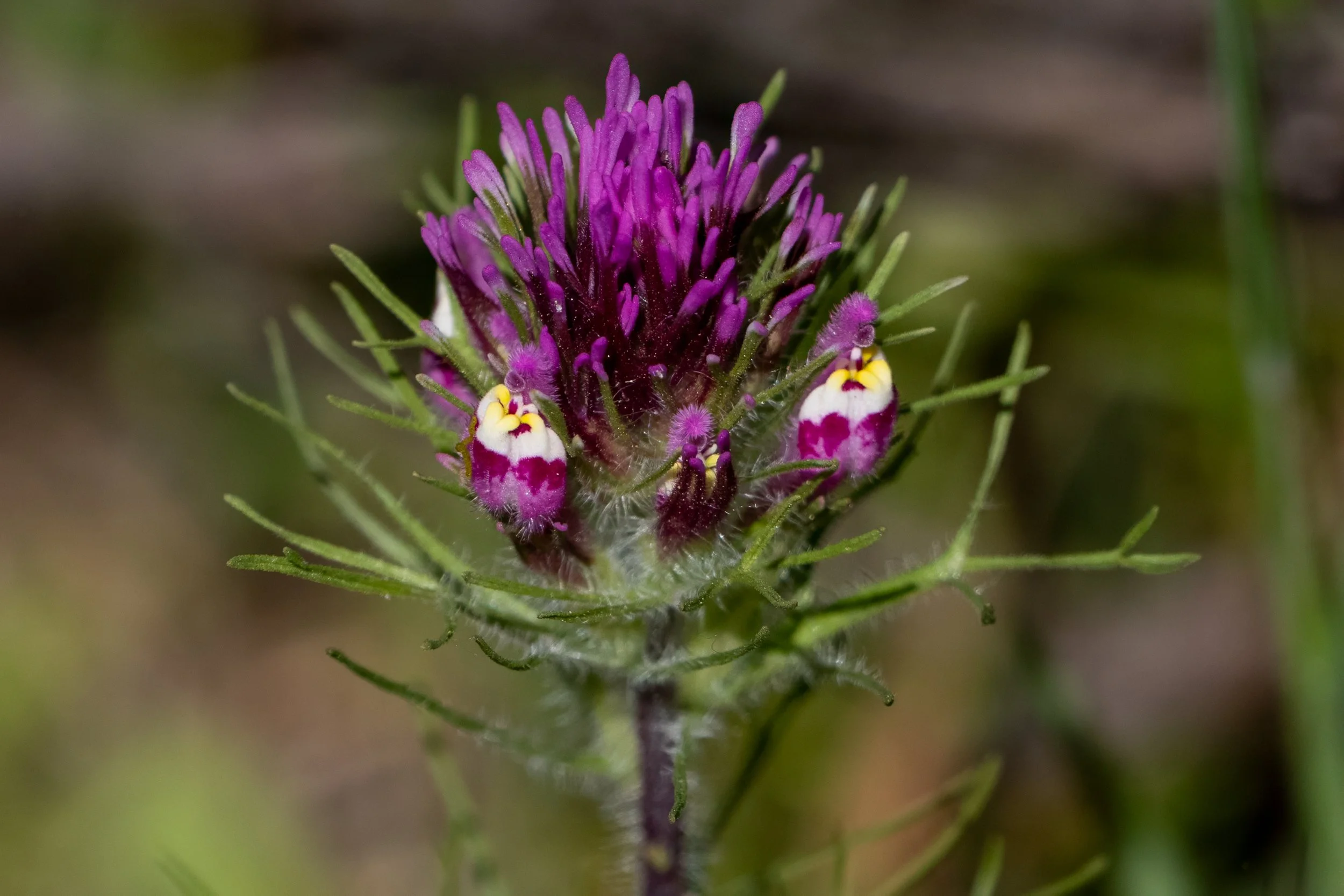
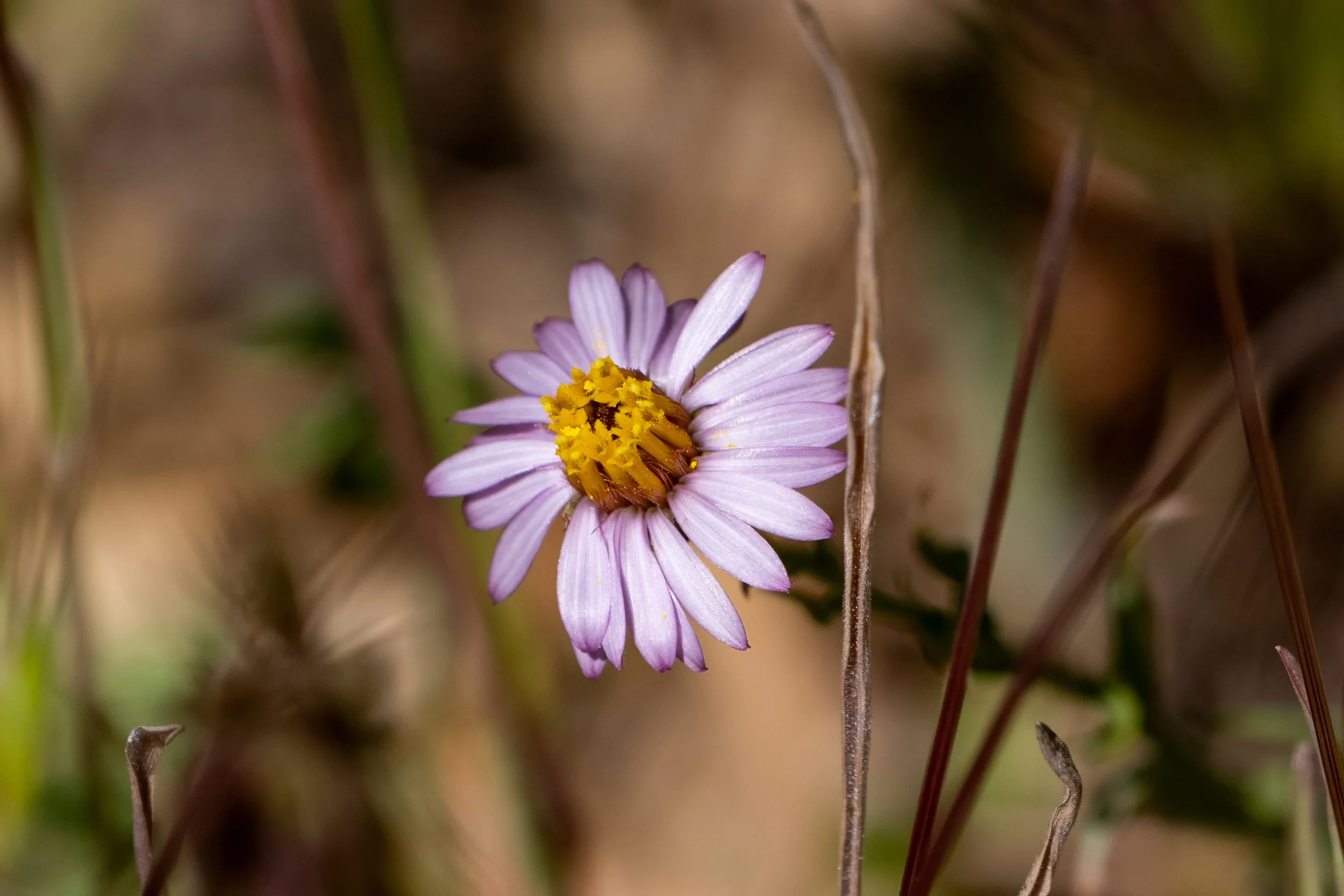
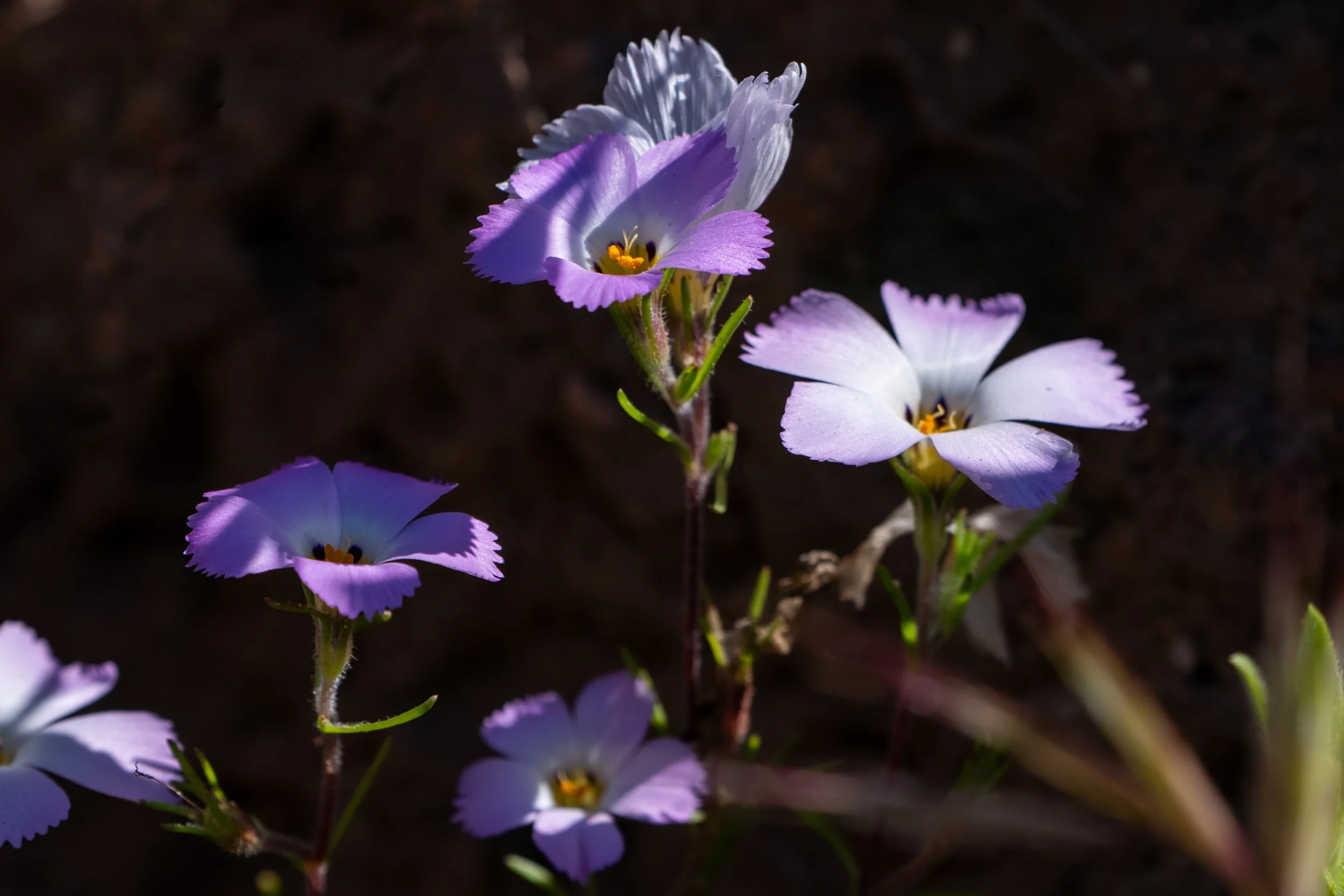
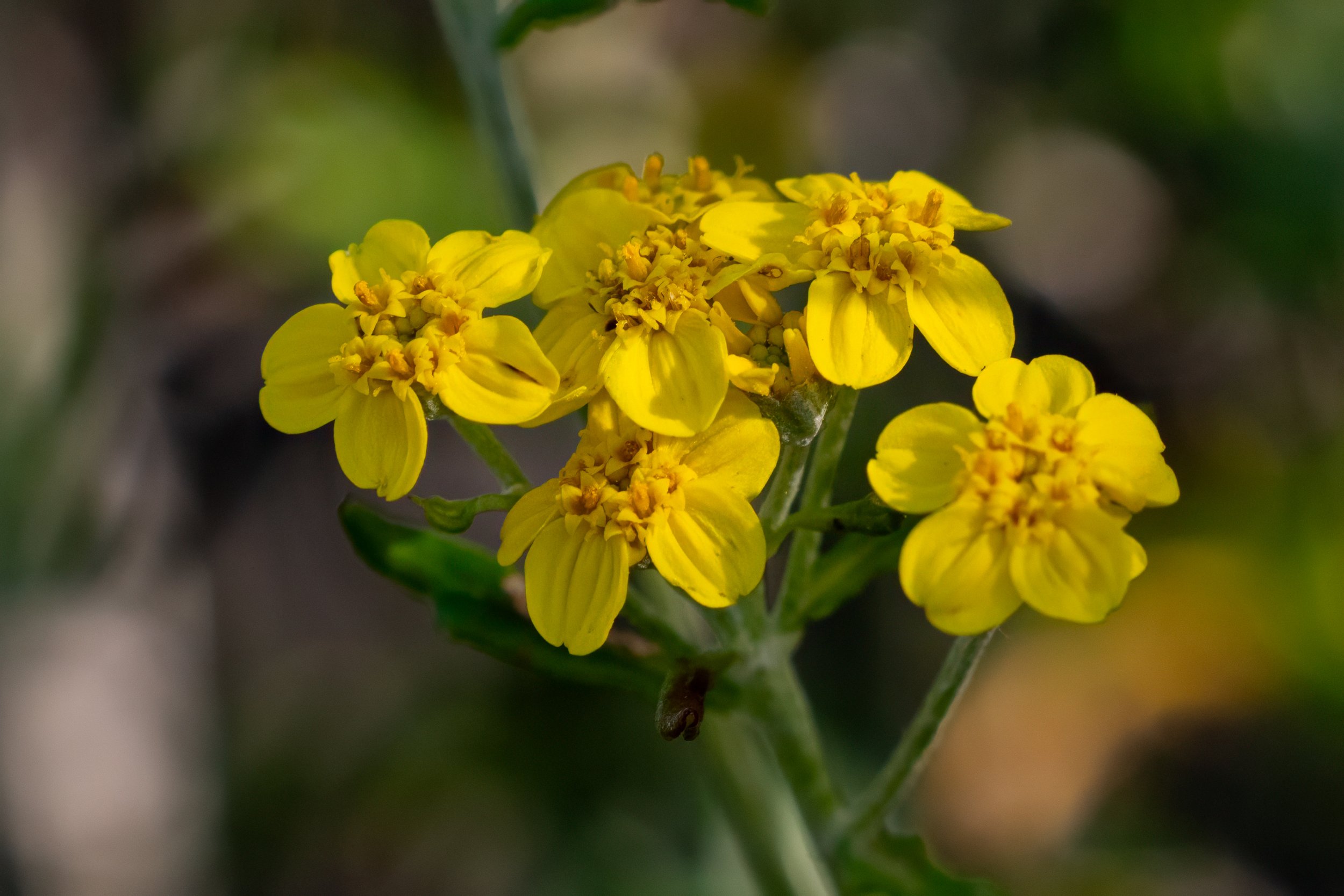
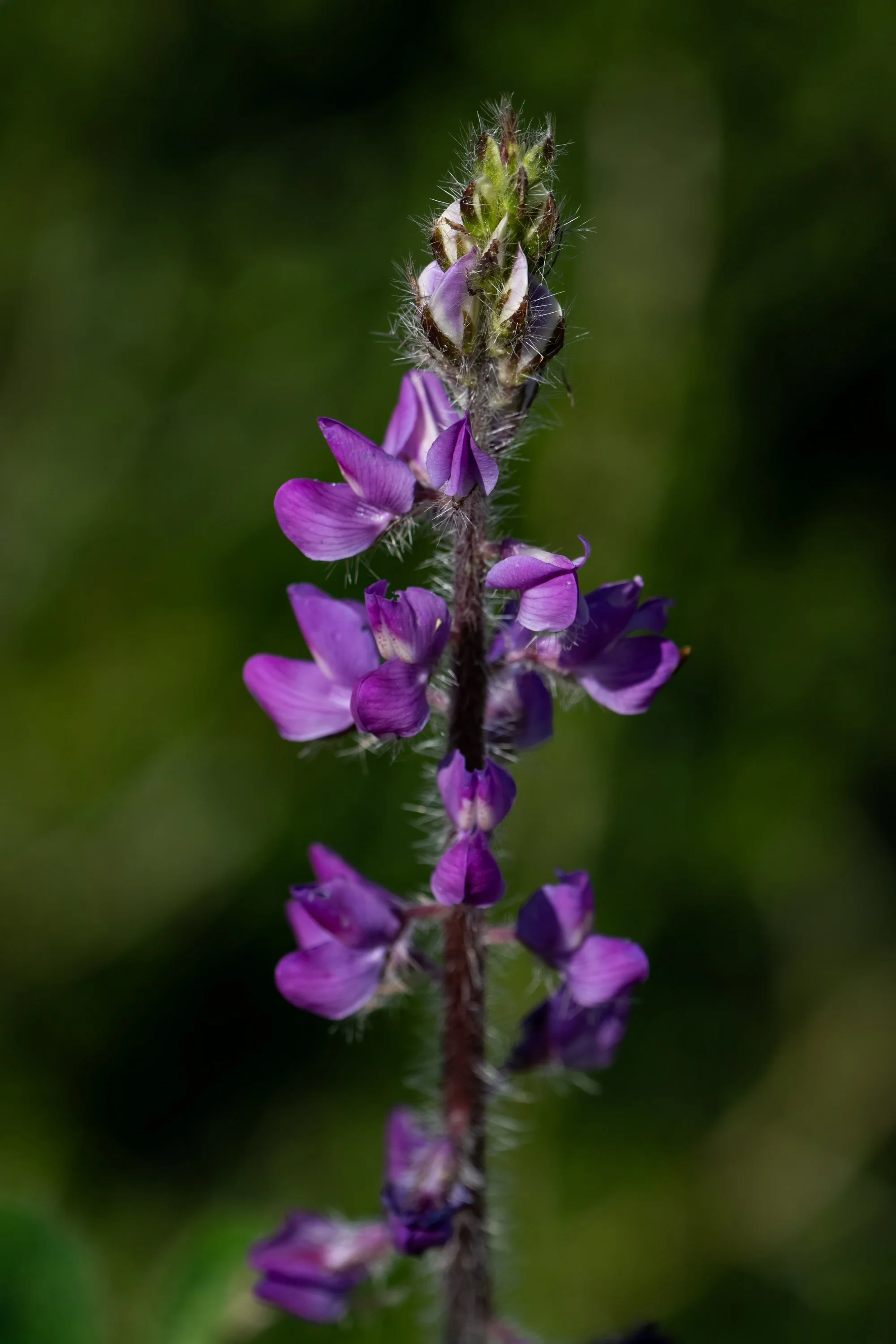
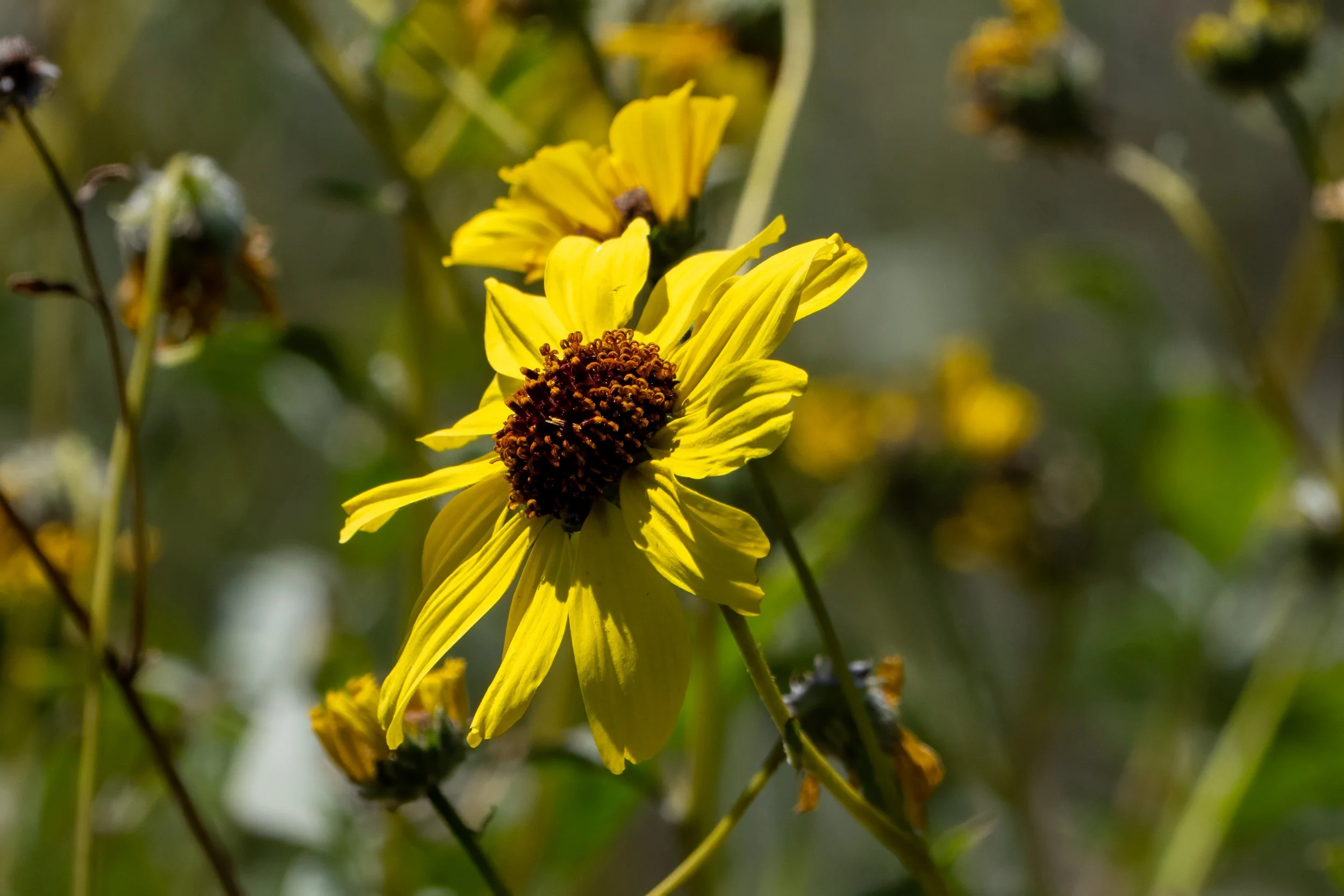
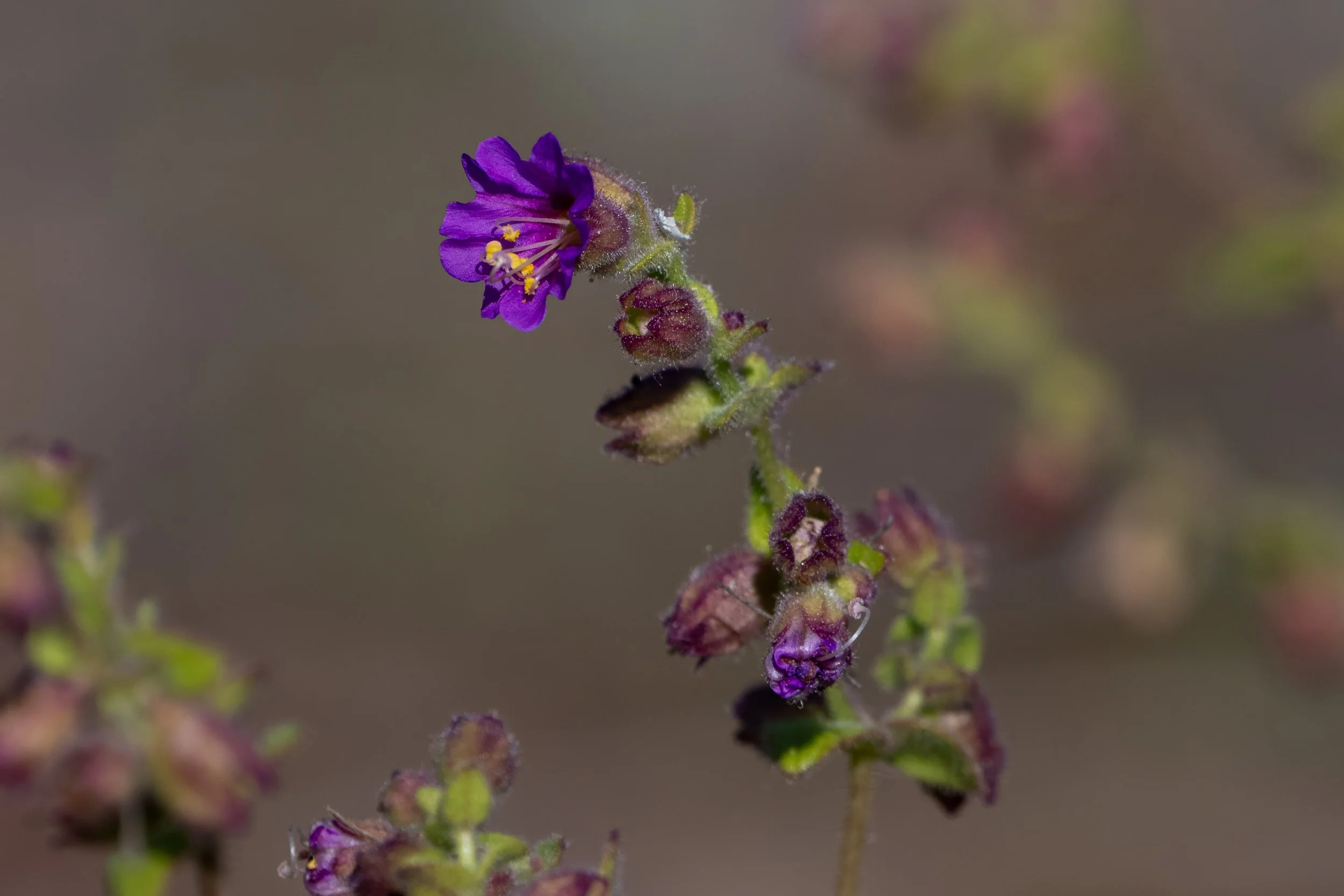
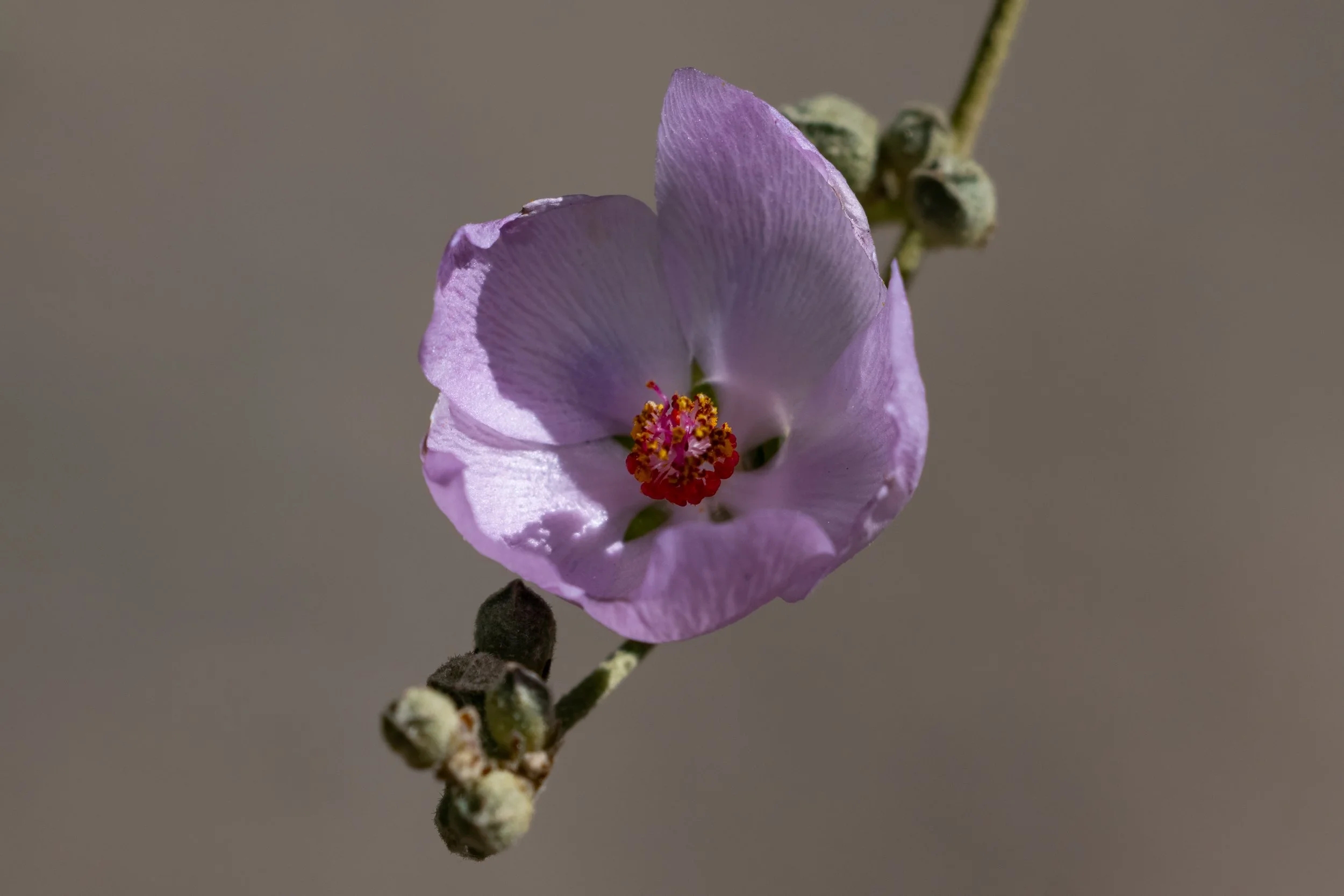
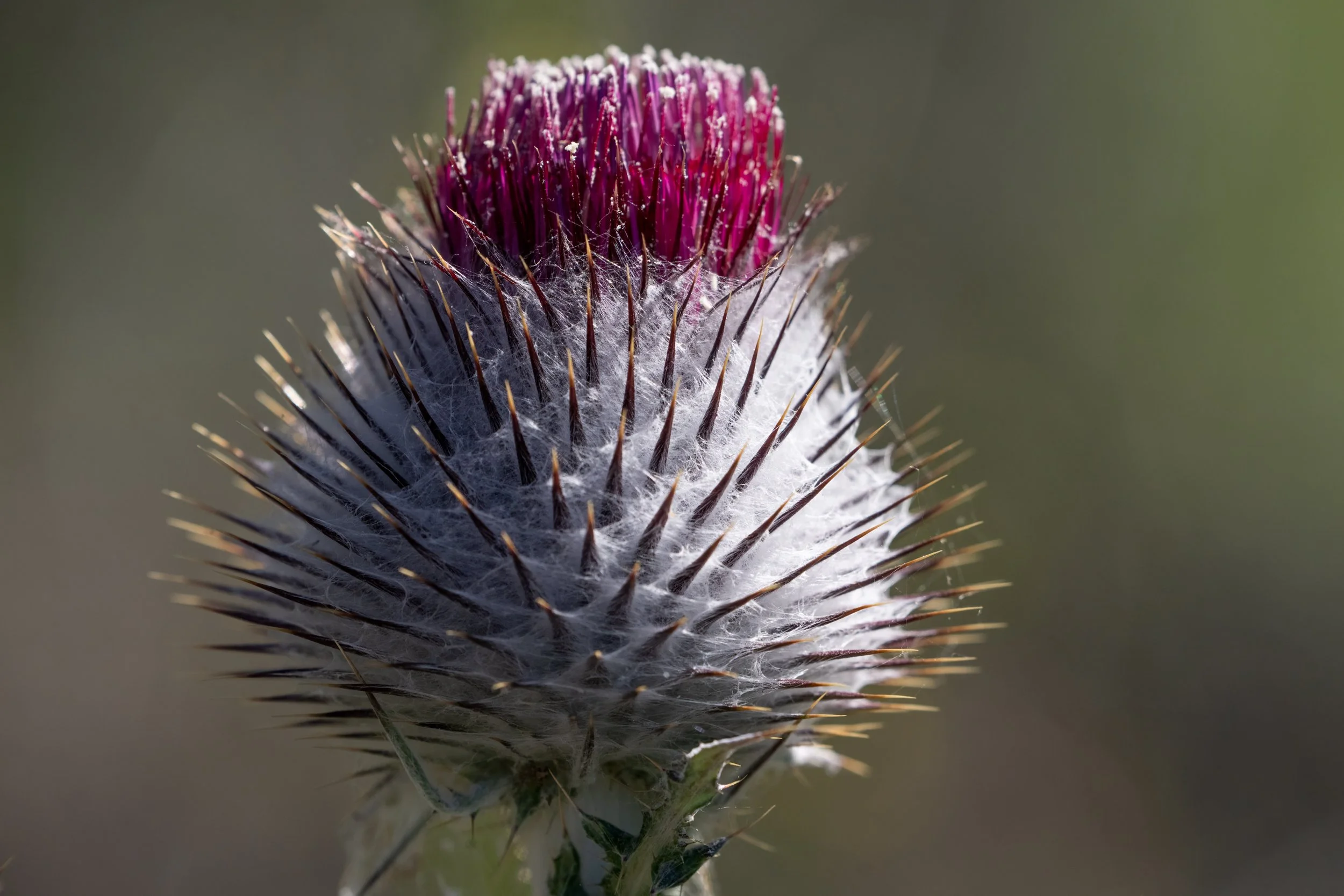
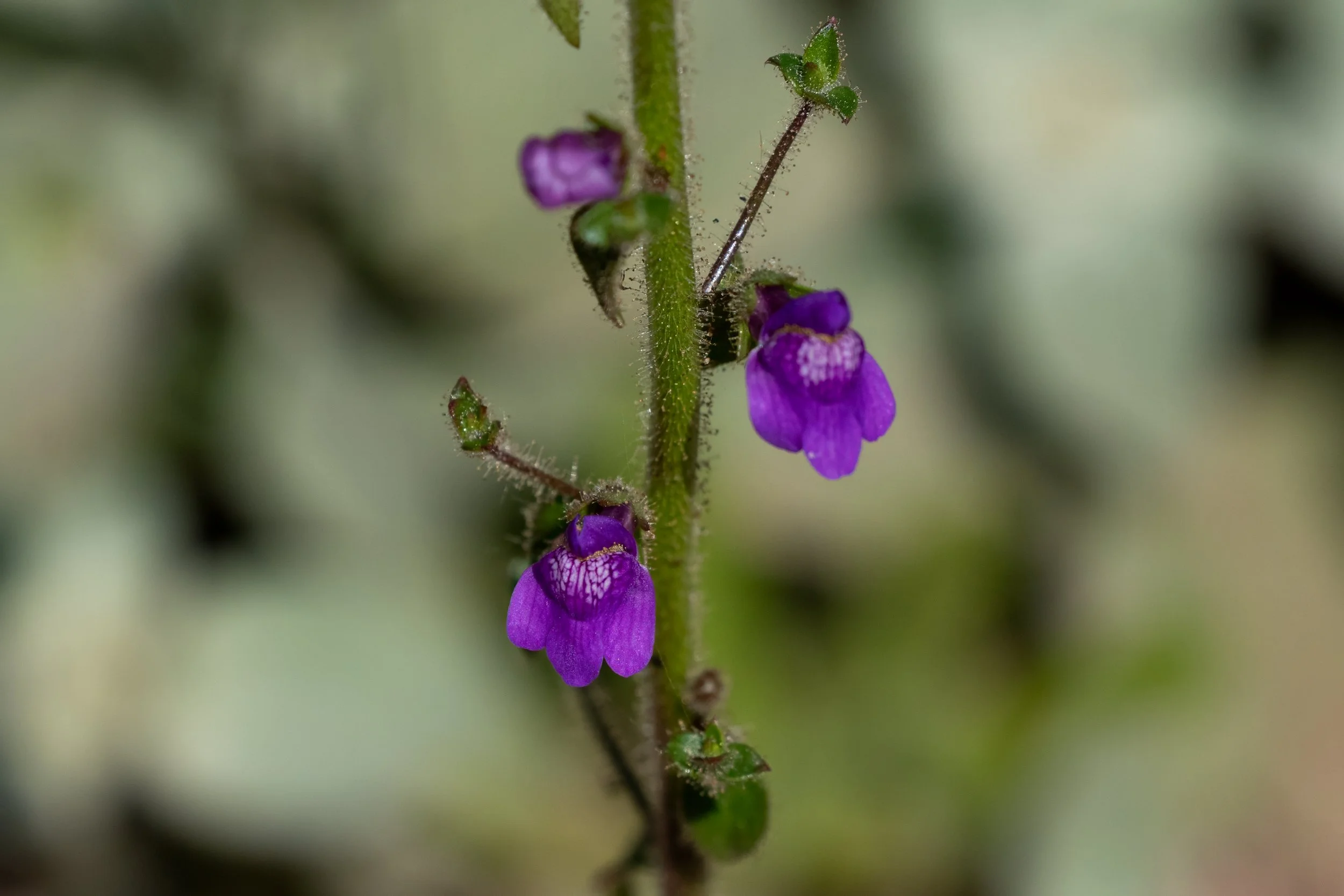
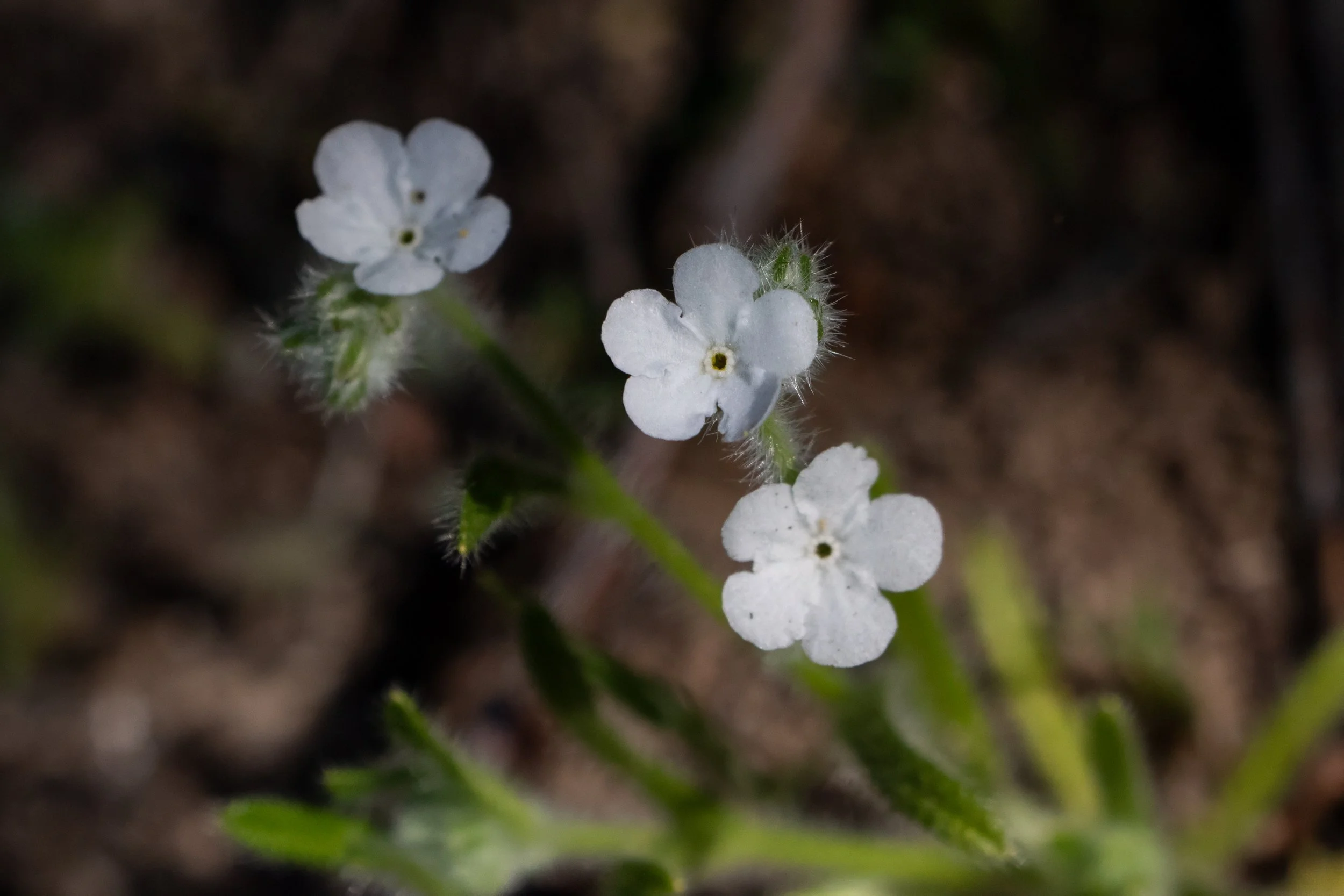
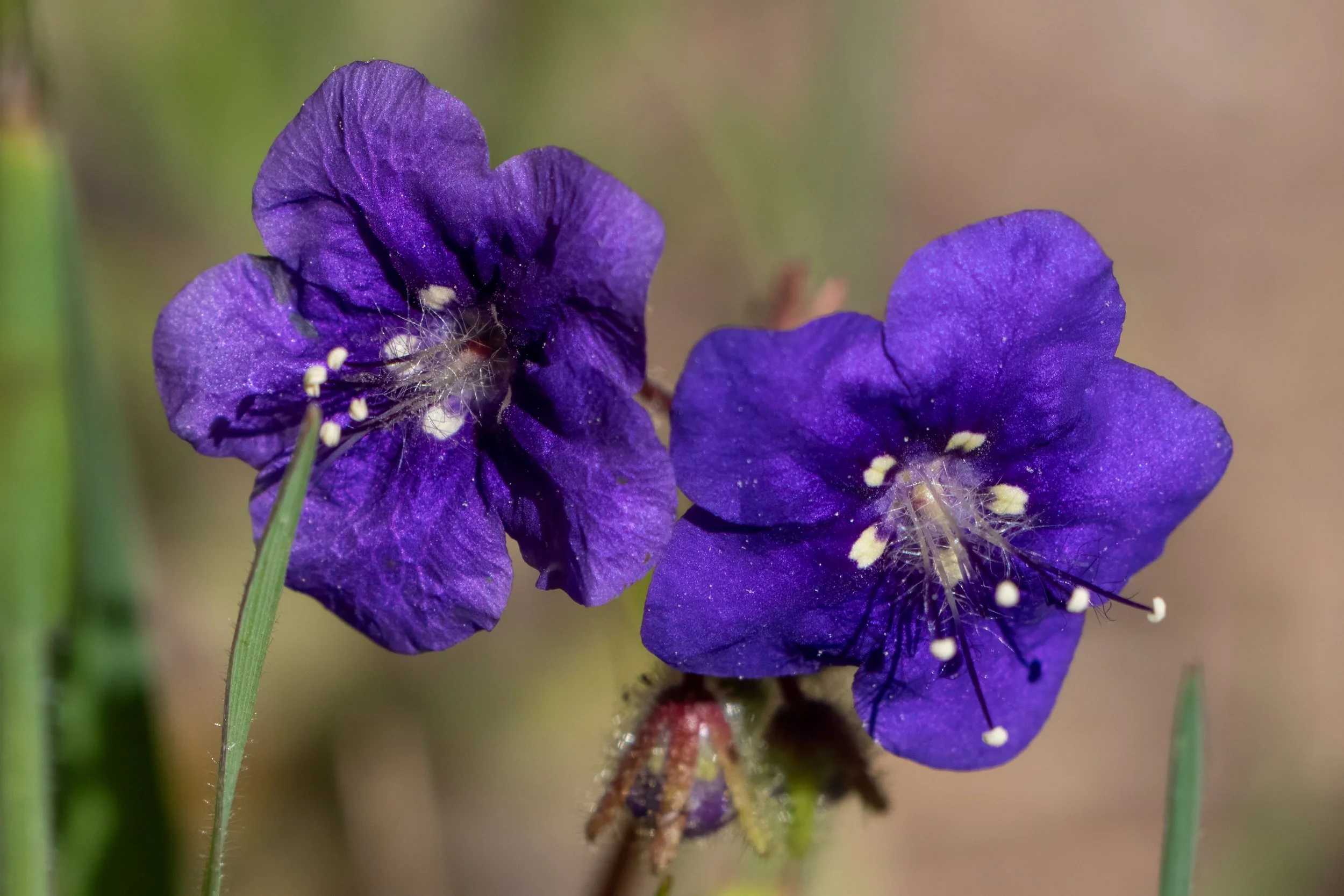
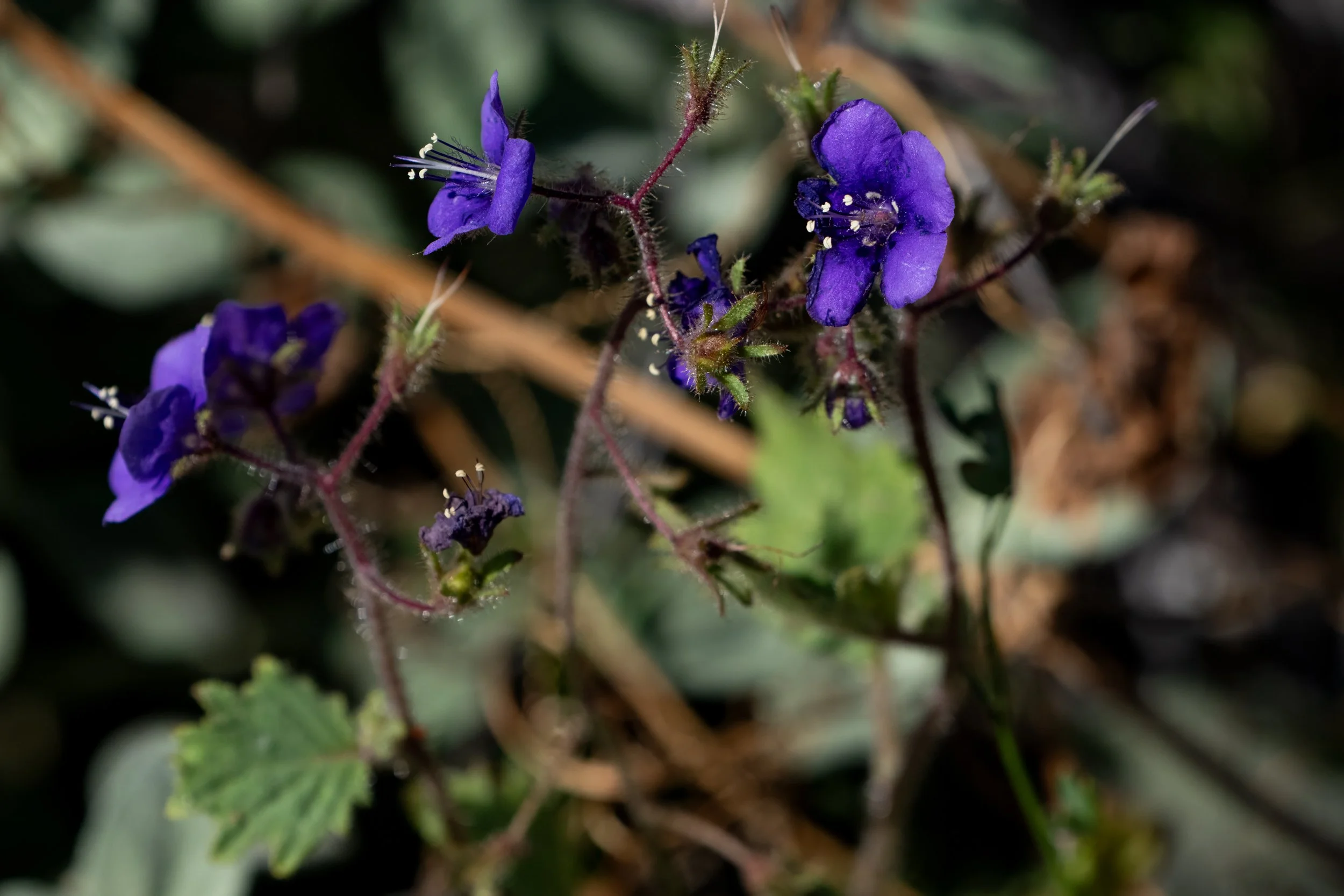
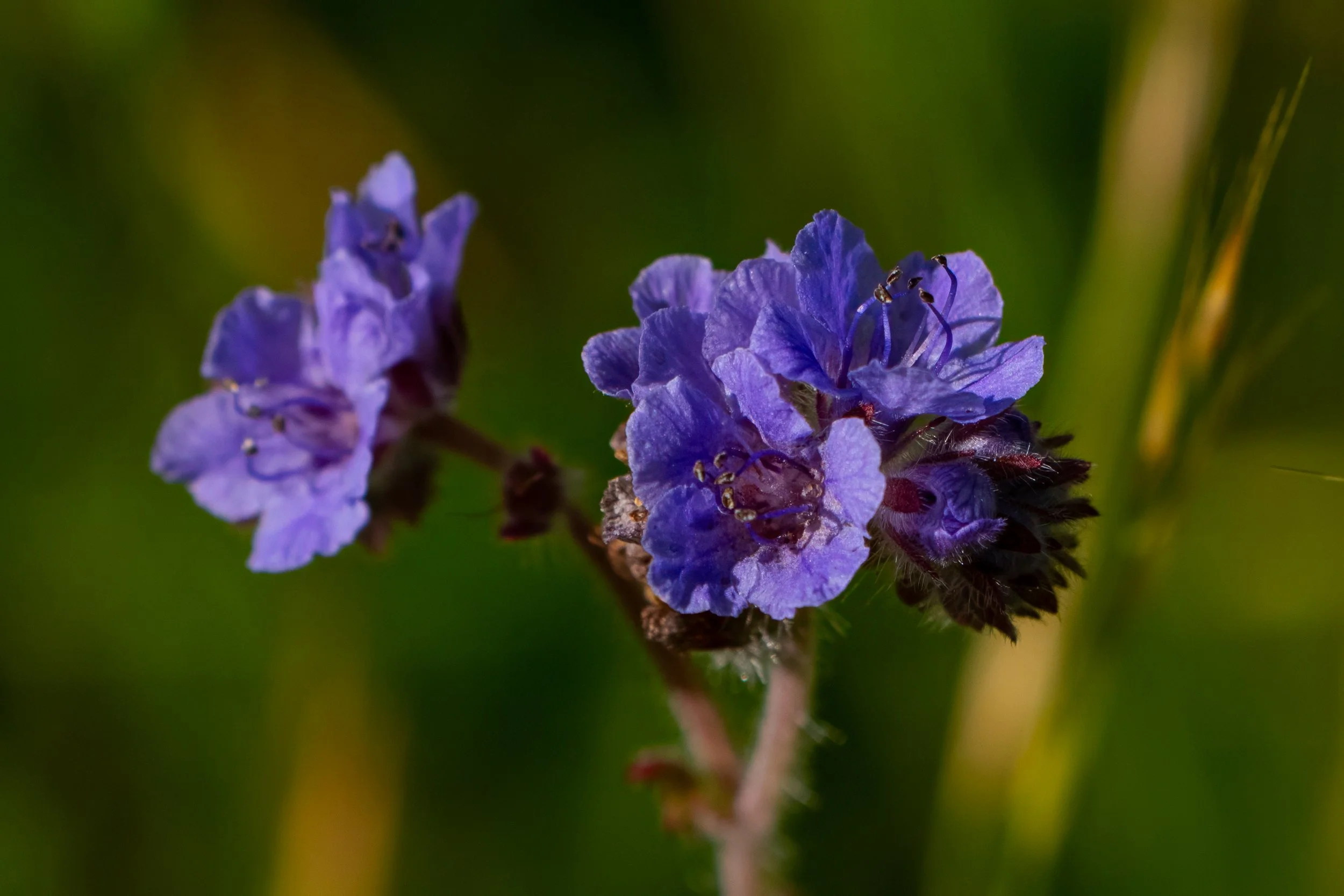
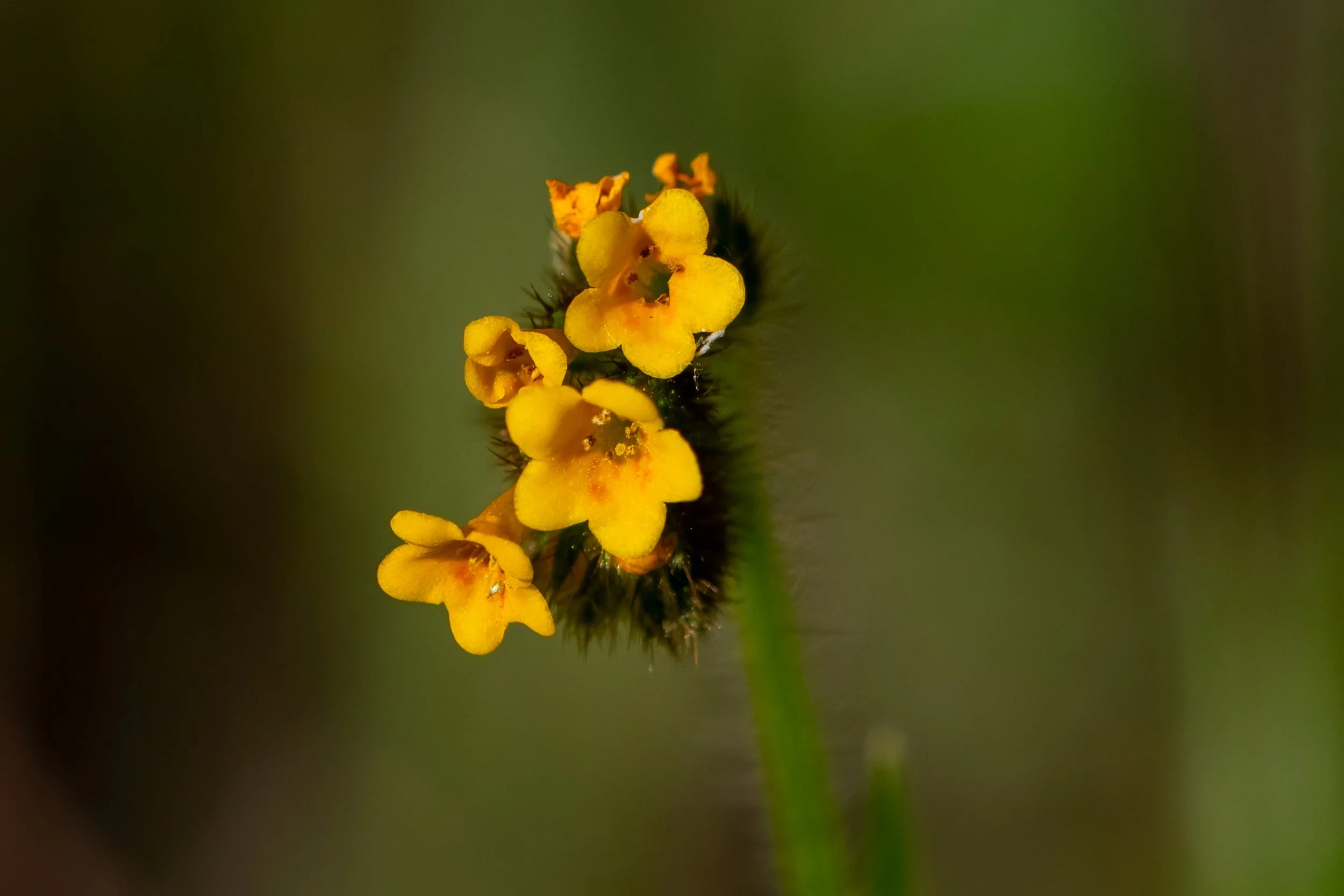
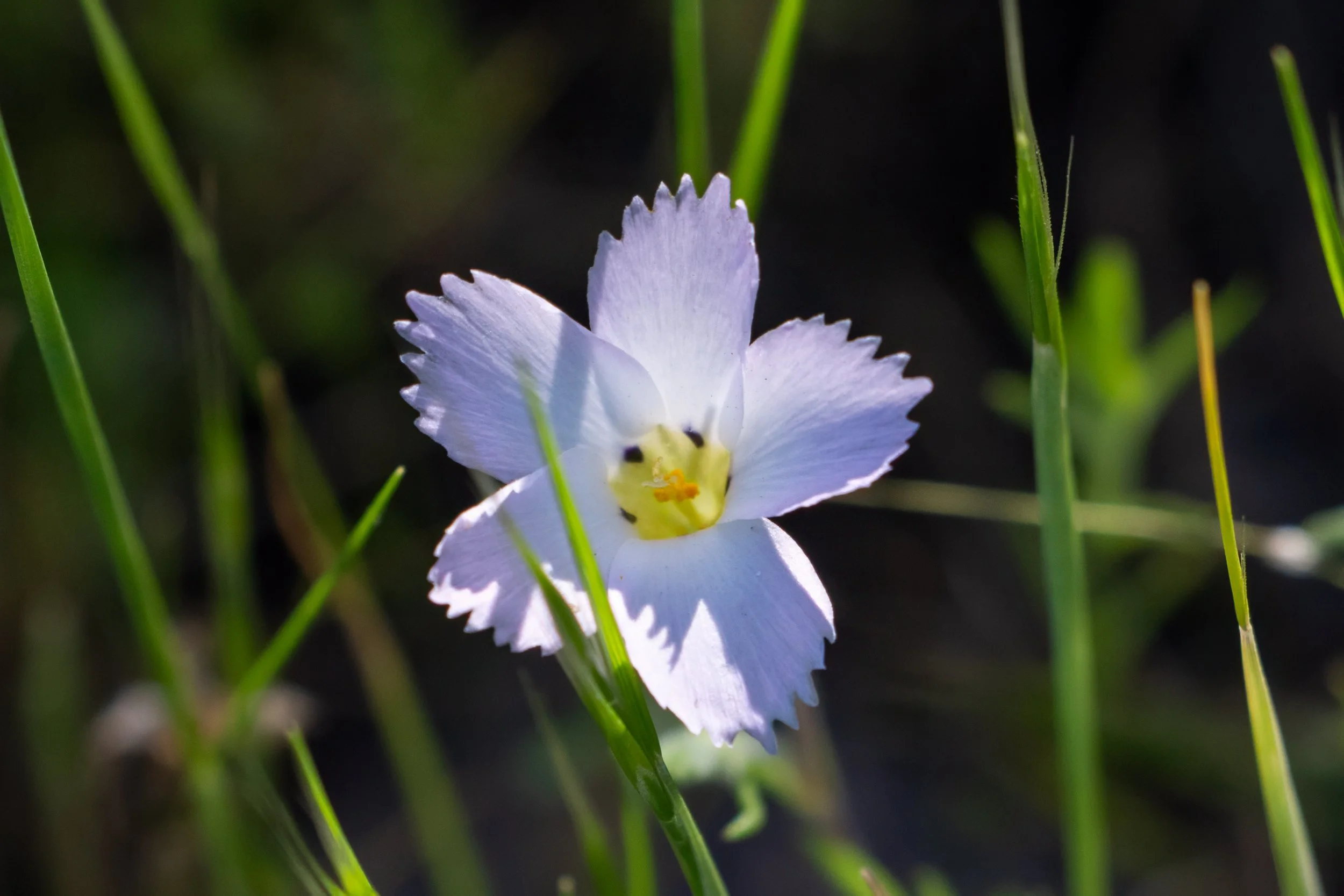
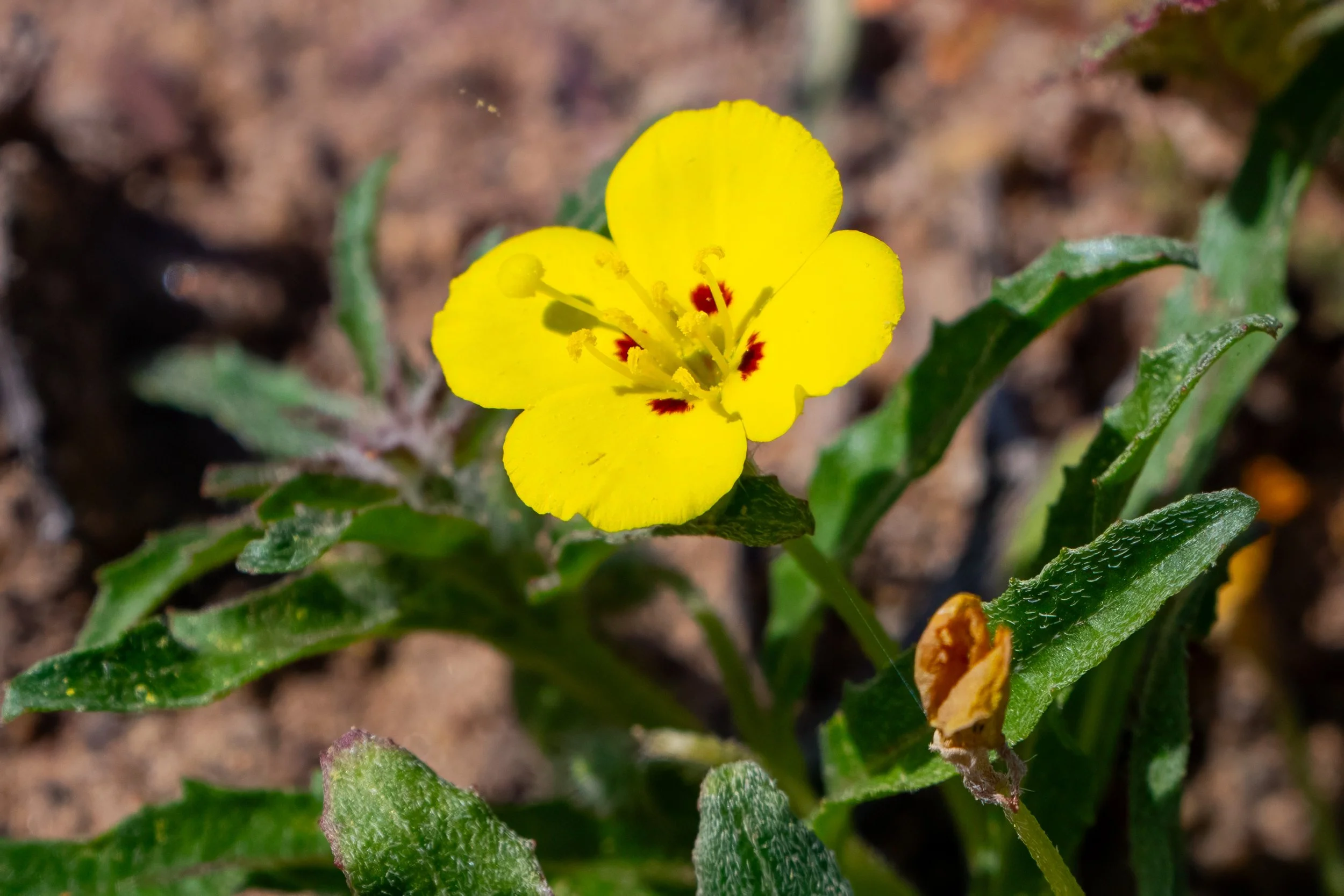
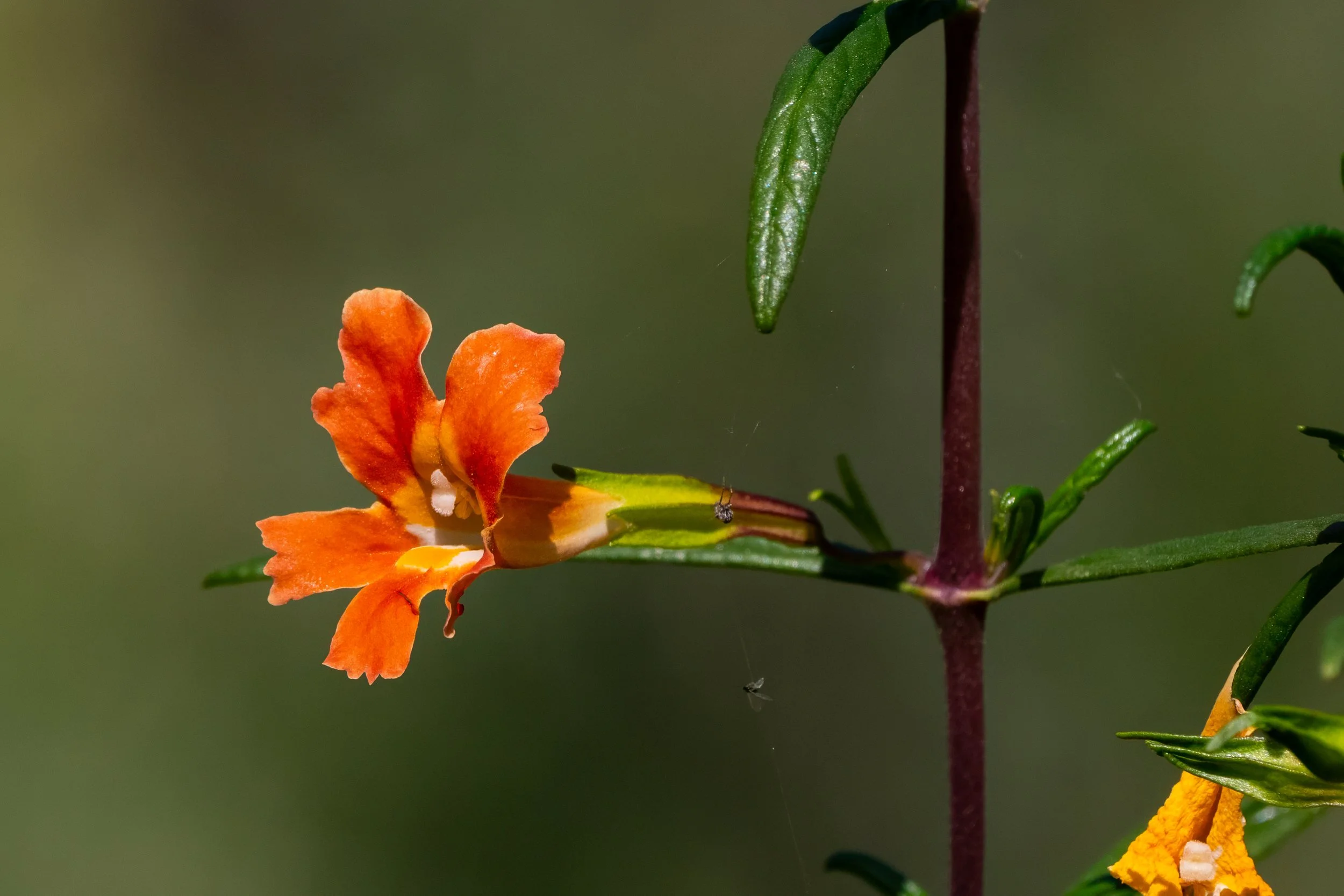
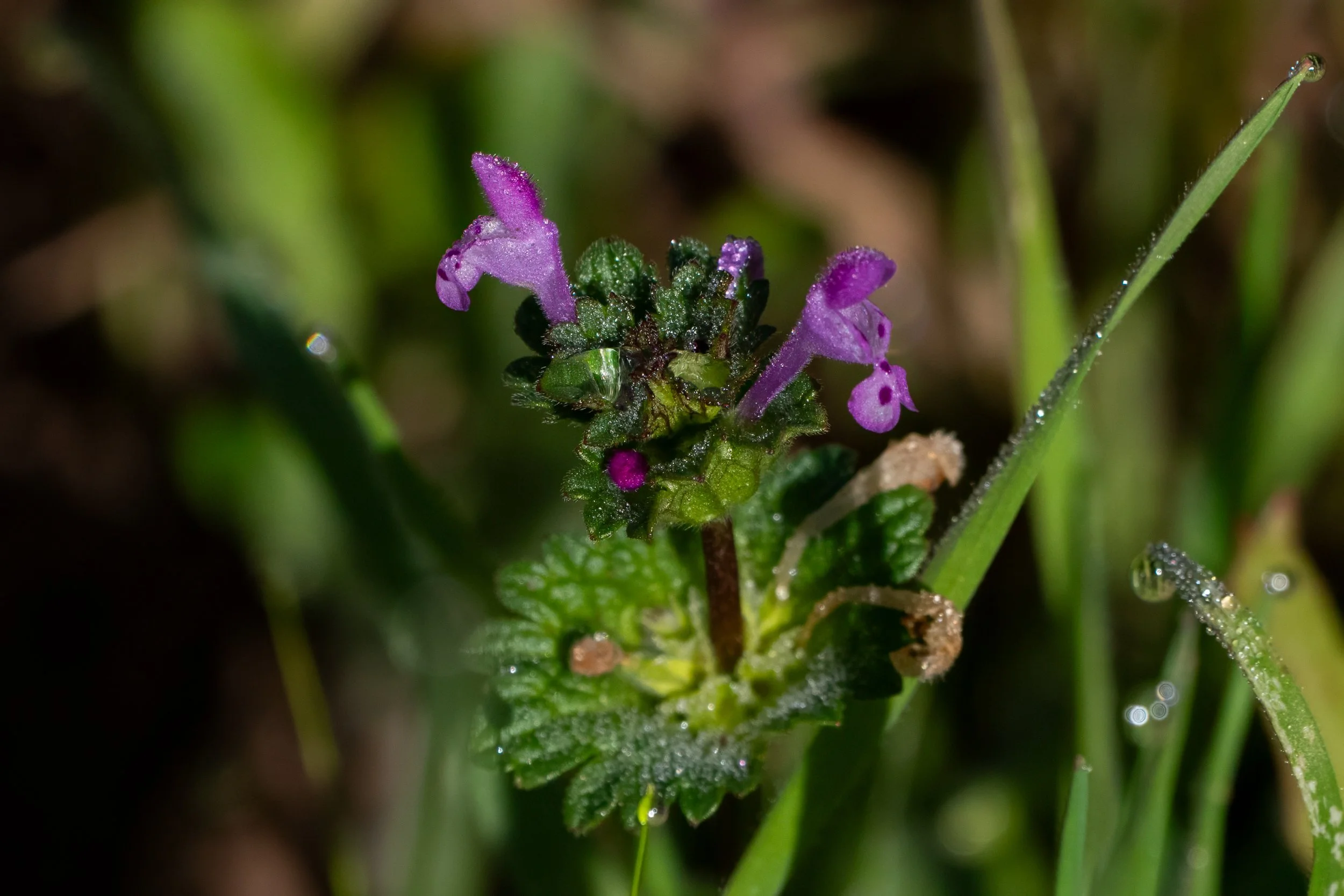
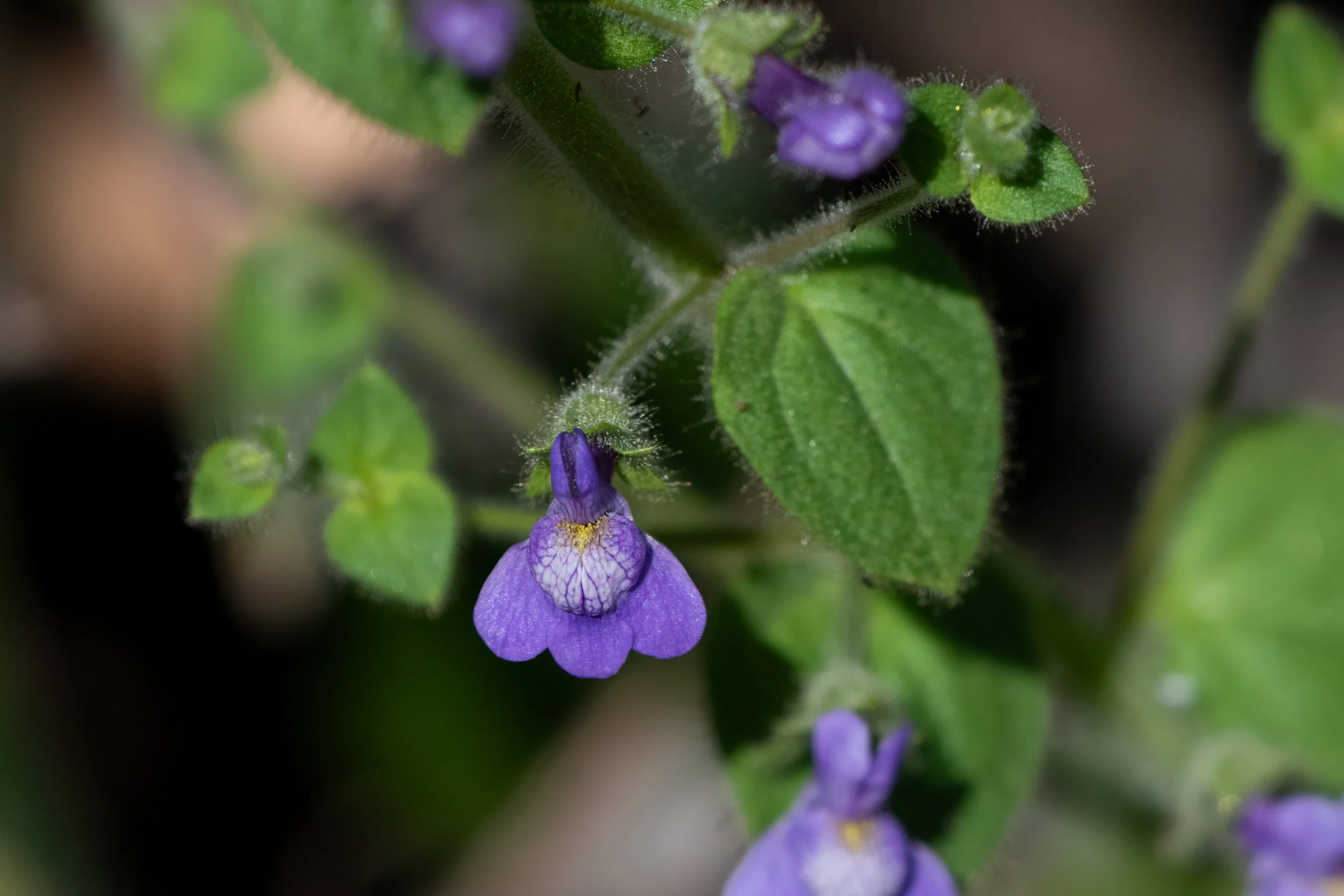
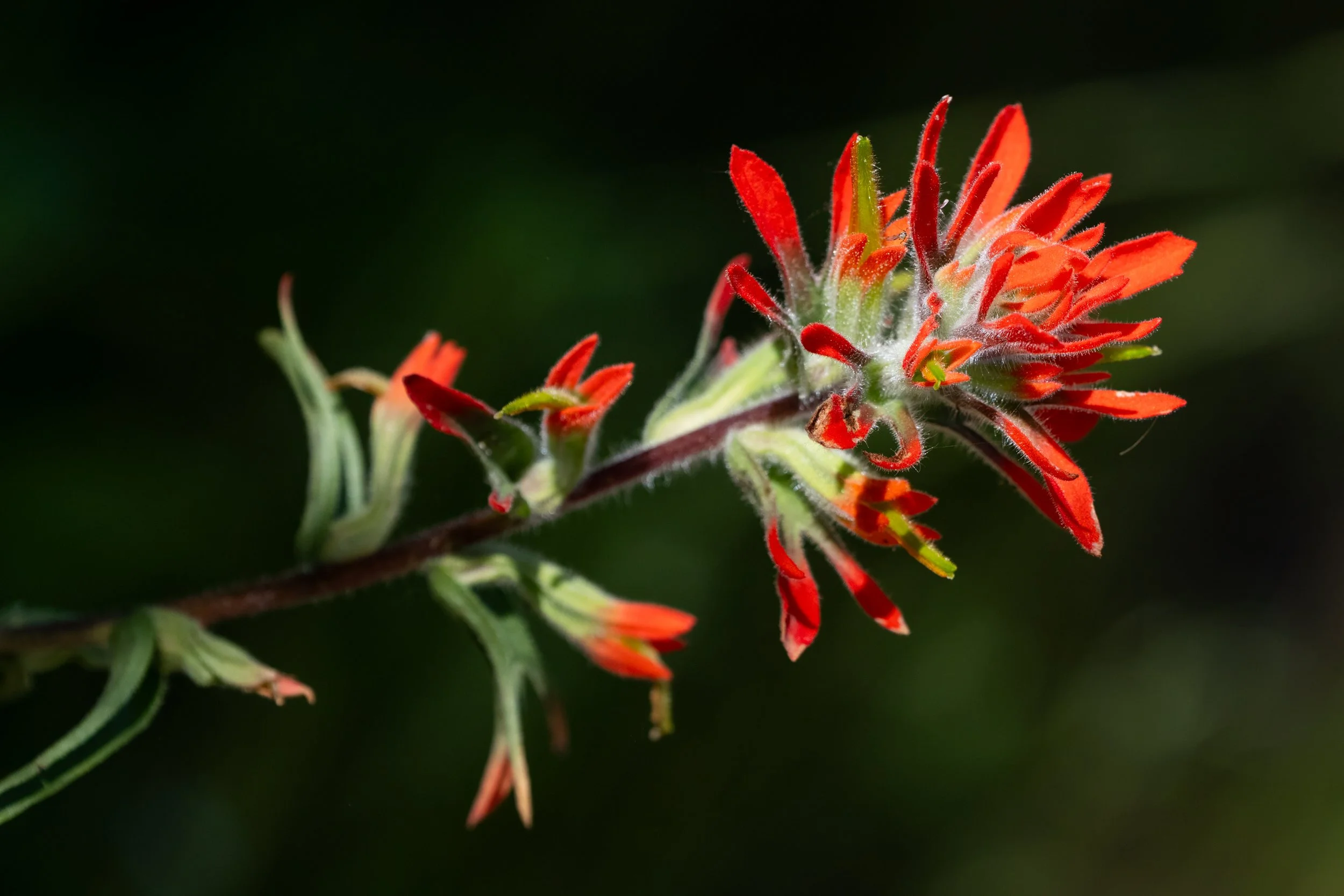
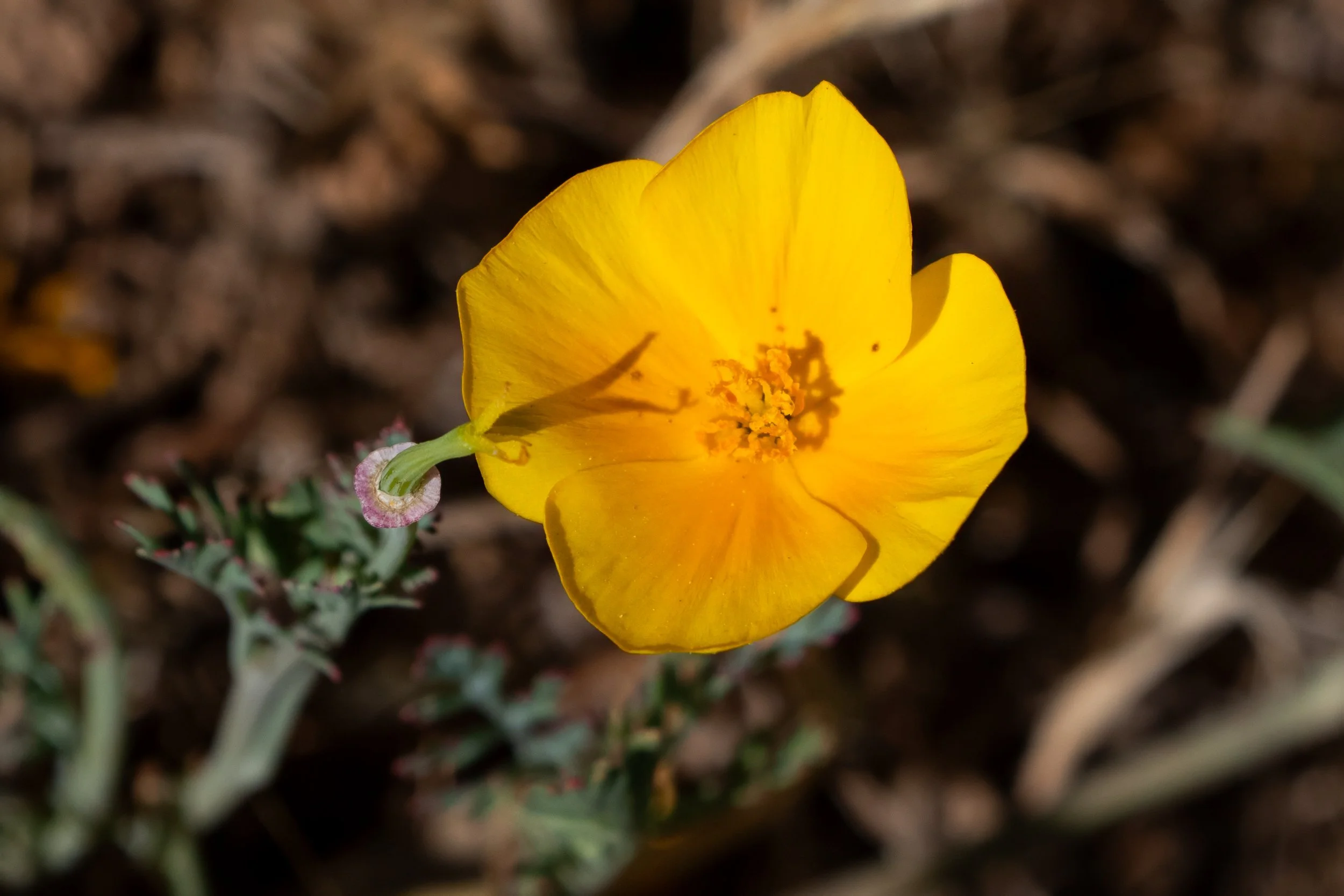
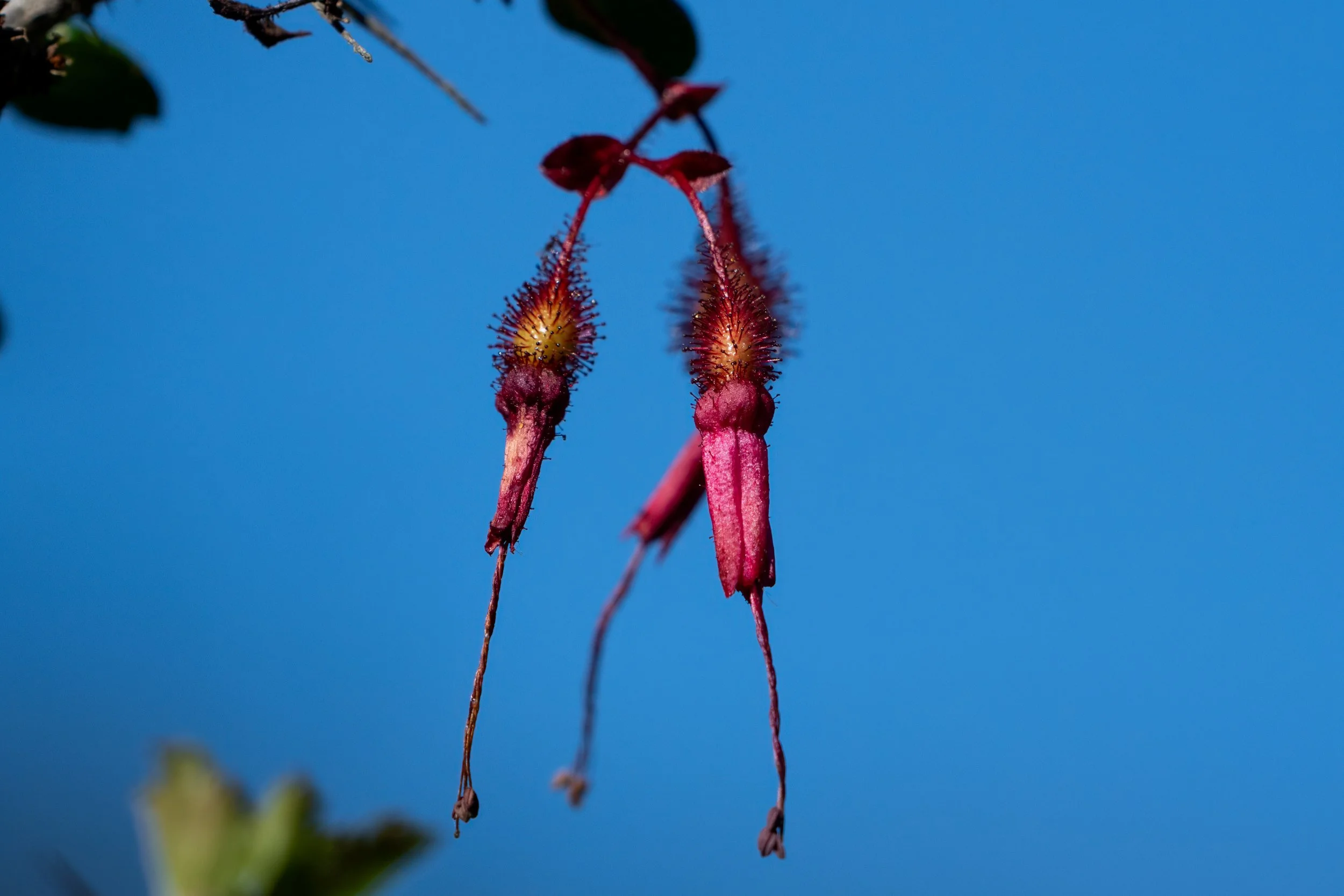
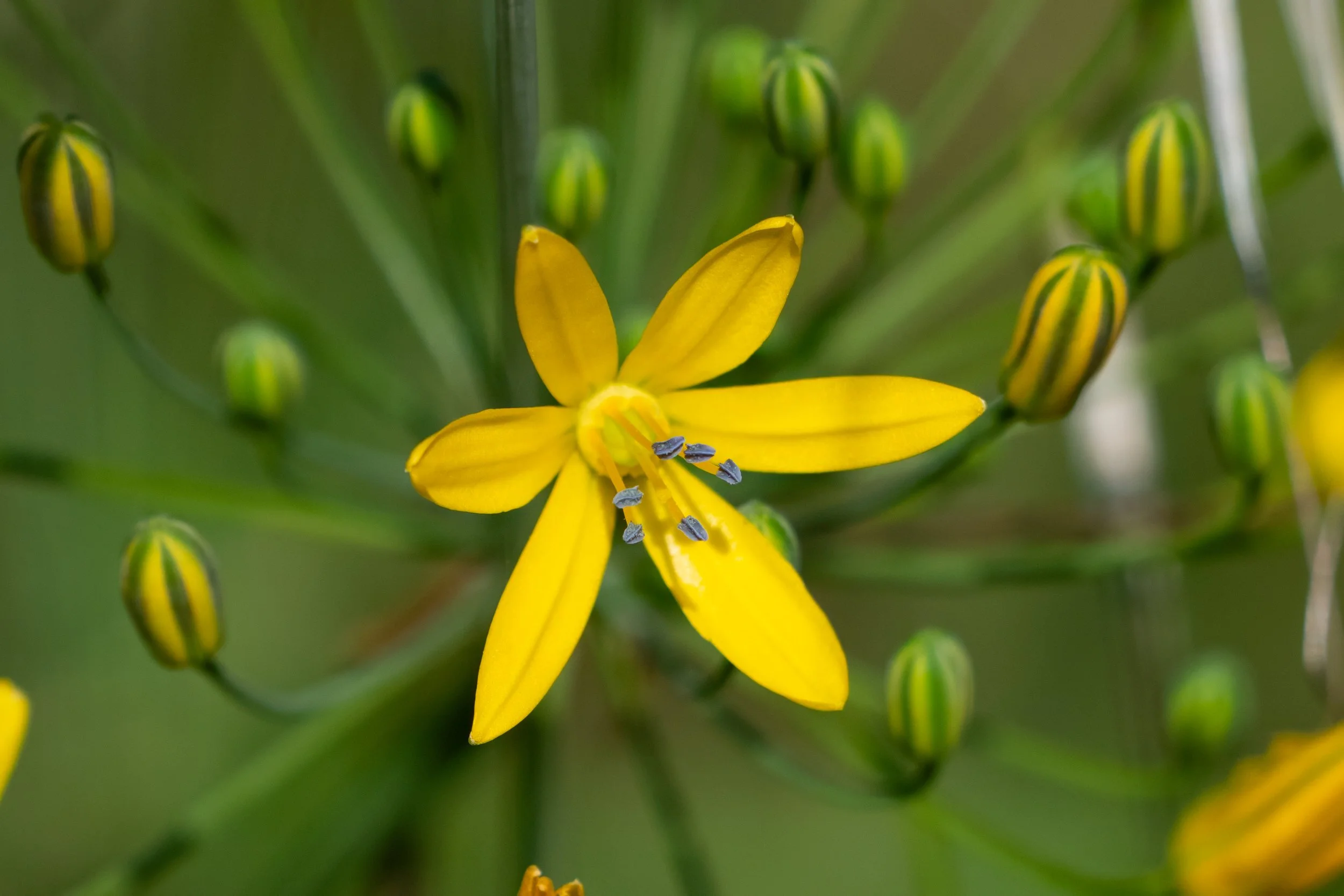
Wildflowers We Found
Named in order as shown in the photos above!
California Buckwheat x3, Western Blue-Eyed Grass in blue and in white
Fuschiaflower Gooseberry, Purple Owl’s-clover, California Aster, Fringed Linanthus, Golden Clover
Stinging Lupine, California Brittlebush, Wishbone Bush, Southern Coastal Bushmallow, Cobwebby Thistle
Lesser Snapdragon, Clearwater Cryptantha, Parry's Phacelia x2, Distant Phaceli
Common Fiddleneck, Fringed Lananthus, California Sun Cup, Southern Bush Monkeyflower, Henbit Deadnettle
Nuttall's Snapdragon, Coast Paintbrush, California Poppy, Fuschiaflower Gooseberry, Goldenstar
The Splendid Mariposa Lilies were the best wildflowers here, in my opinion! We went for the fungi and stayed for the blooms!