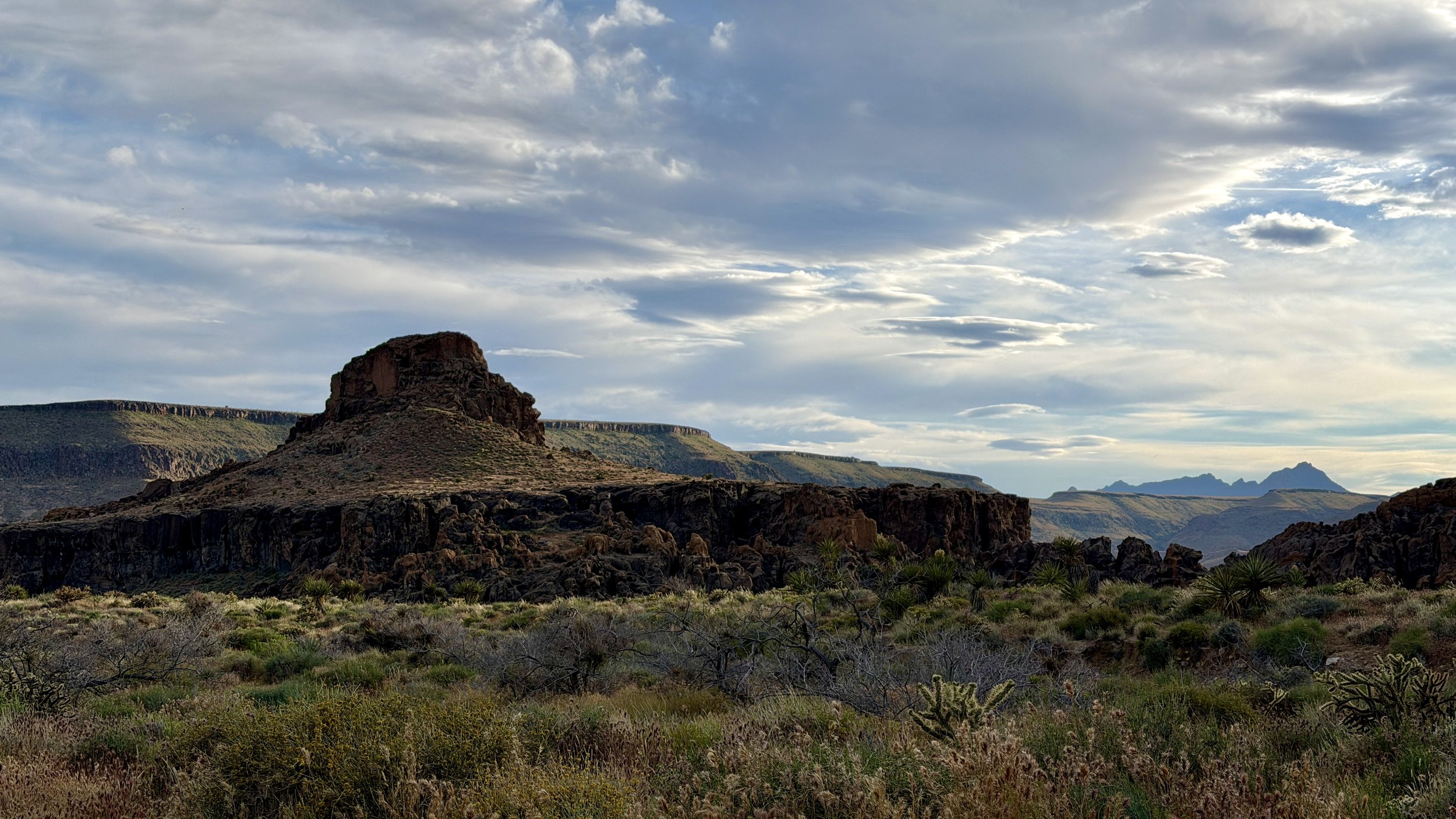
Mojave National Preserve occupies a quiet stretch of California desert that many people pass on the drive between Los Angeles and Las Vegas. Inside its nearly 1.6 million acres are Joshua tree forests, volcanic cinder cones, dunes, and rocky canyon country.
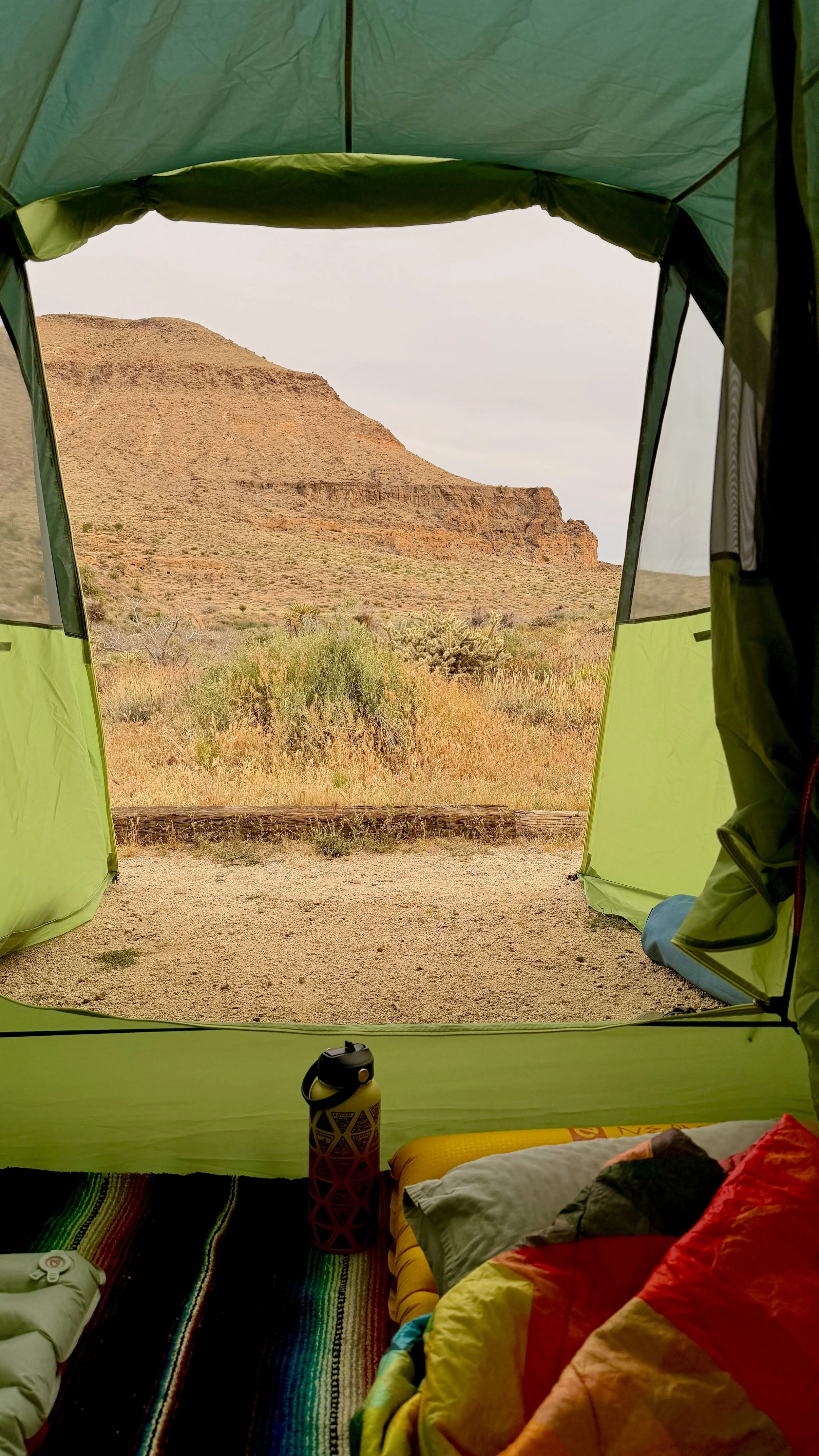
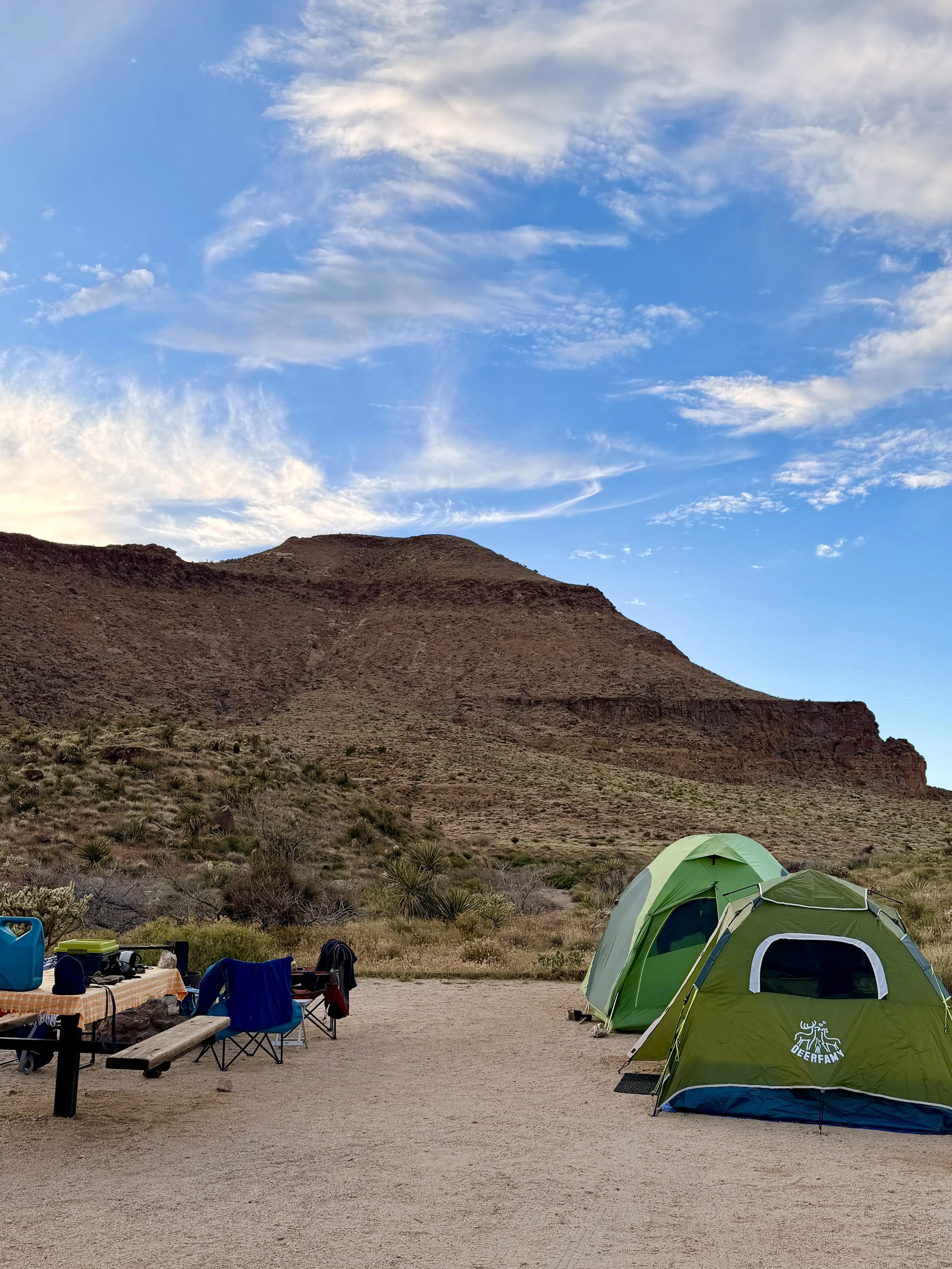
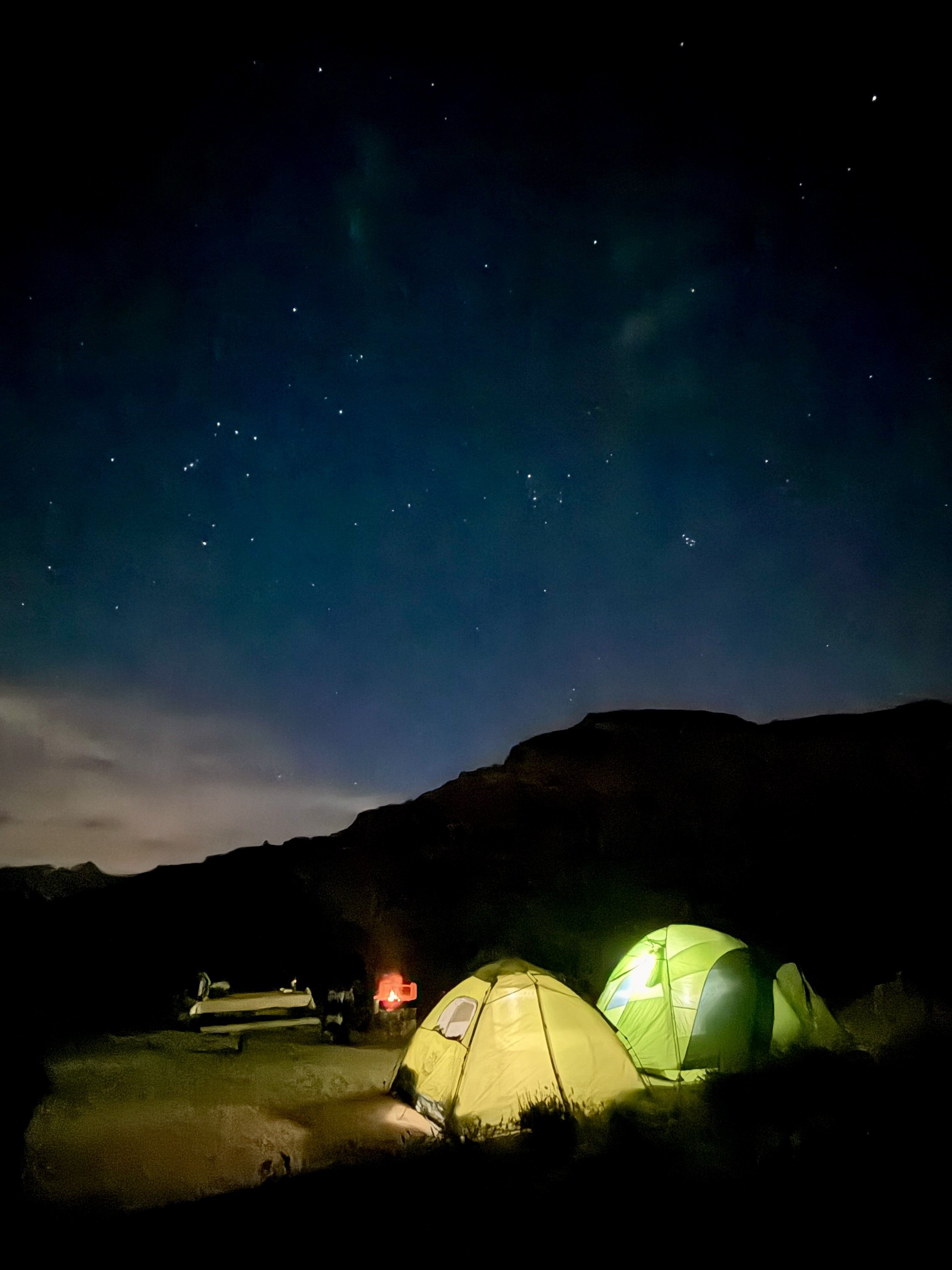
We camped at Hole-in-the-Wall in spring with Kim's mom. The campground sits around 4,500 feet beside pockmarked volcanic cliffs, with trails beginning close to camp. Wildflowers were blooming, birds were singing around our site, and the wind arrived after dark with enough force to bend the tent poles. The fly snapped all night like a sail.
Birds Around Camp
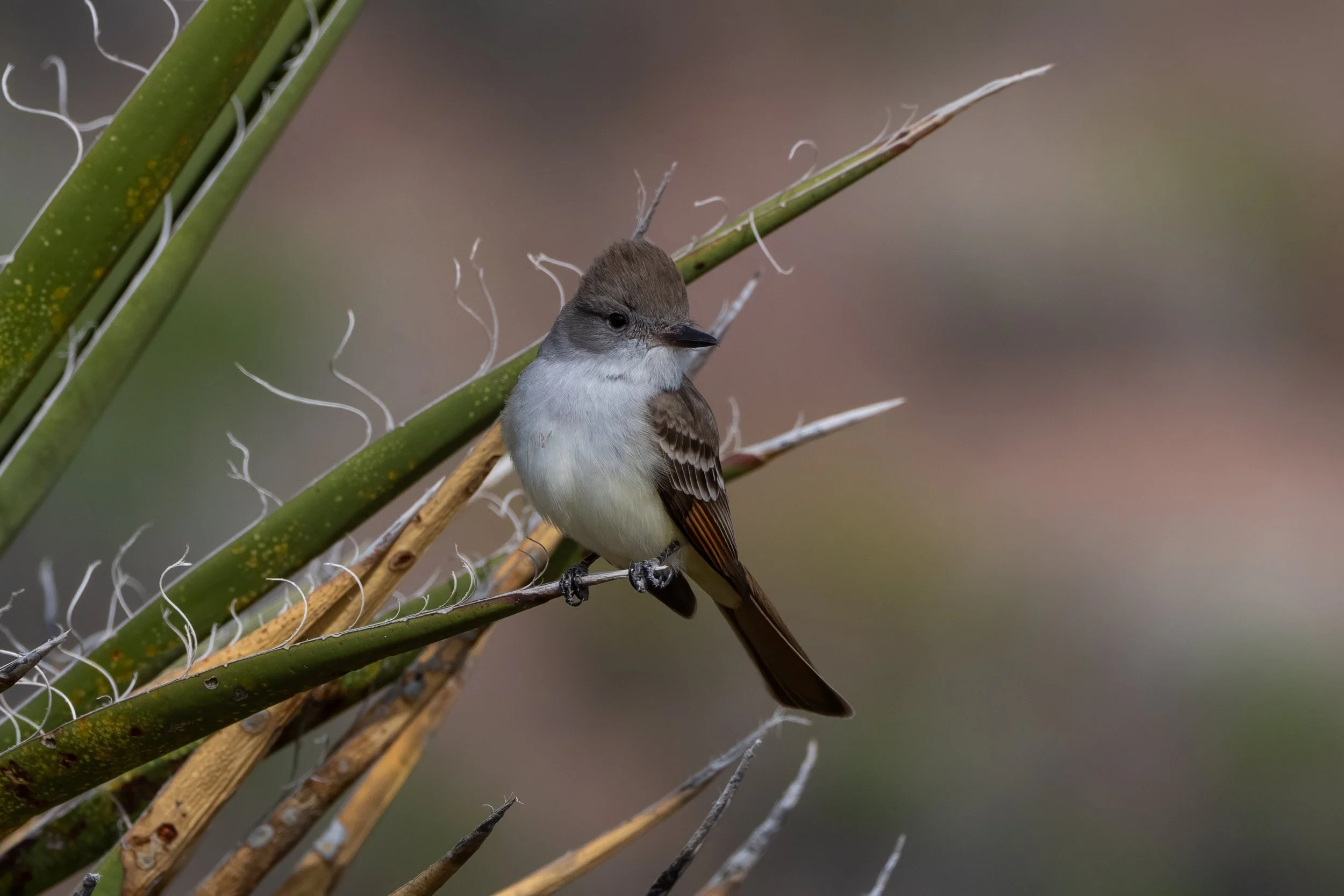
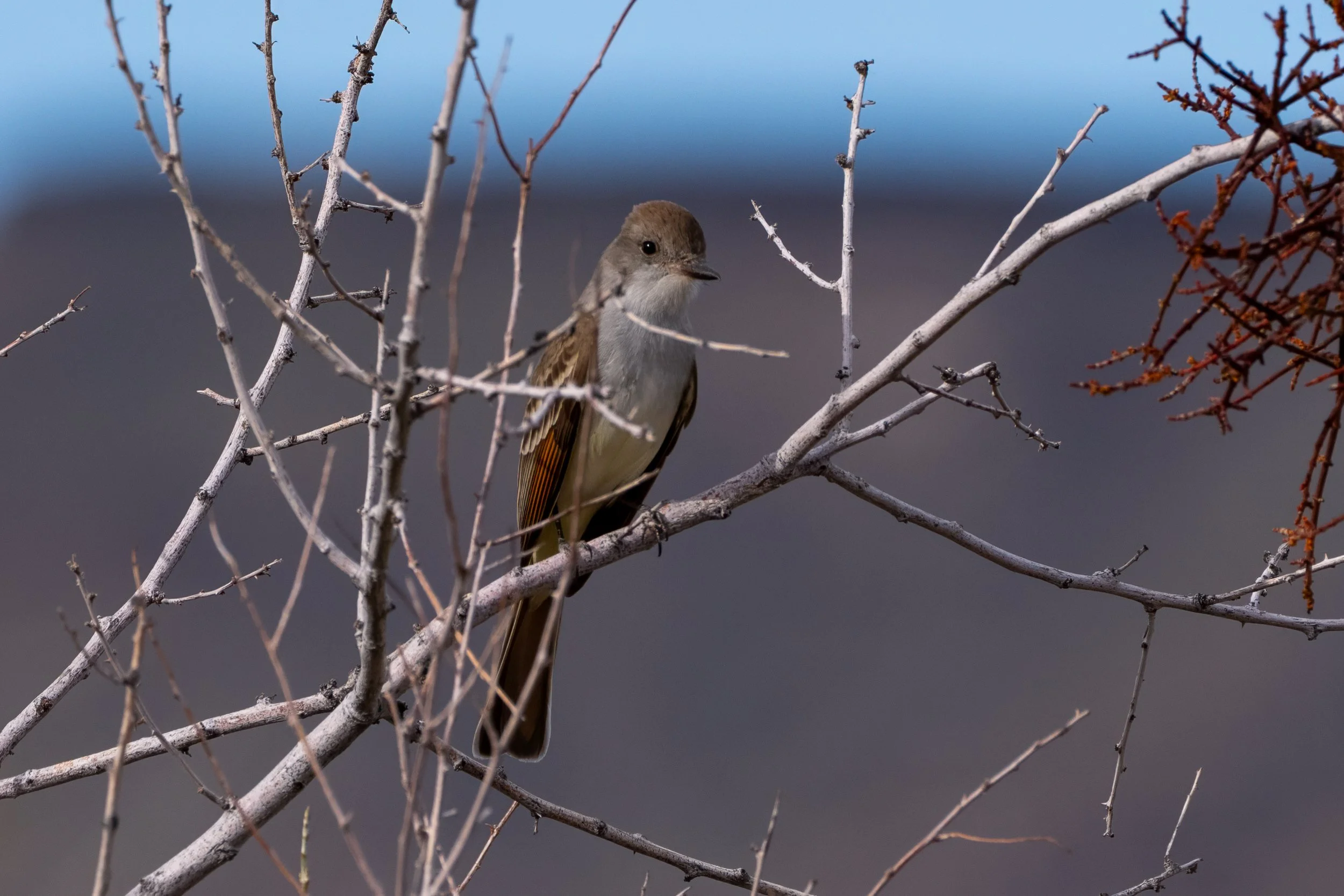
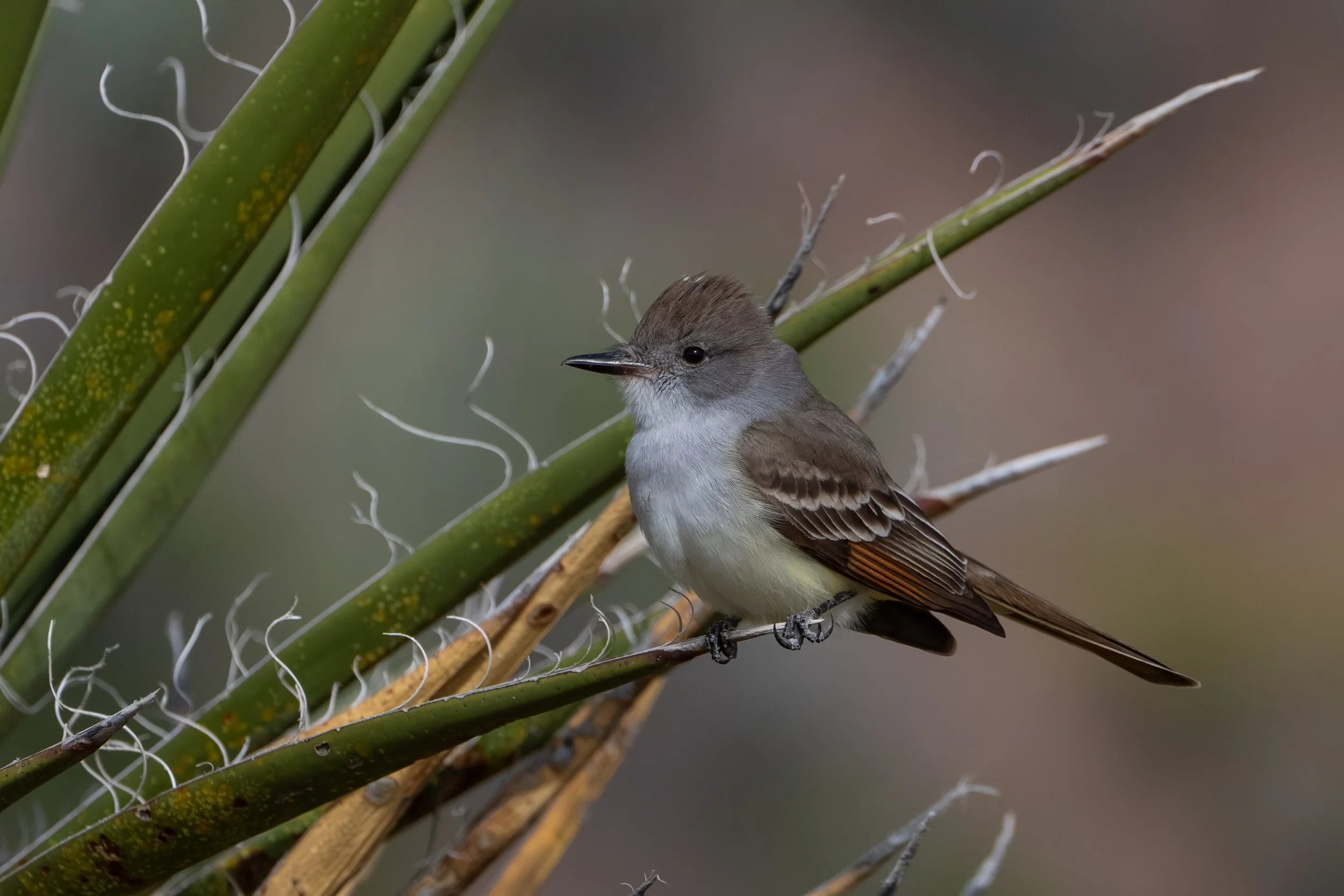
Our first Ash-throated Flycatcher of the season appeared at the campsite. This is one of my favorite birds, with a pale throat, warm rufous in the wings and tail, and a raspy call that always seems to belong among creosote and Joshua trees.
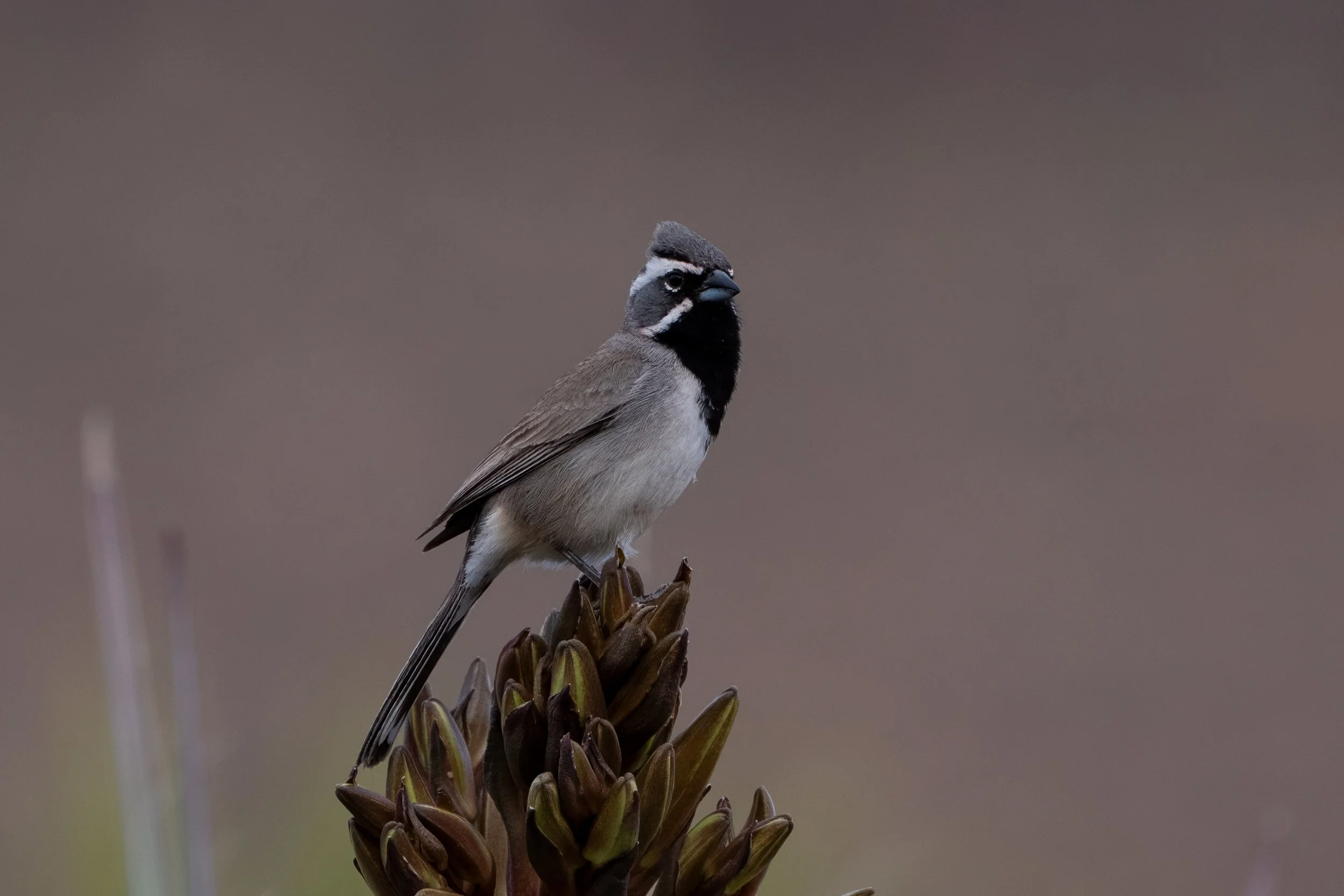
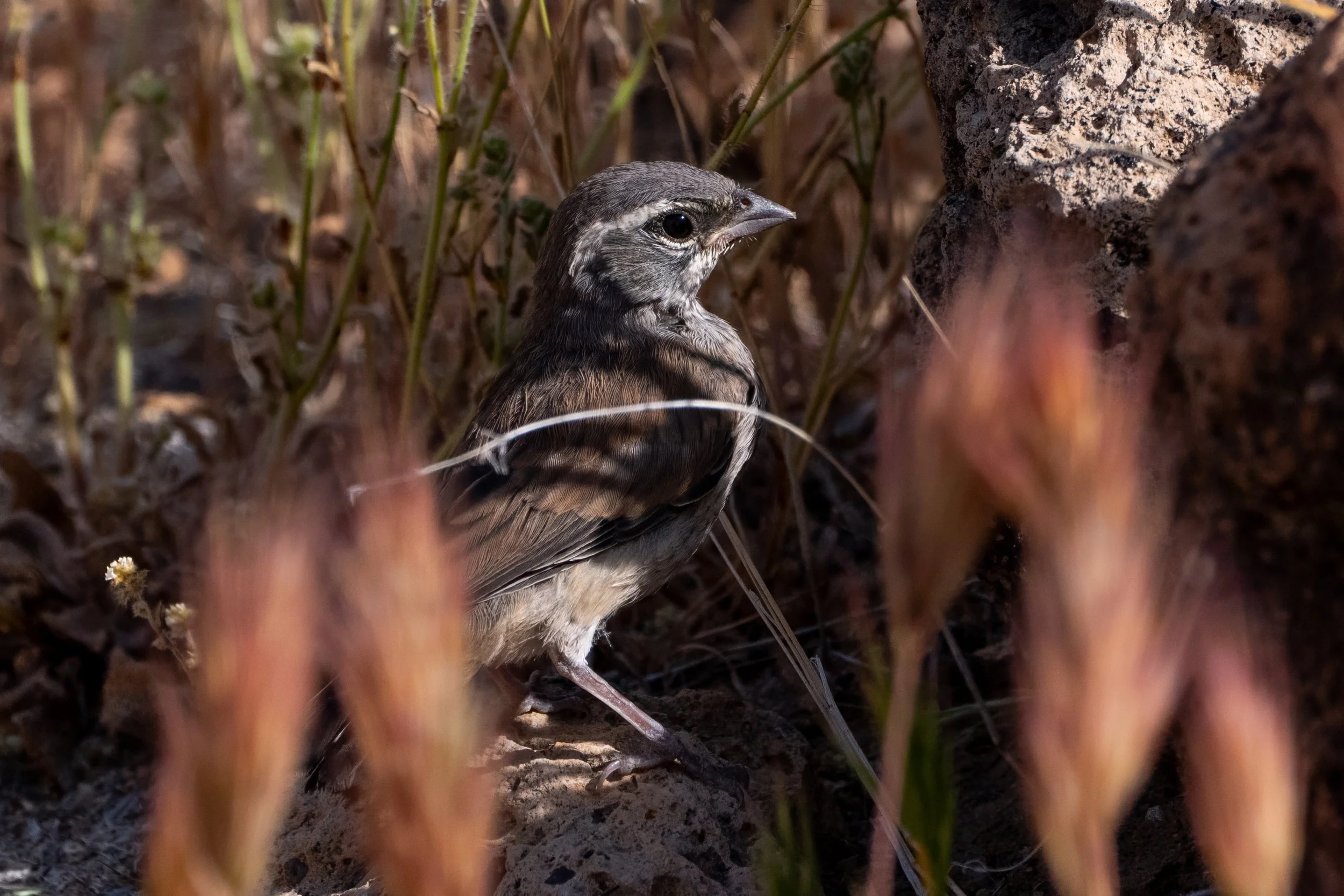
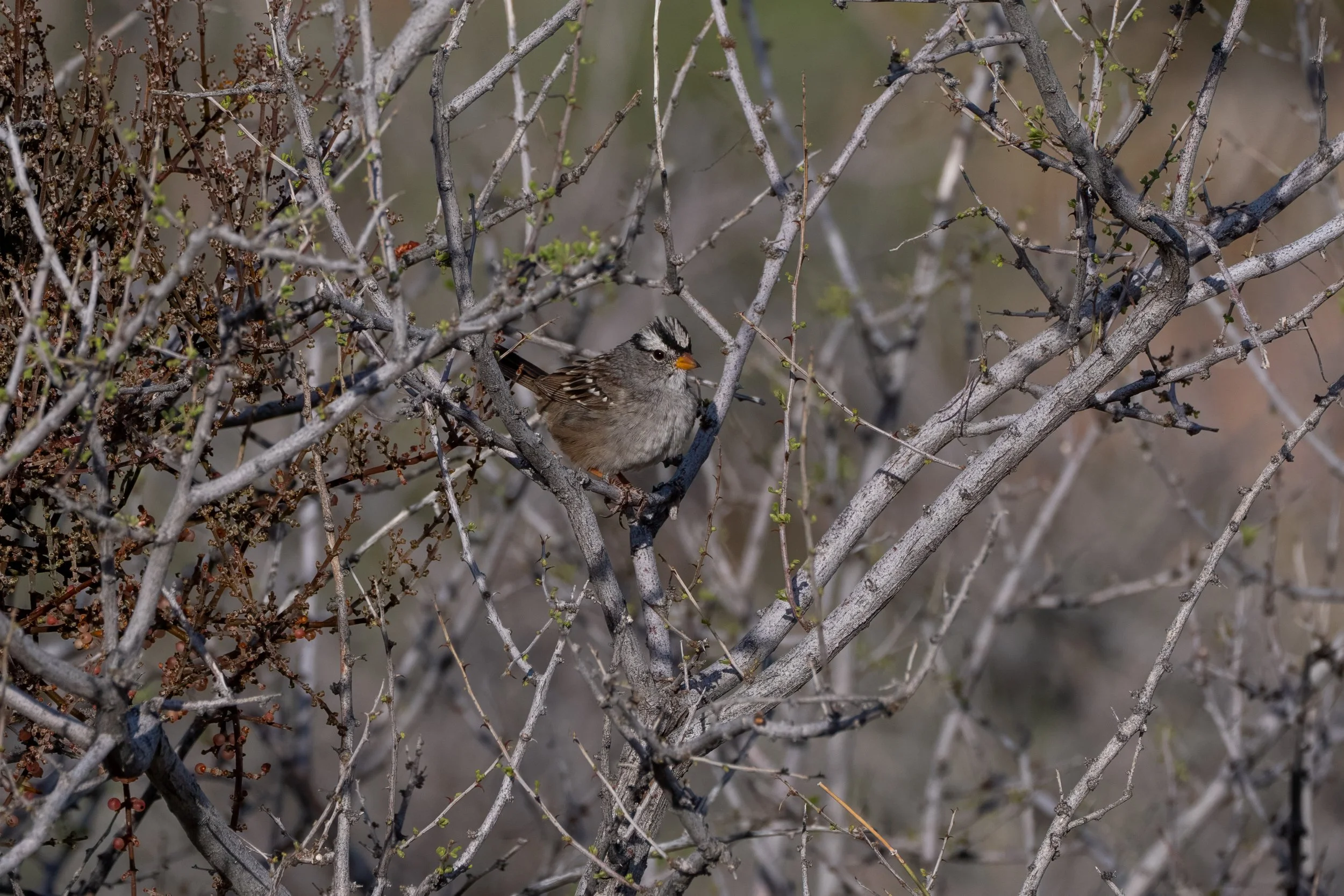
Black-throated Sparrows sang from low shrubs around camp, and a couple of young ones popped out nearby! Their crisp black-and-white faces stood out against the pale desert, while White-crowned Sparrows added a familiar spring voice nearby.
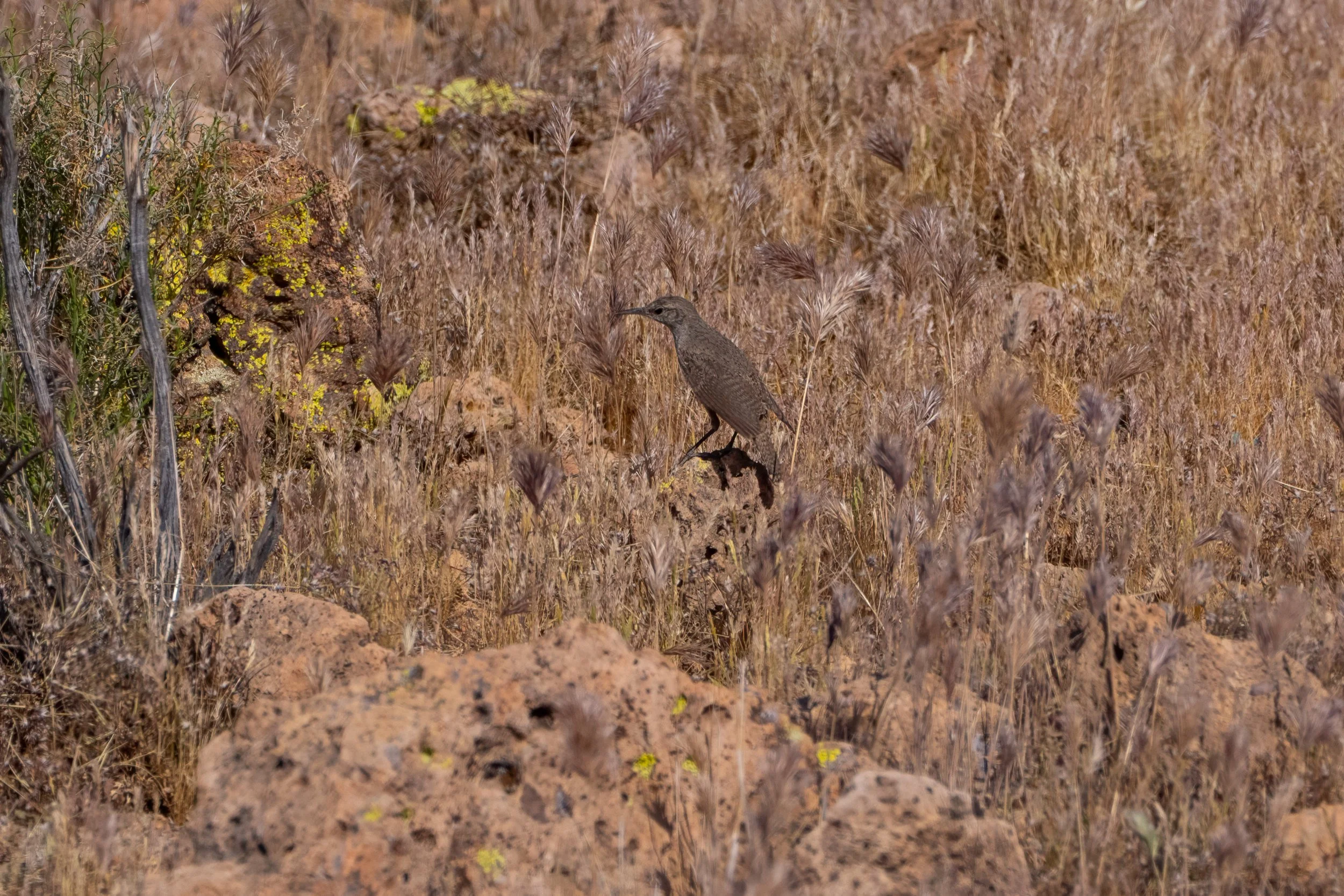
The Hole-in-the-Wall Trail drops into Banshee Canyon through sculpted rhyolite. Rock Wrens bobbed across the boulders, and the descending song of a Canyon Wren echoed from the walls before we found the bird itself. Cactus Wrens called from the taller vegetation above the wash. Hearing all three along the same trail was a small, satisfying part of the morning.
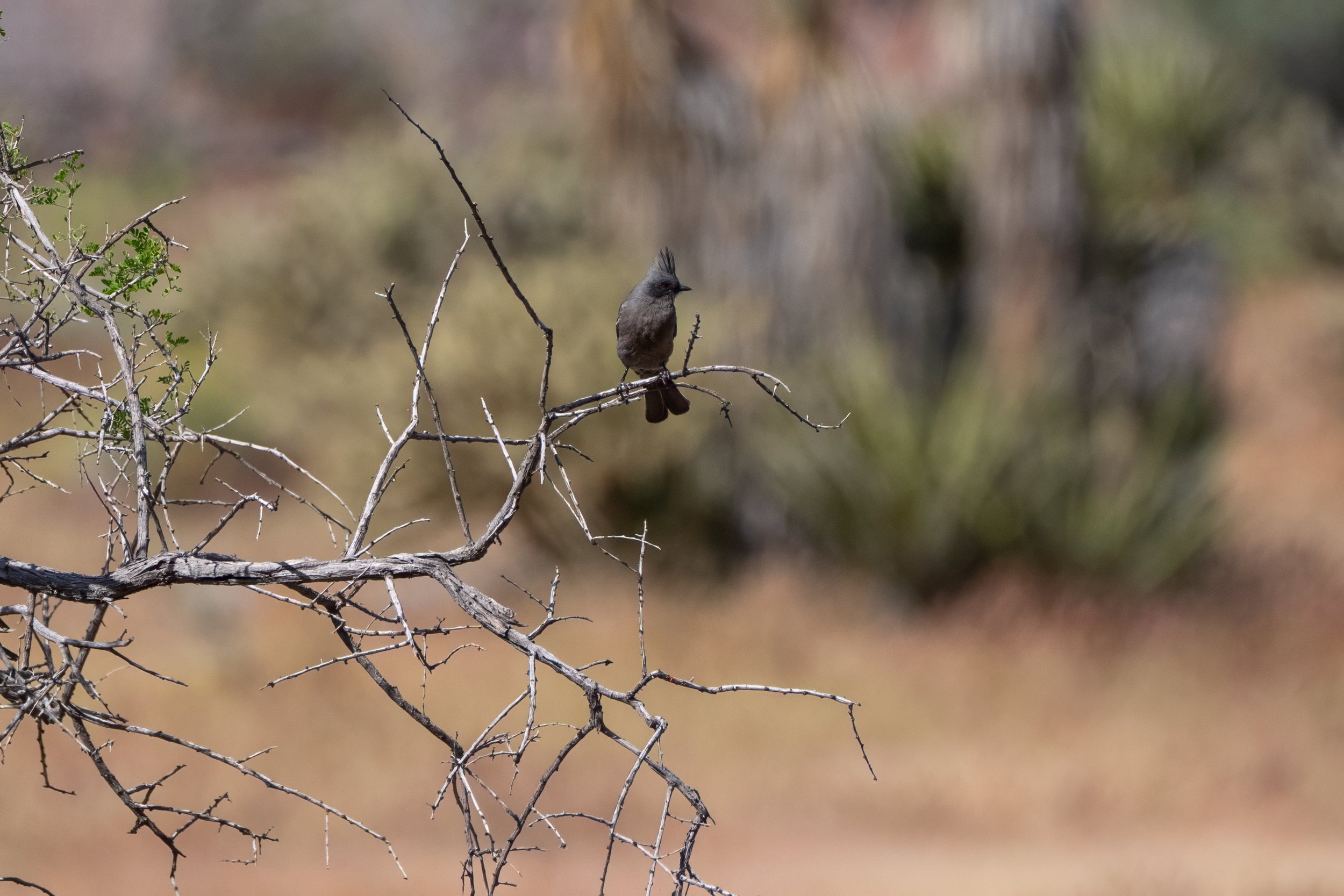
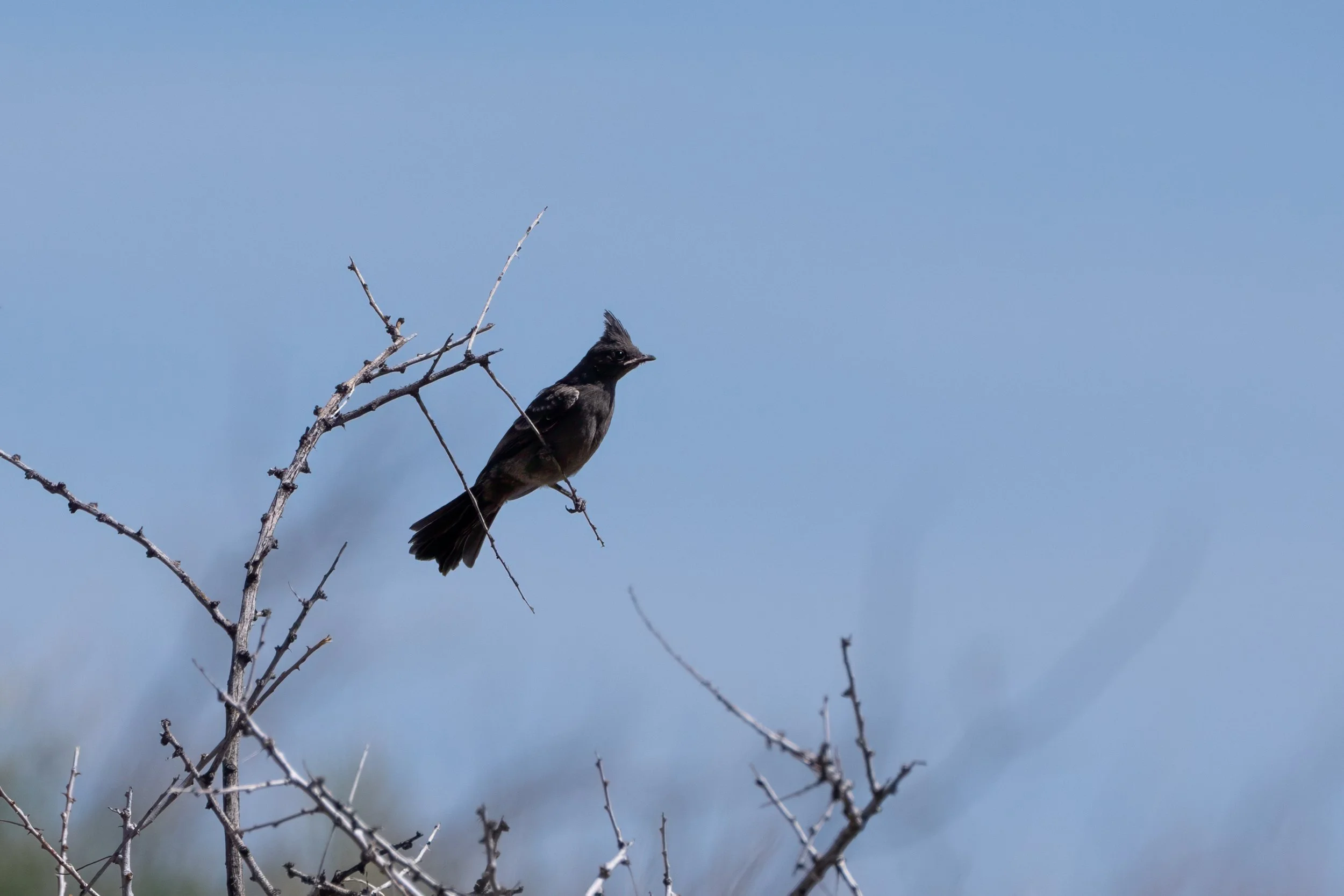
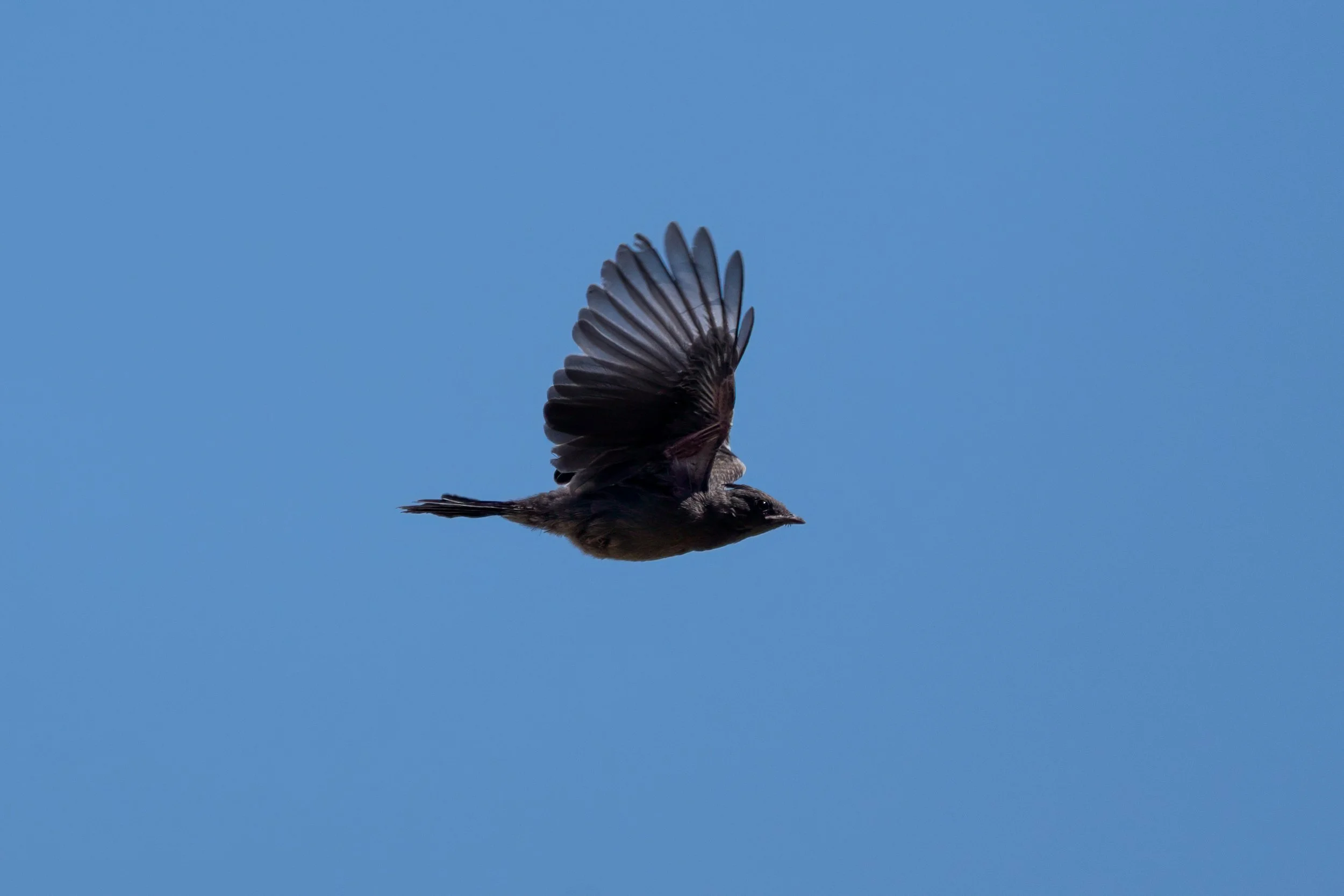
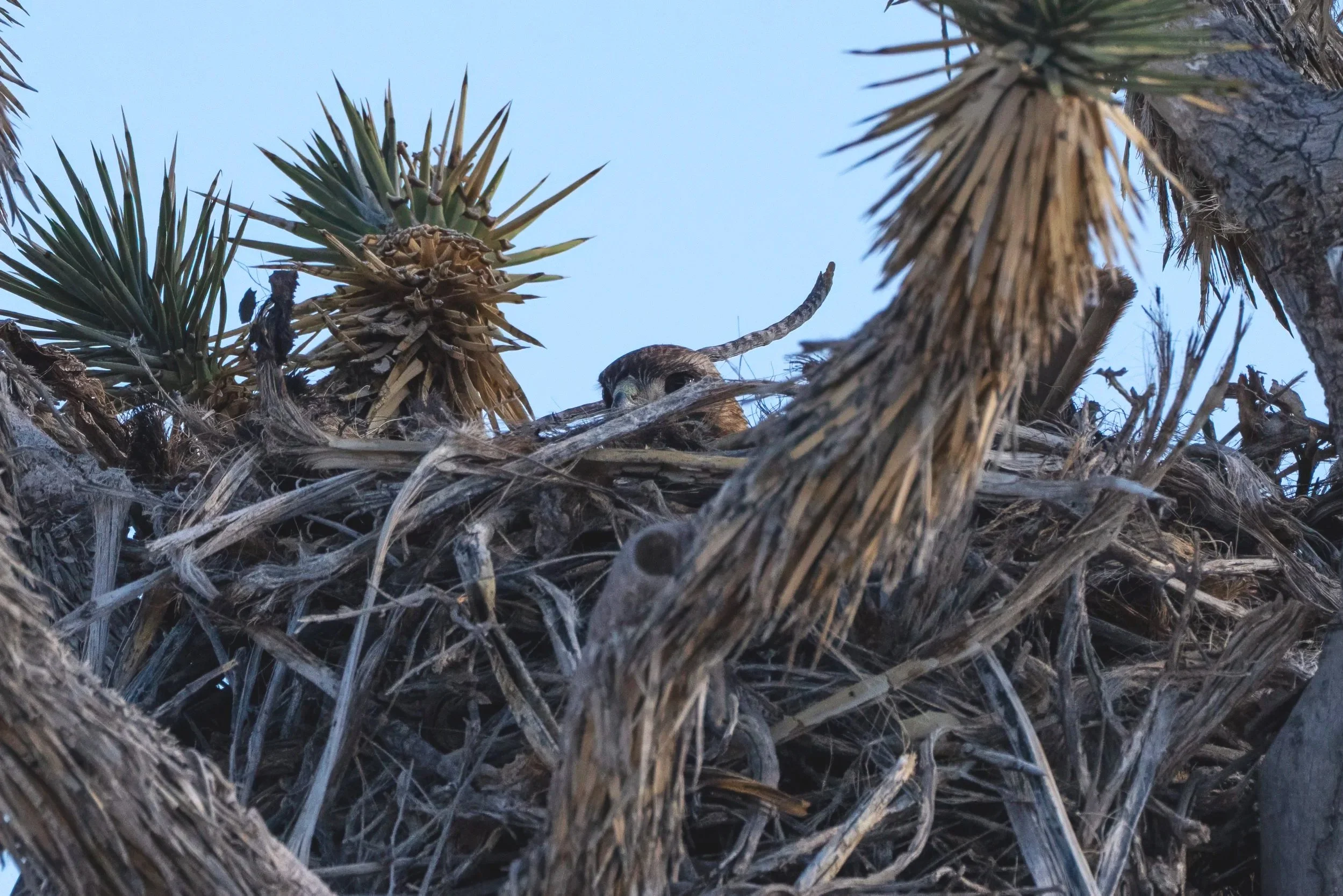
Phainopeplas perched above the scrub, including adults and a softer gray-brown young bird. Near Cima Dome, we watched a Red-tailed Hawk on an active nest among one of the preserve's densest Joshua tree forests.

Wildlife on the Rocks and Sand
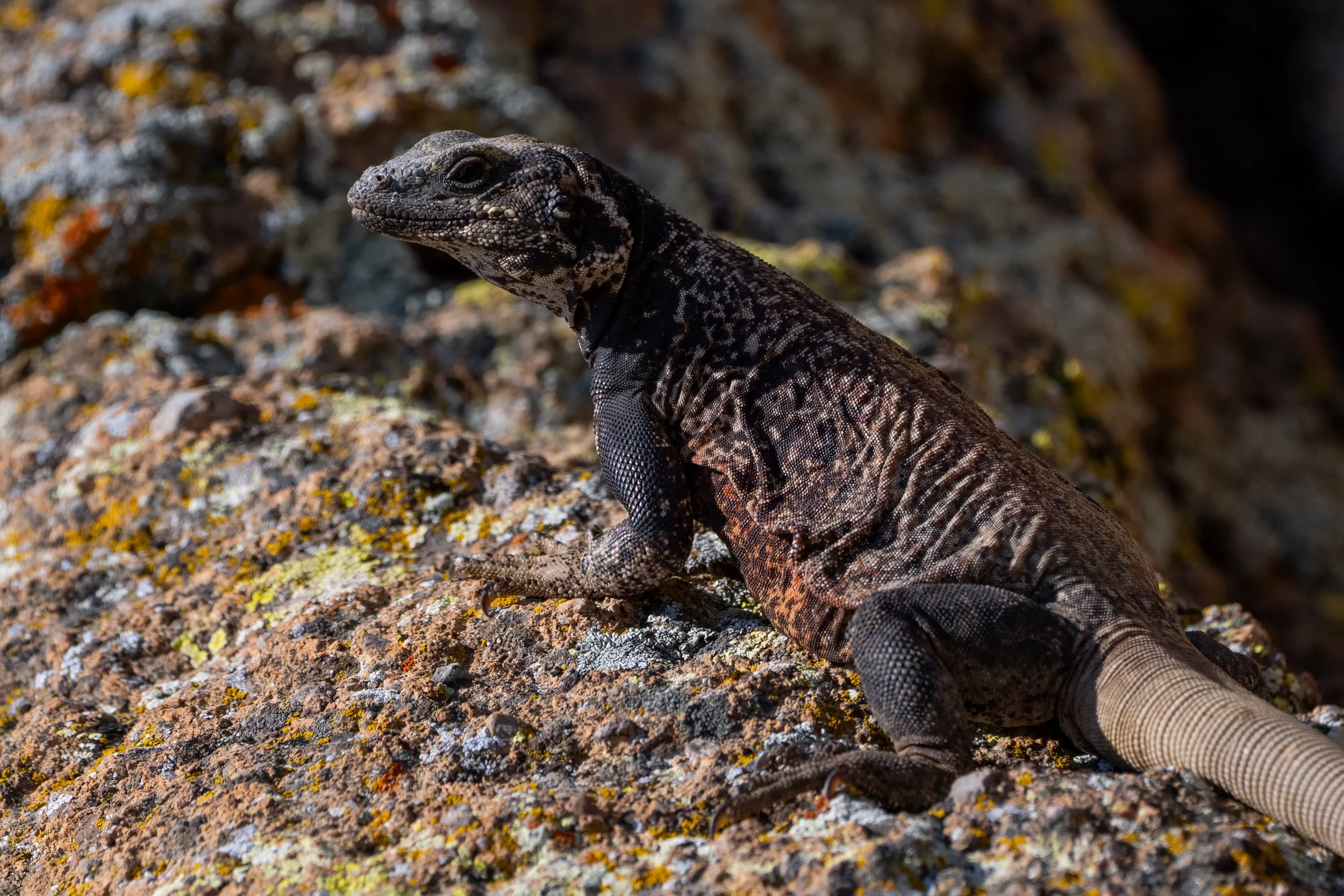
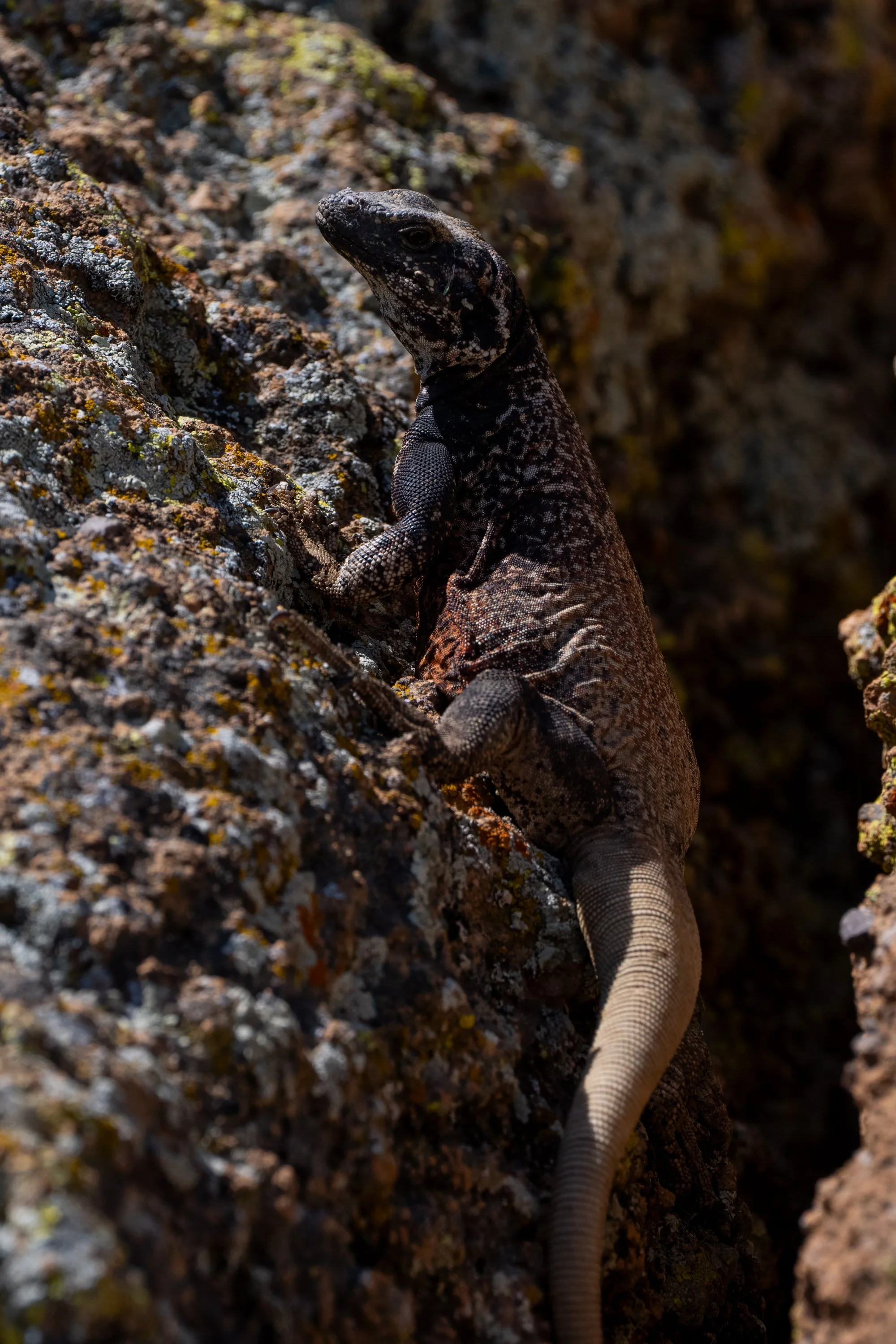
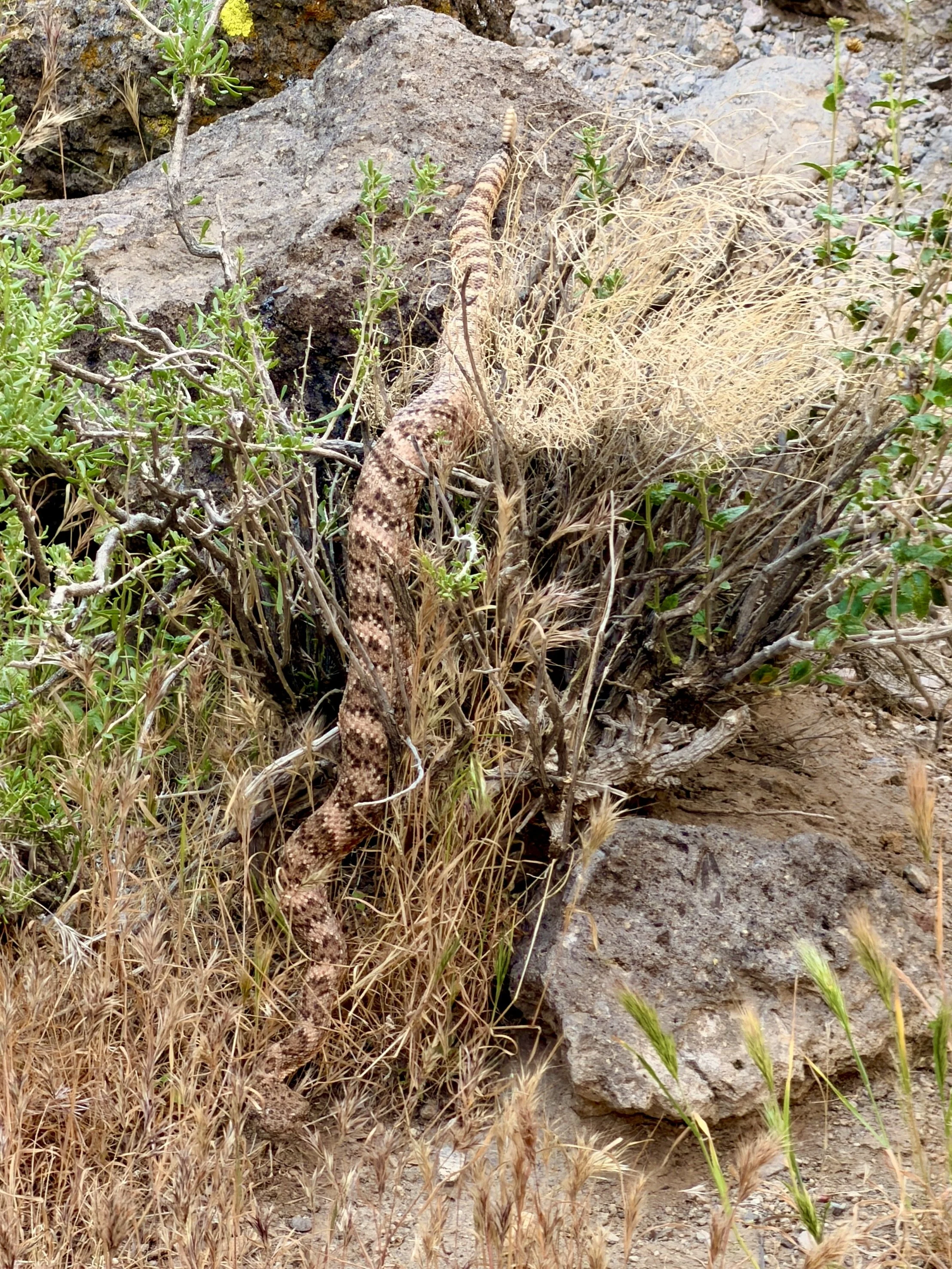
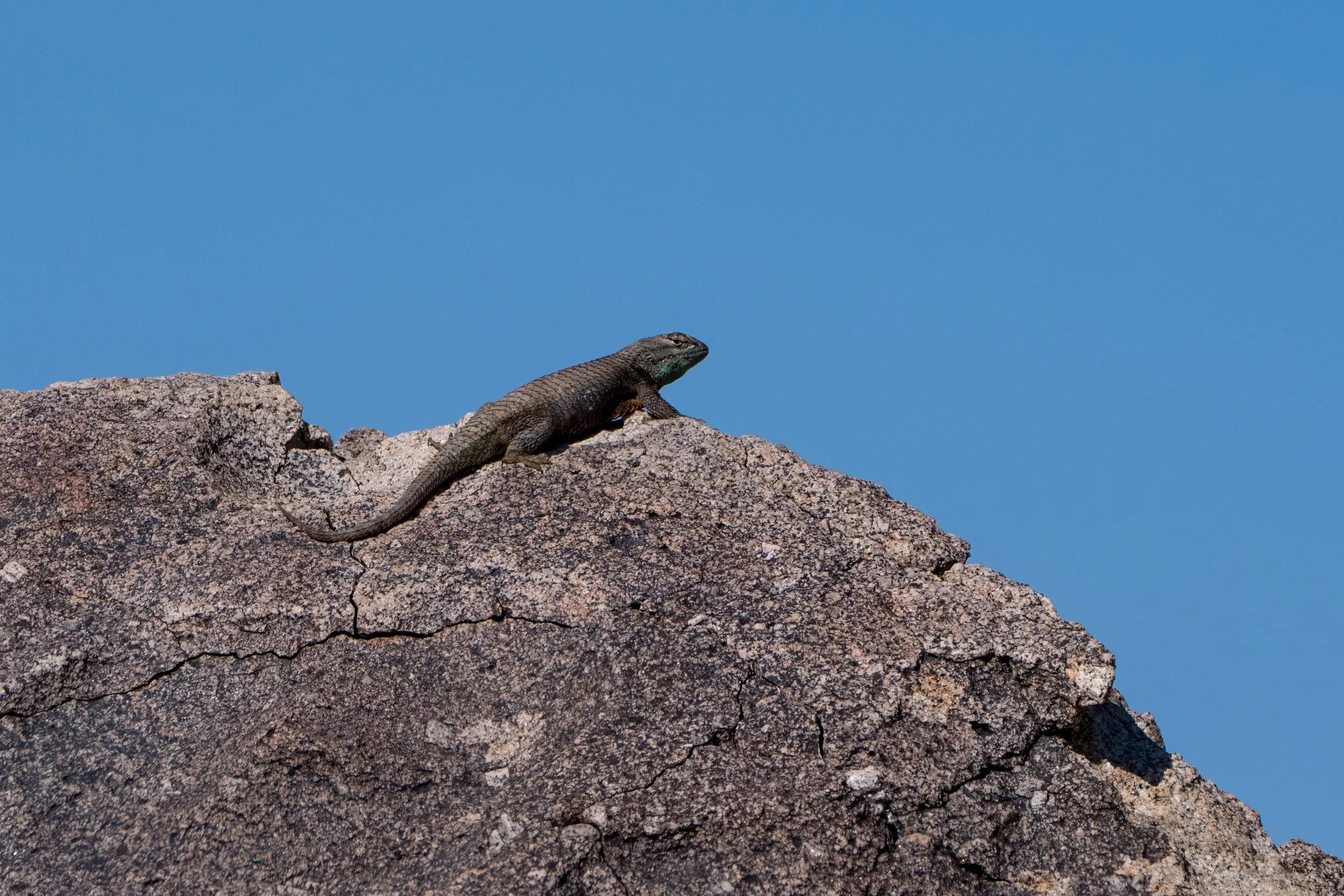
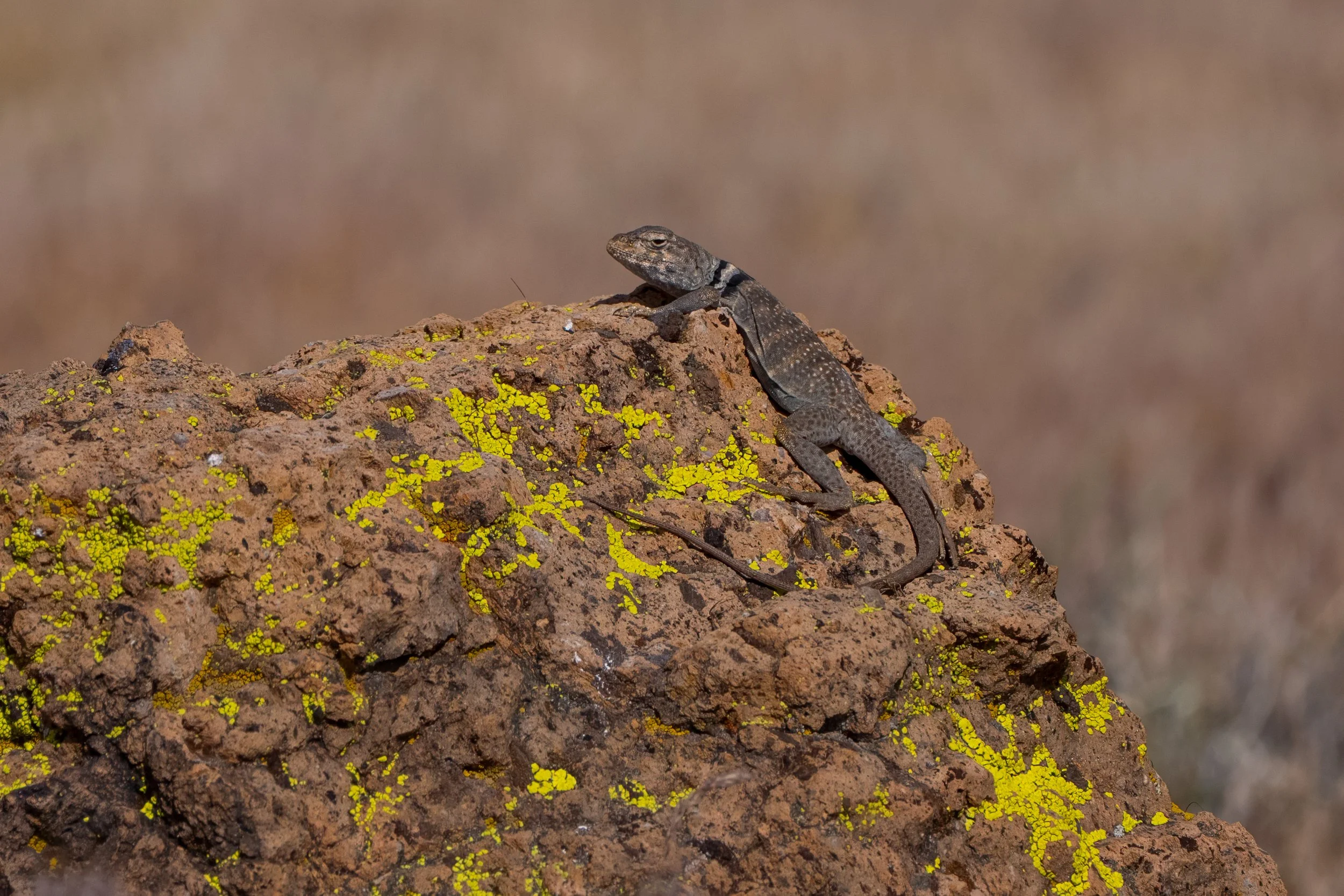
Warm rocks brought out Chuckwallas along the canyon trail. We found three basking in the sun, their heavy bodies surprisingly well matched to the volcanic stone. A Southwestern Speckled Rattlesnake blended into the same terrain so effectively that its pattern seemed to borrow the colors of the canyon. We gave it plenty of space and watched from a distance, after I yelled and scared my wife and mother-in-law to watch the step. It was inches from the trail, so startled us all!.
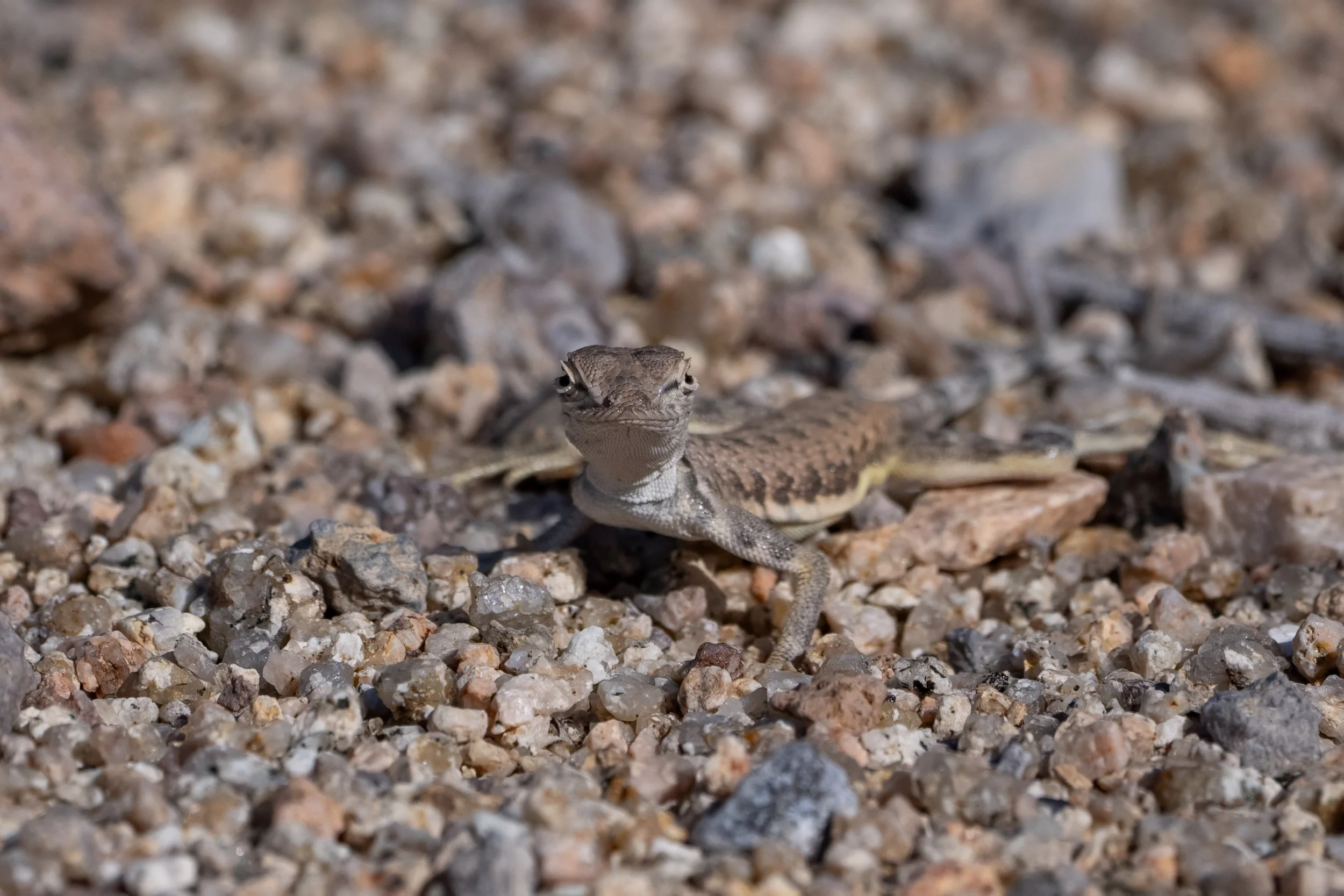
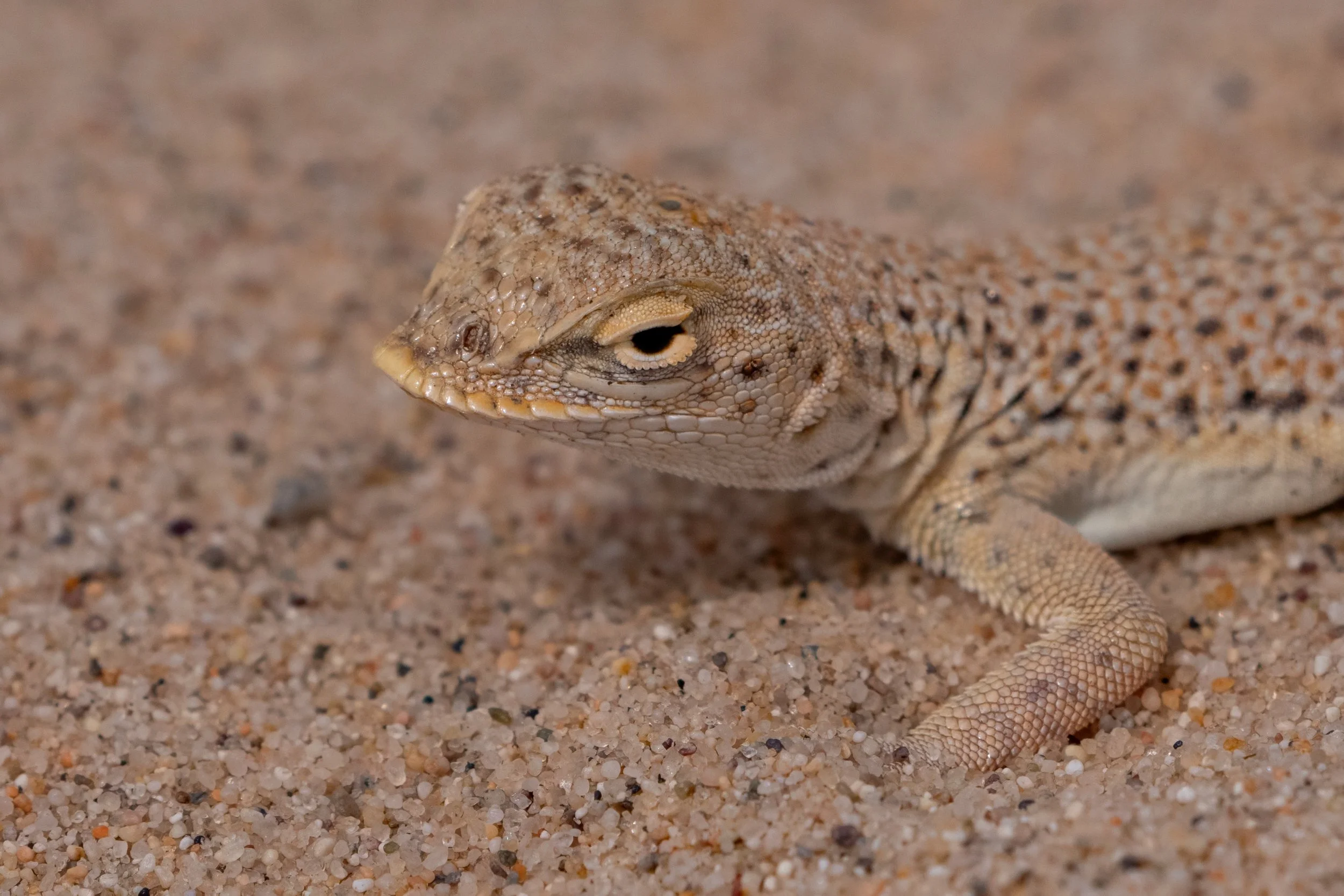
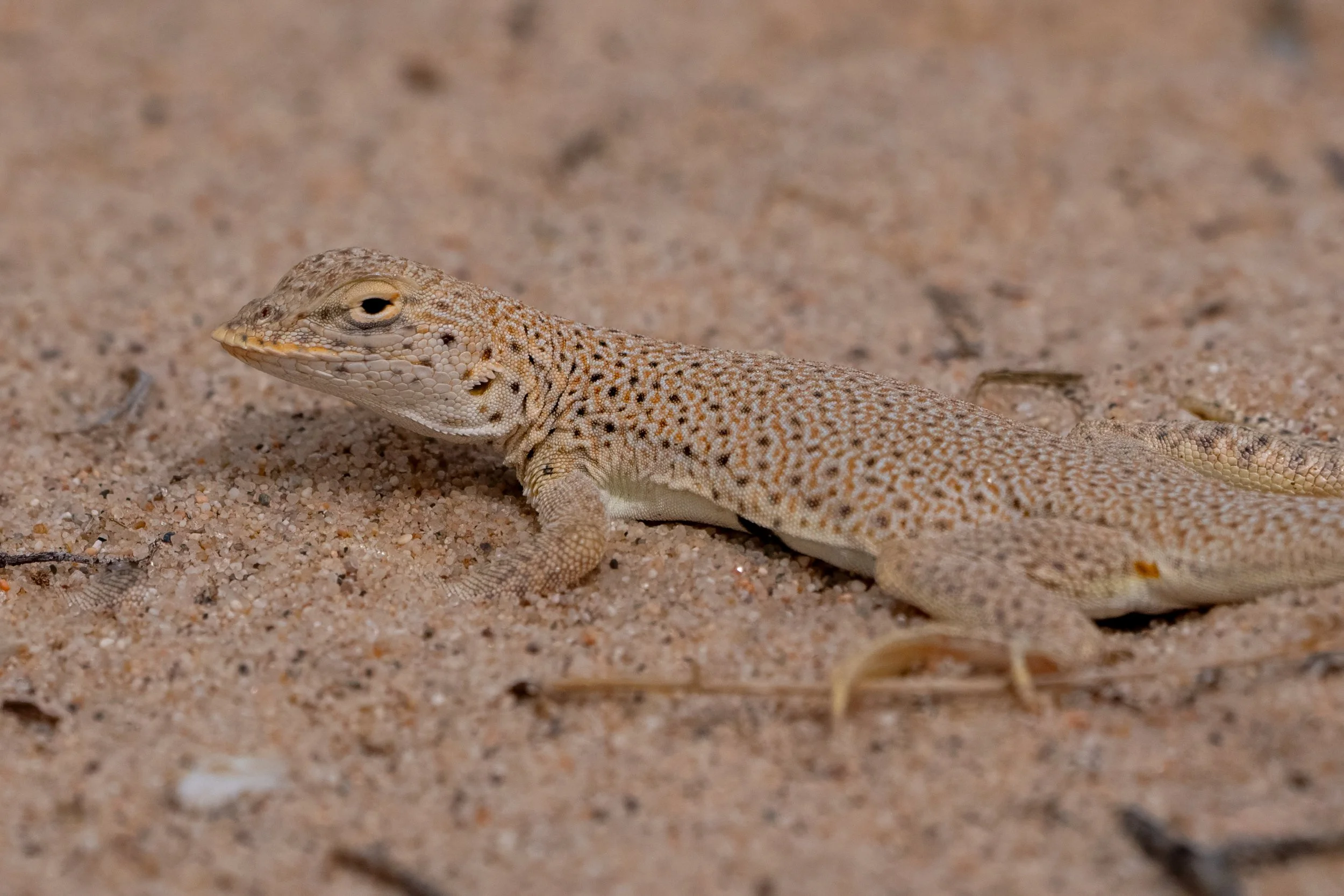
At Kelso Dunes, a dream come true siting of Mojave Fringe-toed Lizards sprinting across loose sand and disappearing beneath it. Their fringed toes give them traction on a surface that shifts under every step.
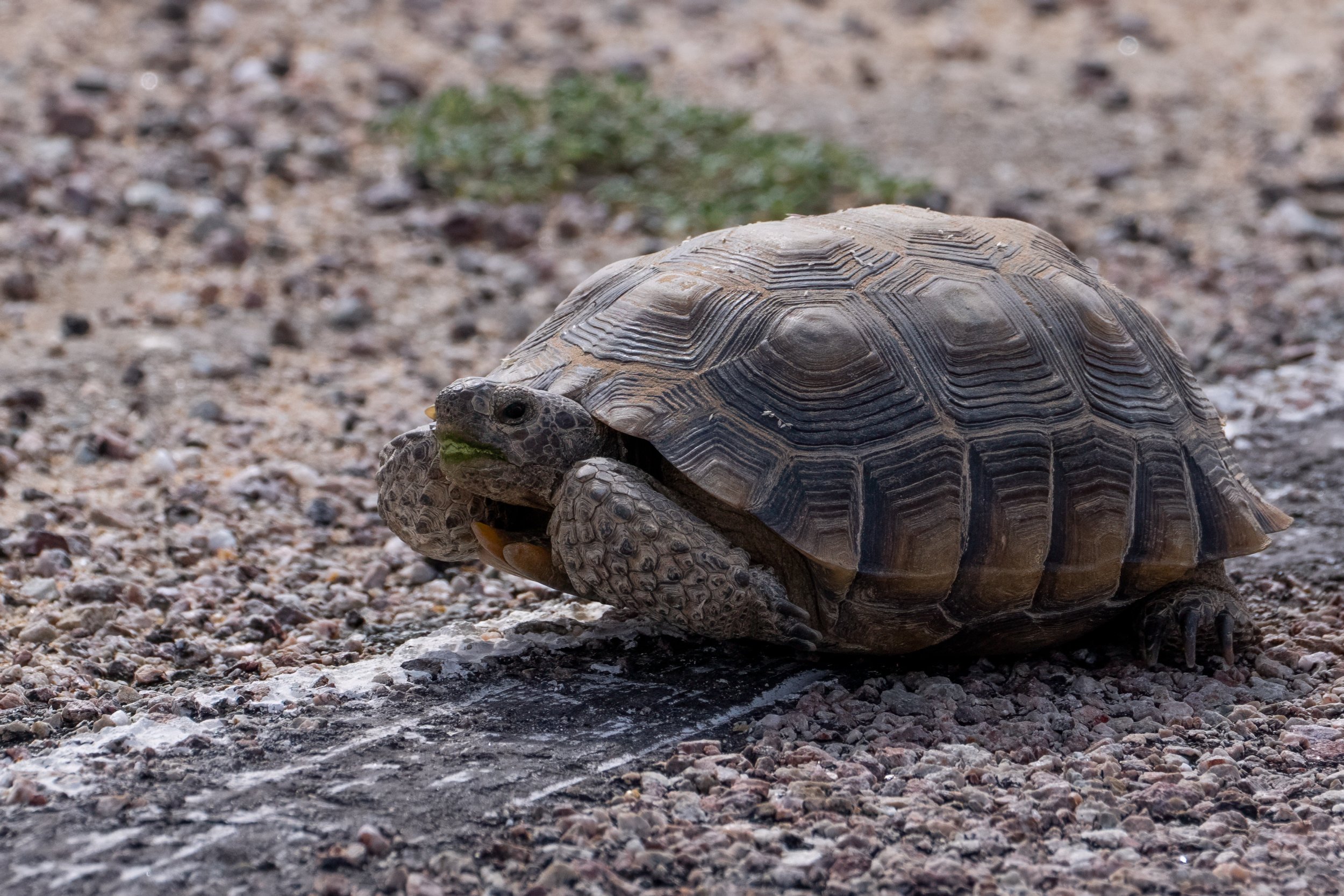
On our drive out of the preserve, an American Badger crossed the road in a flash, too quickly for a photo. It moved low and purposefully, then was gone. We also spotted a young Desert Tortoise crossing the road at a much slower pace. We stopped and waited until it reached the other side.
Butterflies and Spring Flowers
Butterflies followed the bloom around Hole-in-the-Wall. Checkered Whites and small skippers worked low flowers, Sleepy Oranges flashed bright color through the scrub, and a Desert Black Swallowtail opened its wings while feeding. At Kelso Dunes, a White-lined Sphinx Moth hovered at flowers like a hummingbird.
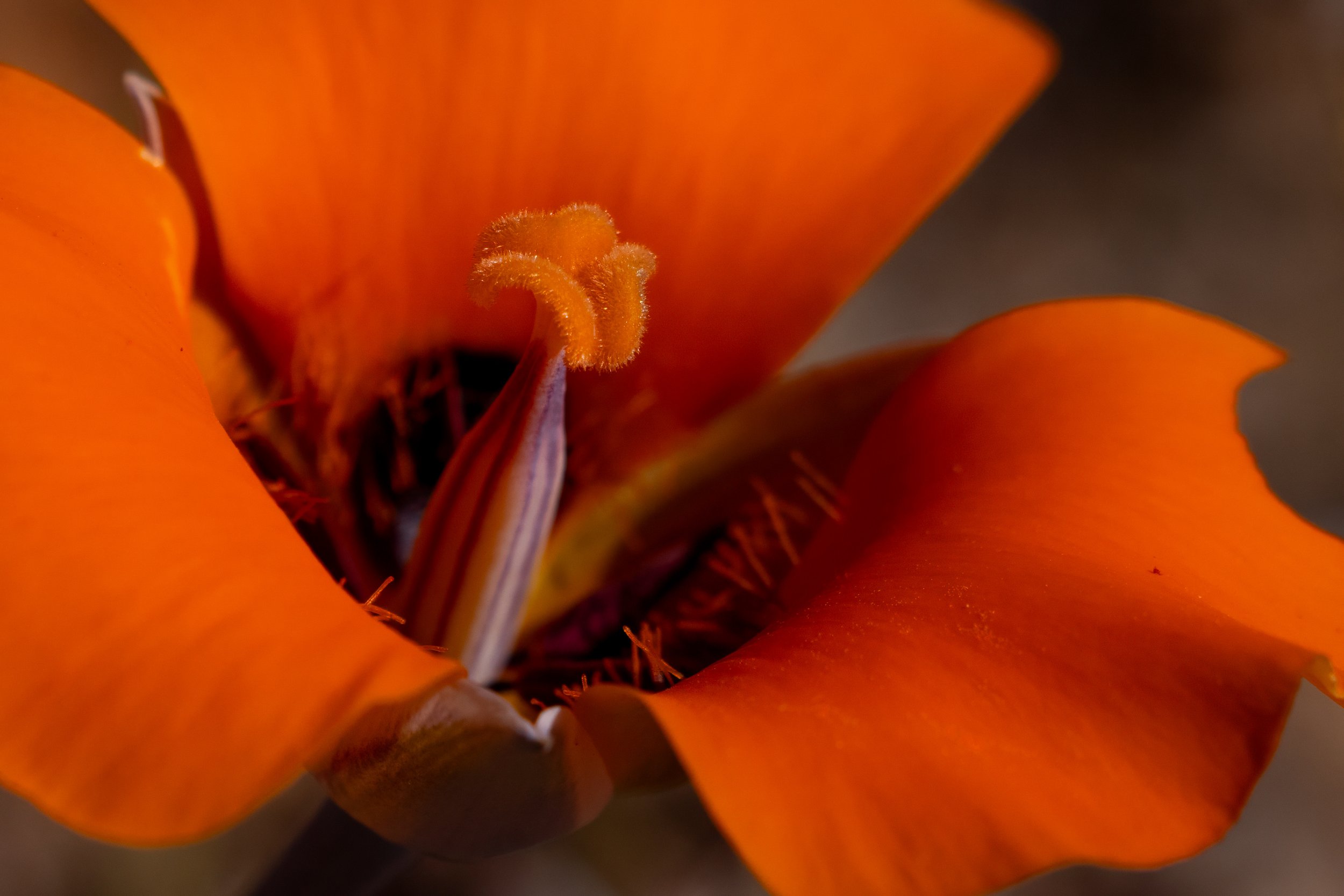
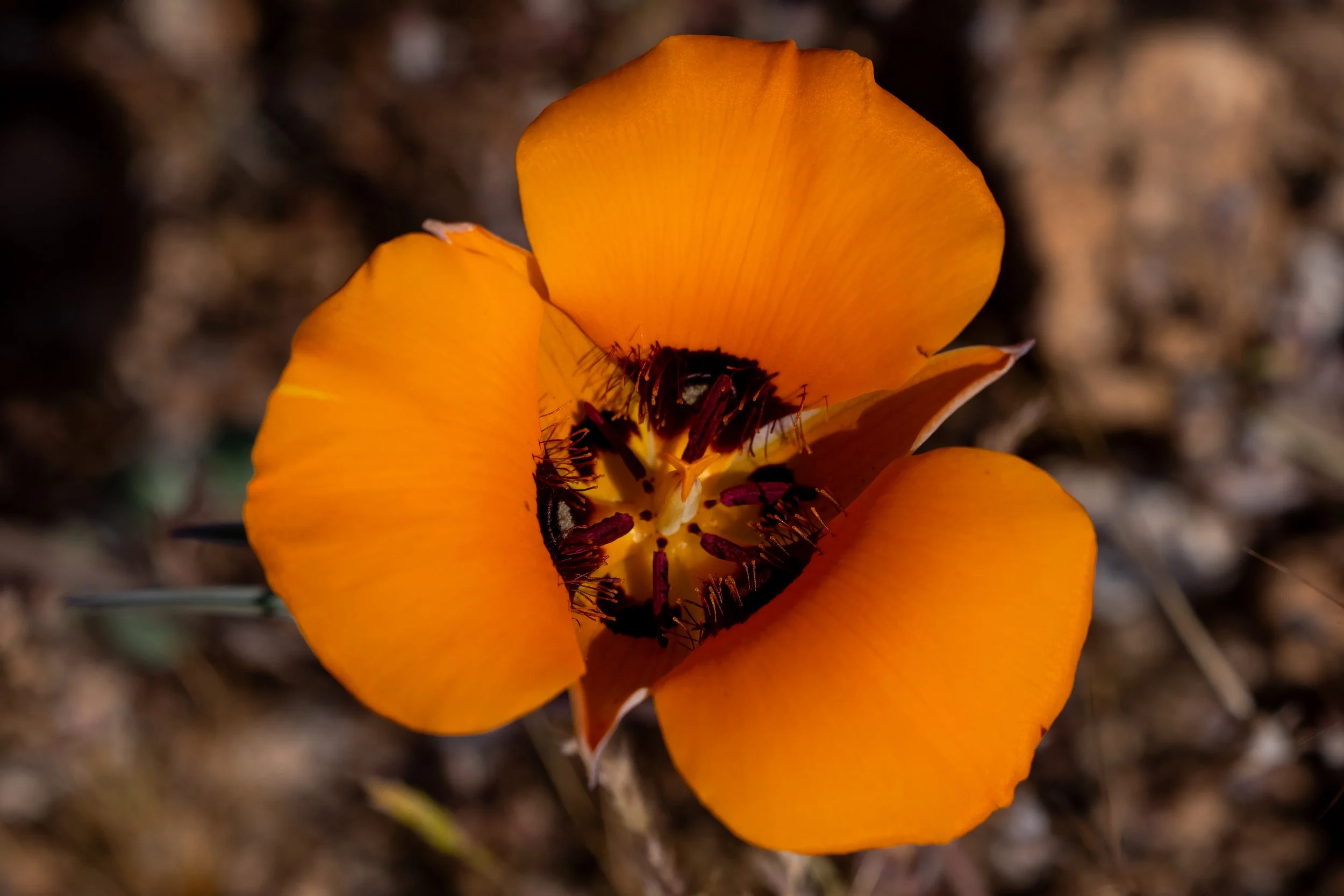
Apricot mallow brought warm orange to the roadsides, but the mariposa lilies were the flowers I most hoped to find. Desert Mariposa Lilies burned orange-red against rocky soil. The rare Munz's Mariposa Lilies were paler and more delicate, with soft lilac petals and a strong target flower that I hoped to find, then we found one, and dozens more! There were also Snakeleaf Mariposa Lilies growing in the particular sandy and alkaline habitat.
Desert Mariposa Lilies shown below are orange, in the top row. The Munz Mariposa are the yellow, in the second row.
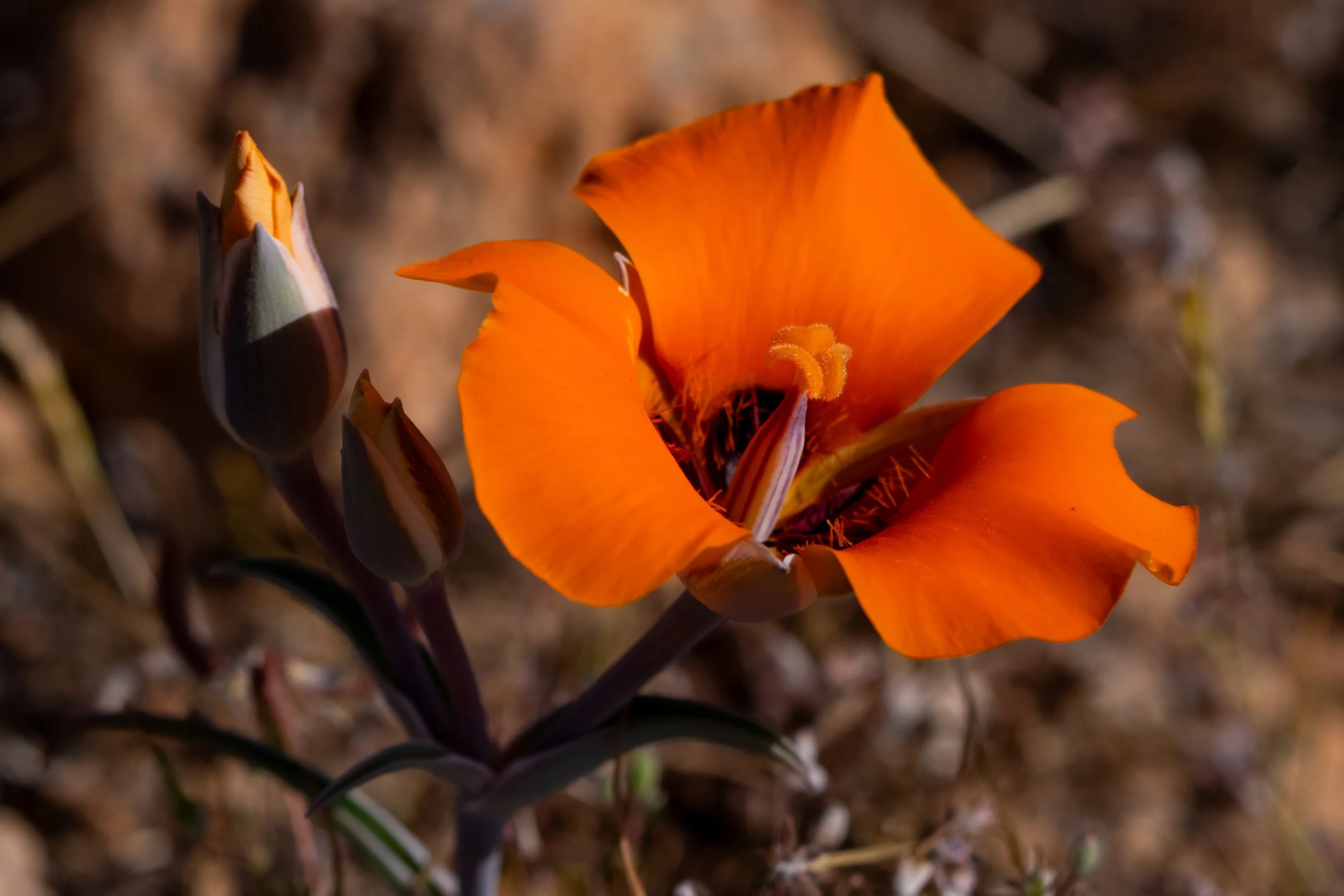
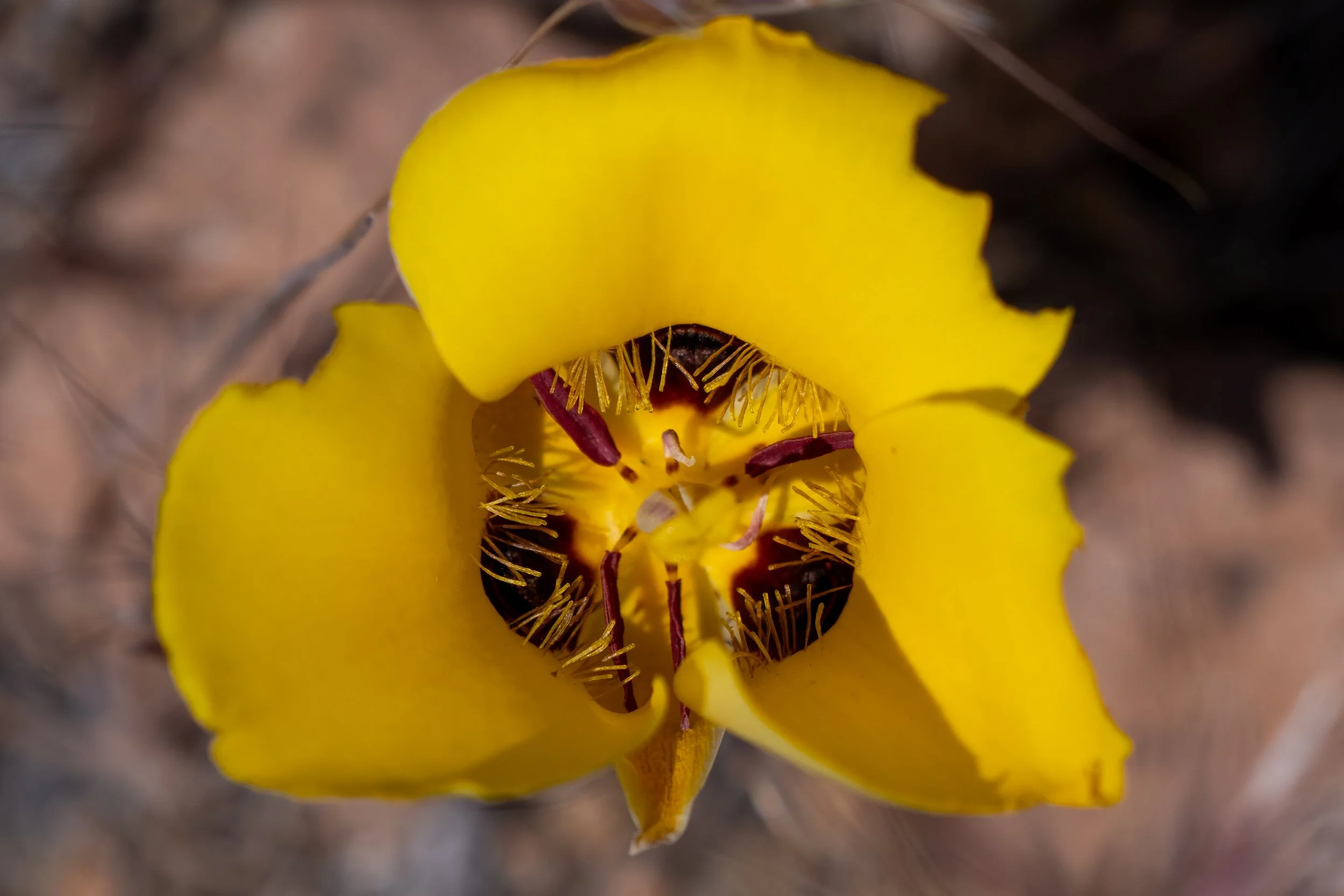
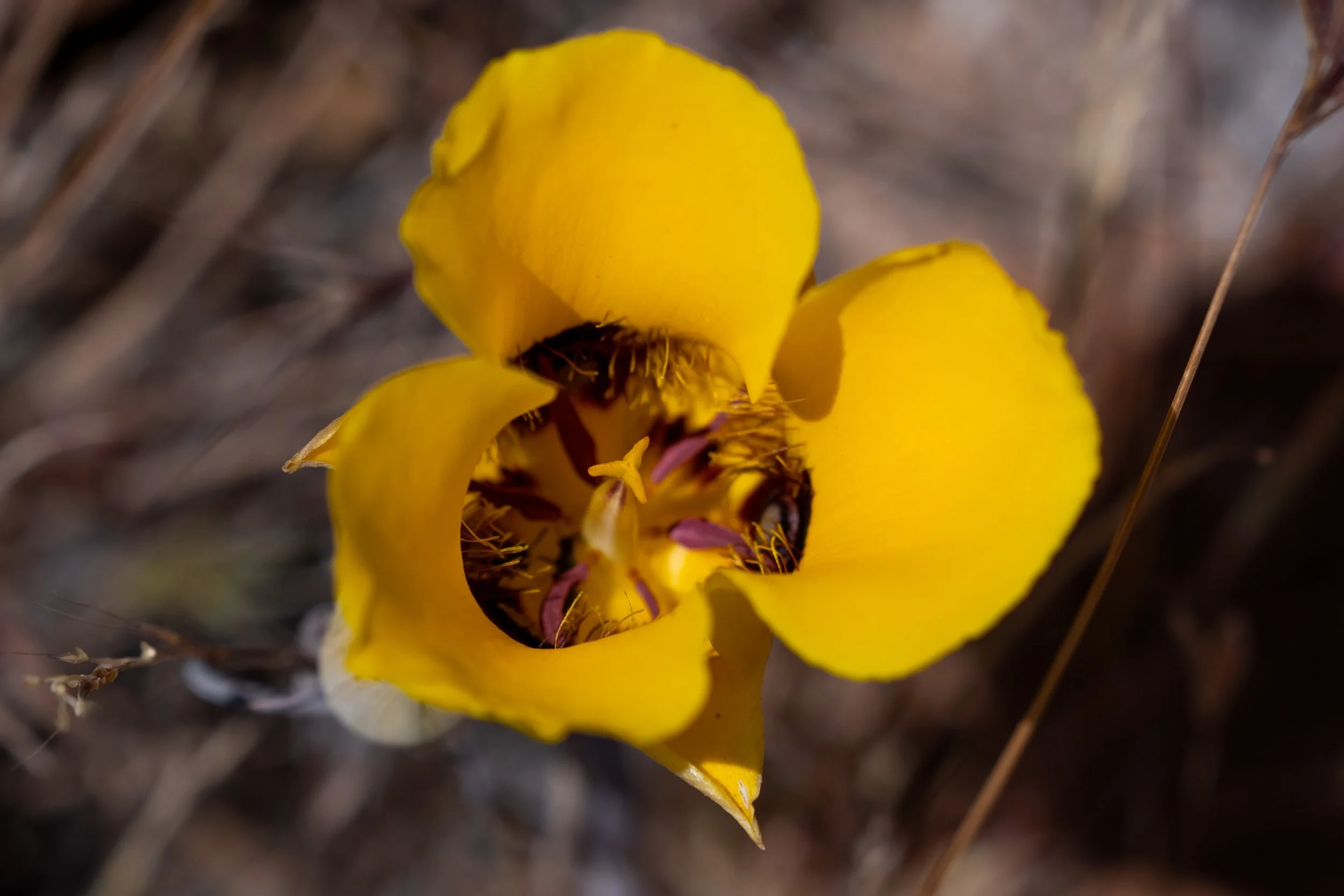
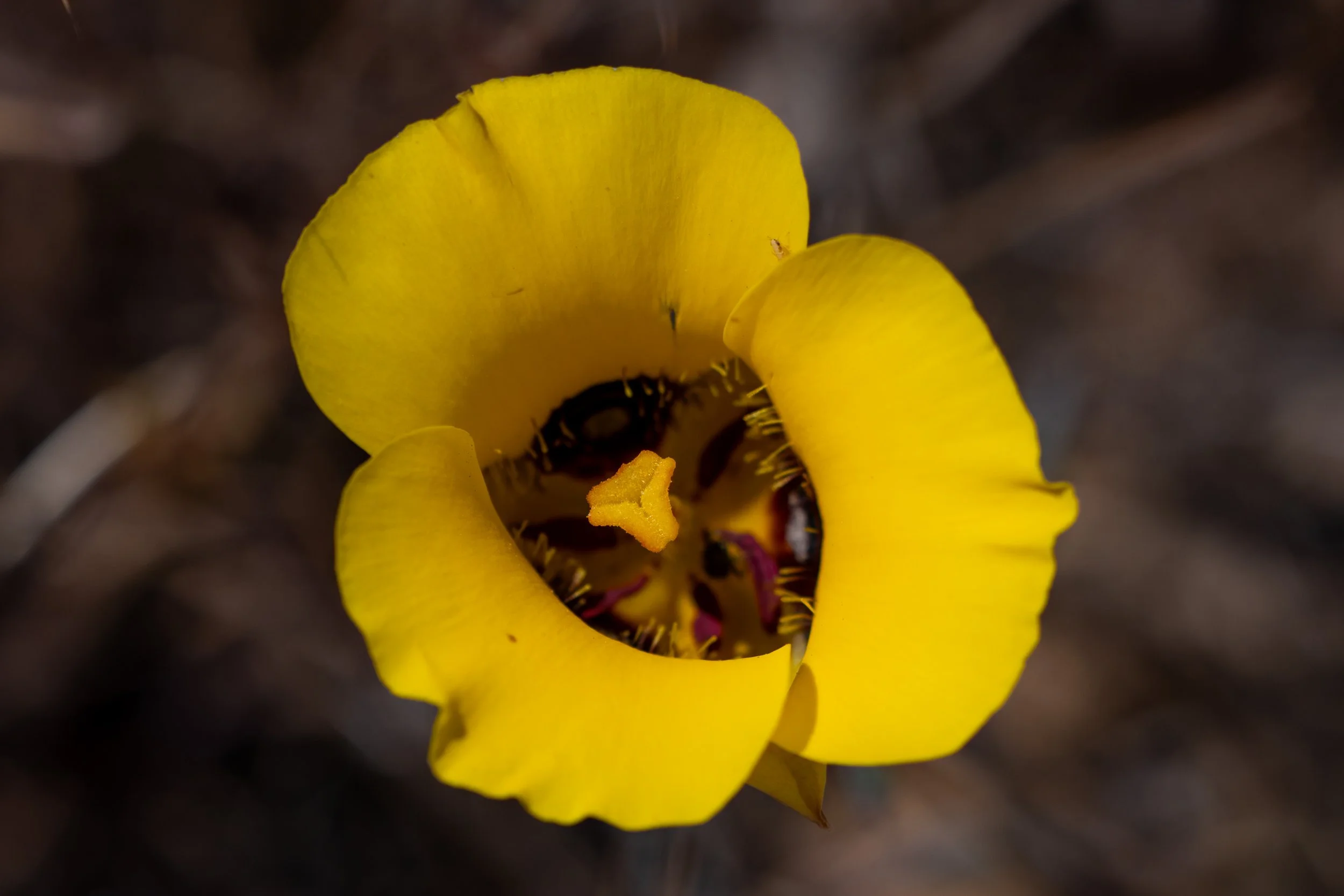
Finding all three gave us an excuse to slow down and to appreciate the beauty of these bright flowers bursting out of the sandy desert floor!
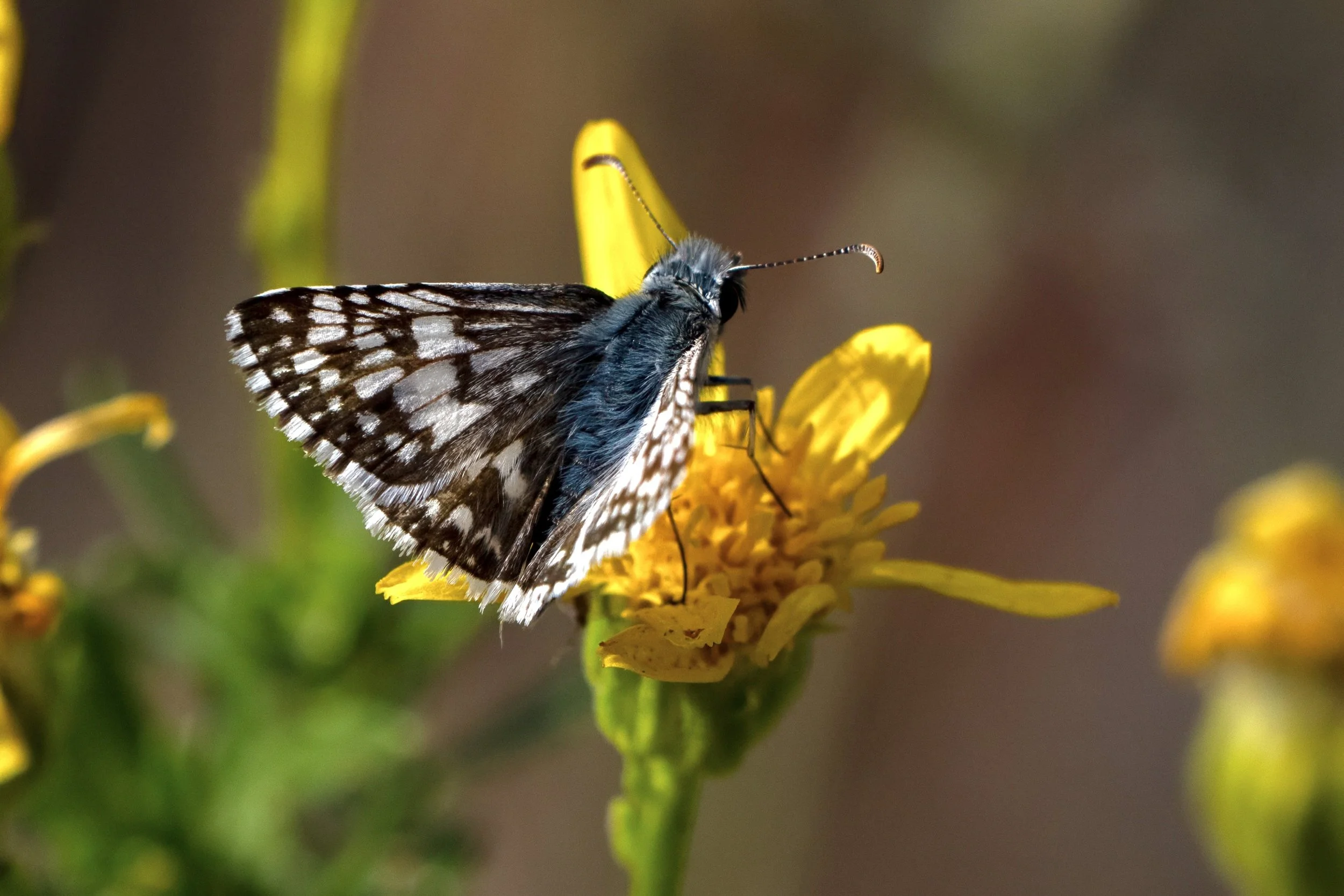
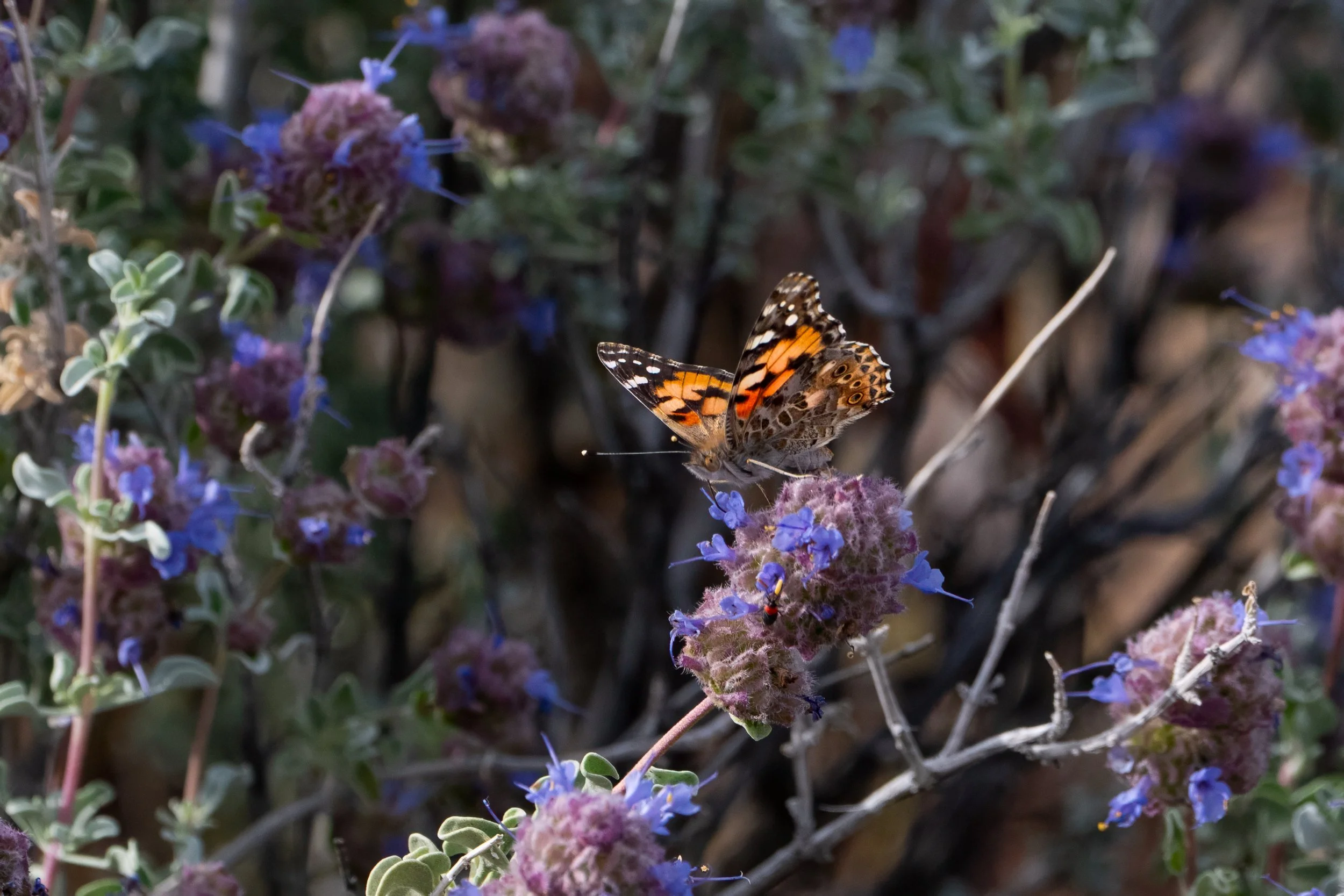
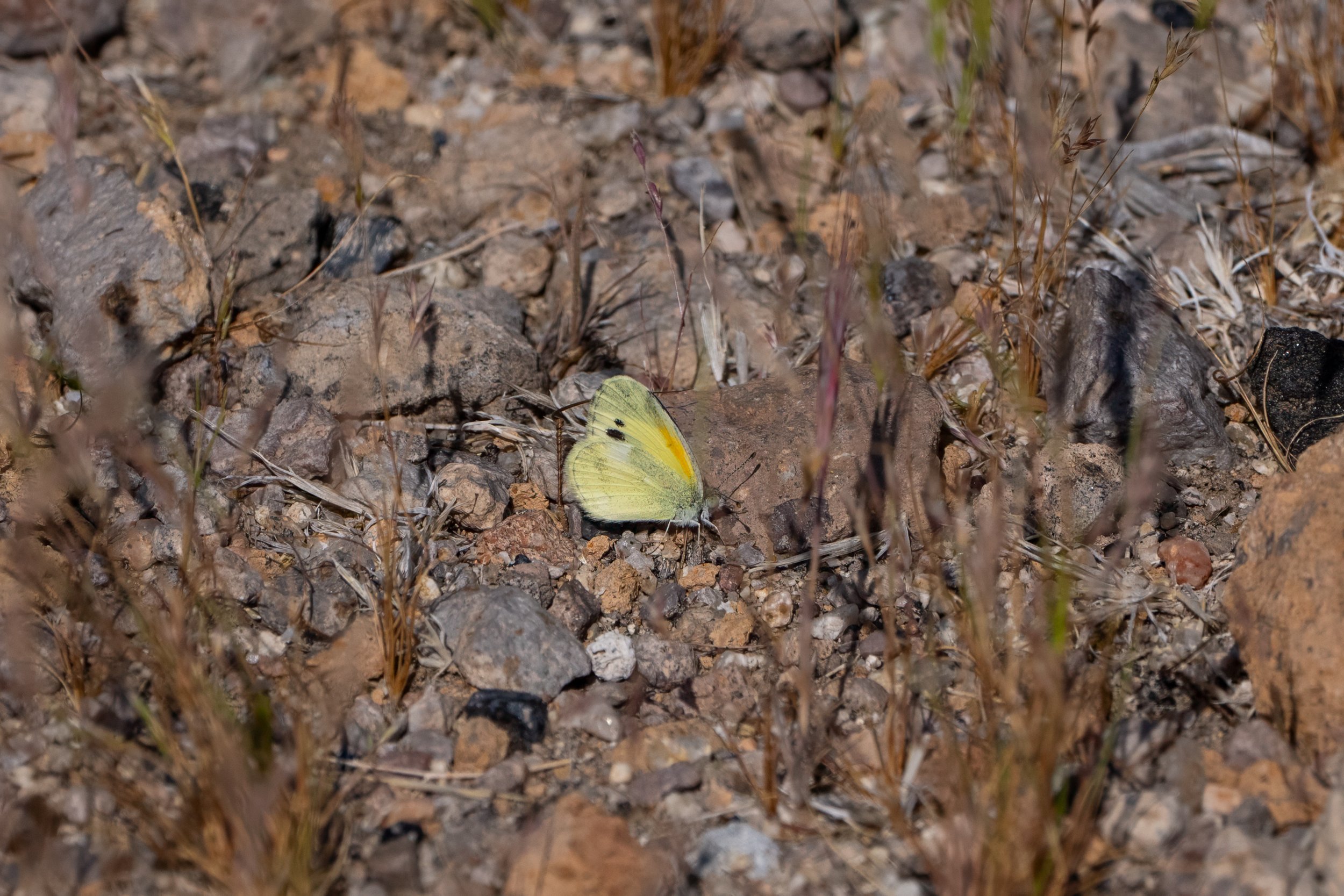
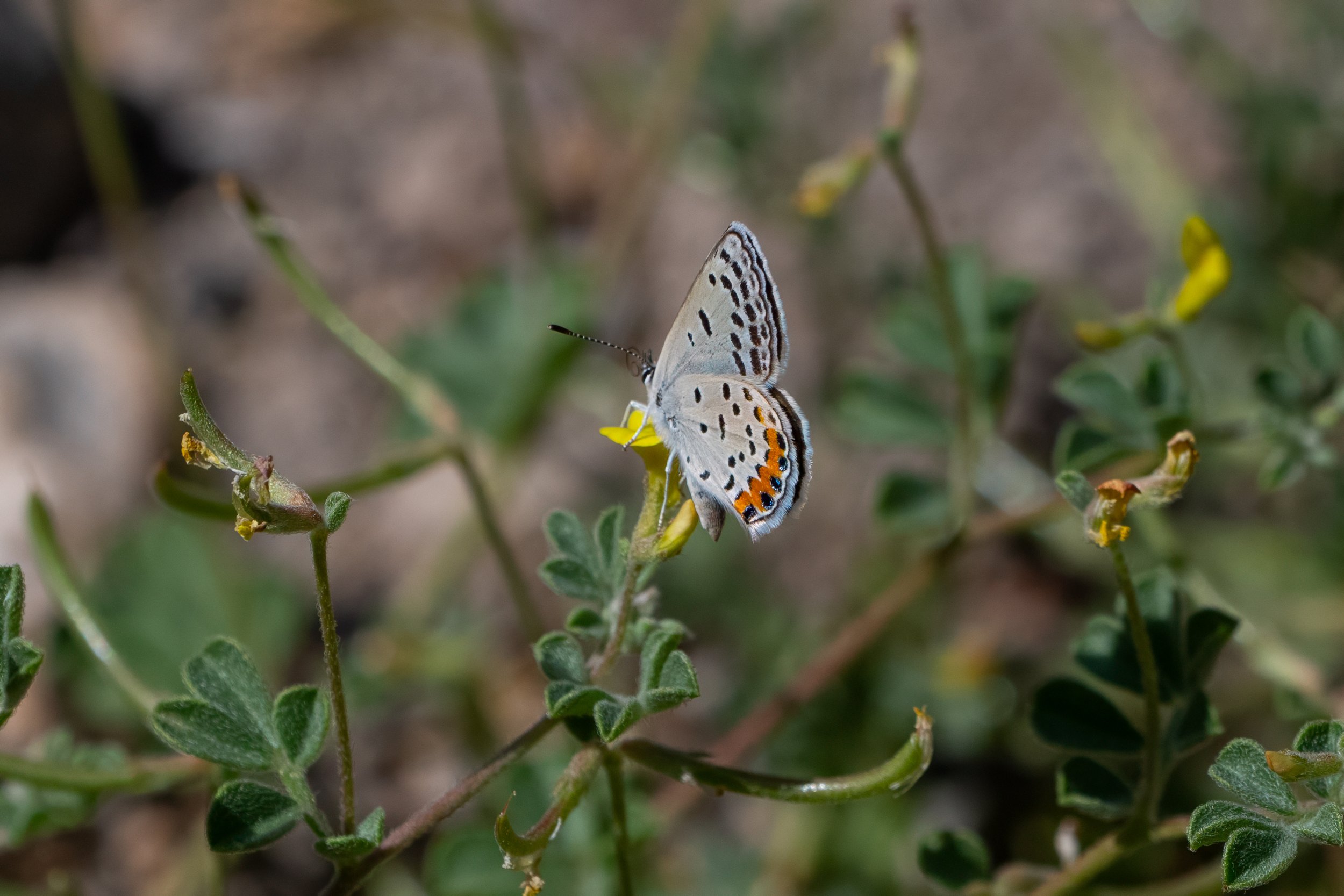
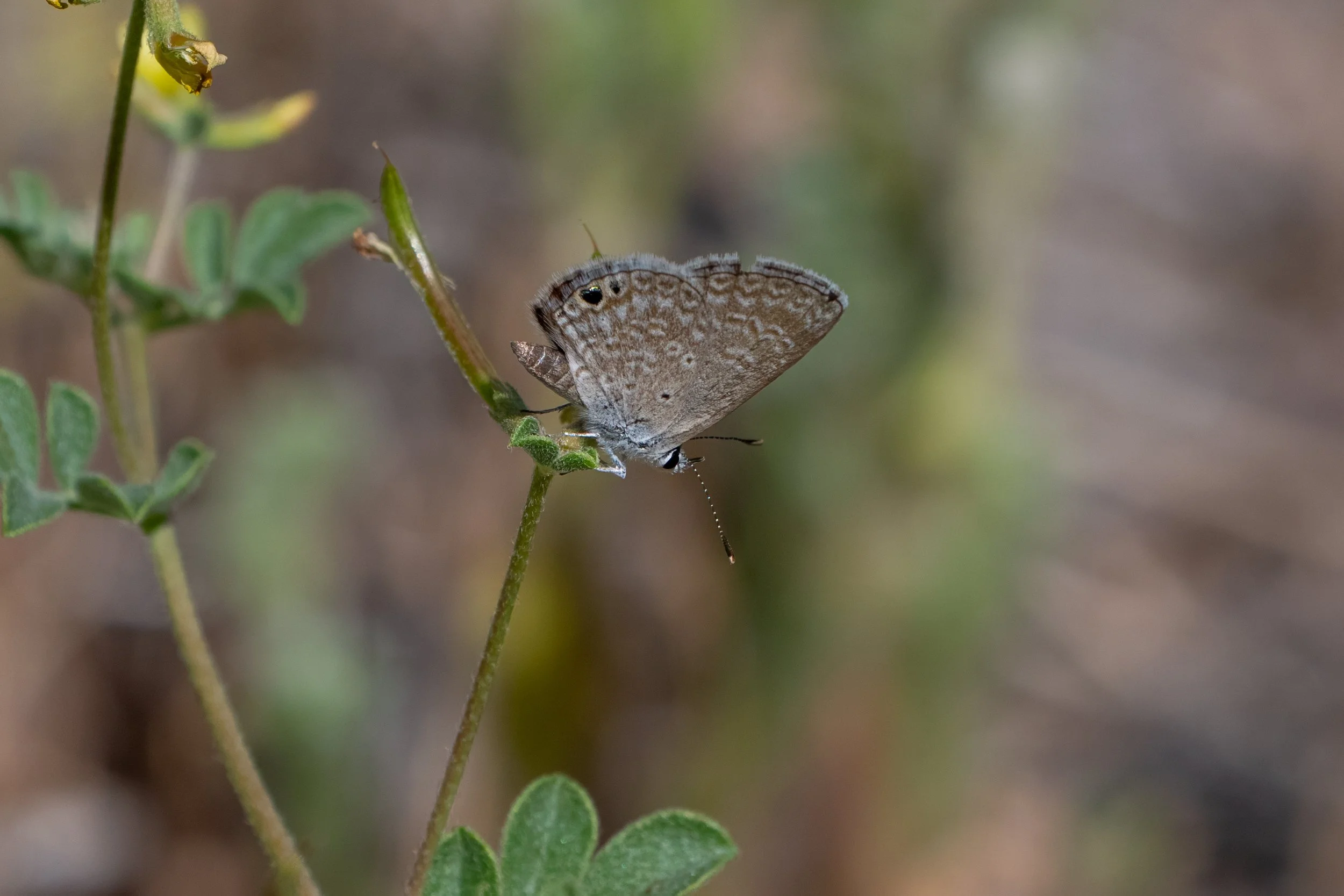
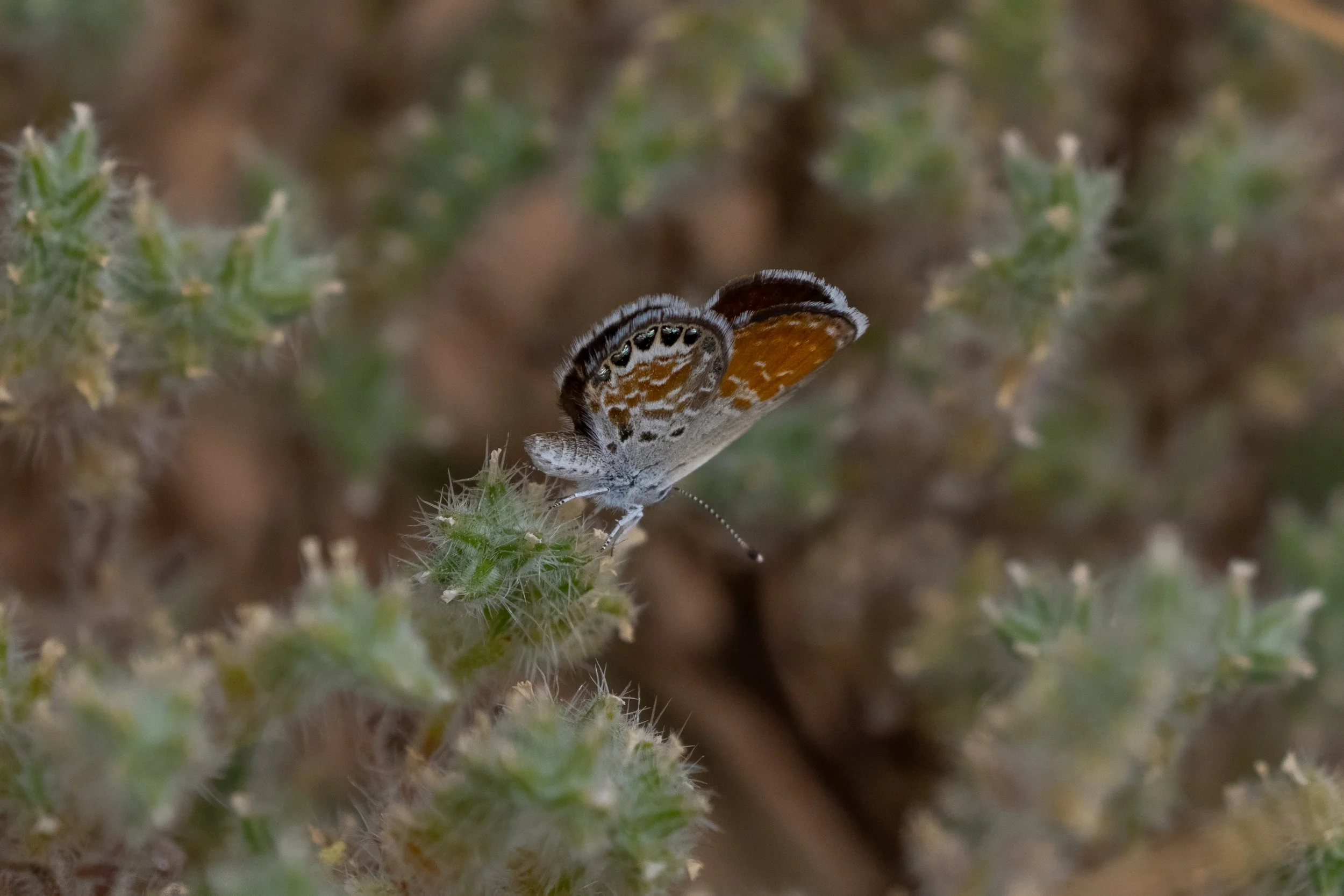
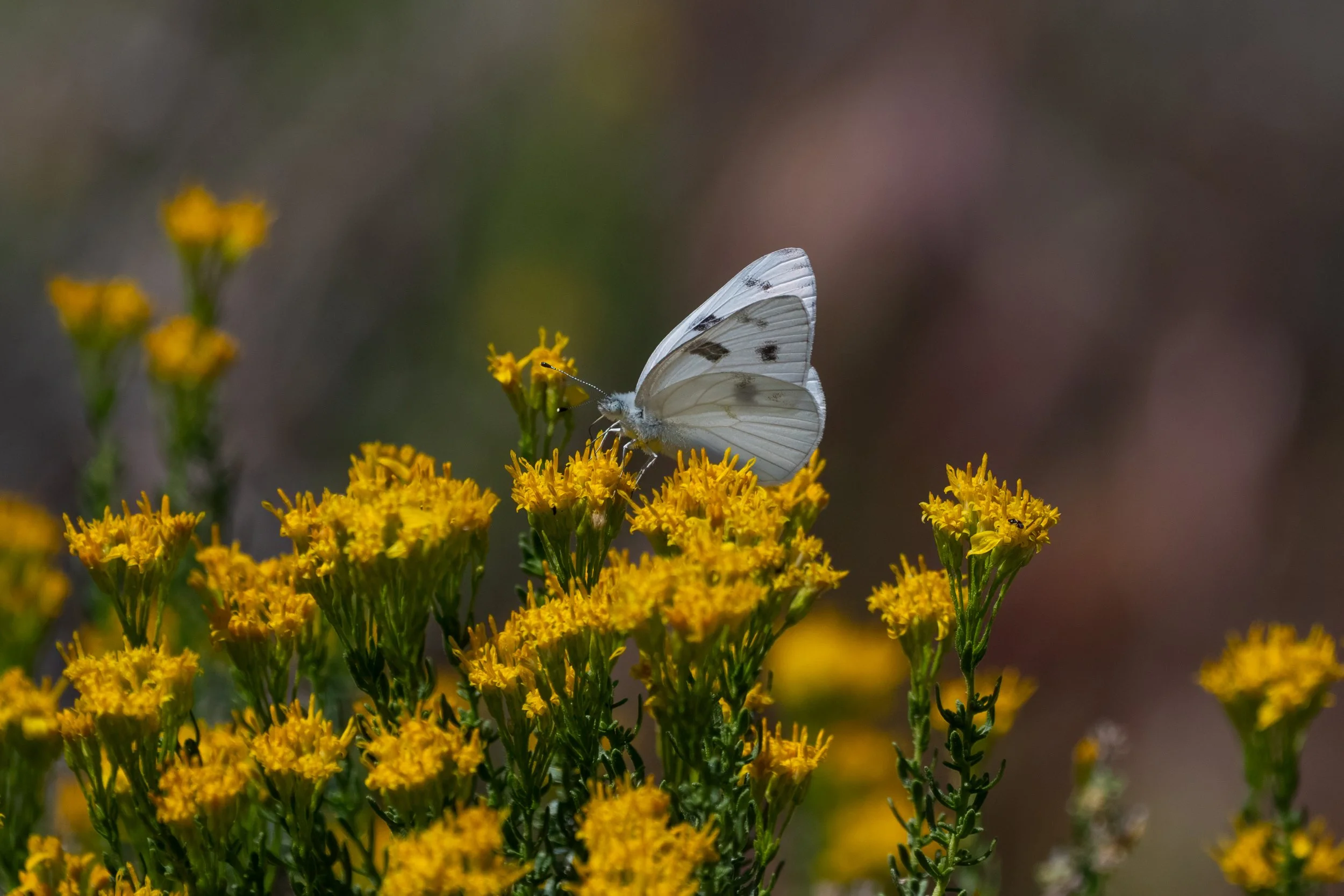
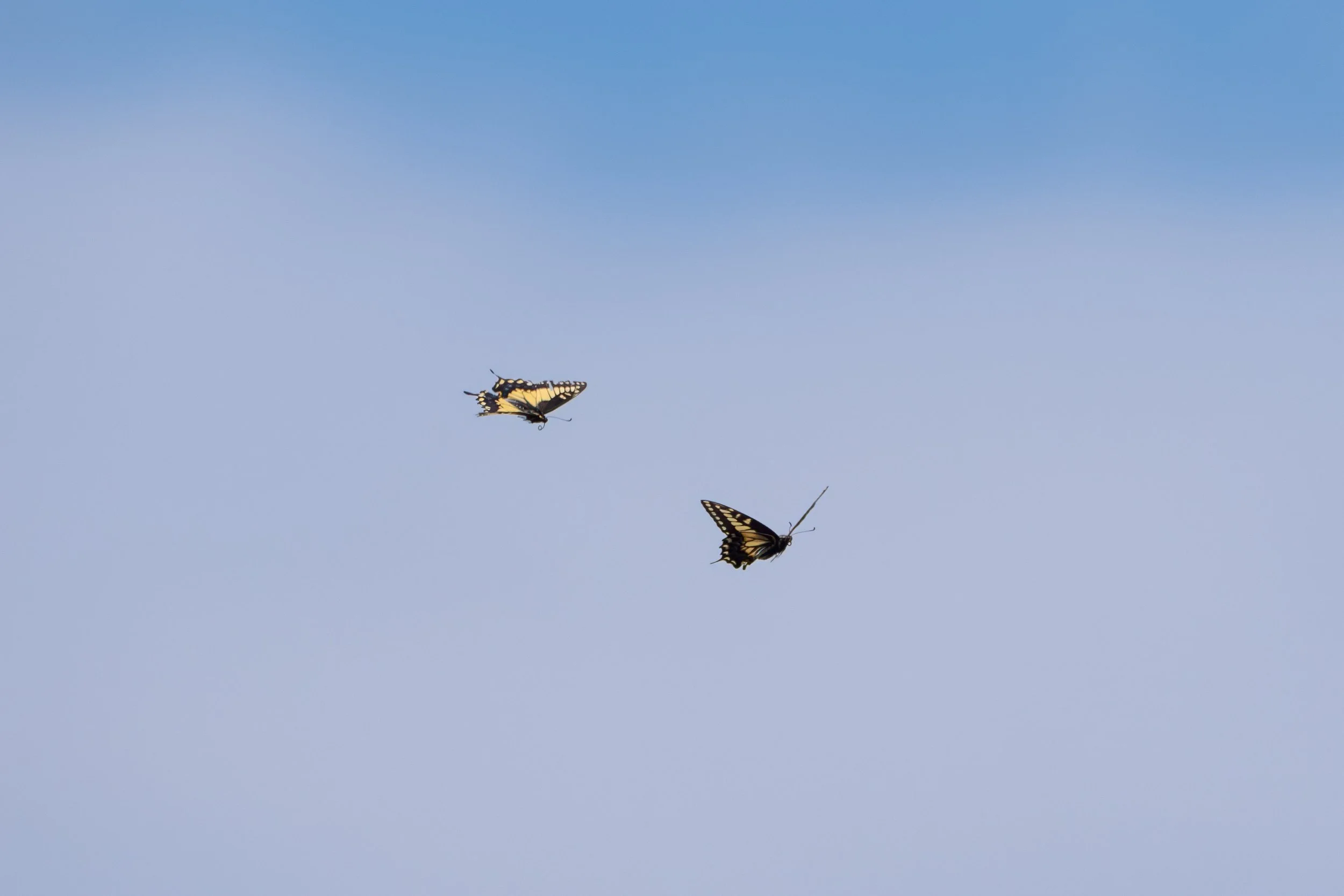
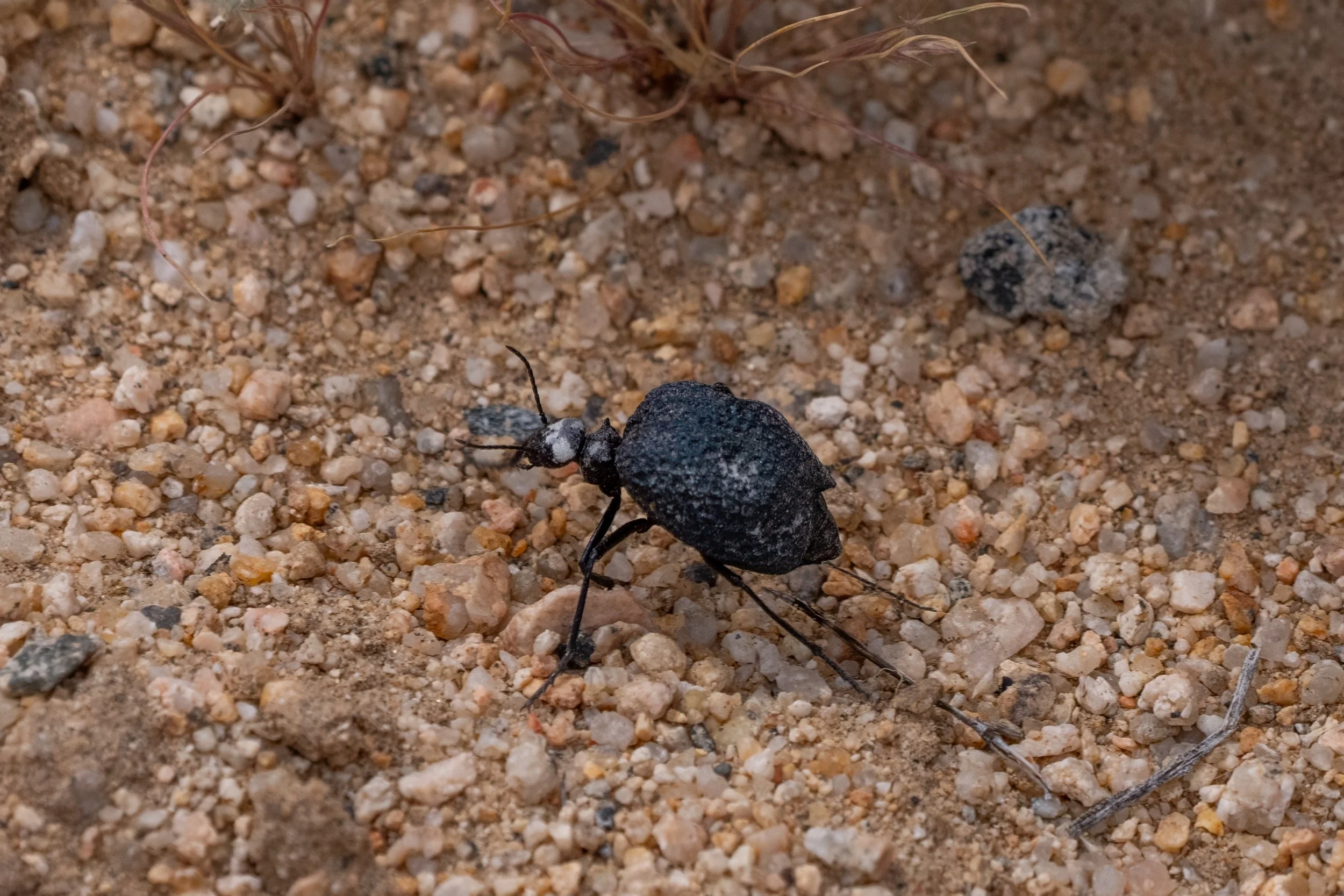
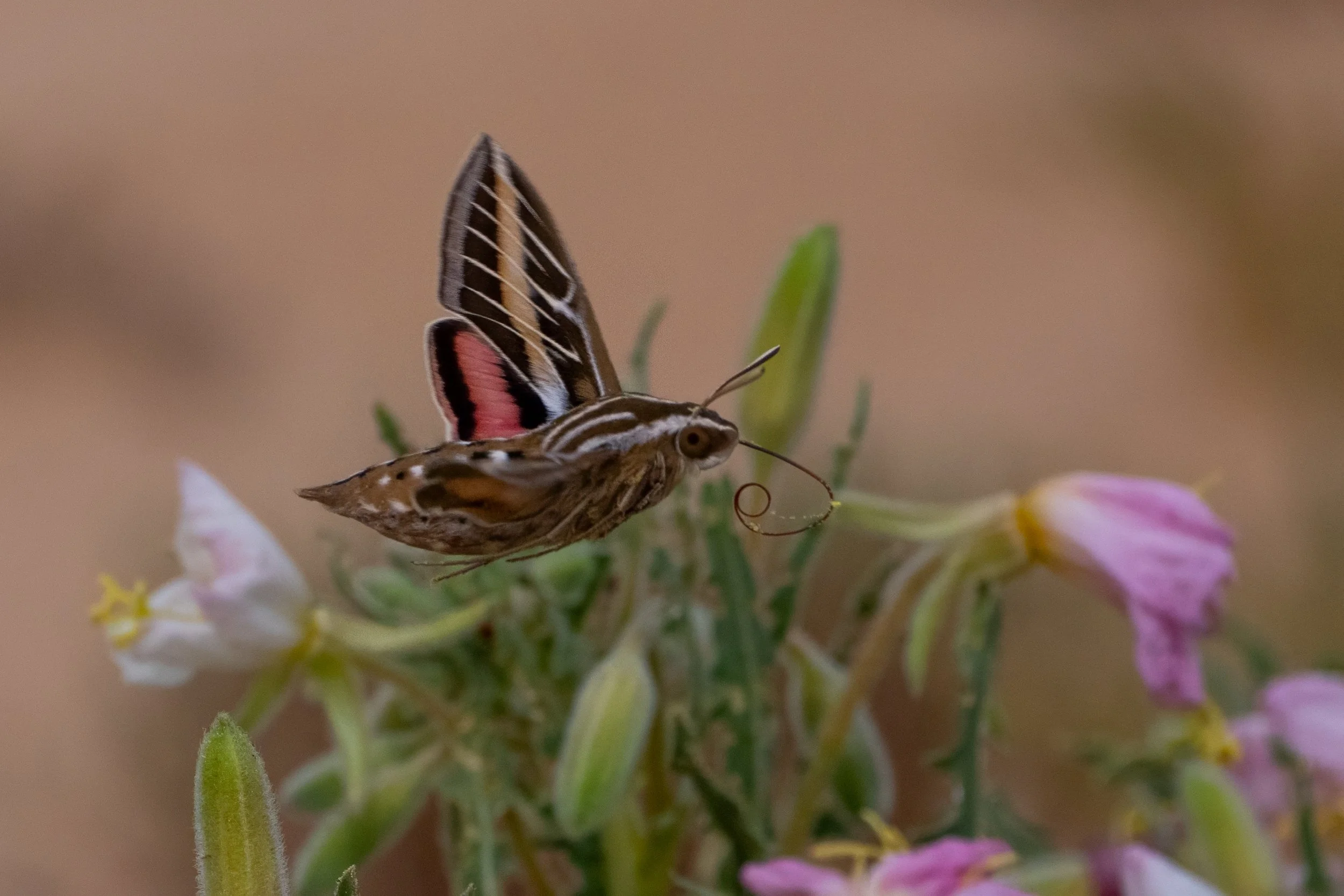
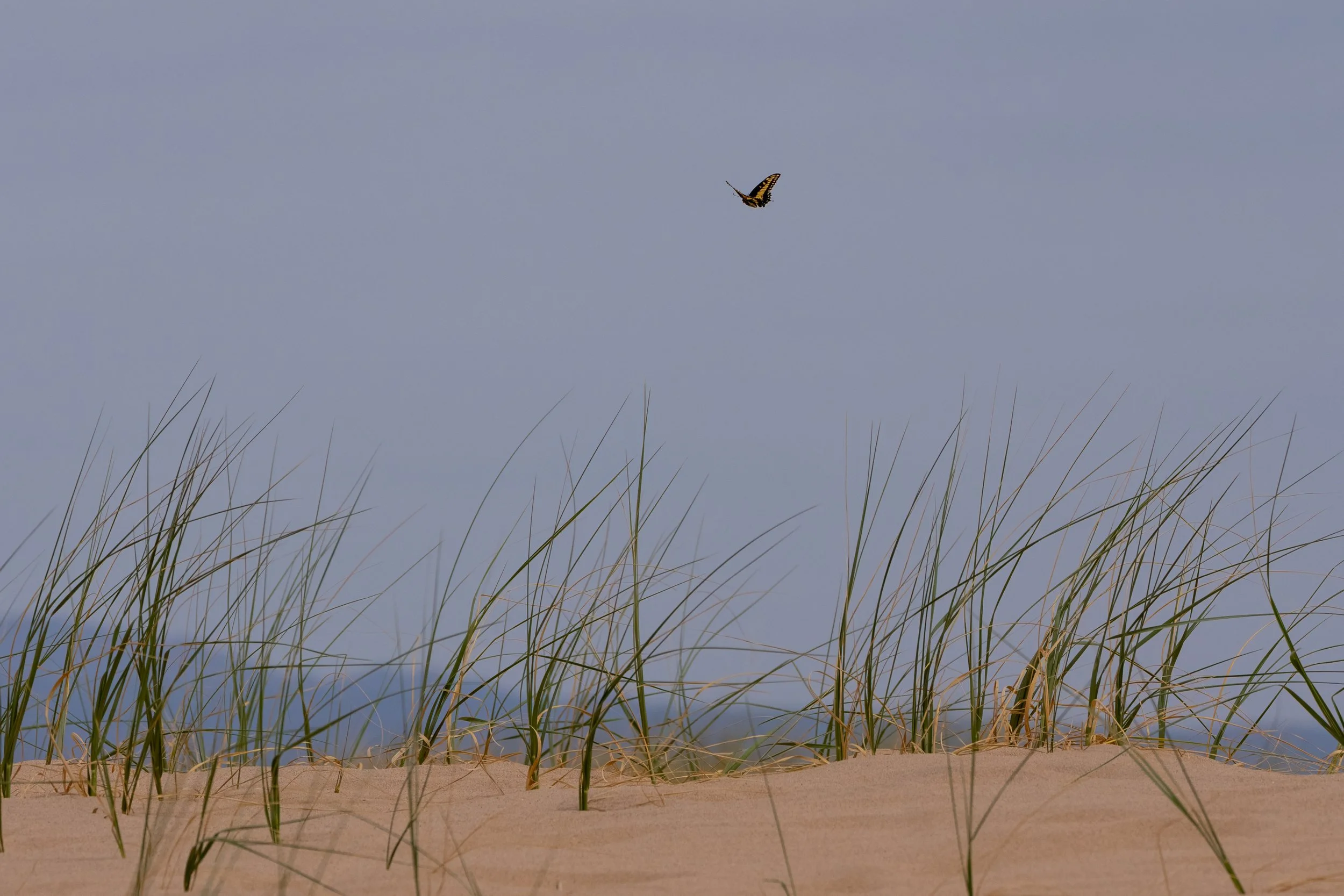
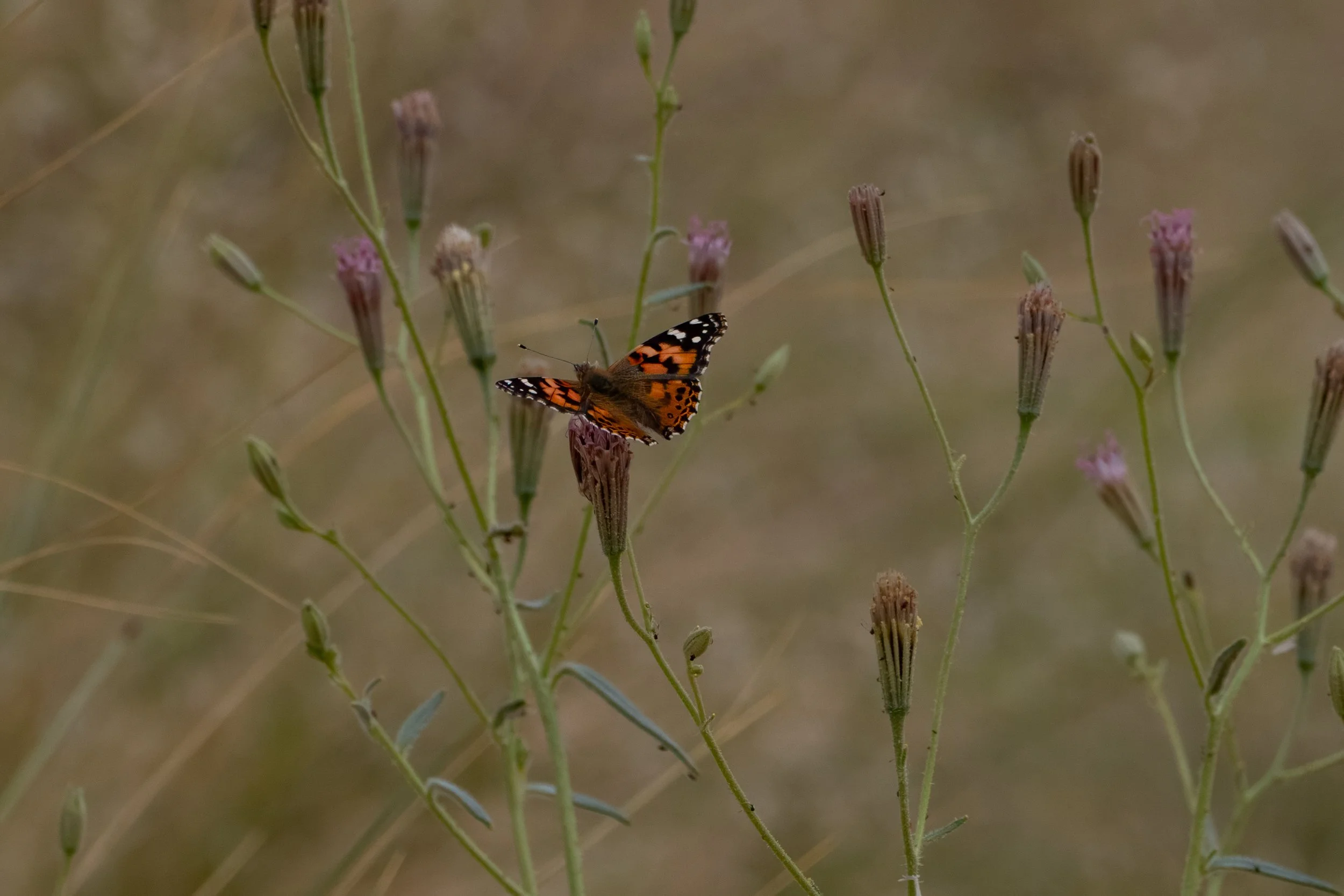
Named in order as shown in the grid above!
White-checkered Skipper, Panited Lady, Dainty Sulphur
Lupine Blue, Ceraunus Blue, Western Pygmy-Blue
Checkered White, Black Swallowtails, Inflated Beetle
White-lined Sphinx (moth), Black Swallowtail, Painted Lady
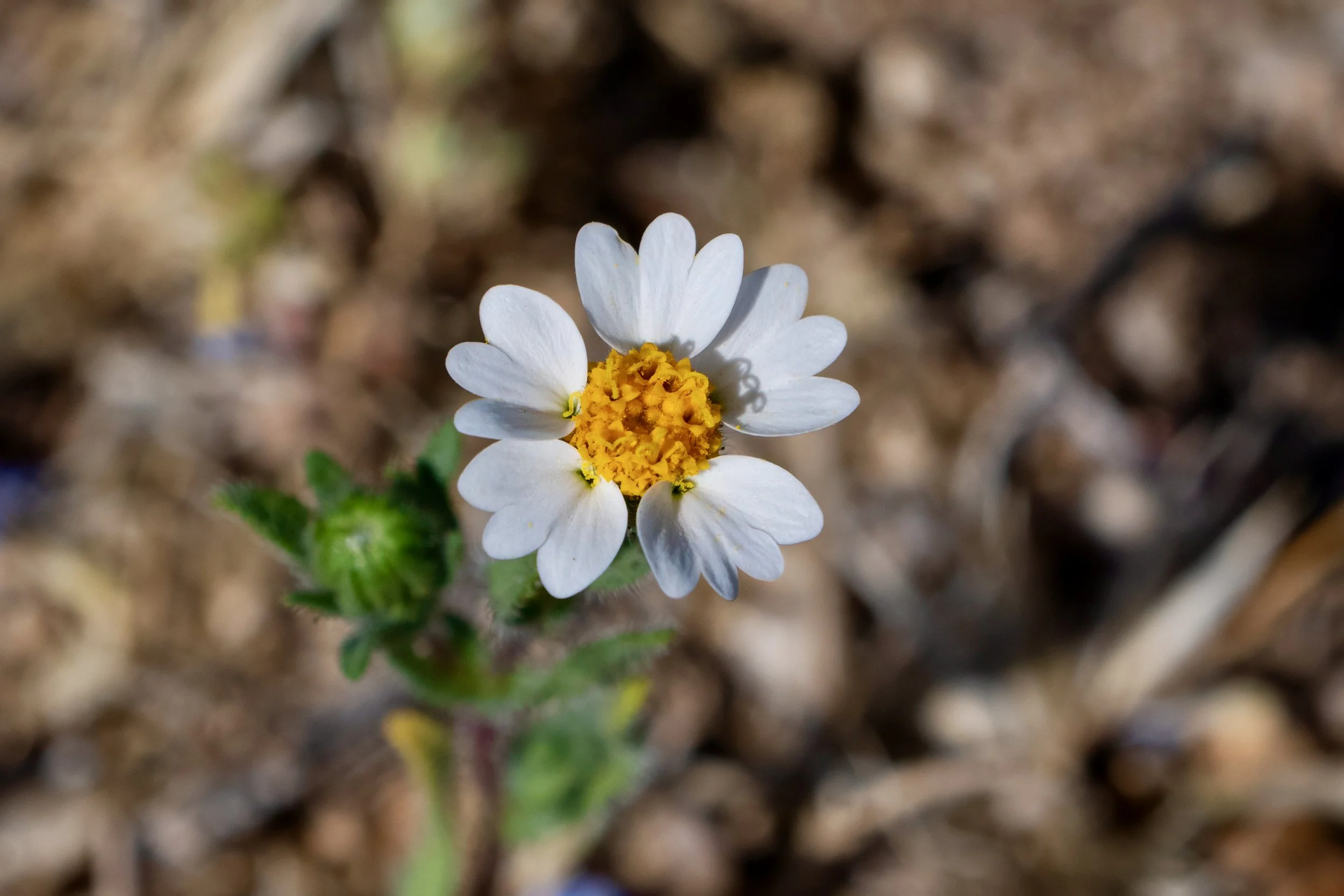
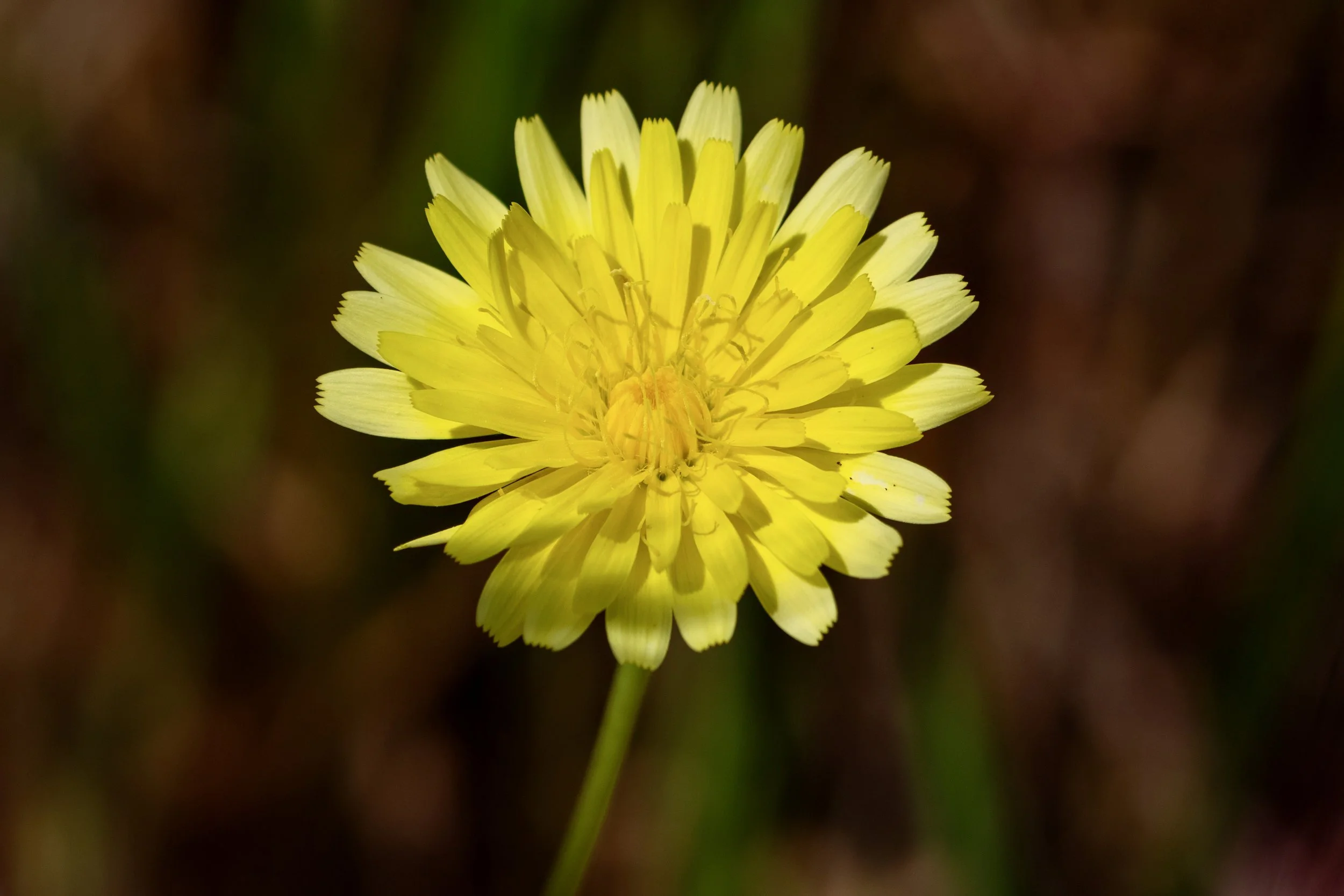
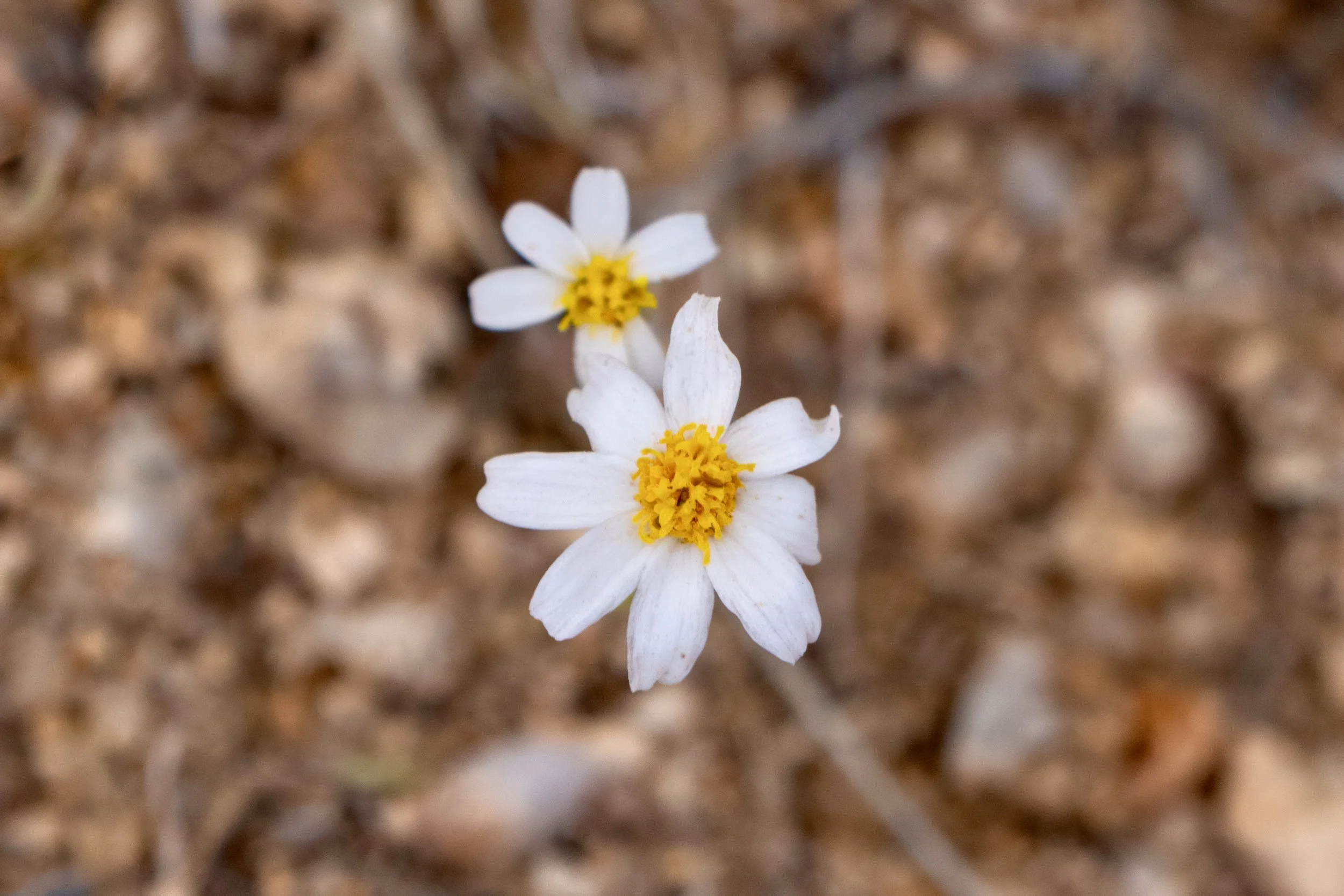
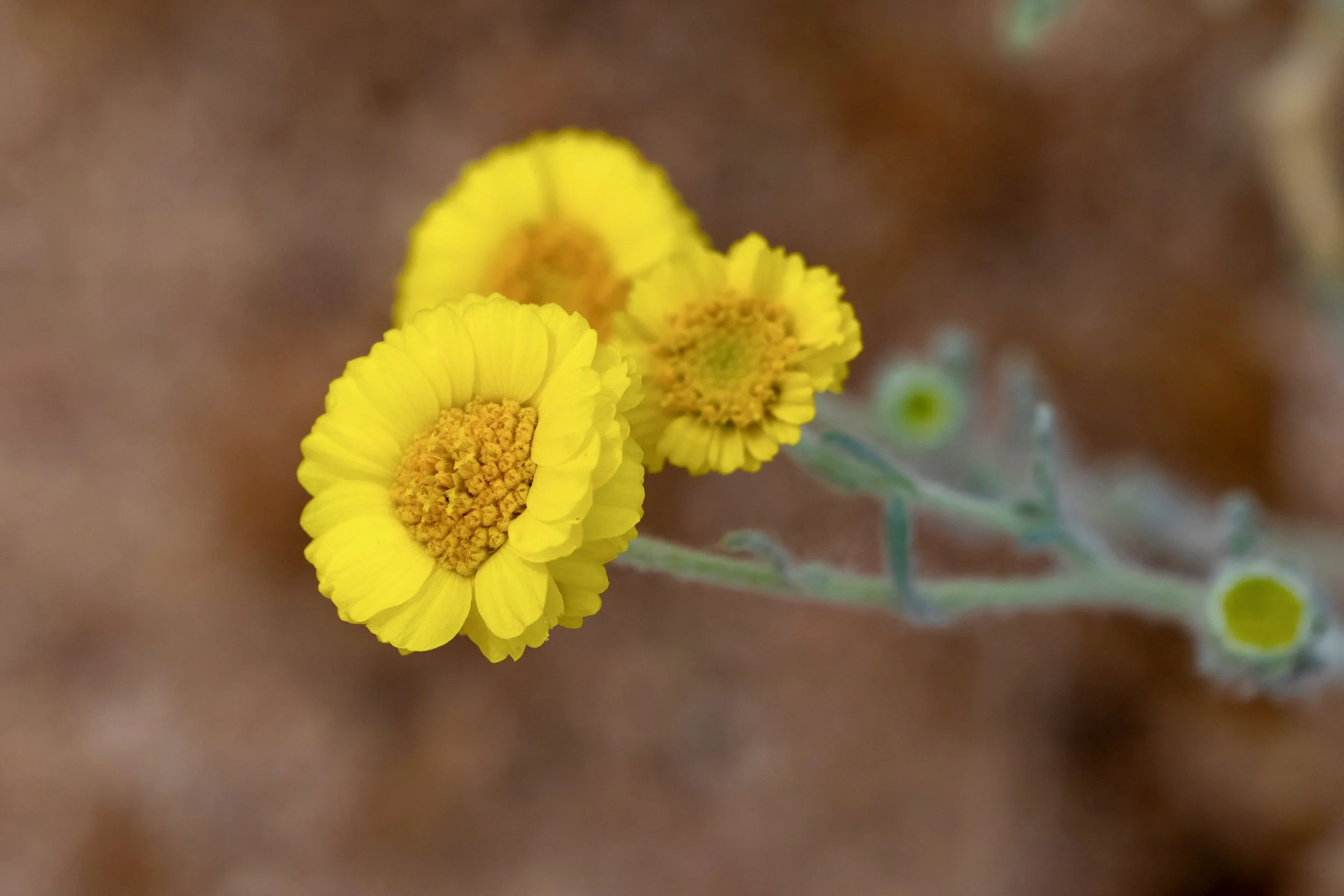
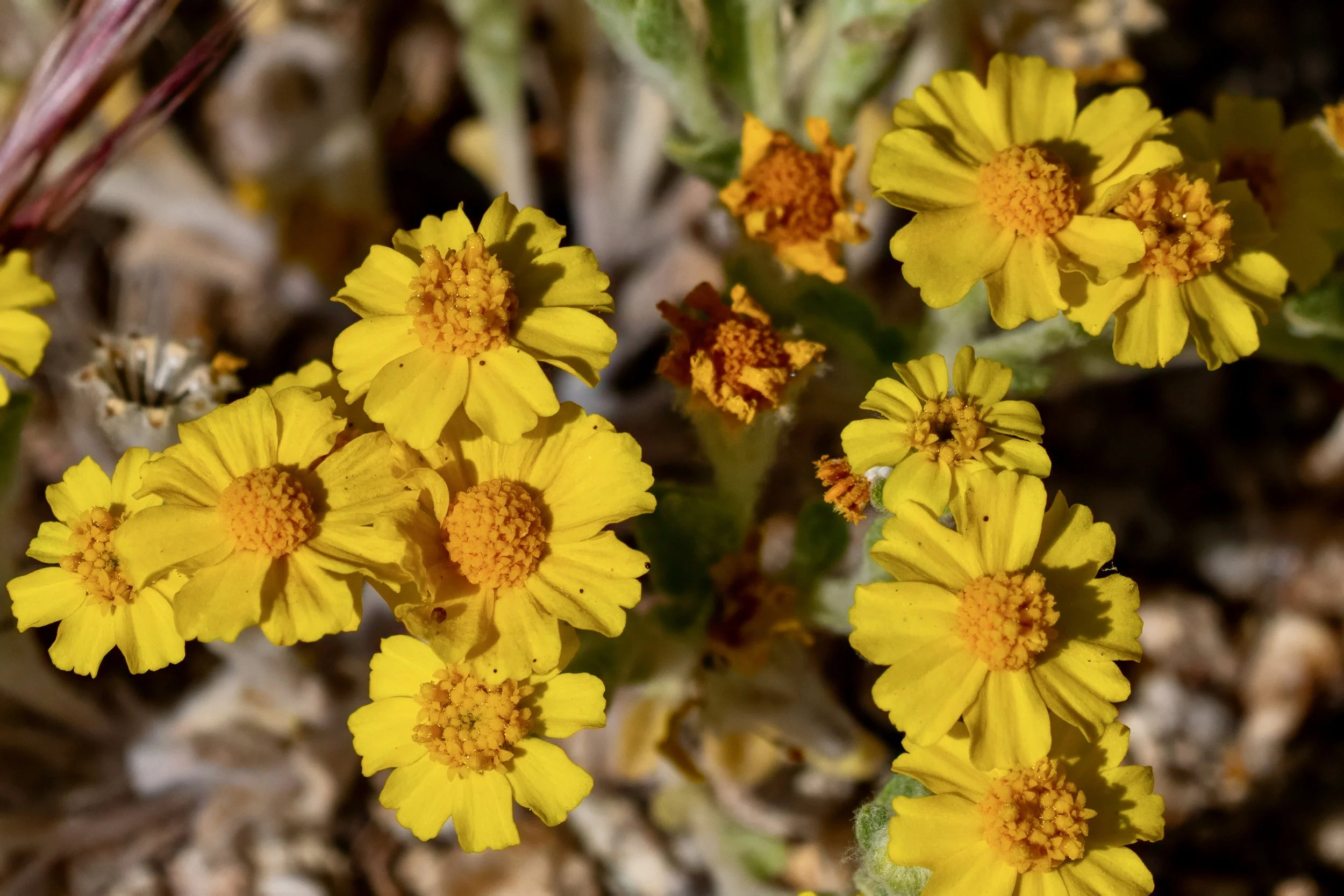
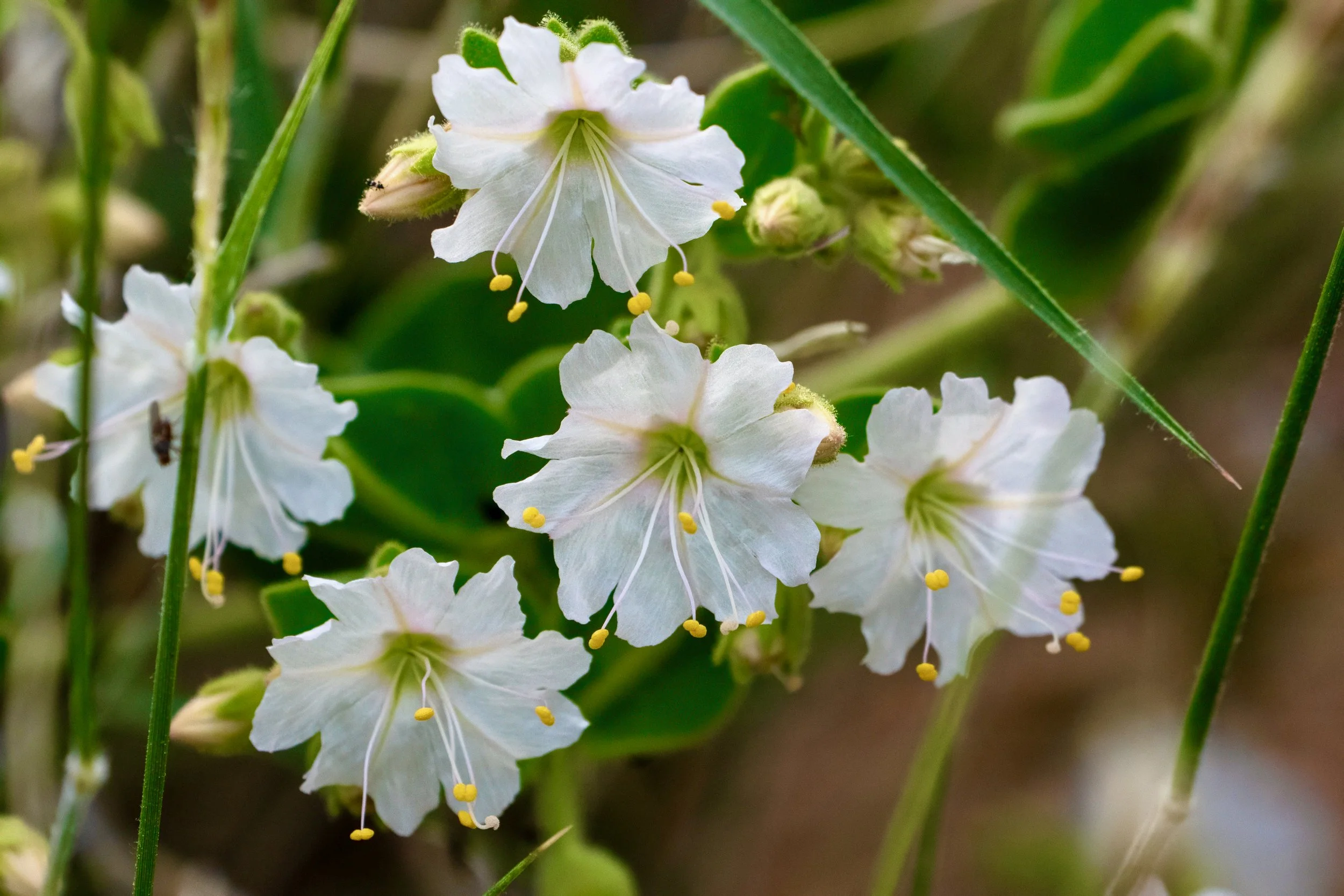
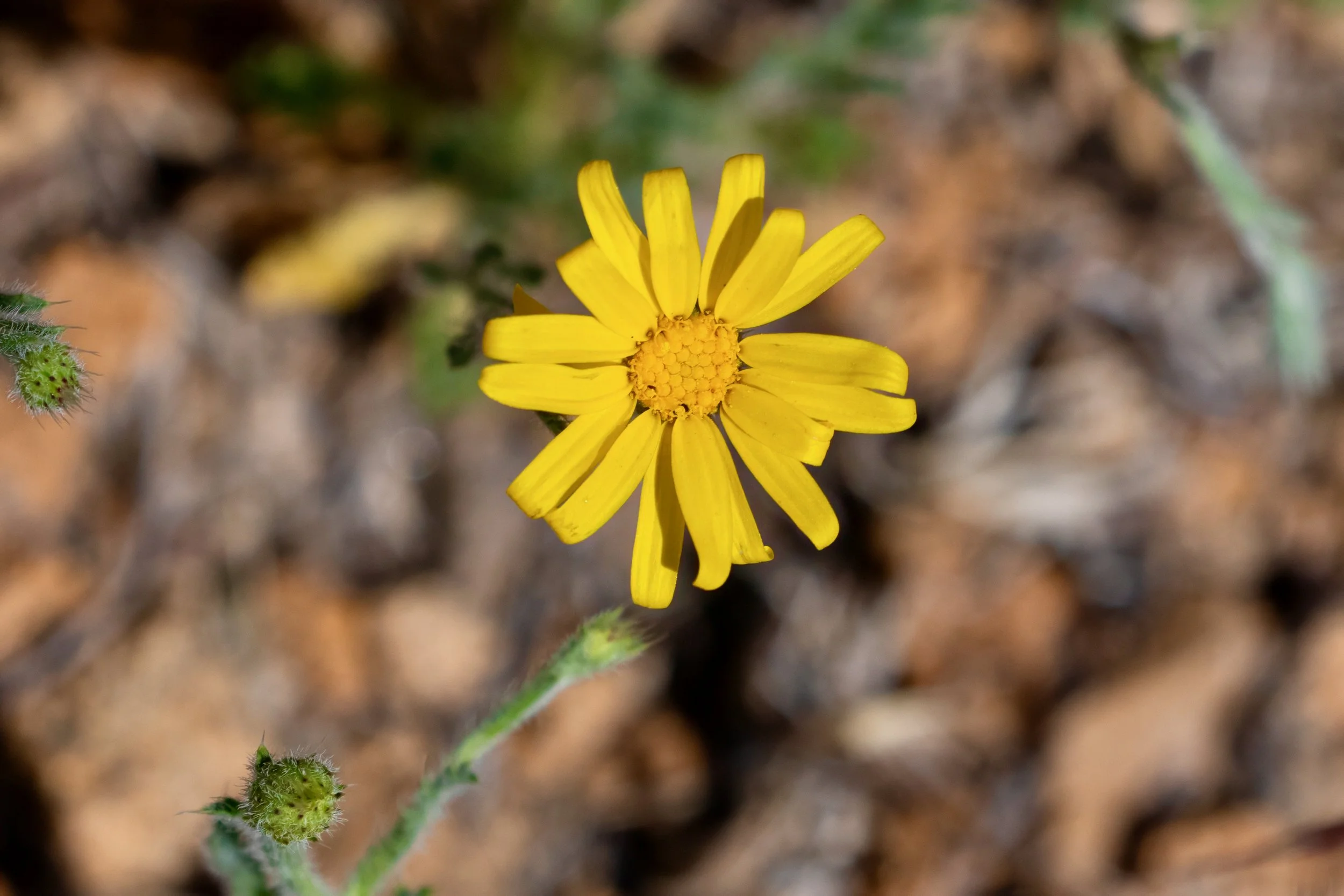
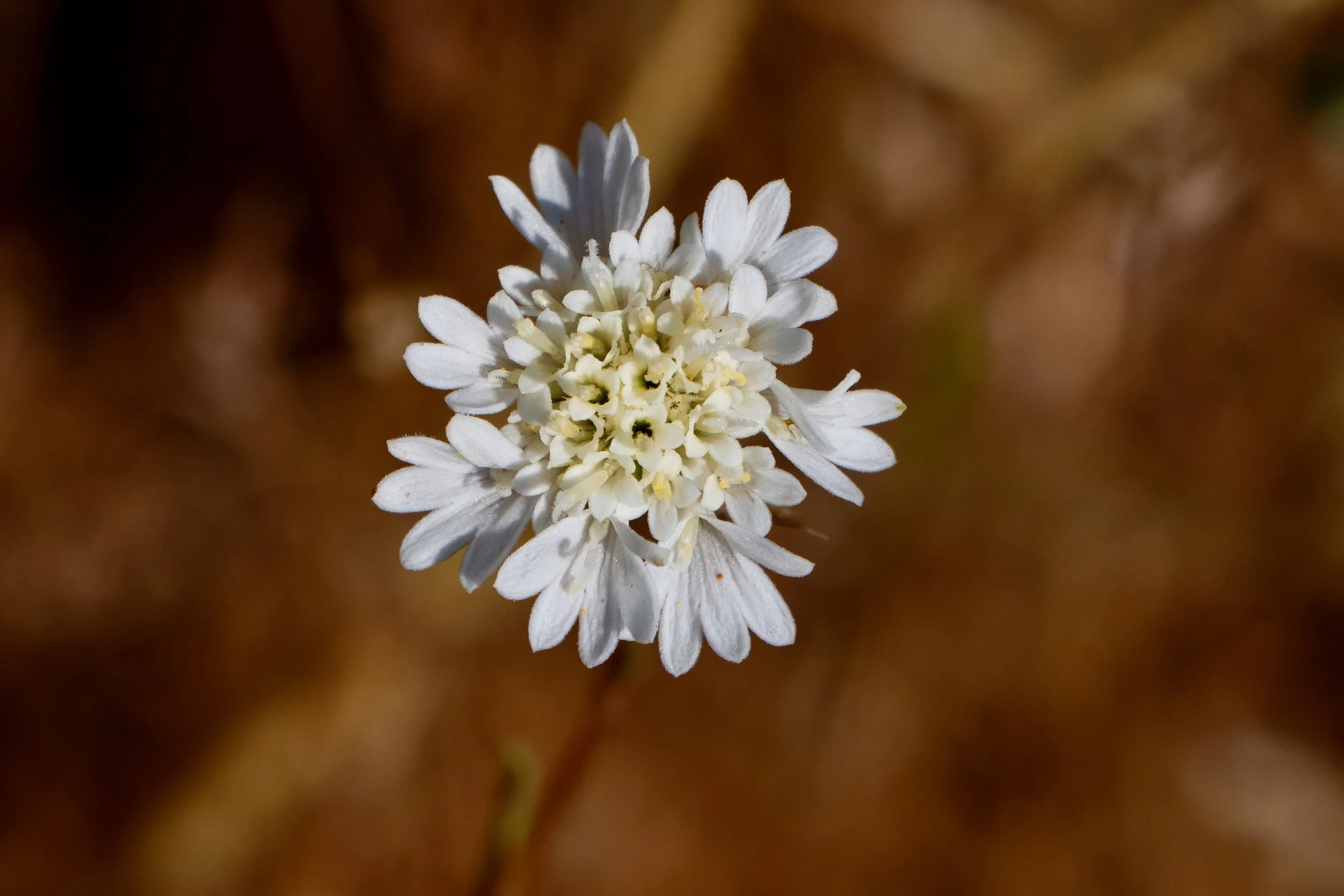
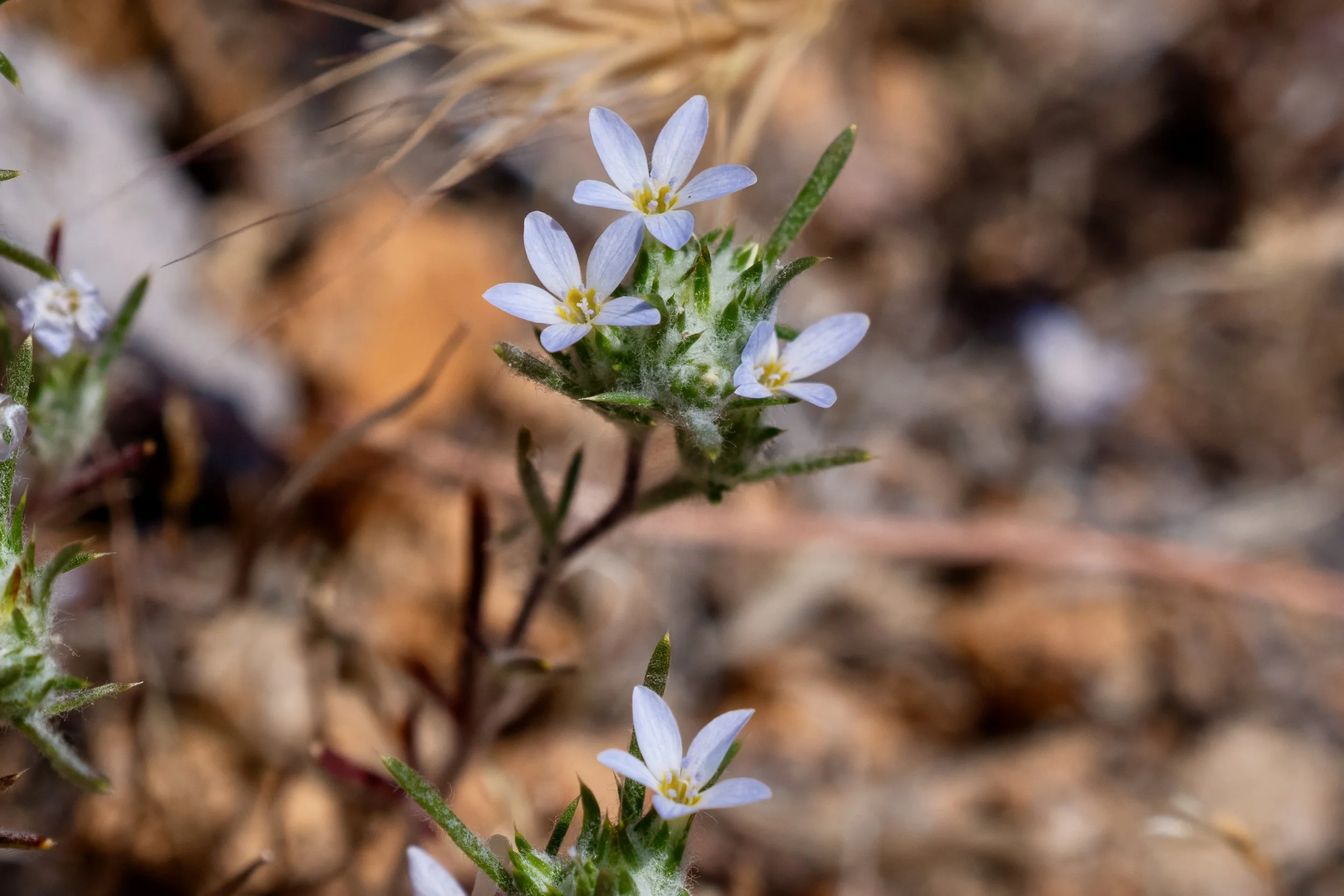
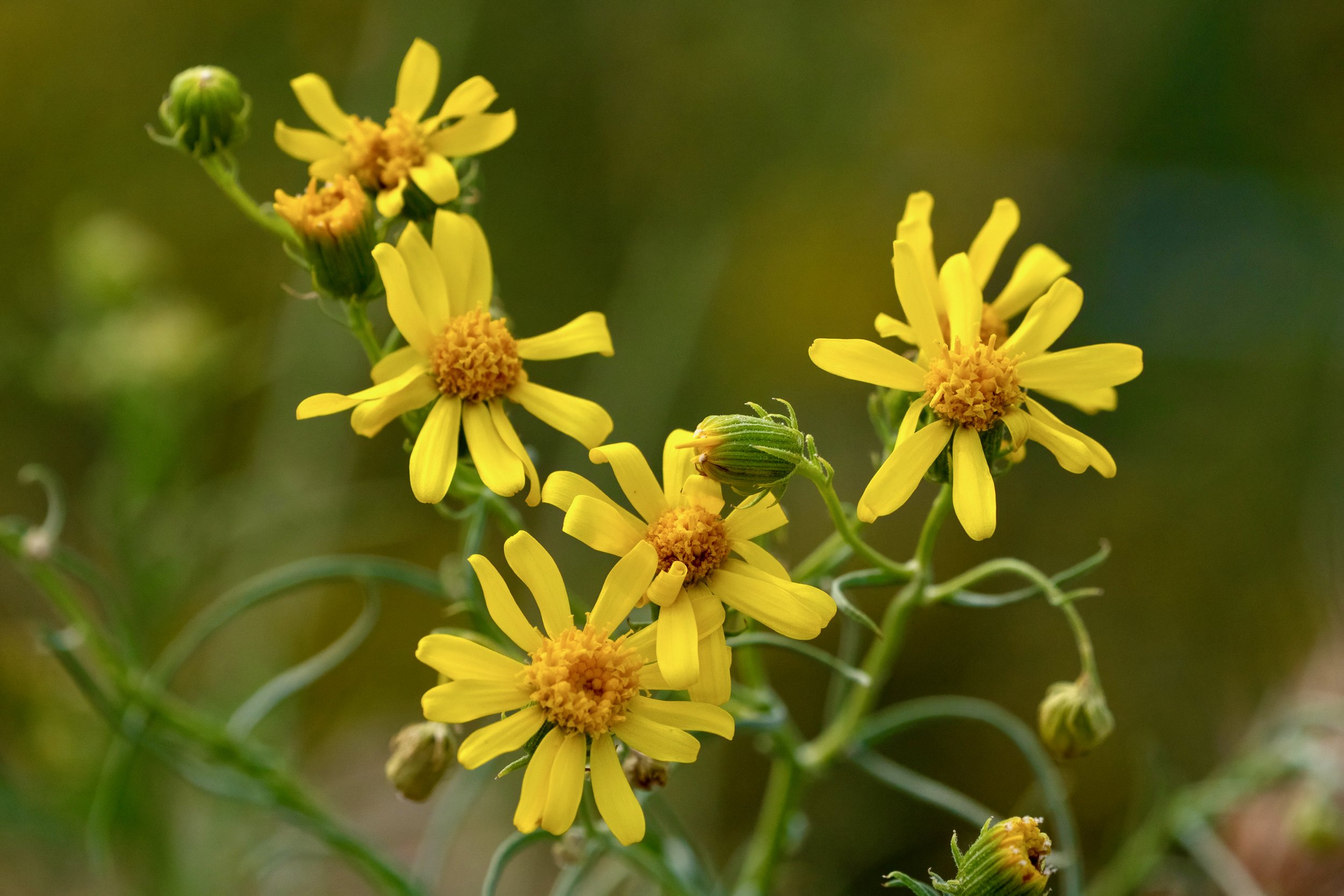
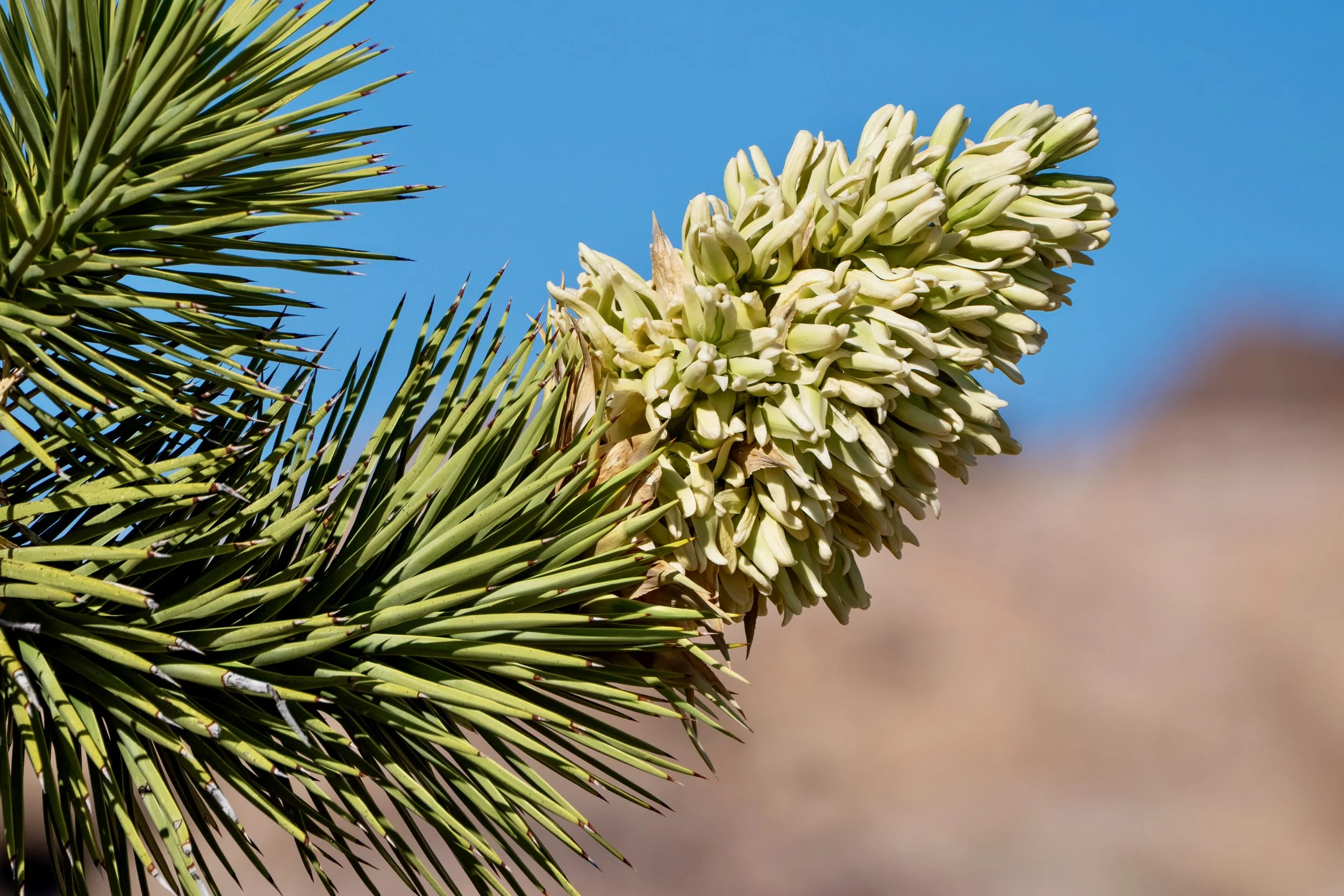
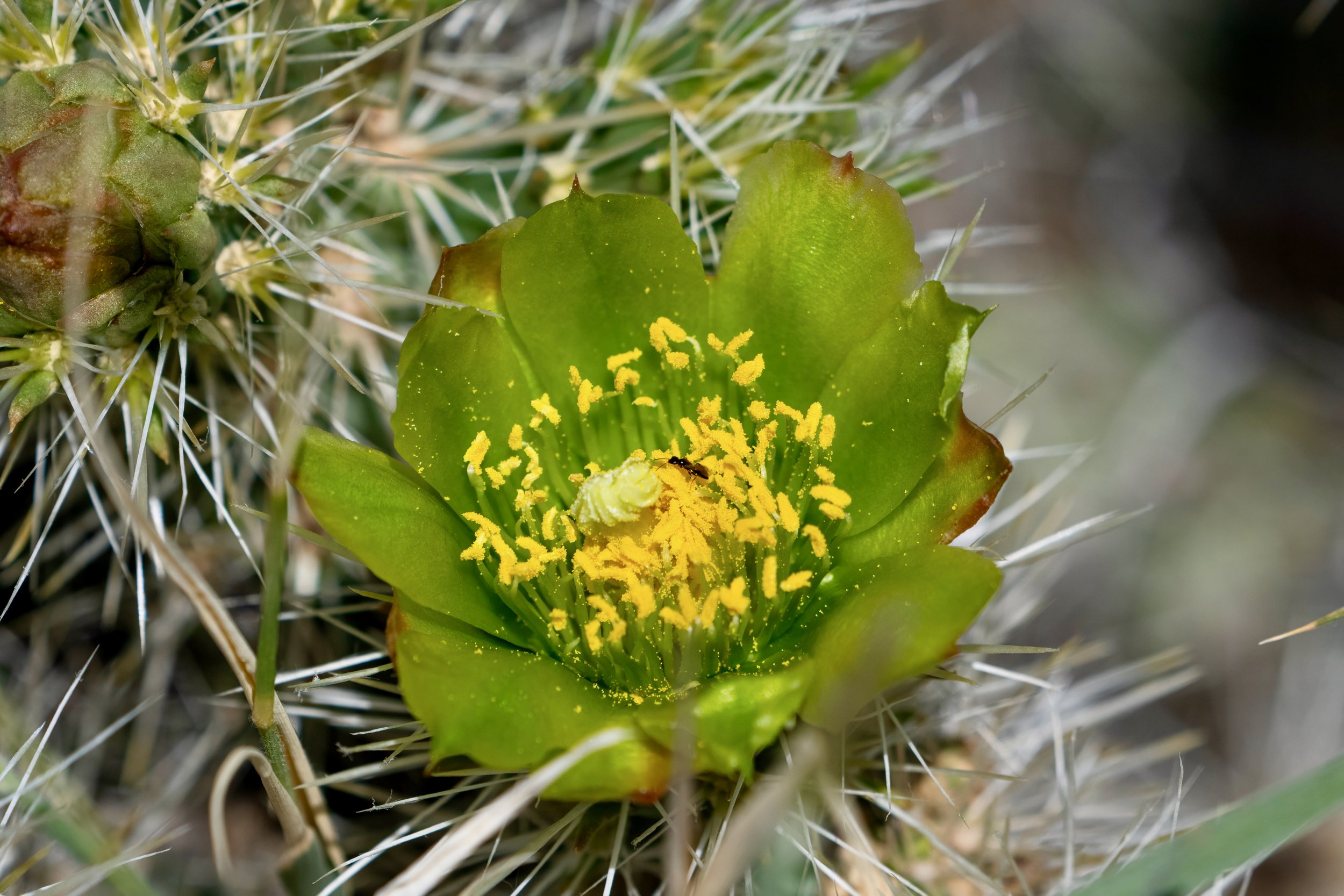
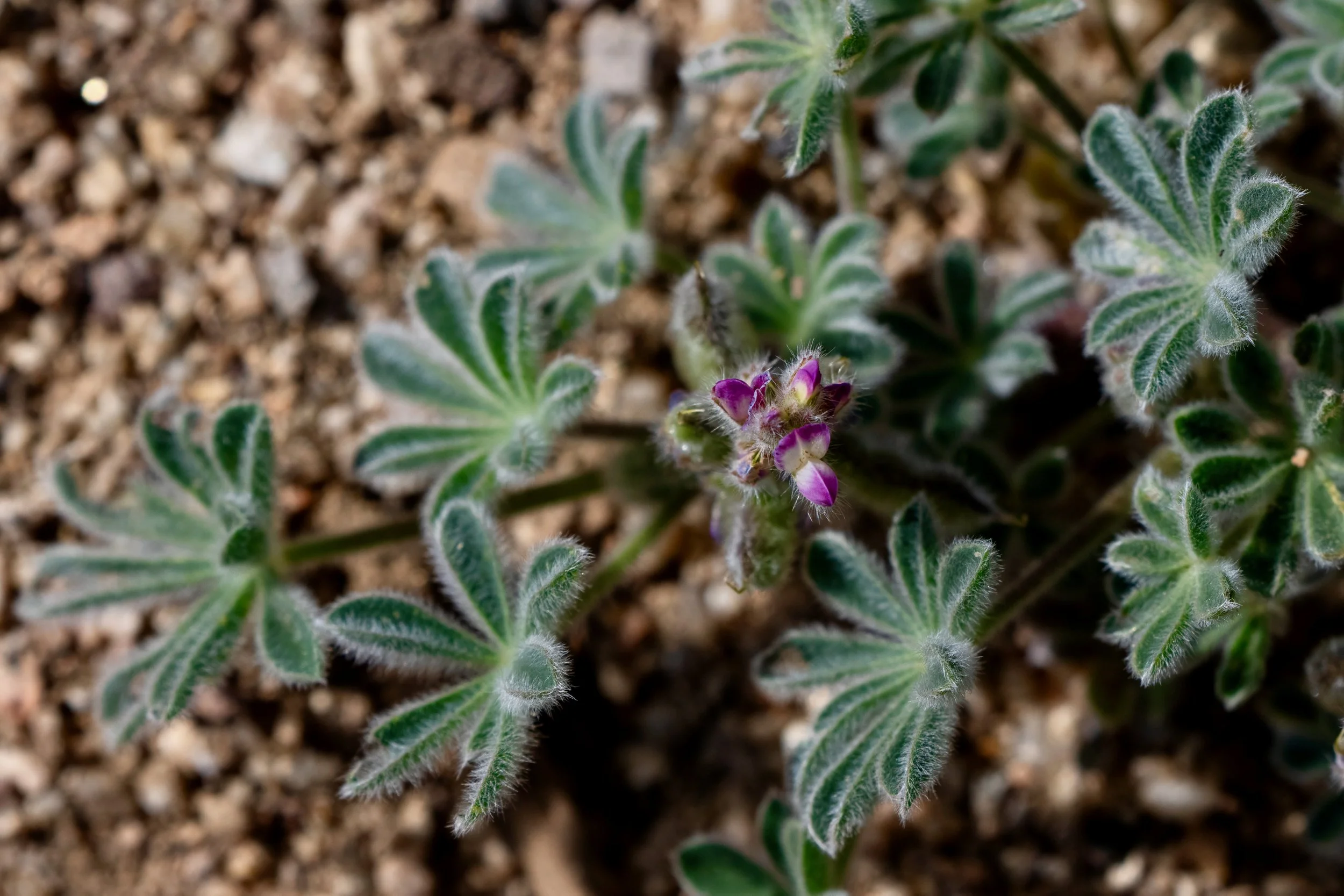
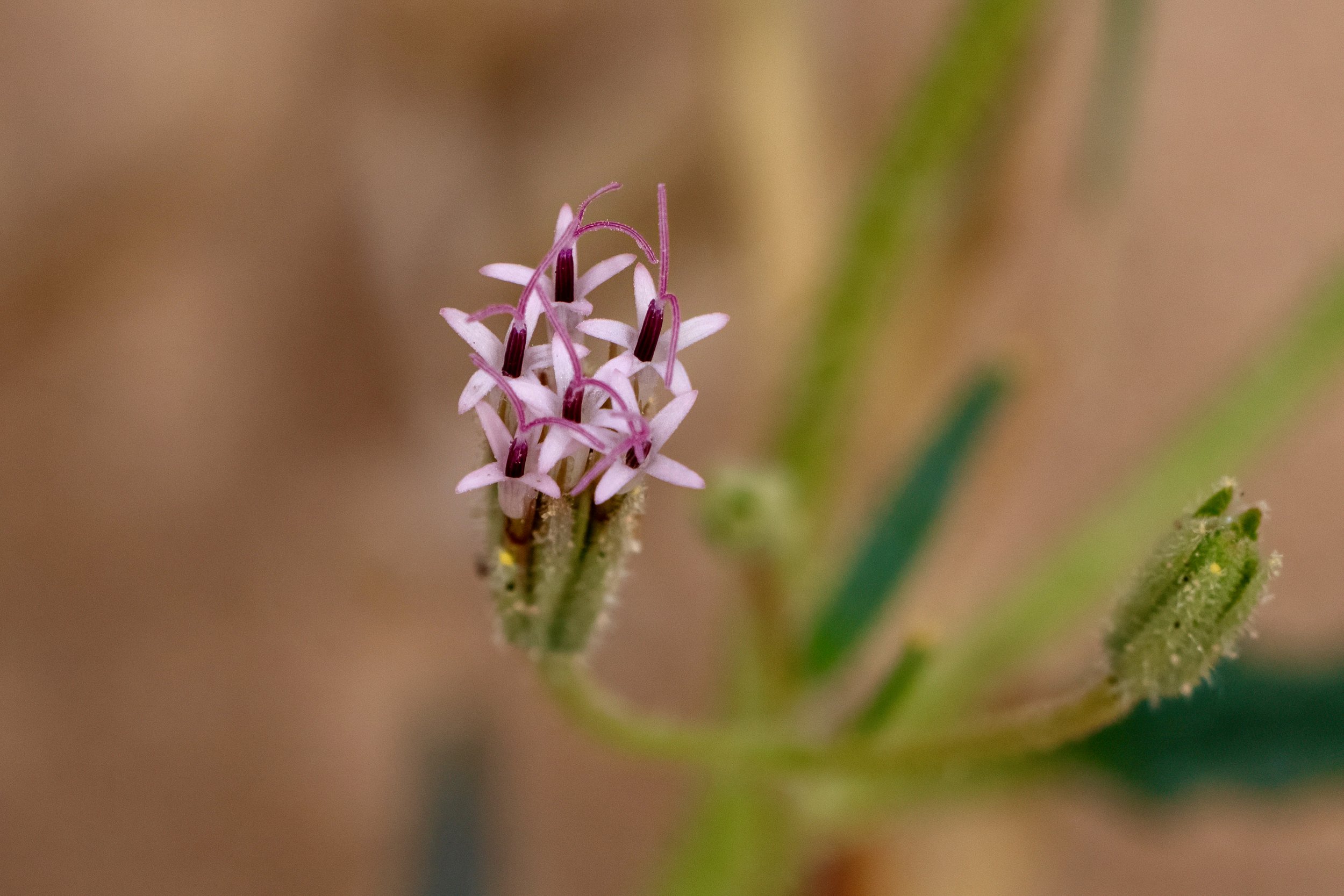
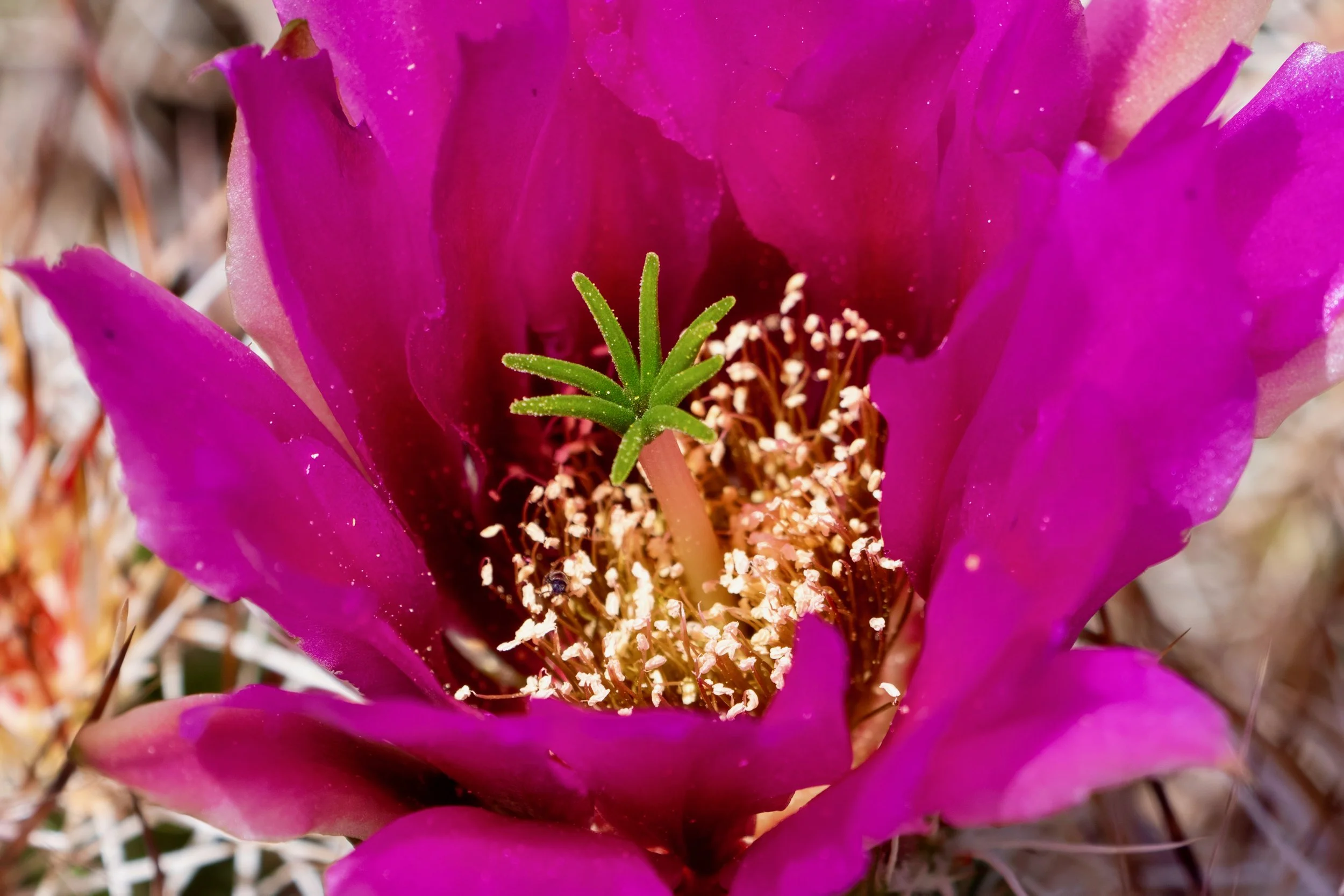
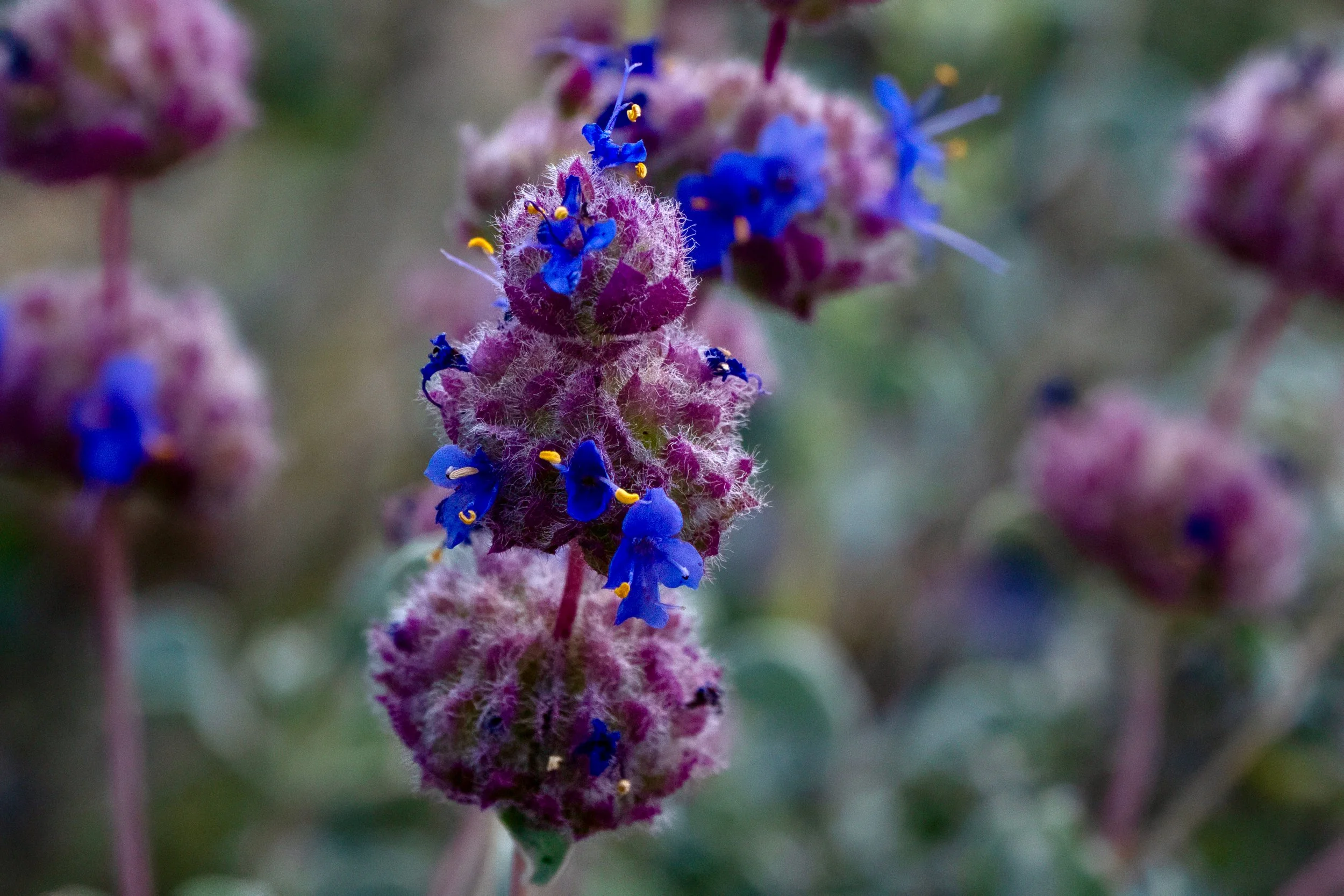
Named in order as shown in the grid above!
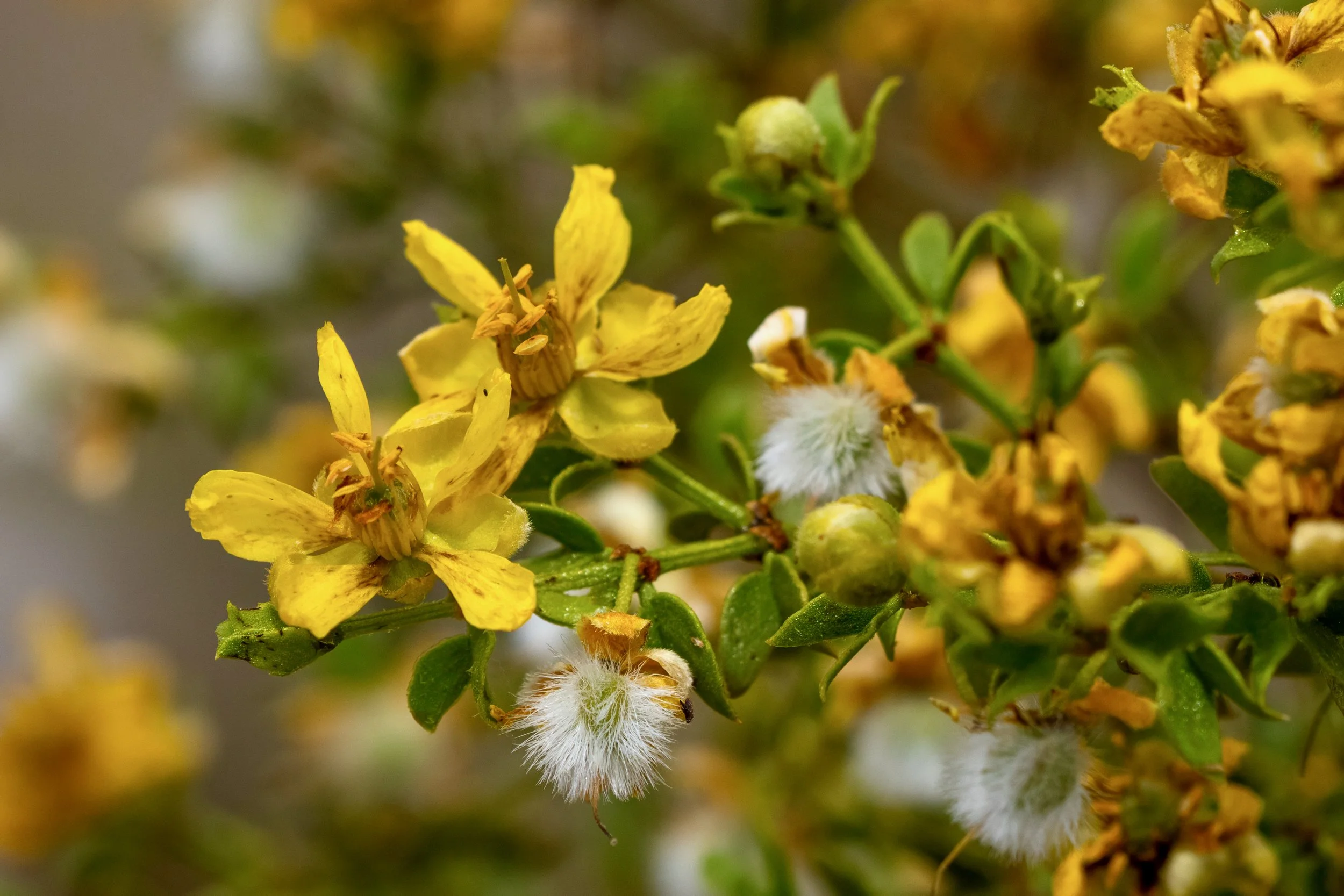
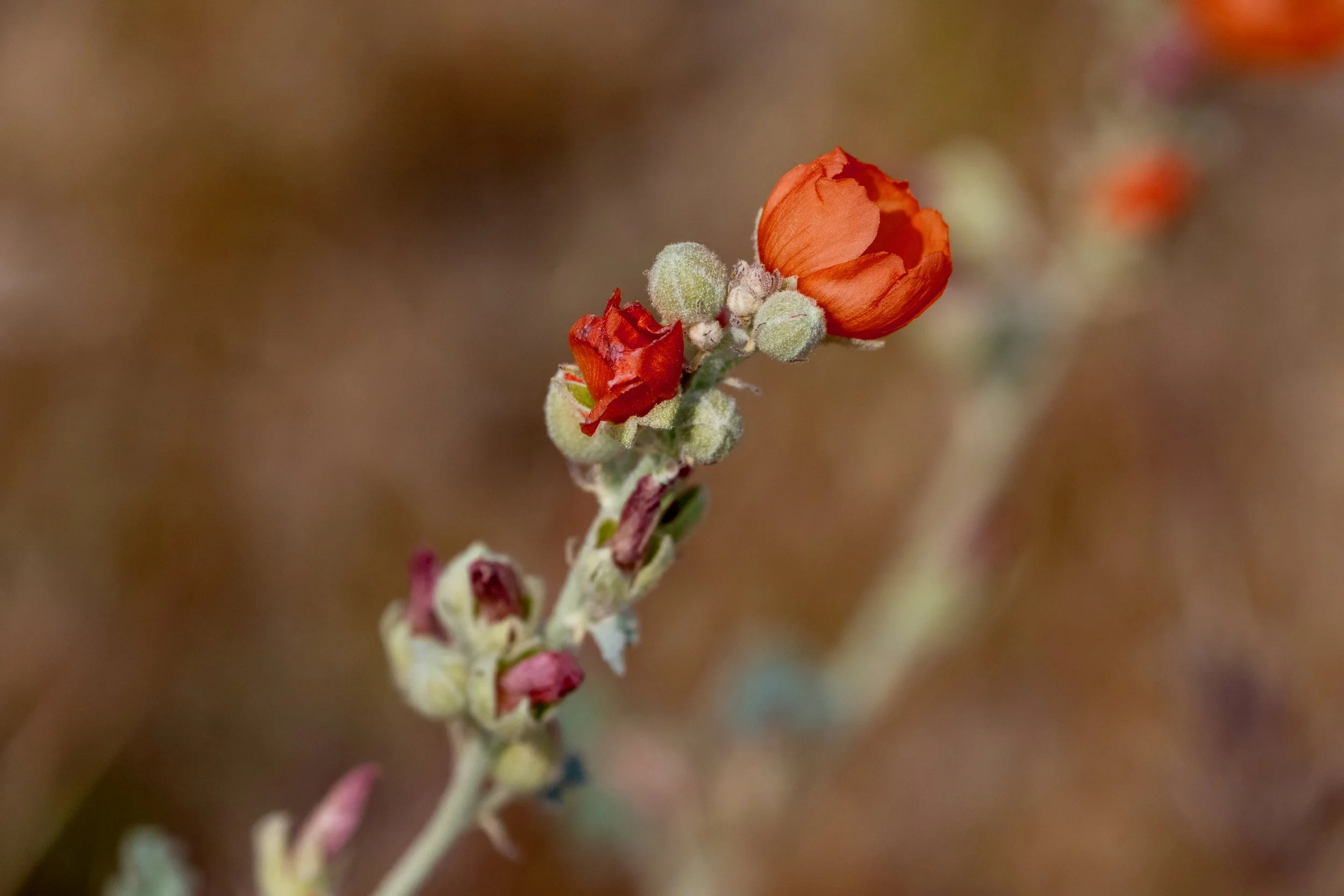
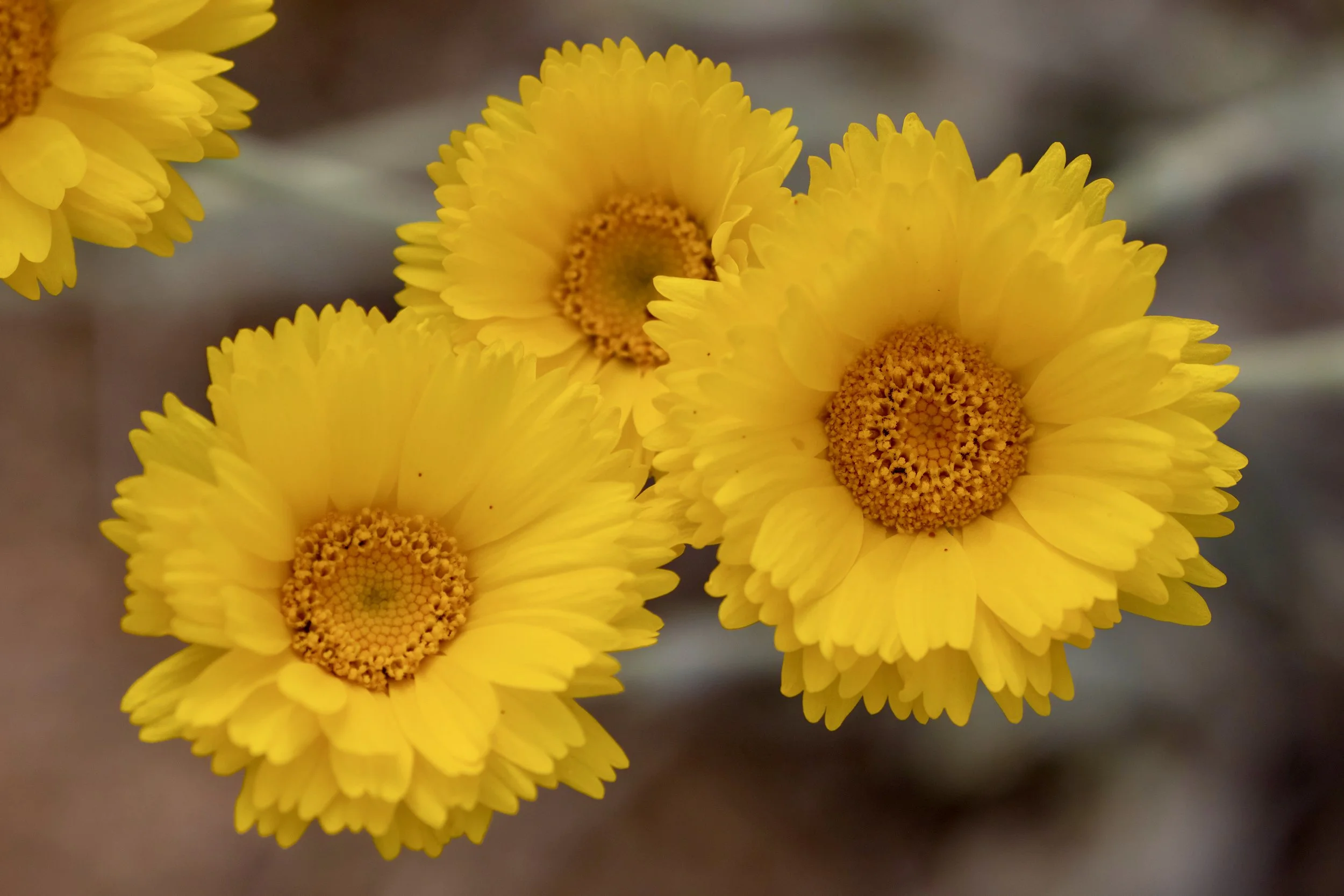
Creosote Bush, Apricot Globemallow, Desert Marigold, Yellow Turbans
Whitedaisy Tidytips, Desert Dandelion, White Easterbonnets, Woolly Desert Marigold
Wallace's Woollydaisy, Wishbone Bush, Desert Marigold, Fremont's Pincushion
Spreading Woollystar, Threadleaf Groundsel, Eastern Joshua Tree, Silver Cholla
Bajada Lupine, Spanish Needles, Engelmann's Hedgehog Cactus, Dorr's Sage
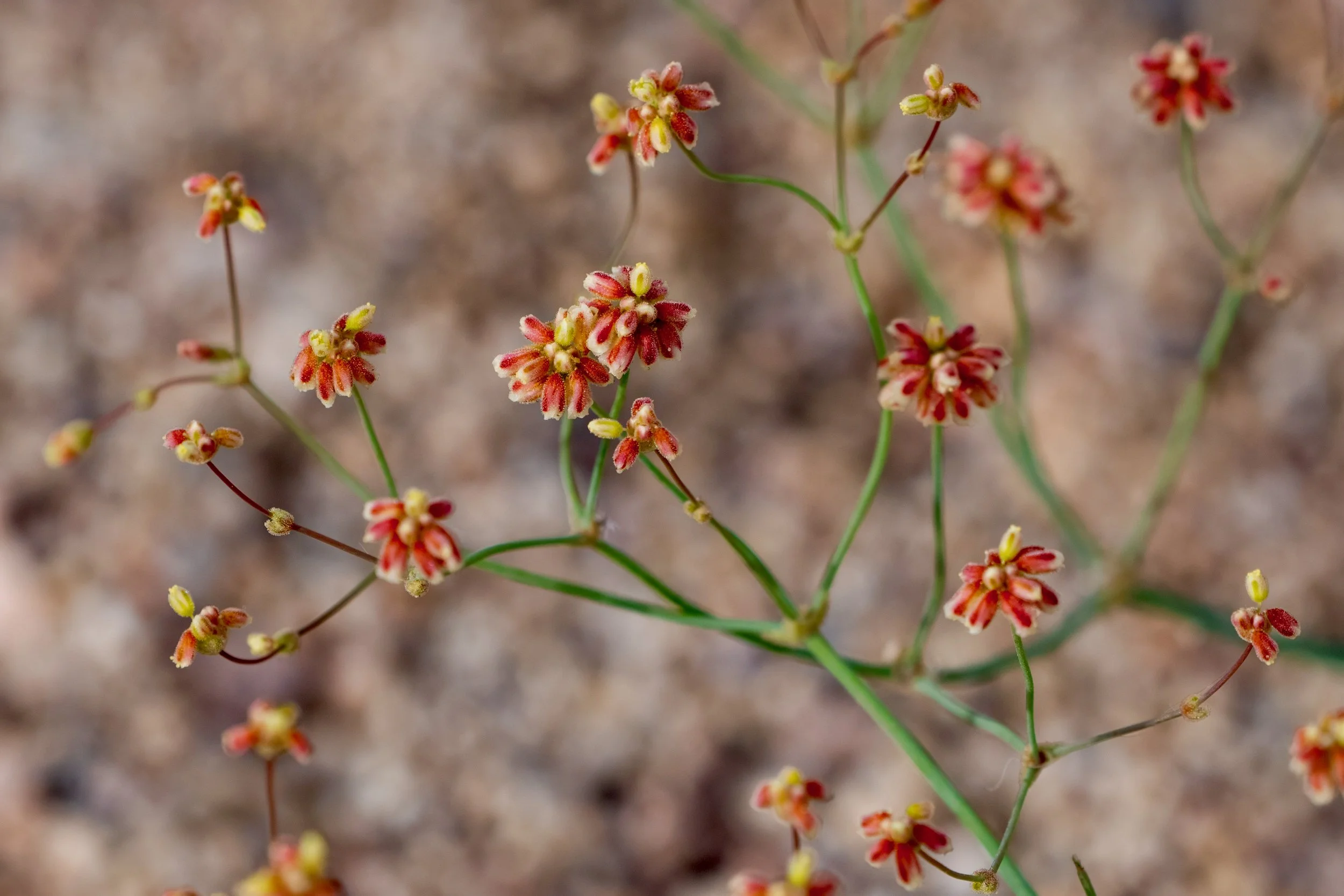
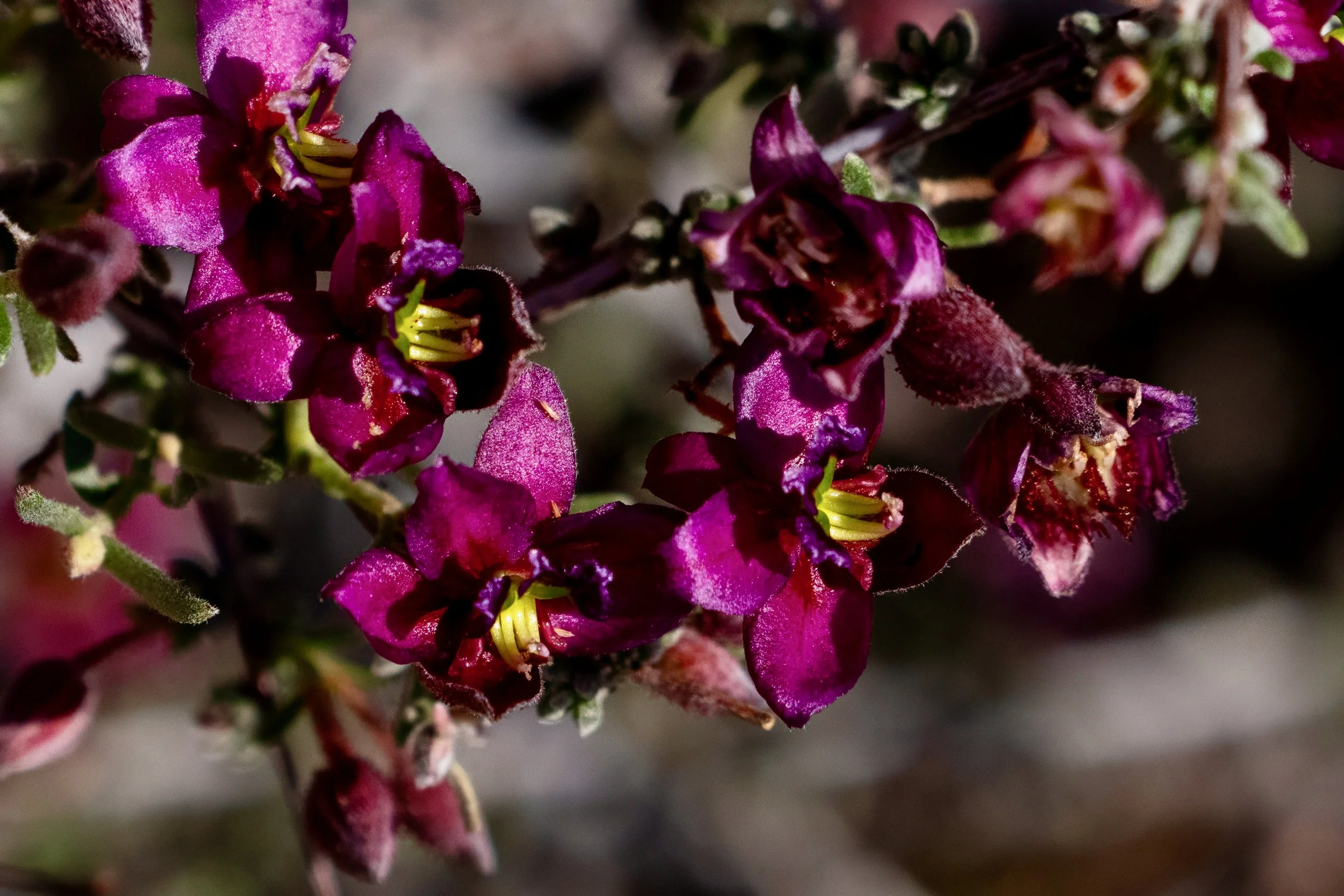
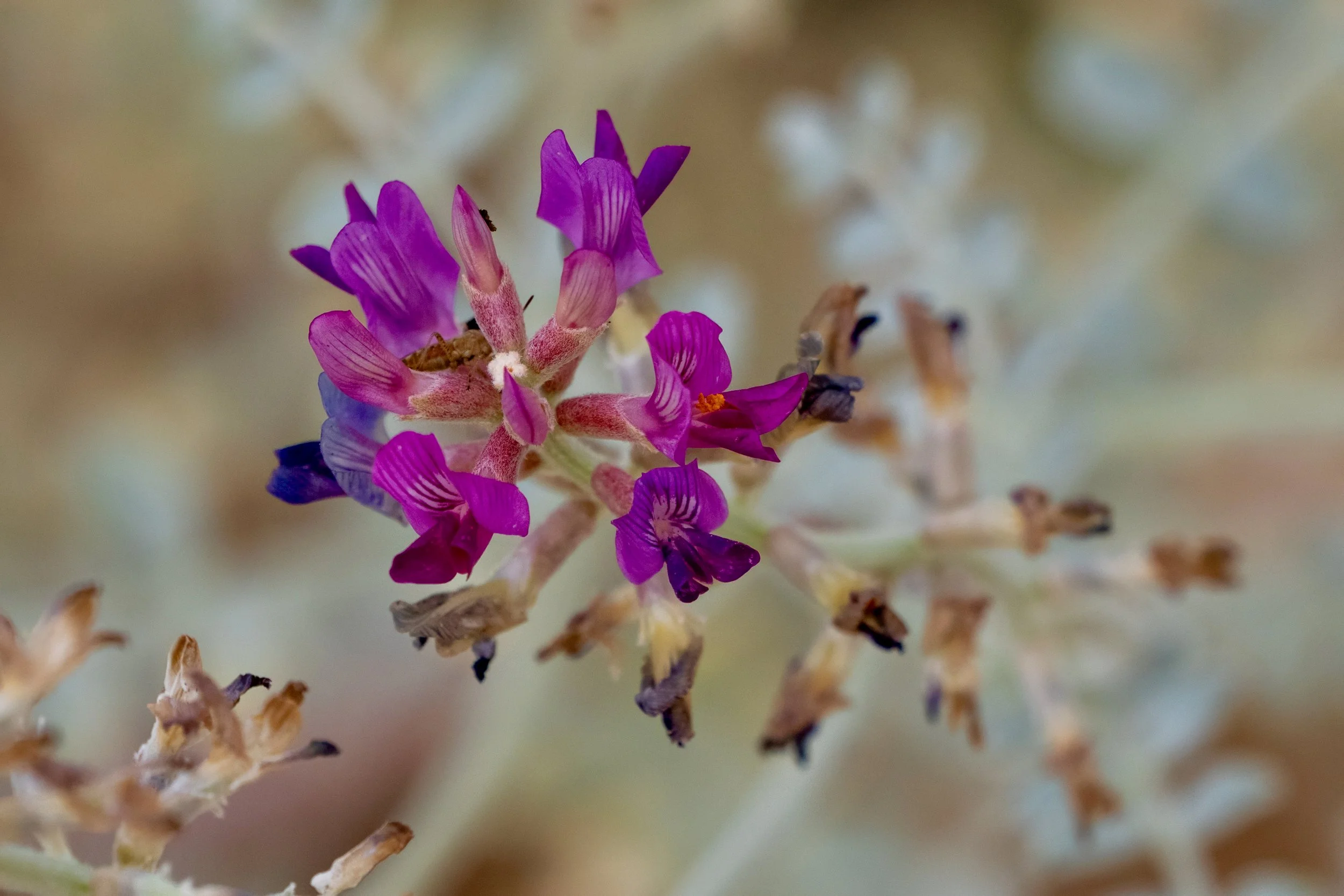
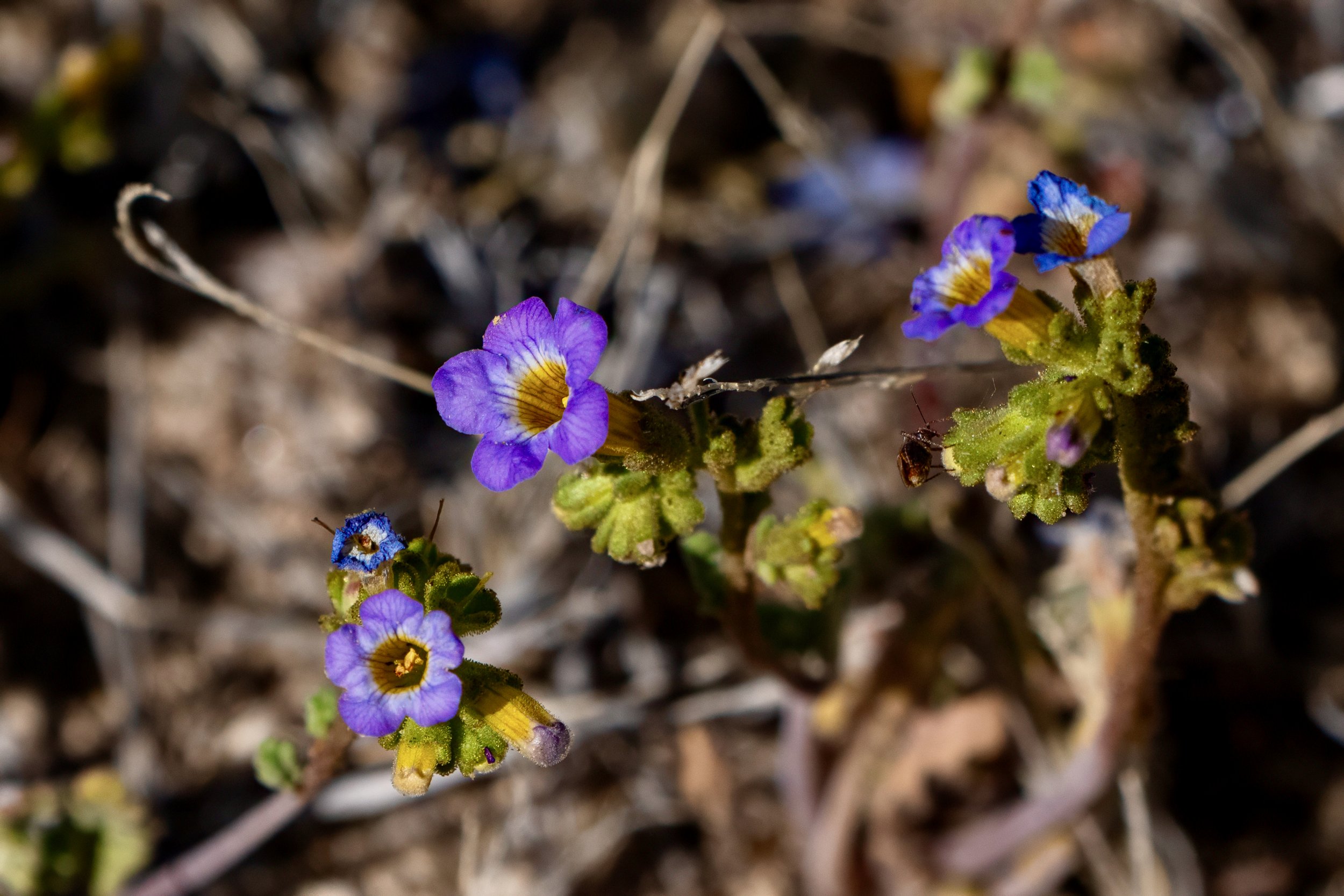
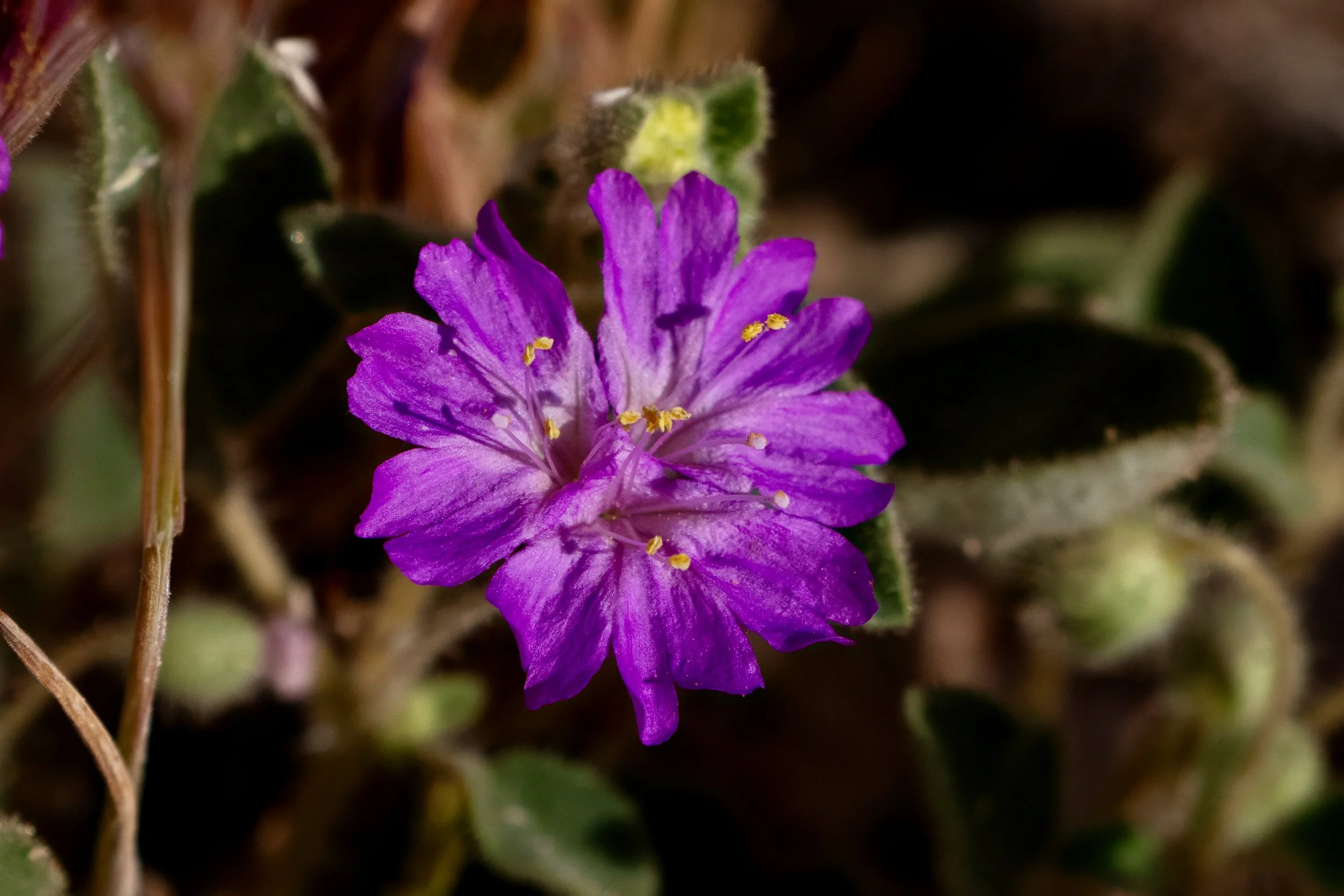
Littleleaf Rhatany, Borrego Milkvetch, Fremont's Phacelia, Trailing Windmills
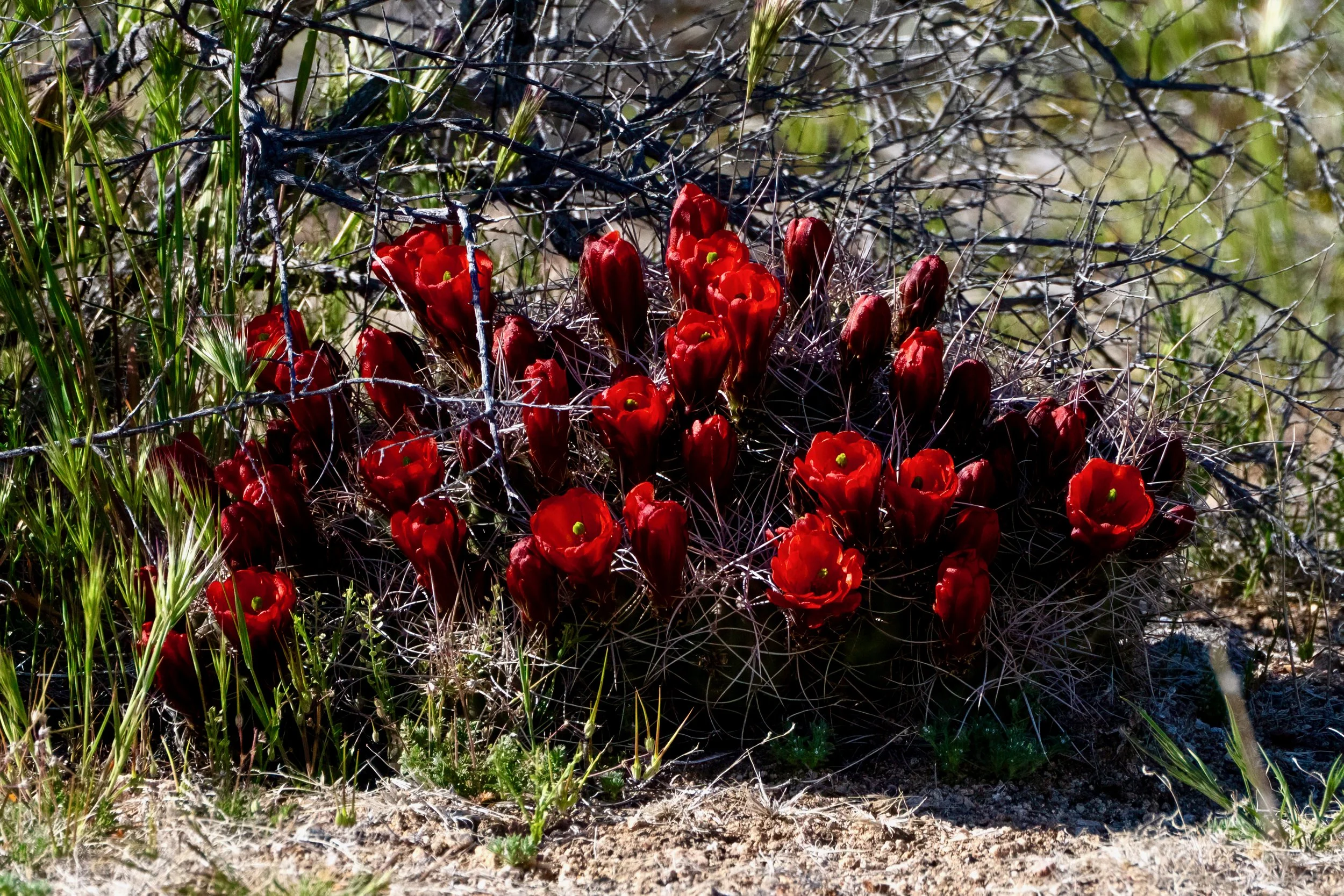
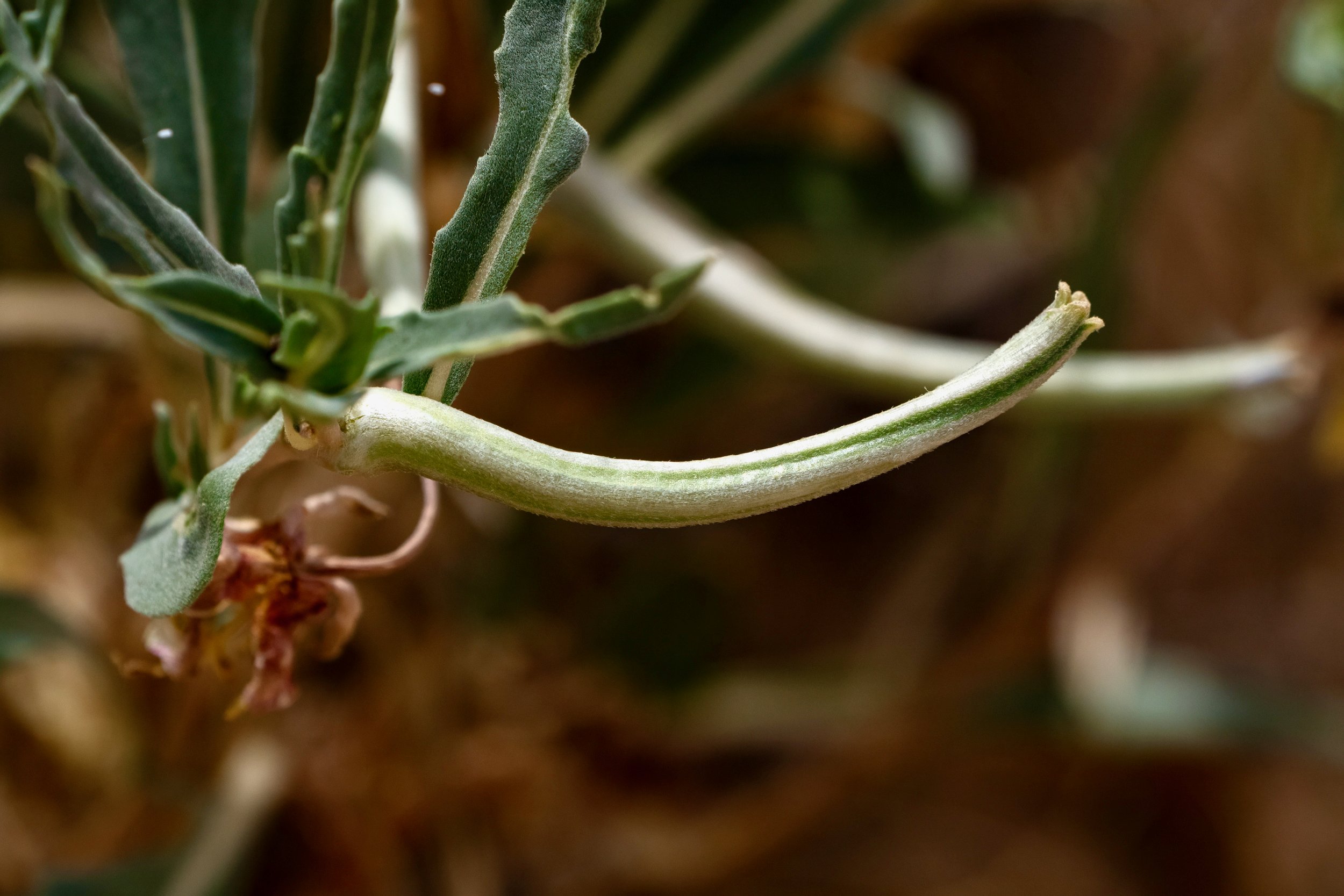
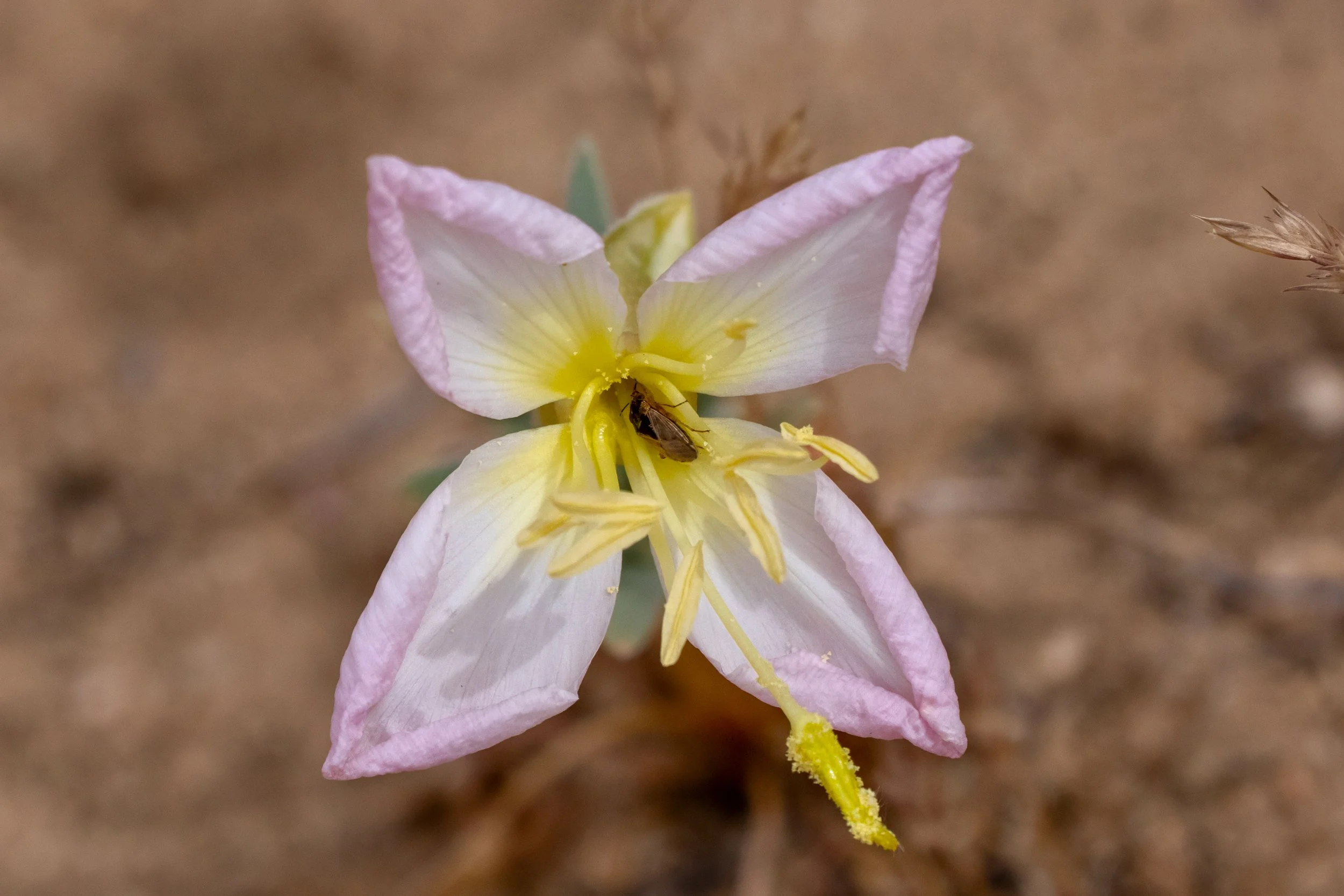
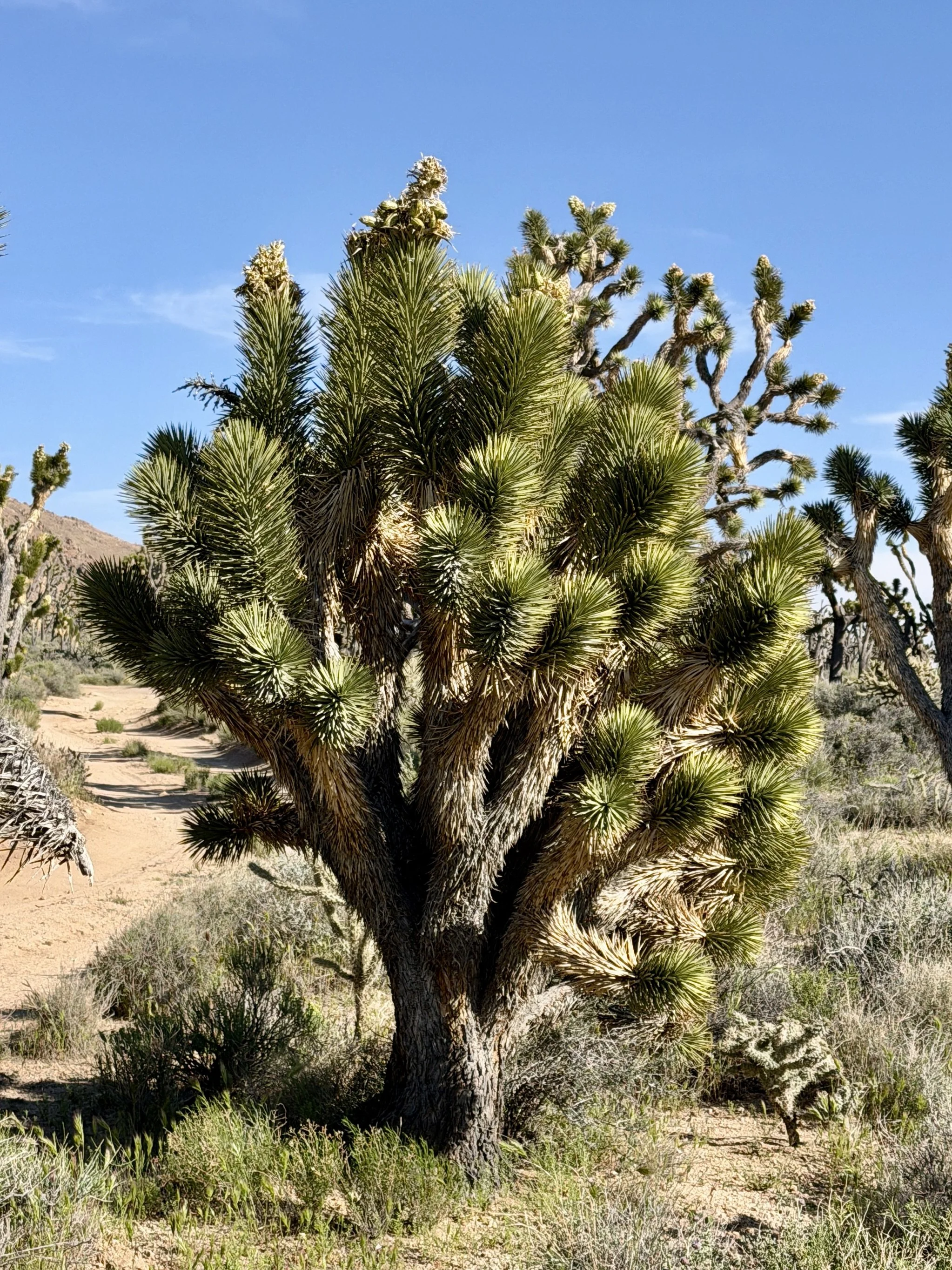
Mojave Kingcup Cactus, Deset Lily, California Evening Primrose, Eastern Joshua Tree
The wind at Hole-in-the-Wall was hard to ignore, especially at two in the morning. It was shockingly loud and strong each night, and even damaged mother-in-laws tent poles! I went to the bathroom in the middle of the night one night, since I was already awake and making sure nothing blew away. I had to fight so hard to open that bathroom door against the strong wind, it was shocking! But daylight changed the wind and it was a calm breeze each day.
An Ash-throated Flycatcher at camp, wrens calling through the canyon, warm rocks covered with lizards, and mariposa lilies scattered across the preserve were more than enough reason to forgive a loud night of gusting wind!