Exploring the South Rim of the Grand Canyon

After considering a Grand Canyon trip for several years, we finally planned a long weekend in February. Winter gave us the lighter crowds and cool temperatures we wanted, along with the possibility of snow.
We shared our Mather Campground experience and South Kaibab hike in separate posts. This part of the trip was about exploring the South Rim, from Desert View in the east to Hermits Rest in the west.
Our few sunny days went toward hiking. When wind, rain, fog, and snow arrived, we explored by van, stopping whenever the clouds revealed a different piece of the canyon.
Driving to Desert View Watchtower
Desert View Drive runs 23 miles between Grand Canyon Village and the Desert View area. Numerous overlooks along the road made this much more than a drive from one end to the other.
We stopped at several viewpoints before reaching Lipan Point, where we hoped to see California Condors. No Condors appeared, but we cooked breakfast in the parking area and watched the canyon until snow began falling without warning.


The flurries quickly changed the mood of the morning. We walked around enjoying the snow, then continued toward Desert View in case the weather caused a road closure.
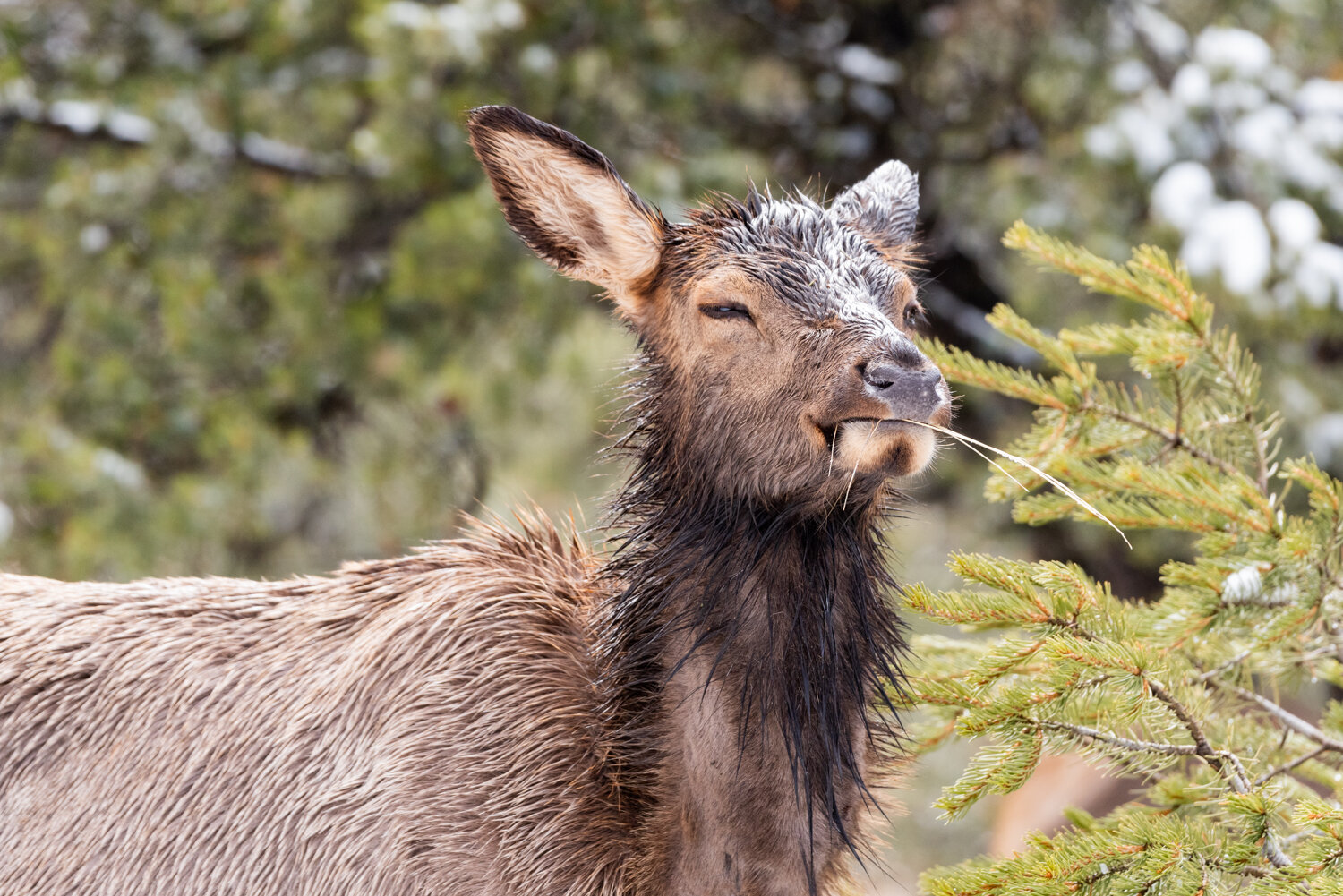
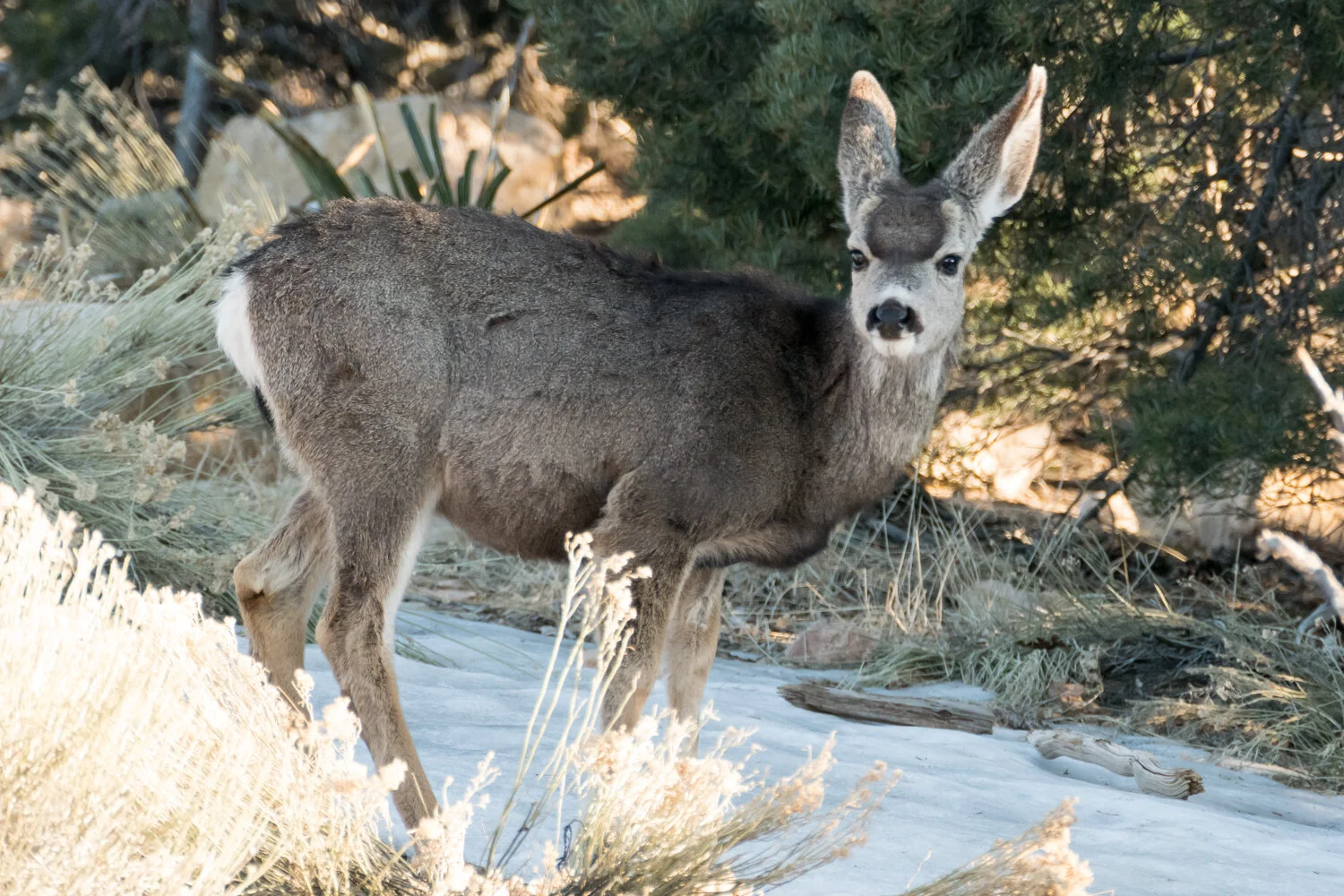
Elk and Mule Deer appeared along the way. The viewpoints were quiet, and each one revealed a slightly different arrangement of ridges, cliffs, and distant walls. With no reason to hurry, we stopped often.



Desert View Watchtower
Light rain and snow followed us to Desert View Watchtower. Inside, a fire was burning and a ranger welcomed us into the warmth. He shared an update about the approaching weather before we began exploring the tower.
Architect Mary Colter designed Desert View Watchtower, which was completed in 1932. The circular stone building rises from the rim as though it belongs to the surrounding rock.
A winding staircase follows the interior walls around an open central chamber. Murals by Hopi artist Fred Kabotie add color and meaning to the space, while windows on each level frame different portions of the landscape. At the top, the observation area opens to a wide view across the eastern Grand Canyon and toward the Painted Desert.
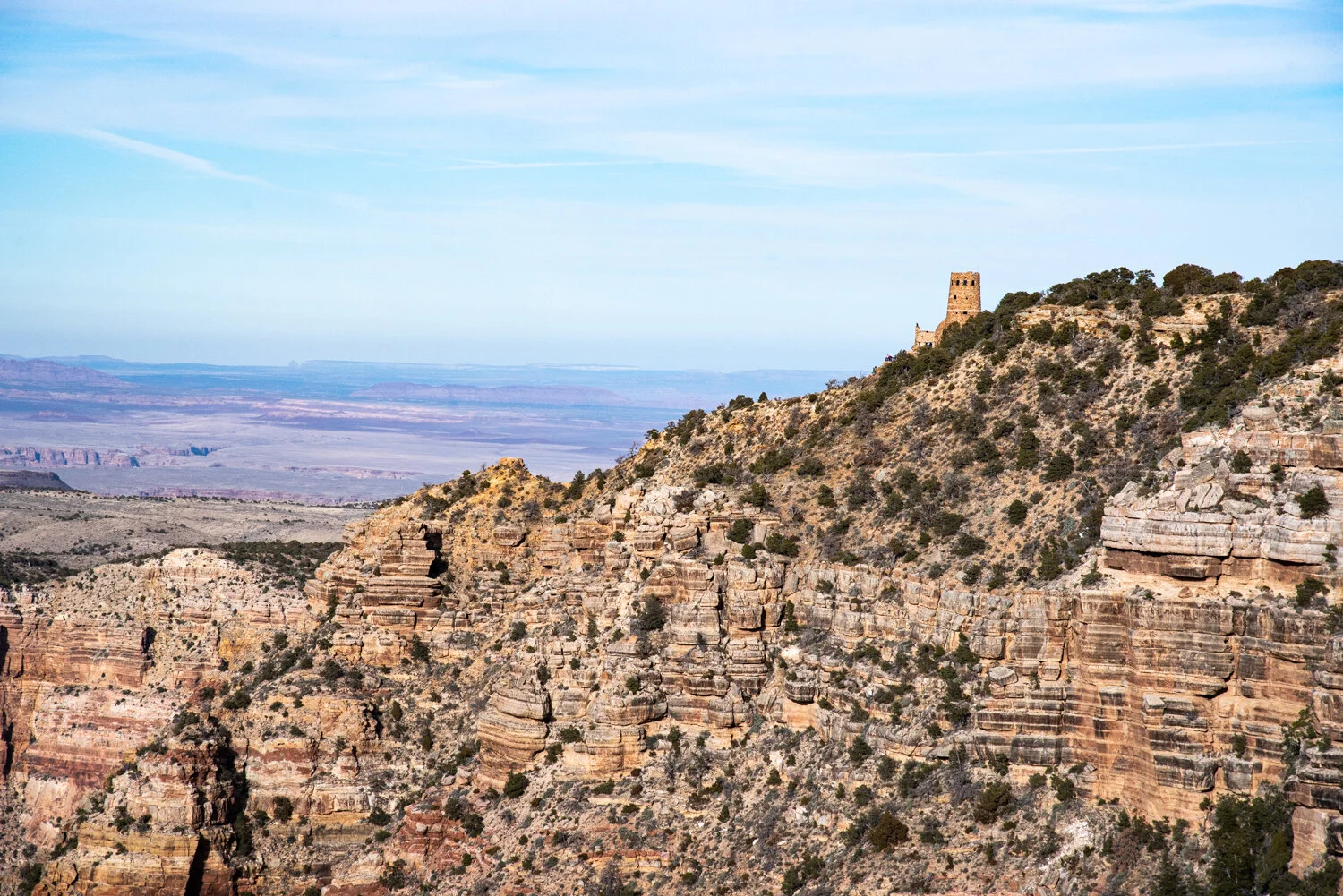


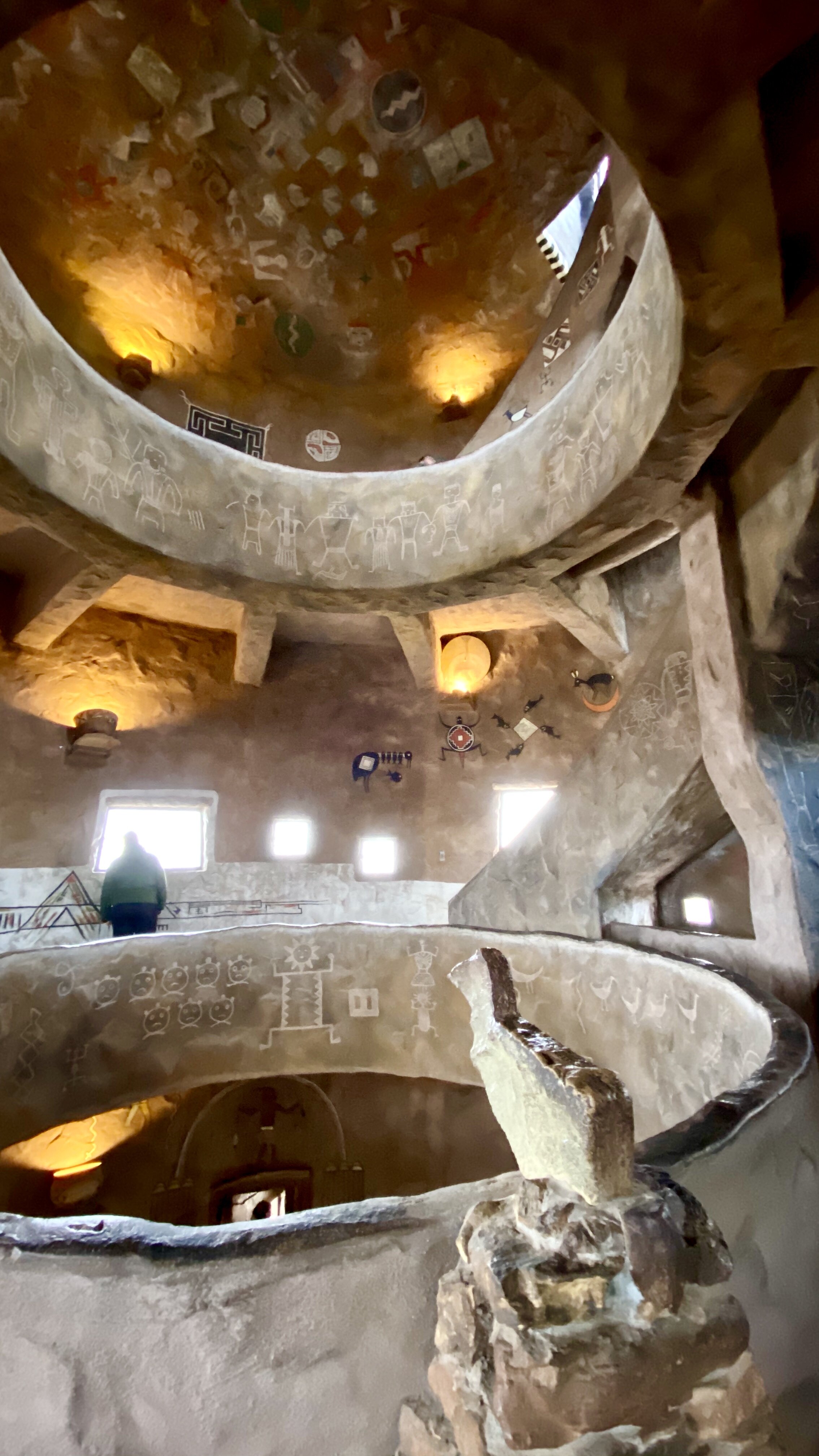
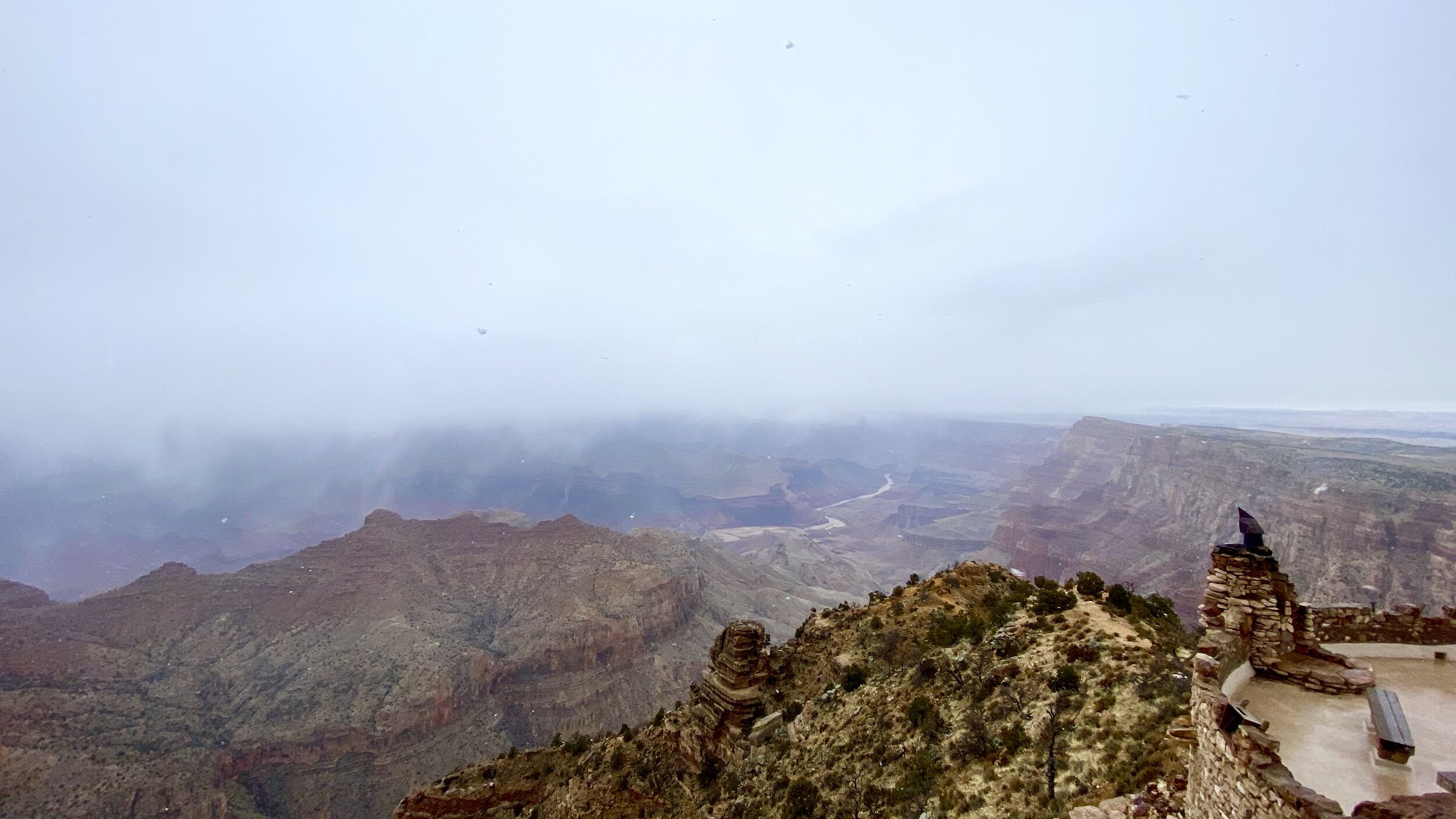

Several other visitor services were clustered around the Watchtower, including food, restrooms, and shops. Most were closing as the weather moved in, but we had time to visit the Trading Post and look through its selection of Native-made art and gifts.
We left Desert View before the roads became worse, traveling back toward Mather Campground through light snow and rain.
Winter Drive to Hermits Rest
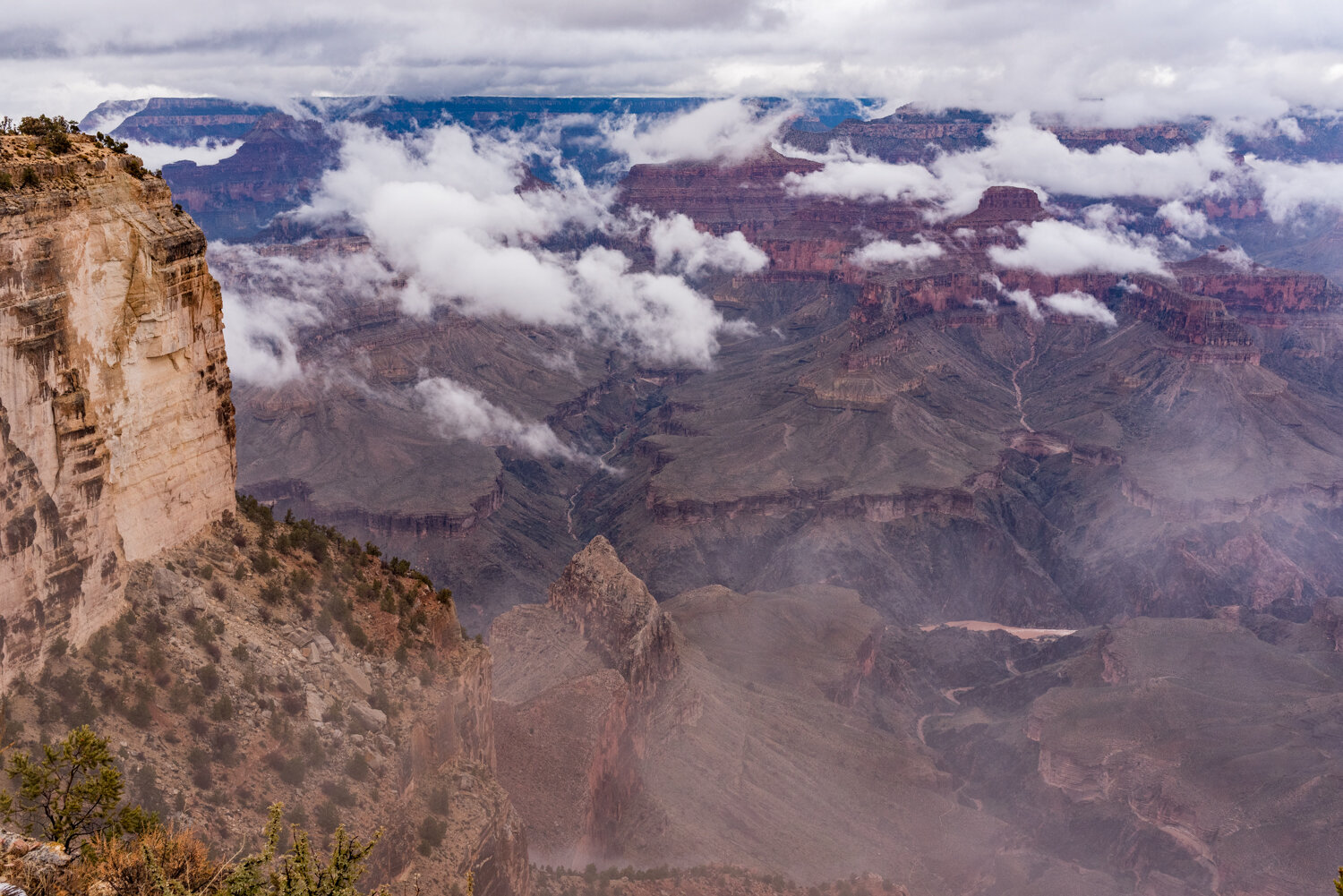
Our drive west to Hermits Rest brought even stronger wind and intermittent rain. We repeatedly jumped out to see the canyon, stayed long enough to take a few photographs, then hurried back into the van when another burst of weather arrived.
Hermit Road is open to private vehicles during December, January, and February, which allowed us to make the drive ourselves. During the busier months, visitors use the park shuttle to reach its overlooks.
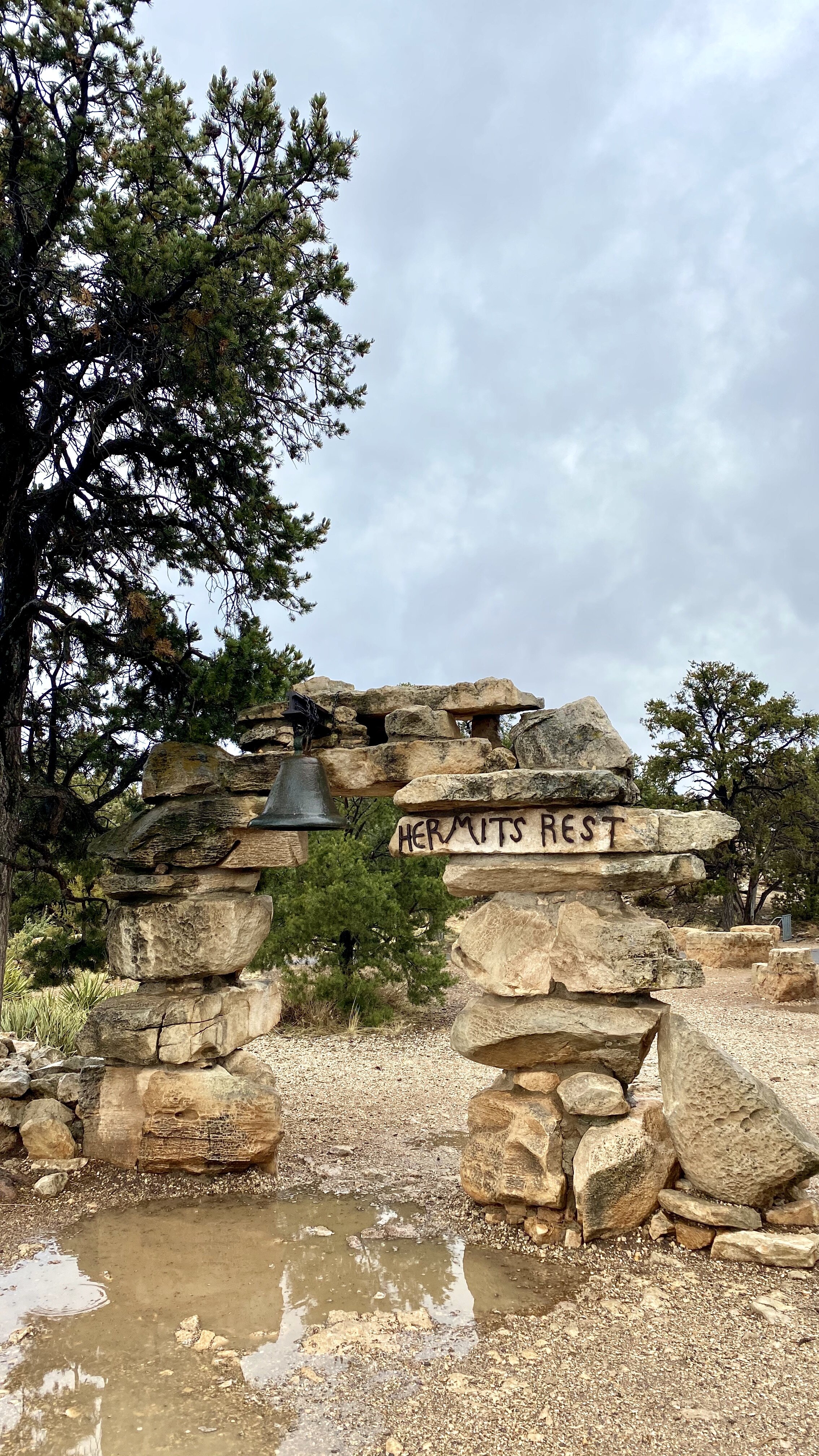




At the end of the road, the stone arch marking Hermits Rest looked like part of the landscape. Mary Colter designed Hermits Rest in 1914, creating a building that feels deliberately weathered and tucked into the rim.
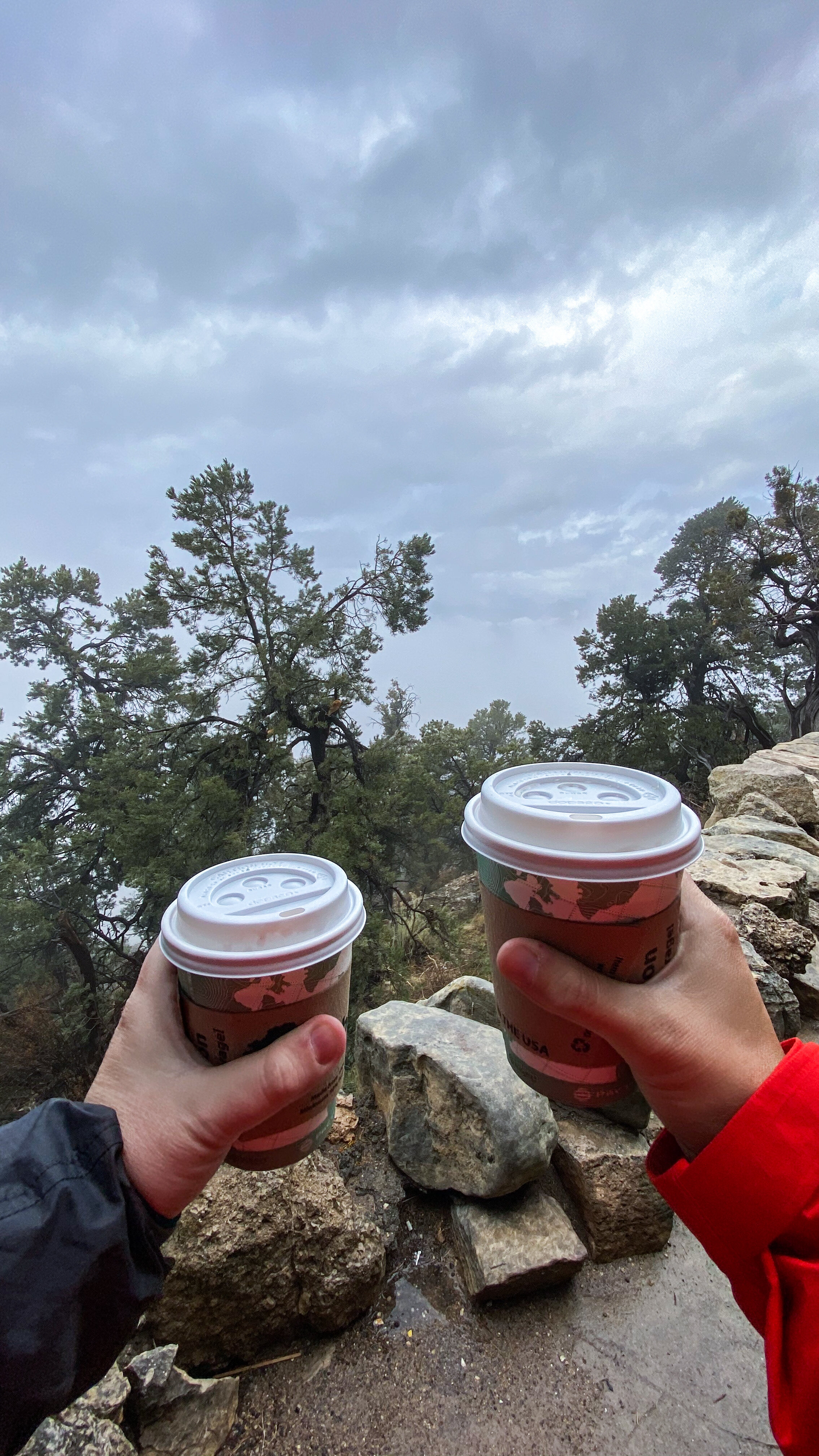
A break in the rain gave us time for a short walk before we went inside for hot cocoa. We sat with our warm drinks while clouds moved into the canyon, gradually hiding cliffs that had been visible only minutes earlier.
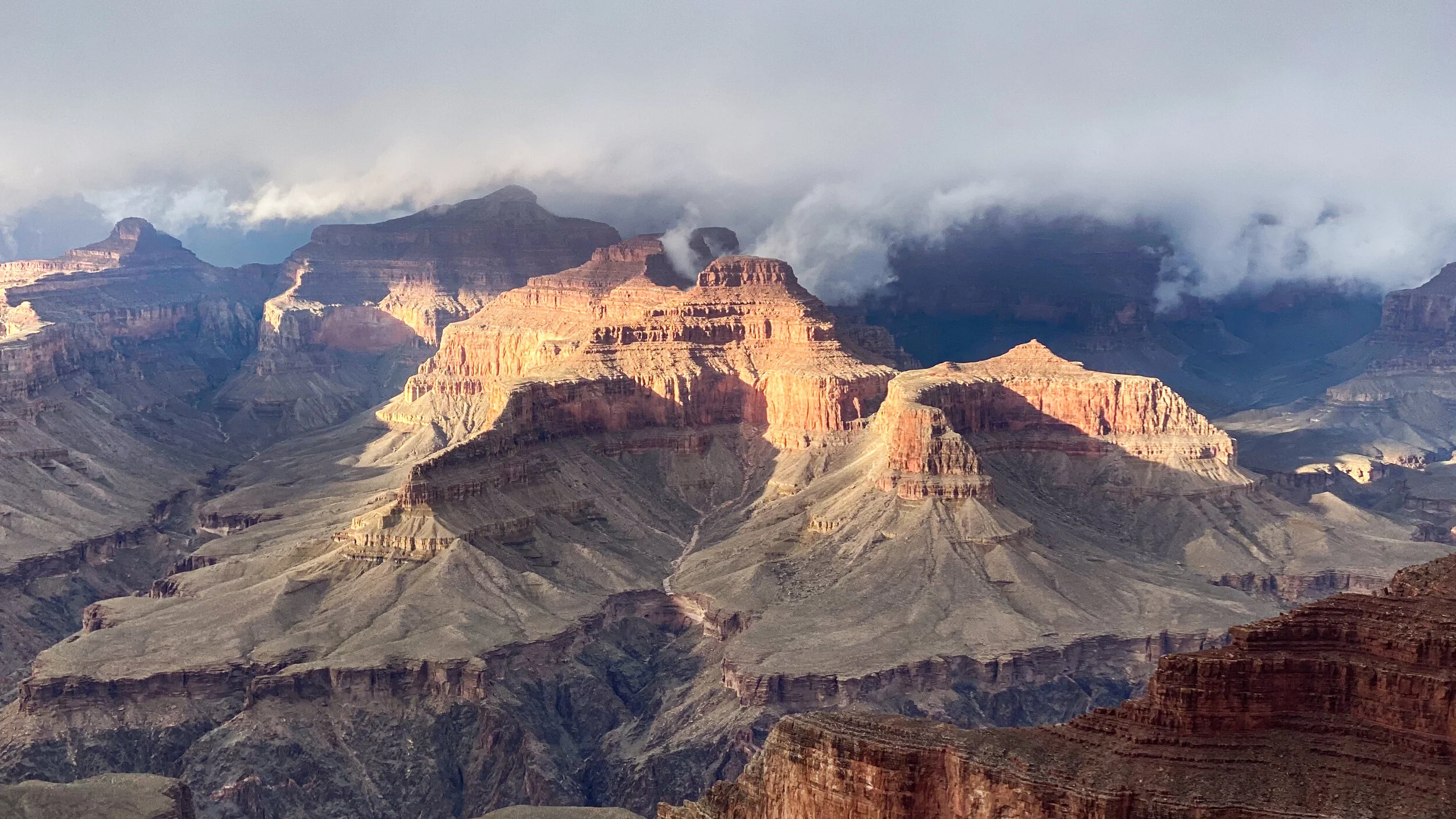
The rain eased during our drive back, just as sunset began adding color beneath the clouds. At one point, the road disappeared into fog while orange light filtered through from the other side. We were briefly surrounded by a warm glow with no view beyond the cloud.


A Snow Day at the Grand Canyon
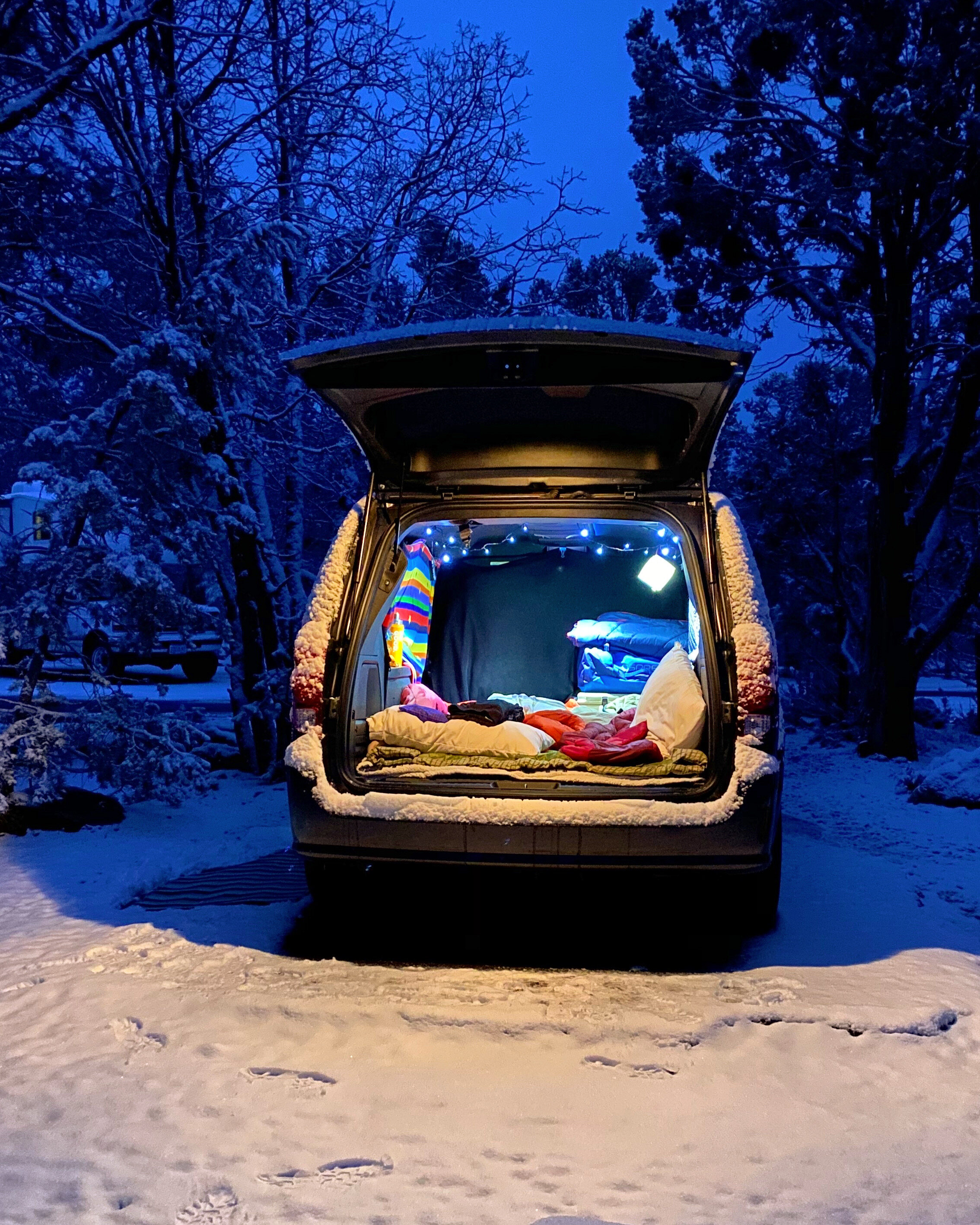
On what should have been our last morning, we opened the back of the van and found the campground covered in fresh snow. The trees, picnic table, and ground around us had all turned white overnight.
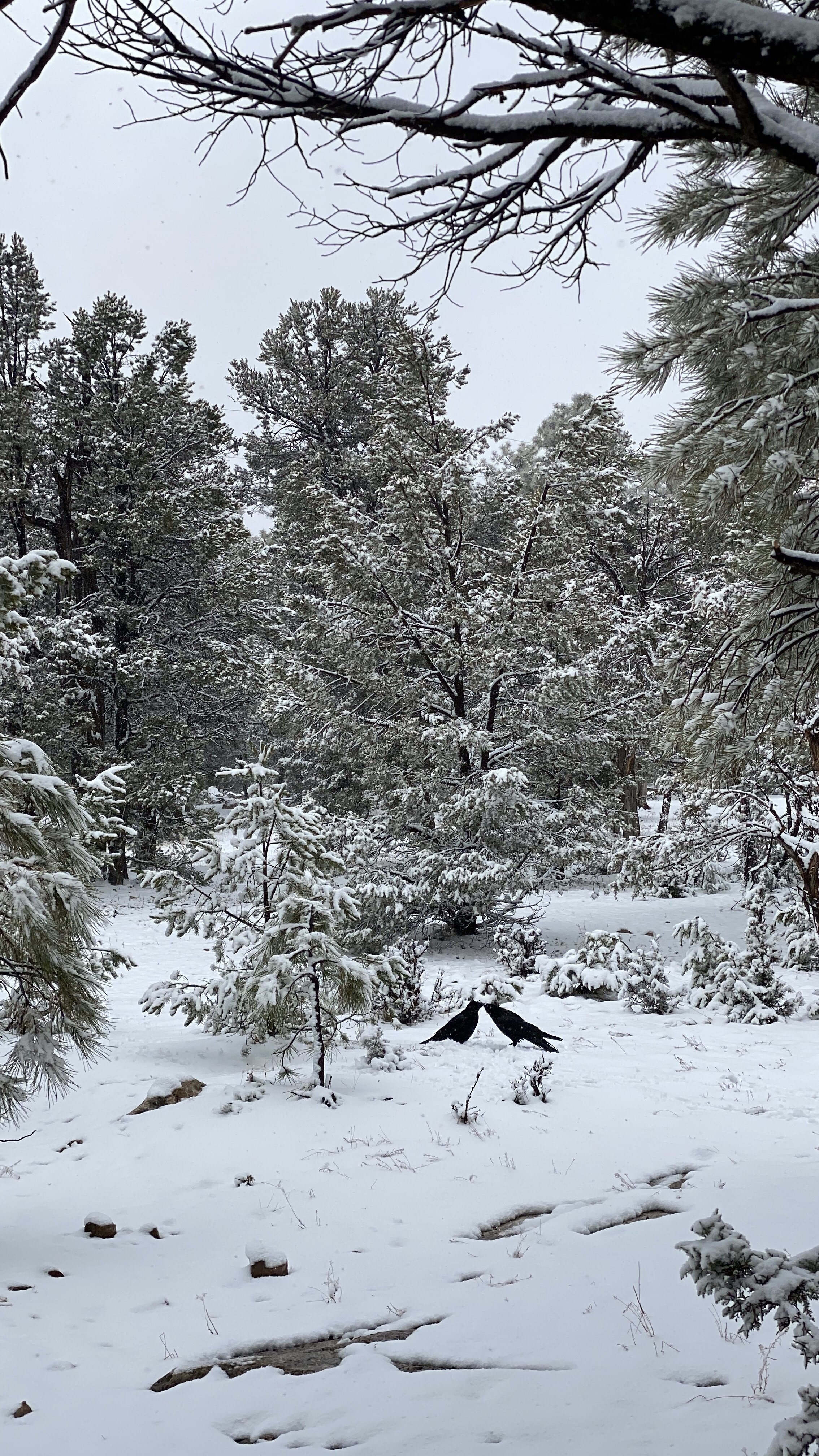
We wandered through the campground for a while, watching animals move through the snow and enjoying it ourselves. Eventually, we drove toward Bright Angel Lodge to see the snow-covered canyon.



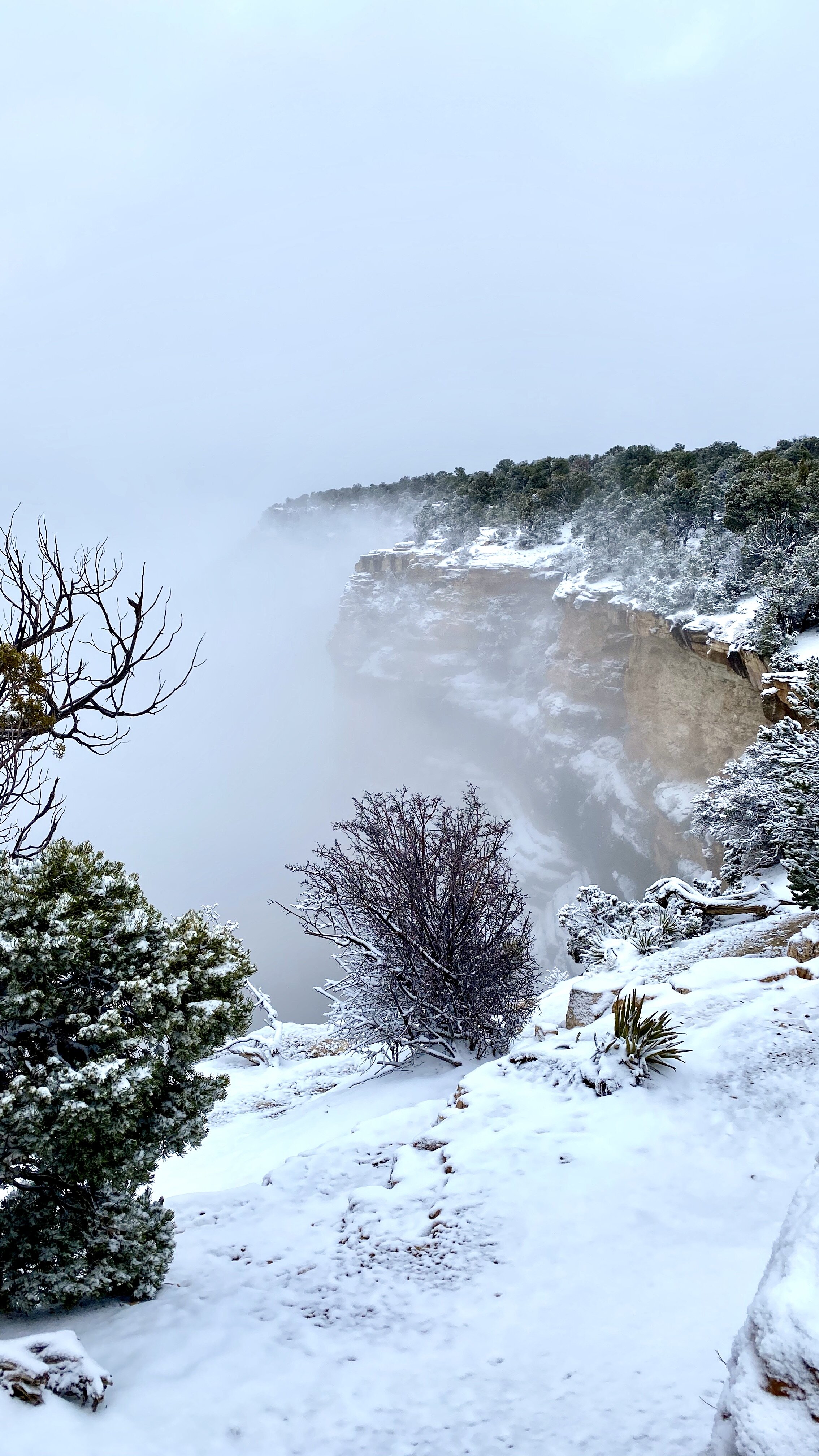
There was almost nothing to see. Fog filled the canyon so completely that only a few trees and the nearest edge of the rim remained visible.
Rather than waiting impatiently for a view, we accepted the slow morning. We ate a warm breakfast at the lodge and lingered over several cups of coffee that we did not have to make outside in the wind.



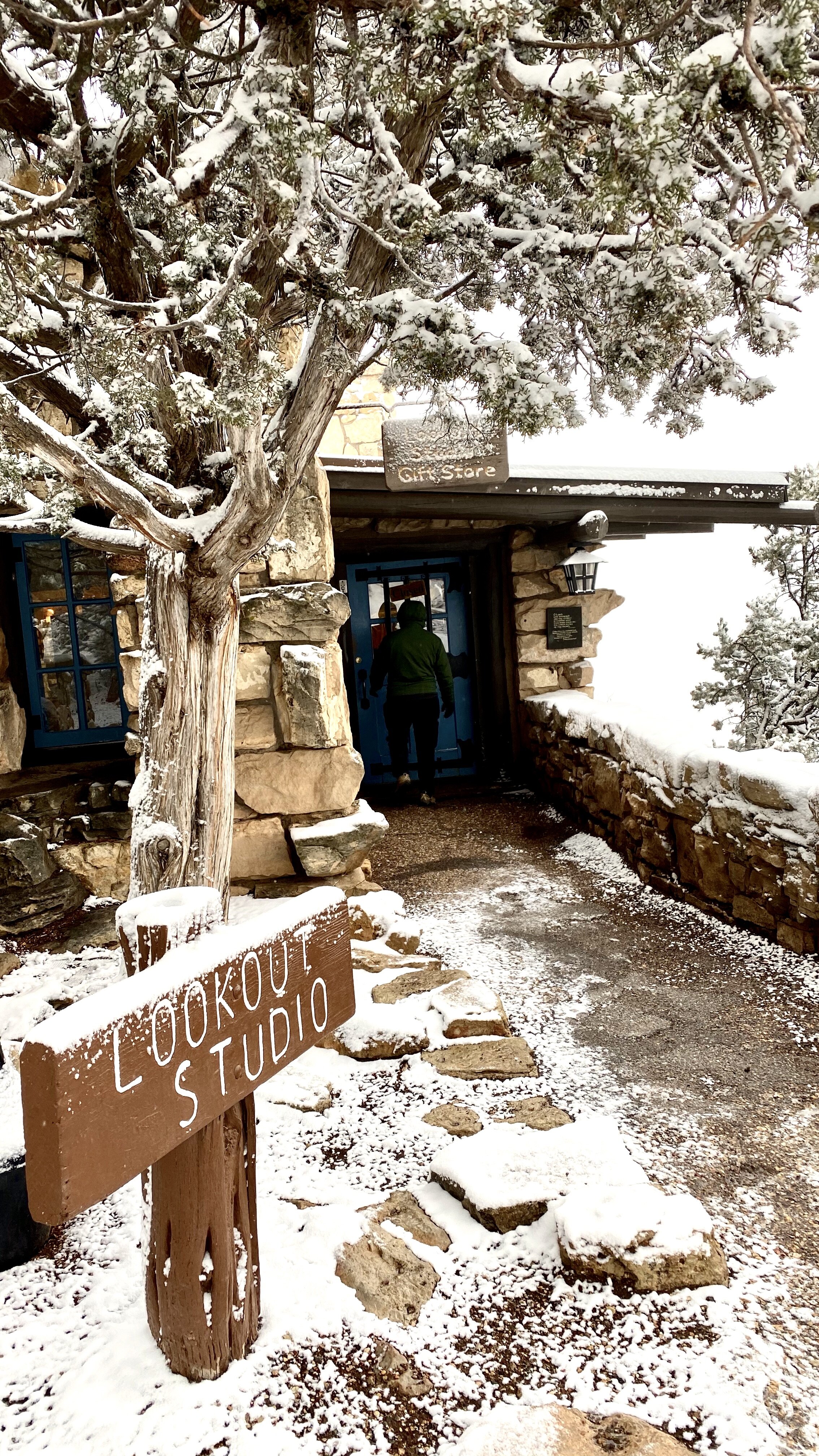



After breakfast, we walked to Lookout Studio. Another Mary Colter design, the stone building appears to grow directly from the canyon rim. Inside, we found an exhibit featuring antique cameras, early photographs, and stories about people who documented and explored the canyon. We left with a book so we could continue reading at home.
Ice beneath the snow made the roads too slippery for us to feel comfortable leaving the park, so we stayed one more night. That gave us time to visit more indoor exhibits, watch another moody sunset, and have burgers and beer at Yavapai Lodge.
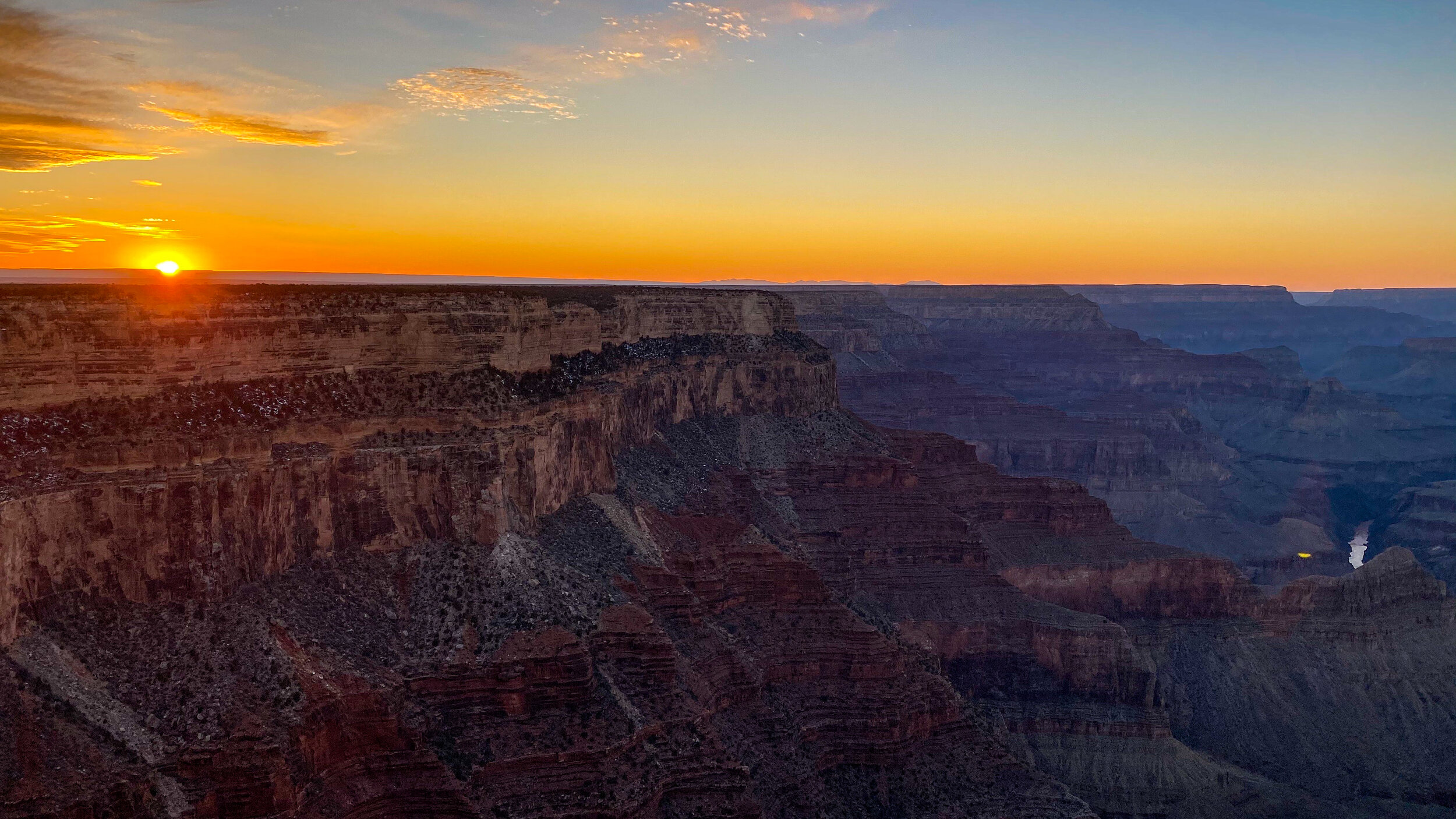
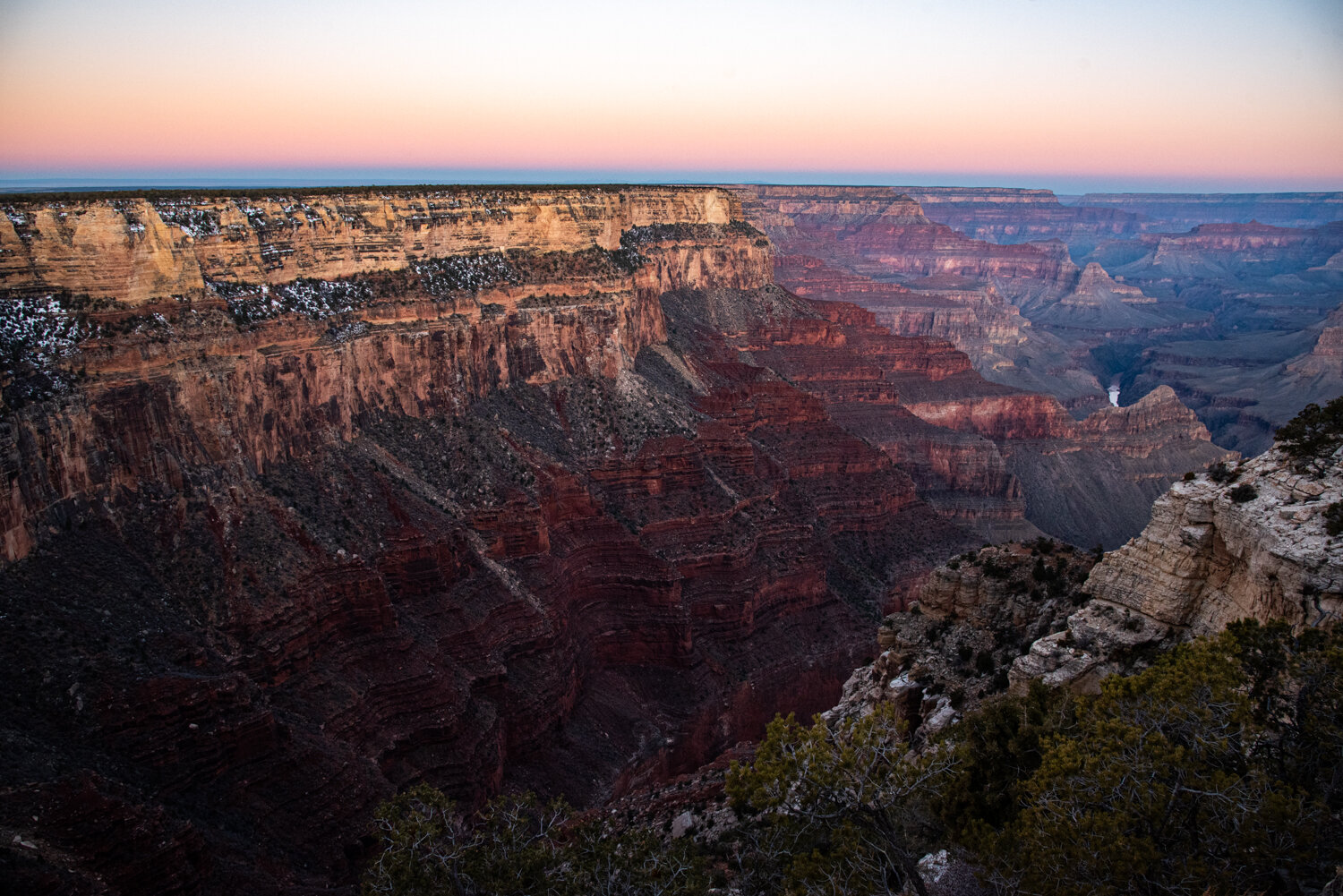
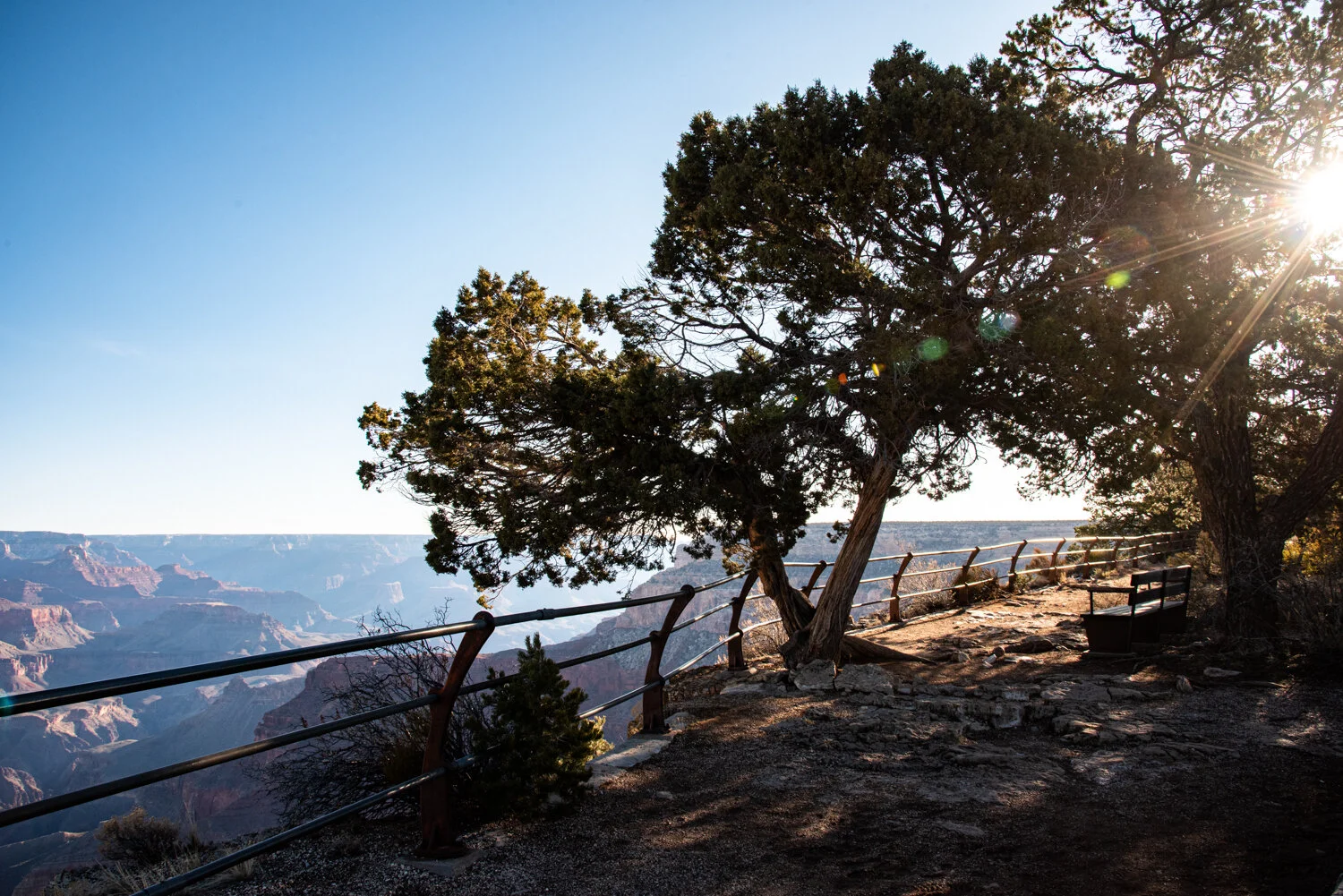
The next morning arrived with clear roads and blue sky. Before beginning the drive home, we stopped at a pullout along Hermit Road and cooked breakfast burritos with the food remaining in our cooler. Sunrise slowly reached across the canyon while we ate at the picnic table.



Birds Along the South Rim
California Condors were the birds I most hoped to see, and two of them soared over us during our South Kaibab hike. Their dark wings seemed enormous when they passed above Cedar Ridge, even against the scale of the canyon.
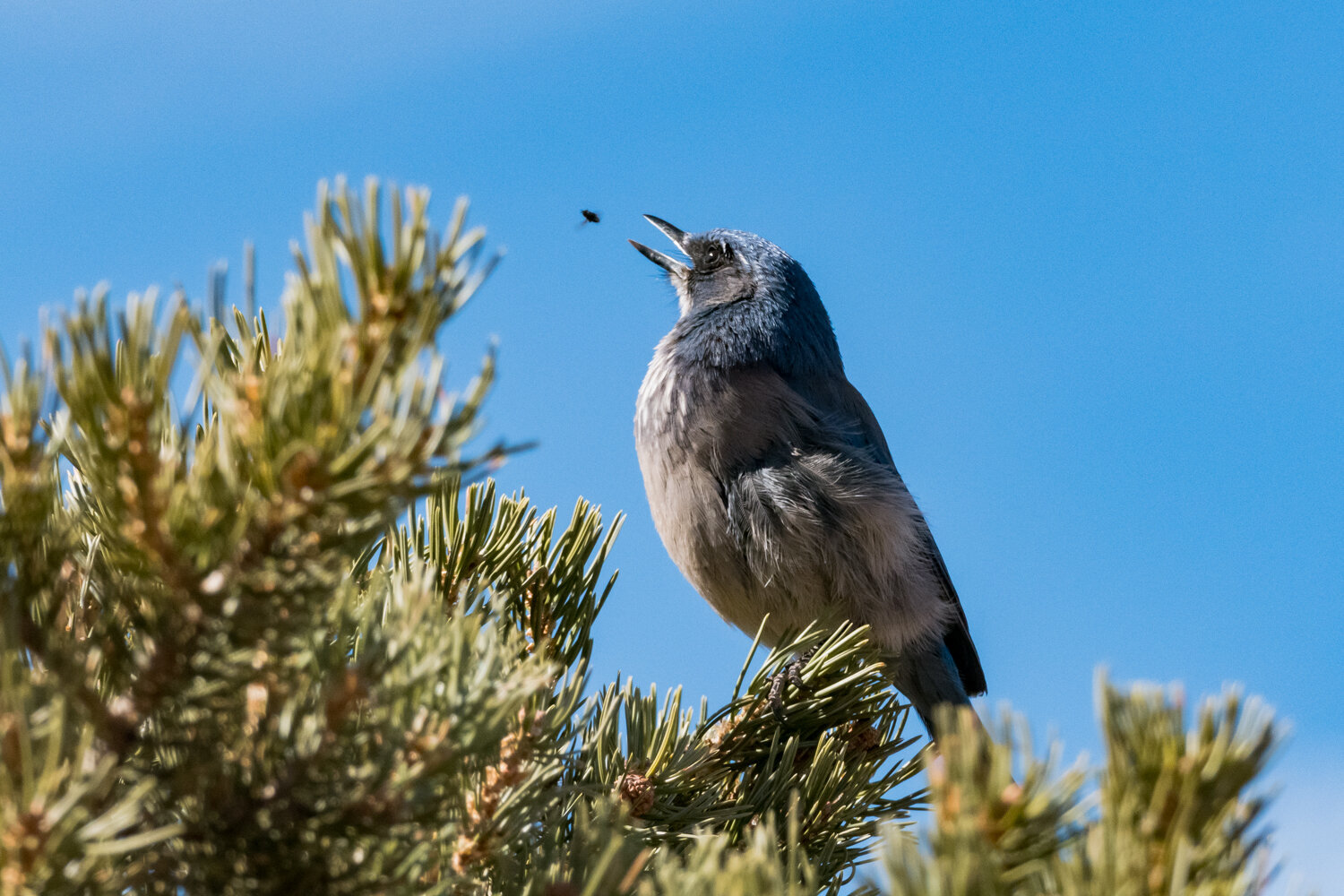
I also hoped to find a Pinyon Jay and a Juniper Titmouse. A Pinyon Jay appeared on our first day, its blue-gray body moving among the pines while its rough call carried through the trees.
The Juniper Titmouse made me wait until our final day. It popped into view at the last place we stopped, a small gray bird with a pointed crest moving quickly through the branches before we left the park.
Here are a few of the other birds we encountered while exploring the South Rim: