Birding at Tijuana Slough National Wildlife Refuge

My ongoing search for new places to watch shorebirds led us to Tijuana Slough National Wildlife Refuge, just south of San Diego. The 1,072-acre refuge protects the wetlands where the Tijuana River reaches the Pacific Ocean and is part of the much larger Tijuana River National Estuarine Research Reserve.
More than 370 bird species have been recorded around the estuary, but the appeal goes beyond numbers. Ocean beach, dunes, mudflats, salt marsh, and open water come together in one protected landscape, with the hills of Tijuana visible beyond the river.


Walking South From Imperial Beach
We accessed the beach from Seacoast Drive in Imperial Beach and headed south toward the mouth of the Tijuana River. On a clear day, the Coronado Islands of Baja California can be visible beyond the water.
A paved walkway and boardwalk near Seacoast Drive provide views east across the refuge. We stopped frequently to scan the marsh before following the raised rocky path between the wetland and beach.
The beach was calm and surprisingly quiet. We mostly passed walkers, runners, and a few other people carrying binoculars or cameras.
During our visit, signs warned about sewage contamination in the ocean, so we stayed out of the water. Conditions along this coastline can change, and current advisories should always be checked before visiting.
We walked as far south as we could before reaching the Tijuana River mouth. The water was too deep to cross safely, so we stayed on our side of the river and explored the narrow stretch of beach.
The Tijuana Estuary Visitor Center sits on the other side of the refuge. It offers maps, exhibits, restrooms, and access to additional trails through the wetlands. We visited on a hot September day and chose to remain near the beach, where the ocean air was noticeably cooler.


A Snowy Egret in the Waves
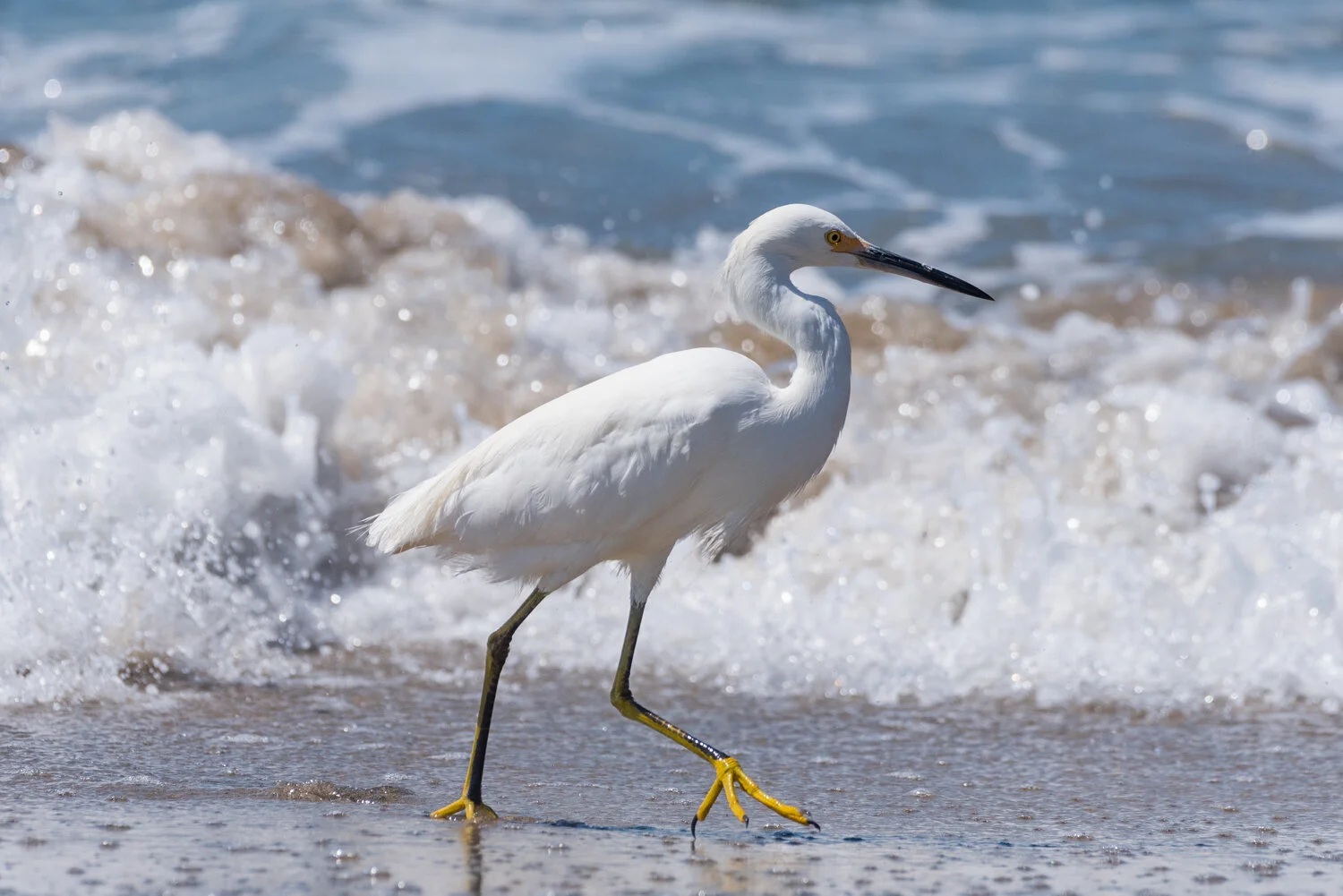
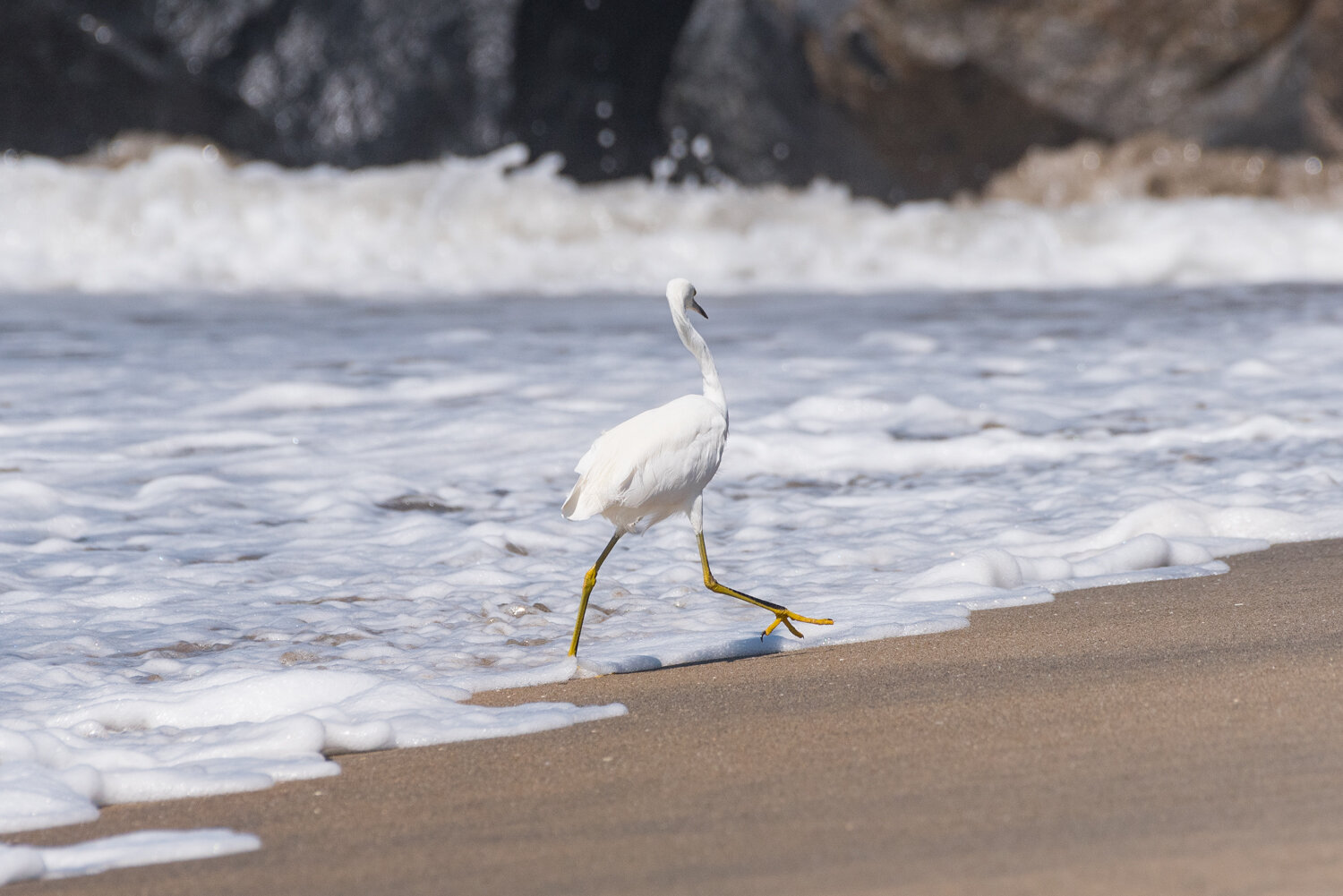
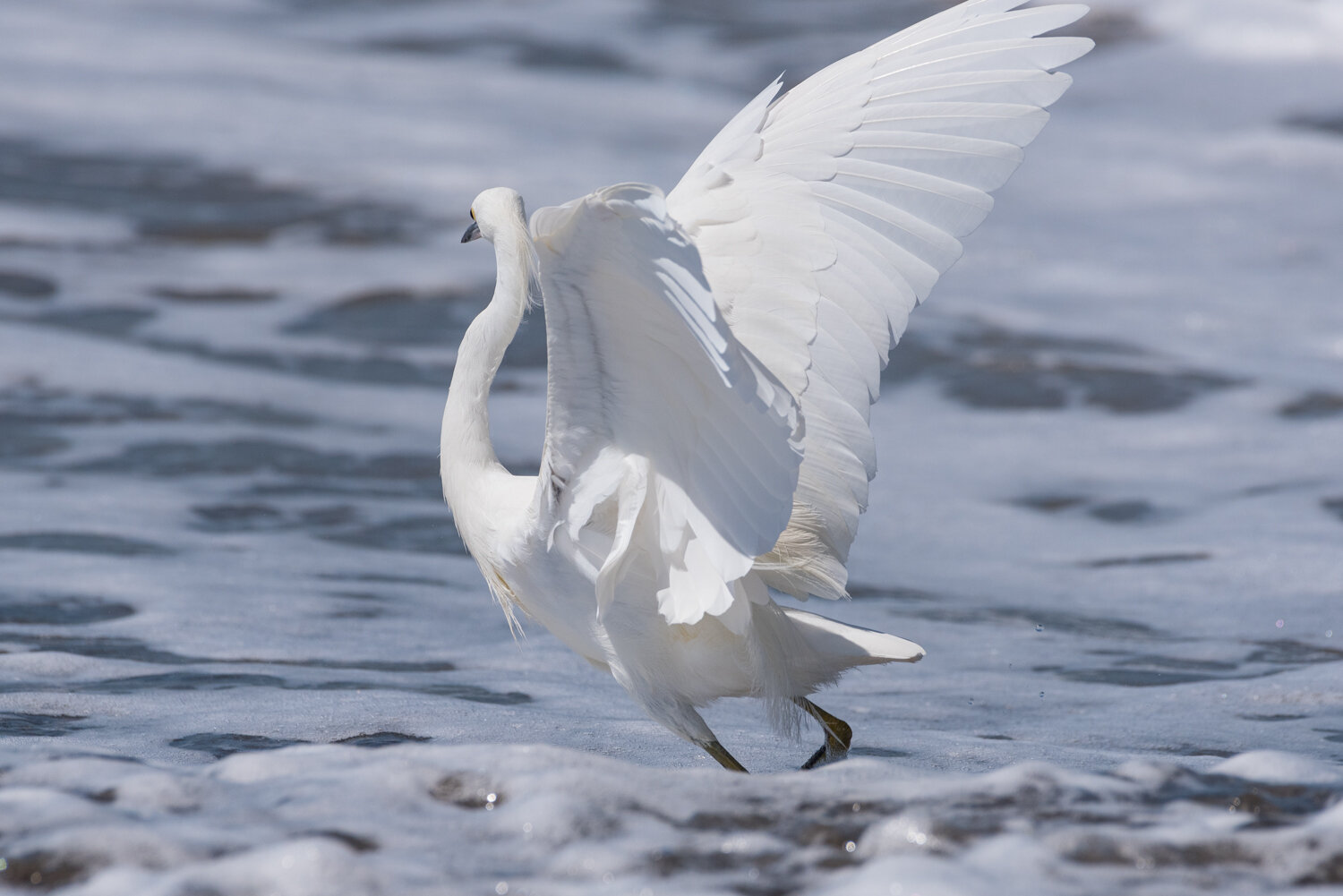
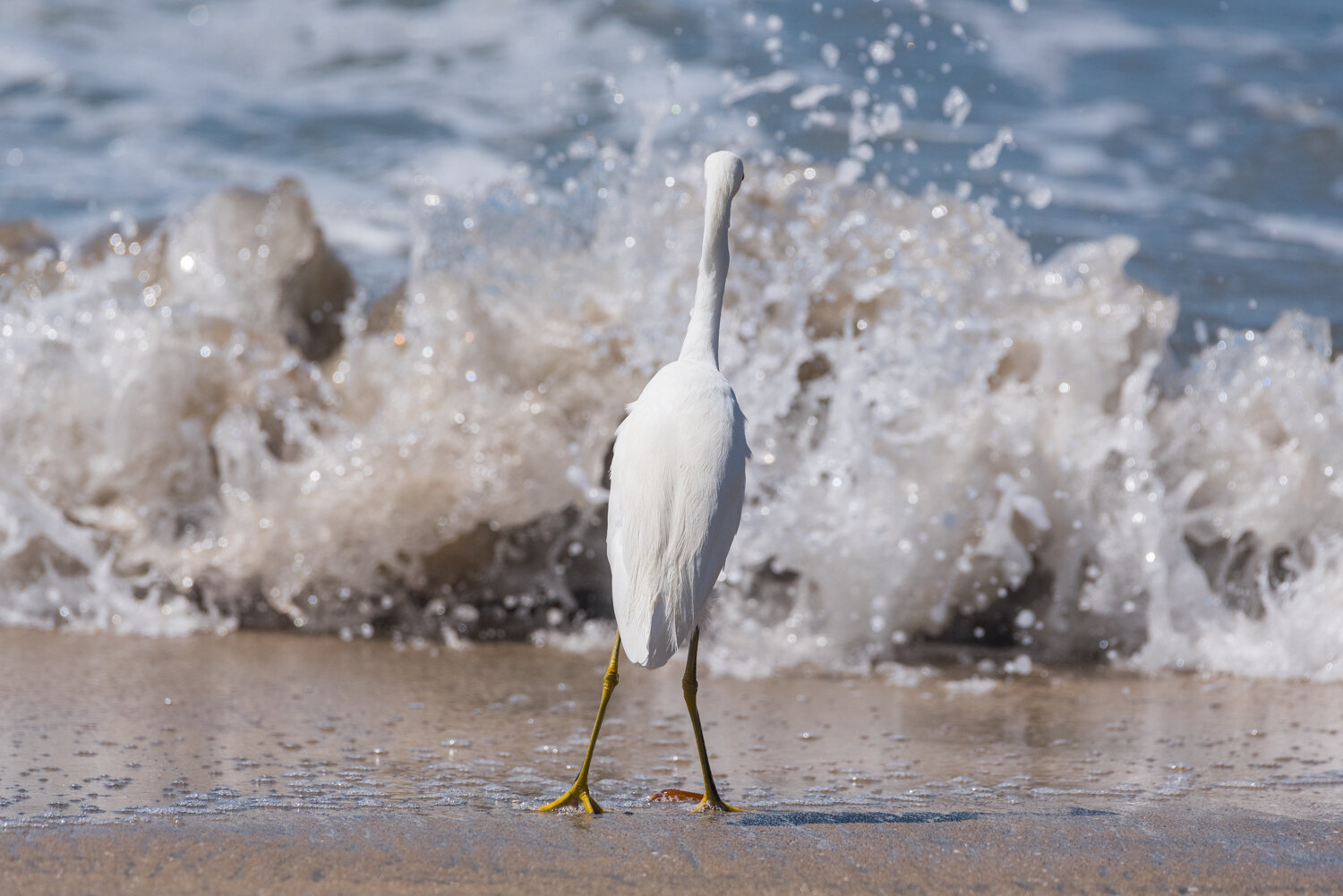
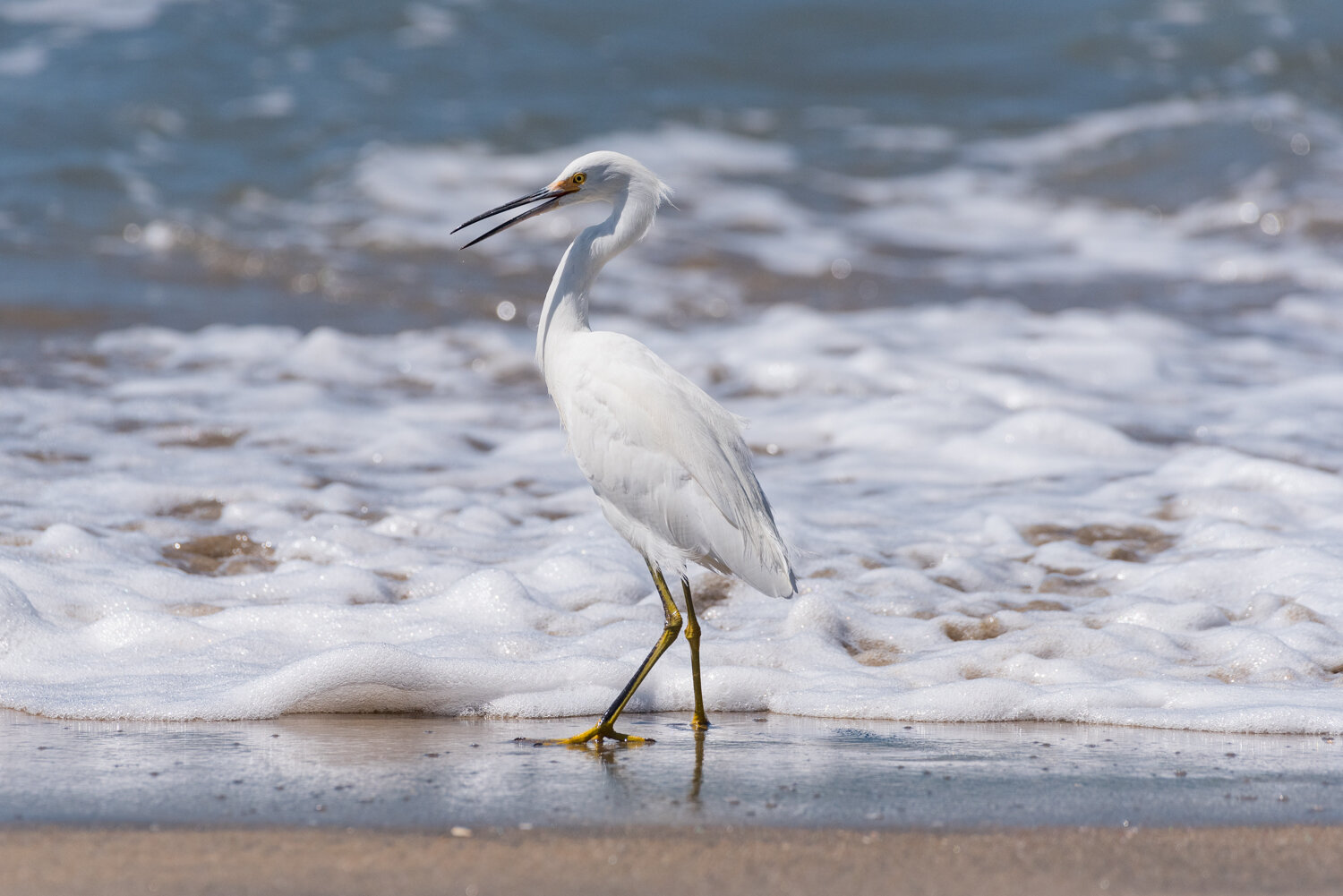
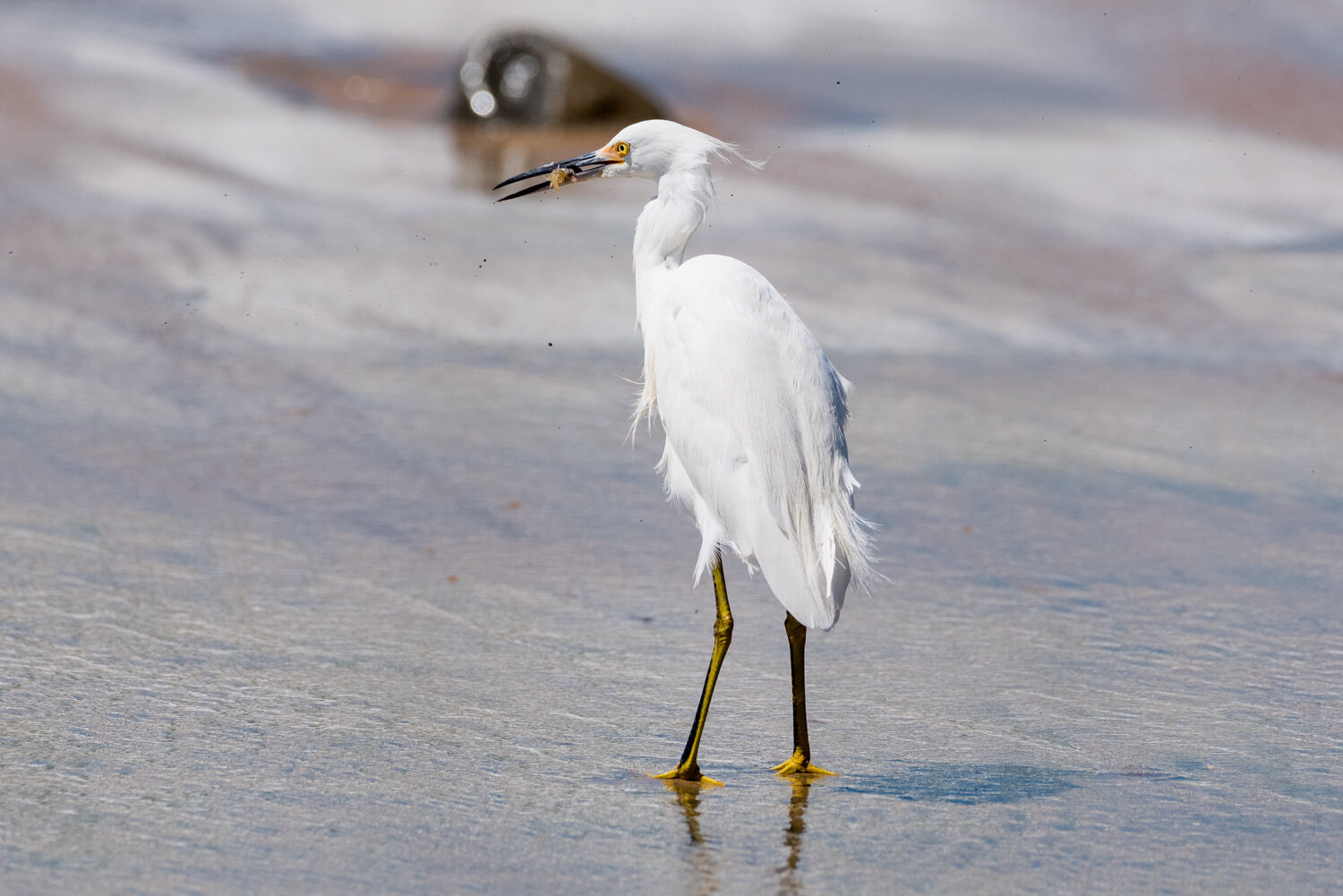
My favorite observation of the day was a Snowy Egret working along the surf.
The bird ran toward the water as a wave pulled back, then hurried away when the next one rolled in. Its yellow feet flashed against the wet sand as it changed direction, lifted its wings, and chased small prey through the shallows.
The egret caught a few tiny bites, so it was clearly hunting. Still, there were moments when its quick dashes in and out of the foam looked almost playful, as though it were cooling off and enjoying the movement of the waves.
I watched it repeat the pattern again and again, always staying just ahead of the incoming water.
Birds That Depend on the Estuary
Tijuana Slough was originally established to help protect the endangered Light-footed Ridgway’s Rail. This secretive marsh bird lives in dense coastal wetlands from Southern California into northern Baja California.
The rails spend much of their time hidden among cordgrass and other thick vegetation. We did not see one, but looking across the marsh gave me a better sense of why the bird is so difficult to find and why preserving this habitat matters. A rail can disappear into that dense growth without leaving so much as a ripple.
California Least Terns and Western Snowy Plovers also nest within the reserve. Both depend on open sand and dunes, where their eggs and chicks can nearly disappear against shells and pale bits of beach debris.
The California Least Tern is federally endangered, while the Pacific coast population of the Western Snowy Plover is federally threatened. Their nests are vulnerable to predators and disturbance from people, so closed nesting areas need plenty of space. Even outside marked closures, watching where we step helps protect birds that may be almost invisible until they move.
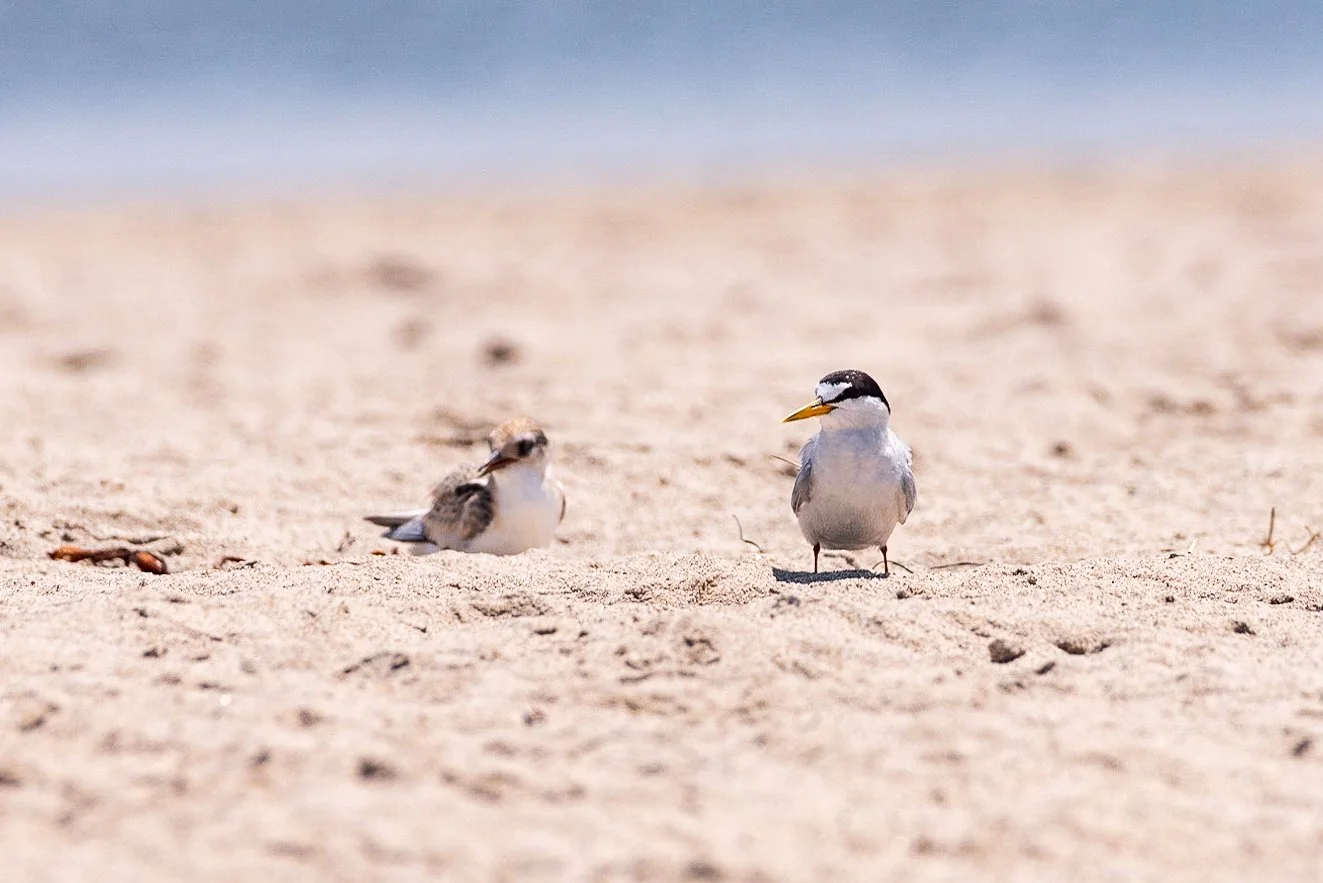
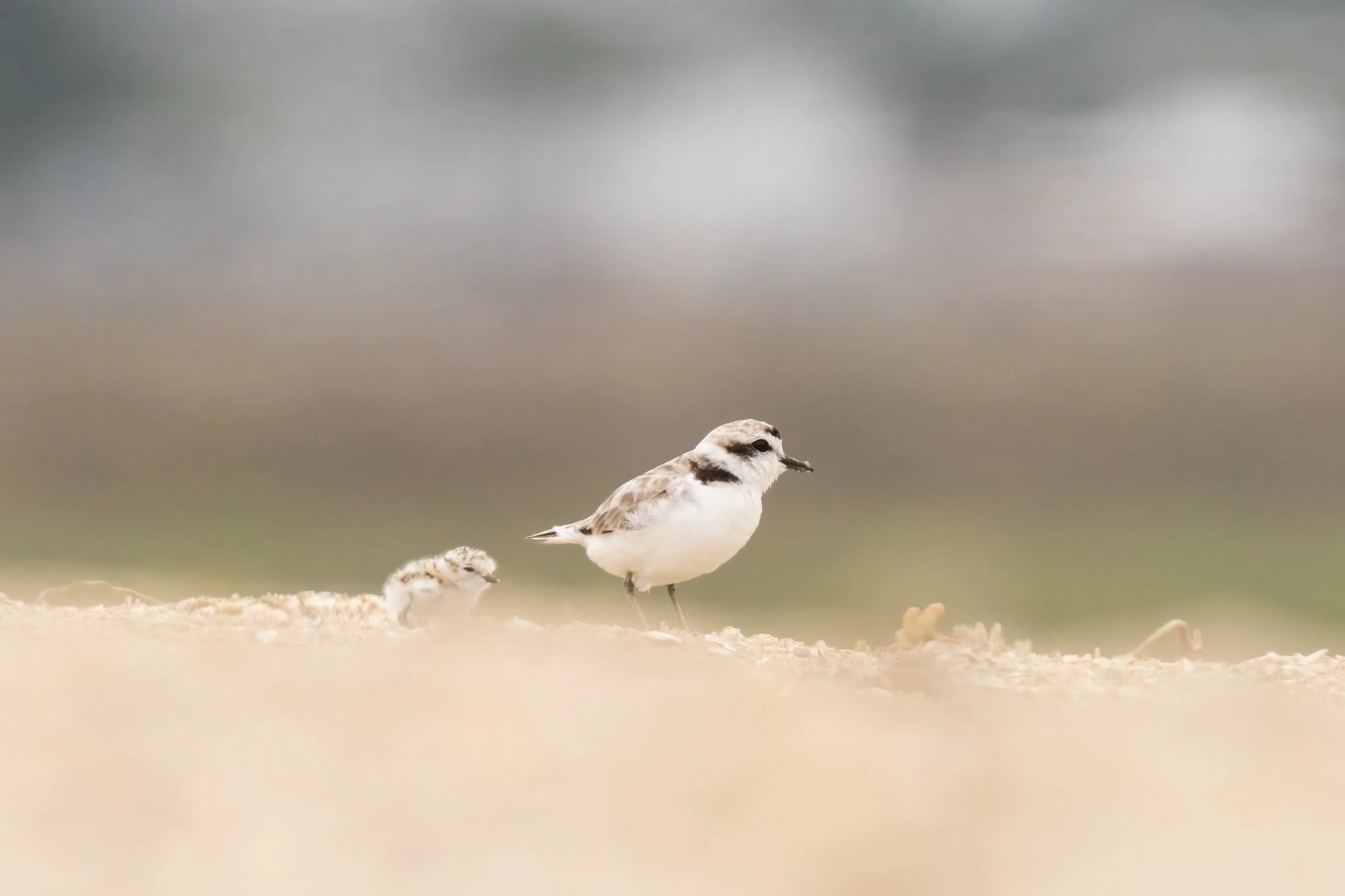
We were fortunate to see an adult Western Snowy Plover on the beach. It moved in quick bursts across the sand, pausing between scattered debris before hurrying forward again on tiny dark legs.
An adorable Snowy Plover - a threatened species on our SoCal beaches.
Tijuana Slough gave us a quiet stretch of coastline with birds moving between waves, dunes, and marsh. We did not find the elusive Ridgway’s Rail, but we spent time in the habitat that allows it, Least Terns, Snowy Plovers, and so many other coastal birds to remain here.