
When I started birding in February 2019, I had no idea bird festivals existed. For the first several months, I was simply enjoying the birds I found, flipping through field guides, and reading everything I could while trying to figure out which bird was which.
Gradually, I discovered an entire community built around birds. I joined local bird walks, took a small boat into a restricted section of my local bay, and spent a full day on a pelagic trip off the coast of Ventura. I met welcoming people who were generous with their knowledge and happy to help a new birder.
During one of those walks, another attendee asked if I was planning to attend any bird festivals. I had no idea what she was talking about, but I went home, searched online, and soon registered for my first one.
The San Diego Bird Festival was an annual gathering hosted by the organization then known as San Diego Audubon. The program included field trips, workshops, pelagic trips, presentations, and an exhibit hall filled with optics, books, artwork, and other birding gear.
I registered about four weeks before the 2020 festival, which was apparently very late in bird-festival time. Most of the field trips and classes were already sold out, but I found a Birding by Bike tour led by Hannah and Erik of Hannah and Erik Go Birding. Later, an additional shorebird trip appeared with a few open spots. It was led by Kevin McGowan from the Cornell Lab of Ornithology, whose eBird and Cornell resources had helped me tremendously during my first year of birding. I signed up immediately.
A Day of Shorebirds Around San Diego
We got up early on Saturday for the roughly two-hour drive to San Diego. Kim dropped me off at the Marina Village Conference Center before heading out for her own day of paddleboarding, and I checked in for my field trip.
Our trip began with a short presentation from Kevin before we loaded into a shuttle bus. I had been nervous about joining an all-day excursion without knowing exactly what to expect, but everything was carefully organized and the group immediately felt welcoming.
We visited Robb Field, Famosa Slough, Mission Beach, and La Jolla Cove. At each stop, we had time to spread out, watch the birds, and borrow one of the spotting scopes brought by the group. There was no pressure to rush. We could stay with a cluster of shorebirds long enough to study their shapes and movements while Kevin talked us through the details that separated one species from another.
La Jolla was easily my favorite stop. Brandt’s Cormorants were nesting on the cliffs, their blue throat patches glowing against their dark feathers. Some nests held fluffy chicks tucked among the adults. Seeing an active nesting colony was very different from finding an individual cormorant sitting on a harbor piling.
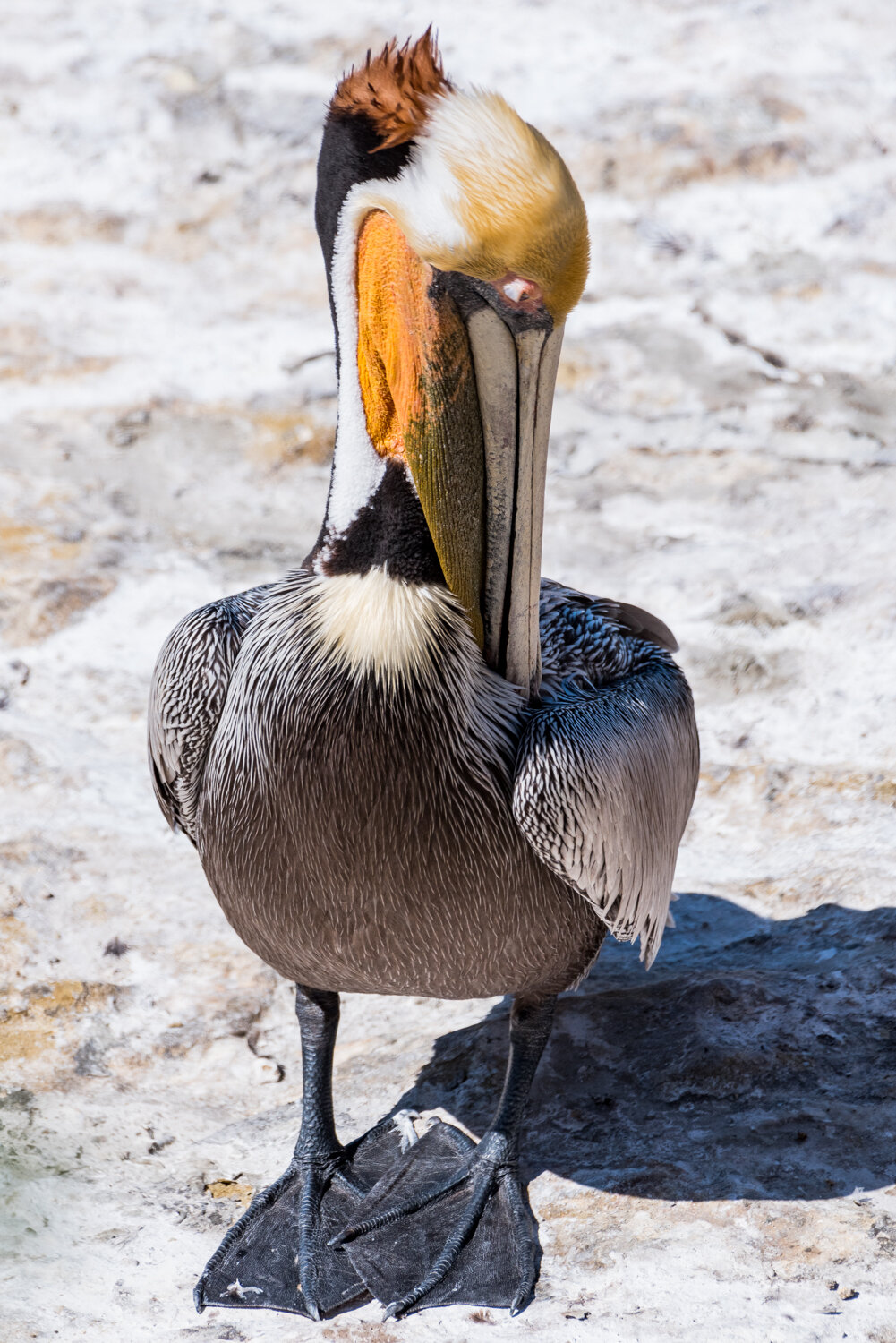
The Brown Pelicans immediately drew my attention. They are always my favorite, but they were especially beautiful against the deep blue water with their breeding colors on display. Some rested along the rocks while others skimmed over the ocean, their broad wings carrying them just above the swells.
Nearby, seal pups flopped around among adults that looked thoroughly unimpressed by their activity. Between the cormorants, colorful pelicans, seals, cliffs, and rolling water, there was always something moving.




Exploring the Festival
When we returned to Marina Village, I wandered through the exhibit hall. Artists displayed bird-inspired work, booksellers offered field guides and natural history books, and optics companies had rows of binoculars and scopes available to try. As a relatively new birder, I enjoyed comparing different binoculars in person instead of trying to understand their differences from descriptions online.
My next event was an Afternoon Estuary Walk. We found young Black-crowned Night-Herons tucked into the trees along the harbor, followed by a surprise Gray Catbird that immediately drew everyone’s attention. I saw the catbird moving through the vegetation but never managed a good photograph before it disappeared.
By the time we reached the estuary, the early drive and full-day shorebird trip were catching up with me. I walked with the group for about half an hour before deciding to call it a day.
After a little rest at our hotel, Kim and I went out for dinner and met the World Girl Birders group at Modern Times Beer. We spent the evening sharing stories about birds and adventures over some very good beer.


Birding by Bike Around Mission Bay
Sunday morning began with breakfast and plenty of coffee before Kim dropped me off for my Birding by Bike tour.
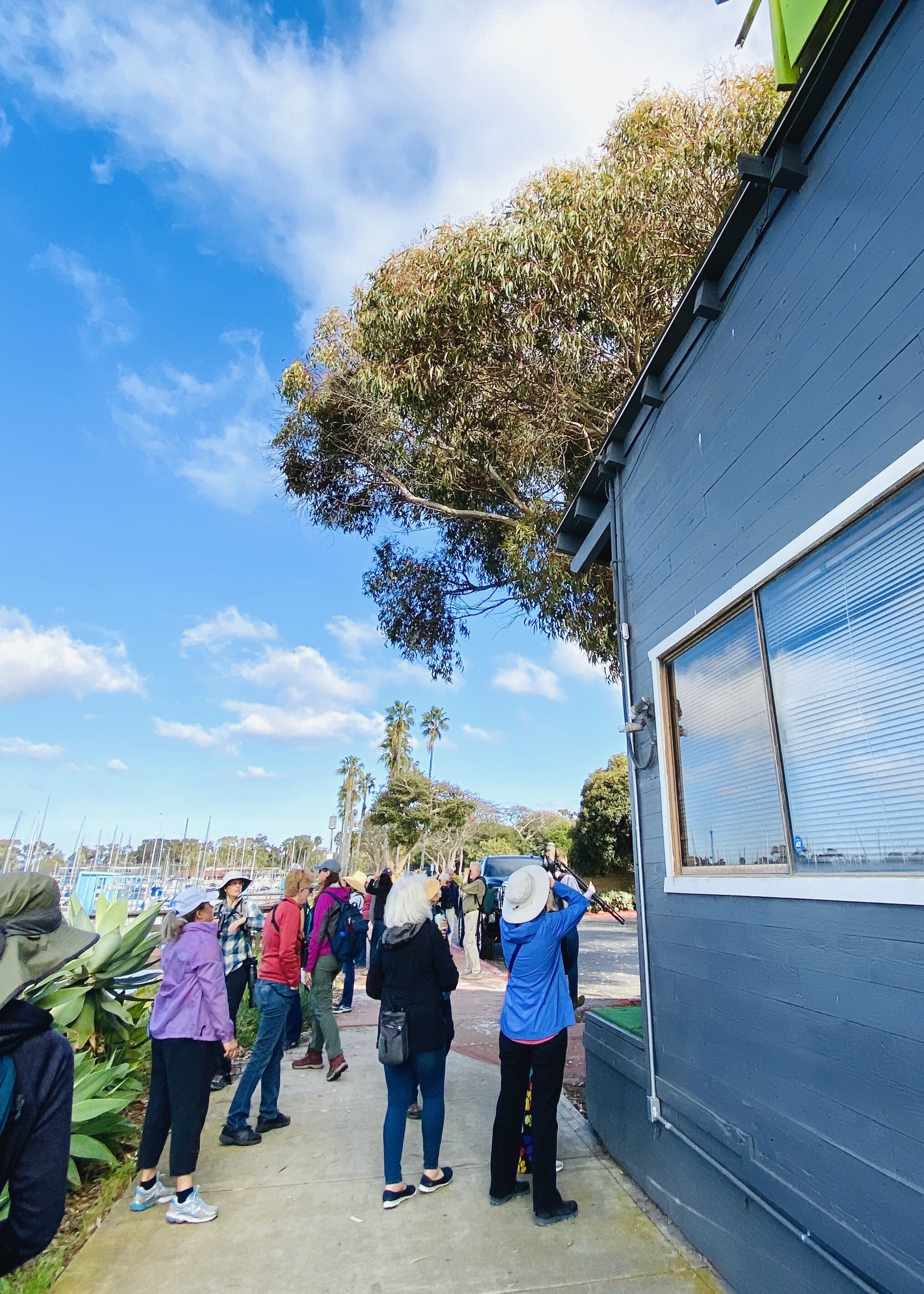
Hannah and Erik led the trip, and bicycles were waiting for us when we arrived. I will not pretend that I remember every place we stopped, but we covered a good portion of the Mission Bay area, pausing whenever someone noticed movement along the water, in the grass, or among the trees.
The network of bike paths kept us away from roads for most of the tour. Birding by bike allowed us to cover more ground than we could have on foot while still stopping quickly when something caught our attention. Between sightings, we rode beside the bay with open water and San Diego scenery around us.
After about four hours, we returned to the festival center. I said goodbye to Hannah, Erik, and the rest of the group, then met Kim in the parking lot so we could find some lunch.
I had arrived at my first bird festival without knowing quite what to expect. I left with new friends and memories of nesting cormorants, colorful Brown Pelicans, a disappearing Gray Catbird, and a long bike ride beside Mission Bay.
Planning for a Future San Diego Bird Festival
The festival continues under the San Diego Bird Alliance, formerly San Diego Audubon. Programs change each year, but the event still includes guided outings, workshops, presentations, and opportunities to explore the varied habitats of San Diego County.
Here are some of the other great birds that I saw during the festival:
Row 1, Left to Right: (1) Iceland Gull (Thayer’s), (2) Double-crested Cormorant, (3) Black-crowned Night Heron (juvenile)
Row 2: (1, 2) Little Blue Herons, (3) Black-bellied Plover, Western Sandpiper / Ring-billed Gull / Red Knot / Black-bellied Plover
Row 3: (1, 2) Yellow-crowned Night Heron, (3) Ring-billed Gull with a snack
Row 4: (1) Red-masked Parakeet, (2) Wandering Tattler, (3) Brown Pelican doing yoga