Our First Backpacking Trip: A Freezing Night in Joshua Tree
Backpacking always seemed a little intimidating.
Car camping was familiar. We could fill the car with everything we thought we might need and still have room for more. Backpacking was different. Everything had to fit into one pack, and every extra item meant more weight on your back for every mile.
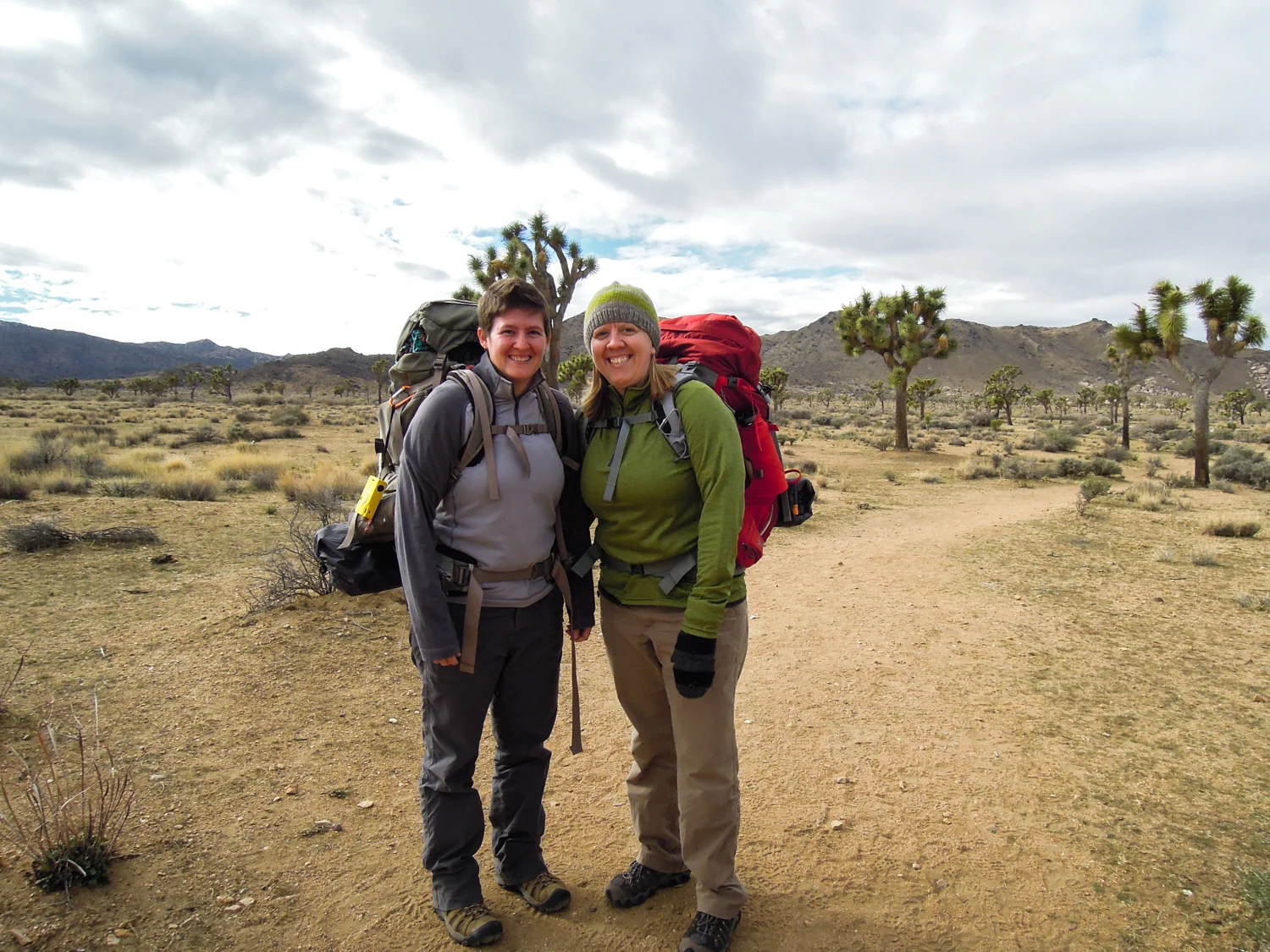
After a lot of debating, packing, unpacking, and repacking, we ended up with backpacks weighing about twenty pounds each. We certainly weren't carrying ultralight gear, but for our first overnight trip it felt manageable. Looking back now, there were plenty of things we could have left behind, but that's part of learning.


Choosing Our First Backpacking Camp
Our plan was to take advantage of REI's Opt Outside tradition on Black Friday while avoiding the crowds filling the campgrounds inside Joshua Tree National Park. Instead of reserving a campsite, we decided to try one of the park's backcountry camping zones. After a little research, we settled on Juniper Flats.
One thing we liked immediately was its location along Keys View Road. It tends to feel a little quieter than some of the more popular areas of the park, and it's surrounded by beautiful stands of Joshua trees. We already knew we wanted to pitch our tent beneath one if we could.
At the Juniper Flats Backcountry Registration Board, we filled out our overnight permits, shouldered our packs, and started west along the California Riding and Hiking Trail. We only planned to hike about a mile and a half before making camp, but carrying a full backpack for the first time still felt very different from day hiking. Fortunately, the trail is mostly flat, giving us a chance to get used to the extra weight without climbing steep hills.
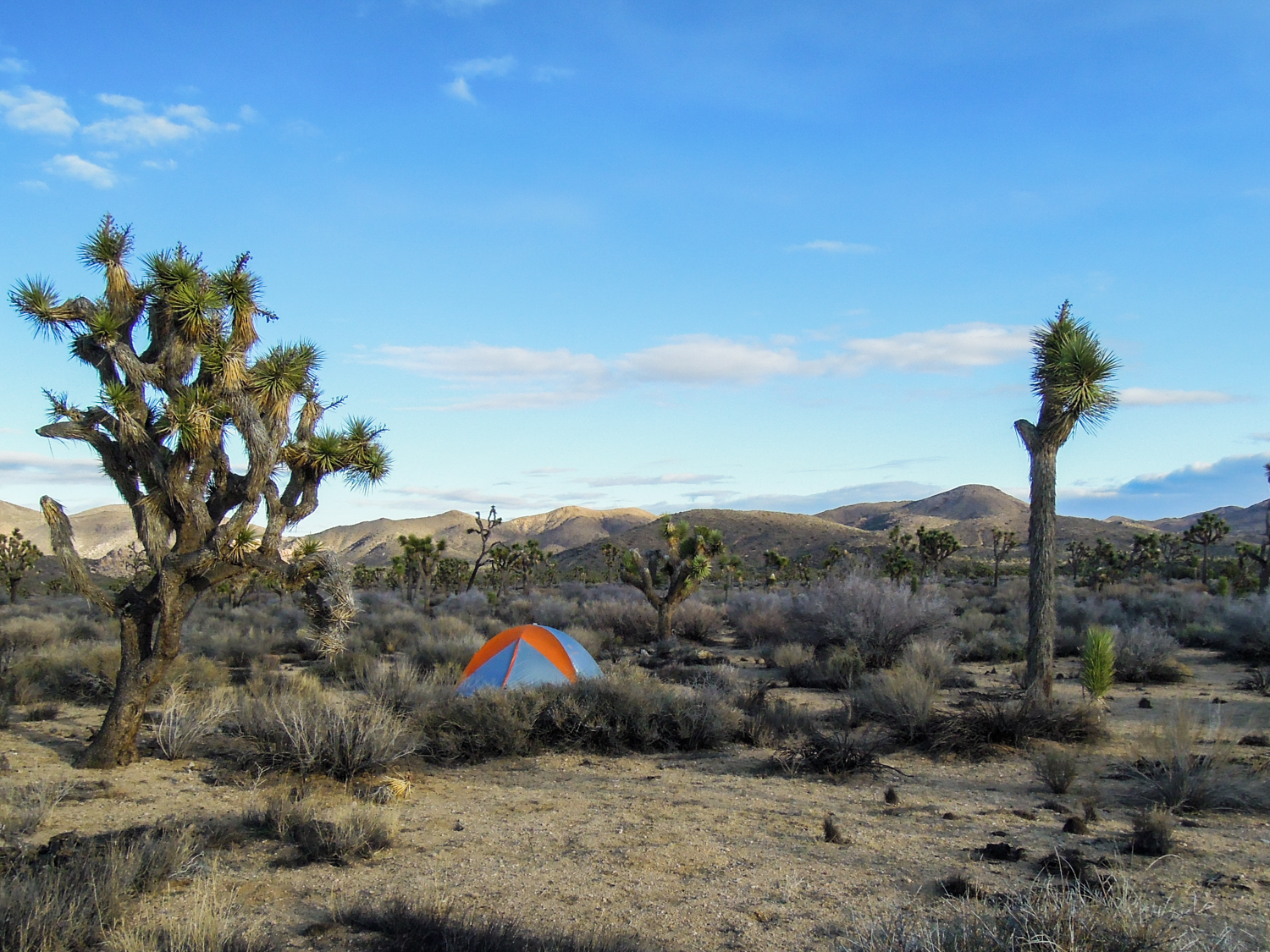
After about a mile and a half, we left the trail and wandered into a quiet grove of Joshua trees where we found a level patch of ground for our tent.


Learning Cold the Desert Can Feel
By the time camp was set up, the temperature had already dropped into the low 40s.
We climbed into our sleeping bags almost immediately, layering on every piece of clothing we had brought with us. Dinner was freeze-dried chili, followed by a few games of cards while we hoped our sleeping bags would eventually warm up. Instead, it just kept getting colder.
About an hour after trying to fall asleep, sometime around 10:00 that evening, we both admitted what we had been thinking. Our hands and feet were numb, our hips felt frozen against the ground, and neither of us was getting any warmer.
We packed everything back into our backpacks, switched on our headlamps, and started hiking the mile and a half back to the car beneath a sky full of stars.
When we finally climbed inside and started the engine, the dashboard showed 22 degrees!
The frozen condensation covering the rainfly suddenly made perfect sense.


A Successful First Backpacking Trip
At the time, hiking back to the car felt like admitting defeat. Looking back, I see it very differently. One of the most important backpacking skills is recognizing when conditions aren't matching your gear or your experience. We weren't prepared for temperatures that cold, and there was no reason to spend a miserable night pretending otherwise.
The hike back taught us far more than staying would have. It made us rethink our sleeping bags, sleeping pads, clothing layers, and what we'd need before attempting another overnight trip. More importantly, it confirmed something we'd already suspected.


We loved the idea of backpacking. Even after a freezing night that ended in retreat, all we could think about was planning the next trip and doing it better.
Sometimes your first adventure isn't memorable because everything goes according to plan. Sometimes it's memorable because everything goes wrong, you learn a lot, and you can't wait to try again.