A Cold Night Backcountry Camping in Joshua Tree

A couple of weeks earlier, we arrived in Joshua Tree on a Friday afternoon and found every campsite full. We had not packed for backcountry camping, and there were no hotel rooms available nearby, so we reluctantly drove home. When our next opportunity came along, we made sure we were prepared to hike in and camp away from the crowds.
We took our time on Saturday morning and reached Joshua Tree around 10 a.m. The amount of traffic moving through the park suggested that the campgrounds were probably full again, so we did not bother looking for a site. We stopped for some photos, took a few short walks, and gradually made our way toward the Desert Queen Mine area.
The small dirt parking area near the backcountry board was full. For a moment, it felt as though our previous trip was repeating itself.
So, we continued to Twin Tanks, where we had camped nearby on an earlier visit. Its backcountry parking area was much larger, and this time we found a place to leave the car. The sun was already beginning to drop toward the horizon. We filled out the backcountry permit, placed it in the box, and headed east from Twin Tanks on the California Hiking and Riding Trail.
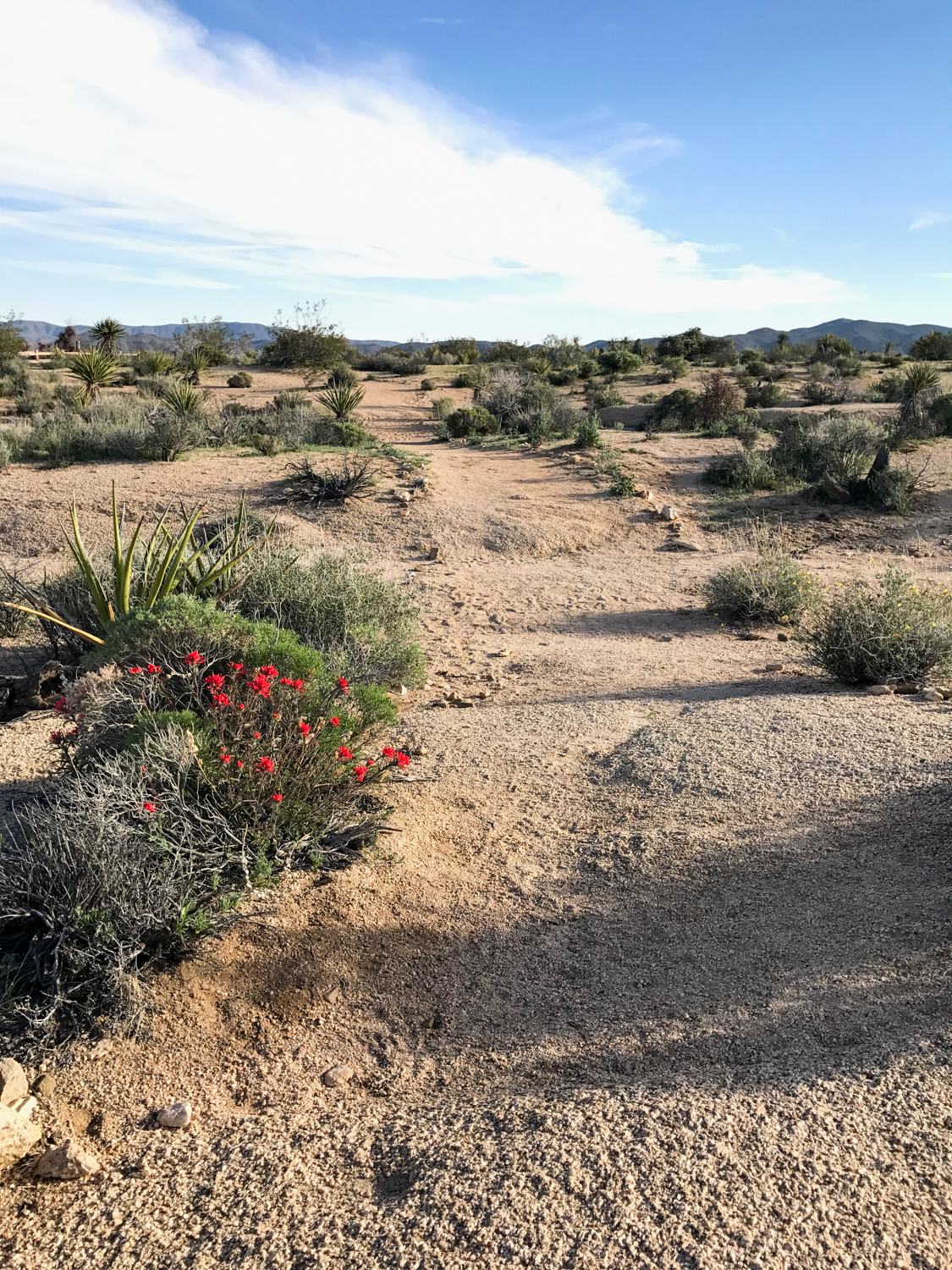
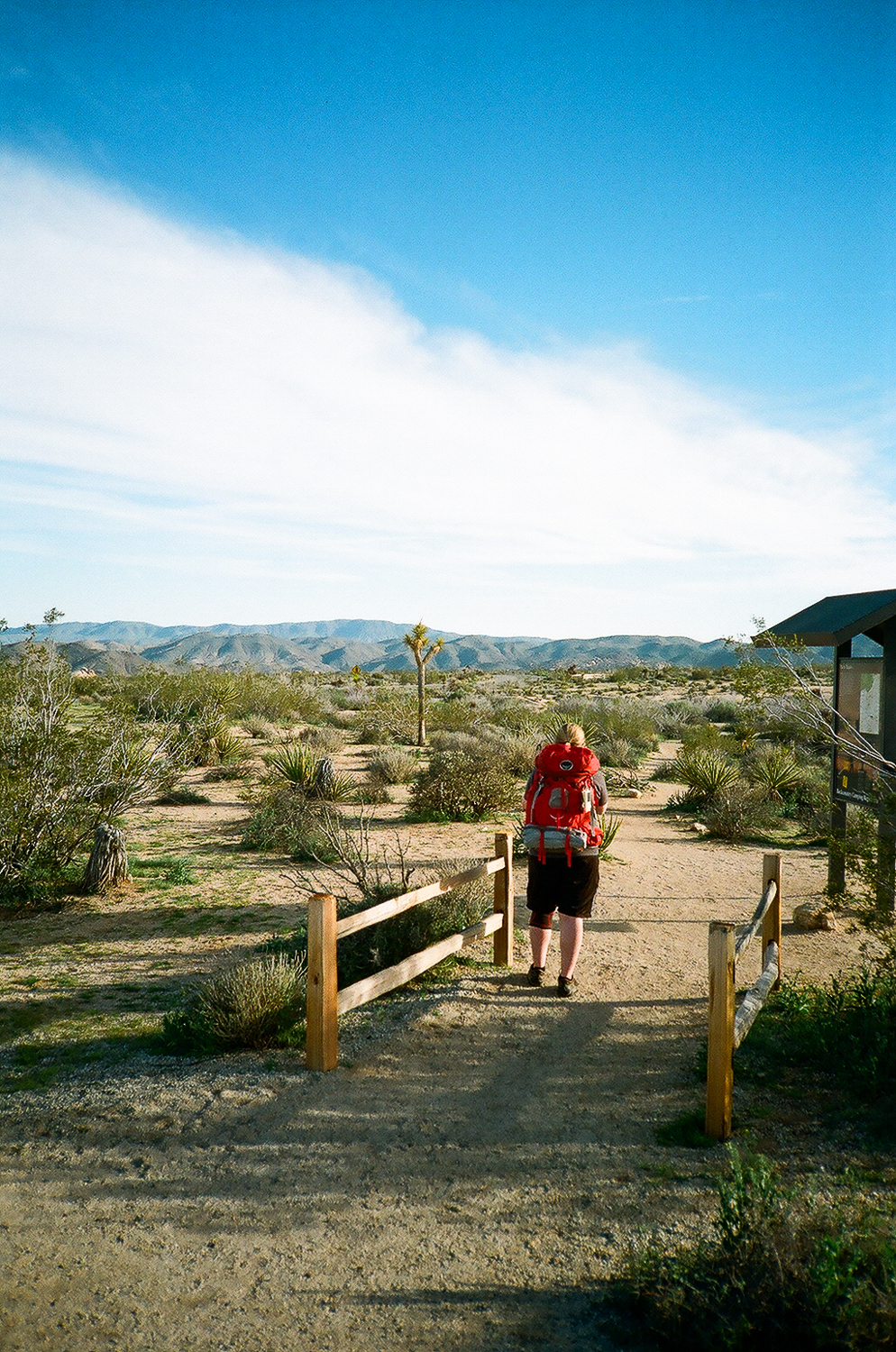
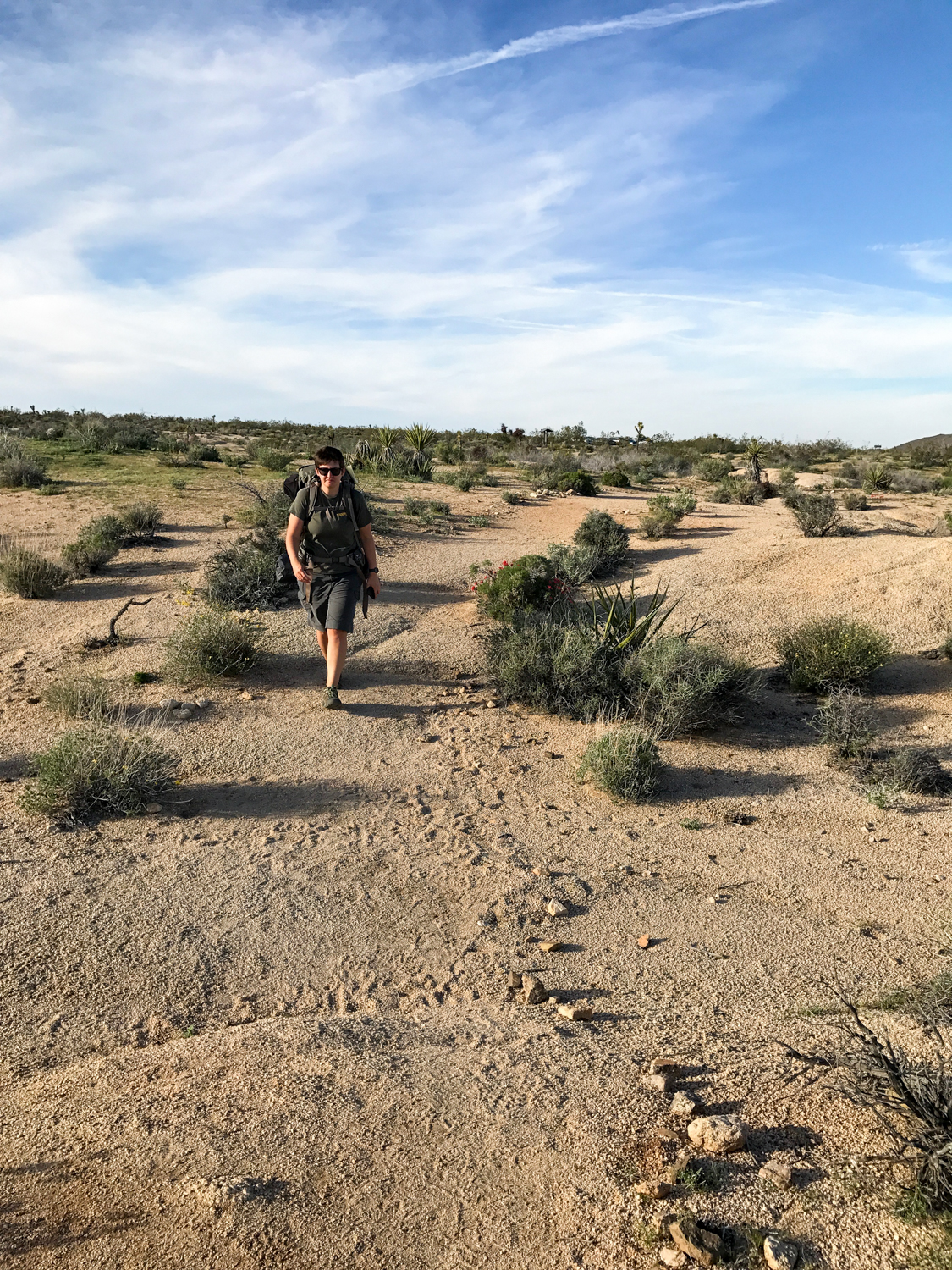
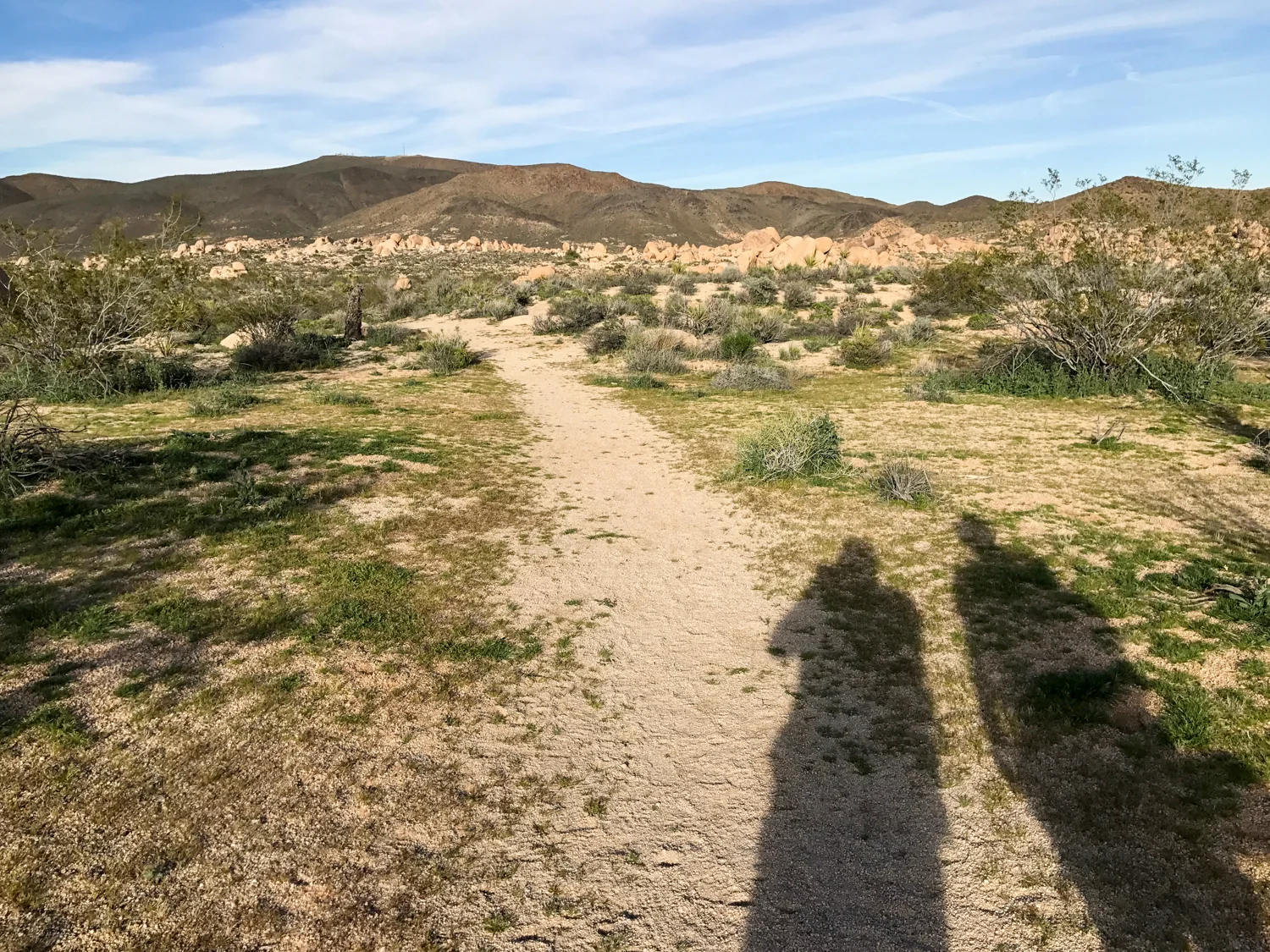
The trail followed a somewhat zigzagging course before entering rockier terrain. Low slabs spread across the ground in some places, while enormous boulders rose above us in others. Those taller formations created sheltered pockets that looked promising for camping.
Once we had hiked more than a mile, we left the trail and began looking for a place to spend the night. After wandering among the rocks, we found an open space surrounded by large boulders on nearly every side. A flat area in the middle was exactly the right size for our tent. Unfortunately, that beautifully level surface was solid rock.
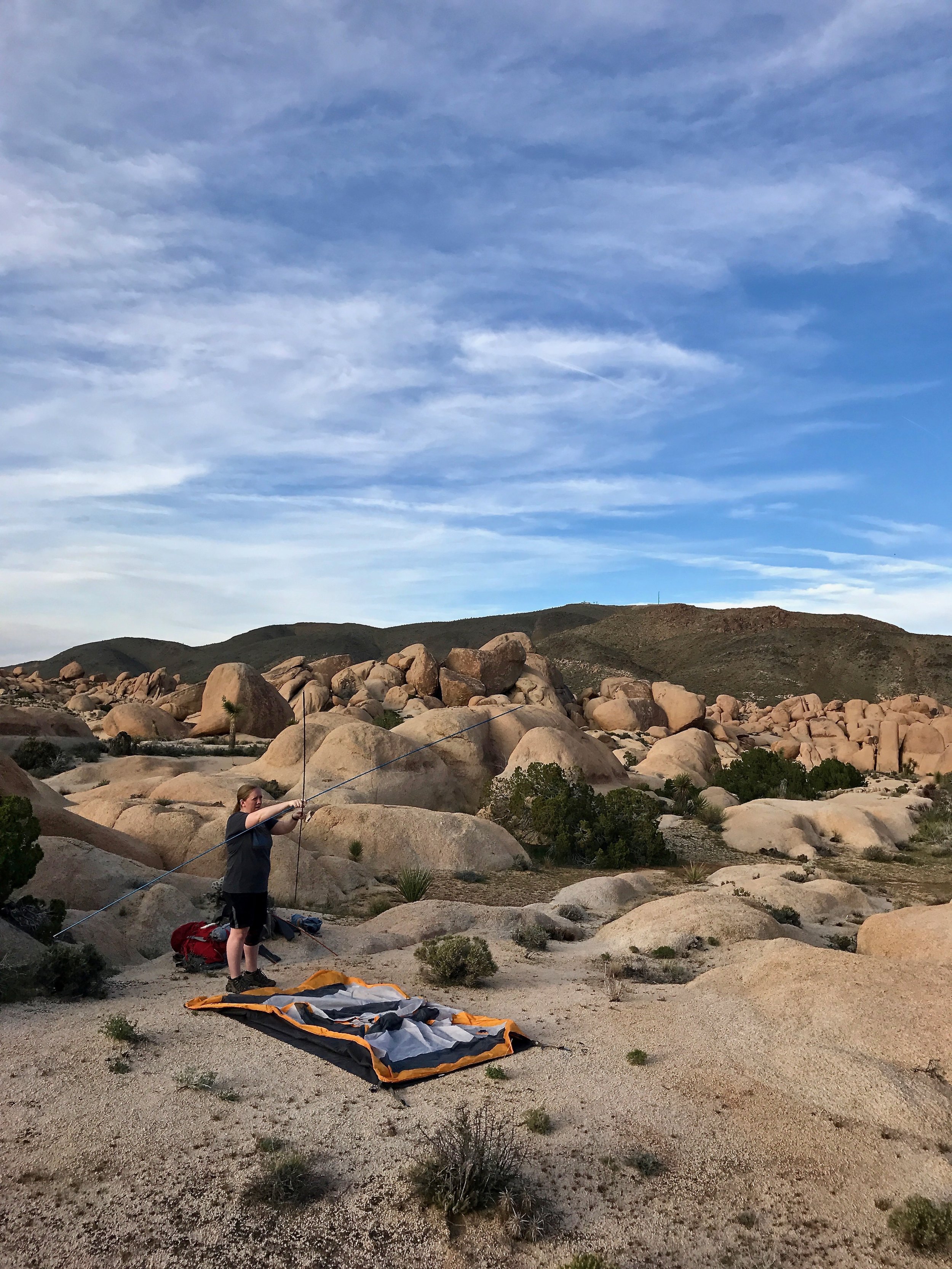
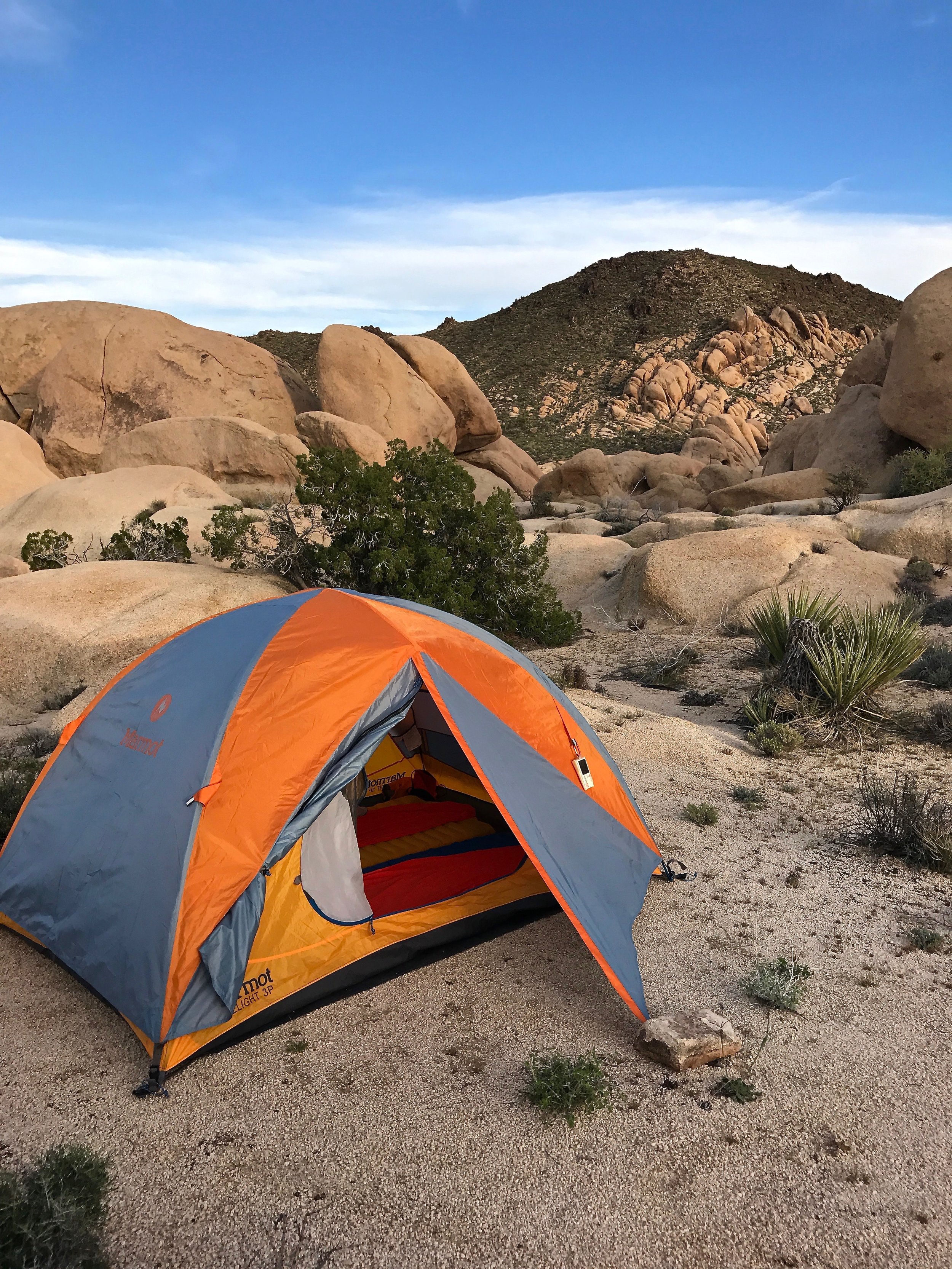
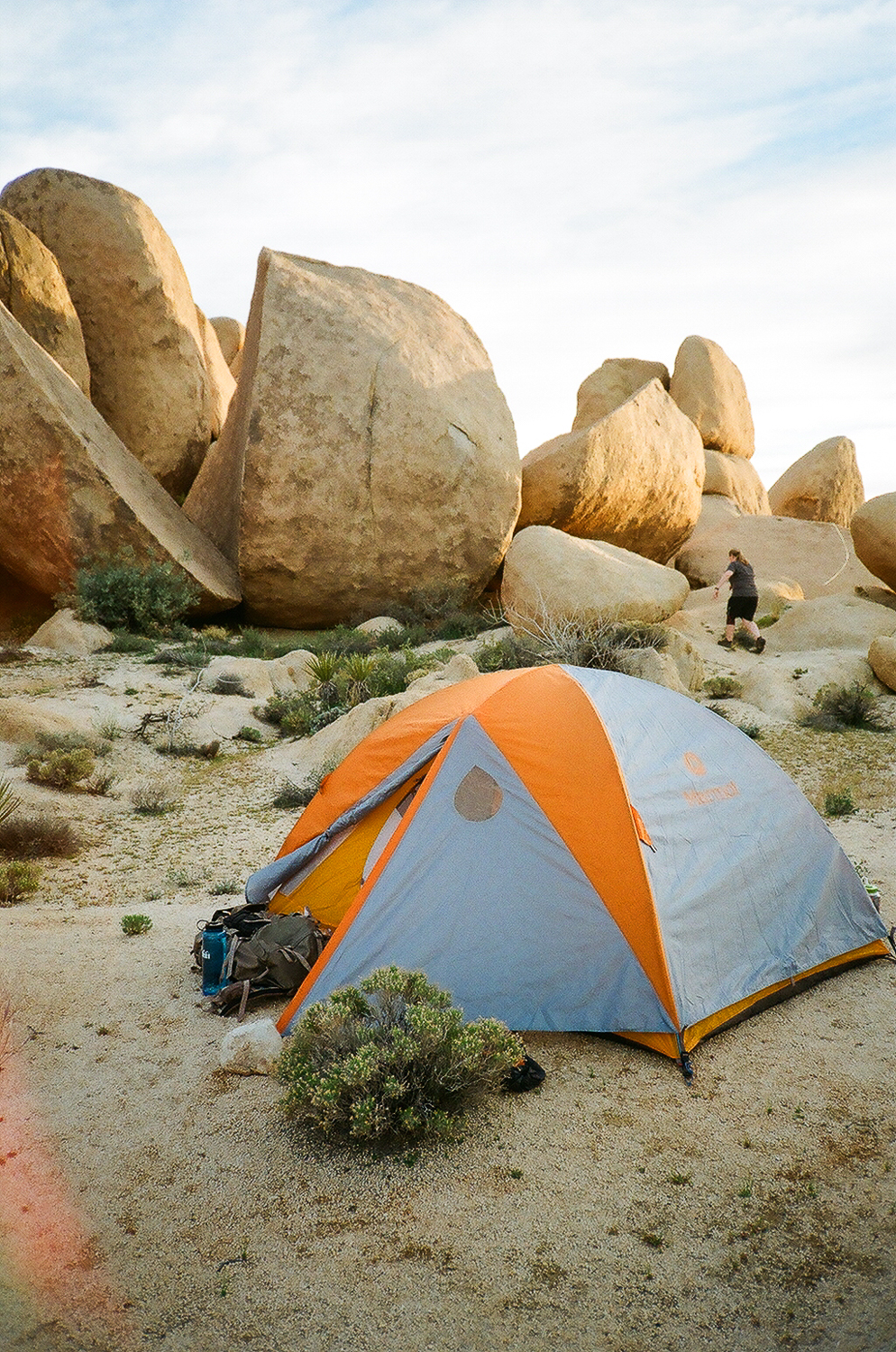
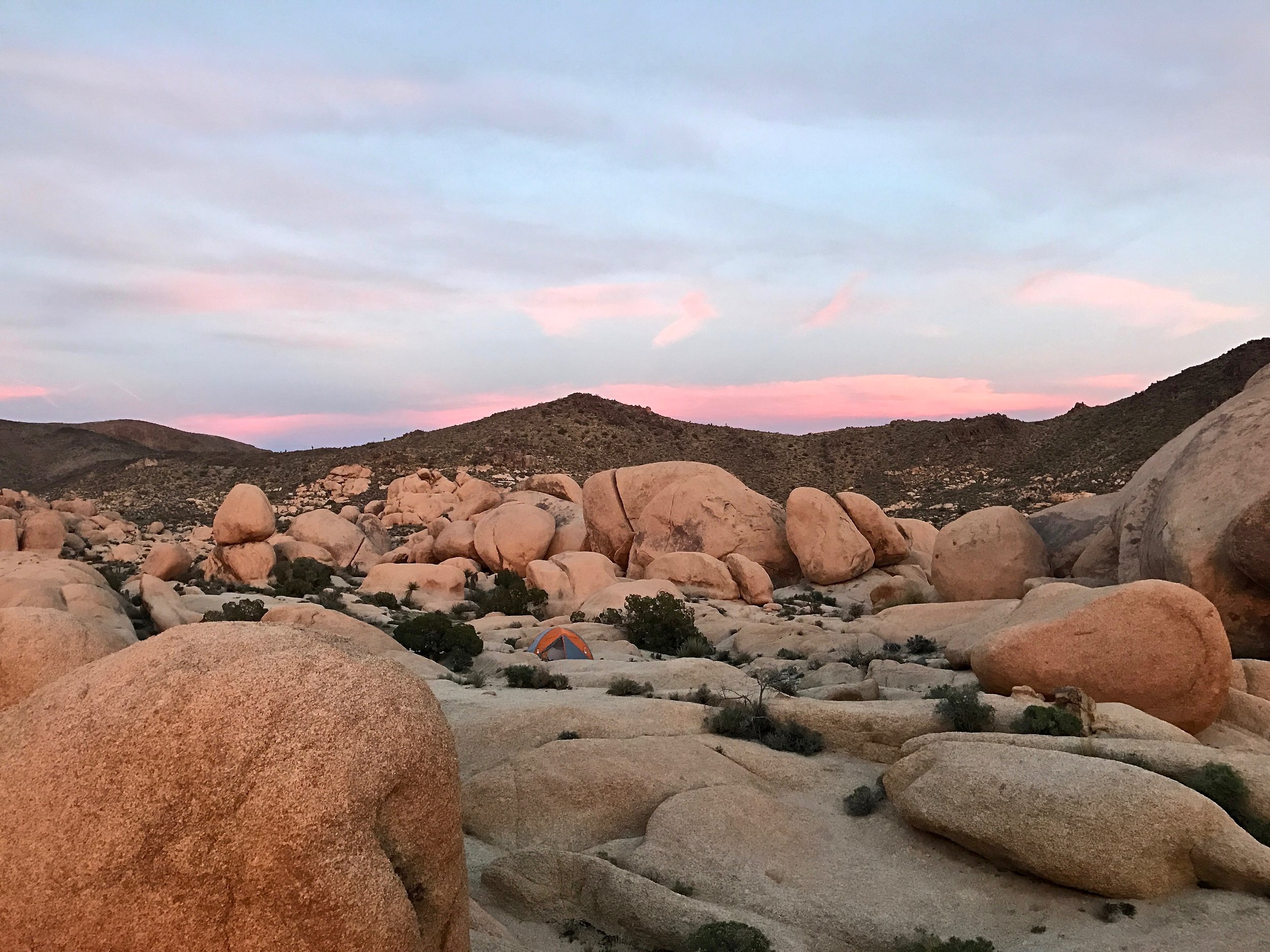
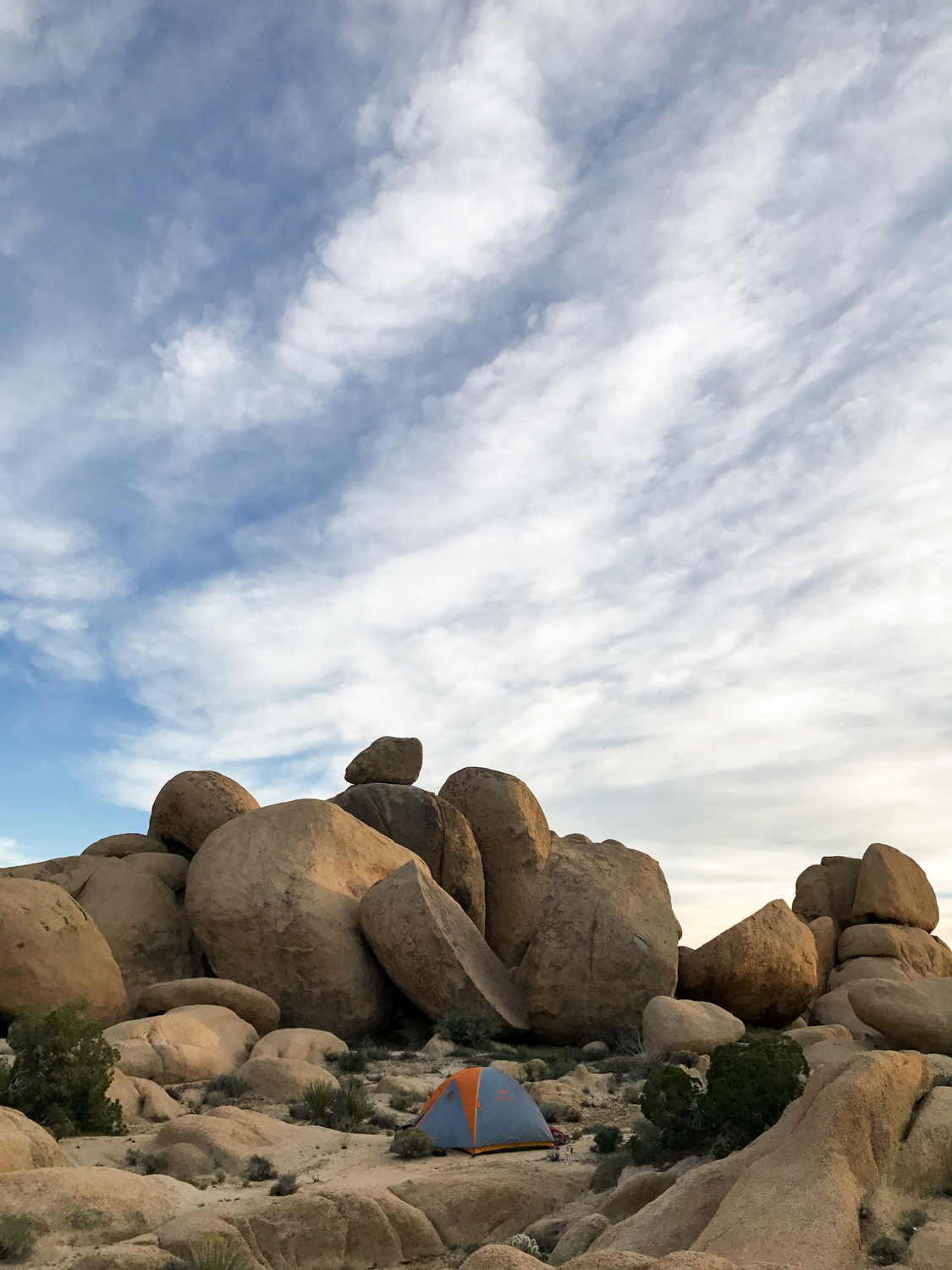
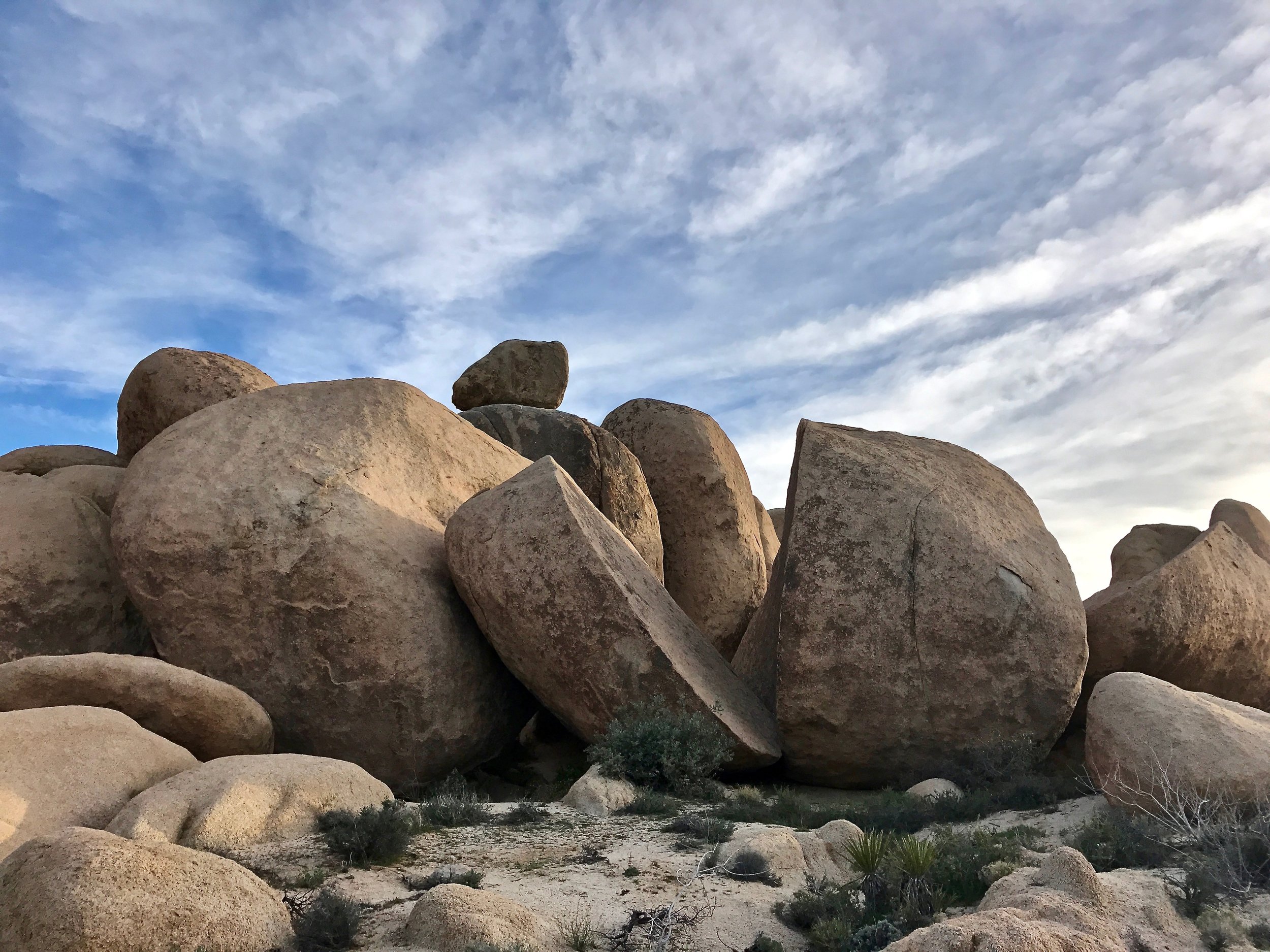
We set up camp quickly while a little daylight remained, then climbed onto a boulder to watch the sunset. Joshua Tree nearly always puts on a good evening show, and a warm rock offered the perfect place to watch the colors move across the desert. Darkness arrived quickly once the sun disappeared. Before long, we were tucked into the tent for the night.
The forecast had called for temperatures in the upper 40s, and we believed it. To lighten our packs, we left our sleeping bags at home and brought only our Sea to Summit Extreme sleeping bag liners.
That was a mistake. We had packed Under Armour layers and warm socks, which kept us reasonably comfortable for the first few hours. By 1 a.m., the cold had settled into the tent and everything inside it.

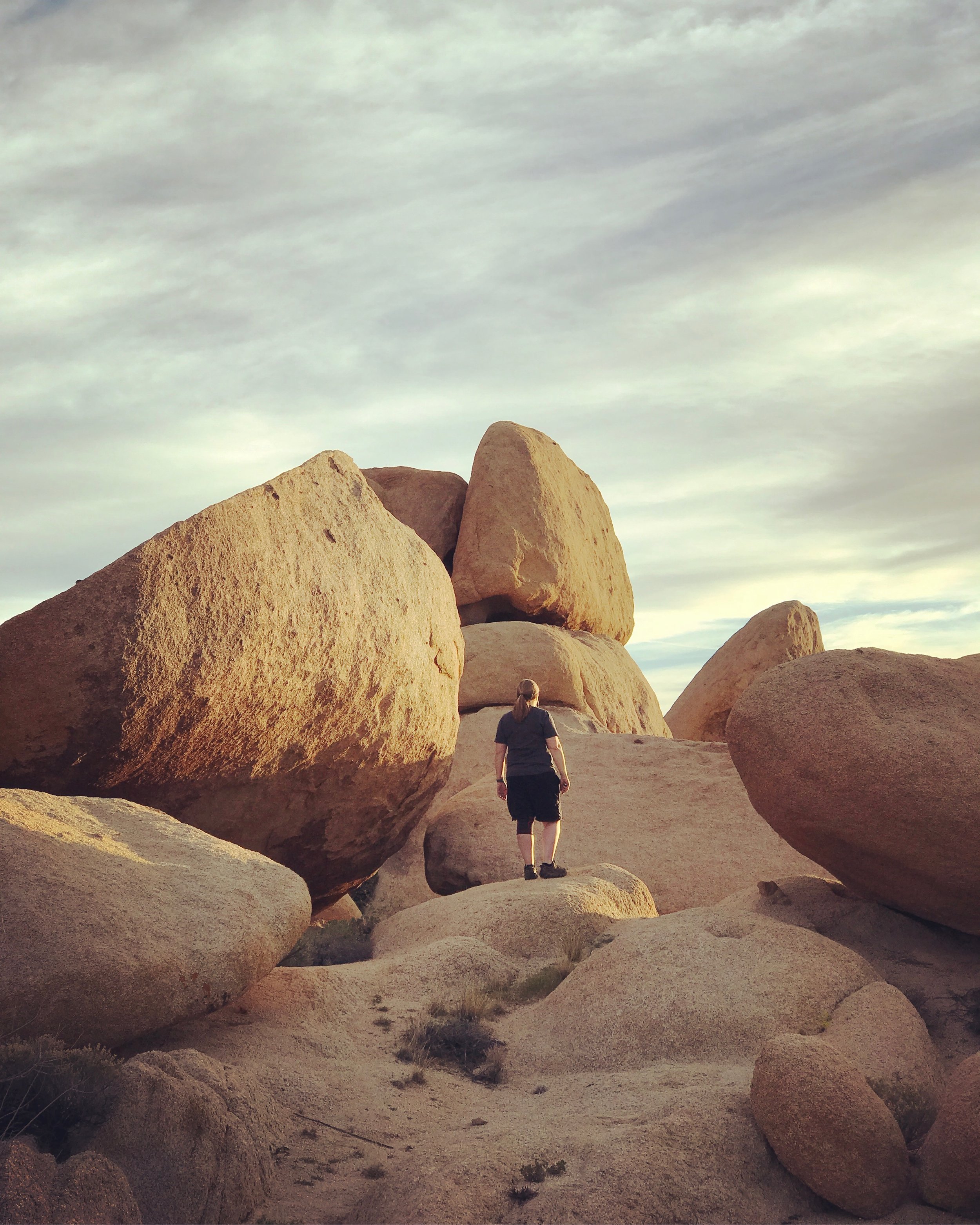

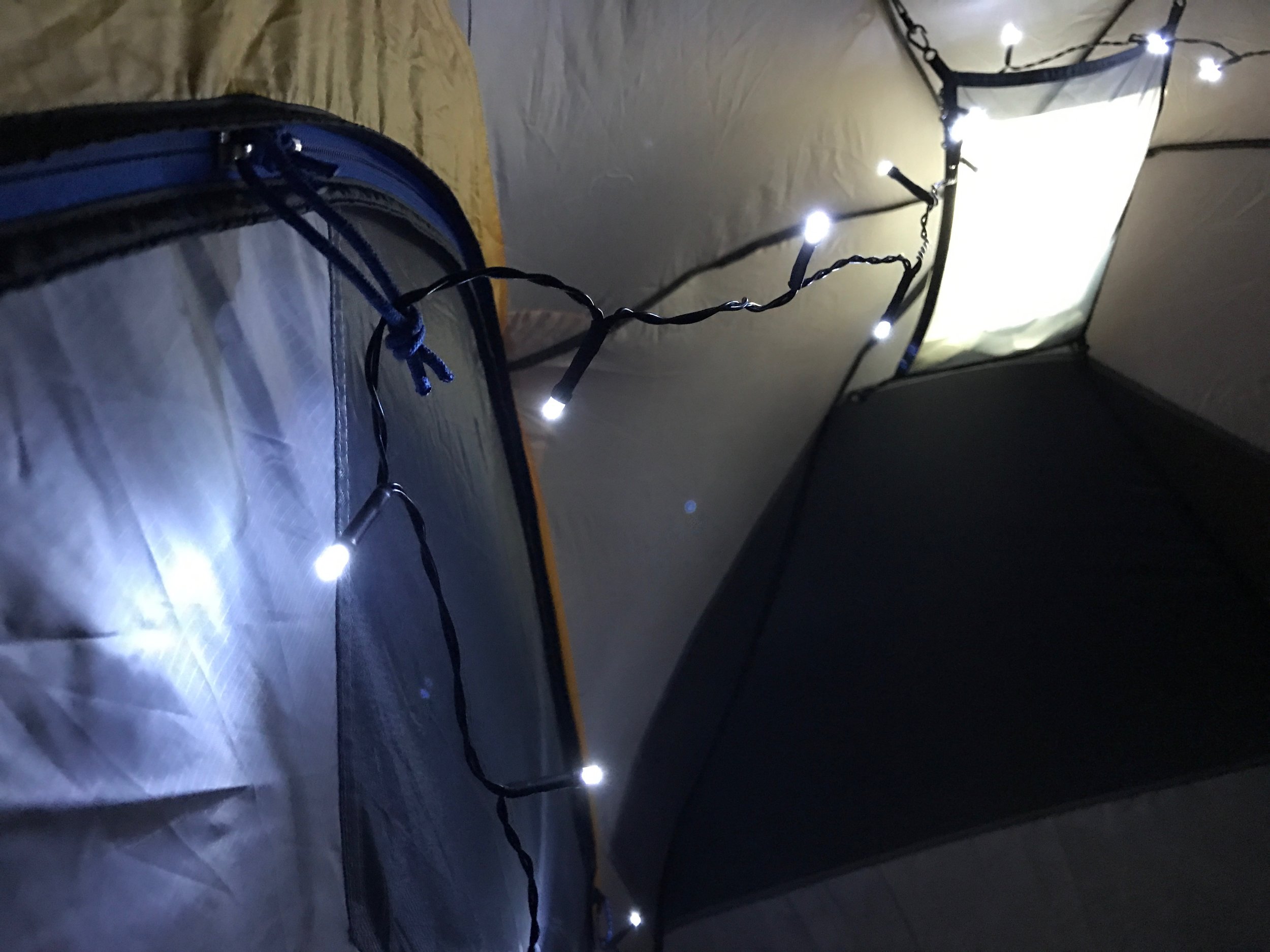
We were not fearless, rugged campers, either. We often slept poorly in the backcountry, and I became particularly nervous once it was dark. Before sunset, I had noticed a flat spot beneath one of the nearby rocks. It was covered with small paw prints and looked as though some littler critters might rest there. Once darkness settled around the tent, my imagination turned that harmless little nook into a gathering place for hundreds of coyotes, mountain lions, and unidentified desert monsters.
We tried distracting ourselves with the forehead-charades game on my phone. It worked for a while. Then we ate the homemade brownies we had brought. This was obviously necessary because leaving brownies uneaten would only encourage the imaginary creatures outside to come looking for them.
Eventually, we pulled out our Kindles and read until we could no longer keep our eyes open.
The cold was only one of the night’s problems. My brand-new Nemo sleeping pad had a leak, so I woke up three times with my hip and shoulder pressed against the rock beneath the tent. Each time, I inflated the pad again and tried to get comfortable.
Because we had pitched the tent on solid rock, we could not stake it securely. The wind shook and rustled the fabric throughout the night, creating a noisy ruckus around us. We eventually put on every piece of clothing we had brought, took out the whiskey, and tried to sleep. For several hours, I wondered why we kept doing this to ourselves.
The best sleep of the night came during the final hour before sunrise. The wind settled, the sky began to brighten, and the tent finally became quiet enough for us to rest.
When the sun climbed above our boulder yard, the temperature changed almost immediately. Warm light reached the tent and felt wonderful against our cold bodies. Within minutes, we were packing before that welcome warmth turned into full desert heat.
We returned to the trail and hiked back toward Twin Tanks. After reaching the car, we drove to one of the campgrounds and found several empty sites. We borrowed an unoccupied picnic table to make coffee and breakfast, then climbed onto a nearby boulder with our mugs. The morning was quiet. Sunlight warmed the rocks, coffee warmed our hands, and the previous night already felt a little less miserable.


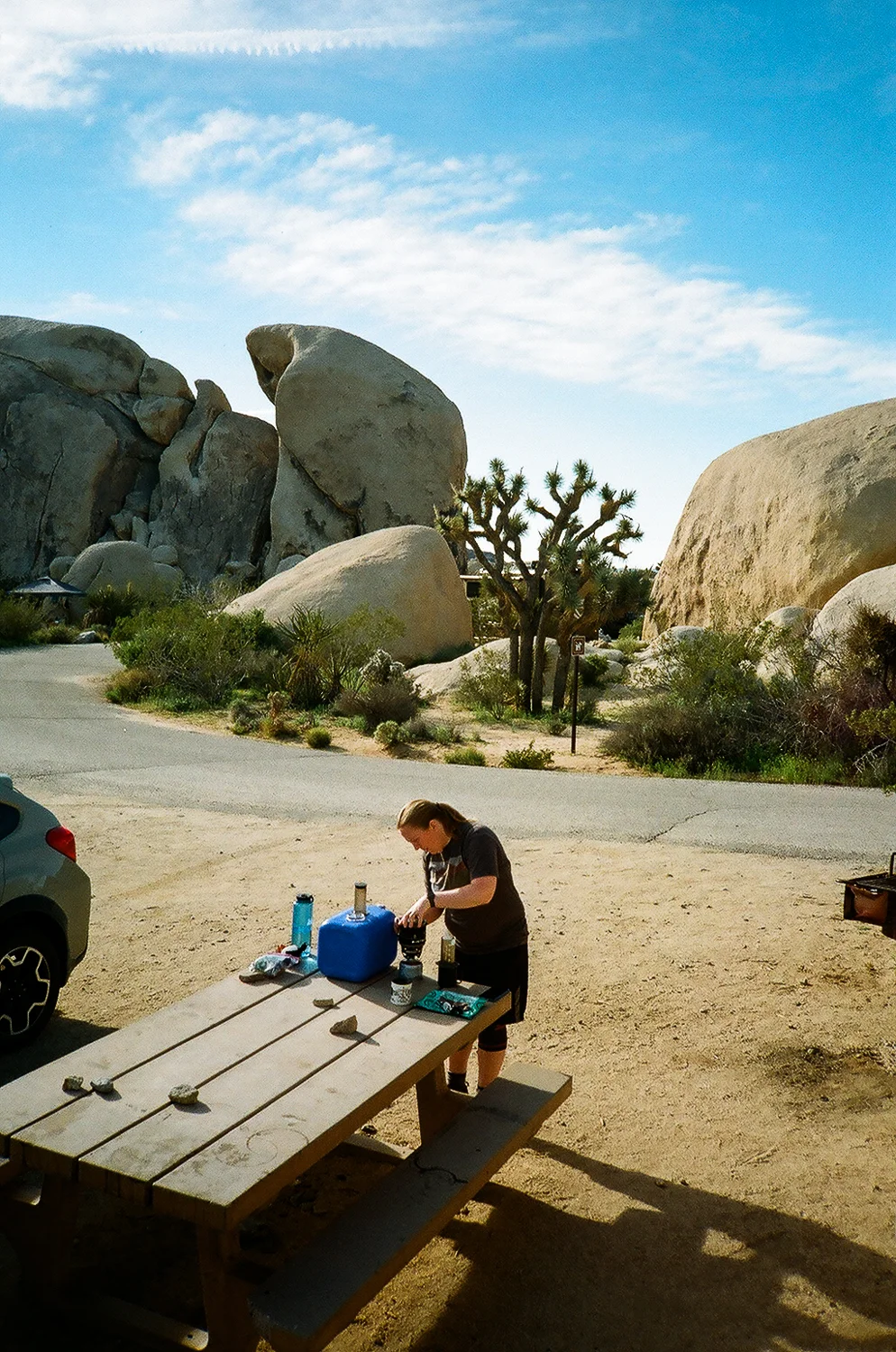

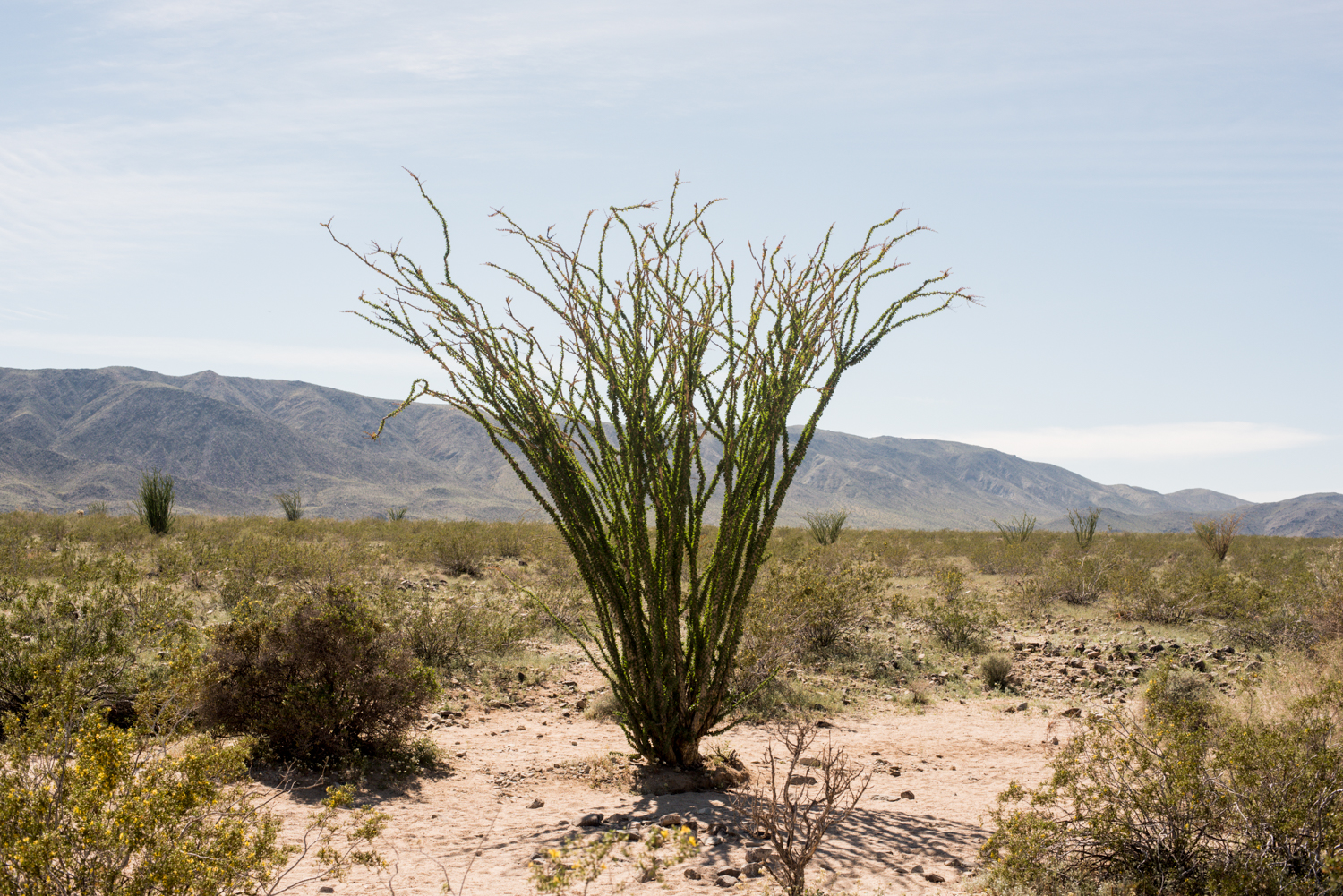
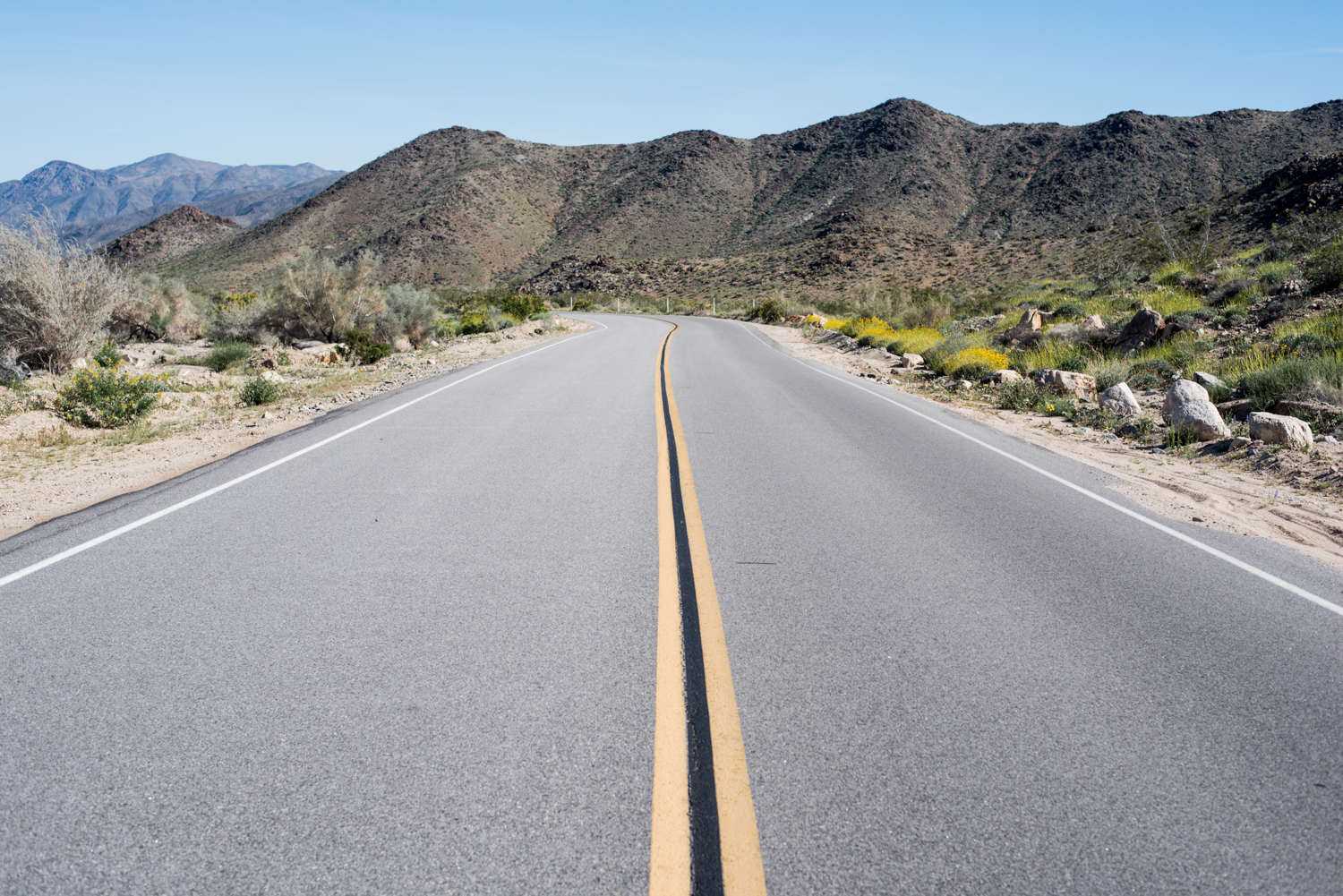
Spring was spreading across Joshua Tree during our visit. The southern part of the park was covered in wildflowers, with color appearing along roadsides, across open ground, and between the rocks.
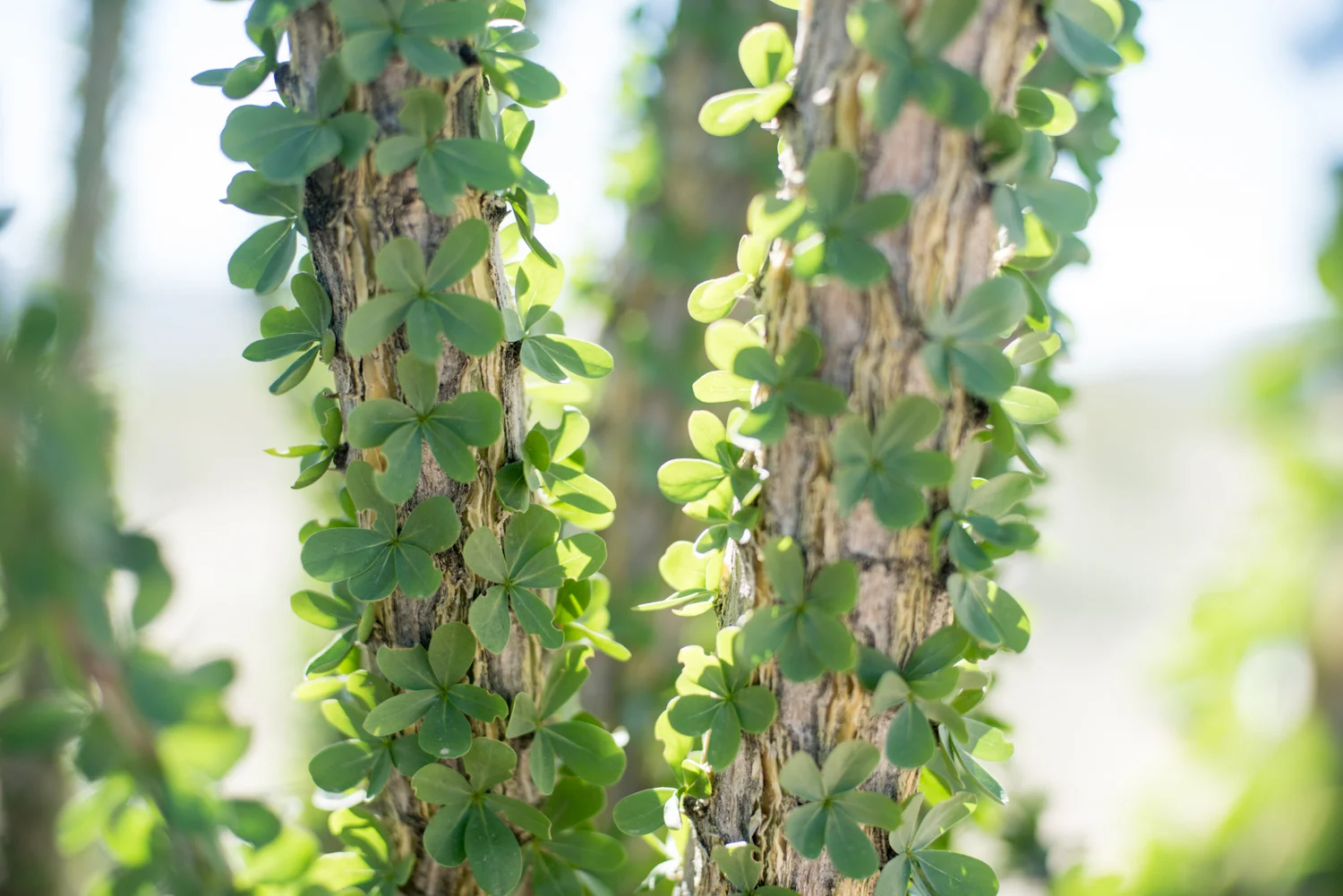
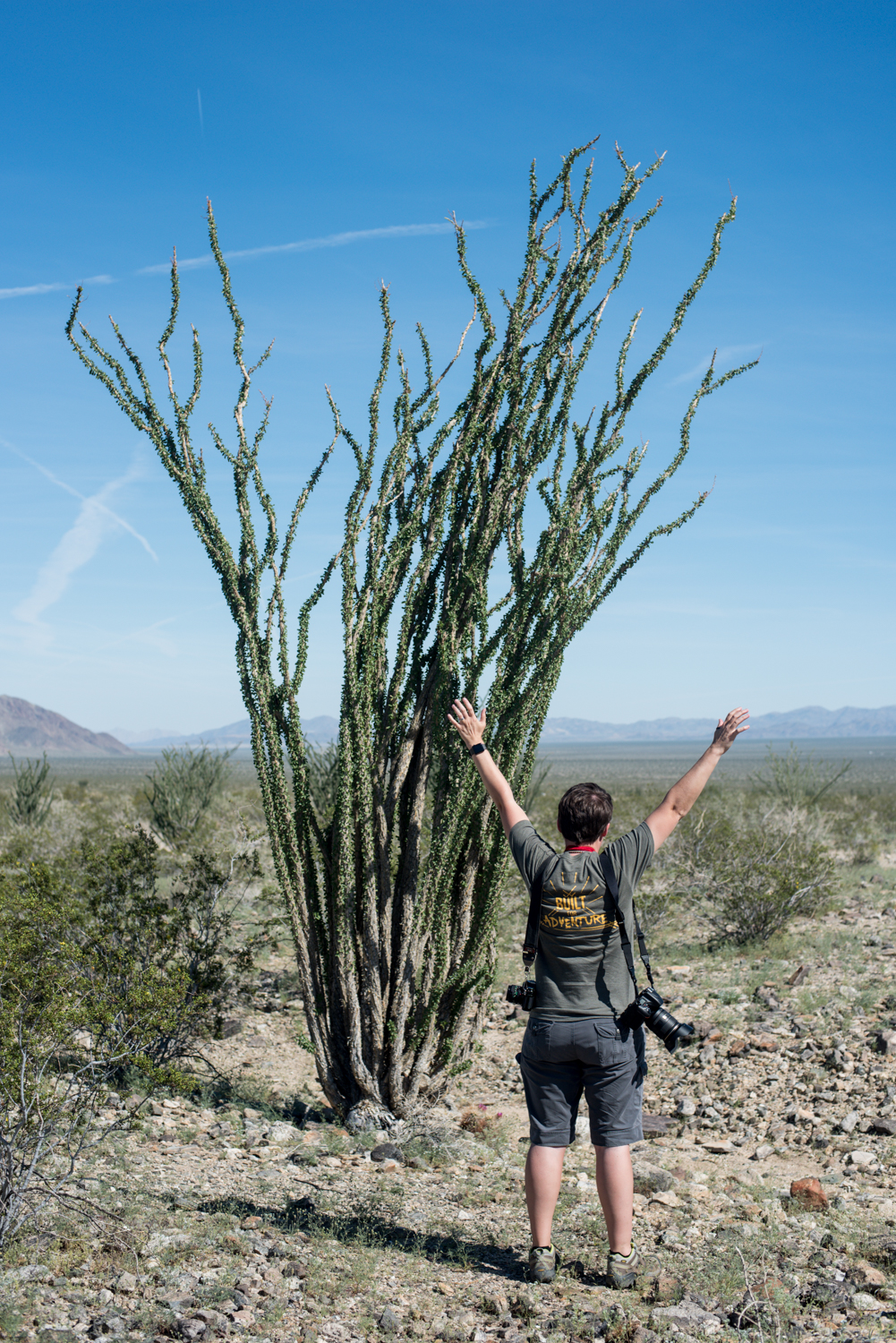
Several ocotillos were blooming, and many were covered in small green leaves. On our previous visits, we had mostly seen them as tall clusters of bare brown stems. I did not realize how leafy and green they could become after receiving enough rain.
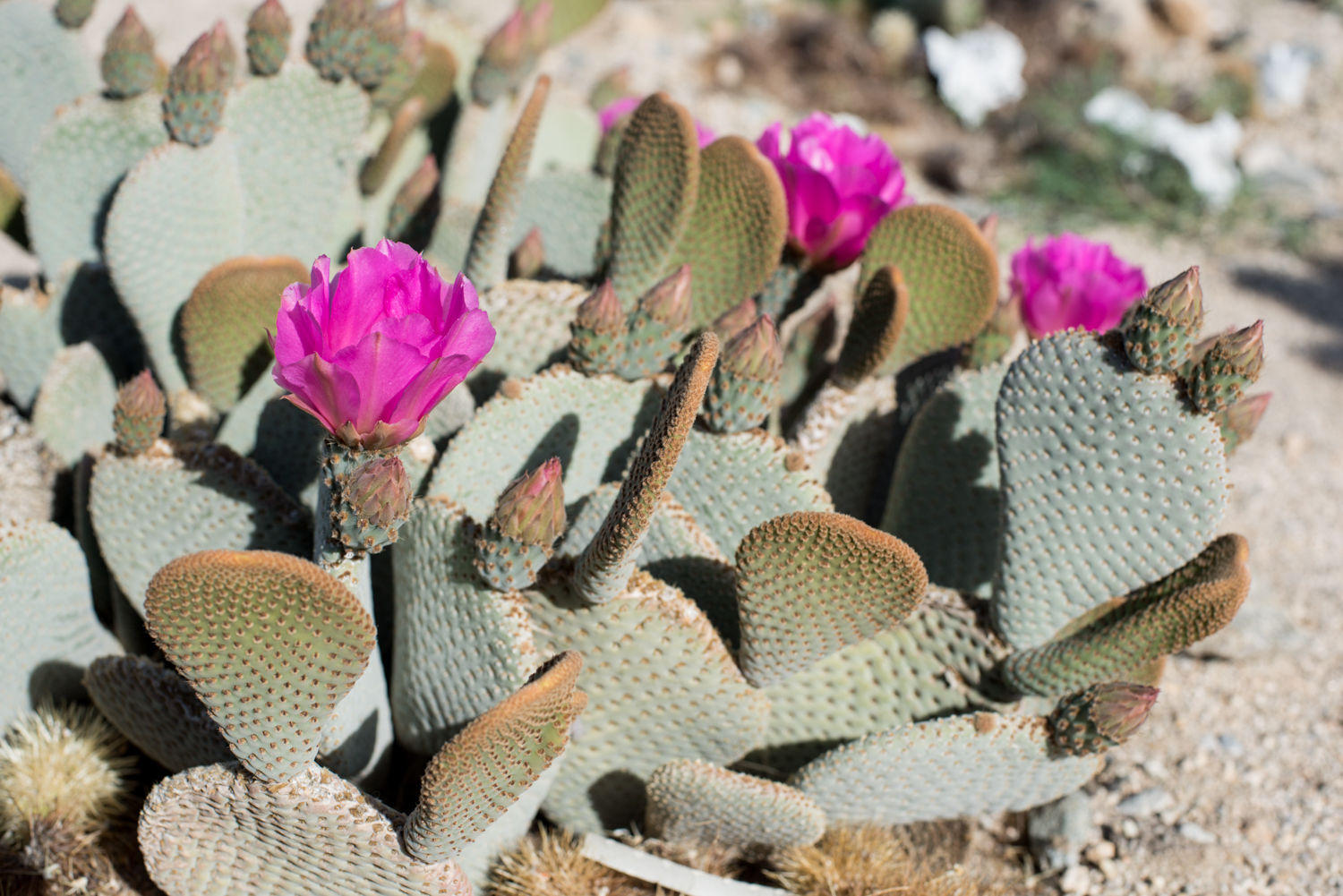
Flowers were also beginning to open on some of the cacti. The blooms looked especially delicate against the spines and dry ground around them.
A butterfly, possibly a Painted Lady, settled nearby and remained still long enough for us to photograph it. After the cold, restless night, quietly watching a butterfly in the morning sun felt like an entirely different trip.






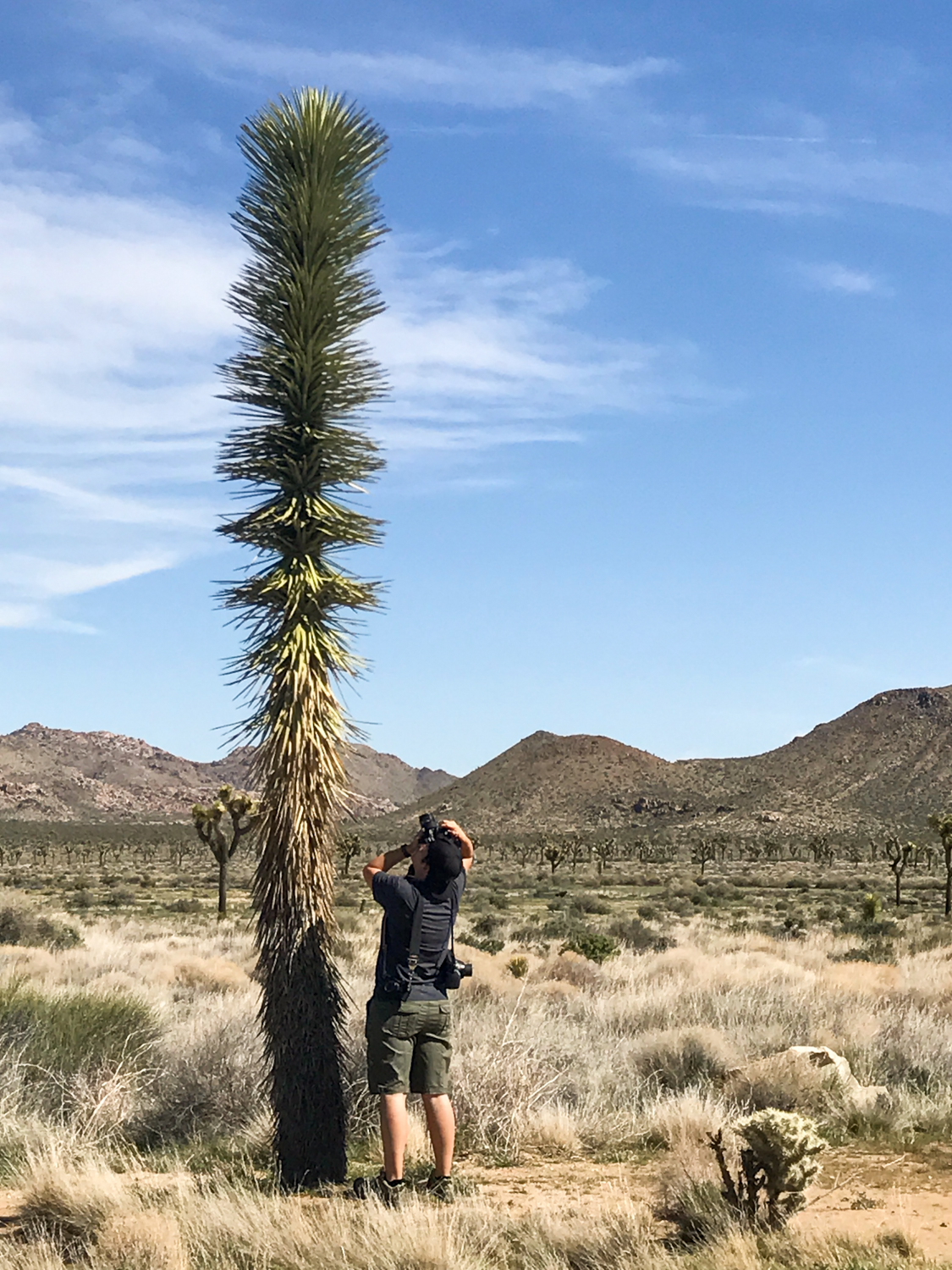
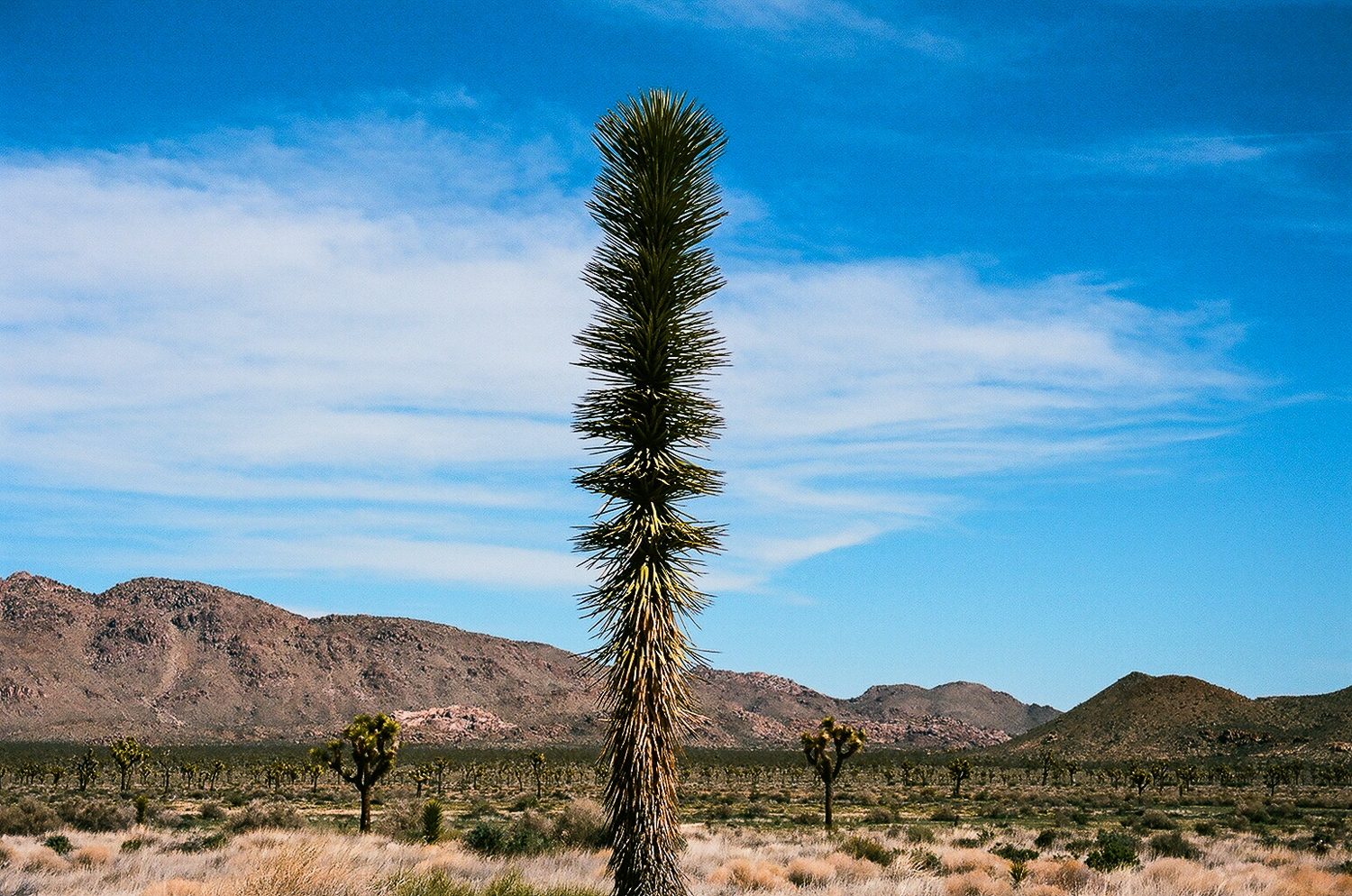
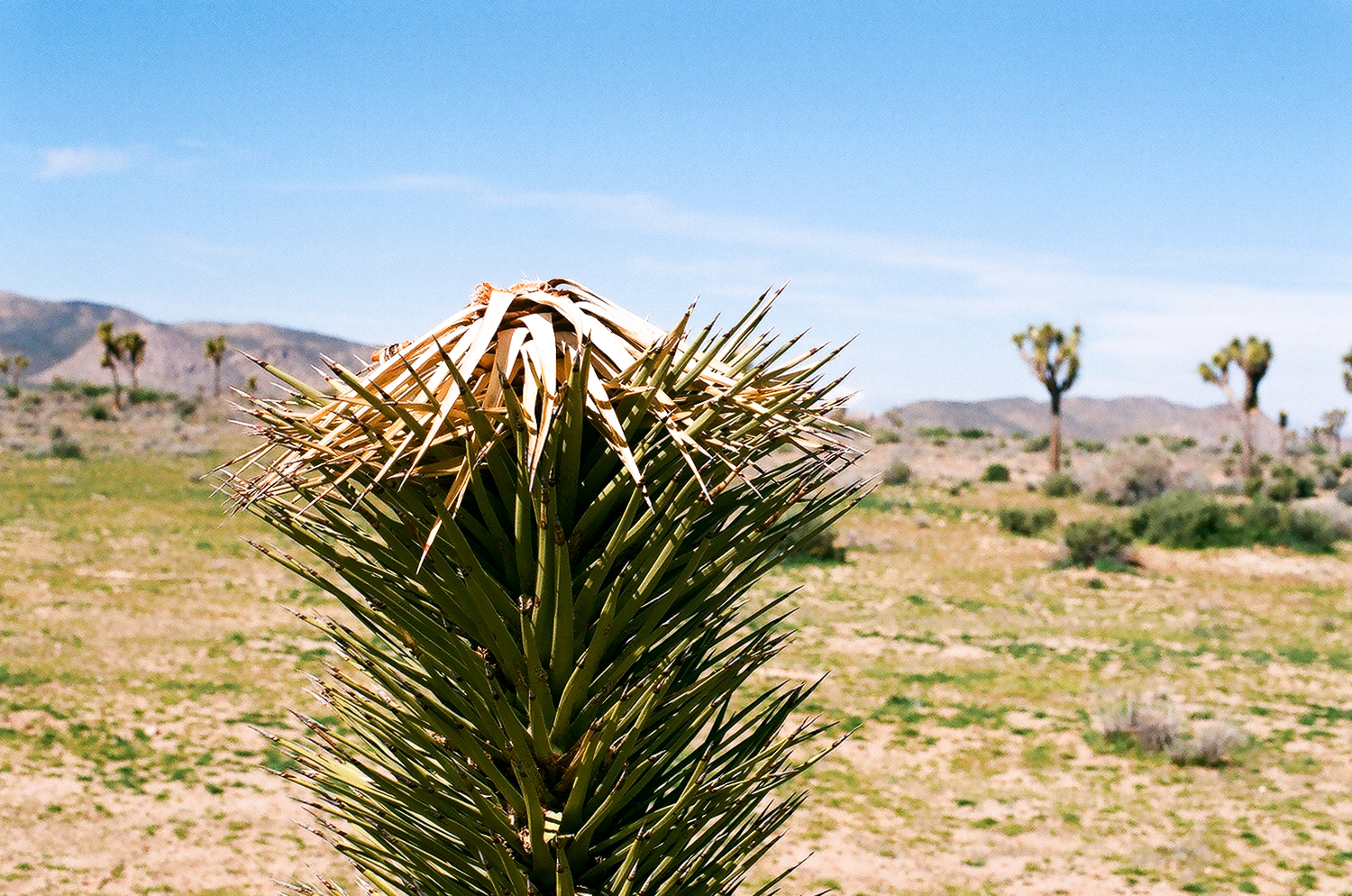
The Joshua trees were blooming, too, along with several yuccas. Their dense clusters of pale flowers were much larger and more intricate when we approached them closely. Some carried a noticeable scent, while others were busy with small insects moving among the blossoms.
We leaned in to look at the individual flowers, taking care around the stiff, pointed leaves. From the road, the blooms had appeared like pale shapes at the ends of branches. Up close, each cluster held dozens of waxy flowers packed tightly together.
Spring in Joshua Tree had transformed the desert we thought we knew. Ocotillos had turned green, flowers emerged from plants covered in spines, and a butterfly rested in the sunlight beside us. Even after one of our coldest and least comfortable nights outdoors, we were already finding reasons to stay a little longer.





Note: Check the Joshua Tree backpacking and permit information here. Joshua Tree’s permit system has changed since this trip. Overnight backpackers now need a paid permit for a designated backcountry zone, obtained through Recreation.gov or the park’s permit office.