
Hiking The Narrows: Zion's Most Iconic Adventure
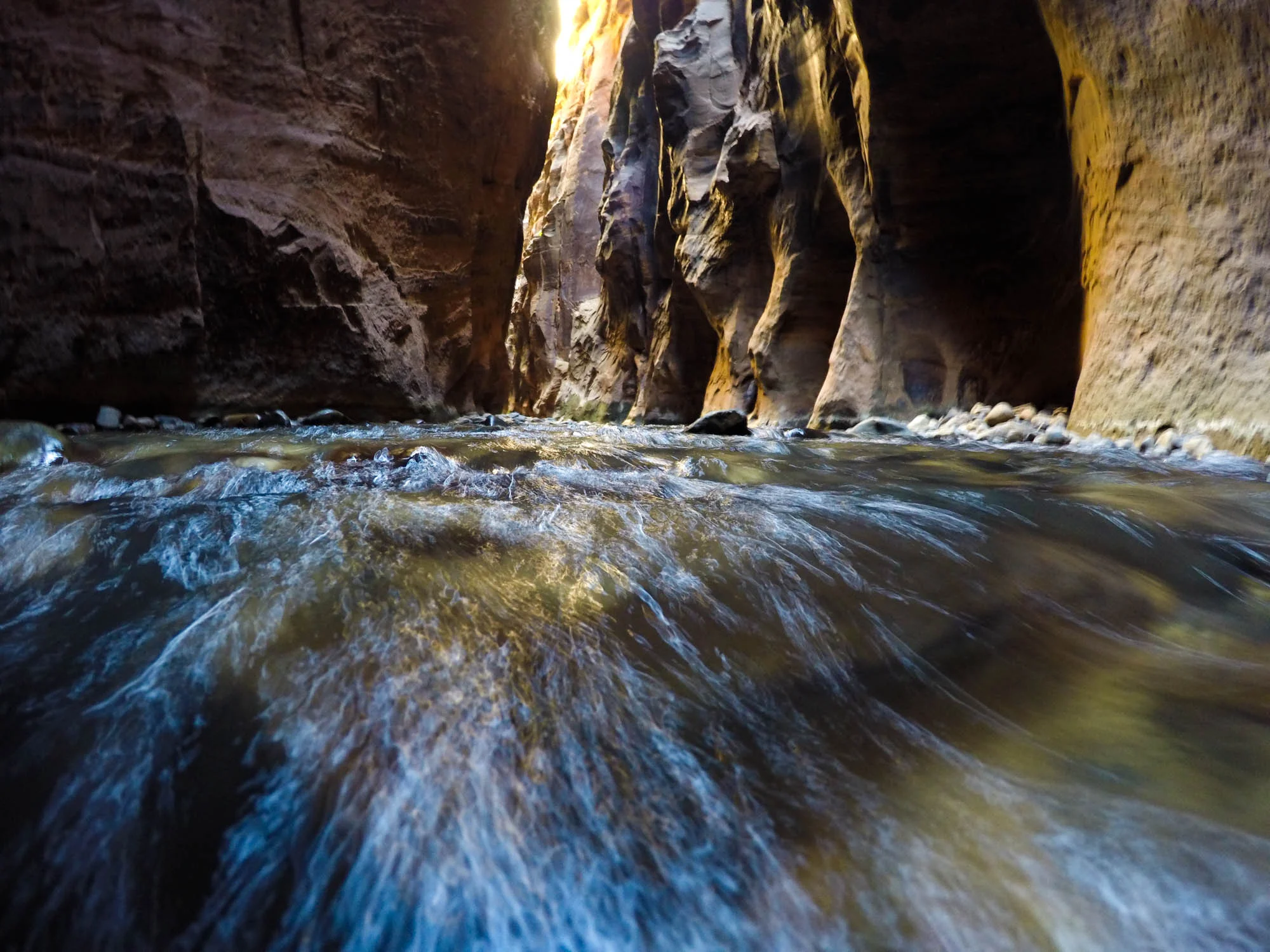
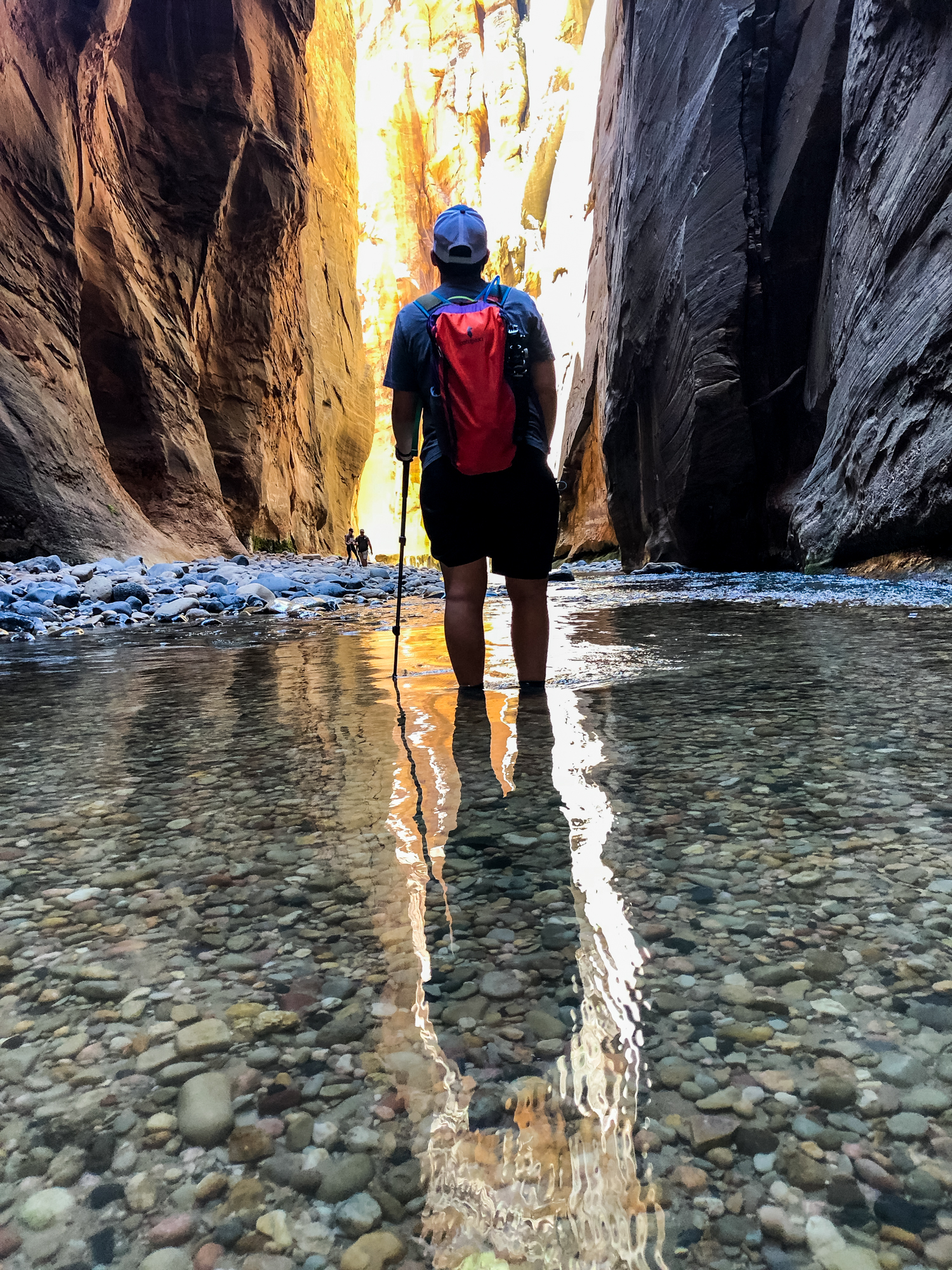
The Narrows is one of those epic hikes that seems to appear everywhere. Photos fill outdoor magazines and social media, usually showing tiny hikers wading beneath enormous sandstone walls. Even after seeing all those photos, the experience of walking through the Virgin River felt completely different from anything I had imagined.
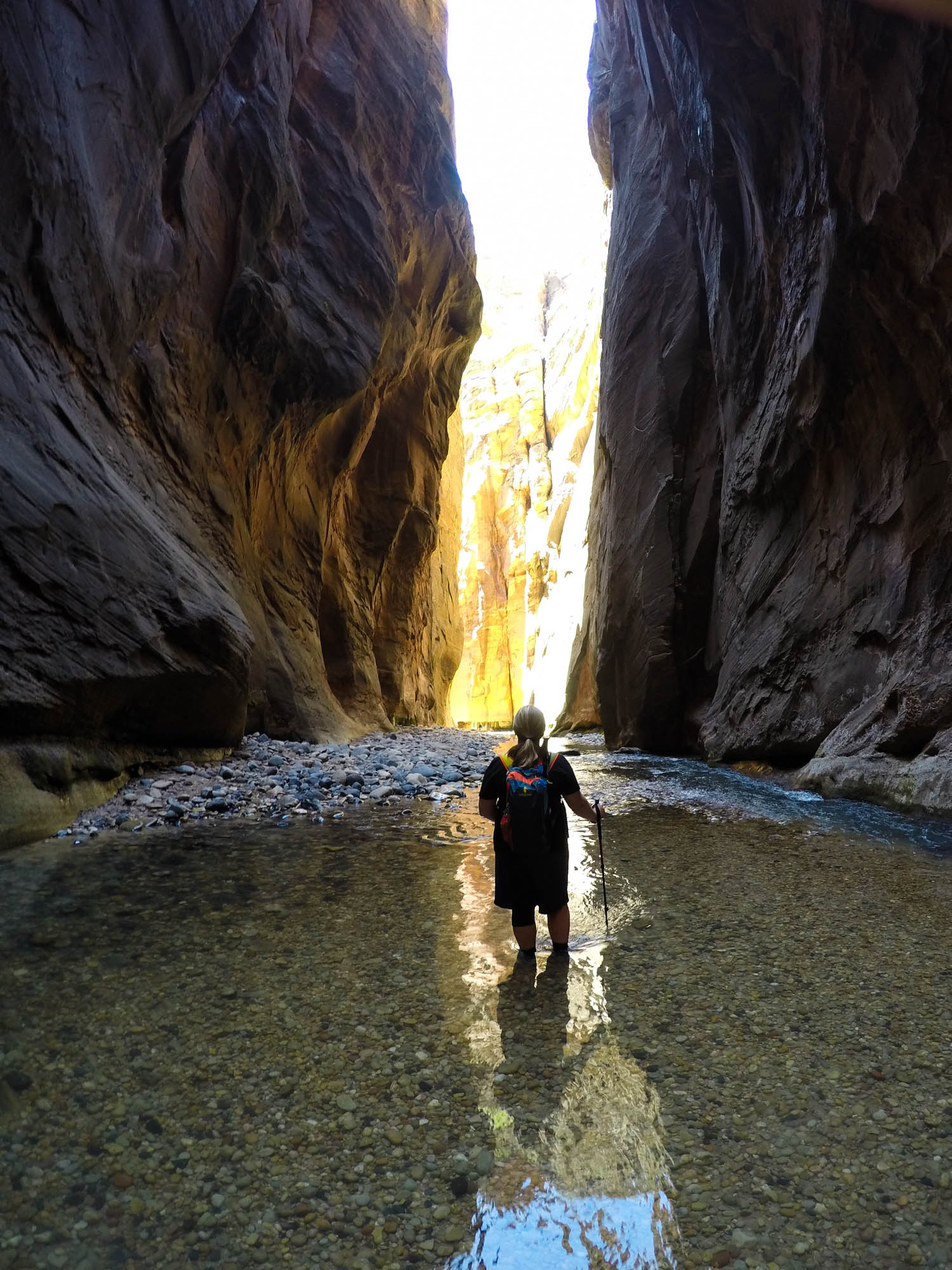
The first time I heard about The Narrows was in a bookstore. We were browsing the national park section and picked up Your Guide to the National Parks, which became one of our most-used resources while planning trips. Our edition had a photograph of someone hiking through The Narrows on the cover. As soon as I saw it, I knew I wanted to do this hike.
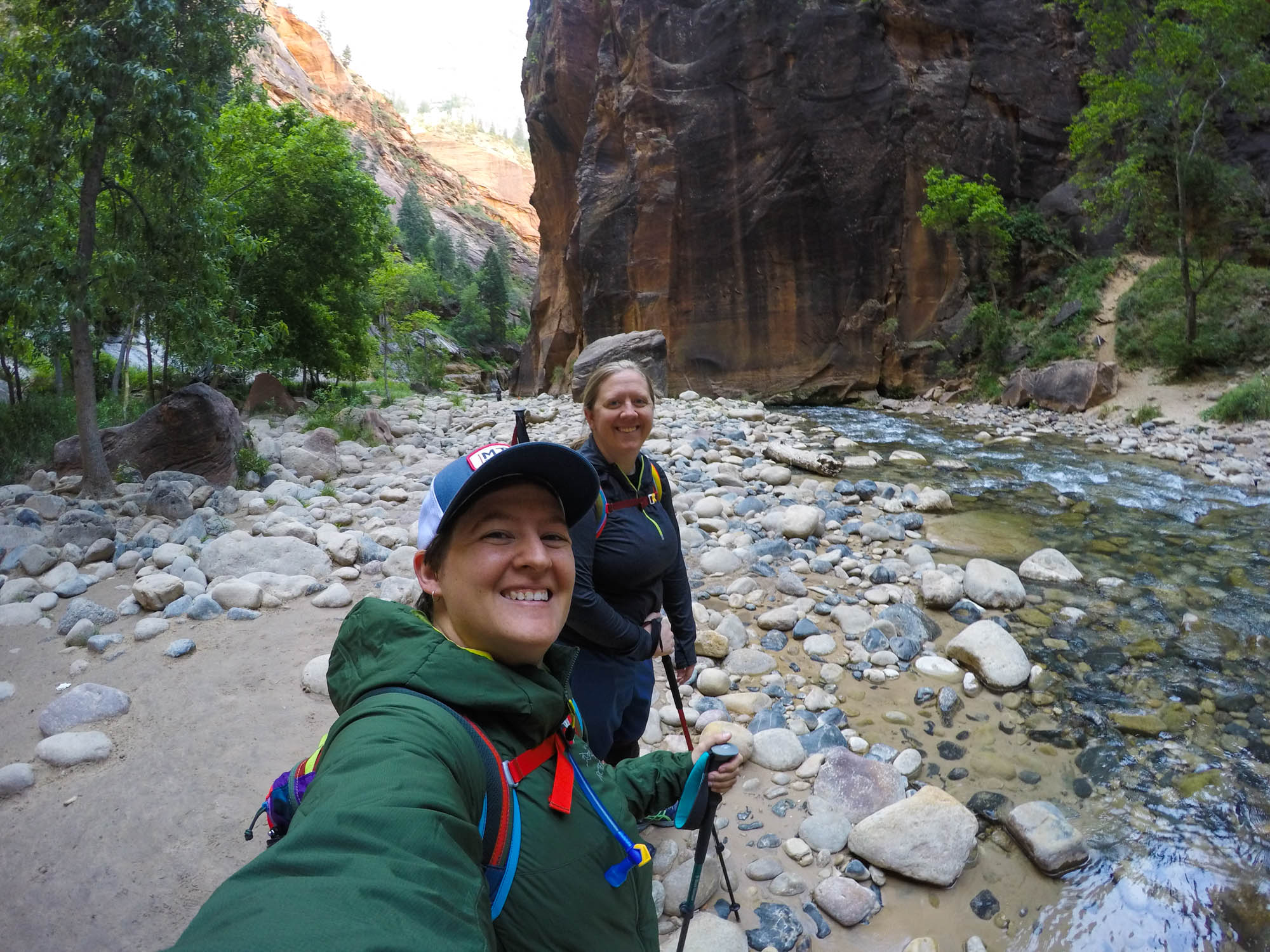
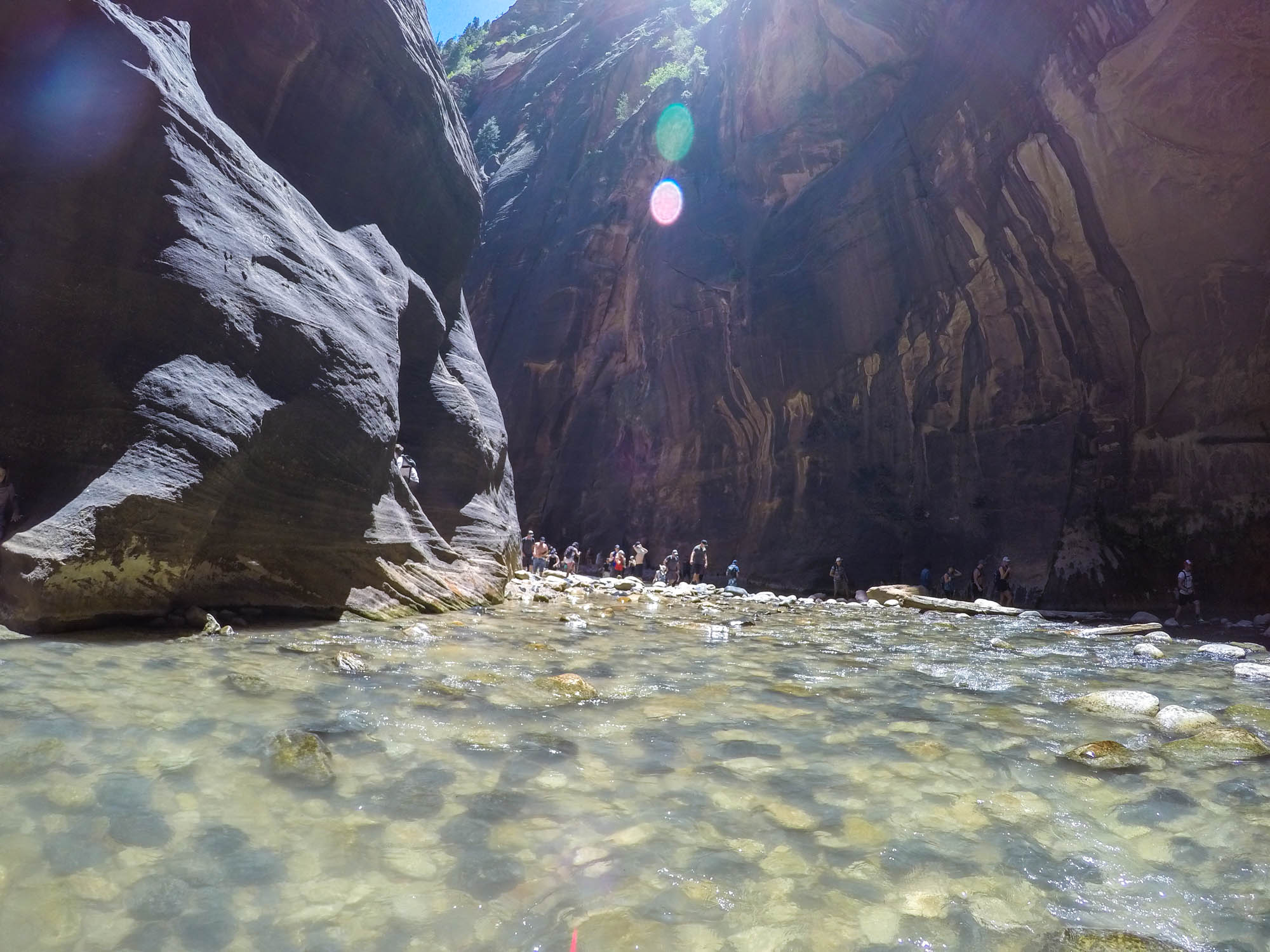
We got incredibly lucky with the conditions. Water temperature, river flow, weather, and crowds can all affect the experience. Although we visited Zion during a busy and very warm summer month, we caught the first shuttle of the morning and reached the river before most of the crowds. The flow was low, and the water was cool without being painfully cold.

What We Wore for The Narrows
Hiking The Narrows is very different from following a normal dirt trail. Much of the route is through flowing water over rounded, slippery rocks, so footwear and stability matter.
Before our trip, we read plenty of recommendations about renting specialized shoes, buying water sandals, or wearing older hiking shoes that could get soaked. We decided to use footwear we already owned.
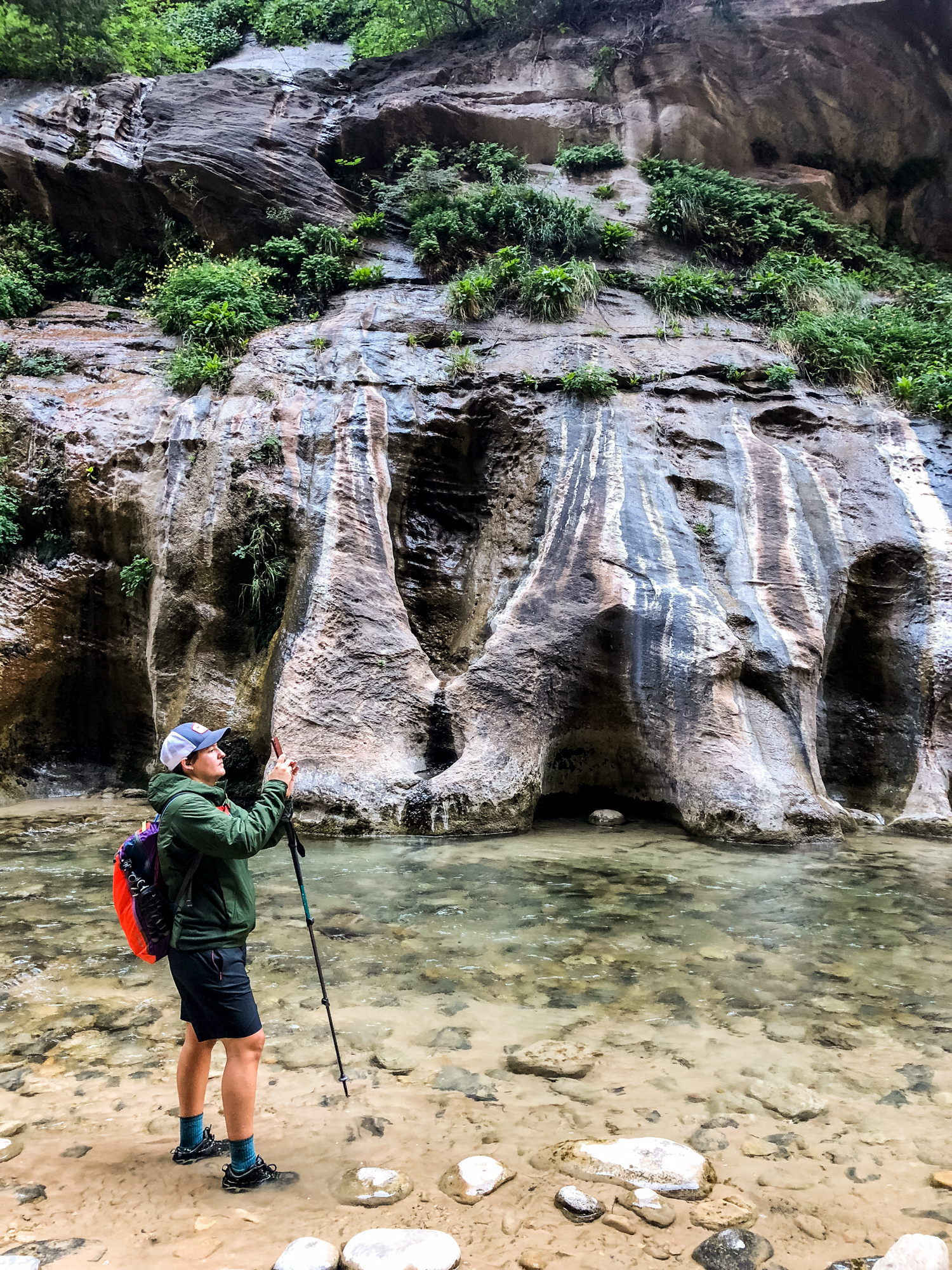
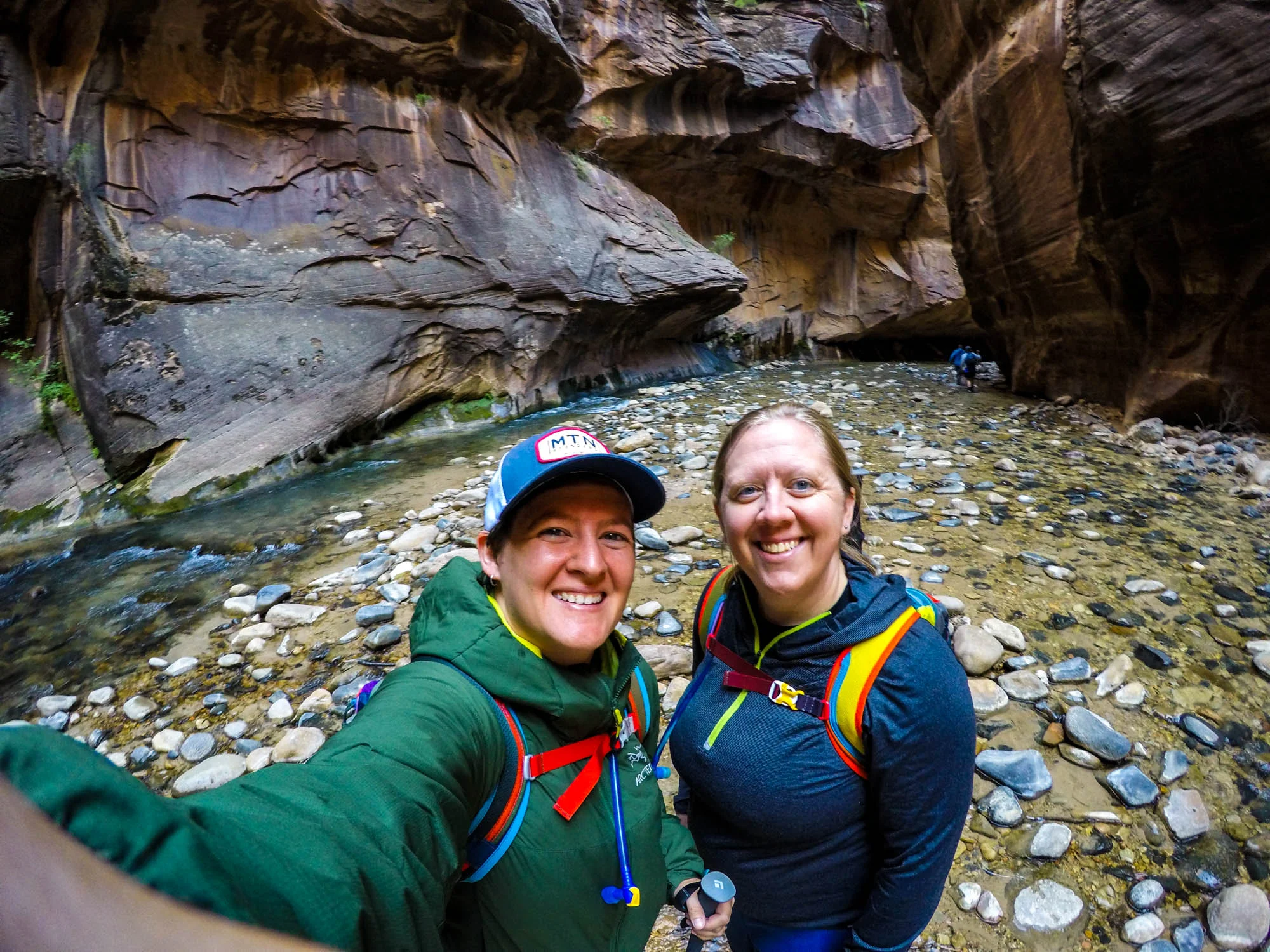
I wore an old pair of ASICS trail-running shoes, while Kim wore older Oboz hiking boots. Both pairs gave us enough protection and traction, and they survived the hike in good condition.
We also wore wool socks. They stayed comfortable when wet and helped keep our feet from feeling too cold. Sandals would have left our toes exposed to rocks, and I would not have wanted to hike several miles in the river wearing our Bedrock sandals, even though we love them around camp.
Gear rental shops near Zion offer canyoneering shoes, neoprene socks, walking sticks, and cold-weather protection. Rental gear can be useful when the water is colder or when you do not have sturdy shoes that can remain wet for hours. Fit still matters, especially on a long hike over uneven rocks.
Bring a Sturdy Walking Stick
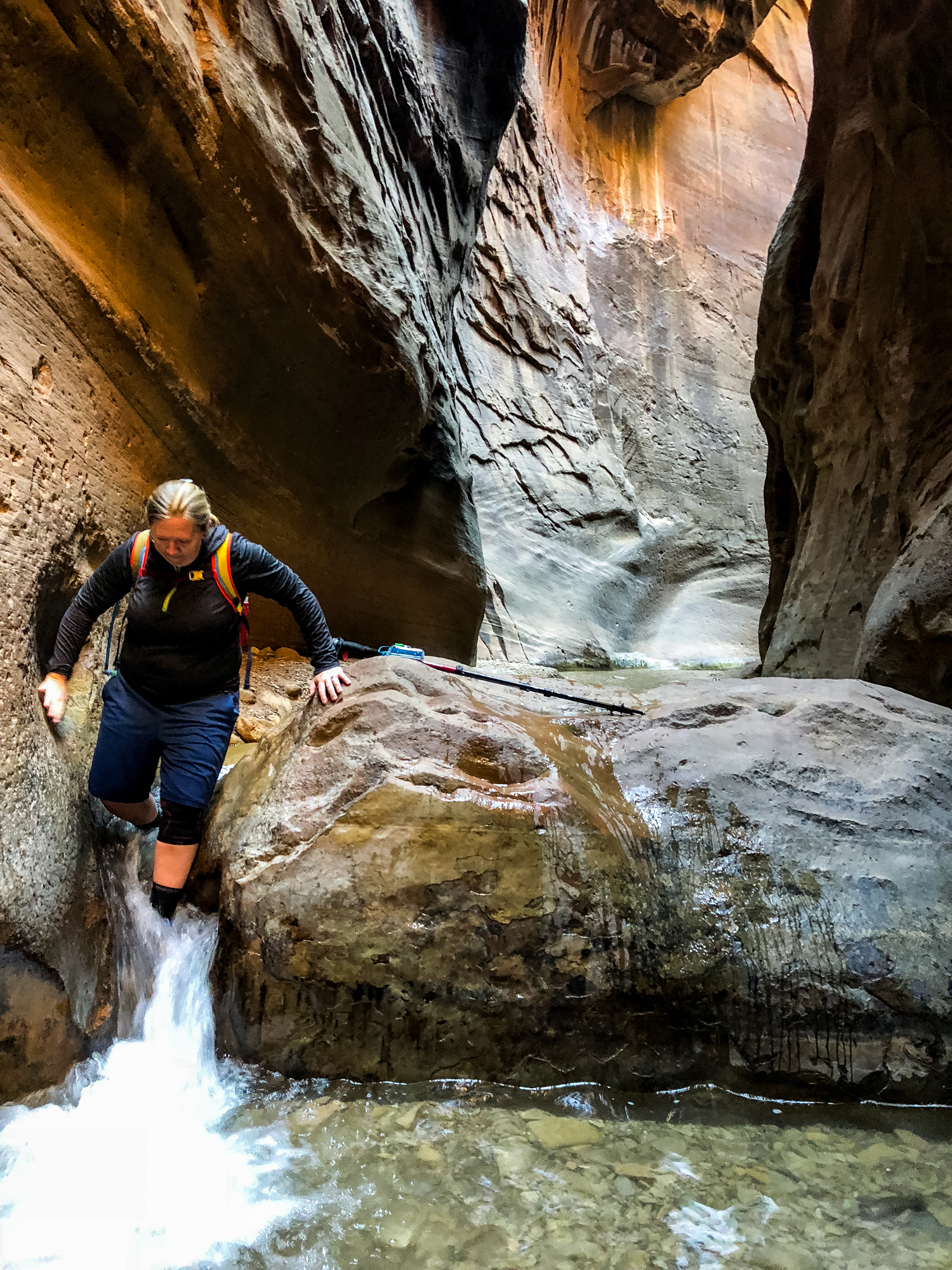
We brought our trekking poles from home, and I do not think we would have traveled nearly as far without them. The river rocks were slippery, and the current sometimes pressed against our legs while we tried to feel for a stable place to put each foot.
A sturdy walking stick or pole gives you an extra point of contact while crossing the river. Lightweight trekking poles can bend or become gritty from sand, so this is not the place for a delicate pair.
Before starting, we checked with park rangers about the river conditions. The flow was somewhere between 25 and 40 cubic feet per second, and the water temperature was in the 60s. With those mild conditions, we felt comfortable using our own shoes, socks, and poles instead of renting additional equipment.
Starting at the Temple of Sinawava
The bottom-up Narrows hike begins at the Temple of Sinawava, the final stop on the Zion Canyon shuttle route.
We took the first shuttle of the day and started with only about a dozen other hikers. From the shuttle stop, the paved Riverside Walk follows the Virgin River for about a mile. At the end of the walkway, a few steps lead directly into the river, and that is where the traditional trail ends.

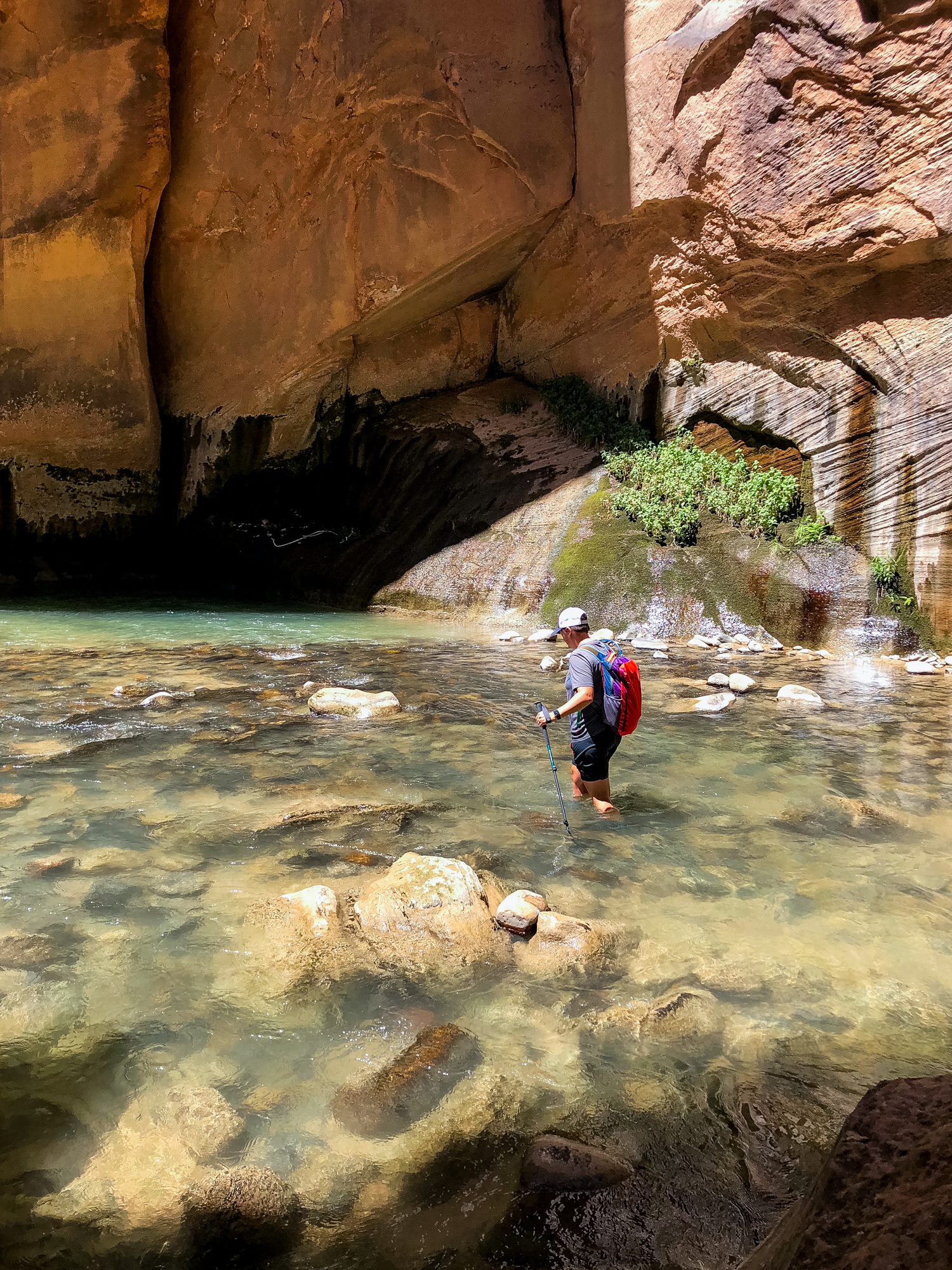

From there, the river is the trail. The small group quickly spread out once we entered the water. For the first couple of hours, long sections of the canyon felt almost empty. The water curled around our legs, the canyon walls blocked much of the morning sun, and the sound of the river echoed between the cliffs.

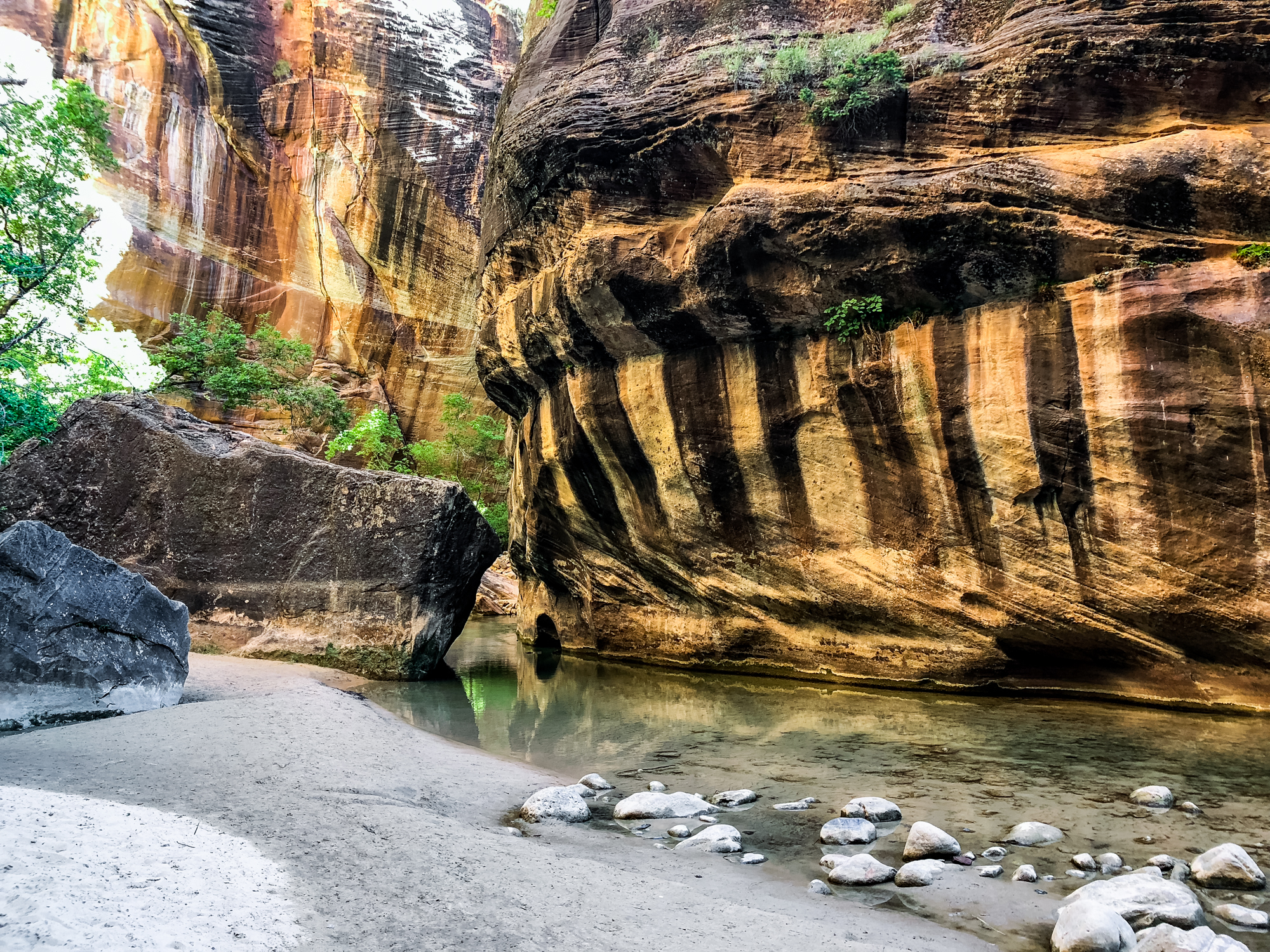

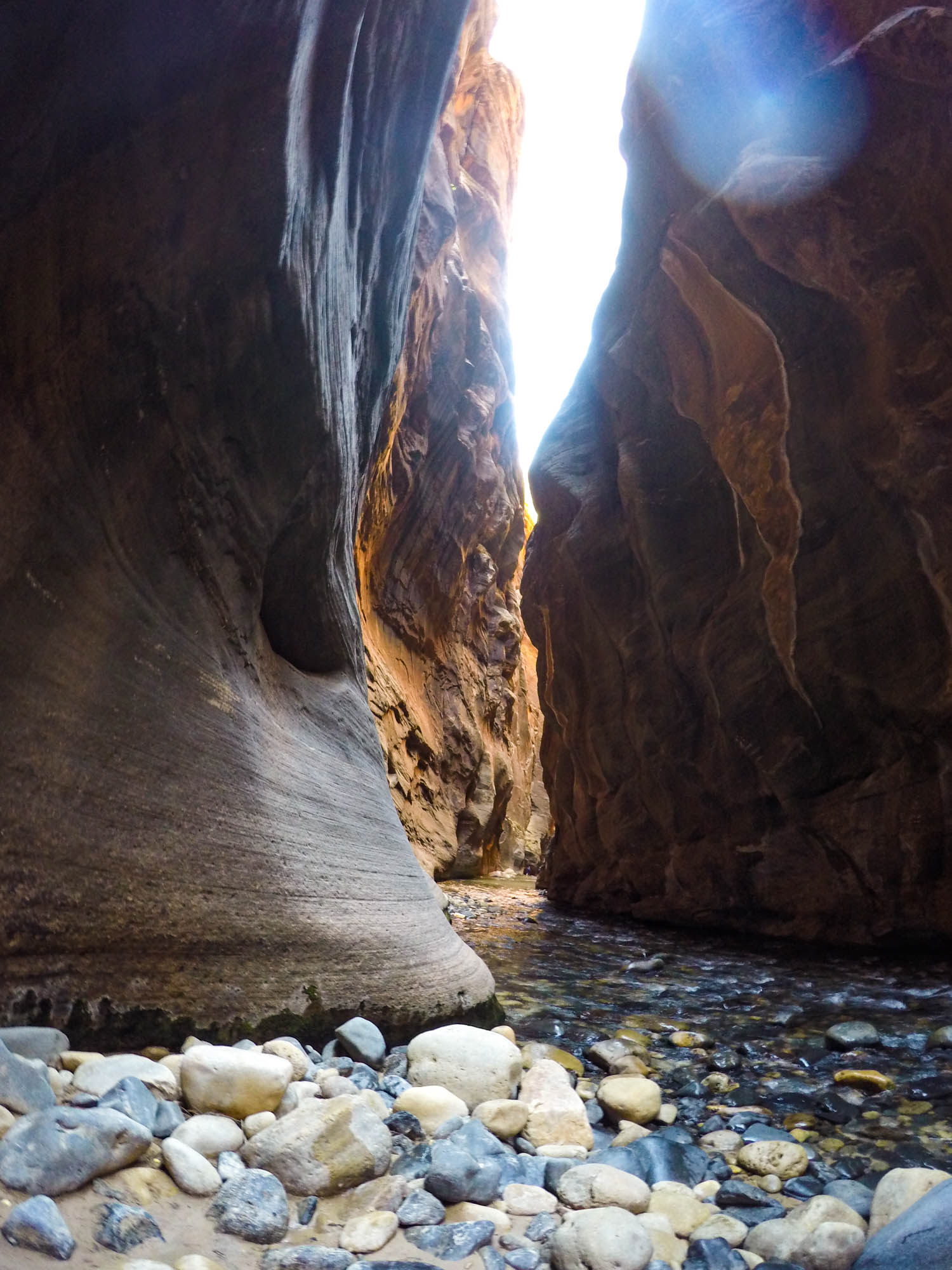
Hiking Through Orderville Canyon and Wall Street
Because the bottom-up route is an out-and-back hike, every mile upstream adds another mile to the return. We kept that in mind as we continued farther into the canyon.
When we reached the junction with Orderville Canyon, we took the side trip. The passage was narrower and quieter, and for much of the time we were the only people there. We climbed over a few boulders but eventually turned around before reaching Veiled Falls. By then, our feet and toes had spent hours balancing on submerged rocks, and we knew we still had a long walk back.
After returning to the main river, we continued upstream into Wall Street. This was the stretch I had imagined after seeing that first book cover. The canyon walls closed tightly around the river, rising almost vertically while we waded through the narrow space below.
The river changed constantly. In some places, the water barely covered our ankles. In others, it reached our knees or pushed higher against our bodies. We moved around fallen trees, climbed over rocks, and crossed back and forth as the safest route shifted from one side of the river to the other.
Every bend revealed a different combination of water, stone, shadow, and reflected light. We made it about five miles upriver before finding a place to stop for lunch. After eating beside the water, we turned around and began the long hike back toward the shuttle.

Why the Early Start Mattered
The canyon felt completely different by the time we approached the entrance again.
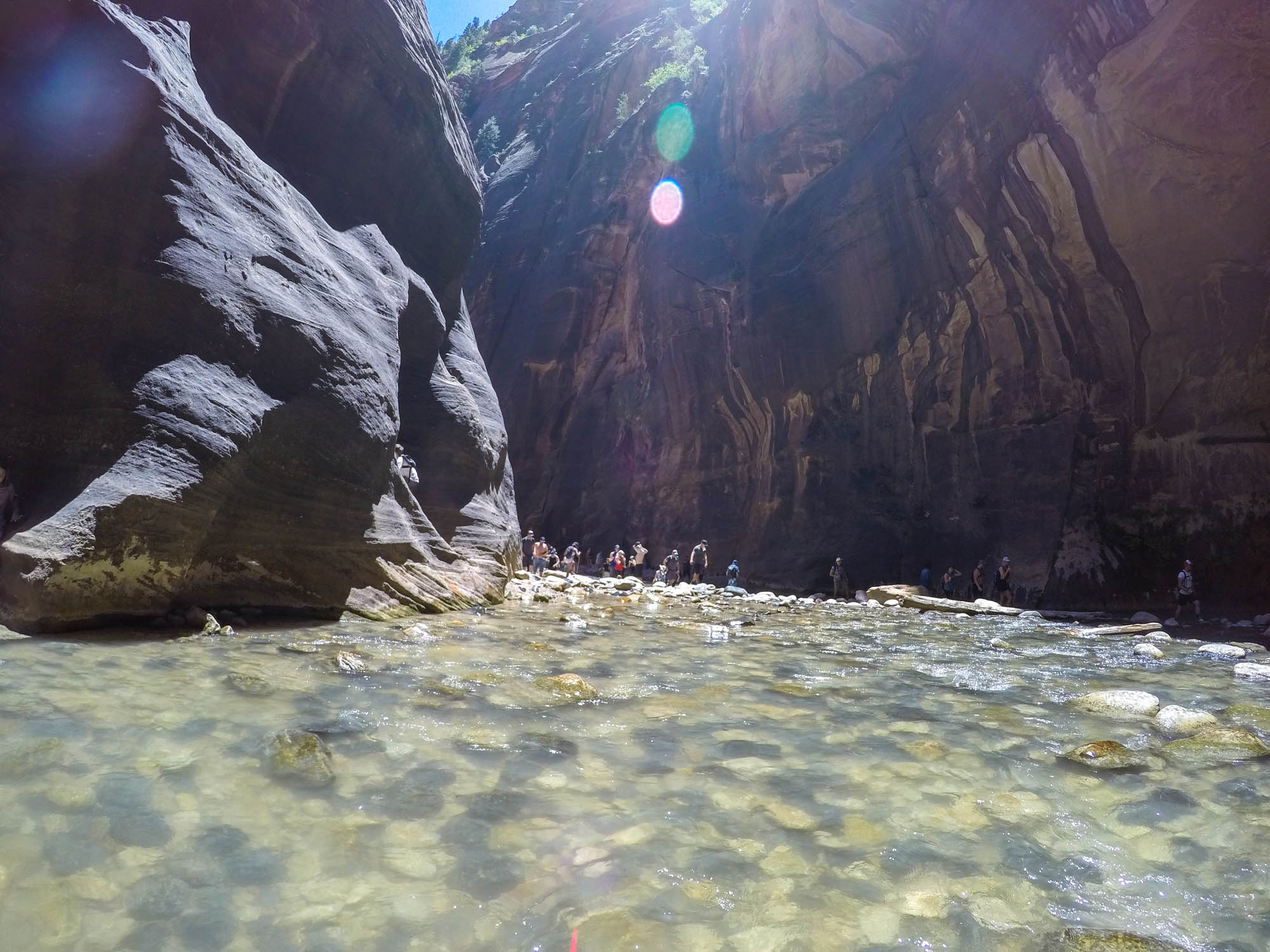
The quiet stretches we had walked through that morning were now crowded with visitors carrying selfie sticks, beach towels, and bags held above the water. Near the beginning of the river, people filled nearly every open space.
We were very glad we had taken the first shuttle. Starting early gave us several peaceful hours inside the canyon before the busiest part of the day, and those quiet miles became some of my favorite memories from Zion.
The Narrows had been a bucket-list hike for years, but completing it did not make me feel finished with the place. There was still more of Orderville Canyon to explore, and the river would never look exactly the same twice.
Note: Before planning a Narrows hike, check the current weather, flash-flood potential, river conditions, closures, and water-quality advisories. Conditions in the canyon can change quickly, even when the weather overhead appears calm.