
Did you know Yellowstone National Park sits on top of one of the world's largest active volcanic systems? Beneath the forests, rivers, and mountains is a massive caldera that fuels thousands of geothermal features. Spend any time in the park and you'll quickly realize you're walking across a landscape unlike anywhere else.
Every stop is a sensory experience. Brilliant blues and oranges color the ground, steam rises from every direction, the unmistakable smell of sulfur drifts through the air, and boiling springs and erupting geysers remind you that the earth beneath your feet is constantly changing.
There are far too many geothermal areas to cover in one post, but these were some of our favorites.
Norris Geyser Basin
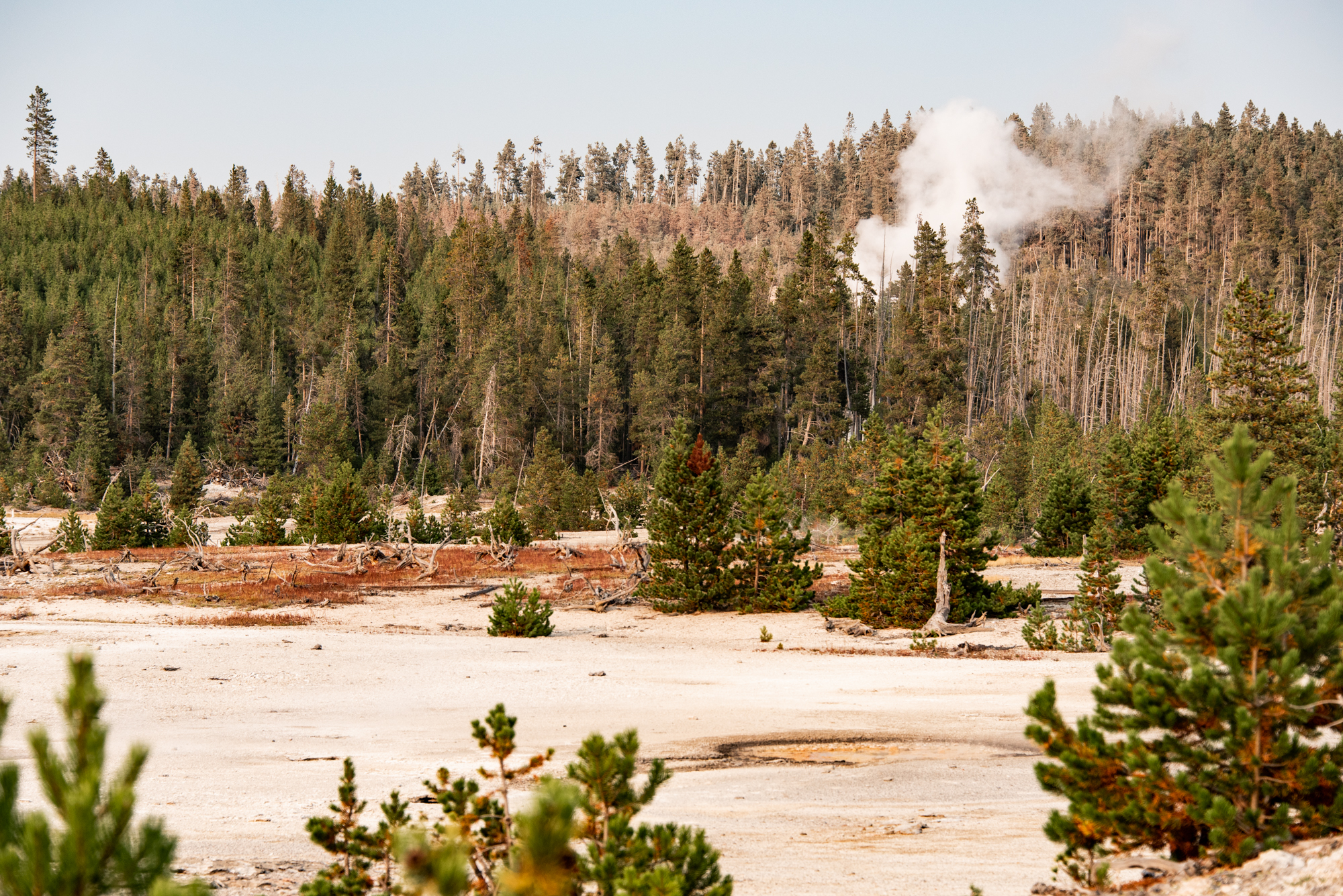
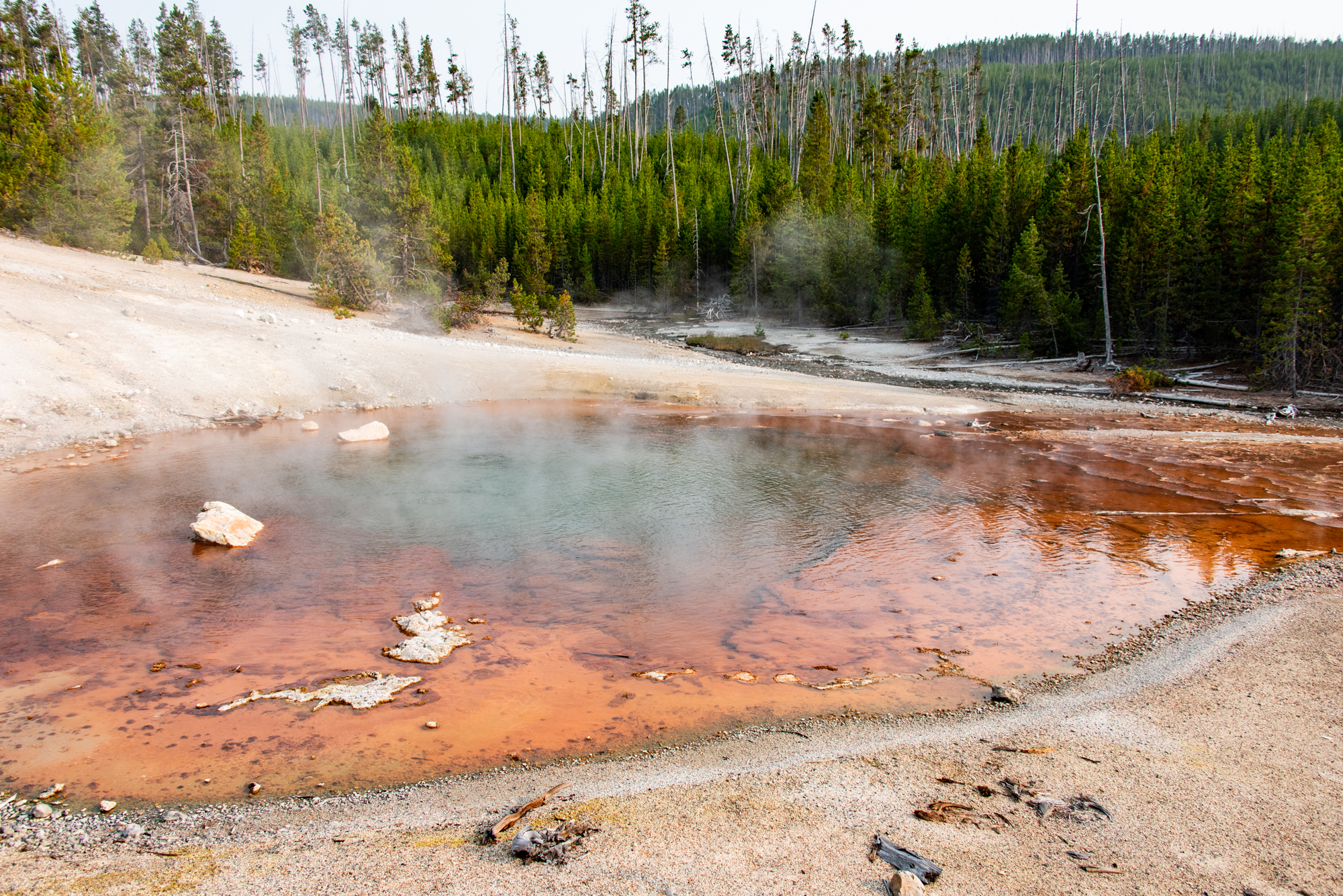
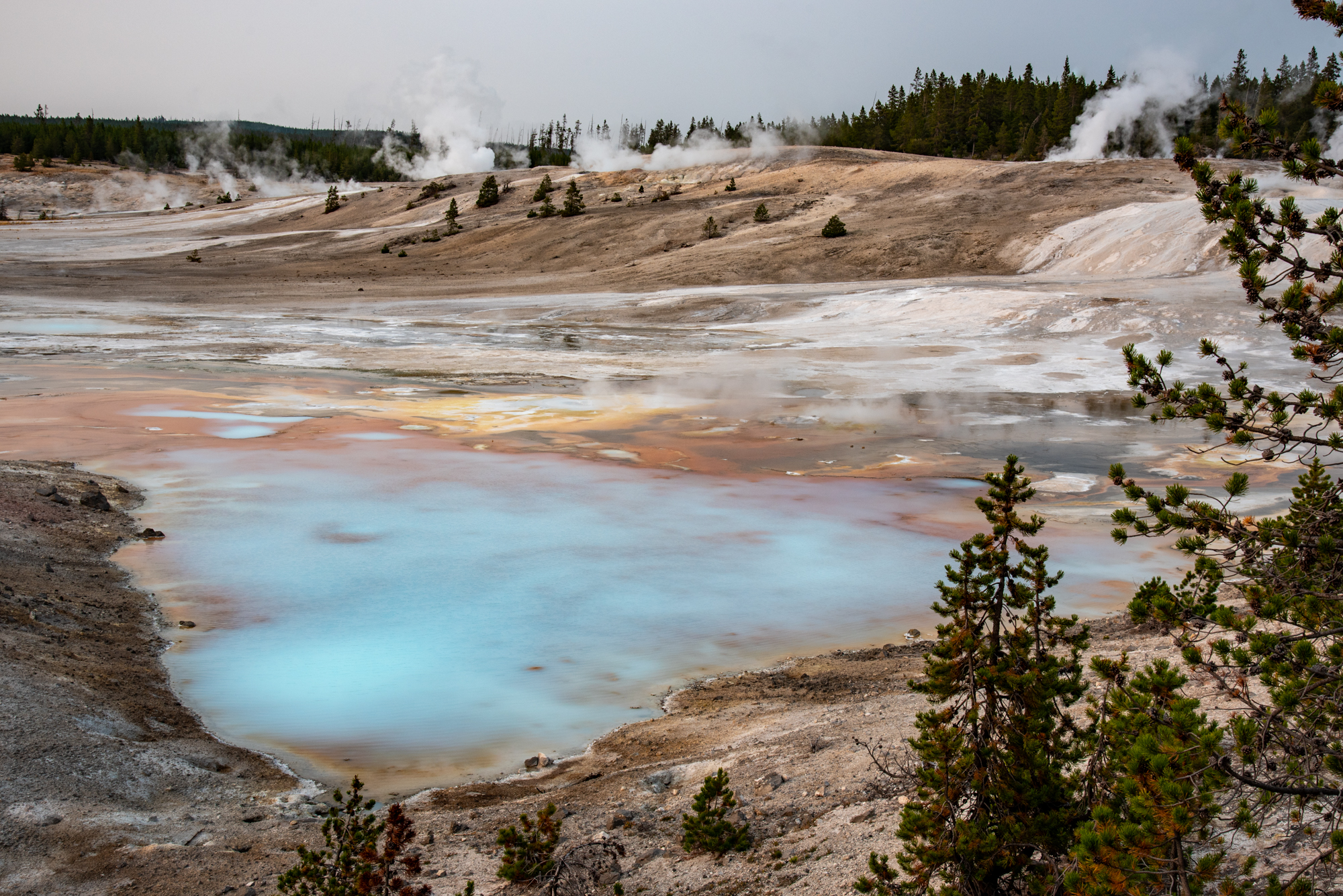
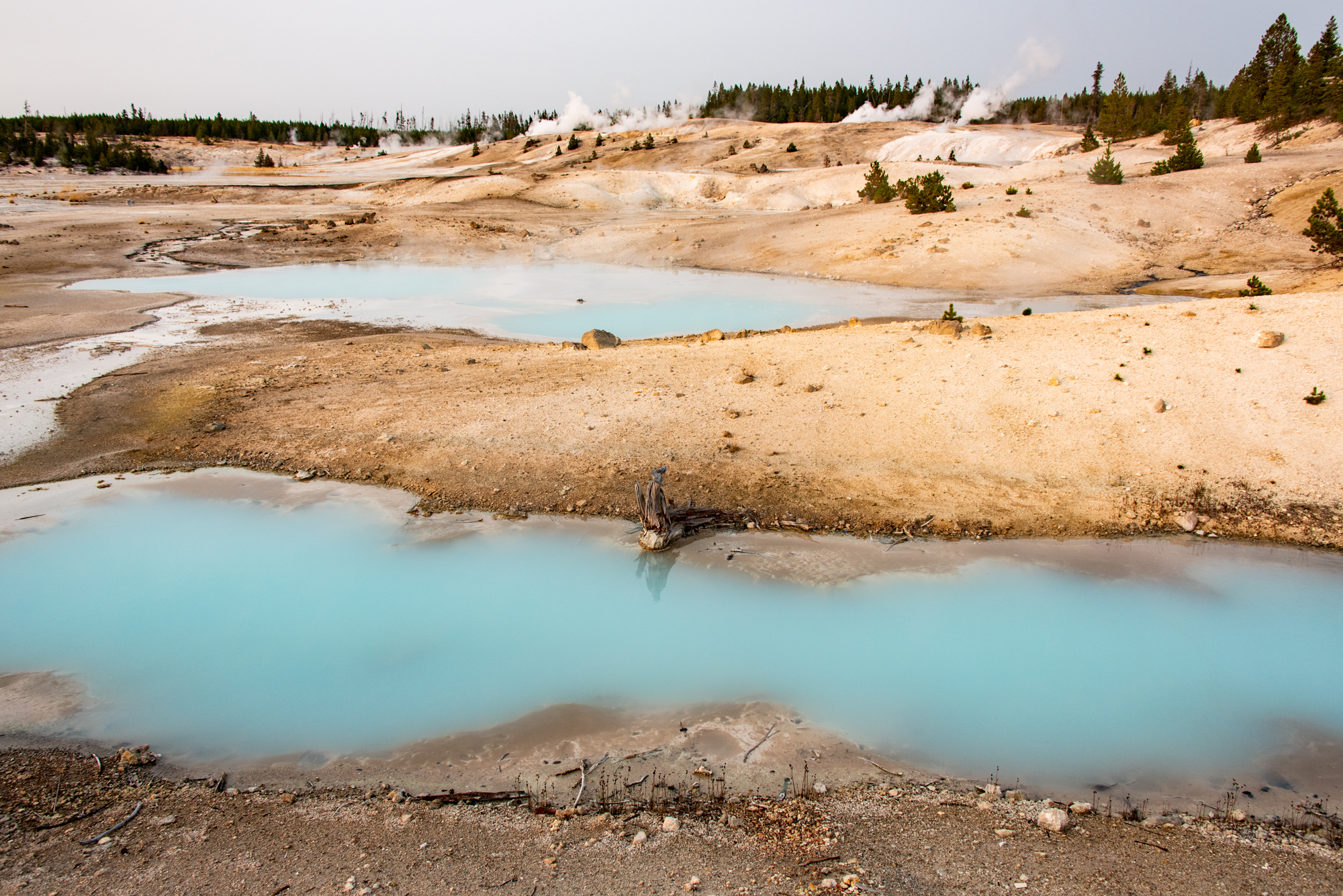
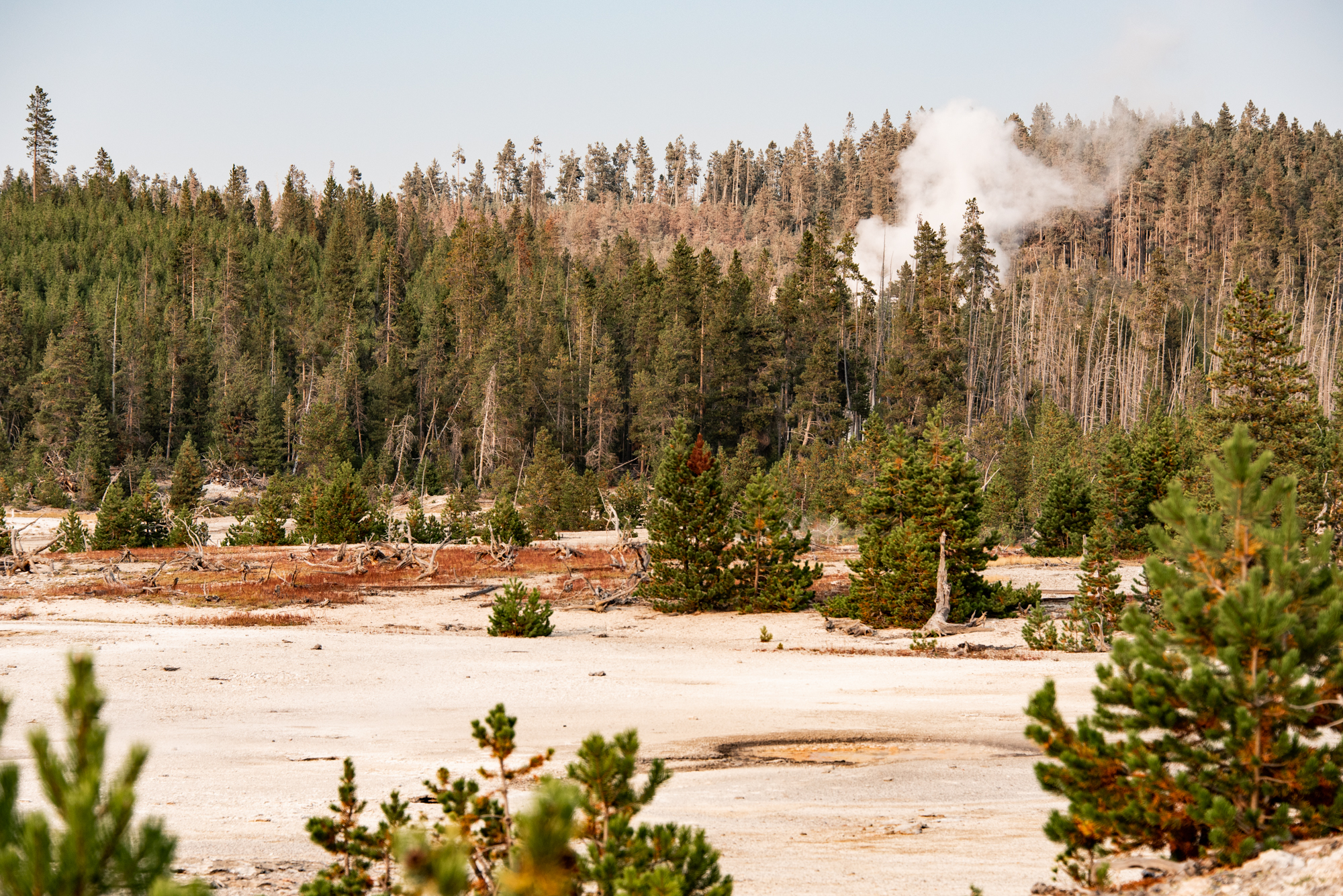
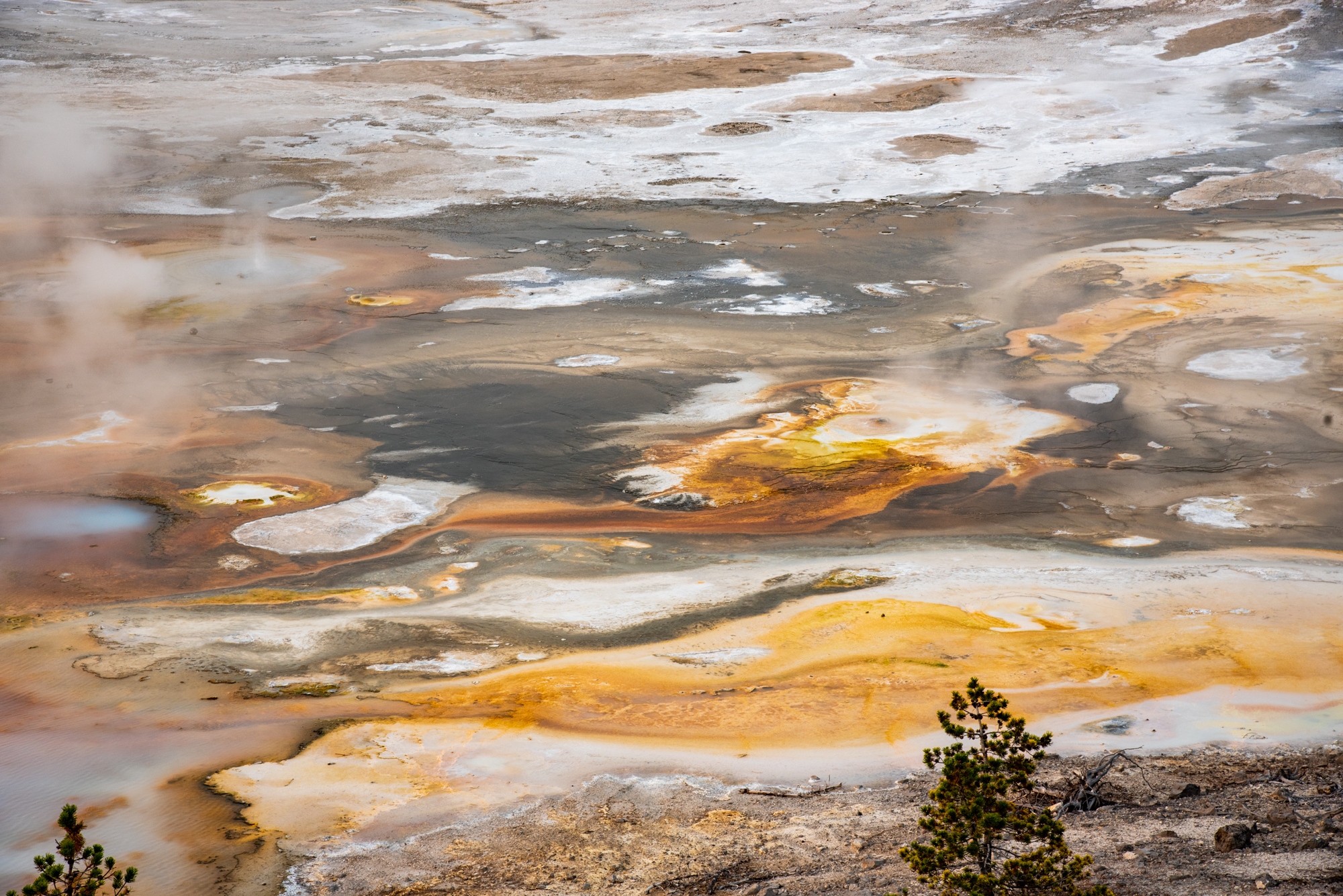
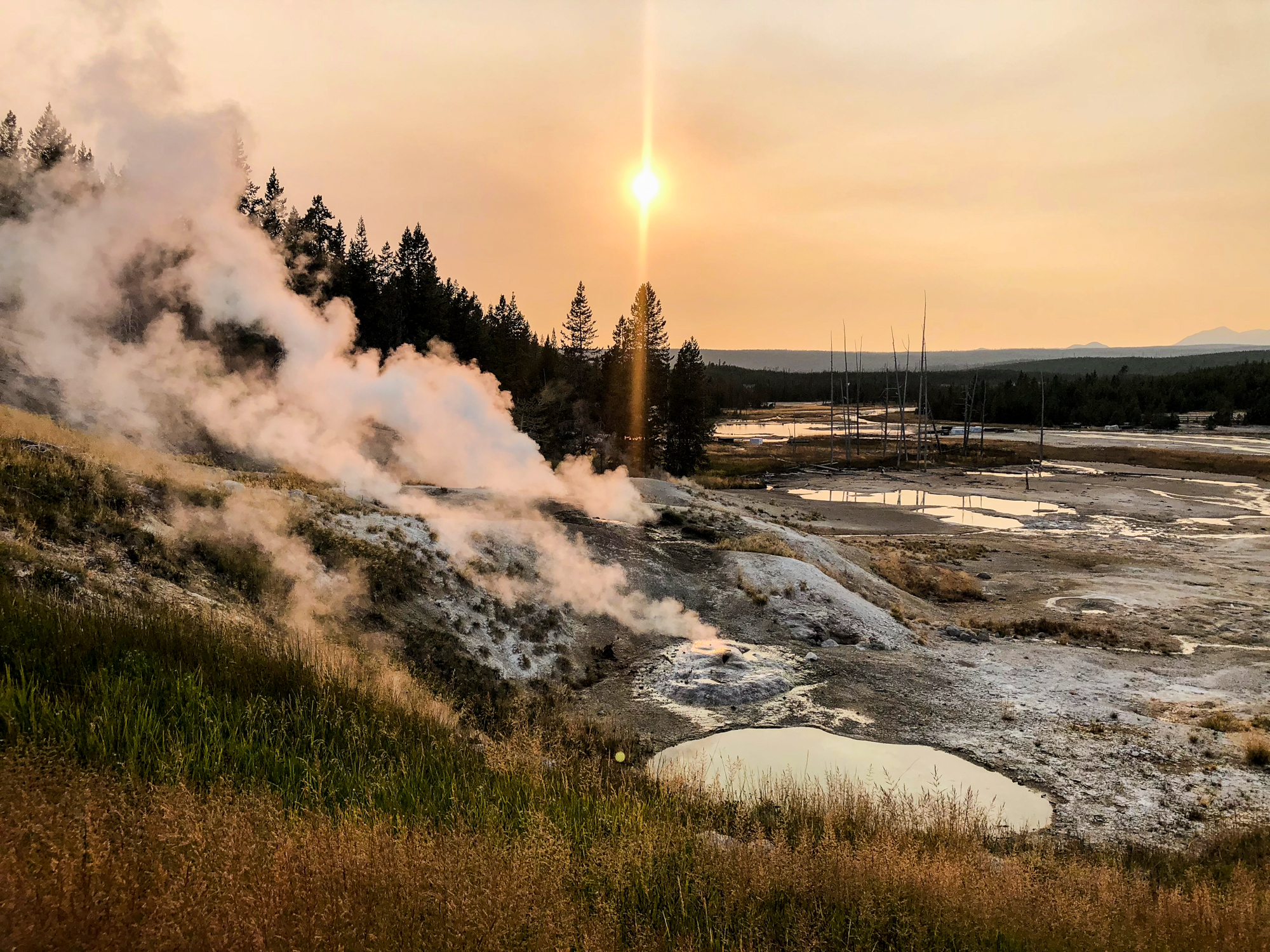
Norris Geyser Basin ended up being our favorite geothermal area in the park. We arrived late in the afternoon, when the golden light made the steam glow and the crowds had begun to thin. It gave the whole area a quieter, almost otherworldly feel.
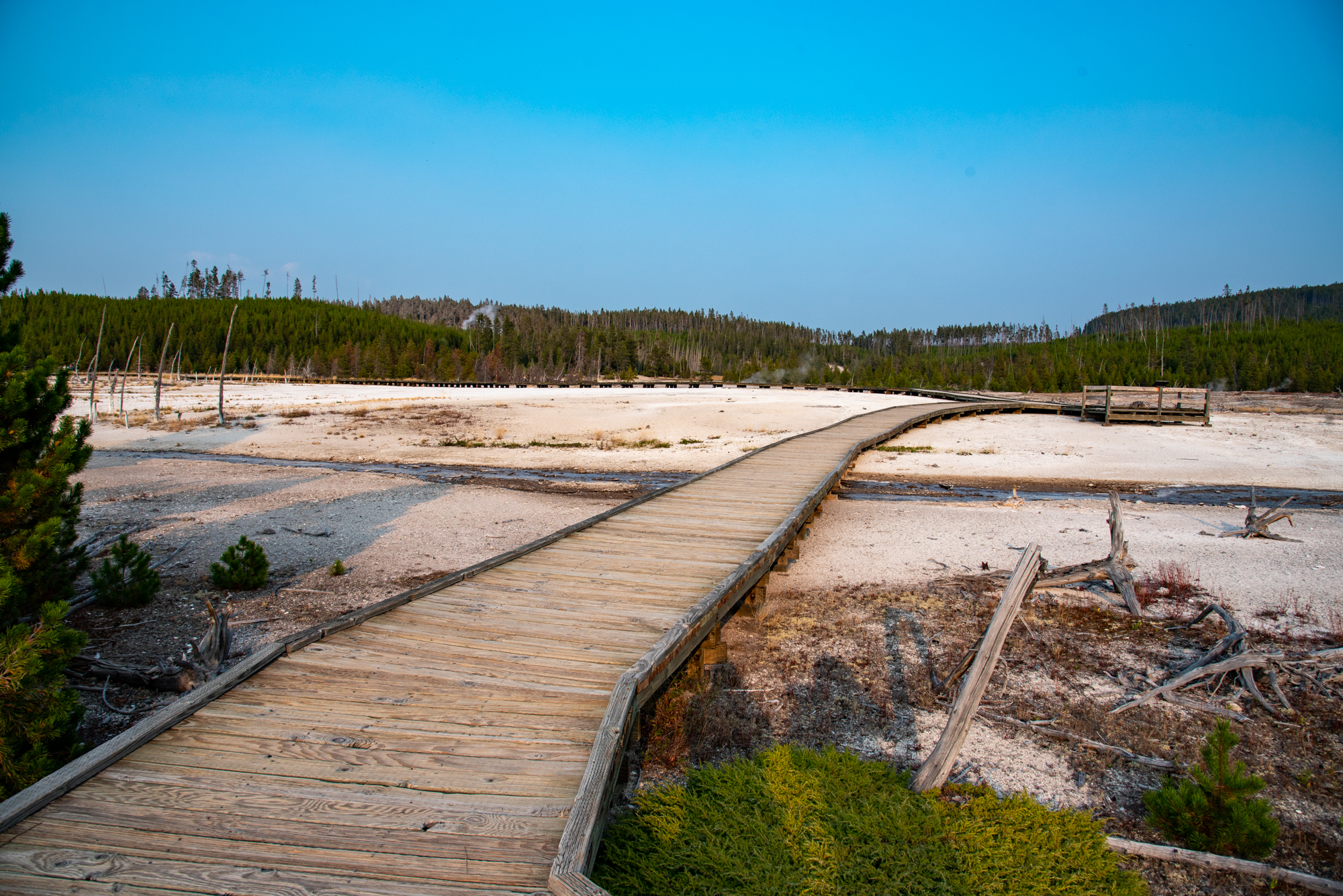
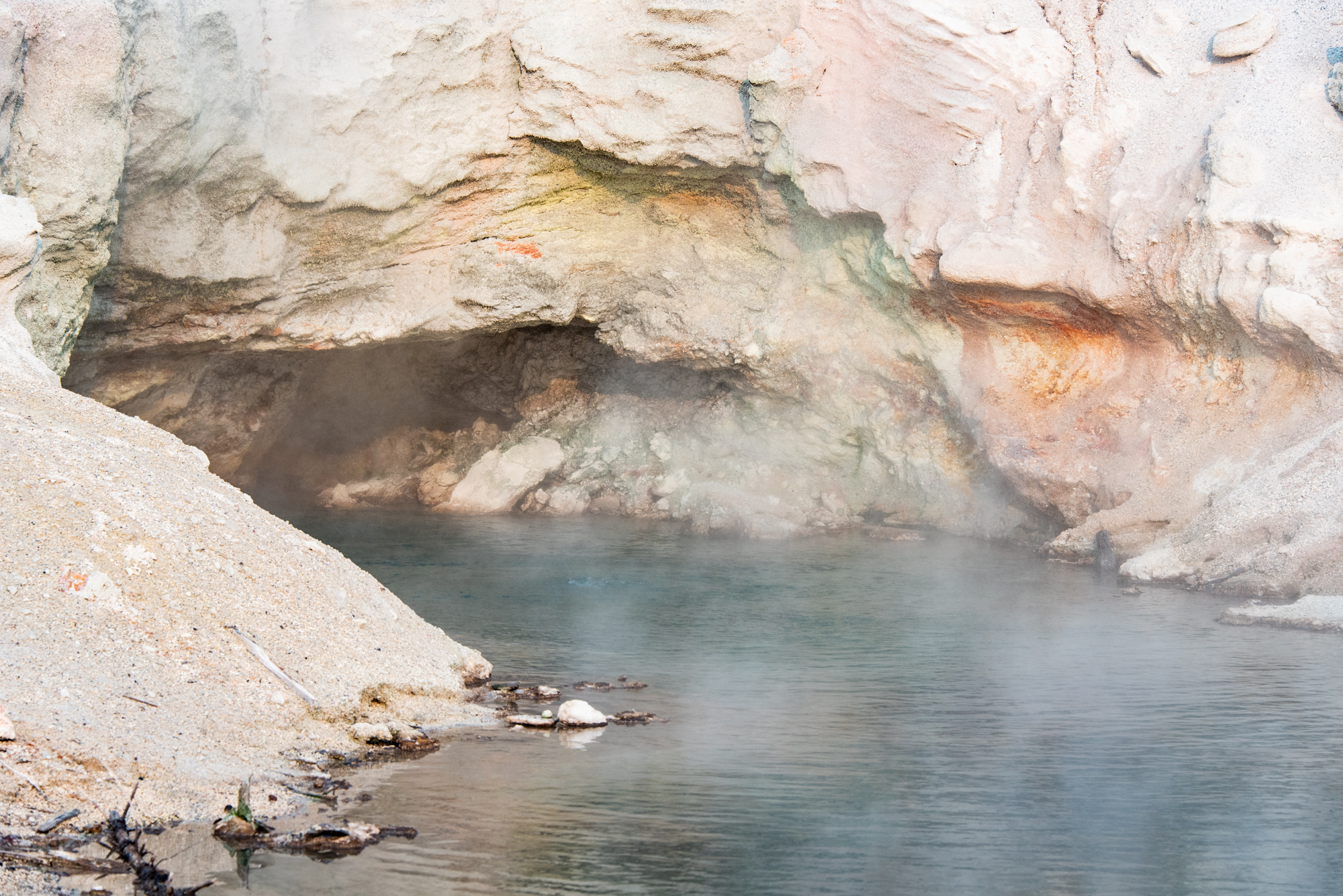
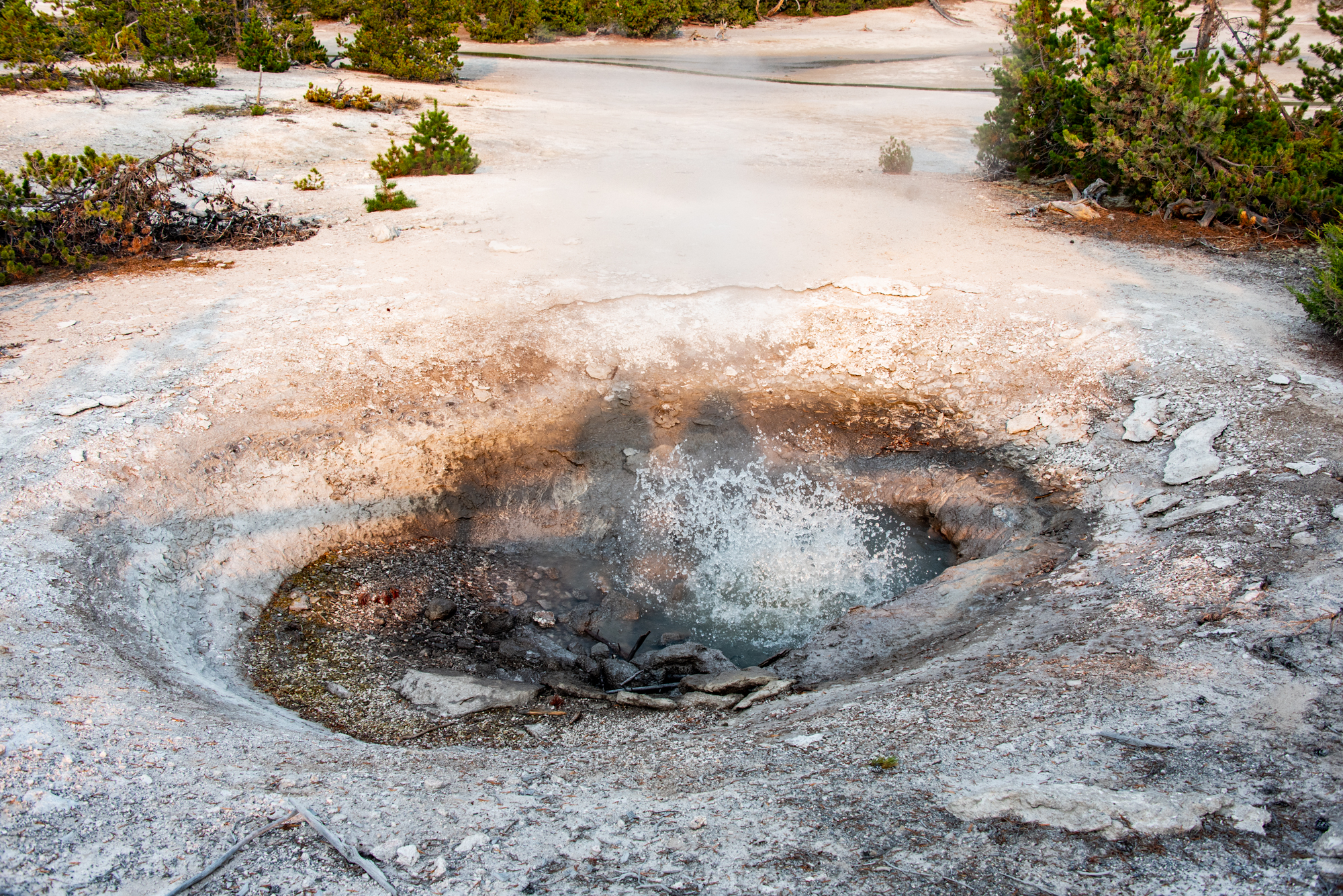
Like many geothermal areas in Yellowstone, Norris is explored on an extensive boardwalk system. The two connected loops total about 2.25 miles and pass an incredible variety of geysers, hot springs, and fumaroles.
Steamboat Geyser was one of the highlights. It was gently steaming while we were there, but even a modest eruption is impressive. During a major eruption, it becomes the tallest active geyser in the world, sending water more than 300 feet into the air.
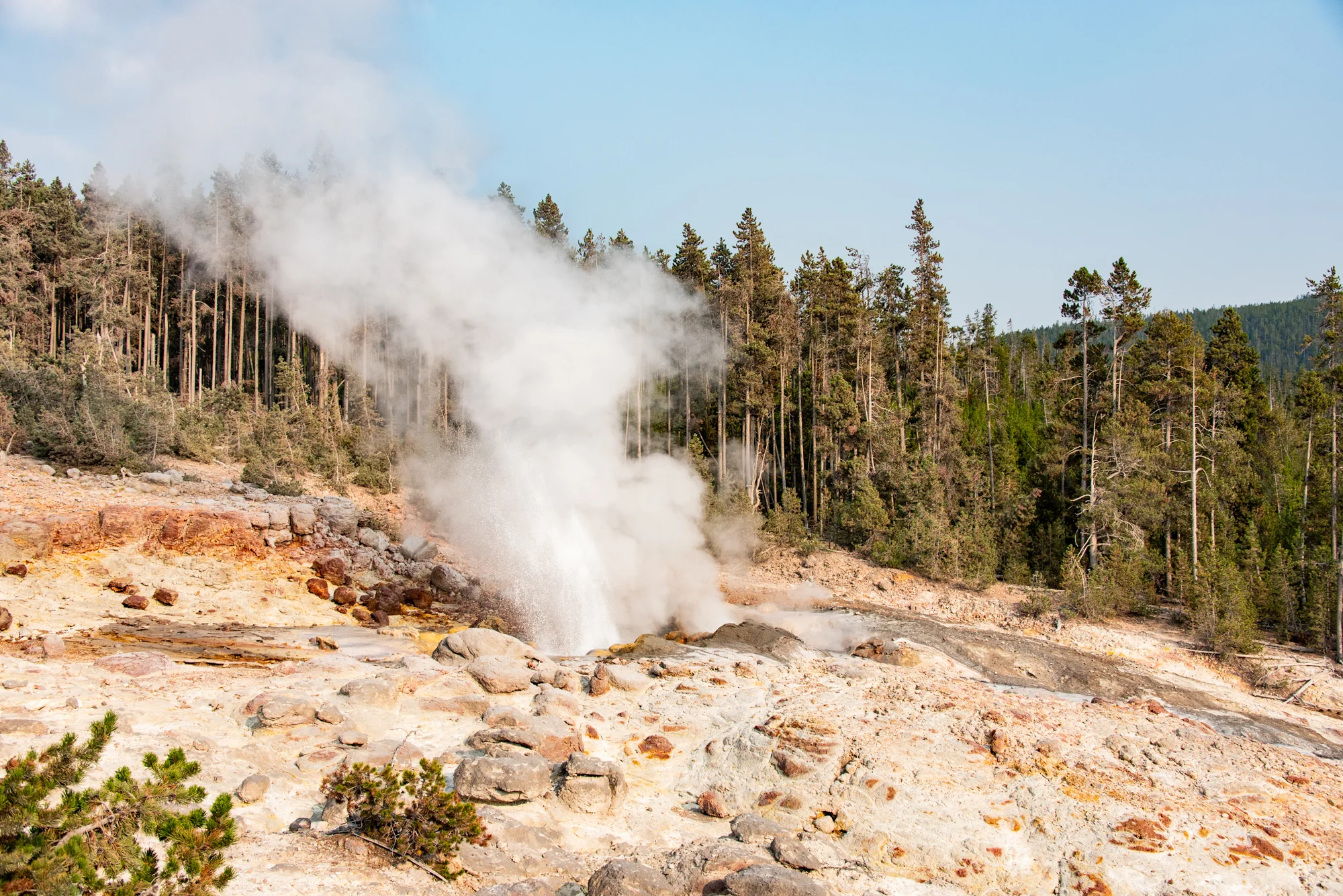


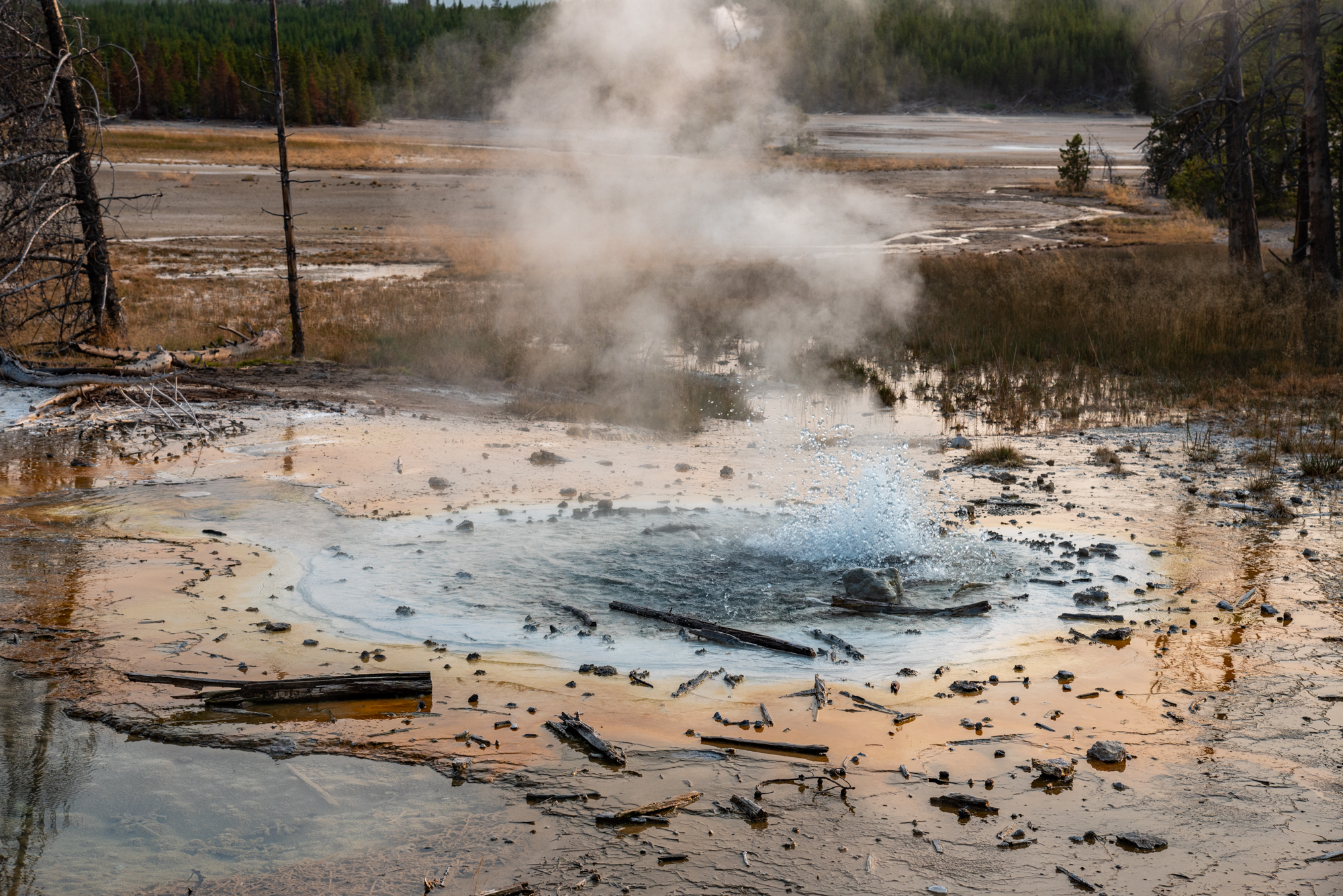
Our favorite geyser, though, was Vixen Geyser. We happened to arrive just as it began erupting, and watching it spray into the afternoon light made it one of our favorite geothermal moments in Yellowstone.


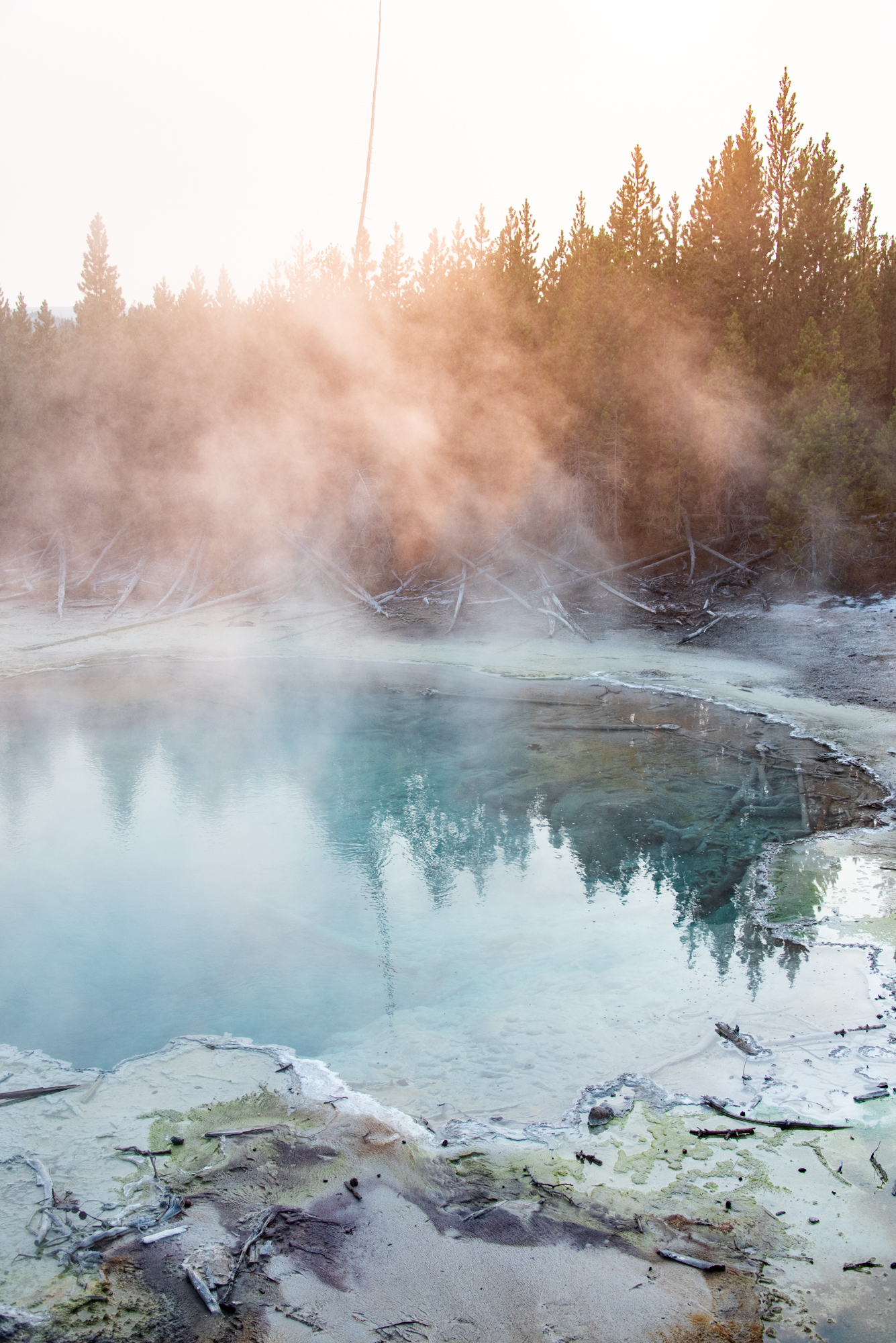
Cistern Spring also stood out. Its brilliant blue water, surrounded by white silica deposits and evergreen trees, was one of the most beautiful hot springs we saw anywhere in the park.
If you're only visiting one geothermal basin outside the Old Faithful area, Norris should be high on your list.
Mammoth Hot Springs
Mammoth Hot Springs wasn't originally a priority stop for us. It was more of an "if we have time" destination, and thankfully we did.
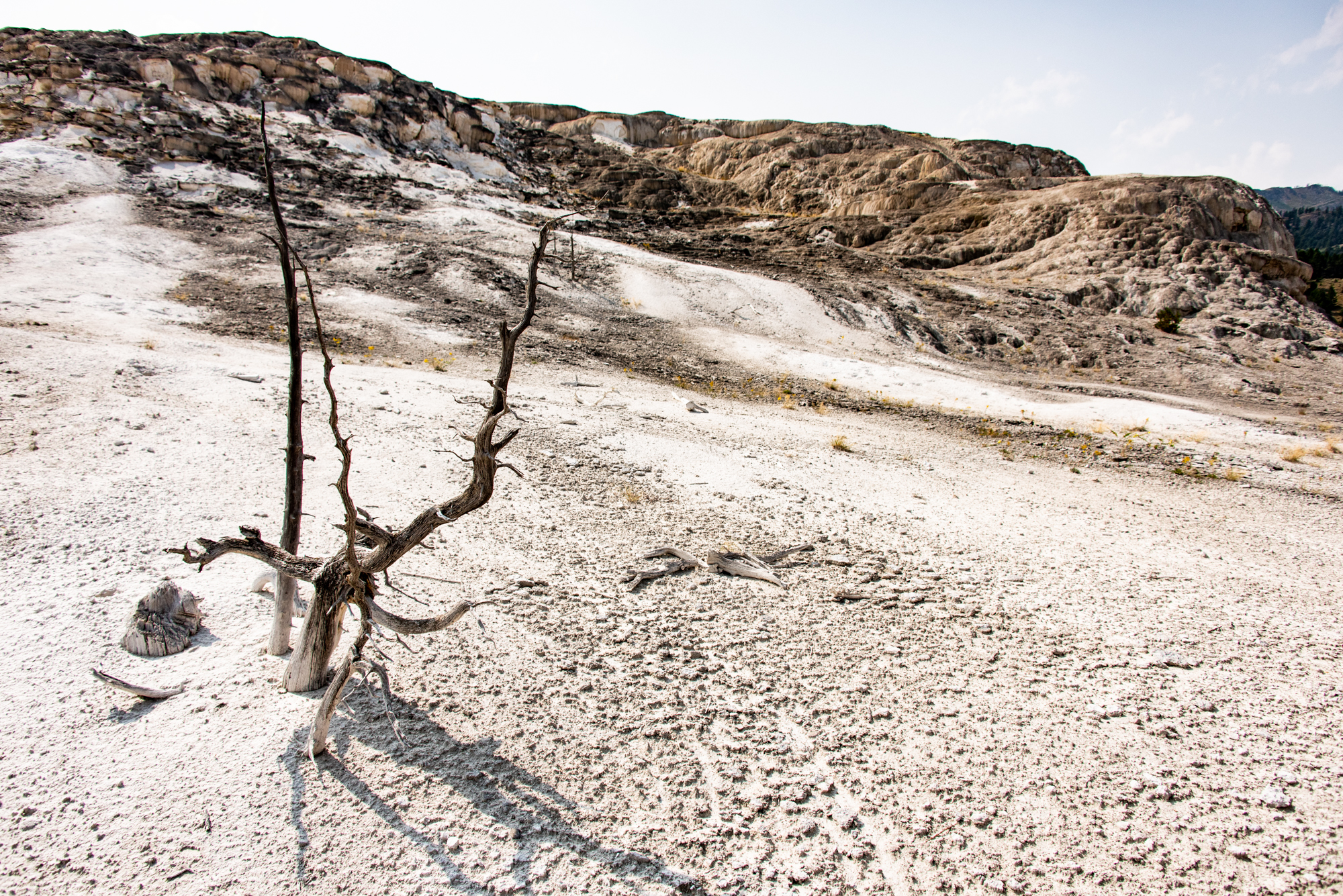
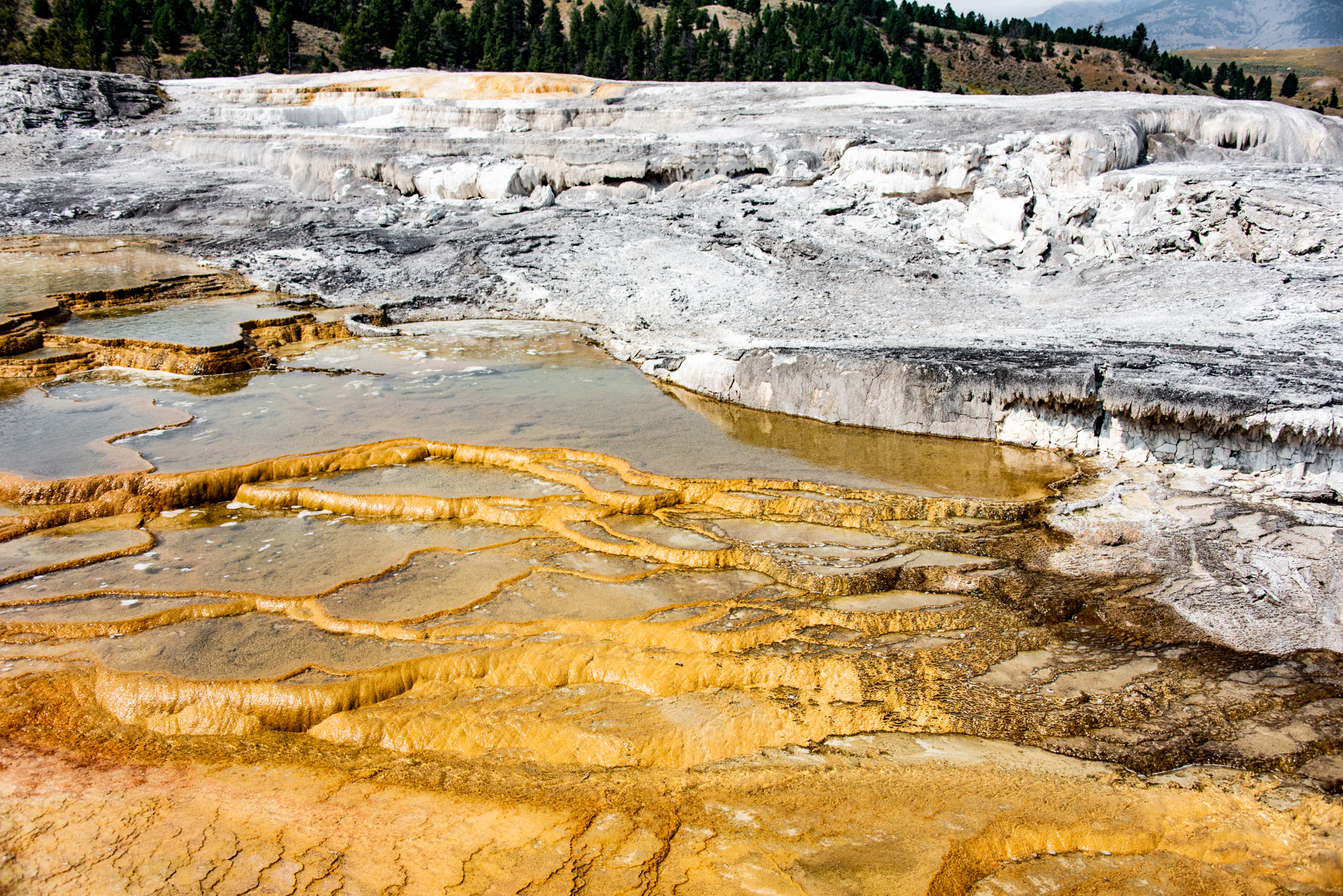
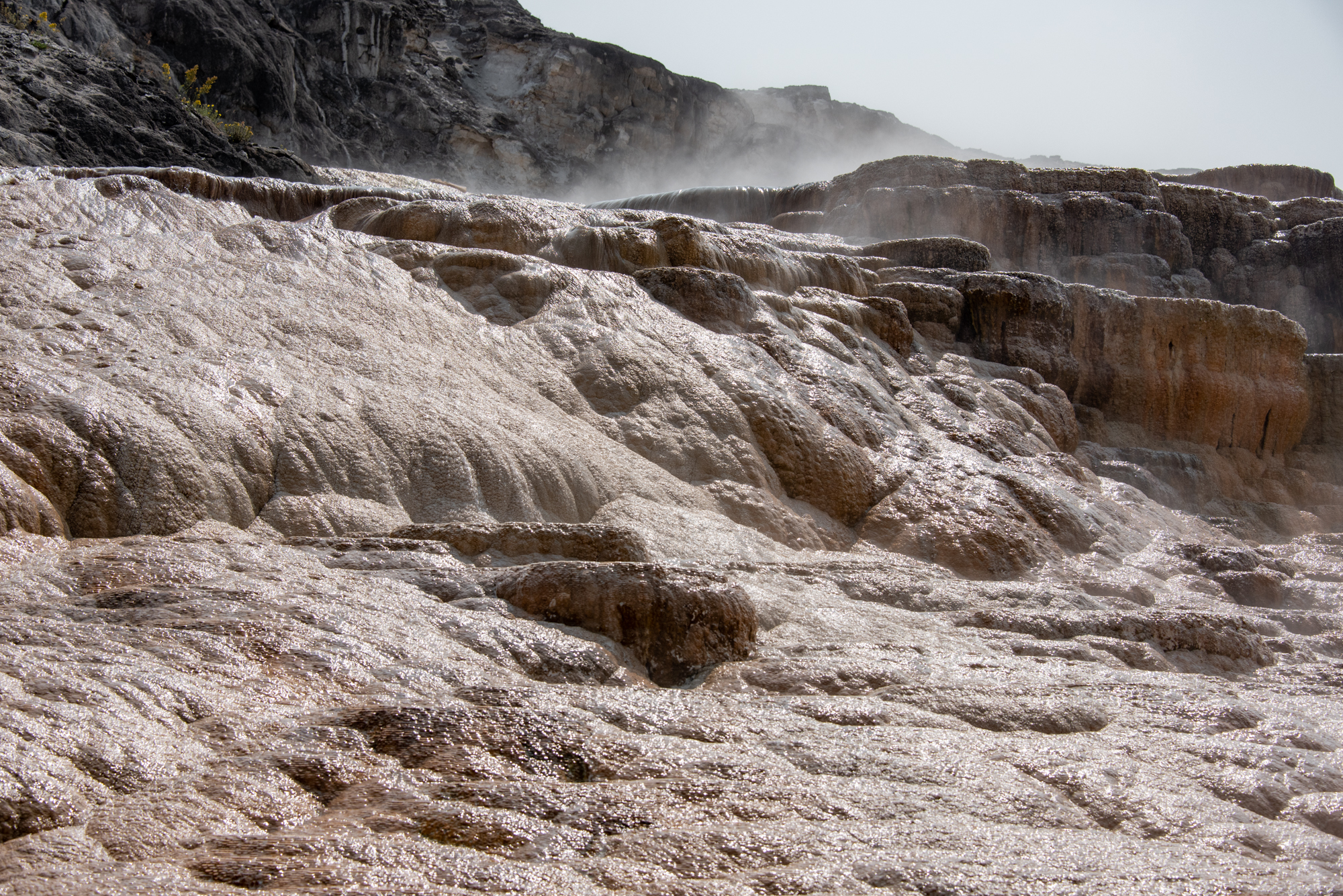
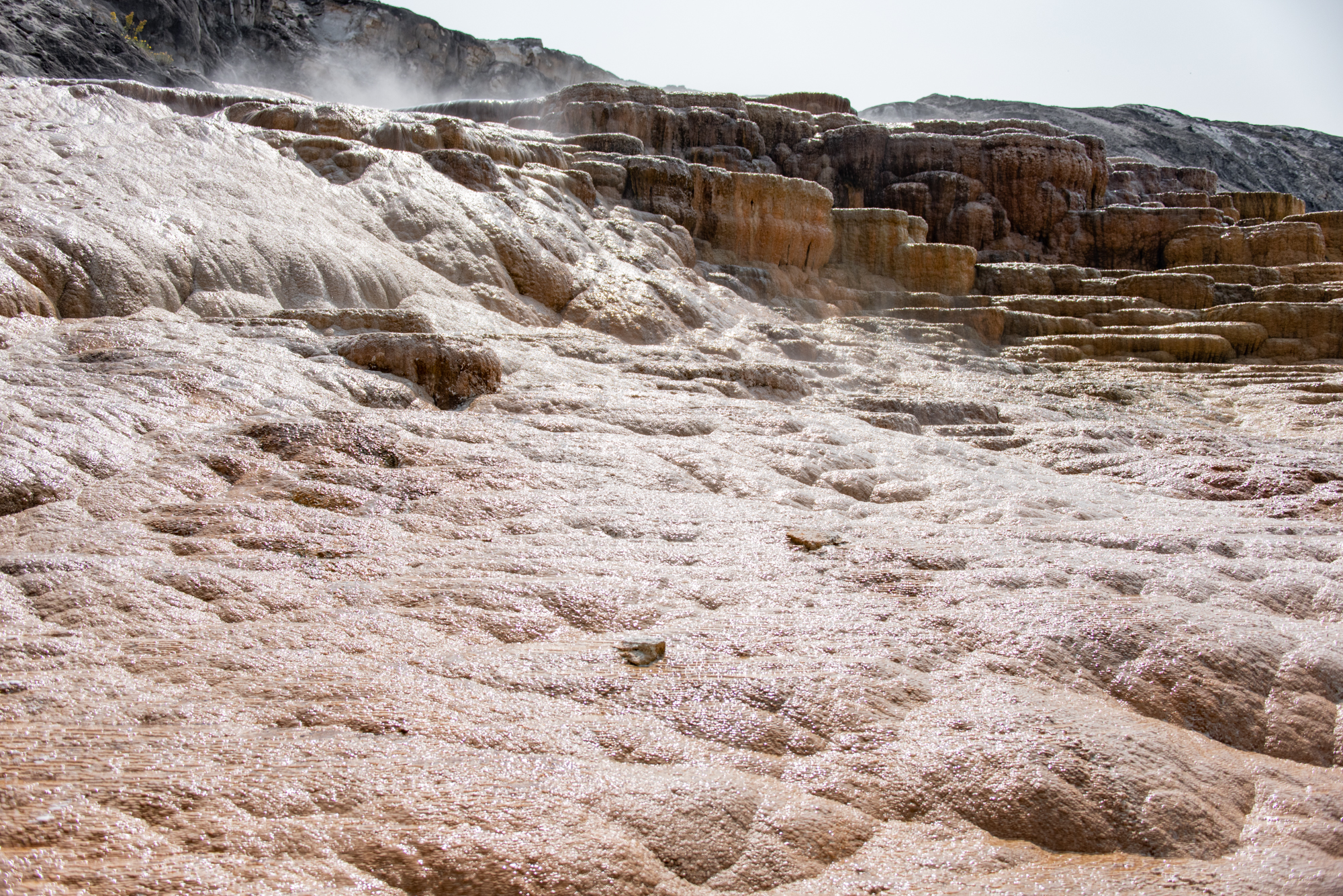
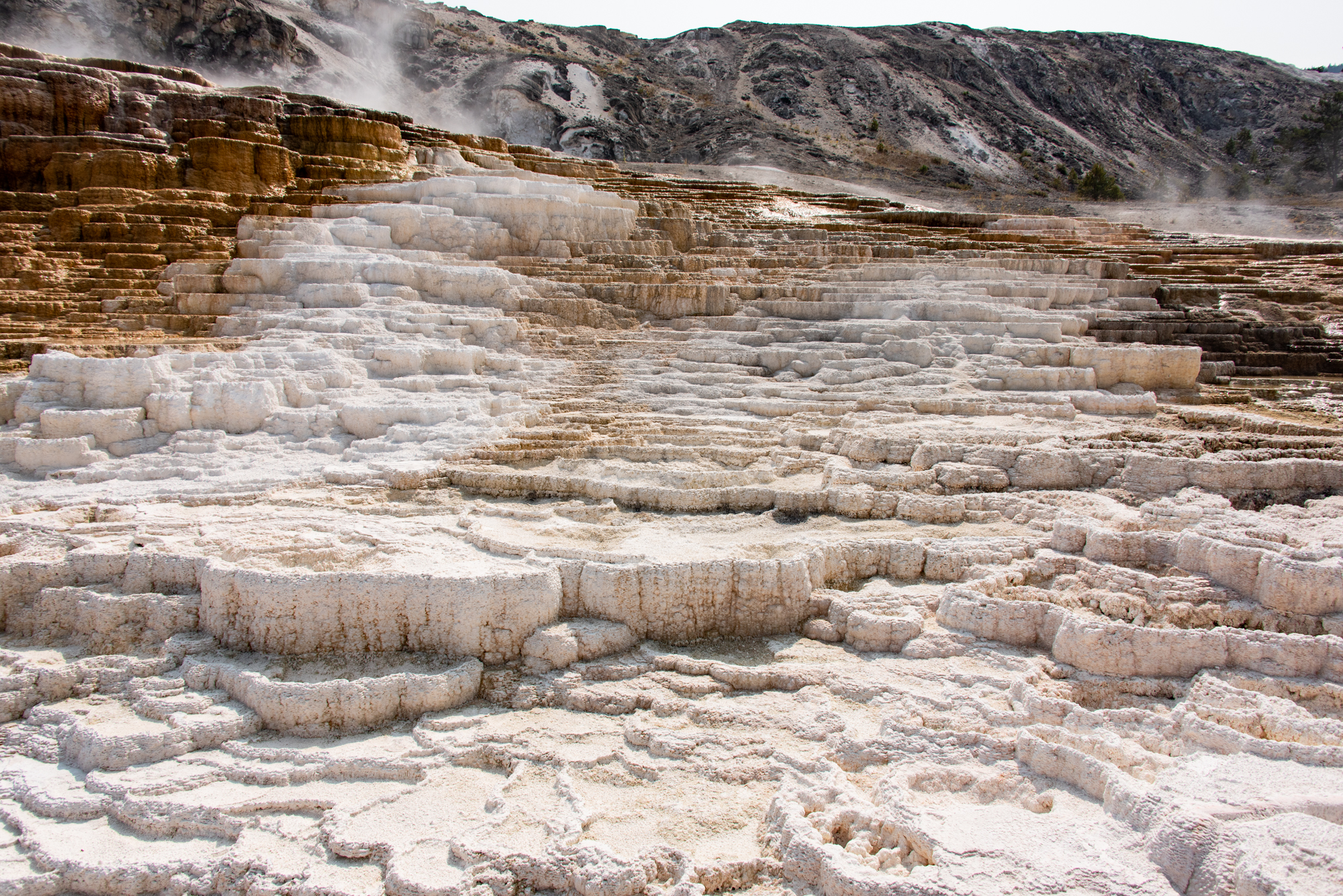
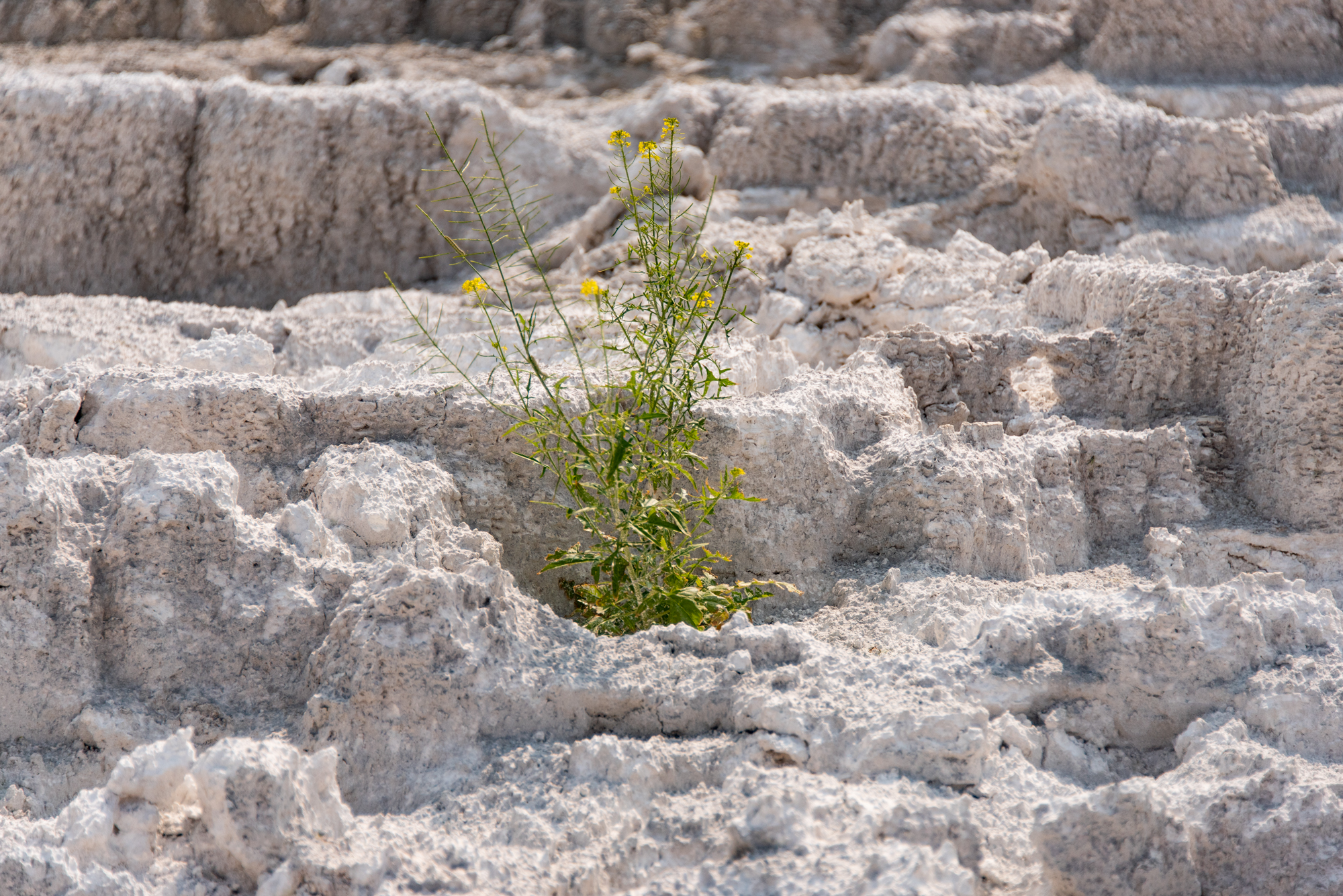
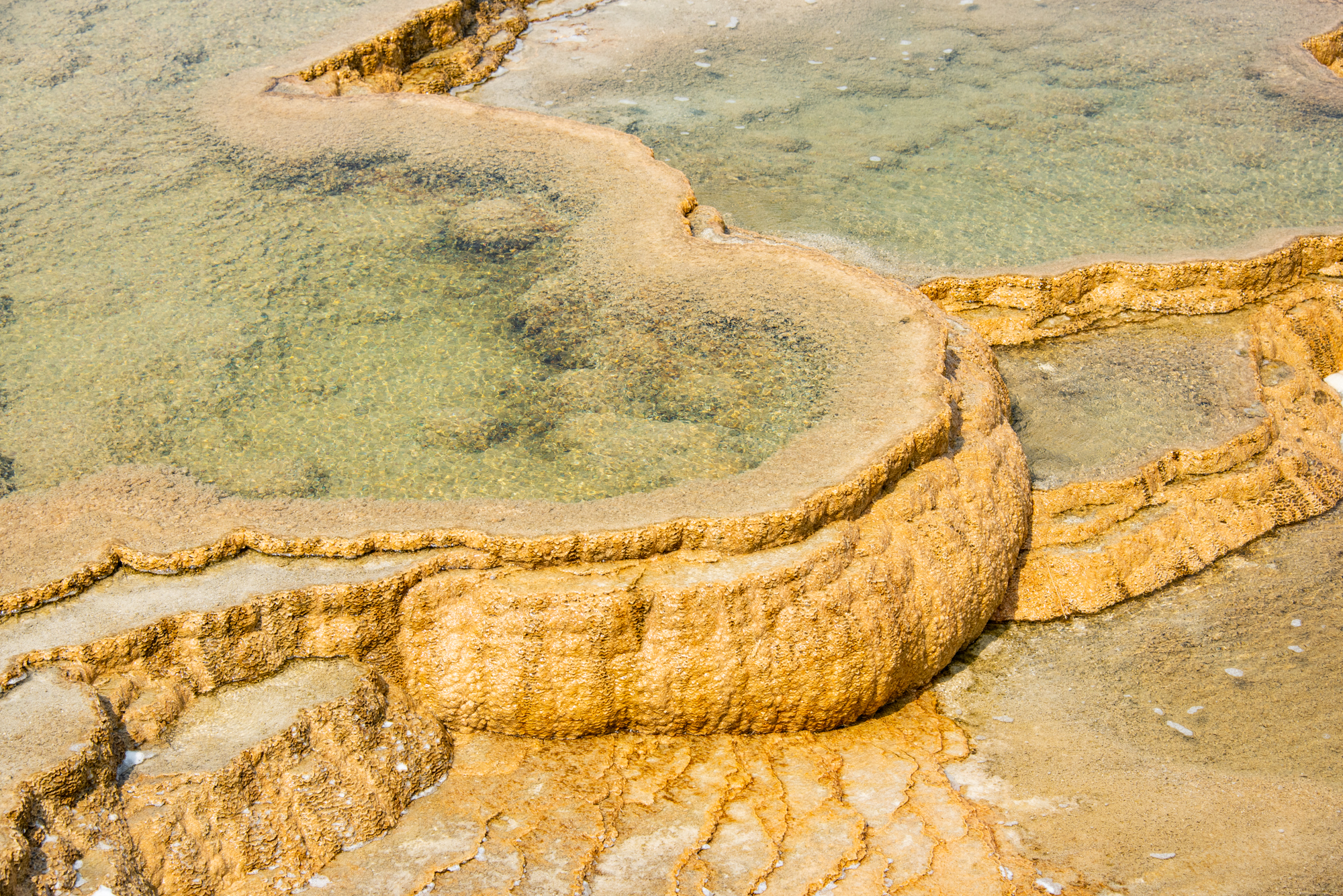
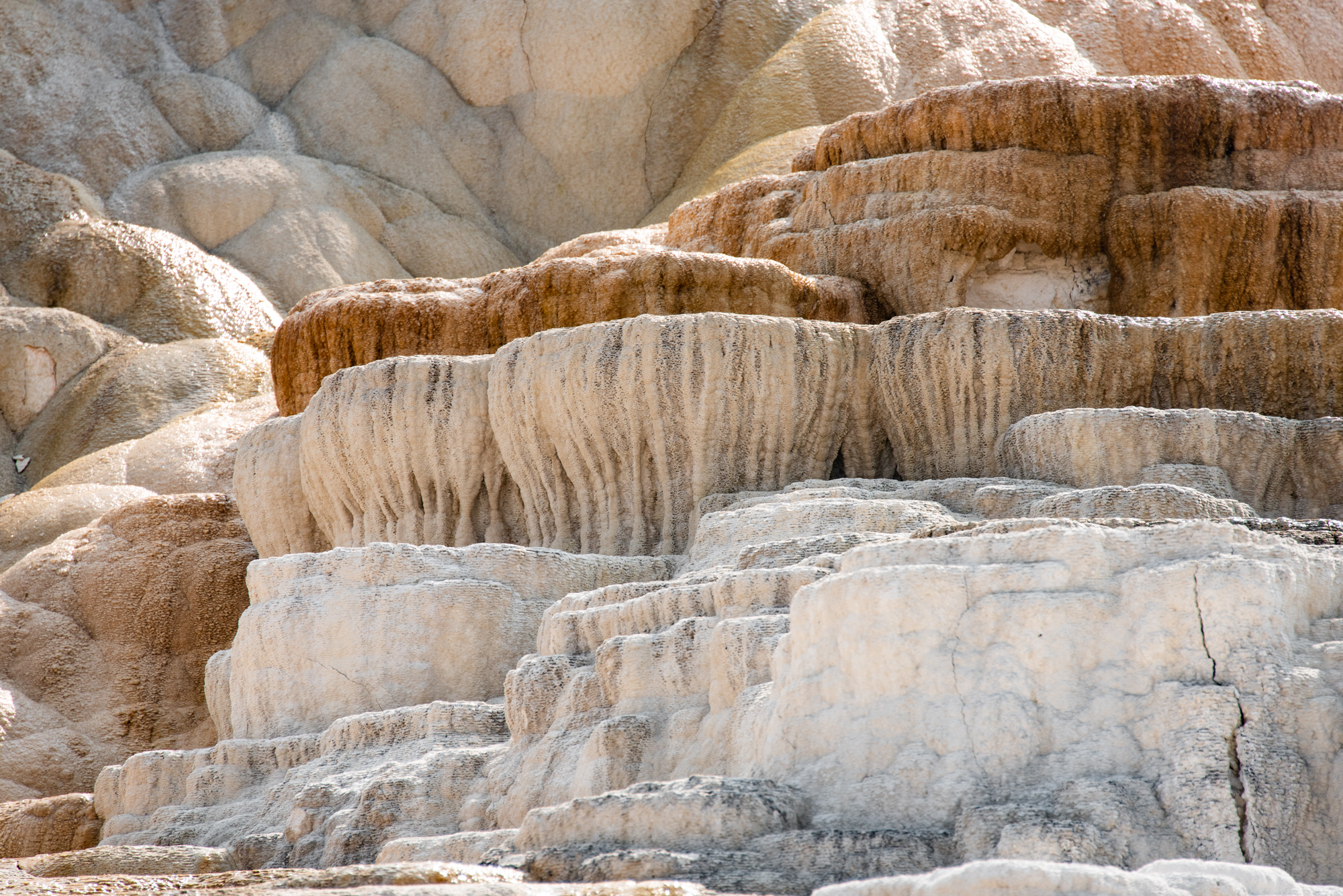
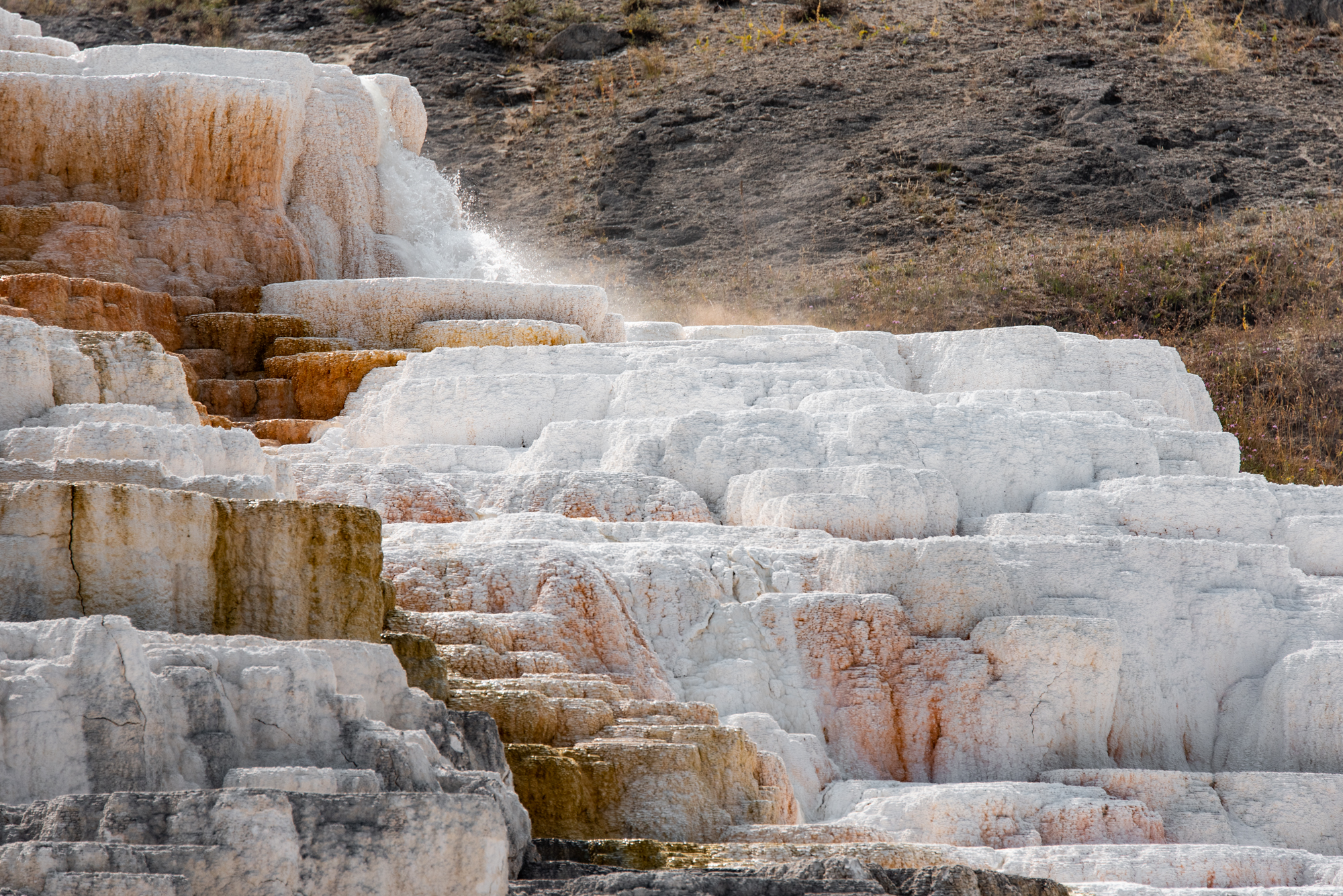
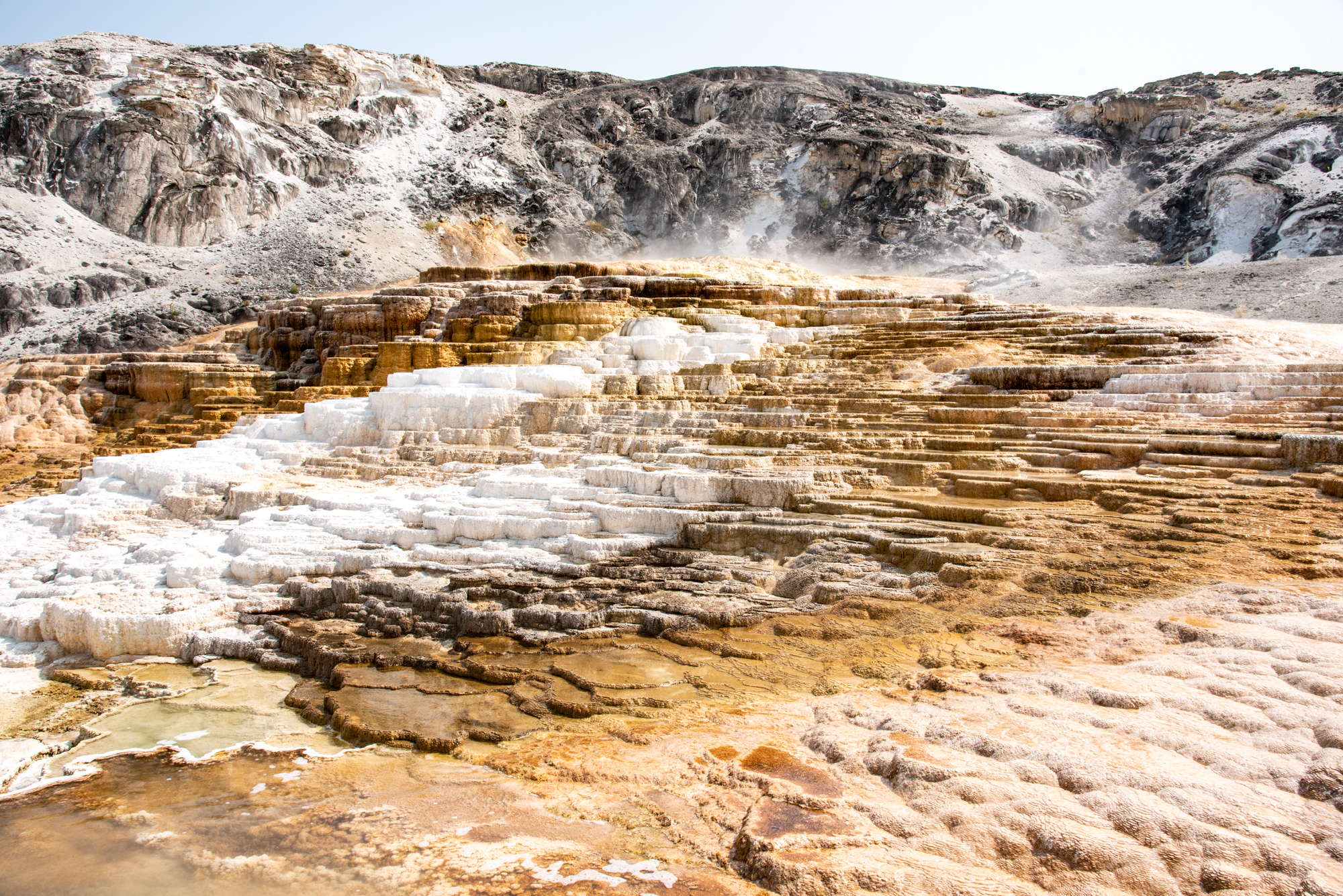
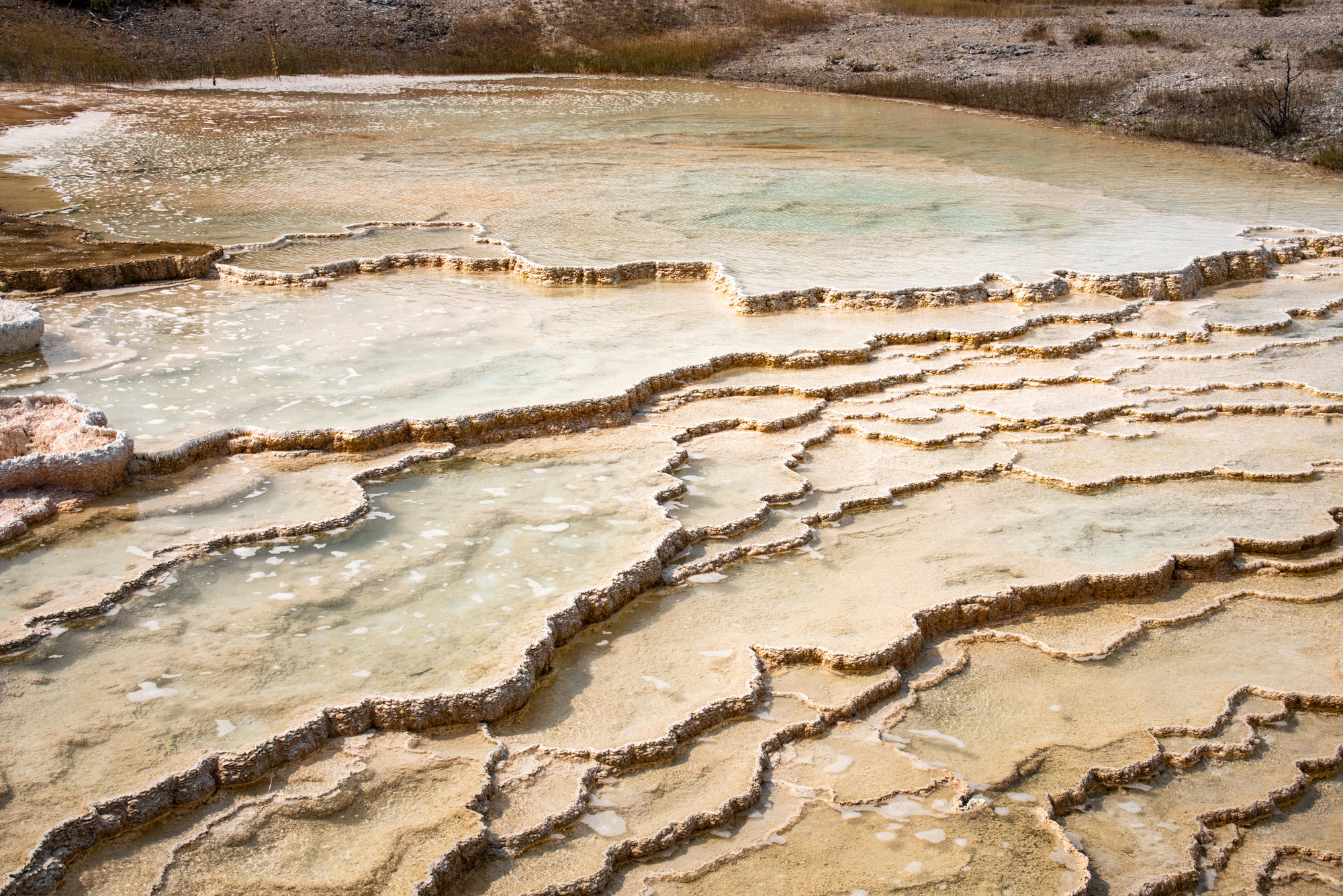
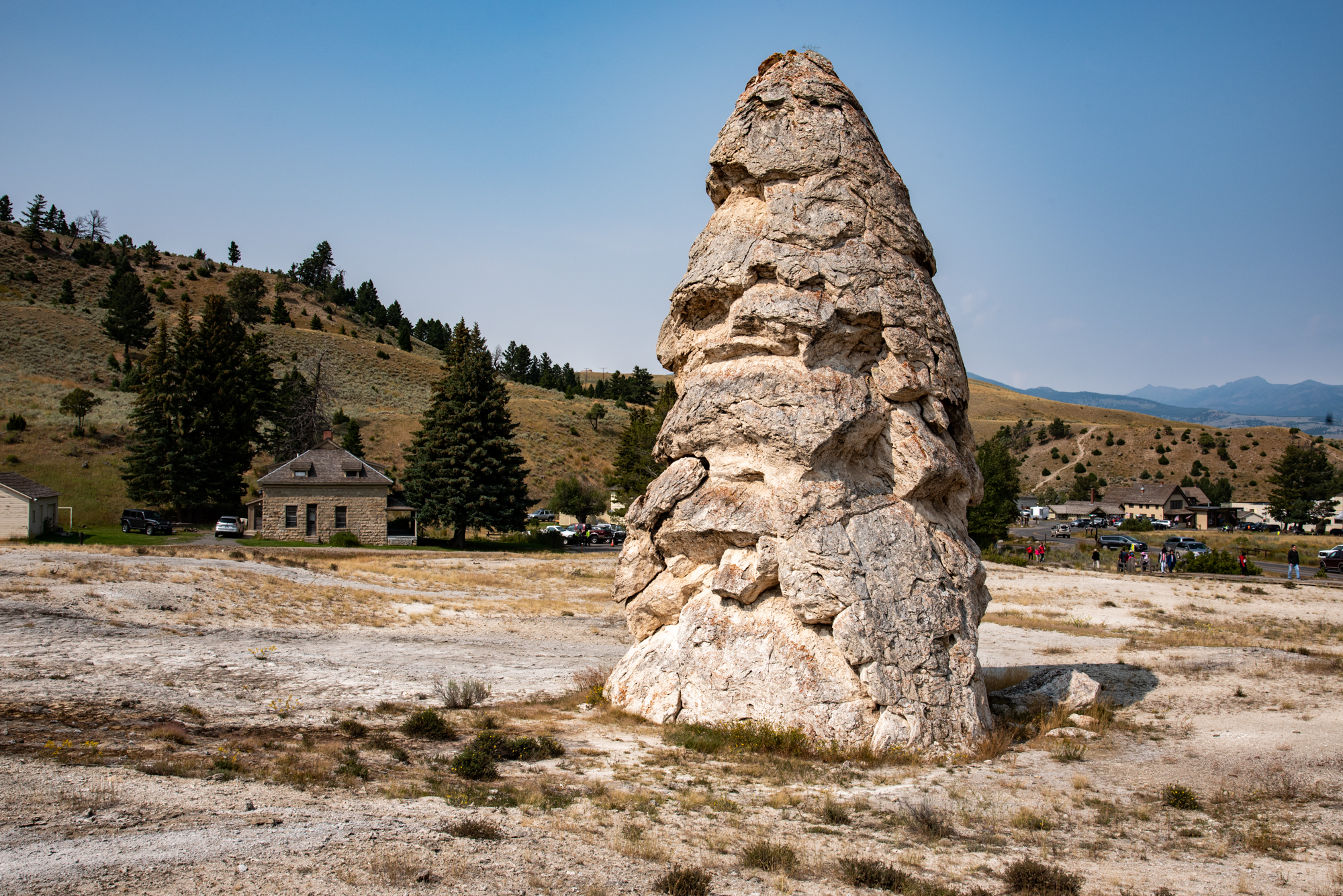
The boardwalks connect both the Upper and Lower Terraces, making it easy to explore the entire area on foot. Unlike the colorful pools found elsewhere in Yellowstone, Mammoth is dominated by layered white and gray travertine formations that look almost sculpted.
Water trickles over many of the terraces, constantly reshaping the landscape. It's a completely different look from the rest of Yellowstone's geothermal areas and well worth seeing.
West Thumb Geyser Basin
West Thumb was our first geothermal stop as we entered from the south side of the park, and it makes quite an introduction.
The boardwalk follows the shoreline of Yellowstone Lake, where steaming springs sit just a few feet from the cold water. The contrast between the enormous lake and the boiling geothermal features is fascinating.
Abyss Pool immediately caught our attention with its deep sapphire-blue water. At more than 50 feet deep, it's one of the most striking pools in the basin.
Fishing Cone was another memorable stop. According to park history, anglers once caught fish from Yellowstone Lake and cooked them in the boiling spring before that practice was banned. Whether or not you'd want to try it today, it's one of Yellowstone's more entertaining historical stories.


Mud Volcano
After visiting Lassen Volcanic National Park, I discovered that I love bubbling mud pots almost as much as colorful hot springs. I expected Yellowstone to be filled mostly with pools and geysers, so I was excited to find an entire area dedicated to mud pots and fumaroles.
The smell of sulfur here is especially strong. At times we found ourselves covering our noses, especially when a cloud of steam drifted across the boardwalk.
Dragon's Mouth Spring was easily our favorite feature. Hidden inside a small cave, the water surged in and out while deep gurgling sounds echoed from within. It really did sound like a dragon breathing beneath the ground.
Mud Volcano and Mud Geyser were equally mesmerizing. Watching thick gray bubbles slowly swell and burst never seemed to get old.


Sour Lake was another unusual stop. At first glance it looked like an ordinary pond, but small bubbles rising to the surface, the warm air, and the unmistakable sulfur smell quickly reminded us that this was anything but ordinary.
Artist Paint Pots


We almost missed Artist Paint Pots. We had originally planned to visit but ran out of time. Later, after seeing photos in a campground handout, we decided we had to fit it into our final morning before driving back to Salt Lake City.
The early start paid off. We had the trail almost entirely to ourselves and enjoyed chatting with a friendly ranger along the way. The short 0.6-mile trail winds through forest before opening onto bubbling mud pots, colorful springs, and a scenic overlook. Watching the mud bubbles slowly inflate and pop was worth the extra stop alone.
Grand Prismatic Spring
Grand Prismatic Spring is Yellowstone's most famous geothermal feature, and it absolutely lives up to the hype.
At roughly 370 feet across and more than 120 feet deep, it's difficult to appreciate its size until you see it in person. The vivid blue center fades into brilliant rings of orange, yellow, and green created by heat-loving microorganisms.
We started with the overlook trail, which provides the iconic aerial view of the spring. It's a busy hike, but it's easily the best place to appreciate the spring's incredible size and colors.
Afterward, we walked the boardwalk, where the experience becomes much more intimate. Instead of seeing the entire spring, you're close enough to admire the colorful microbial mats and watch steam drift across the water.
Expect plenty of sulfur along the way and hope the wind is working in your favor.
Nearby, Opal Pool, Turquoise Pool, and Excelsior Geyser Crater are all worth slowing down for as well.


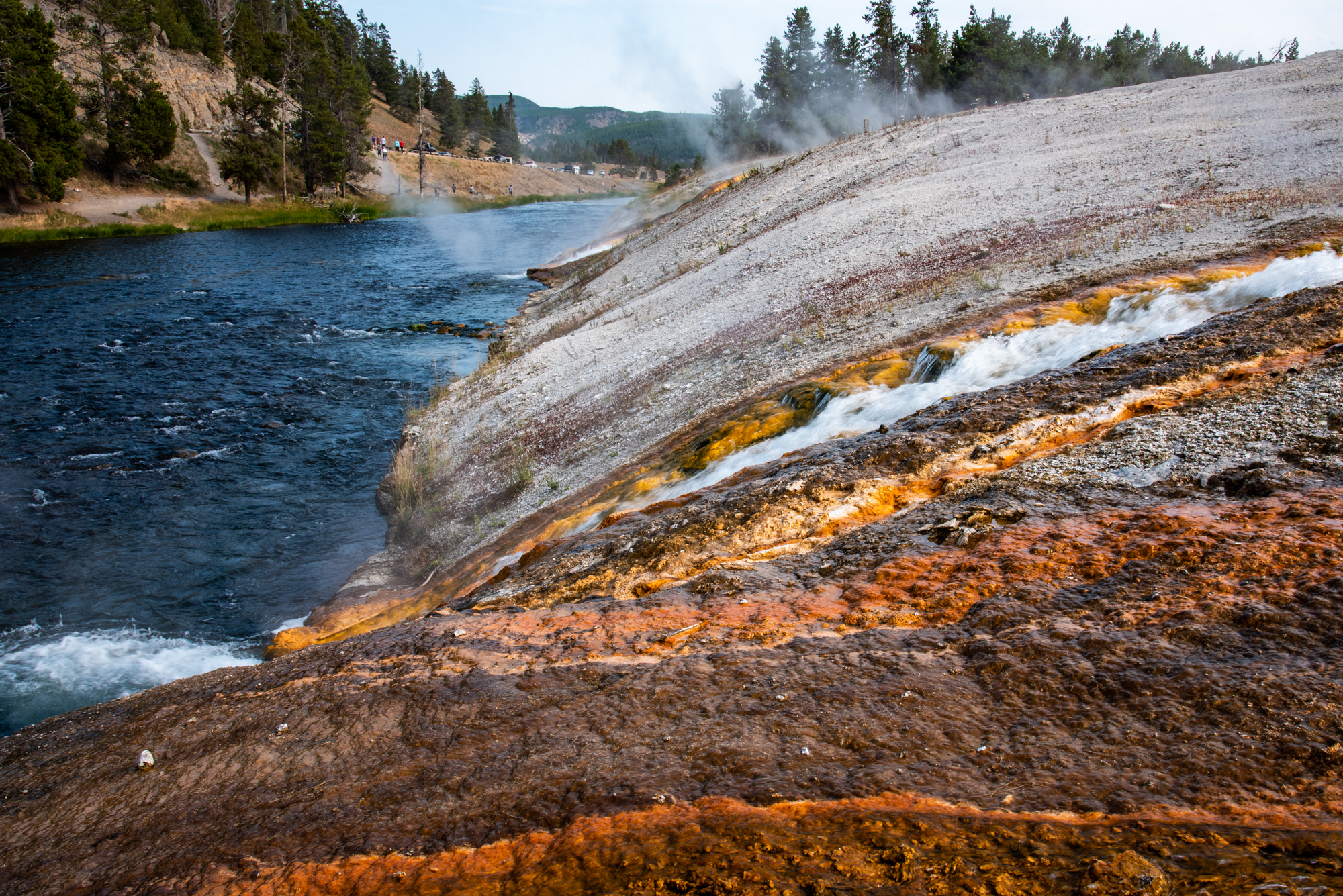
Please remember to stay on the boardwalks throughout this area. The ground surrounding these features is extremely fragile, and the water beneath the surface can be dangerously hot.
Respecting these remarkable places helps protect both the park and everyone who visits it.
Biscuit Basin


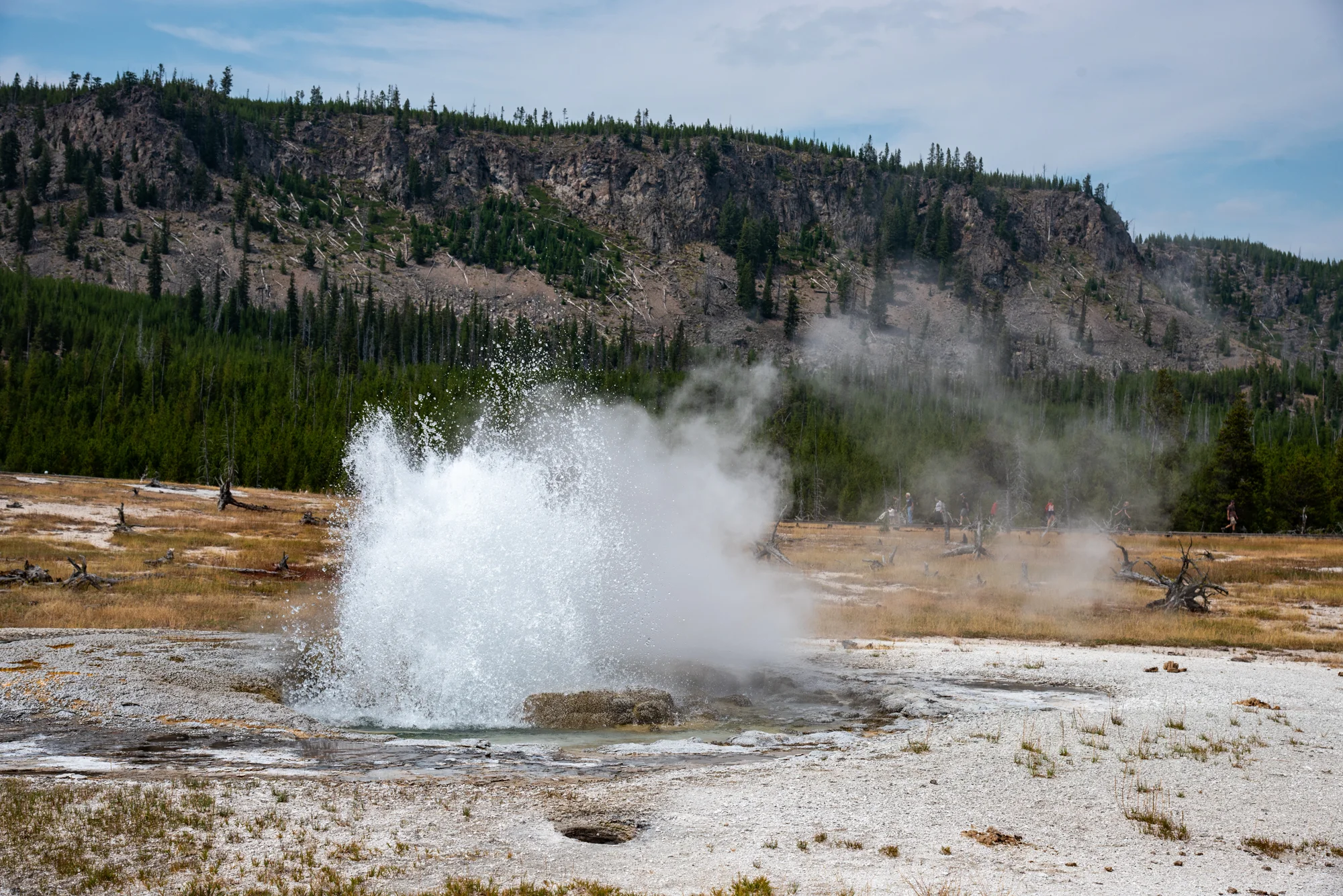


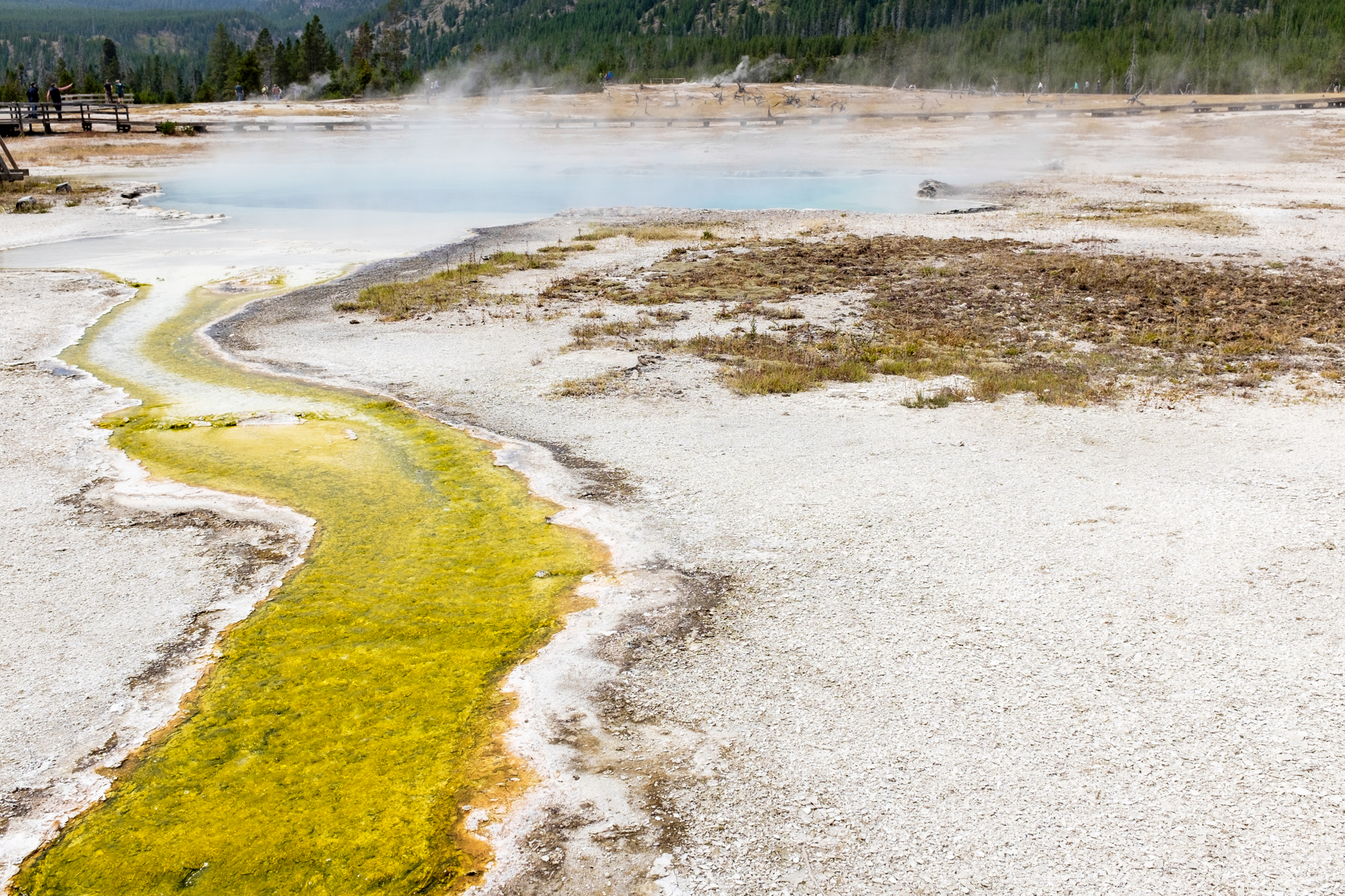

Biscuit Basin is a smaller geothermal area, but it's well worth a stop if you're exploring this part of the park.
A short boardwalk loops past colorful pools, active geysers, and vibrant microbial mats. Sapphire Pool immediately catches your eye with its intense blue color, while the yellow tones of Mustard Spring provide a striking contrast.
We also caught Jewel Geyser putting on a couple of small eruptions while we explored, making it a fun place to linger for a few minutes.

Yellowstone's geothermal areas became some of my favorite places in the entire park. Every basin had its own personality, and no two felt exactly alike.
As incredible as these places are, they're also surprisingly fragile. The park has seen increasing visitation over the years, and these unique landscapes depend on visitors respecting the rules. Stay on the boardwalks, give the geothermal features the space they deserve, and leave everything exactly as you found it.
Yellowstone is an amazing place, and with a little care from all of us, it will continue to inspire visitors for generations to come.