
Lomography released an unusual color-negative film a few years ago called LomoChrome Purple XR 100–400. Its color shifts were inspired by the strange, surreal appearance of infrared photography, but the film created its effects without infrared sensitivity or a special filter.
We had shot a couple of 35mm rolls, and it had quickly become one of our favorite films when we wanted to experiment. Familiar landscapes emerged from the scans in unexpected combinations of violet, blue, cyan, and green.

Choosing an ISO
LomoChrome Purple could be exposed anywhere from ISO 100 to 400, with the chosen setting influencing its colors, contrast, and grain. I usually stayed near ISO 400 because it seemed to produce the strongest colors and contrast.
Setting the camera around ISO 200 still created a beautiful palette, especially in bright sunlight, but the colors were a little softer. The character of the photographs also changed considerably with the light. Strong sunlight and deep shadows produced dramatic contrast, while gentle sunset light spread a softer glow across the image.


The photographs above were exposed at ISO 100 in the upper left, ISO 200 in the upper right and lower left, and ISO 400 in the lower right. The differences were dramatic, especially considering that all four photographs came from the same type of film.


Easy Processing, Unpredictable Results
Despite its unusual appearance, LomoChrome Purple was easy to handle. It did not require a filter, although adding one offered another way to experiment with the colors.
It also did not need specialized processing. This was standard C-41 color-negative film, so we could send it to the same lab that developed our other color rolls. We used The Darkroom for our developing and scans.



Photographing a Different Color Palette
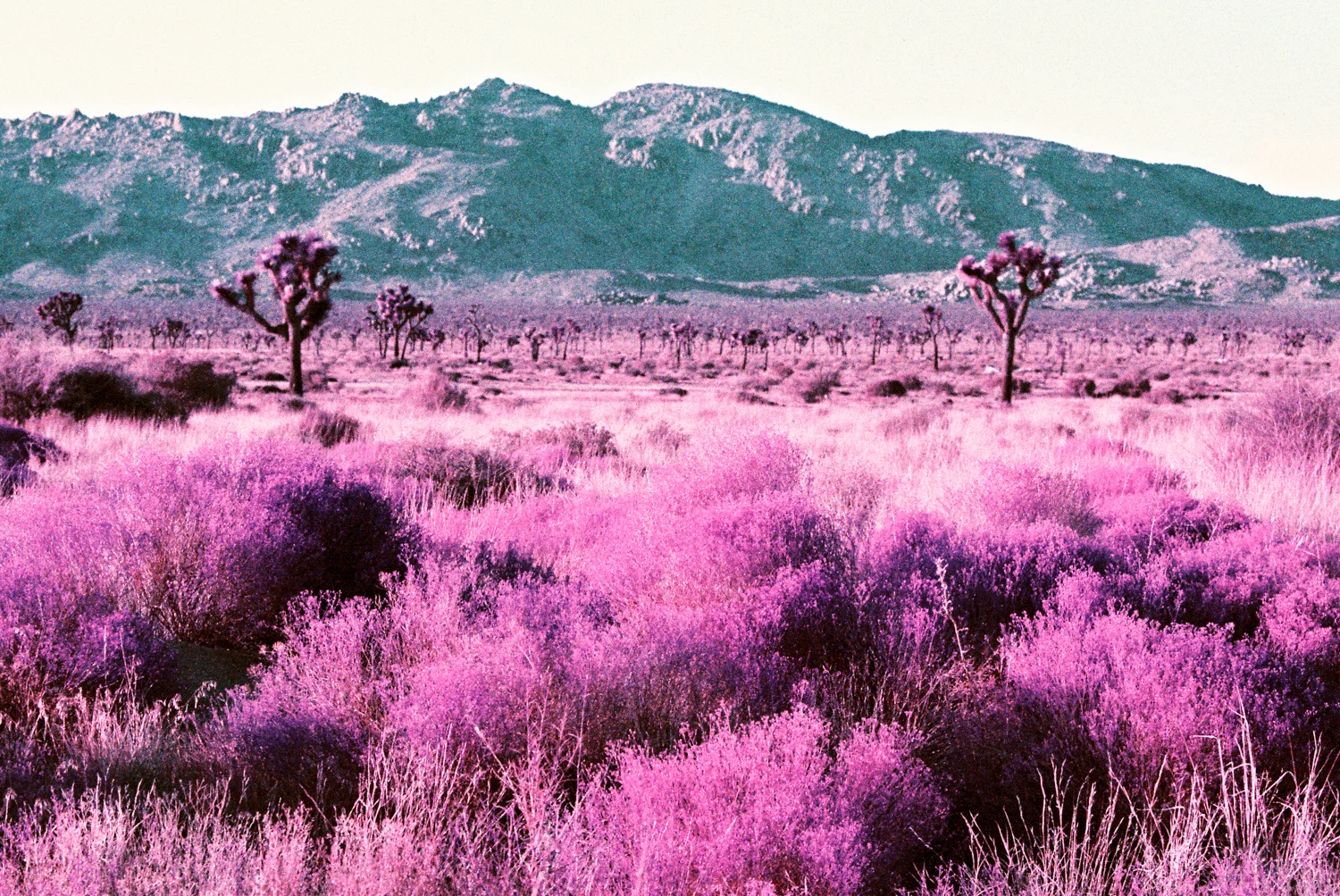
The color shifts were the reason to load this film. Greens became shades of purple and blue, yellows could move toward blue, and familiar blue skies often appeared cyan. Bright green foliage produced some of the most intense violet tones.
Leaves, grasses, and other plants were especially fun to photograph. A familiar patch of greenery could return from the lab looking almost alien, with purple foliage beneath a pale cyan sky.
The results were never entirely predictable because the original colors, exposure, and quality of the light all influenced the final image. That uncertainty was part of the fun. I could choose a scene because I thought I understood how the colors might shift, then receive a scan that looked completely different from what I had imagined.

LomoChrome Purple could sometimes be difficult to find, but we had good luck checking the Film Photography Project. Lomography, B&H Photo, and Adorama also carried it when supplies were available.
This is a really fun film to experiment with!
Note: Lomography has updated the LomoChrome Purple formula since these photographs were made. Current rolls may produce somewhat different colors and grain, although the film retains its ISO 100–400 range and standard C-41 processing.