
Pelagic Birding from Marina del Rey with LA Birders
Pelagic birding requires a certain tolerance for uncertainty. You can spend hours looking across a quiet ocean, then suddenly find yourself watching birds you would never encounter from land.
That was our day aboard the Spitfire on May 21, 2022. The eight-hour LA Birders pelagic departed from Marina del Rey and traveled through Redondo Canyon, along the Palos Verdes escarpment, and across the shipping lane to the 270 Bank.
The ocean seemed cooperative, with a gentle swell and long stretches of glassy water. Skies remained overcast through the morning before clearing on our return, although there was still plenty of seasickness aboard. Birds appeared in scattered pockets between long, quiet stretches of open water.
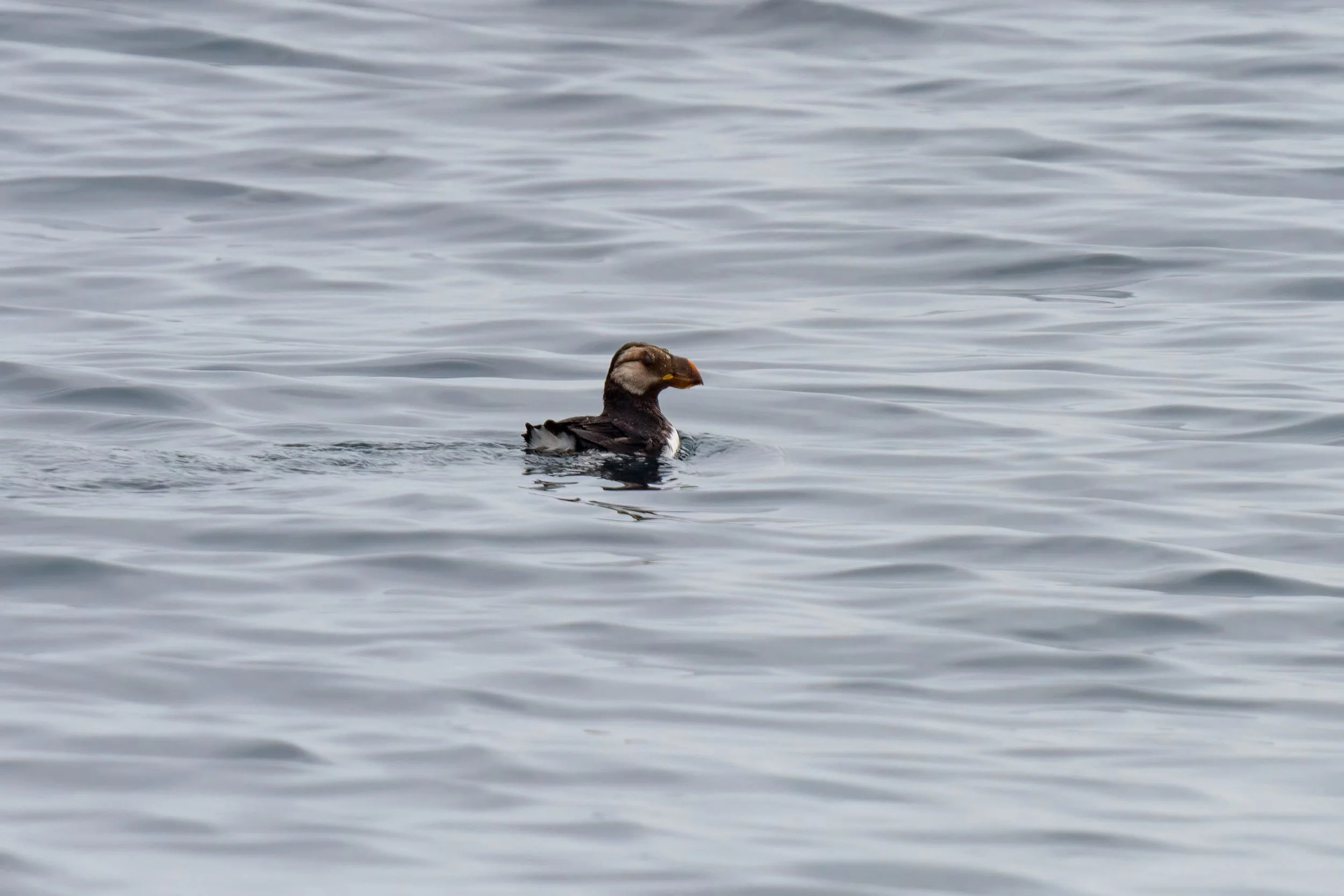
The Horned Puffin
The most memorable moment came at the 270 Bank, where we found a Horned Puffin floating calmly on the surface.
Horned Puffins normally live much farther north, making this an extremely rare bird in Los Angeles County waters. Excitement swept across the boat as everyone raised binoculars and cameras. The puffin remained on the water long enough for excellent views, seemingly unconcerned by the boat full of birders watching it.
That encounter alone could have made the trip worthwhile.
Shearwaters and Fulmars
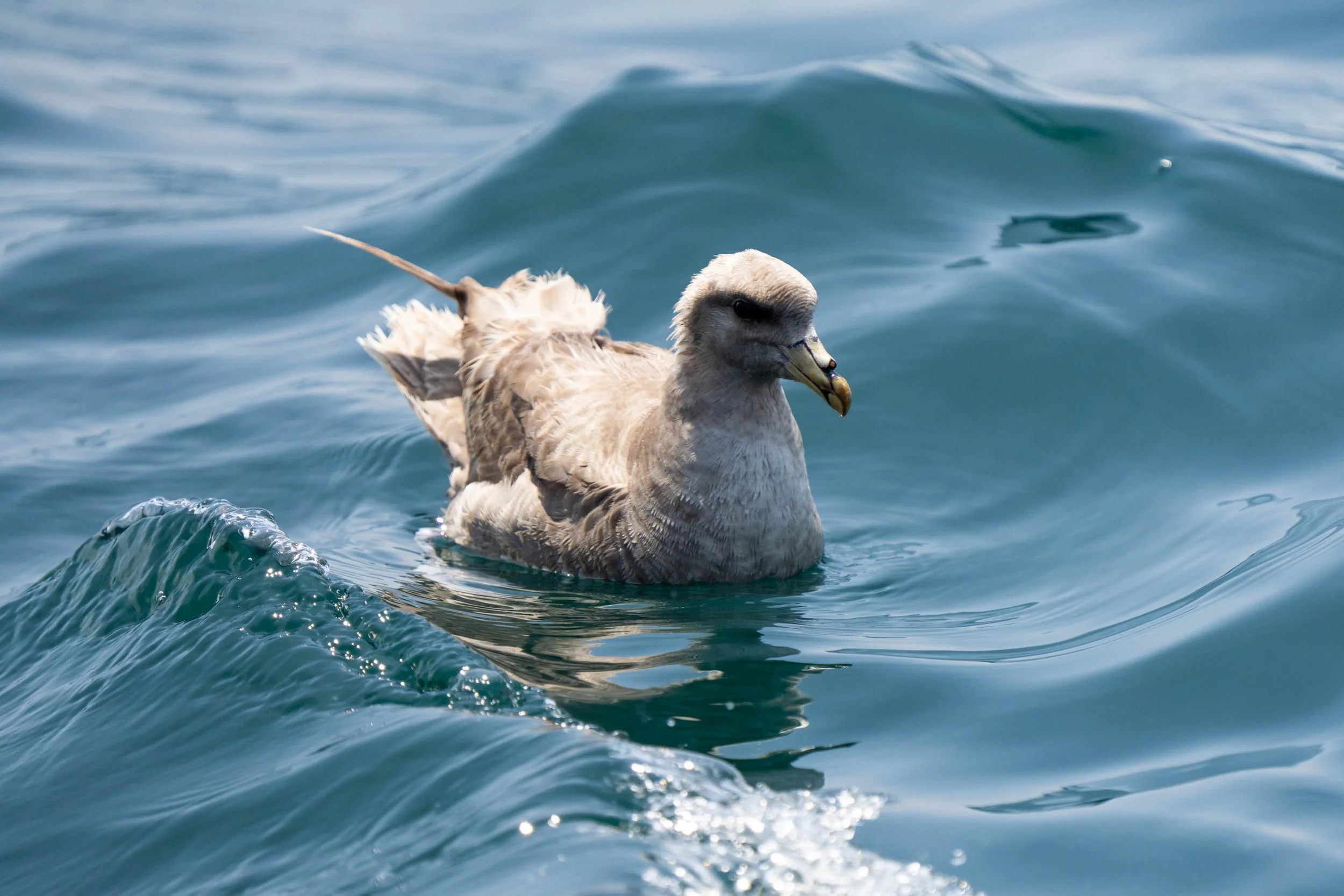
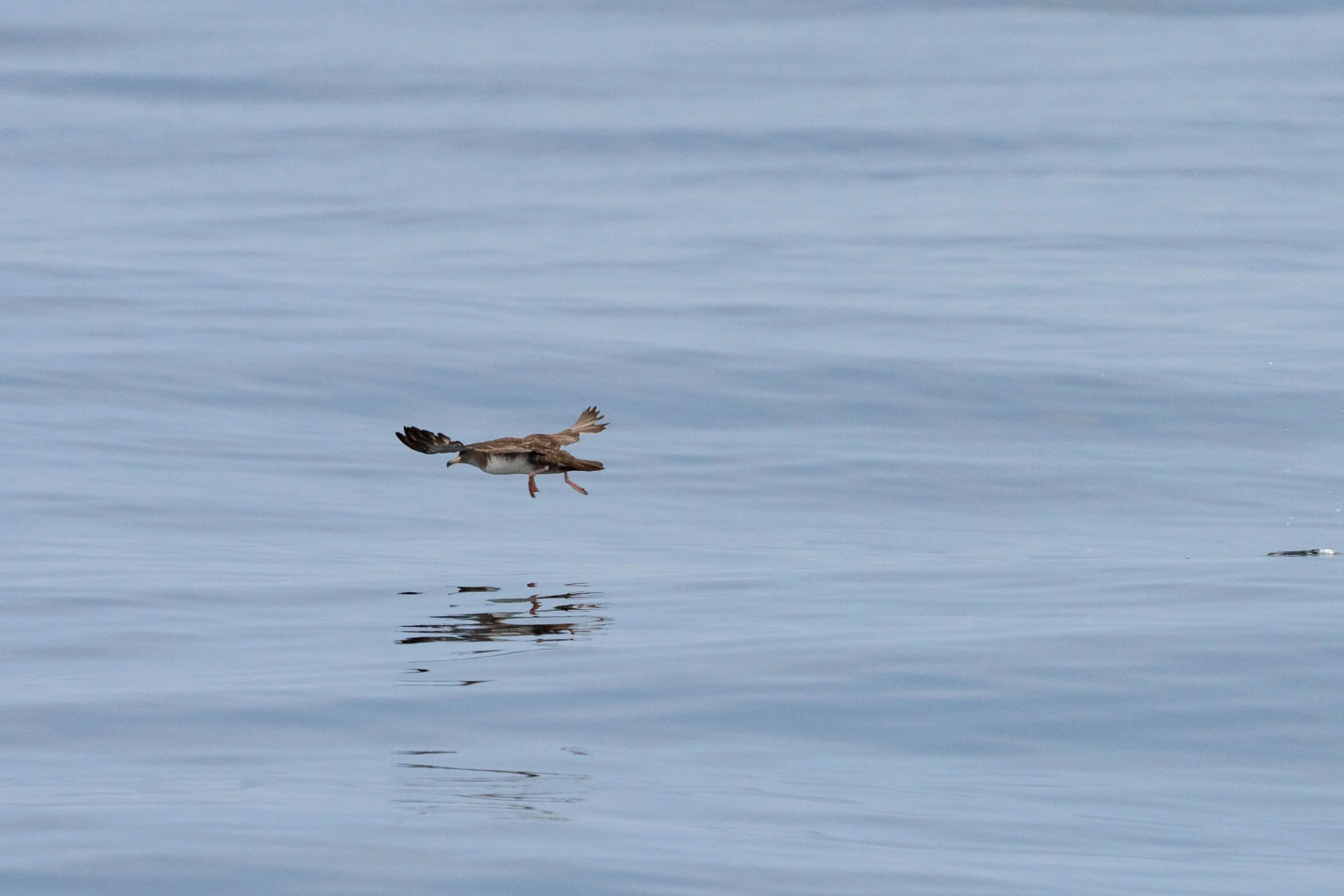
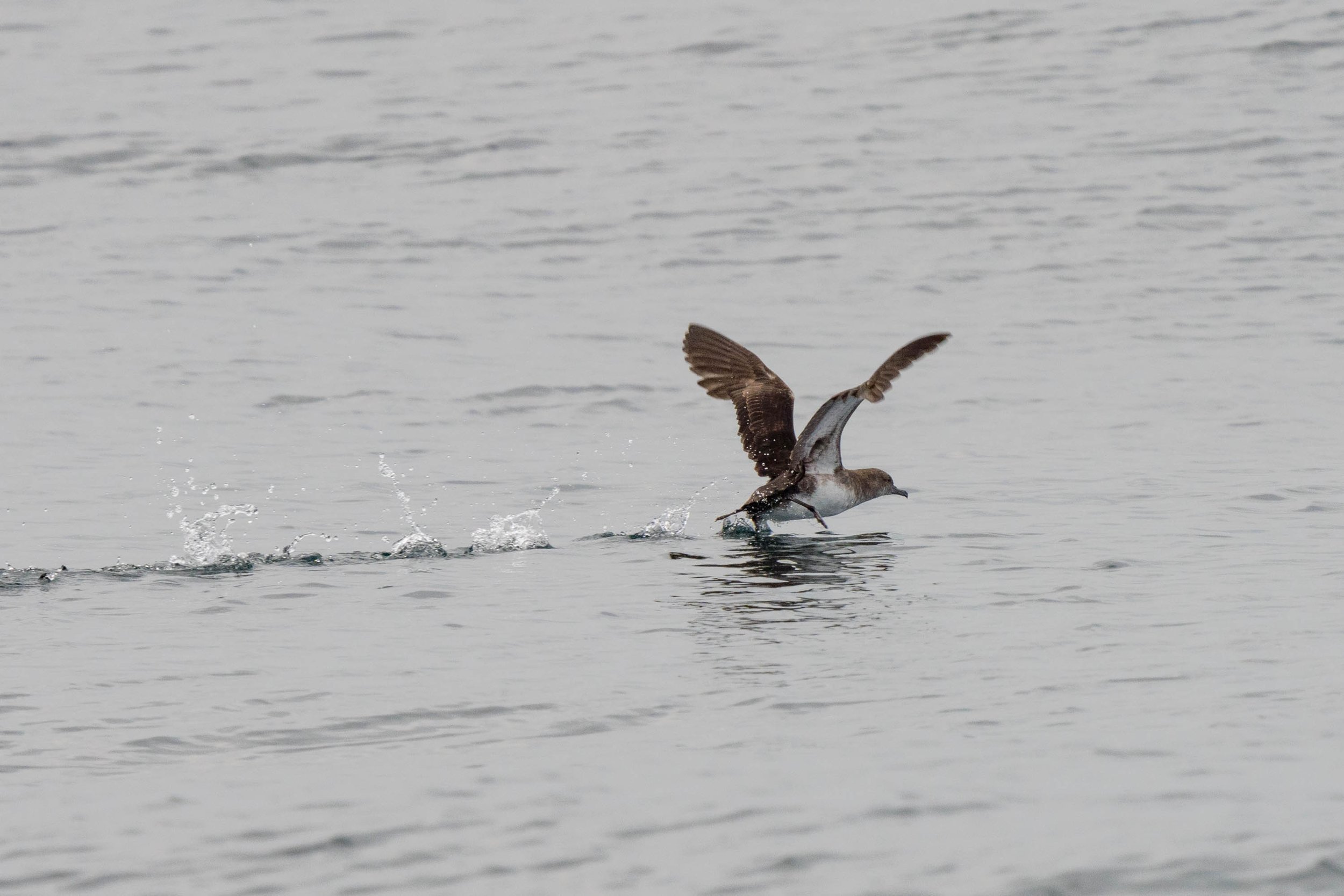
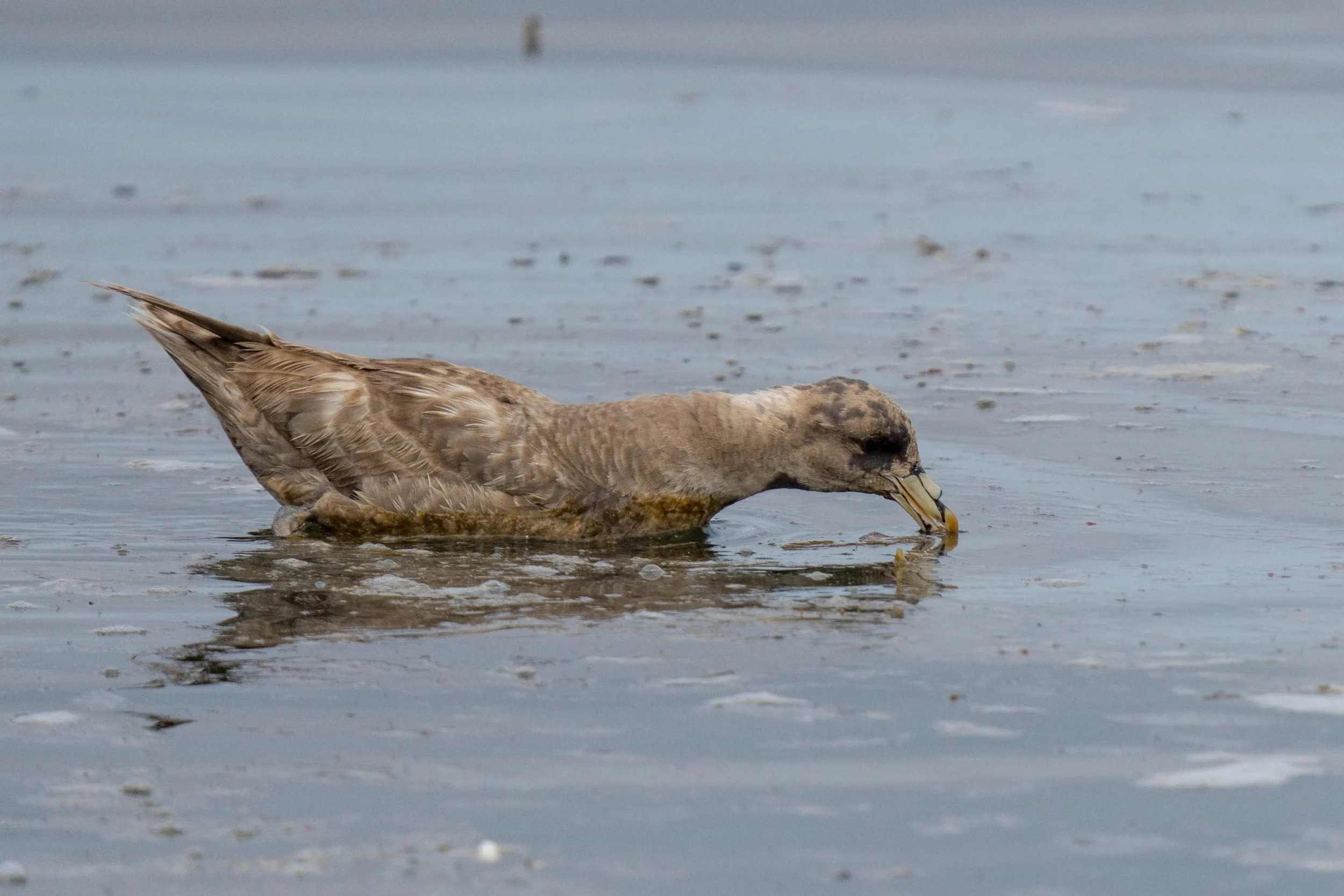
Black-vented Shearwaters were the most numerous shearwaters of the day, skimming low over the water with quick wingbeats and short glides. We also saw migrating Sooty Shearwaters, Northern Fulmars, and a lone Manx Shearwater, a much less expected bird in California waters.
Auklets, Murrelets, and Murres
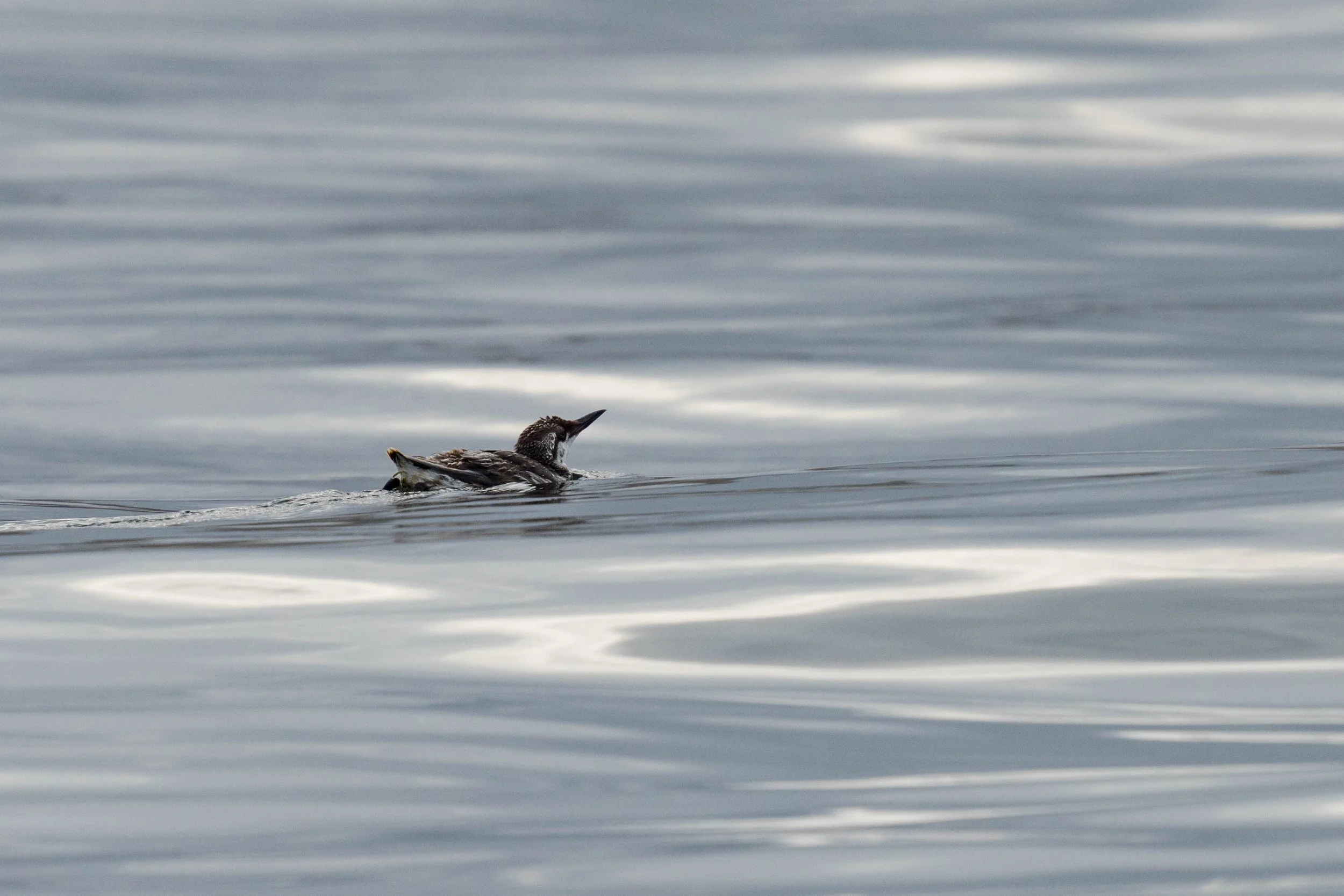
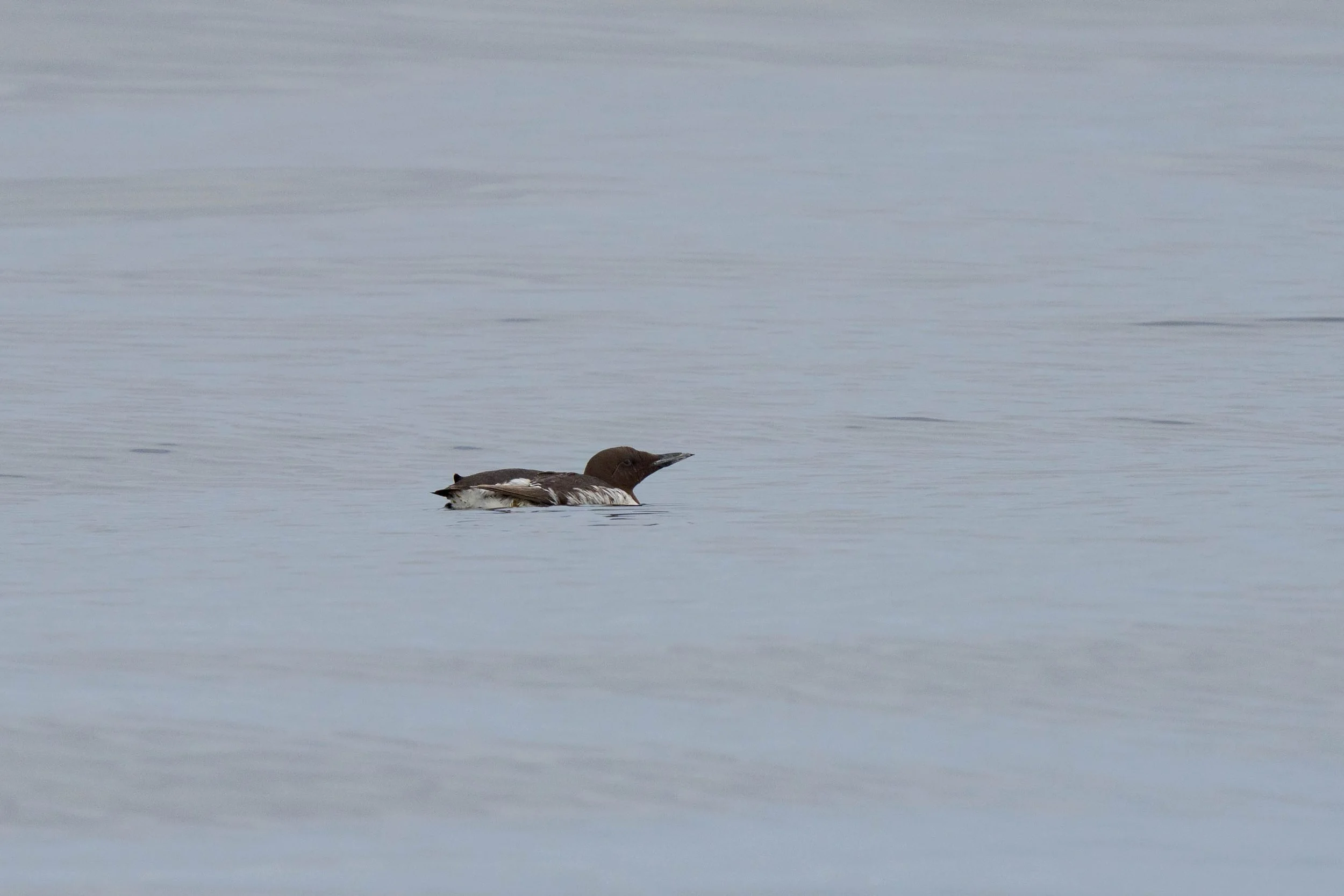
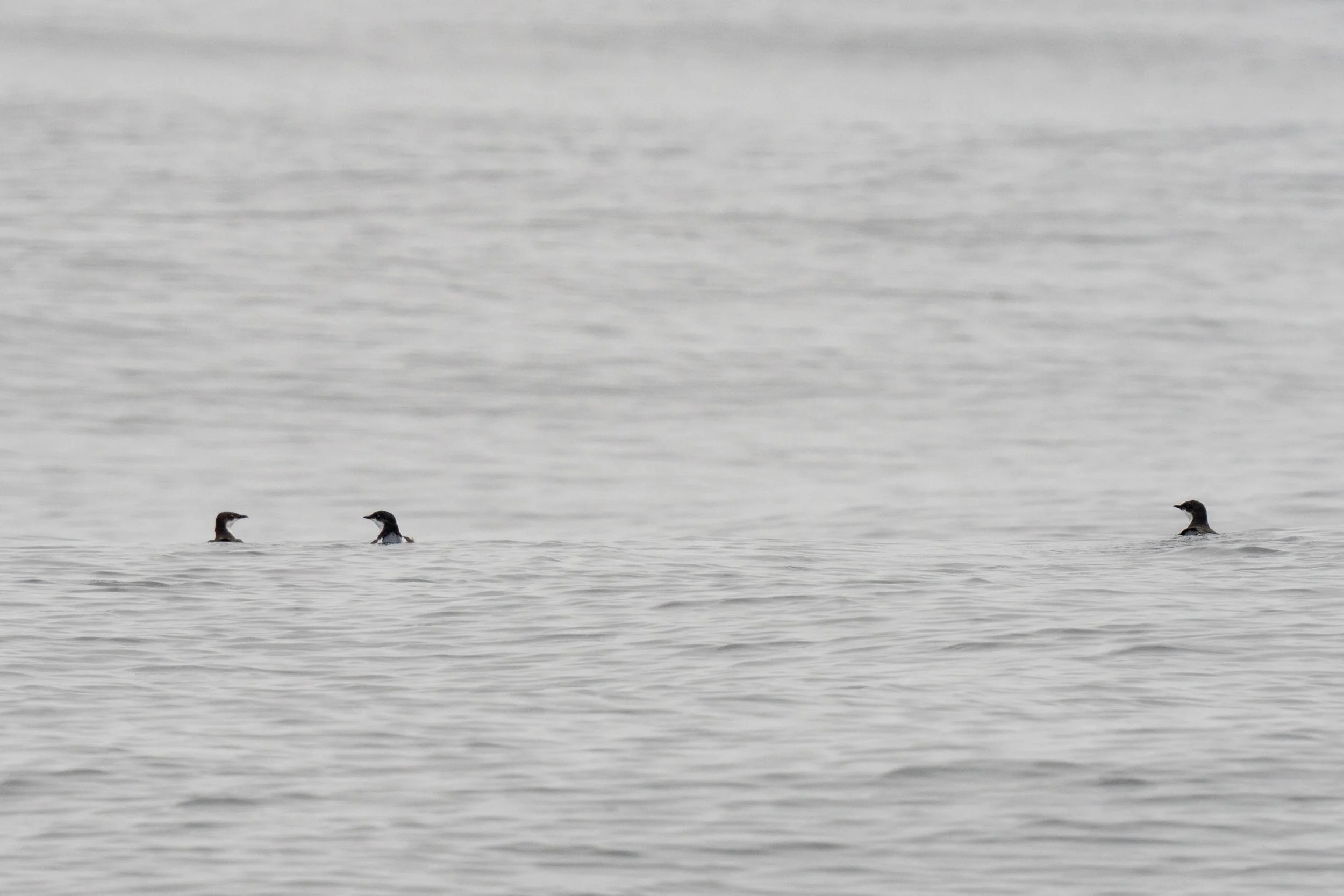
The alcids were another highlight. Cassin’s Auklets sat low on the water and often lifted away as the boat approached. We also found Scripps’s Murrelets and Common Murres, along with our remarkable Horned Puffin.
Phalaropes and Jaegers
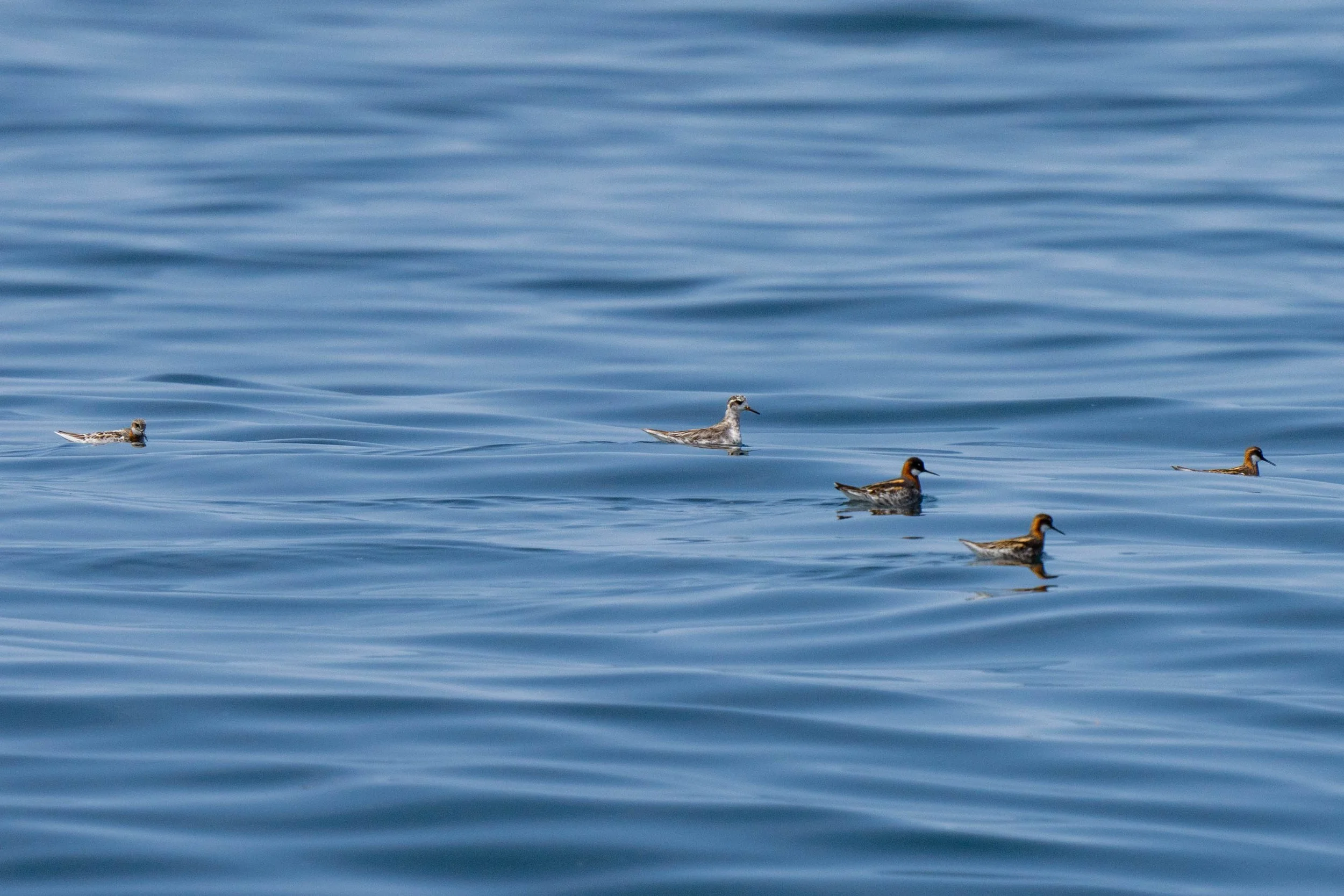
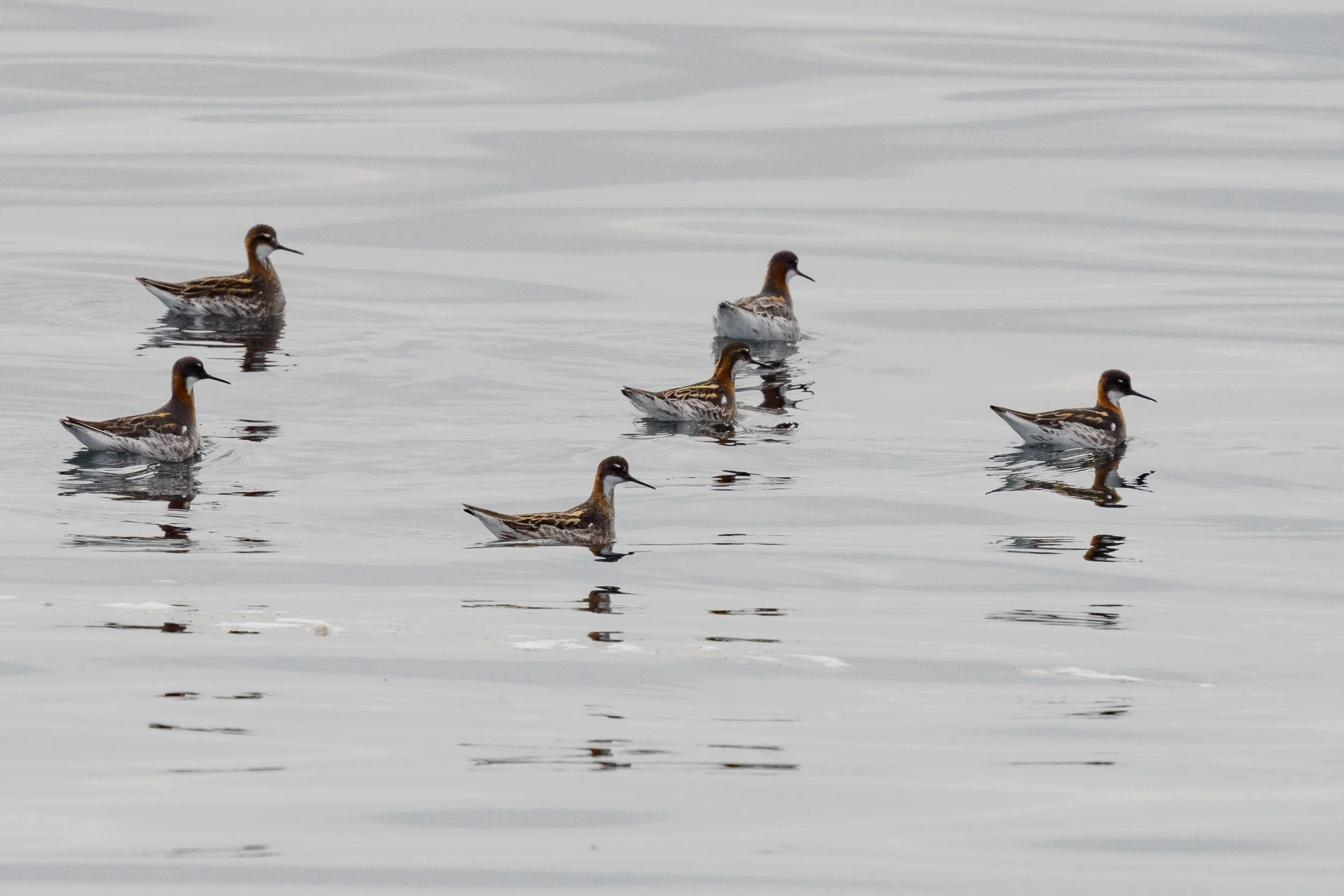
Red-necked Phalaropes appeared throughout the day, with some spinning in tight circles as they stirred up tiny prey. A Red Phalarope in rich breeding plumage was especially beautiful. A couple of Pomarine Jaegers also passed the boat, bringing a quick burst of excitement before continuing over the water.
Birds Along Palos Verdes
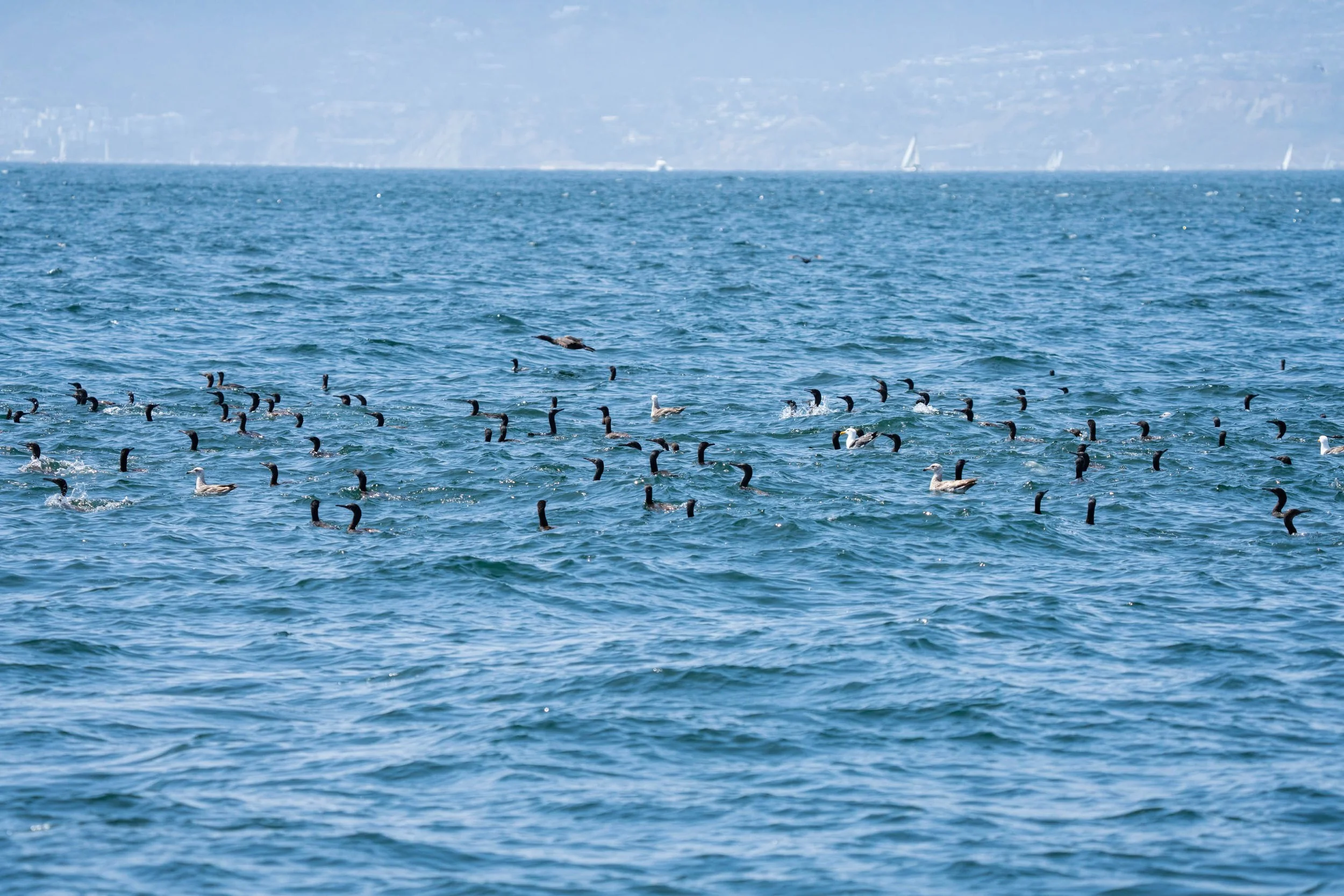
The nearshore portion of the trip brought us closer to the rocky habitat along Palos Verdes. Black Oystercatchers stood on the rocks with a lone Black Turnstone, while Brandt’s and Double-crested Cormorants gathered in impressive numbers.
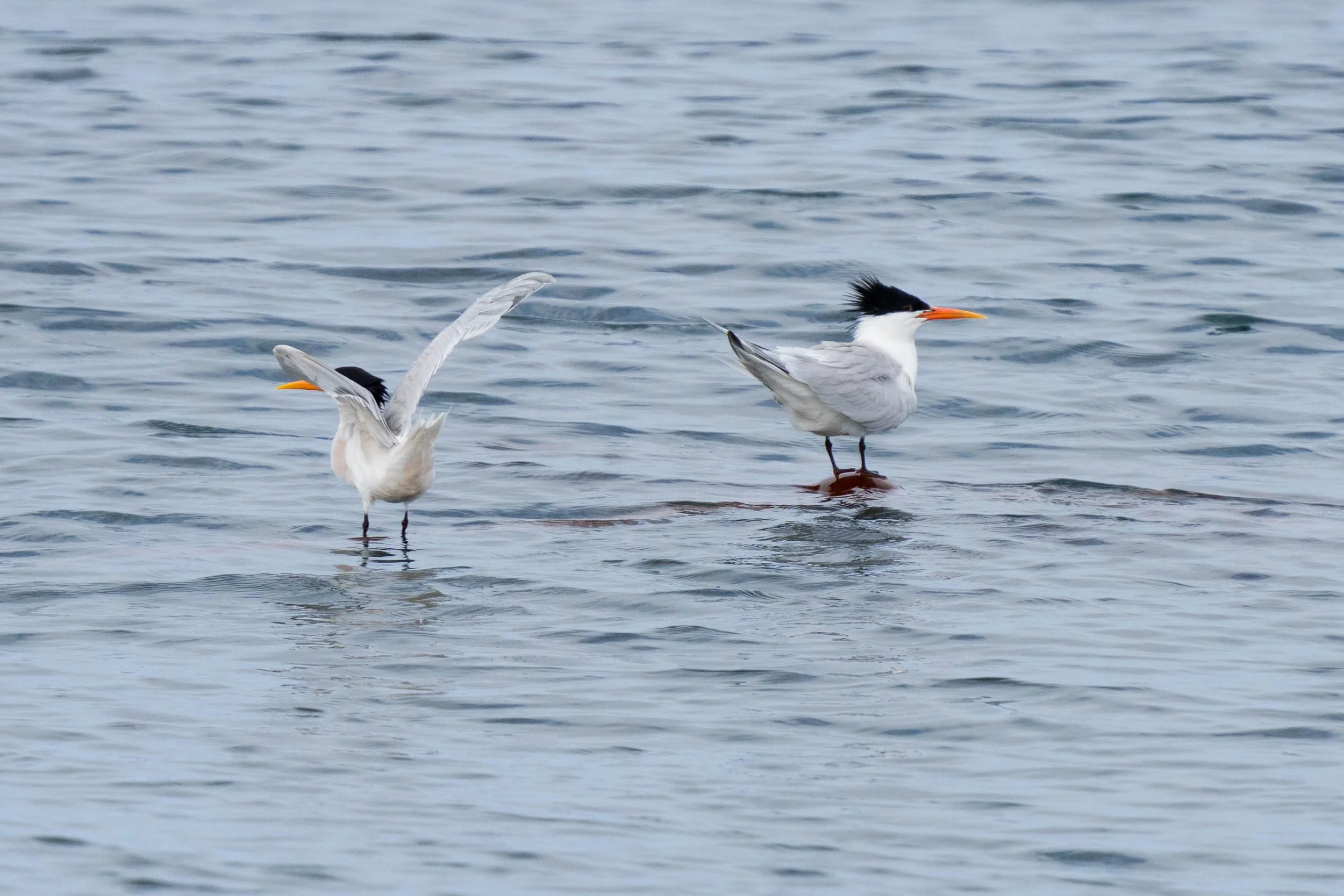
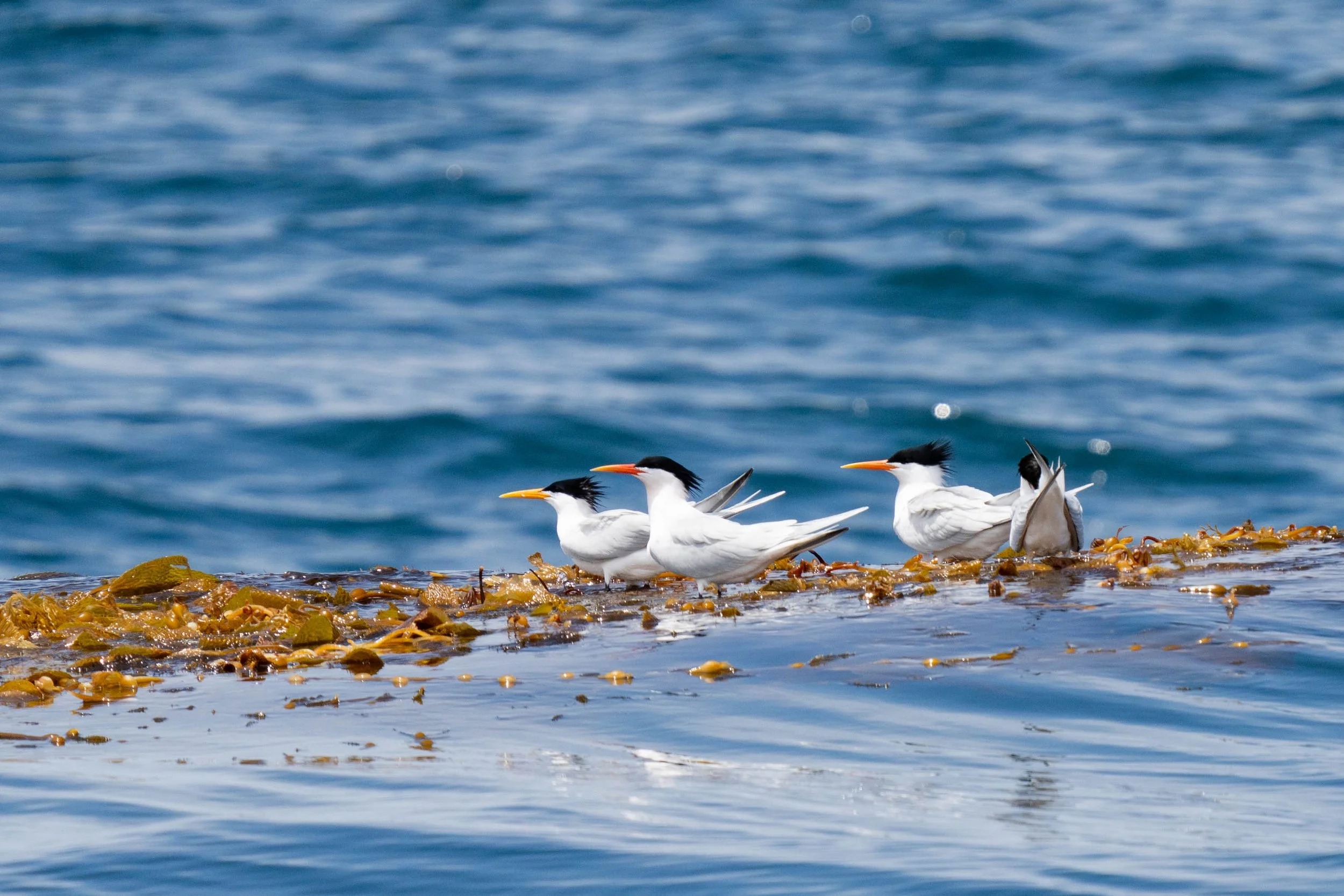
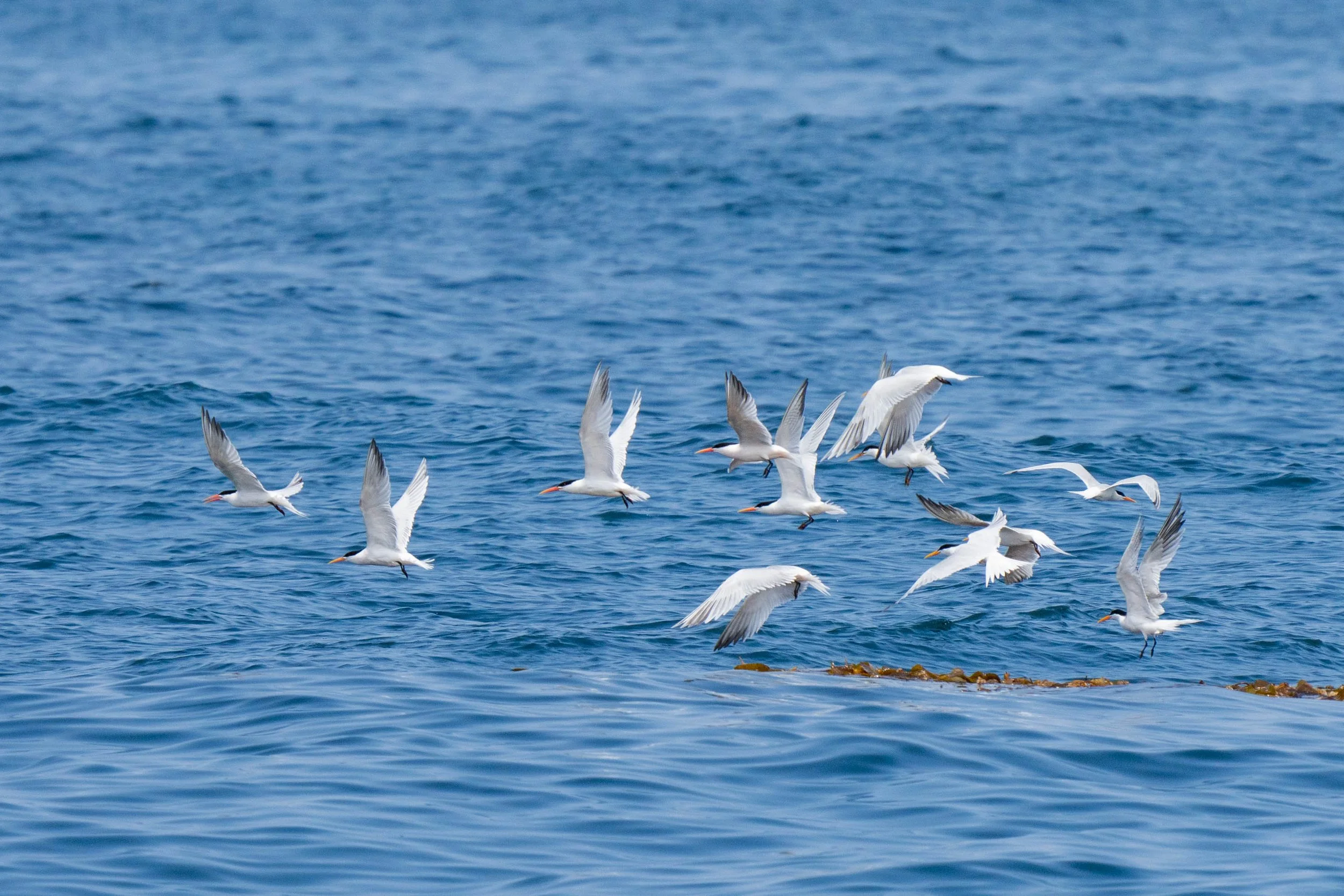
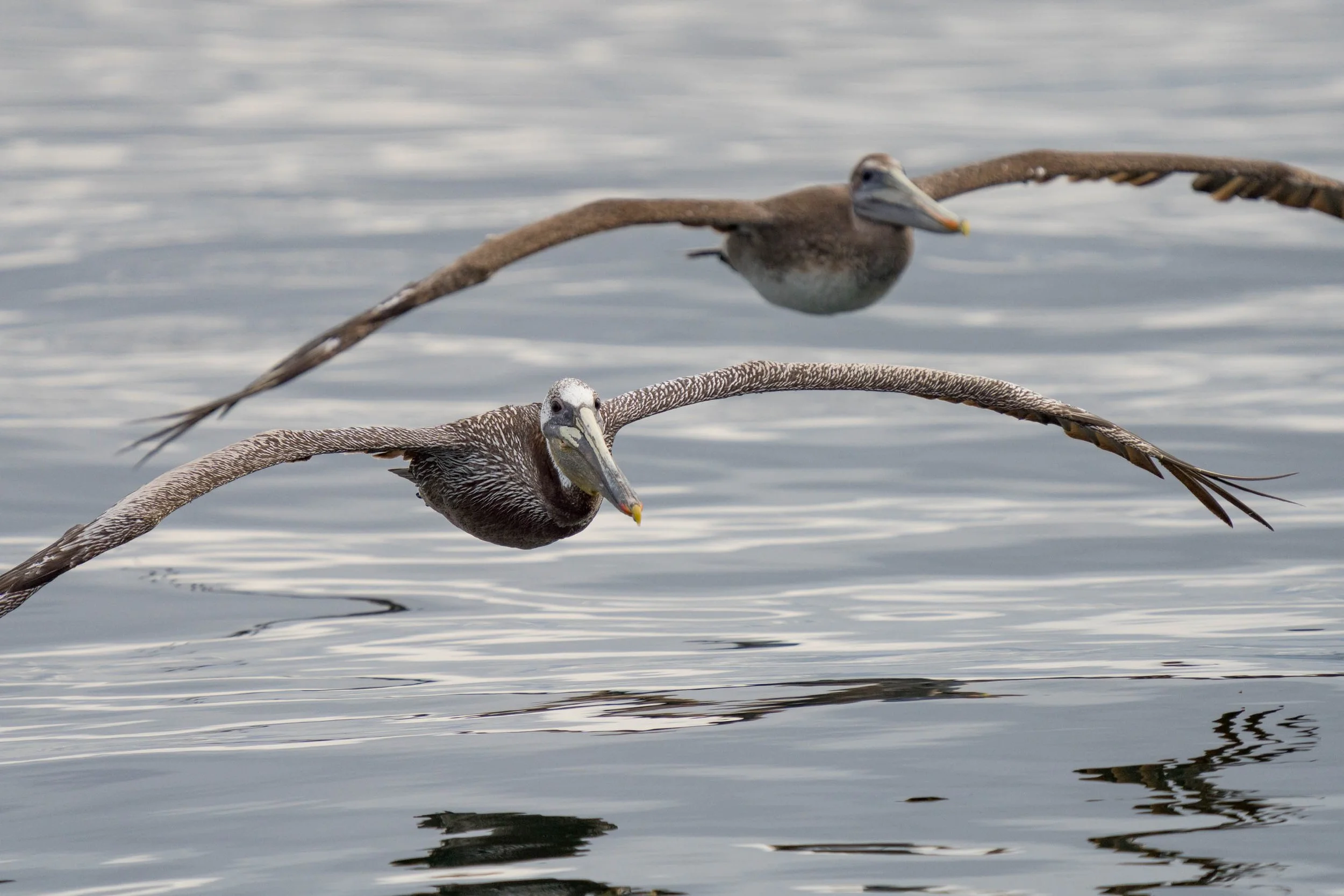
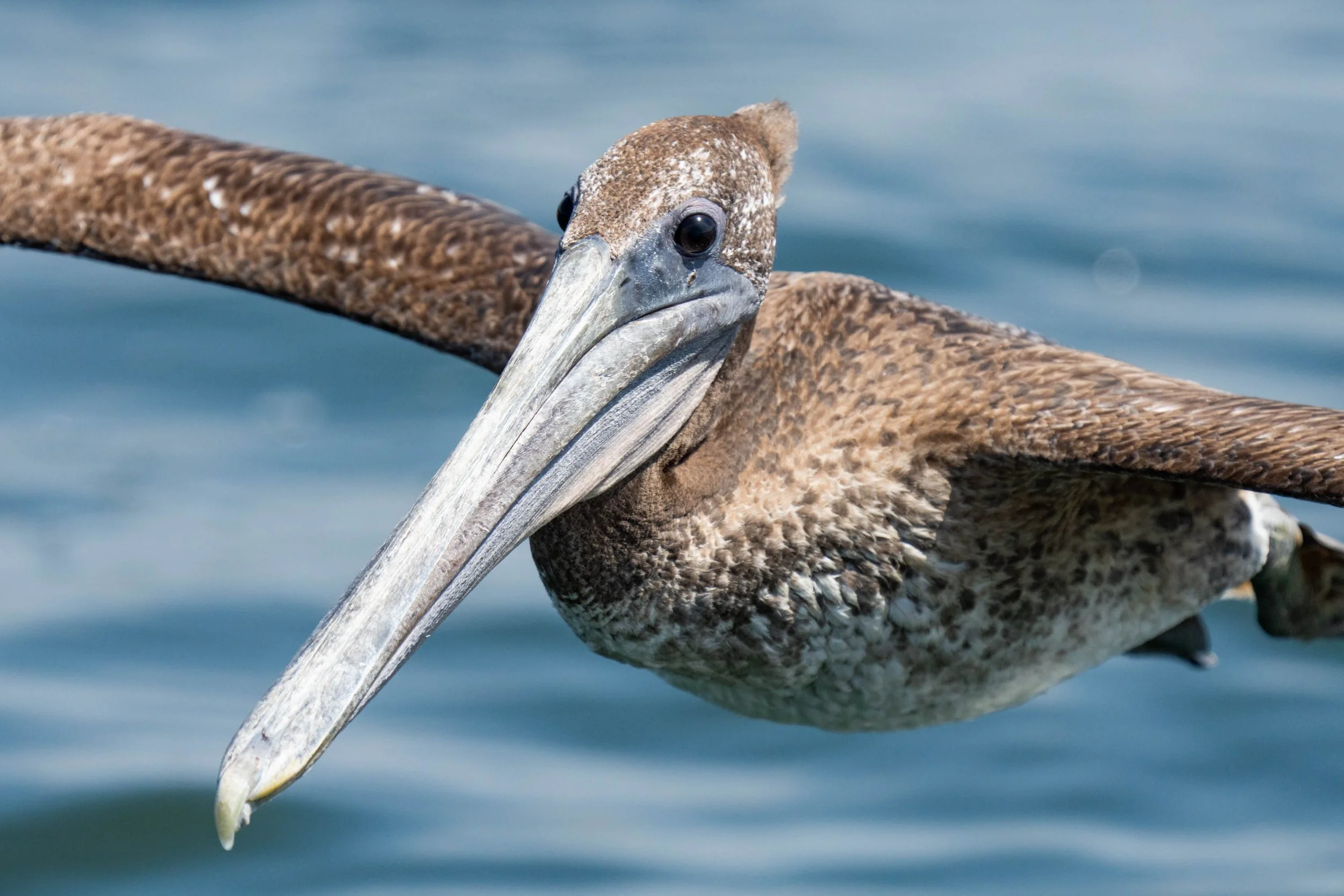
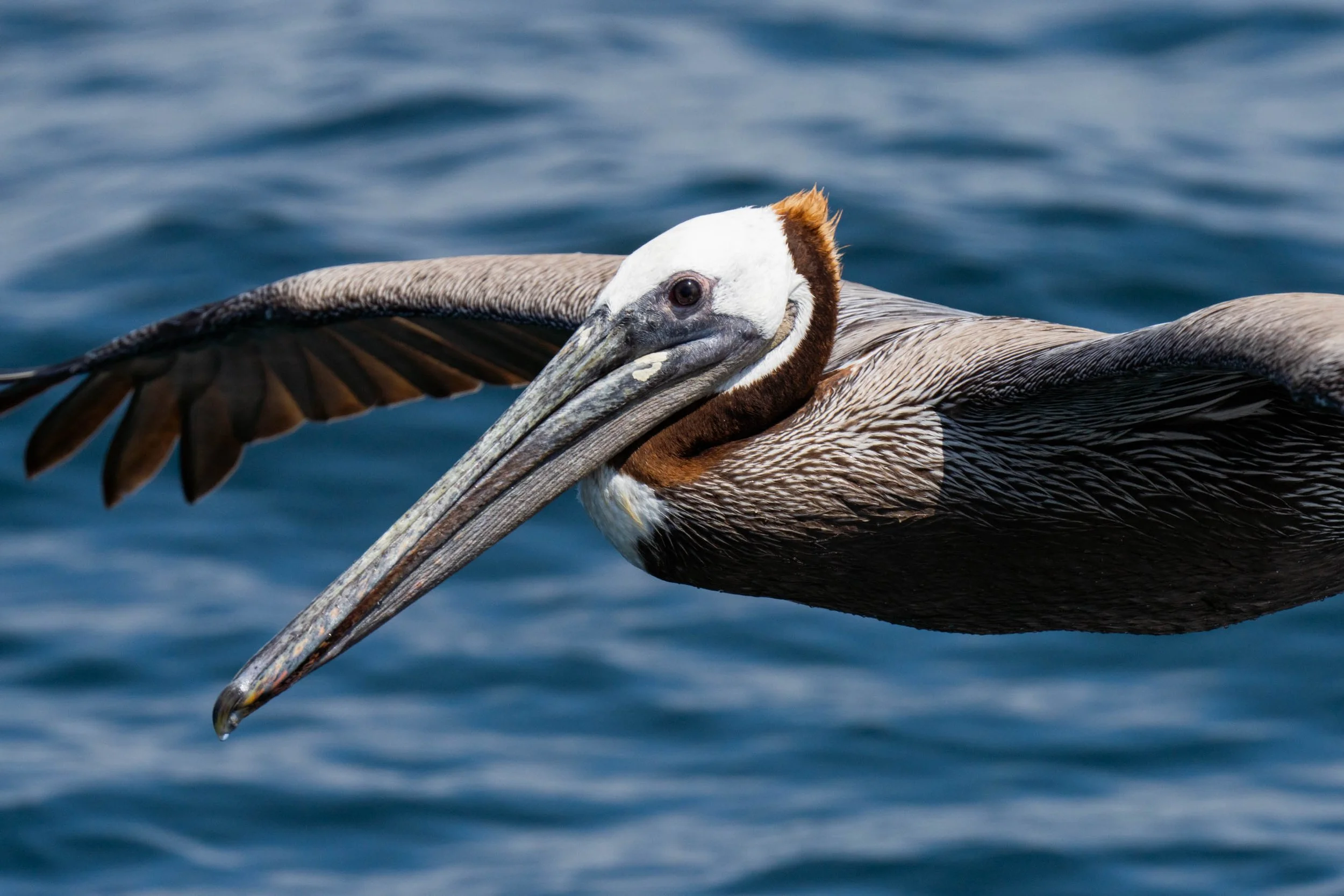
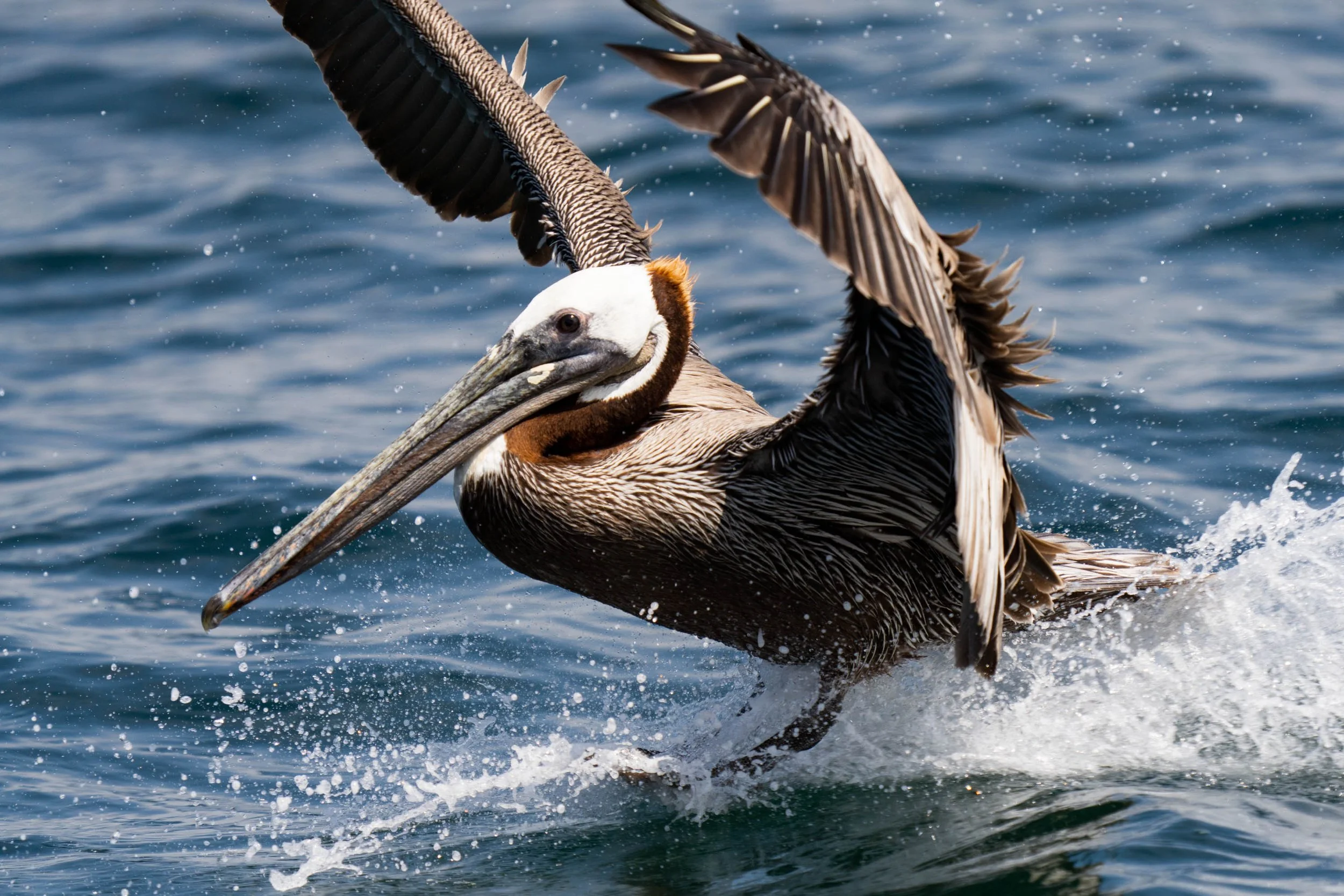
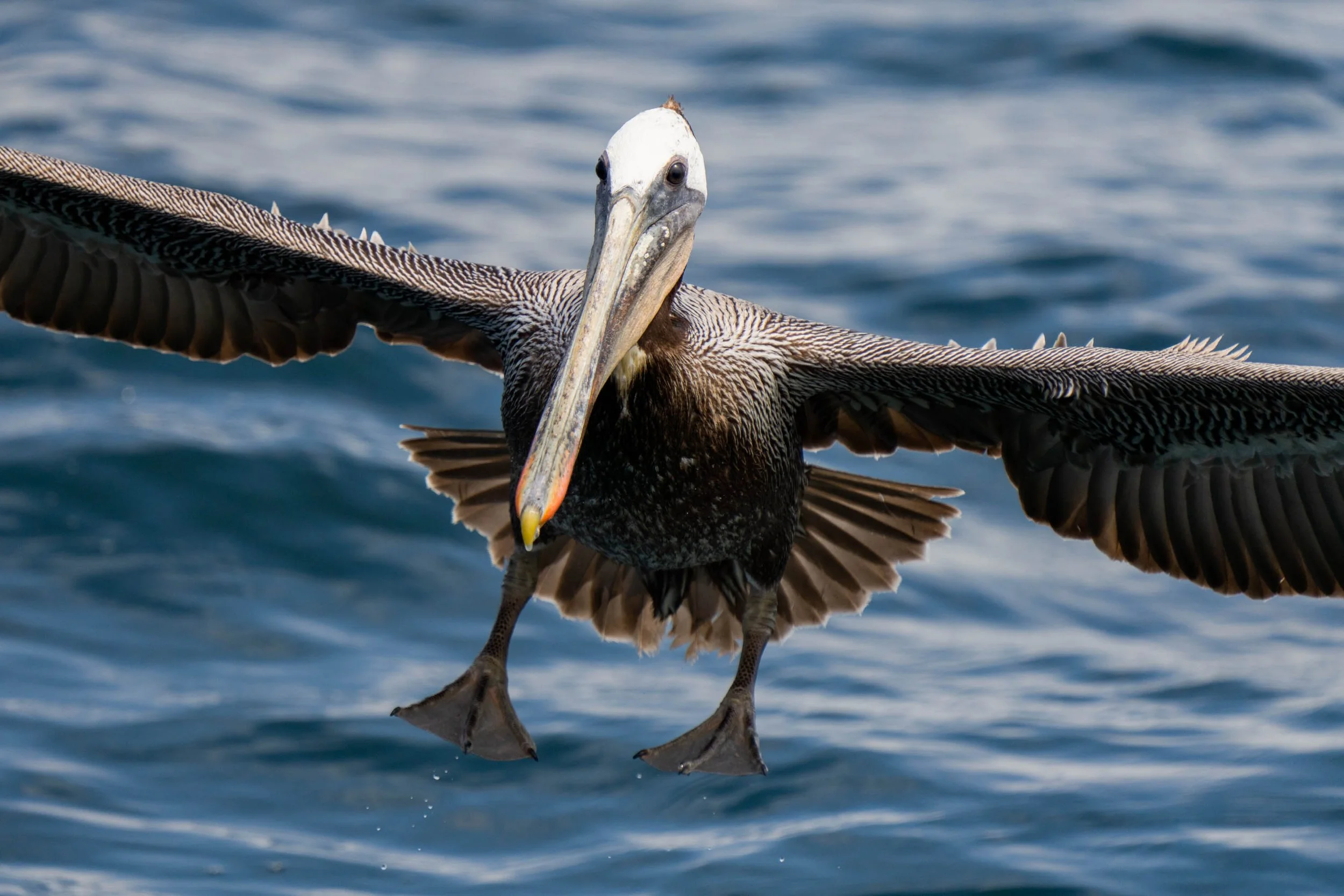
Hundreds of Brown Pelicans moved through the area, along with Pacific Loons and a wonderful variety of terns. Elegant, Royal, Caspian, Forster’s, and Least Terns all appeared during the trip.
A Wilson’s Warbler at Sea
One of the smallest surprises was a Wilson’s Warbler far offshore, likely a migrating bird that had drifted away from land.
Landbirds at sea always seem especially vulnerable. A tiny yellow warbler looks perfectly at home among leafy branches, but impossibly delicate against miles of gray ocean. Its brief appearance stayed with me long after it disappeared from view.
A Remarkable Day Offshore
We recorded 43 species during the trip, but the Horned Puffin resting at the 270 Bank is the bird I remember most clearly. The Manx Shearwater, breeding-plumaged Red Phalarope, and Wilson’s Warbler were unexpected in completely different ways.
Much of the day was spent watching quiet water. Somewhere among those long stretches, phalaropes spun on the surface, a migrating warbler crossed our path, and a puffin appeared far south of the waters it usually calls home.