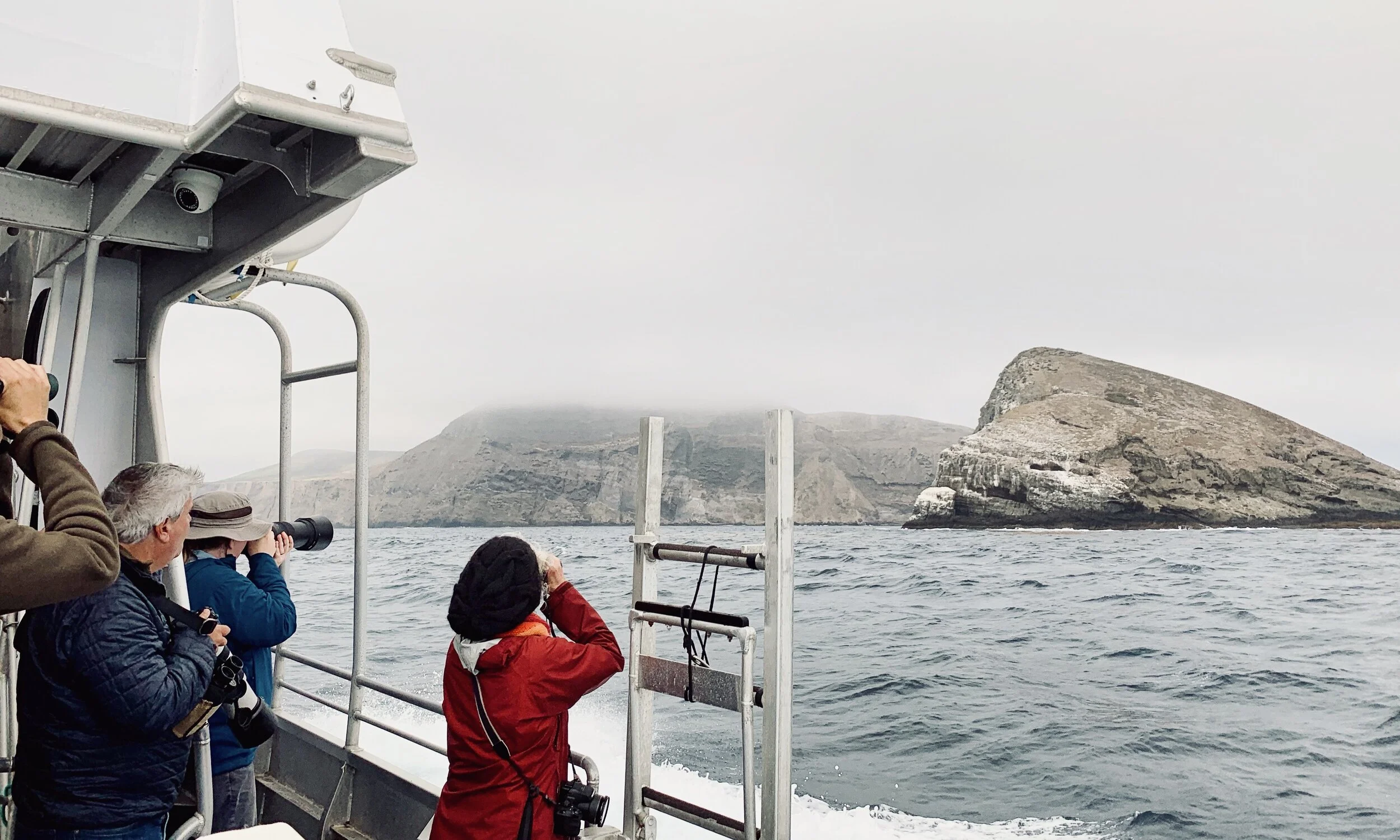
My first pelagic birding tour was also my first truly long boat ride. We spent more than twelve hours traveling through calm water, thick fog, and stretches of open ocean while looking for birds that rarely come close to land. At one point, we even had to abandon the pursuit of a possible rarity when the boat approached a military testing area. It was quite a day.
We stayed in a cozy little Airbnb the night before so we could be at Ventura Harbor early in the morning. It was cloudy, foggy, and chilly when we arrived, and I had no idea how the day would unfold. Our bags were packed with camera gear, binoculars, lunches, snacks, coffee, water, and a field guide.
The trip was operated by Island Packers, the company that runs boats between Ventura and the Channel Islands. Our boat was only about half full, giving everyone plenty of room to move around and look for birds. It even had a small galley selling hot and cold drinks and snacks, which became especially appealing later in the day.
As a newer birder, I felt a little intimidated at first. Many of the people around me seemed to know one another and were already discussing past trips and the birds they hoped to find. I had researched some of the possible species, but I also wanted to leave room for the experience to surprise me.
Once we boarded, met the captain and crew, and began moving away from the harbor, some of that nervousness faded.
Into the Open Ocean
I will not pretend that I always knew where we were. We passed islands rising through the haze, crossed miles of open water, and eventually reached places where I could turn in every direction without seeing land. There was only blue water, a pale horizon, and the slow movement of the boat beneath us. That feeling was completely new to me. Southern California’s coastline is usually such a familiar reference point, and suddenly it was gone.
Here is a map of our route, courtesy of Captain Joel Barrett:
The trip was recorded in several legs. We left Ventura Harbor, passed Anacapa Island, traveled into the deeper water of the Santa Cruz Basin, continued beyond San Nicolas Island, and approached Santa Barbara Island before returning to Ventura.
The morning began in heavy fog, but the sky eventually opened enough to give us good light and broad views across the water. The fog returned as we neared Ventura that evening. By the time we entered the harbor, it was thick enough to give the familiar shoreline an eerie look.
The wind remained light for most of the trip, and the temperatures were comfortable as long as I adjusted my layers throughout the day.
A Different World of Birds
Birders call a species seen for the first time a “lifer.” Some of the more experienced people aboard added only a few birds to their life lists that day. For me, nearly everything we encountered was new.
Pelagic birds live much of their lives over the ocean, sometimes coming to land only to breed. Watching them from a boat was completely different from birding along a trail, estuary, or beach. Birds appeared low over the water, sometimes only briefly, and then disappeared among the swells. Finding and identifying them required quick eyes and help from the experienced leaders calling out directions from different parts of the boat.
The ocean also brought us an incredible variety of marine mammals. We saw a Minke Whale, a Humpback Whale, and groups of Long-beaked Common, Risso’s, and Bottlenose Dolphins. We also encountered a Cuvier’s Beaked Whale, an animal I had never even heard of before that day.
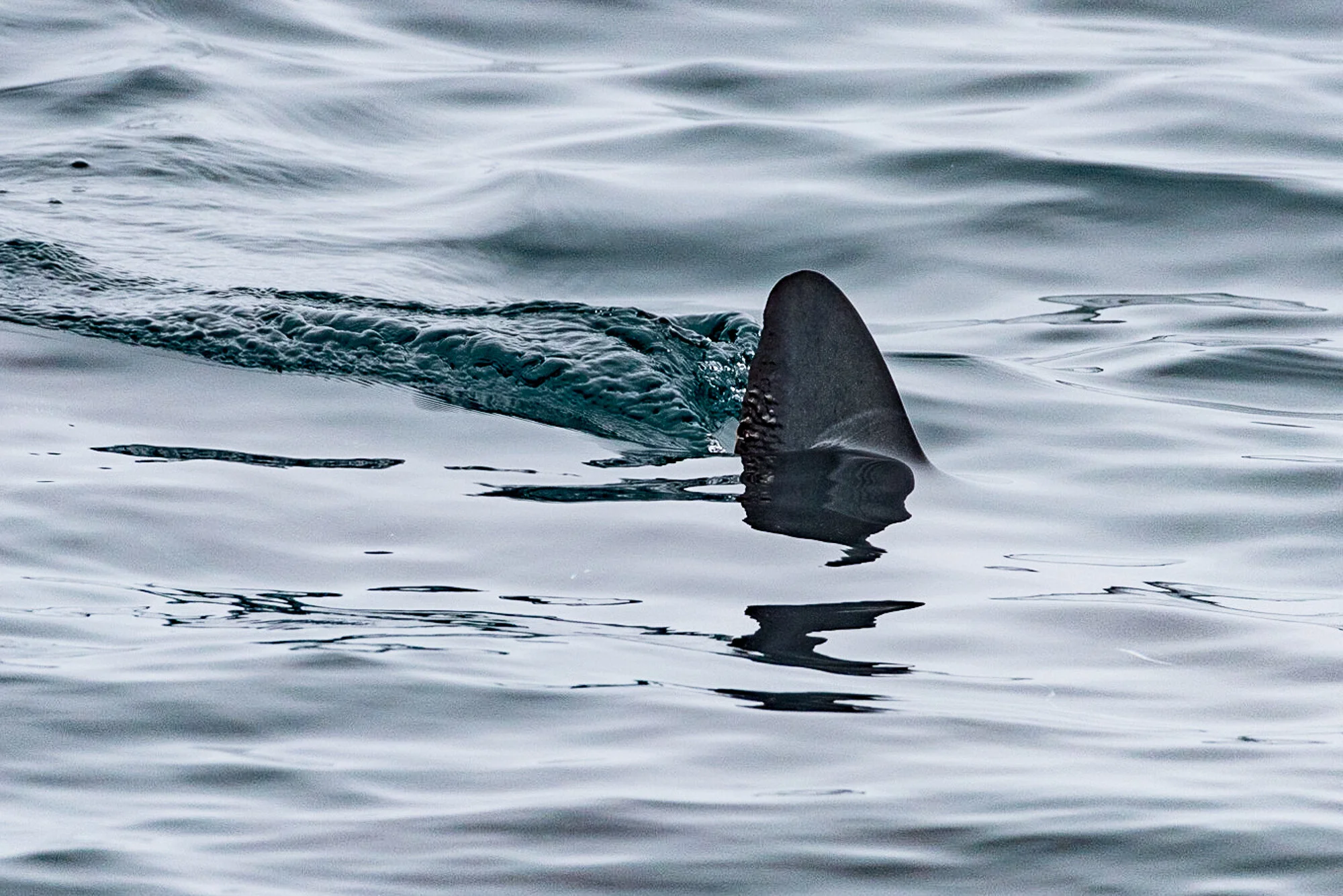
A young Great White Shark passed only a few feet from the boat. An octopus also appeared near the surface and was briefly lifted in a net so we could see it more closely.




Brown Boobies at Santa Barbara Island
The bird I remember most clearly was the Brown Booby.
We saw several flying near the boat, their long wings carrying them smoothly over the water. Later, as we approached Santa Barbara Island, many more appeared along the rocky cliffs and in the air around us.
Brown Boobies had only recently begun nesting in Channel Islands National Park. Their first active nests in the park were documented in 2017 on Sutil Island, a small rocky island just off Santa Barbara Island. The first confirmed chick followed in 2019.
Seeing so many gathered in one place was remarkable. Some sat along the exposed rock while others circled over the water or passed near the boat. Their expressions somehow looked both serious and sweet, and I could have watched them for hours.


Chasing a Possible Rarity
The wildest moment began when the birding leaders spotted something that might have been a very rare bird.
The boat suddenly changed course, and we spent nearly twenty minutes trying to get close enough for a confident identification. The bird remained fast and distant while everyone searched through binoculars and camera lenses. The excitement among the leaders was contagious, even though I did not fully understand what we were chasing.
The pursuit eventually brought us close to an active military testing area. We had to give up and turn back, leaving the bird’s identity uncertain. After racing across the water for so long, I had even less idea where we were than before.


Finding Our Sea Legs
By the time we returned to Ventura Harbor, we had spent more than twelve hours bobbing, racing, and scanning the ocean. I was tired, but grateful for the opportunity to see birds and marine animals I would never encounter from shore.
The effects of the boat ride followed us home. We felt fine while the car was moving, but when we stepped into the garage, we nearly fell over. Even after lying down in bed, it felt as though our bodies were still swaying with the ocean.
Apparently, twelve hours was plenty of time for our brains to become accustomed to the movement of the boat. Solid ground briefly felt like the thing that was moving.
The Channel Islands were beautiful from the water, especially when they appeared through the fog after long stretches of empty horizon. This trip gave me my first glimpse into the lives of birds that spend most of their time beyond the coastline. I hoped our next visit would include setting foot on an island or two.