Exploring the Grand Canyon of the Yellowstone
Finding a place to camp was one of the first steps we took while planning our Yellowstone trip. Campsites could fill far in advance, especially when we needed one reservation to cover several nights. We got lucky and found an opening at Canyon Campground for exactly the days we hoped to stay.
The campground sits near the middle of Yellowstone, making it a convenient base for exploring different parts of the park. More importantly for us, it placed us close to the Grand Canyon of the Yellowstone and its trails, overlooks, and waterfalls.
Camping at Canyon Campground
Campsites were assigned when we arrived, so we did not choose ours ahead of time. We pulled into the campground around lunchtime, parked at the registration office, and went inside to check in.
The staff was friendly, informative, and quick about getting everything processed. They had asked about our sleeping arrangements, and the site they selected worked perfectly for our van.
There was not much open space around the parking area, so it would not have been an especially good tent site. For van camping, it was exactly what we needed. We were in a smaller loop that remained quiet, and we backed up close to the restroom. It was more convenient than disruptive because the building was neither bright nor noisy from inside the van.
That was one of the advantages of van camping in cooler weather. We were protected from much of the campground noise and light while remaining warm and comfortable inside our little home.
Canyon Campground also had a laundry facility, which we had not expected to use. We planned to shower there, especially since showers were included with our campsite and were not timed during our visit. Running out of clean clothes was less intentional, but a few dollars gave us a load of clean, warm, dry laundry.
After several days on the road, it felt like a remarkable luxury.
The Grand Canyon of the Yellowstone
The Grand Canyon of the Yellowstone was the real reason we were excited to stay in this part of the park.
The Yellowstone River carved the canyon through rock that had been weakened by earlier hydrothermal activity. Heat and chemical changes altered the rhyolite, making it softer and easier for the river to erode. Iron compounds within the rock oxidized over time, creating the canyon’s bands and washes of yellow, orange, red, pink, and brown.
Some hydrothermal activity remains in and around the canyon, but the colors are not active hot springs spread across its walls. They are part of the altered rock itself. In places, the canyon is almost literally rusting.
The river drops over two major waterfalls near the head of the canyon. Upper Falls is 109 feet tall, while Lower Falls plunges 308 feet into the canyon. Both were powerful, but each overlook gave us a very different experience of the river.
Artist Point
Artist Point was our first stop for a view into the canyon.
The walk from the parking area was short and easy, which also made this one of the busiest viewpoints we visited. The overlook was packed. We waited for space, squeezed in long enough to take a few photographs, and then stepped away.
A lower viewing area gave us a brief chance to stand back from the crowd and take in the scene.
From Artist Point, Lower Falls appeared at the far end of the canyon, framed by steep walls streaked with color. The white water stood out against the warm yellow and orange rock, while the river wound along the canyon floor below us.
The crowd kept us from lingering, but the view was every bit as beautiful as the photographs had promised.
Brink of the Upper Falls


Brink of the Upper Falls gave us more room to enjoy the river. It was not nearly as crowded during our visit, and the short trail brought us close to an enormous volume of rushing water.
The Yellowstone River swept around a bend and charged toward the overlook before dropping over the 109-foot falls. From where we stood, we could watch the smooth current break apart at the edge and disappear into clouds of mist below.
We were close enough to hear the roar and feel the movement of the water beneath us. The river looked clear and almost calm in places upstream, but everything changed as it approached the brink.
Standing just above that drop made the power of the river feel immediate in a way that a distant canyon view could not.
Brink of the Lower Falls


The Brink of the Lower Falls Trail required considerably more effort. A steep series of switchbacks descended roughly 600 feet in a little more than a third of a mile.
Going down was hard on the knees. Climbing back out was harder on everything else.
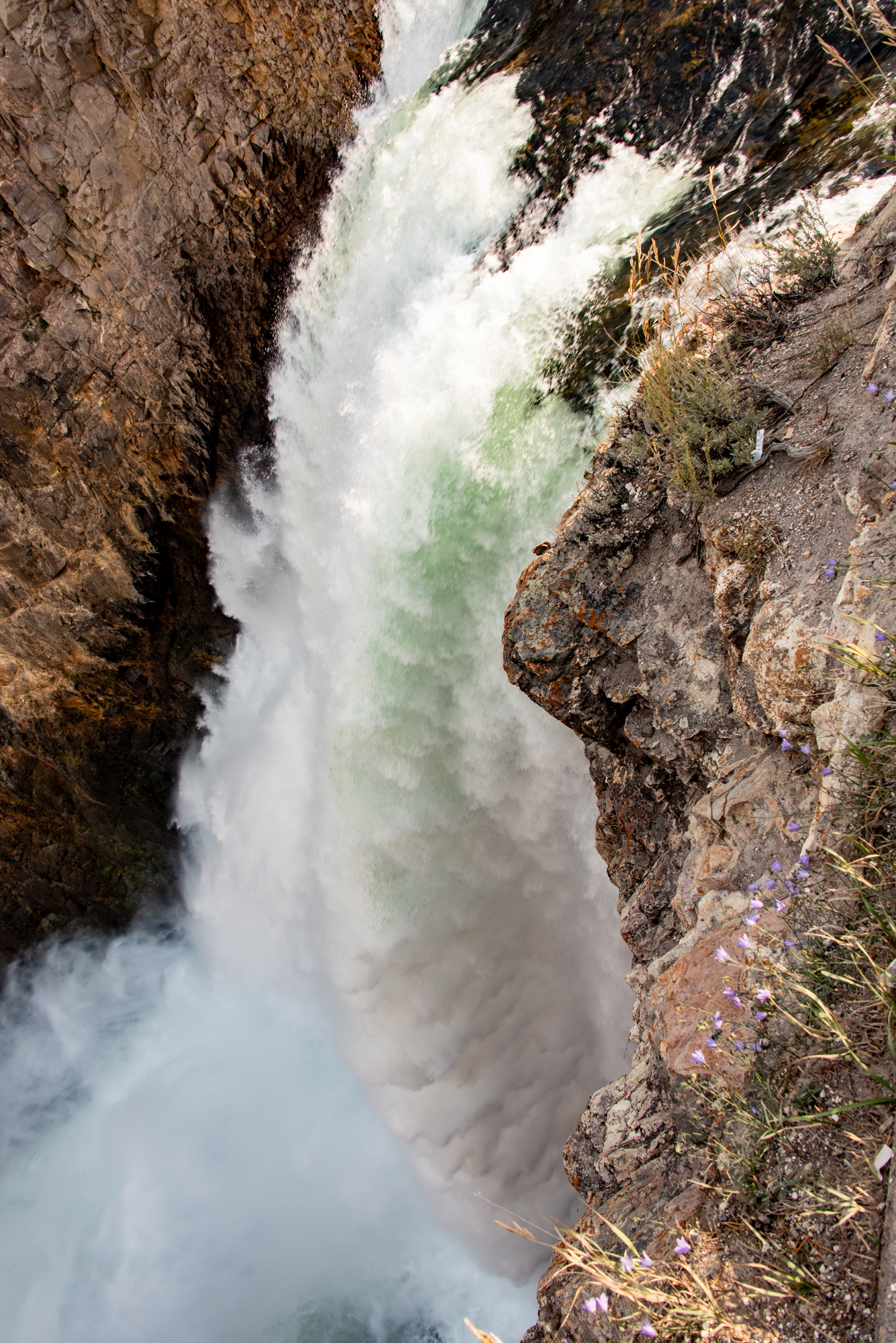
At the end of the trail, the overlook placed us directly above the point where the Yellowstone River plunged 308 feet into the canyon. We could look upstream at the water rushing toward us, then watch it fold over the edge and vanish into spray.
Beyond the falls, the canyon opened in front of us. The river continued far below between steep, colorful walls, while distant overlooks appeared as tiny shapes along the rim.
This trail did not lead to the bottom of the canyon, but it brought us close enough to the brink to feel the waterfall’s scale and force. The climb back up the switchbacks was a leg burner, but the view was worth every step.
Inspiration Point and Uncle Tom’s Point
Inspiration Point and the Uncle Tom’s Point area were closed for construction during our visit. We would have enjoyed exploring both, especially the long staircase associated with Uncle Tom’s Trail, but we had to leave them for another trip.
Yellowstone’s canyon overlooks and trails can close for maintenance, weather, or unsafe conditions, so it is a good idea to check current park information rather than relying on the access we found during this visit.



Returning to Camp
We spent much of the day moving between short trails and overlooks, watching the river from above and seeing the canyon from as many angles as we could reach.
Artist Point gave us the classic distant view of Lower Falls framed by the canyon. The brink trails were louder and more physical. We could stand beside the river as it gathered speed, hear the water striking the rocks below, and feel mist rising through the air.
After all those overlooks and switchbacks, we returned to Canyon Campground and took full advantage of the showers and laundry. Hot water, clean clothes, and a warm van felt almost extravagant after a day beside one of Yellowstone’s wildest landscapes.