
“Go on a Pelagic Birding Trip. Hold your bile, conquer your sea legs, and head far offshore. Trust me, the birds are worth it.” - Birdist Rule #55
I took the advice of “The Birdist” to heart. After my first pelagic birding trip around the Channel Islands, I knew I would eventually board another boat and head offshore again. This time, I decided to try a pelagic trip closer to home in Orange County.
Sea and Sage Audubon offered several pelagic birding trips throughout the year, so I signed up and began looking forward to another day on the ocean. My first pelagic had been in July, but this trip took place in January 2020. Temperatures stayed in the 50s, and the sky was partly cloudy for most of the day. Whenever the sun broke through, it warmed the deck just enough to make the winter air feel comfortable.
One of the best parts of joining a local trip was meeting birders whose names I regularly saw in Orange County bird reports. I even met someone I already knew through Instagram. Many of the people aboard had much more experience identifying seabirds than I did, which gave me plenty of opportunities to listen and learn.
Our leader was Jon Dunn, and although I tried to stay calm about it, I was excited to meet him. He coauthored the sixth and seventh editions of the National Geographic Field Guide to the Birds of North America, and I had brought my copy along. He kindly signed it and added a wonderful note.
Jon was as approachable as he was knowledgeable. He took the time to answer questions and explain why certain sightings mattered, even when I needed to look up a bird in the field guide before I understood everyone else’s excitement. Several other leaders were aboard as well, helping people find and identify birds as they appeared.
A Full Day Offshore from Dana Point
Our trip departed from the Ocean Institute in Dana Point shortly after sunrise. We traveled along the Orange County coast near Newport Beach, passed offshore oil platforms, continued into the Catalina Channel toward Lausen Sea Mount, and eventually returned to Dana Point near sunset.
The boat had hot coffee, cold water for refilling bottles, two restrooms, and an interior seating area. That enclosed space was especially welcome when the wind picked up or the birds became quiet. Pelagic trips involve long stretches of searching, and it was nice to have somewhere warm to eat lunch before heading back outside when someone called out another bird.
Black-legged Kittiwake
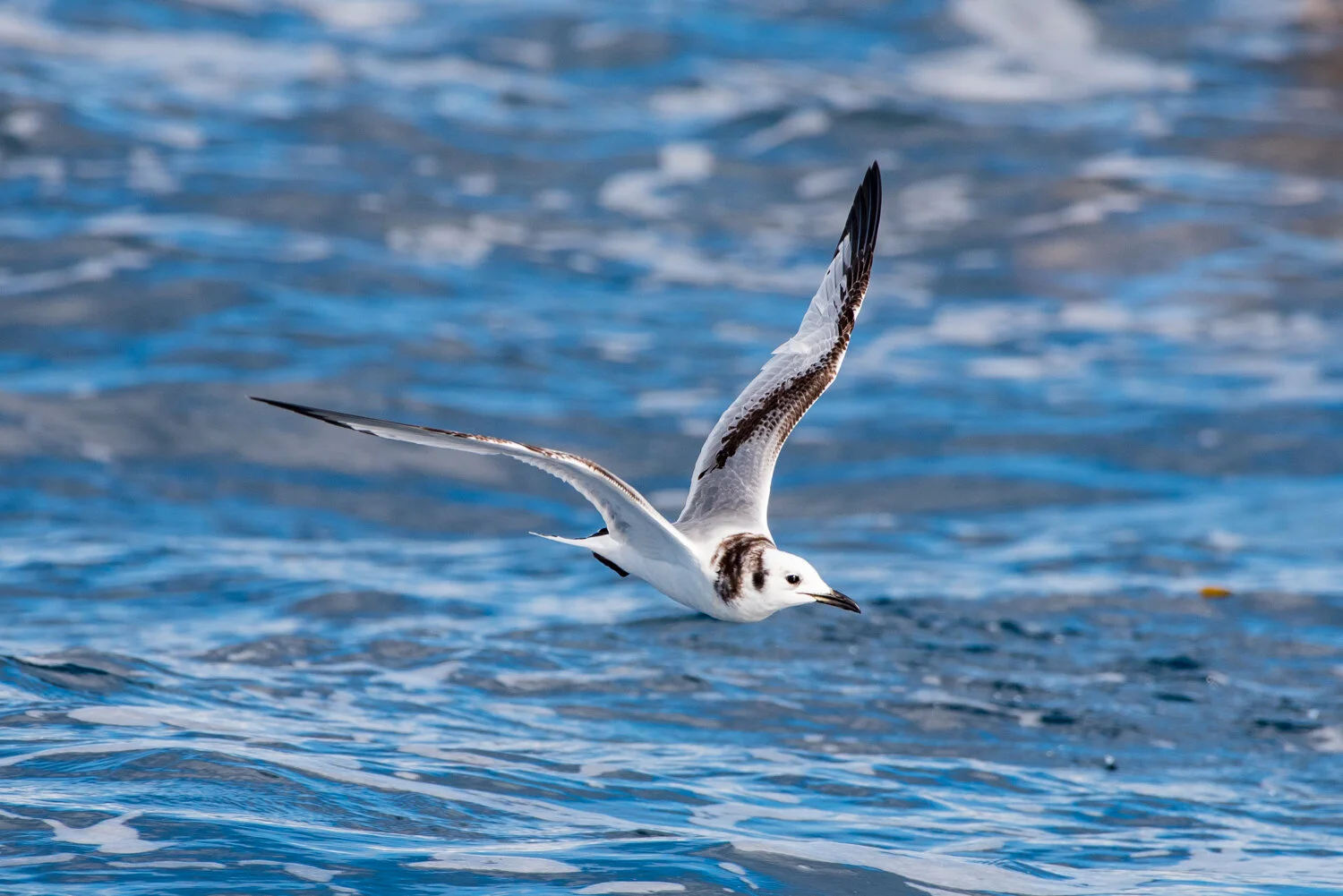
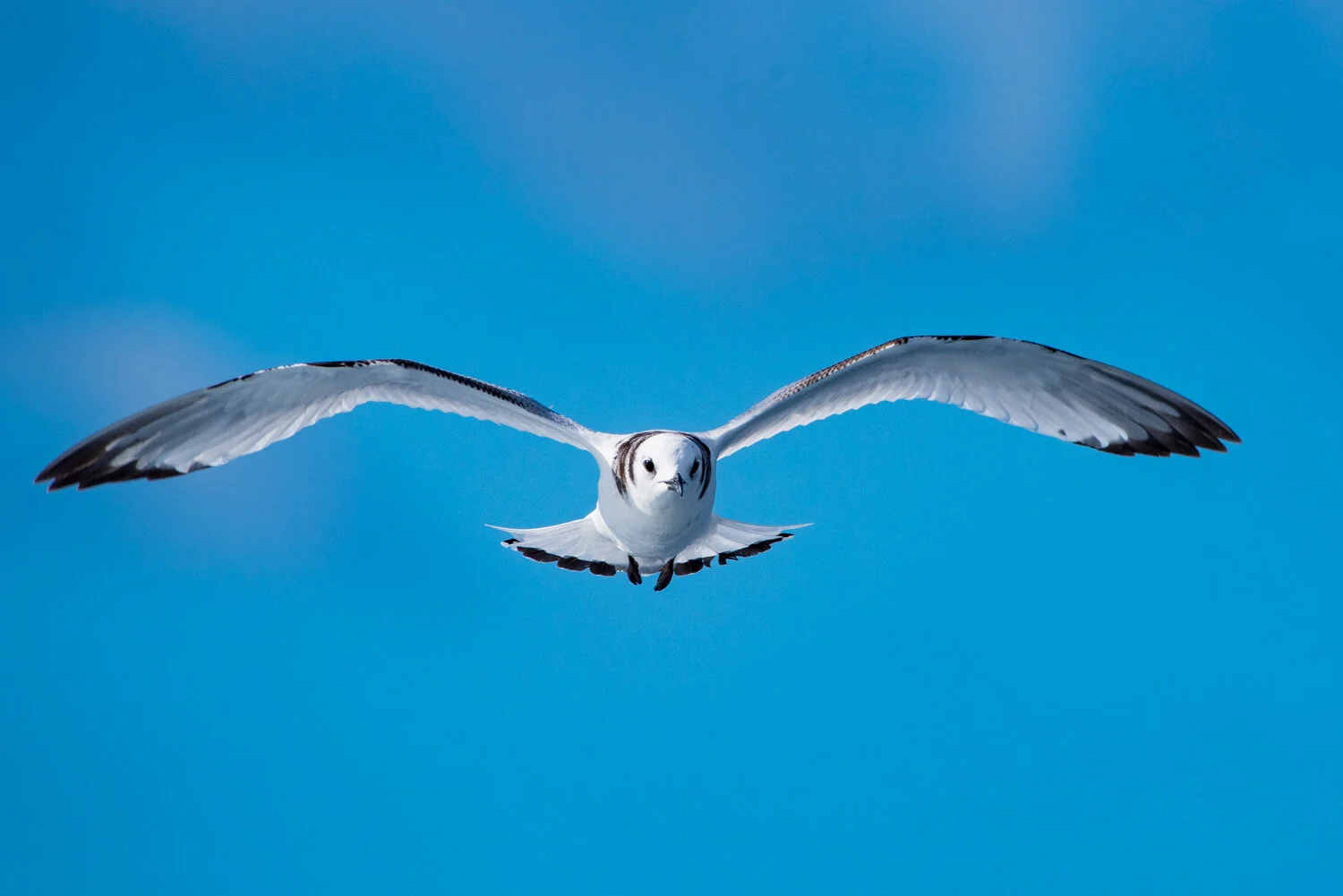
My favorite sighting of the day was a Black-legged Kittiwake. The excitement moved quickly through the boat when it appeared, and once I found it among the other gulls, I understood why everyone was so happy to see it.
The kittiwake followed our wake for nearly a mile, giving us time to watch it fly and interact with the gulls behind the boat. Instead of a quick glimpse disappearing over the water, we had a long, satisfying look as it moved back and forth through the wake.



Pelagic Cormorants
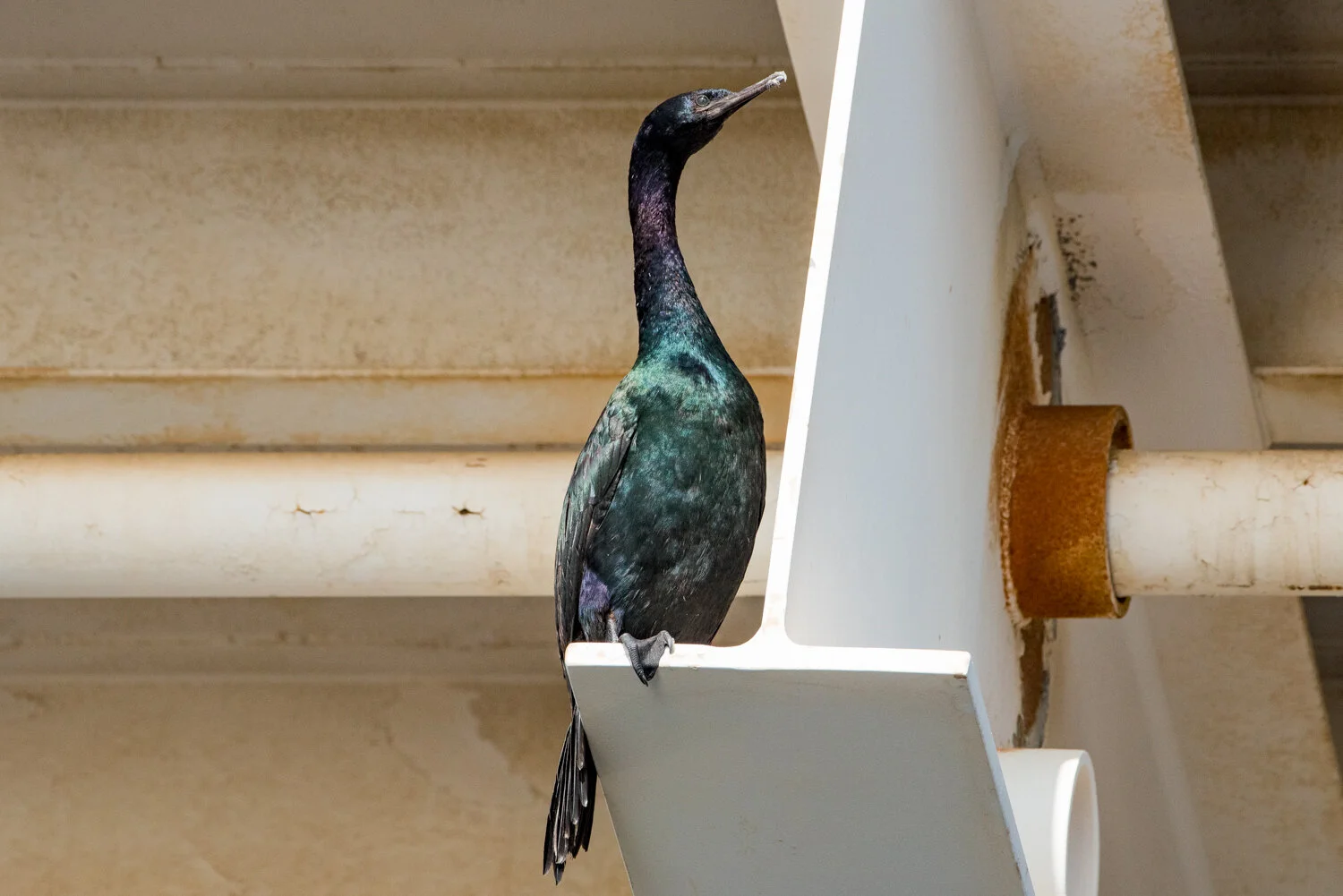
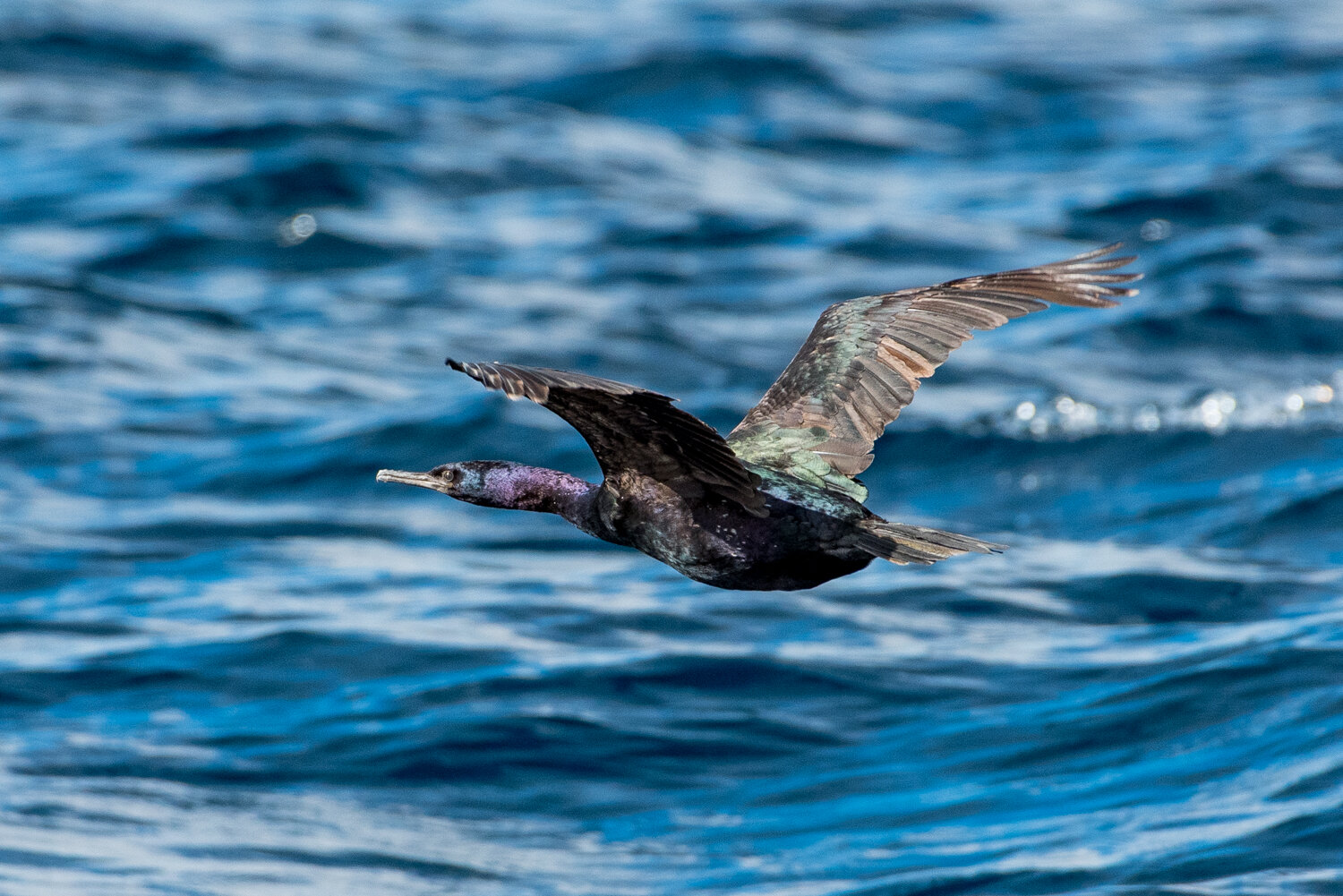
Near the offshore platforms, we found several Pelagic Cormorants resting on the structures. From a distance, these birds can look almost uniformly dark, but sunlight brought out shades of purple, blue, and green in their feathers. They were much more colorful than their name or silhouette might suggest.

A Rare Winter Buller’s Shearwater
The sighting that excited our leaders most was a Buller’s Shearwater. I needed to look this one up in my field guide, and Jon explained why it was such an unusual bird for the trip. At the time, there were very few Orange County records and even fewer winter records from this part of the California coast.
Once I knew what to look for, the bird was surprisingly distinctive. Its pale underside flashed above the dark water, while the upper wings showed the dark pattern that forms a broad “M” across its back. The shearwater remained in view long enough for people around the boat to study it rather than relying on a fleeting pass.
Brown Pelicans Playing in the Wake
My personal favorites were the Brown Pelicans that found us far offshore and began following the boat. They flew close behind us, rising over the rolling water and dropping into the troughs between waves.
Brown Pelicans have always been among my favorite birds, and seeing them against the deep blue water was one of the most memorable parts of the day. Their appearance changes considerably as they move into breeding plumage, when the muted browns and grays are joined by richer colors around the head, neck, and bill.


I love watching the way pelicans move through the world. They can glide low over the water with barely a wingbeat, fold themselves into a steep dive, or sit behind a boat drifting as if they have nowhere else to be. These pelicans stayed close enough for us to watch all those small movements against the open ocean.
Here are a few more of the birds and other marine wildlife we encountered during the trip:
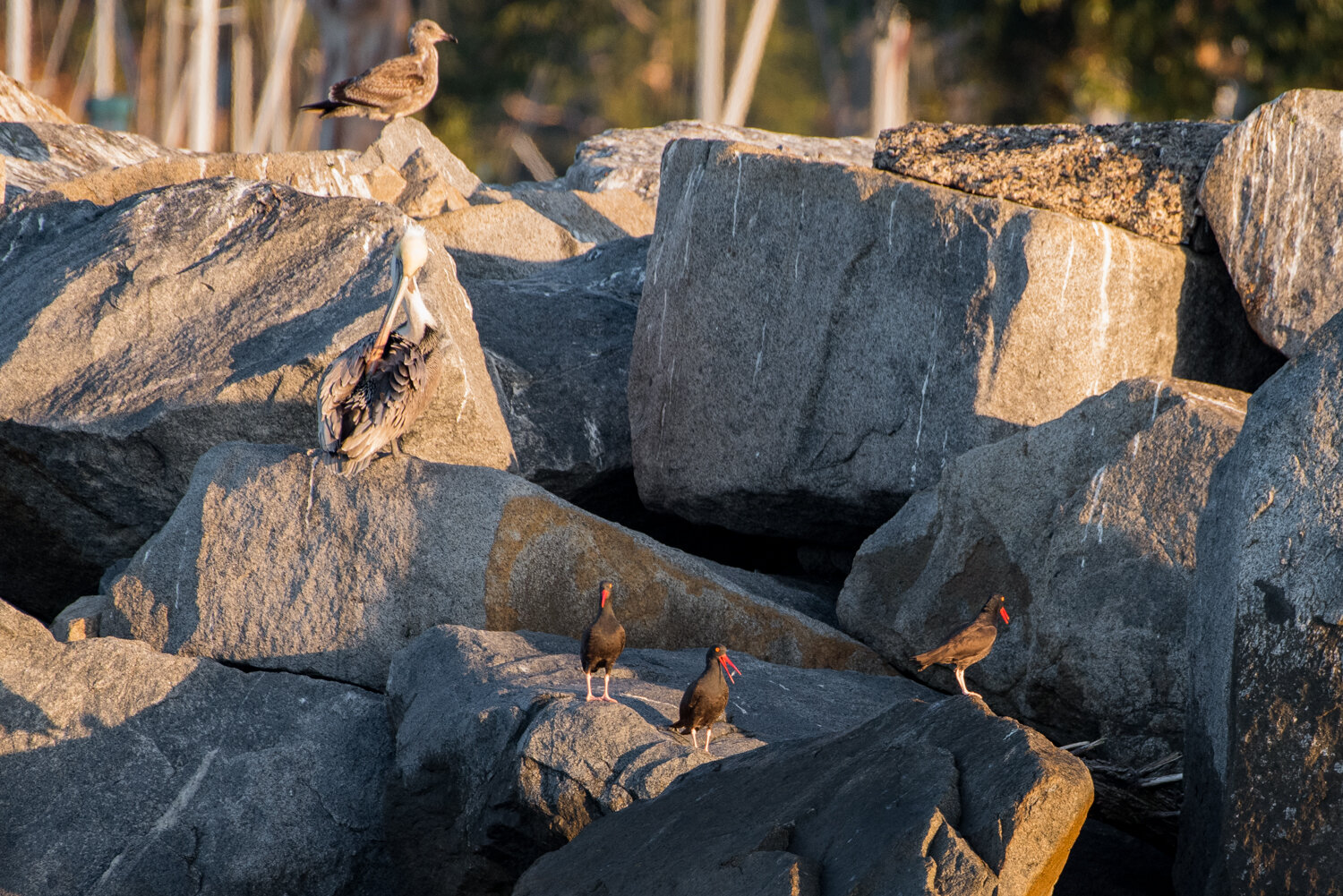


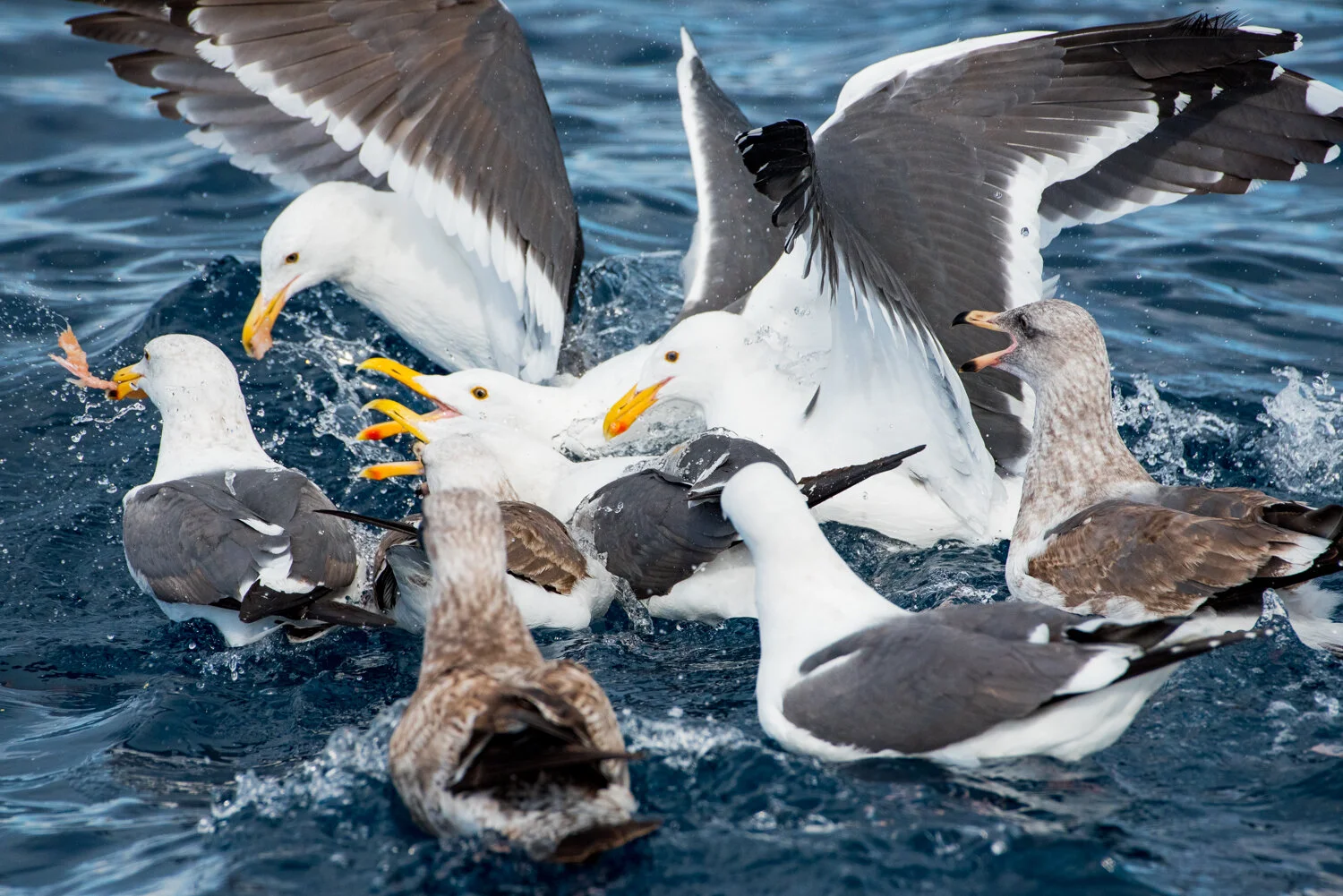


The January 2020 Sea and Sage pelagic trip left Dana Point just after sunrise and returned shortly before sunset. Between those two quiet passages through the harbor, we spent an entire winter day watching the water, learning from experienced birders, and waiting to see what might rise from the waves or sweep past the boat.
The Black-legged Kittiwake following our wake, the unexpected Buller’s Shearwater, and the Brown Pelicans playing over the deep blue water gave me plenty of reasons to join another Orange County pelagic trip.