Winter in Yosemite National Park
We'd talked about visiting Yosemite National Park ever since moving to California, and we finally made it happen with a Valentine's Day trip. We expected a snowy adventure and reserved a camper van to stay warm.
Then California had one of its wettest winters in years. Mudslides and storm damage closed roads throughout the Sierra Nevada, our camper van reservation was canceled, and several large trees fell in our campground, forcing the park to move our campsite. Every plan seemed to need a backup.
At the last minute, we packed up the Subaru Crosstrek instead, picked up a set of snow chains, and converted it into our home for a few nights. (You can read more about our setup in How We Sleep in Our Subaru Crosstrek.)
Ironically, after all the scrambling, the drive into Yosemite was completely clear, and our snow chains never left their bag.
We thought our luck had finally changed, but when we arrived at Upper Pines Campground, someone had already parked in our reserved campsite. Thankfully, the campground staff quickly found us another site, and it turned out to be even better than the original. Tucked away in a quiet section of the campground that had been closed after the storms, we ended up with one of the most peaceful campsites in Yosemite Valley.
Rather than turning this into one giant post, I've broken some of our favorite Yosemite experiences into sections below.
Our Campsite - Upper Pines Campground


Upper Pines Campground is one of the largest campgrounds in Yosemite Valley and one of the best places to stay if you want easy access to many of the park's most famous sights. During our visit, it was the only campground open in Yosemite Valley.
Since we planned to sleep in the Crosstrek instead of a tent, the snowy, muddy conditions actually worked in our favor. Much of the campground was covered in snow when we arrived, and anywhere the snow had melted had turned into thick mud. Overnight temperatures dropped well below freezing, so we were especially glad we weren't setting up a tent.
Our relocated campsite happened to sit next to one of the restroom buildings. Normally I might avoid that because the exterior lights stay on throughout the night, but our Reflectix window covers blocked out every bit of light, so it never became an issue. Each campsite included a picnic table, a fire ring, and one of Yosemite's famous bear lockers. We used that bear locker constantly. It easily held our cooler, food, toiletries, and extra gear, freeing up valuable space inside the Crosstrek for sleeping.
One unexpected tip we discovered was to bring along an extra trash bag to line the bottom of the bear locker. Between the snow, mud, and standing water around camp, ours stayed wet for much of the trip. The trash bag created a simple barrier that helped keep our gear much cleaner and drier. Despite all the weather-related chaos leading up to the trip, we couldn't have asked for a better place to call home for a few days.
Bridalveil Fall

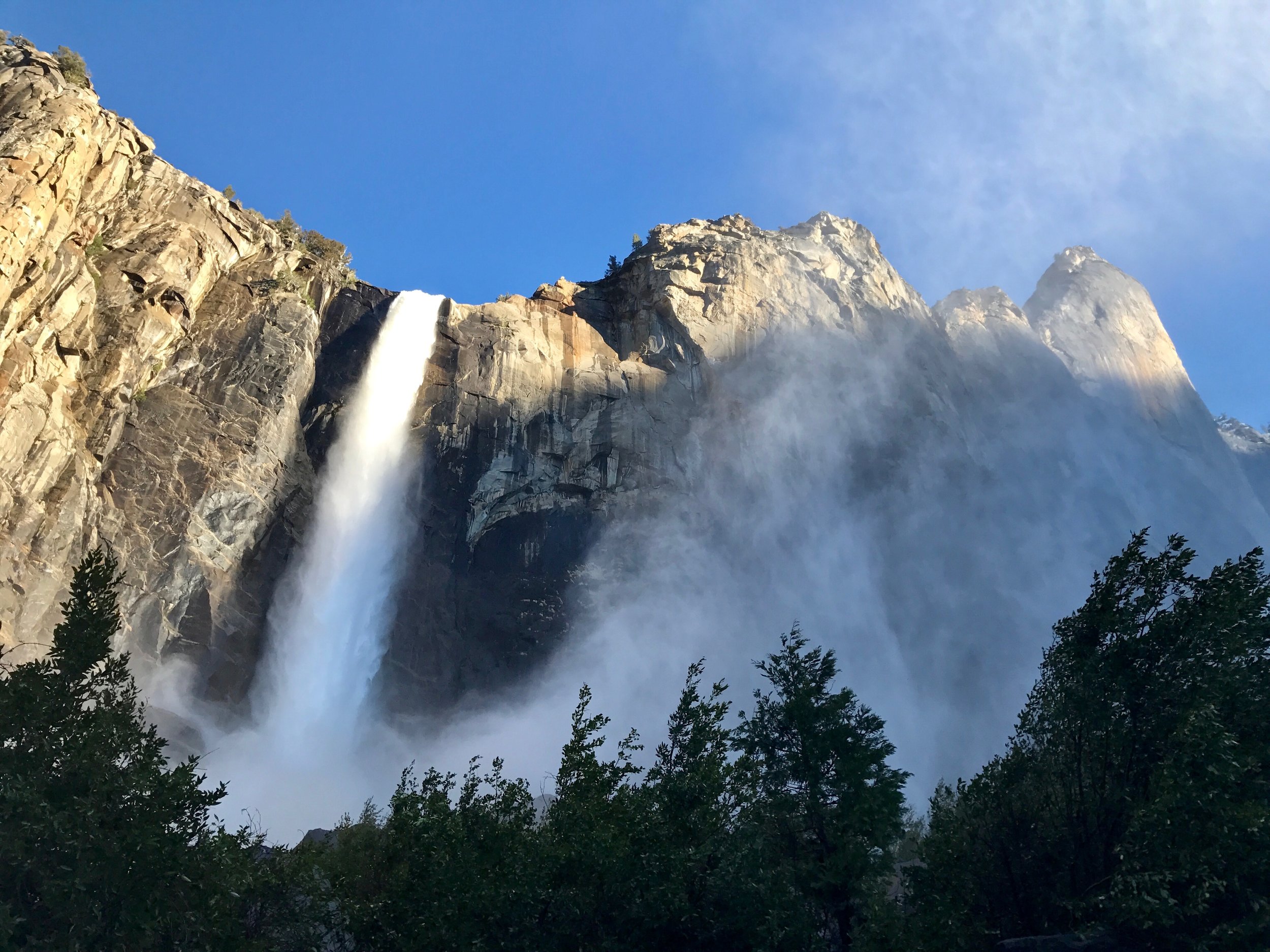
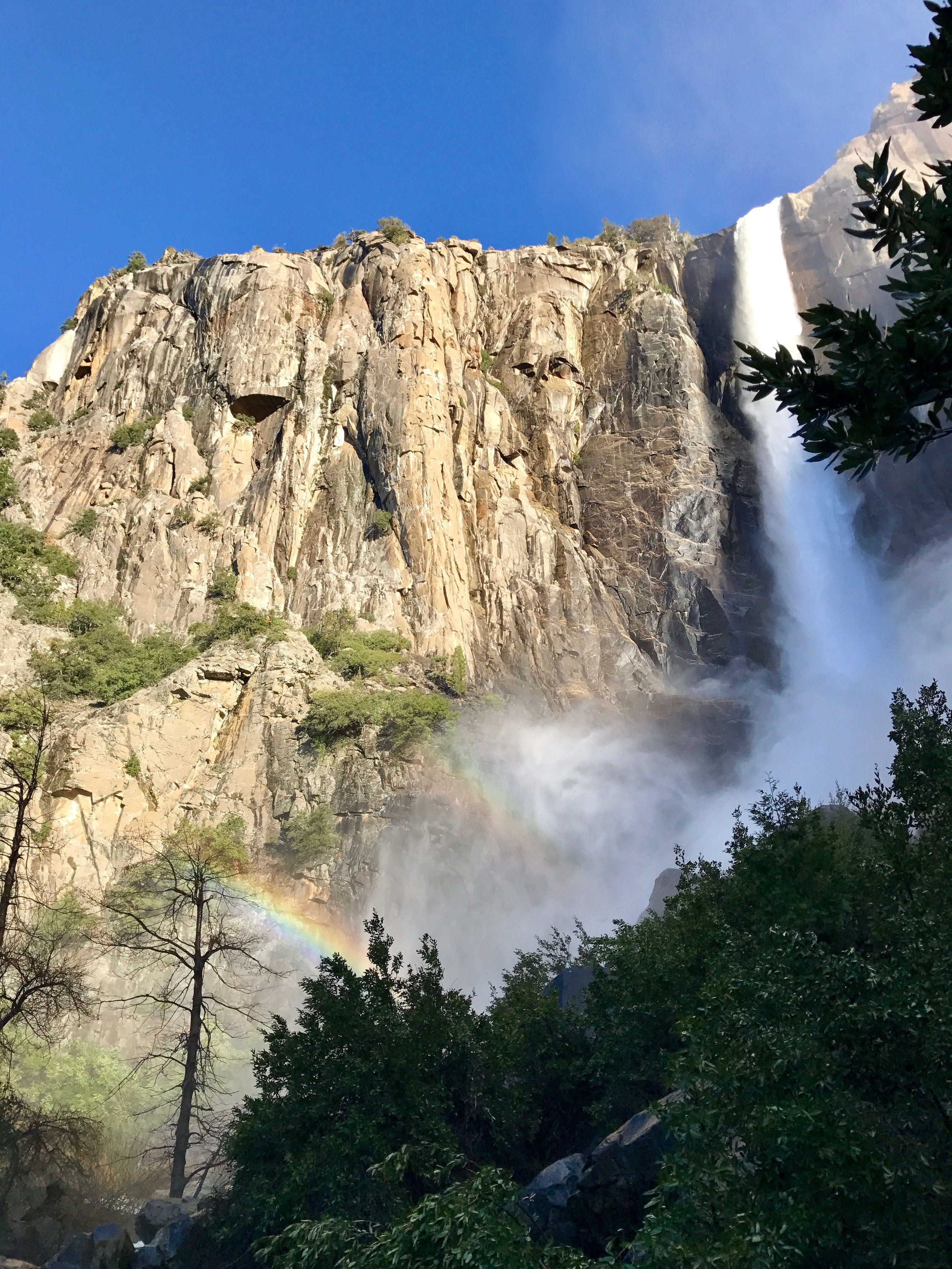
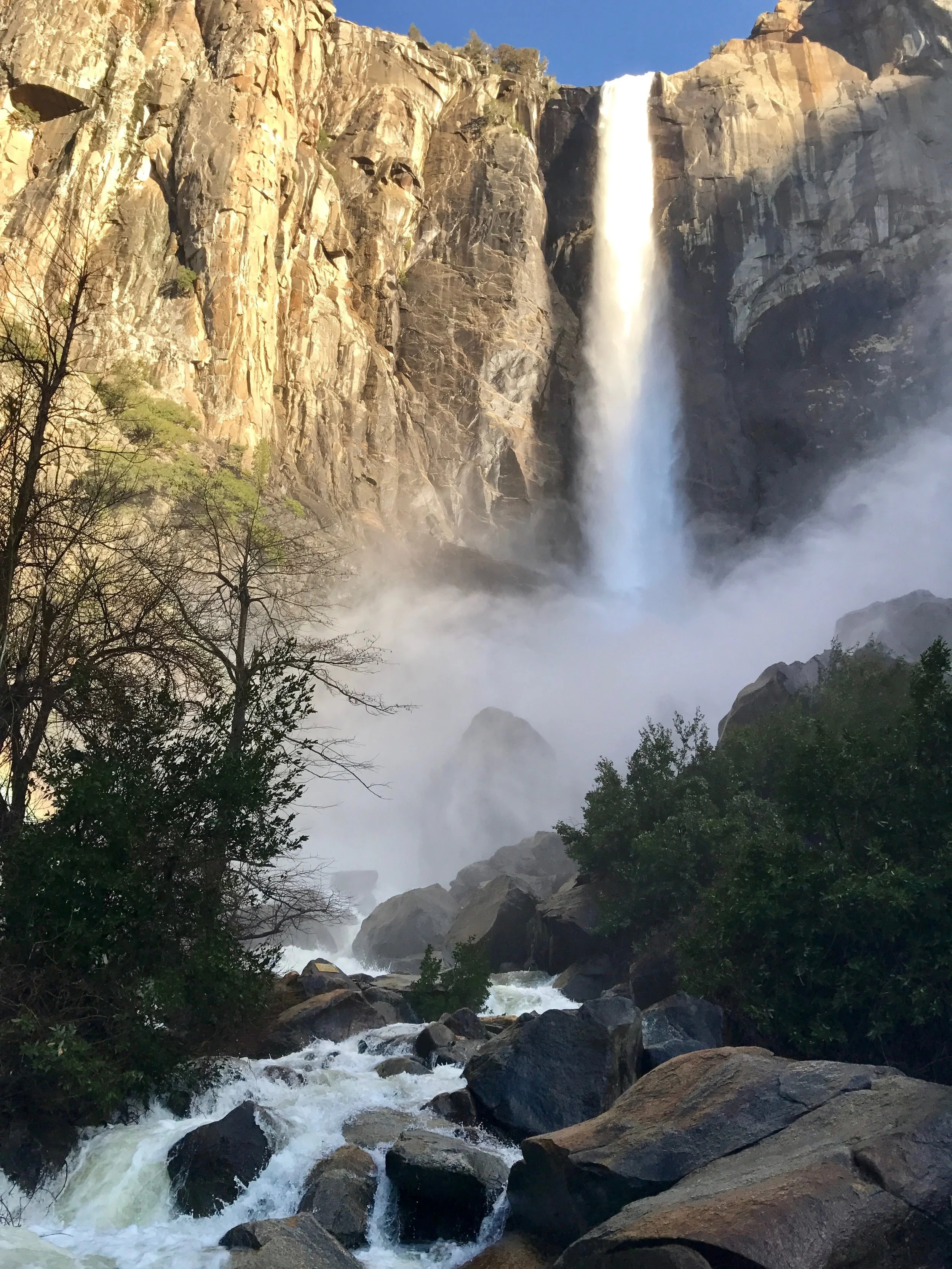
Bridalveil Fall was our first stop inside Yosemite. As we drove into the valley, we noticed the waterfall roaring down the cliffs and couldn't resist pulling over before even reaching our campsite. The parking lot was still partially flooded from the recent storms, but the Crosstrek handled the standing water without any trouble.
The walk to the base of Bridalveil Fall is short, making it one of the easiest waterfalls to visit in Yosemite. The closer we got, the louder the waterfall became. Spray filled the air long before we reached the viewing area, and the trail grew slick from the constant mist and freezing temperatures. In icy conditions, traction devices can make this short walk much safer.
By the time we reached the end of the trail, we were completely soaked. Cameras disappeared back into their bags, and we simply stood there taking in the water crashing down the granite cliffs. After such a wet winter, Bridalveil Fall was spectacular.
Yosemite Falls - A Mirrored View, Rainbows, and Frazil Ice


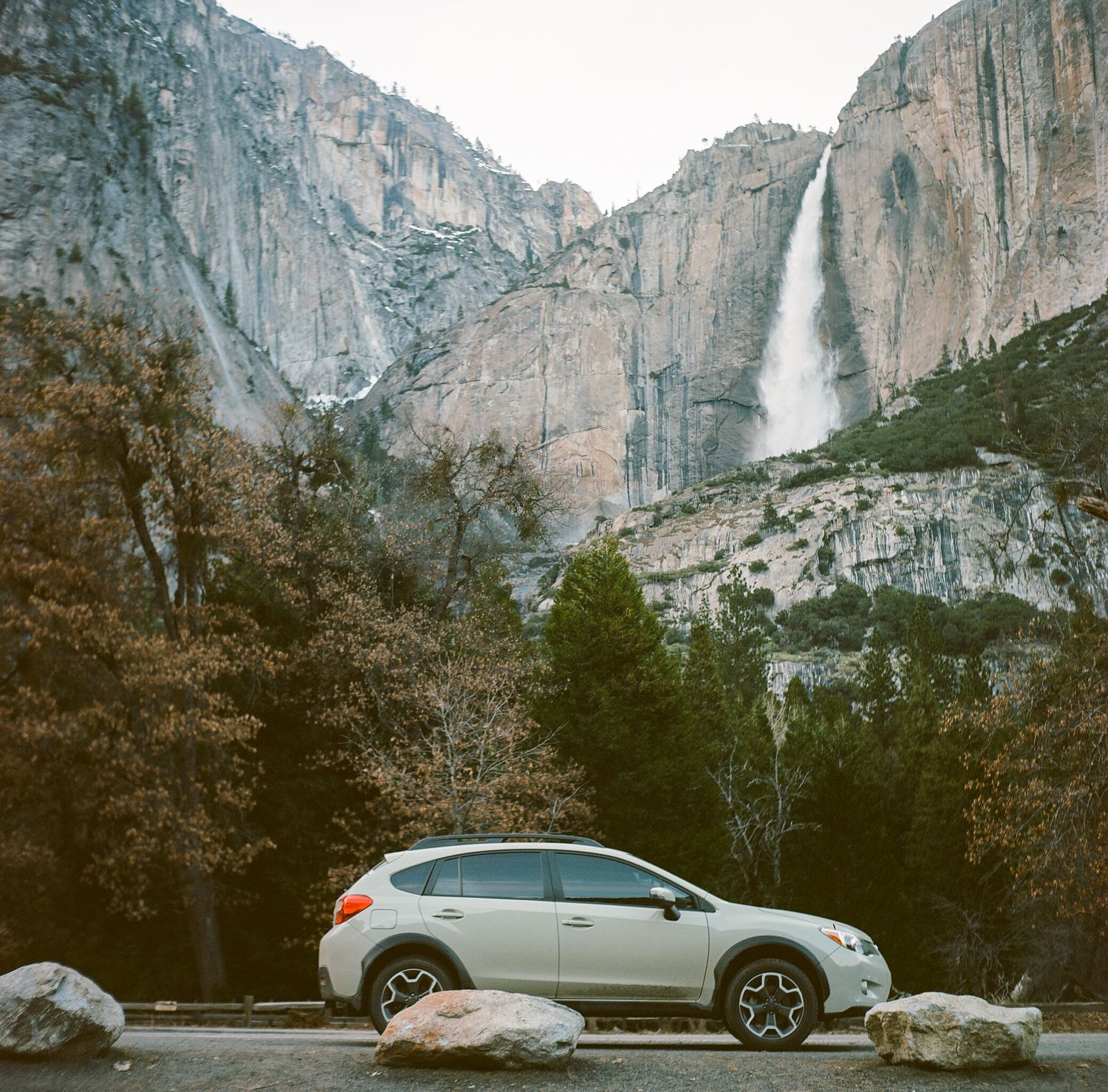
Our first full morning in Yosemite started with one goal: Yosemite Falls. The winter storms had transformed Yosemite, sending waterfalls pouring down nearly every cliff. Yosemite Falls was easily the star of the show. As North America's tallest waterfall, it's impressive any time of year, but seeing it during a particularly wet winter made it even more spectacular.
We began at the parking area near the meadow, where we were greeted by one incredible view after another. Snow still covered parts of the valley floor, shallow pools reflected the surrounding cliffs like mirrors, and a rainbow shimmered through the waterfall's mist. We happily wandered through the meadow, stopping far more often than planned to take photos.
Eventually we made our way to the Lower Yosemite Fall Trail. Normally the trail forms a short loop, but during our visit, ice had forced park staff to close part of it. We explored both open sections of the trail, one leading through the forest to a bridge over the river and the other bringing us remarkably close to the base of the falls.
The closer we got, the louder everything became. The sound of the water echoed through the valley, and mist drifted across the trail. Park rangers had closed the final section leading directly to the base of the falls because of dangerous ice conditions. We were disappointed not to reach the very end, but it was easy to understand why. One of the biggest hazards was frazil ice, an unusual collection of tiny ice crystals that had built up across the river and trail. I'd been hoping to see frazil ice in person, and although I never got a perfect view of it forming, it was fascinating to finally witness something I'd only read about before.
One of my favorite viewpoints wasn't actually at the end of the trail. Along one stretch of the path, the trees opened just enough to reveal Yosemite Falls from top to bottom. It was one of those views that makes you stop walking for a while and simply take it all in.
A Mossy Corner of Yosemite Valley


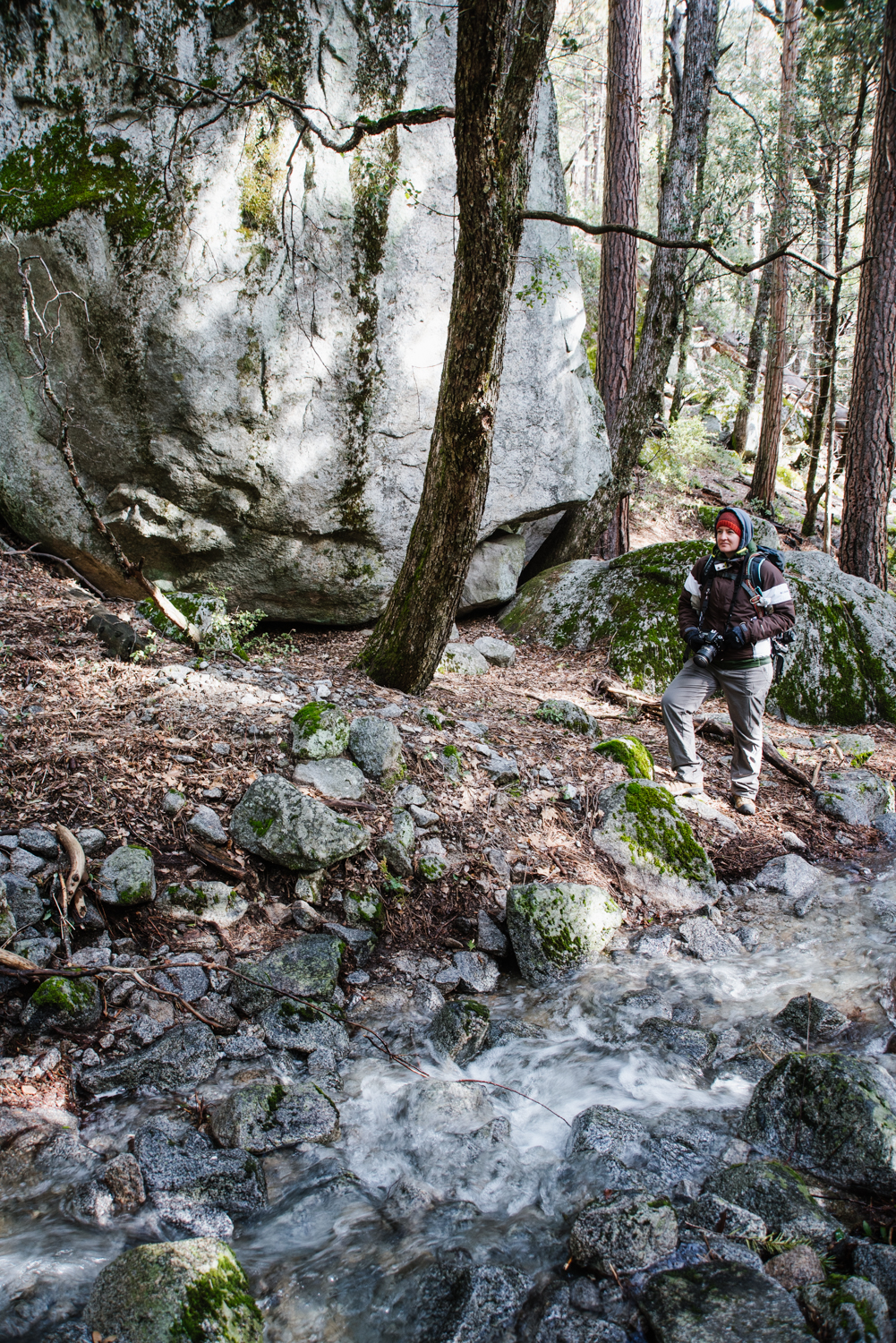
One of my favorite discoveries in Yosemite wasn't on a map. Just beyond Yosemite Falls, we wandered into a quiet, moss-covered forest where a rushing creek wound through towering trees. We carefully crossed a few rocks to get closer without disturbing the moss and spent quite a while simply watching the water flow. I've always loved moss, so this hidden corner of Yosemite felt almost magical.
Yosemite Valley Meadow and Hungry Coyotes

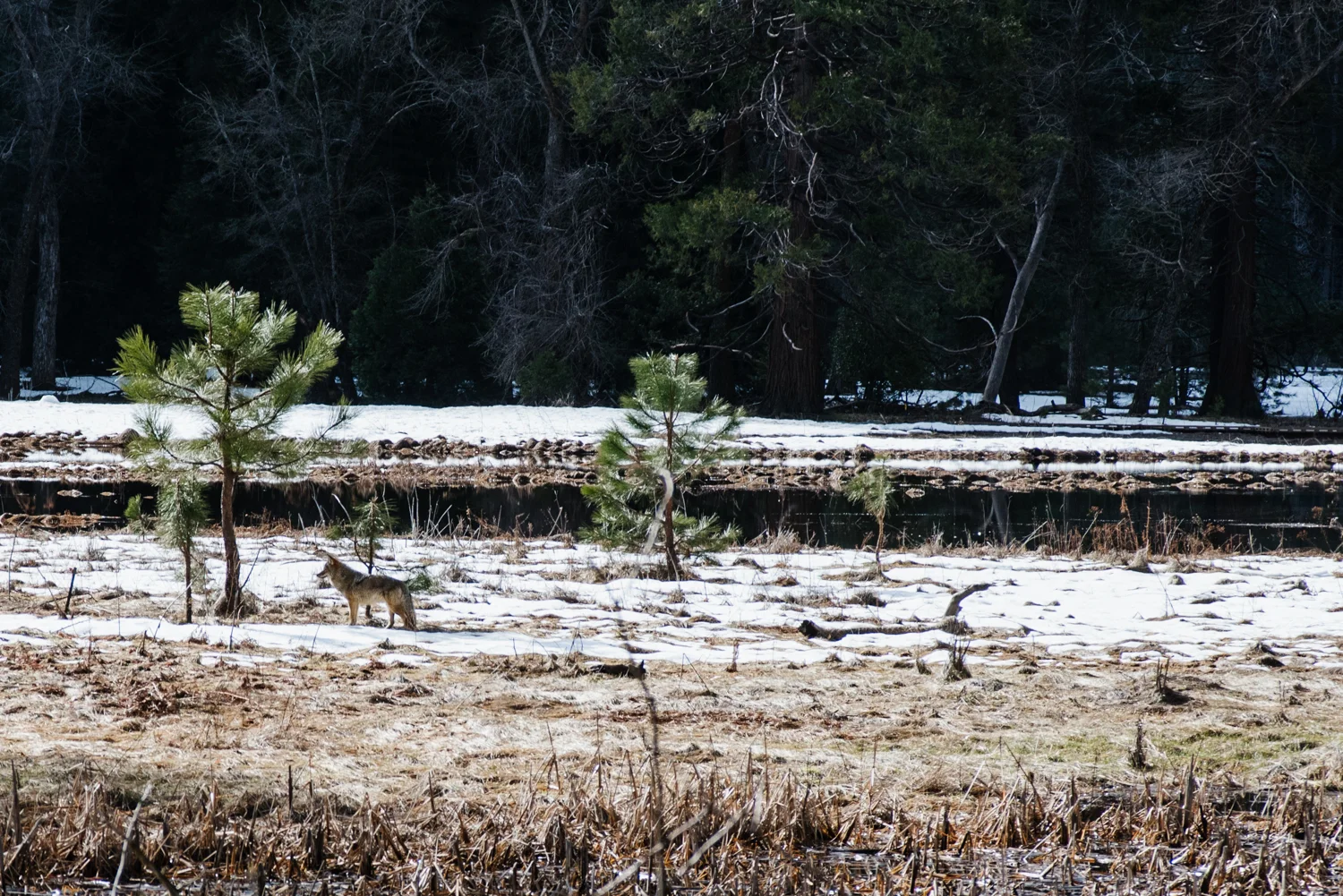


When we first arrived, much of the valley floor was covered in snow and standing water from the recent storms. By the end of our visit, most of the snow had melted away, revealing wide-open meadows filled with wildlife.
While driving through the valley one afternoon, we spotted a coyote quietly working its way across the snow. We pulled over to watch as it suddenly stopped, listened, and dove headfirst into the snow before popping back up with a successful meal.
Watching wild animals behave naturally is always one of my favorite parts of any trip, and this was no exception. Another coyote wandered nearby while its hunting partner stayed busy finding lunch. We watched them for quite a while before they disappeared into the valley.
The Merced River, swollen from the wet winter, flowed alongside much of the valley and created another beautiful view around every bend.
A Hike To Mirror Lake
From the left: Basket Dome, Mt. Watkins, snowy Clouds Rest in the background, Ahwiyah Peak, and Half Dome. (Thanks to @yosemitenps on Twitter for helping with the identification of these landmarks!)


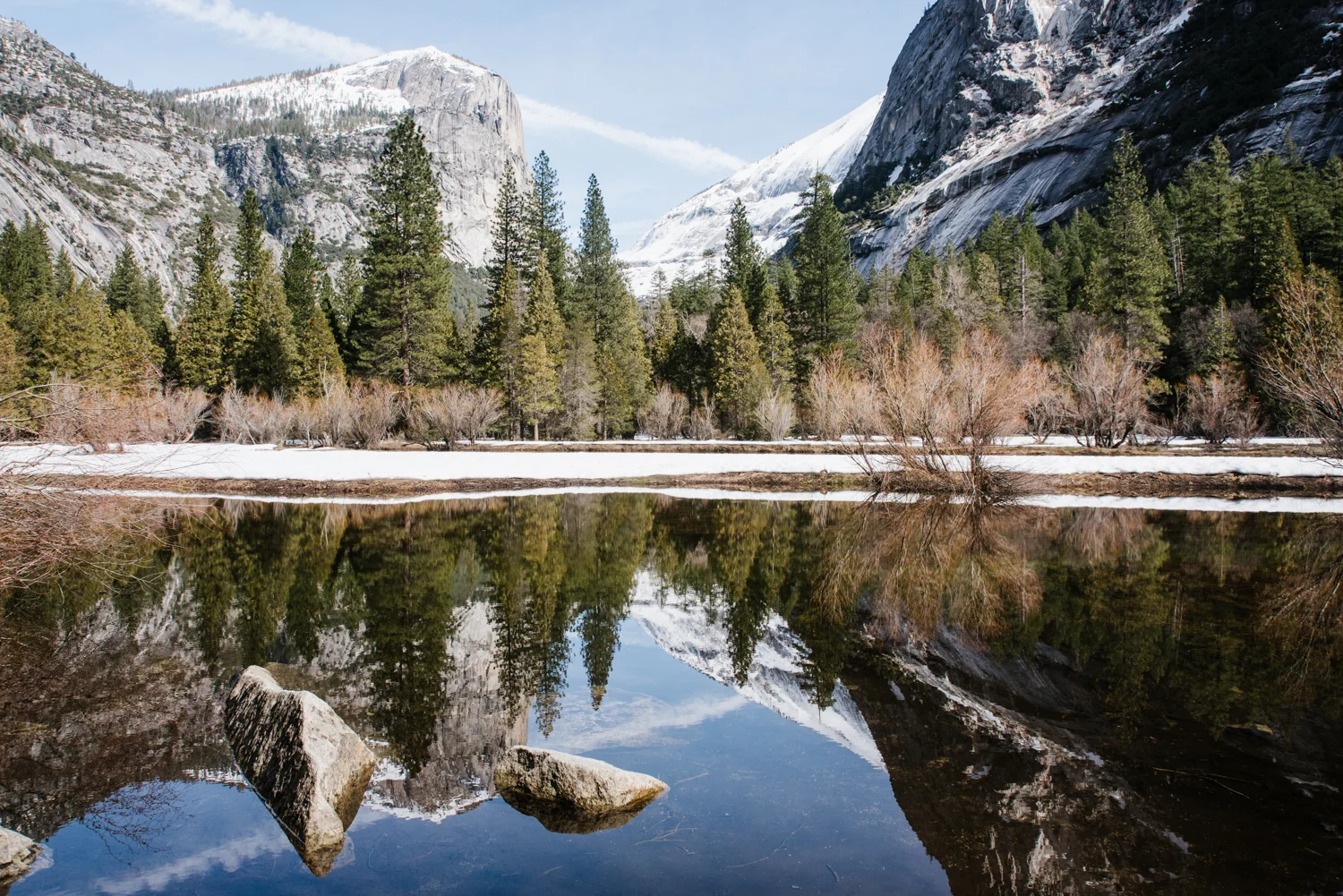


Mirror Lake quickly became one of our favorite stops in Yosemite. The round-trip hike is about 2 miles and follows a mostly flat path through the forest before opening up to one of Yosemite's most iconic views. Thanks to California's exceptionally wet winter, Mirror Lake was completely full during our visit. With calm water and clear skies, the surrounding granite cliffs reflected perfectly across the surface, making the name feel especially fitting.
Technically, Mirror Lake isn't a true lake. It's a seasonal widening of Tenaya Creek that can shrink dramatically later in the year, sometimes becoming more meadow than lake. Visiting while it was full made us appreciate just how much the winter storms had transformed Yosemite.
If you're making the walk, don't stop at the lower pool. Keep following the trail a little farther for the classic view of Half Dome reflected in the water. It's well worth the extra few minutes.
A Hike Toward Vernal Fall


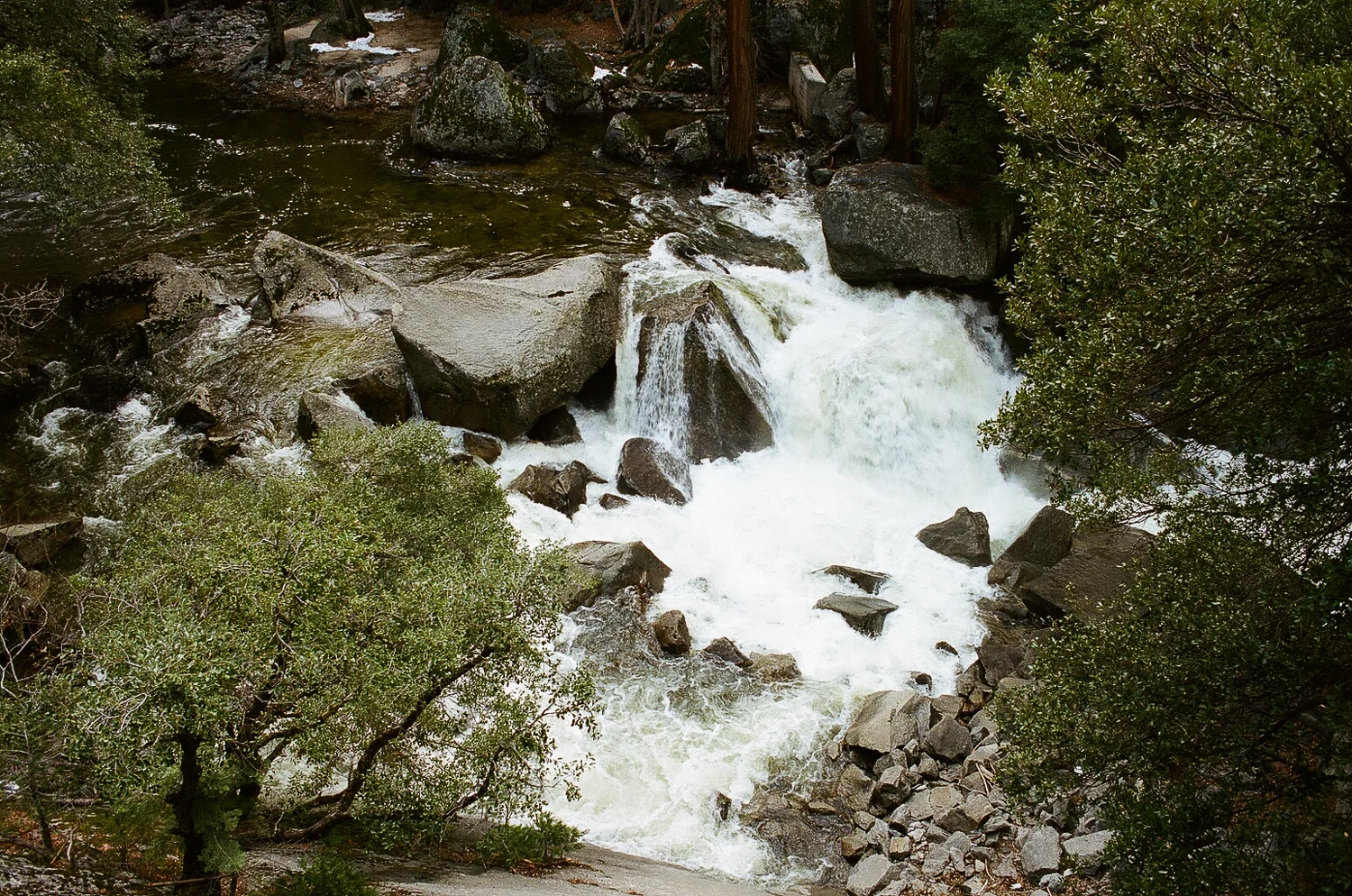

After Mirror Lake, we headed to Happy Isles to hike toward Vernal Fall on the Mist Trail and John Muir Trail. The two trails share the same beginning before eventually splitting apart. Even though we knew we wouldn't be hiking very far that day, it was exciting to step onto the famous John Muir Trail. The climb quickly became steep, with wet rock and rushing water surrounding us.
Unfortunately, this is where my knee had other plans. I was still recovering from an injury, and between the steep trail and the long hike back down, we decided it was smarter to turn around before reaching Vernal Fall. Even without reaching the waterfall, the hike never felt like a disappointment. The Merced River roared below us, and every turn offered another incredible view of the canyon.
Tunnel View & Yosemite Firefall


No visit to Yosemite feels complete without stopping at Tunnel View. As you emerge from the Wawona Tunnel, Yosemite Valley suddenly opens up into one of the most famous views in the National Park System. El Capitan, Bridalveil Fall, and Half Dome all come together in one unforgettable panorama. Even if you've seen countless photos, it's one of those places that somehow feels even more impressive in person.
Firefall - A Valentine's Day Special at Horsetail Fall


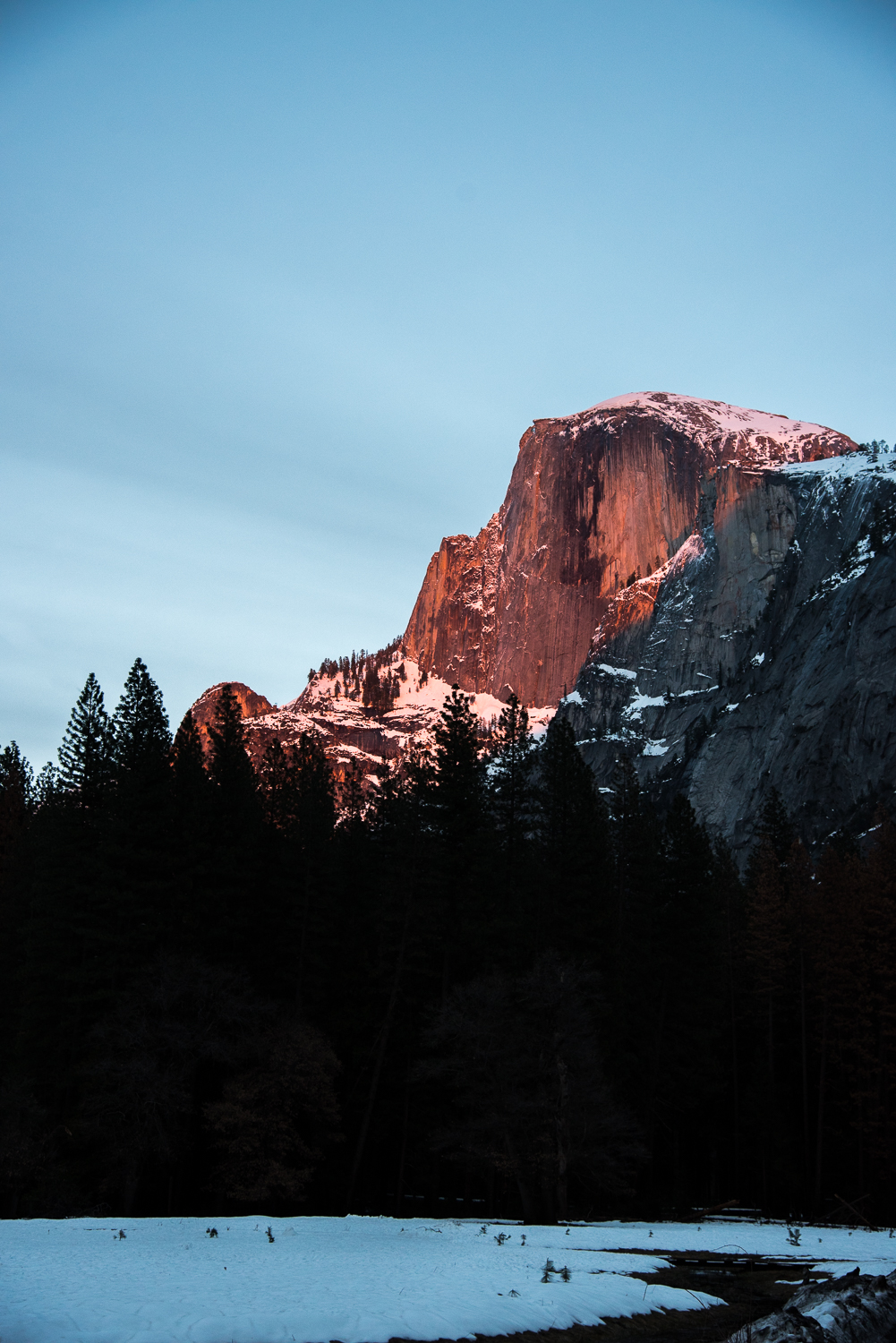
When we planned our Valentine's Day trip, we had no idea it coincided with Yosemite's annual Firefall at Horsetail Fall. We only learned about the phenomenon a day before leaving home, and suddenly understood why the park was filled with photographers carrying giant tripods. That evening, we joined the crowd and waited.
As the sun dropped toward the horizon, Horsetail Fall gradually shifted from white to gold and then to a brilliant orange glow, making it look as though molten lava was flowing down the cliff face. It only lasted a few minutes, but seeing Yosemite's famous Firefall in person was an unforgettable way to end our trip.