

The birds around my apartment are one of the best parts of living here. I may be surrounded by pavement and buildings, but the property has plenty of trees and shrubs. My balcony sits beside a particularly leafy corner, giving me a small window into the lives of the birds nesting nearby.
House Finches and Lesser Goldfinches regularly arrive when I put out seed. Dark-eyed Juncos have even brought their newly fledged young over for snacks. “Yard birds” does not quite fit when the yard is a balcony, but these familiar little neighbors are endlessly entertaining.
My favorite balcony birds are the hummingbirds that nest in the trees just beyond my patio. I have occasionally spotted one of their tiny nests, but the most exciting moment comes after the young birds leave it.
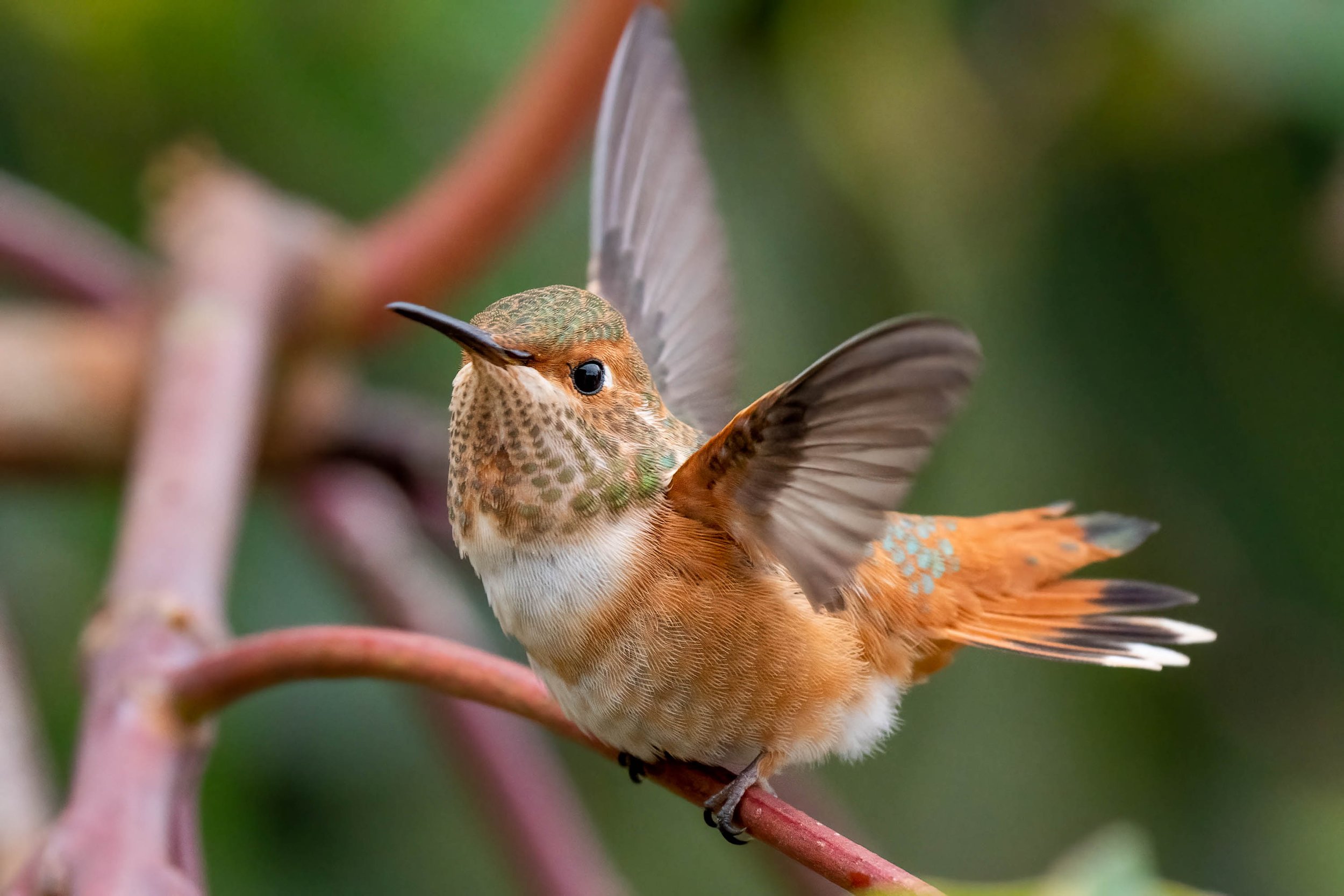
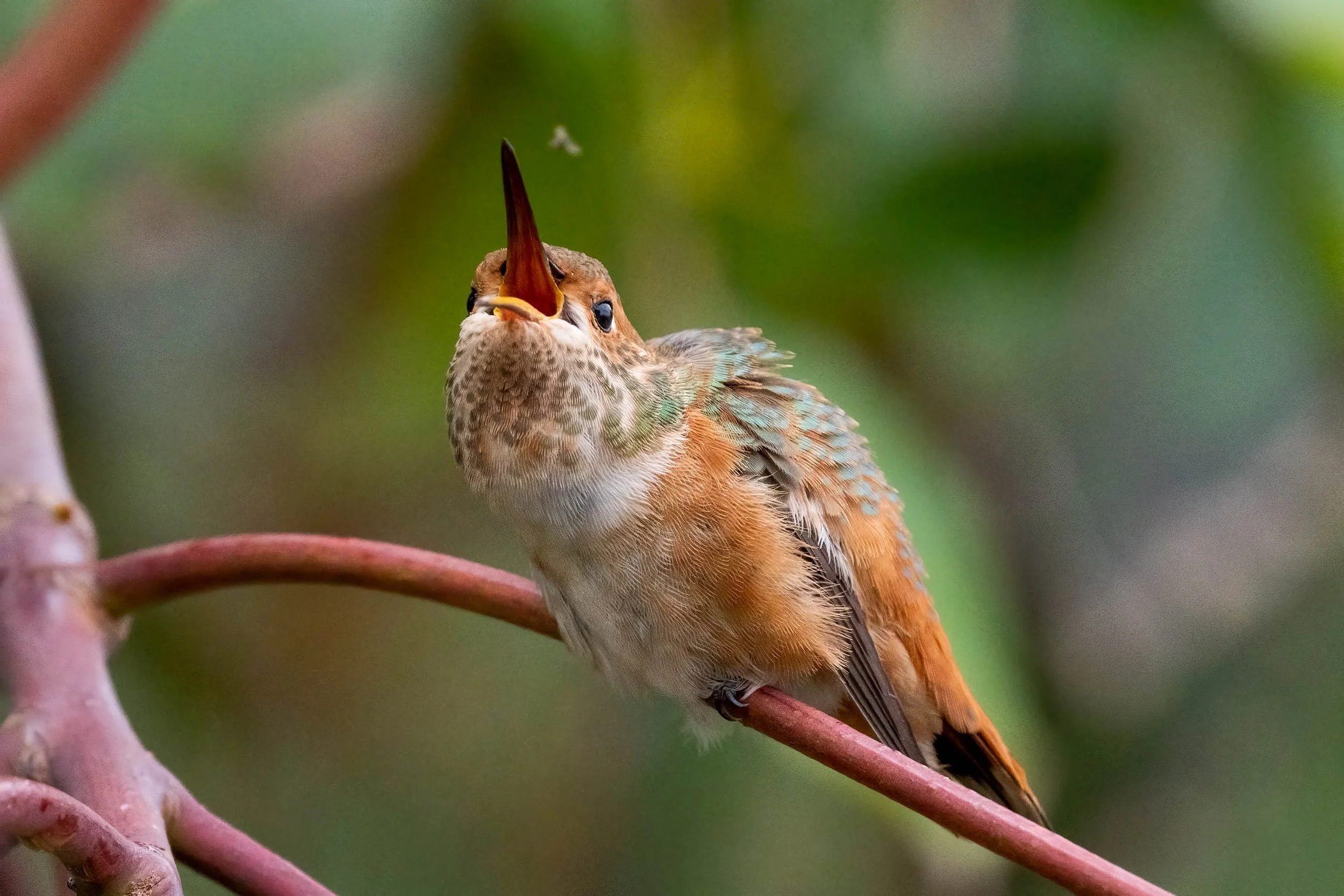
The fledglings settle onto nearby branches, still fluffy and a little uncertain. They squeak repeatedly, shuffle their tiny feet, stretch their wings, and occasionally make clumsy attempts to catch insects. Sometimes they succeed. Sometimes the bug gets away.


That thin, repetitive squeak is a sound I listen for every spring. When hummingbird activity increases around the balcony and the adults become more territorial, I begin watching the trees more carefully.
Depending on the species, young hummingbirds generally spend about three weeks in the nest after hatching. Once they fledge, their mother continues feeding them while they practice flying and learn to find food for themselves.




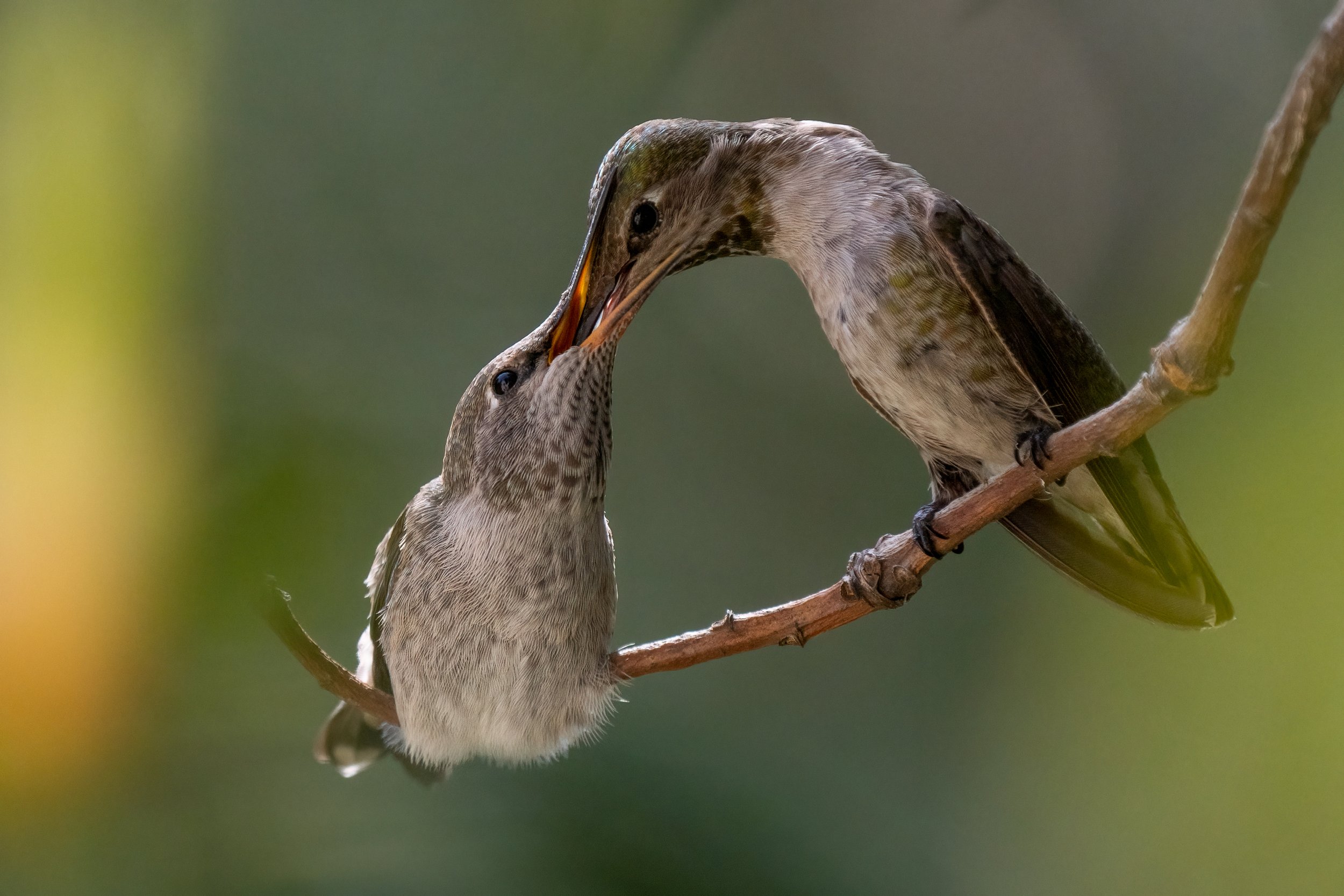
A female hummingbird feeds her young by collecting nectar and tiny insects, then regurgitating the food directly into their mouths. The feeding can look surprisingly intense as she inserts her long bill deeply into the fledgling’s open mouth and moves rapidly. It happens quickly, but the young bird’s eager squeaking often announces the visit before I spot her.


I look forward to these little birds every spring. For a short time, my balcony becomes a front-row seat to their first days outside the nest, complete with squeaks from the trees, trembling wings, missed insects, and tiny feet learning how to hold onto a branch.