Hiking Ryan Mountain in Joshua Tree National Park

If you want an easy-to-follow trail with a strenuous climb and wide-open desert views, Ryan Mountain is a great choice. The hike will have your legs and lungs working almost immediately, but the changing views give you plenty of reasons to stop, catch your breath, and look around.
Ryan Mountain rises 5,457 feet above sea level, high over the surrounding landscape of Joshua Tree National Park. From the summit, the desert opens in every direction, with pale granite formations, distant mountains, and scattered Joshua trees stretching across the valleys below.
Starting the Ryan Mountain Trail
The hike begins at the Ryan Mountain parking area, between Ryan Campground and Sheep Pass. The lot can become crowded during the park’s busiest seasons, particularly on weekends and holidays from fall through spring.
Those cooler months are also the best time to hike Ryan Mountain. The trail has very little shade, and its steady climb makes heat a serious concern. We prefer to start early in the morning, when the air is cooler and the parking area is quieter. The mountain is still there later in the day, but by then, so are a lot more people.
Once you find a parking space, fill your water bottles, apply sunscreen, and take advantage of the vault toilets near the trailhead. The beginning of the trail is easy to spot.
The climbing begins almost immediately. Stone steps lead upward from the parking area, and the trail continues gaining elevation for most of the 1.5 miles to the summit. Three miles round trip may sound short, but with approximately 1,050 feet of elevation gain, it feels like a genuine mountain climb.


Climbing Toward the Summit
The trail winds around the side of Ryan Mountain, revealing broader views as it rises. Several points look as though they might be the summit, only for the trail to bend around another slope and continue upward.
The route is well established and straightforward to follow. Much of it crosses an exposed mountainside, with open views over the desert and steep slopes falling away beside the trail. The path never felt unsafe to us, but the rocky footing and exposed edges still deserved our attention.
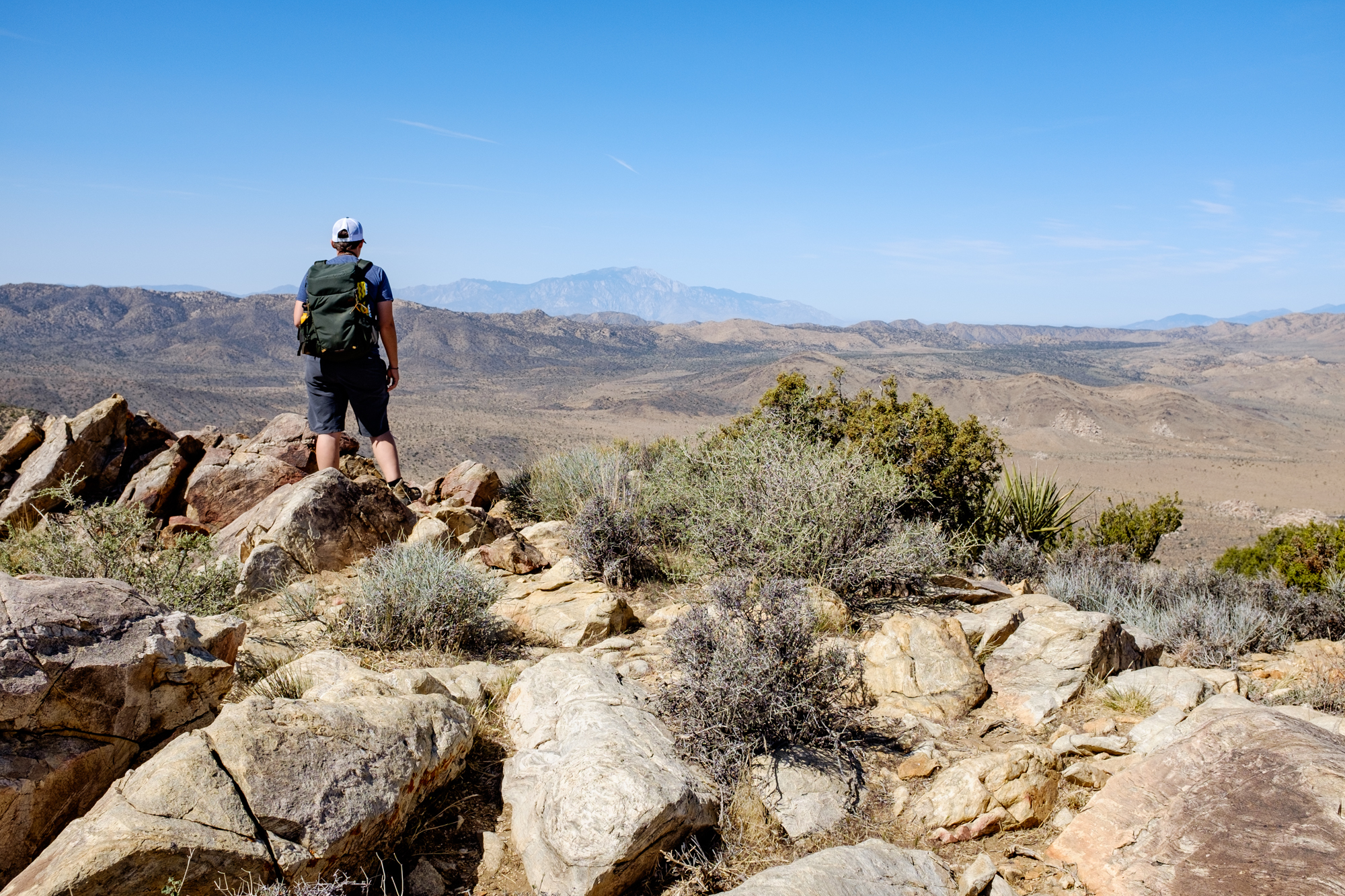
Near the top, we reached an overlook with expansive views across the park. A little farther along, the summit sign stood in the open, easy to spot after the long climb.
There is also a pile of rocks that people scramble onto so they can stand a few feet higher and claim the absolute top. We were content to find one of the larger rocks nearby, pull out our sit pads and snacks, and settle in with a summit beer while looking across the desert.


Views From Ryan Mountain
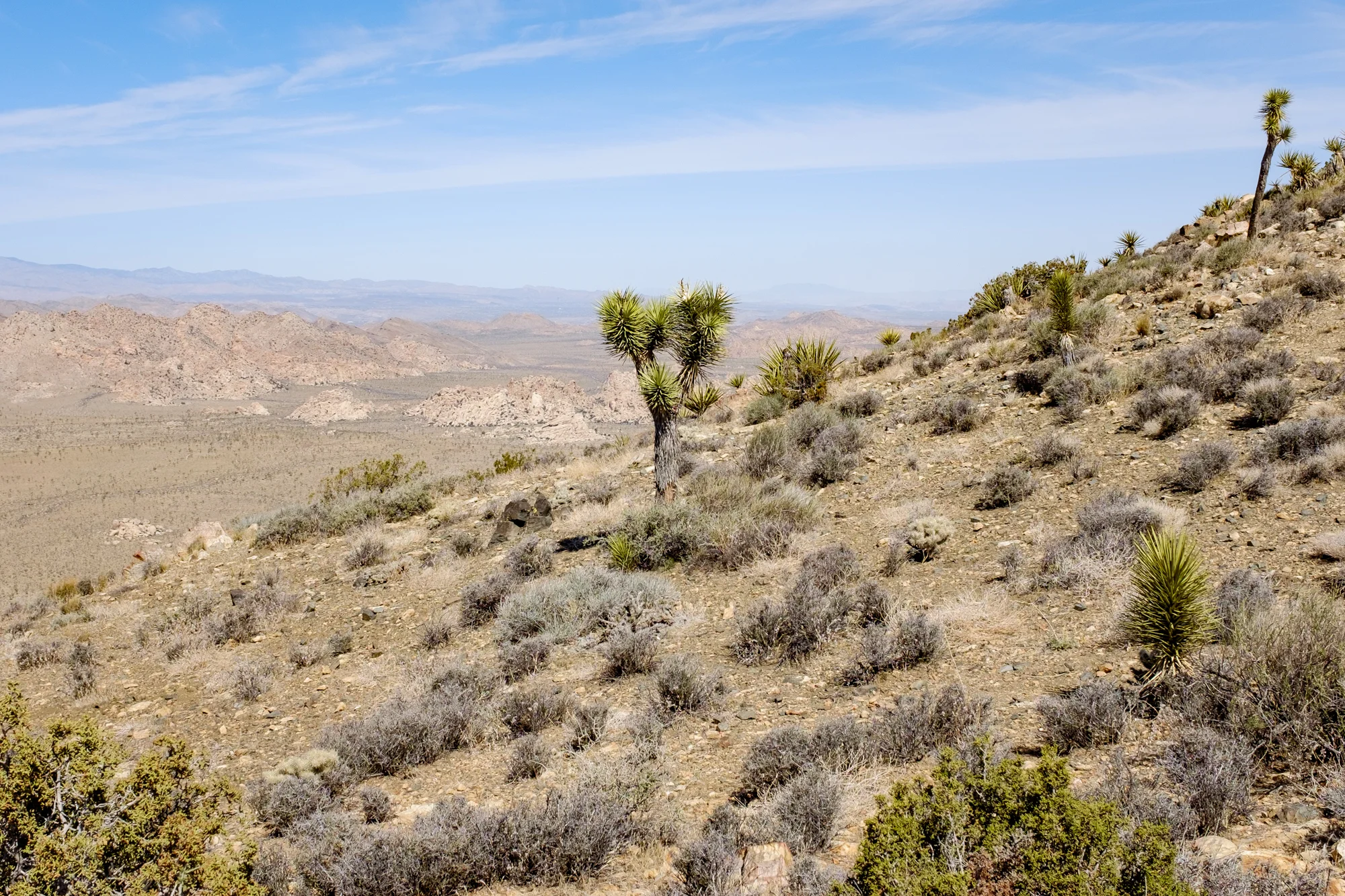
The summit offers a nearly 360-degree view of Joshua Tree National Park. From above, the scale of the landscape becomes much easier to see. Roads and rock formations look small against the broad valleys, while Joshua trees continue across the distant slopes.
One Joshua tree near the summit caught our attention during our first hike in 2015. When we returned in 2018, we photographed it again from almost the same place. Comparing the two images, we could see how little the tree appeared to have changed in more than three years.
Its branches still reached into the open sky in the same irregular shape, enduring the wind and exposed conditions high on the mountain.


Descending Ryan Mountain
The descent is easier on the lungs but harder on the knees. The same stone steps and rocky sections that helped us gain elevation required more care on the way down. Trekking poles are common on this trail for good reason. They can provide extra stability and reduce some of the impact during the steep descent.
Although the trail is strenuous, its relatively short distance makes it approachable for hikers who are comfortable with sustained climbing. There are plenty of places to pause, turn toward the view, and let your breathing settle before continuing.


We usually hike Ryan Mountain early in the morning for the cool air and lighter crowds. The trail can also be beautiful near sunset, when low light spreads across the desert, but the parking lot may still be busy. Anyone hiking late should carry a light and allow enough time for the rocky descent.


Ryan Mountain Hiking Tips
Avoid Hot Weather
There is very little shade on Ryan Mountain. We would not attempt this hike during summer or on an unusually hot day. Even during cooler seasons, an early start makes the climb more comfortable.
Carry Plenty of Water
The short mileage can be misleading. Climbing more than 1,000 feet in an exposed desert environment works up a thirst quickly, and there is no water available at the trailhead.
Use Sun Protection
Sunscreen, a hat, sunglasses, and protective clothing are useful throughout the hike. Most of the route is exposed to direct sun.
Wear Shoes With Good Traction
The trail includes stone stairs, loose gravel, and uneven rock. Shoes with reliable grip are especially helpful during the descent.
Consider Trekking Poles
Poles are not required, but they can make the steep downhill sections more comfortable and provide stability on loose surfaces.
Carry an Extra Layer
The summit is exposed and frequently windy. A light jacket can feel surprisingly good after arriving warm from the climb and sitting still to enjoy the view.
Distance and Elevation
The Ryan Mountain Trail is approximately 3 miles round trip with about 1,050 feet of elevation gain. The National Park Service estimates that the hike takes between 1.5 and 2.5 hours.
Ryan Mountain remains one of our favorite hikes in Joshua Tree. The trail attracts plenty of visitors, but people naturally spread out as everyone climbs at a different pace. At the summit, there is enough room among the rocks to sit quietly, look across the desert, and enjoy the fact that the climbing is finished.