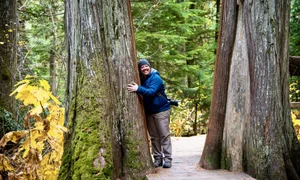
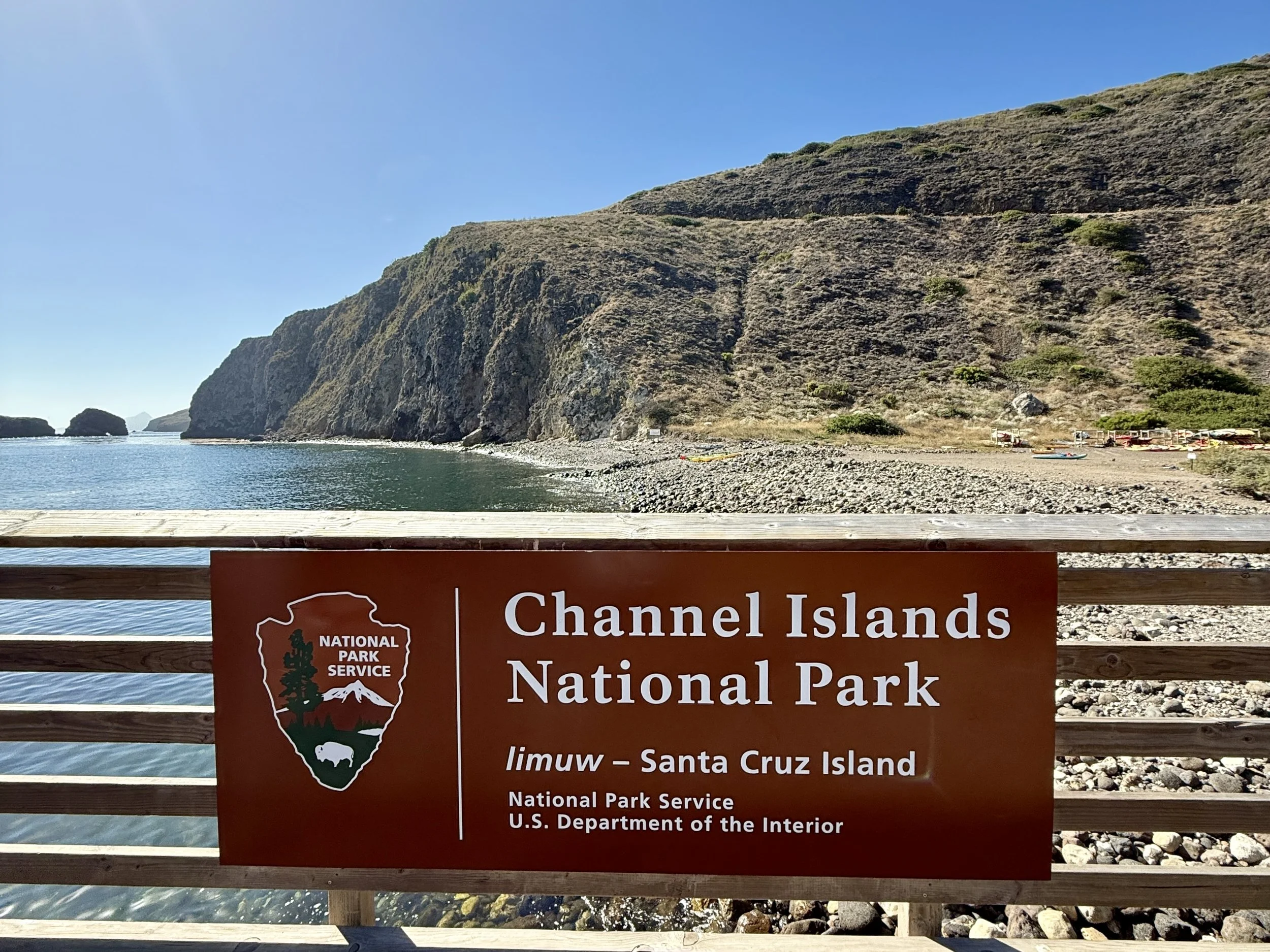
Our 2025 wedding anniversary trip looked a little different from usual. Zoe needed daily medication, so we could not travel far or stay away overnight. A full day on Santa Cruz Island gave us an adventure close enough to be home for her evening dinner.
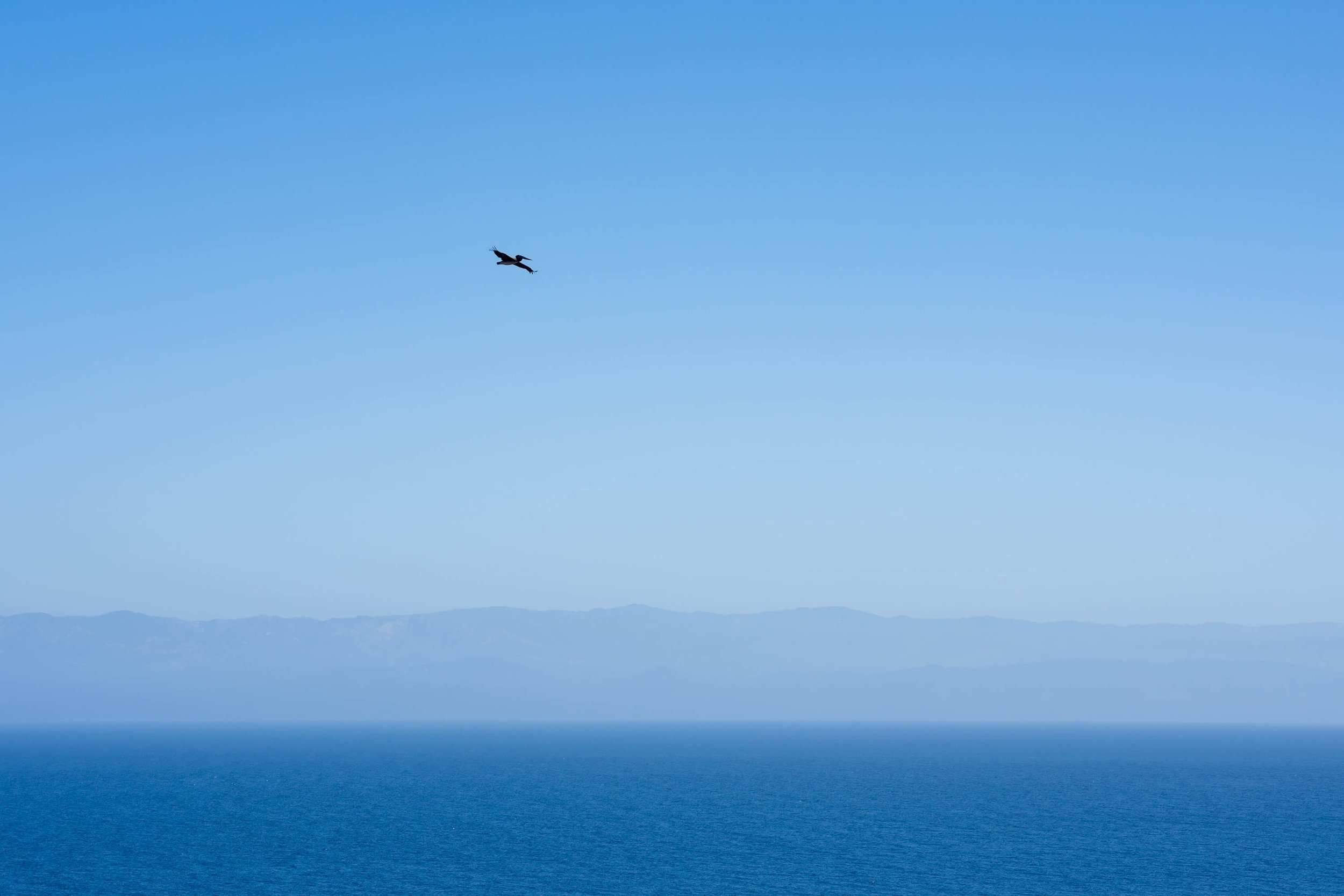
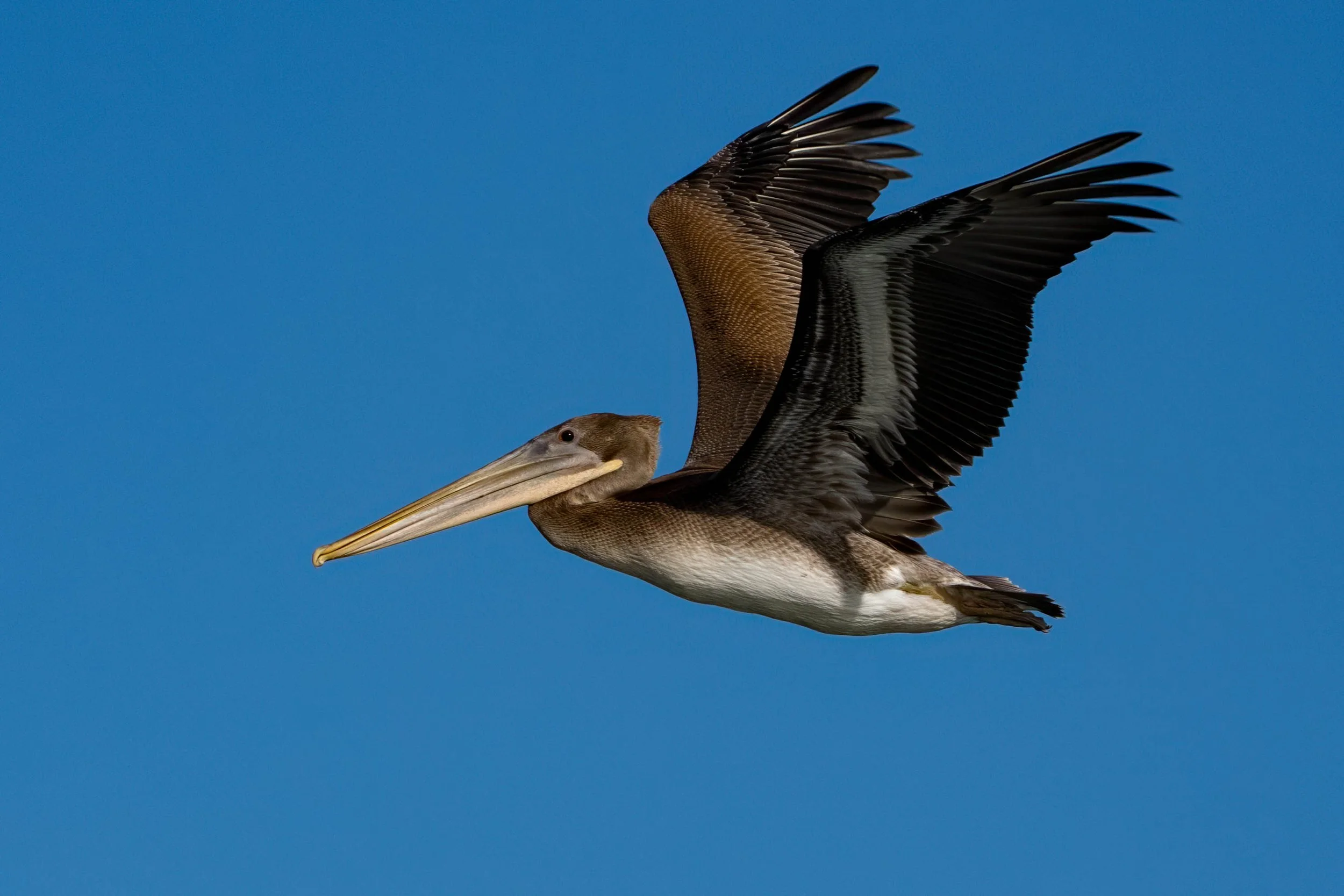
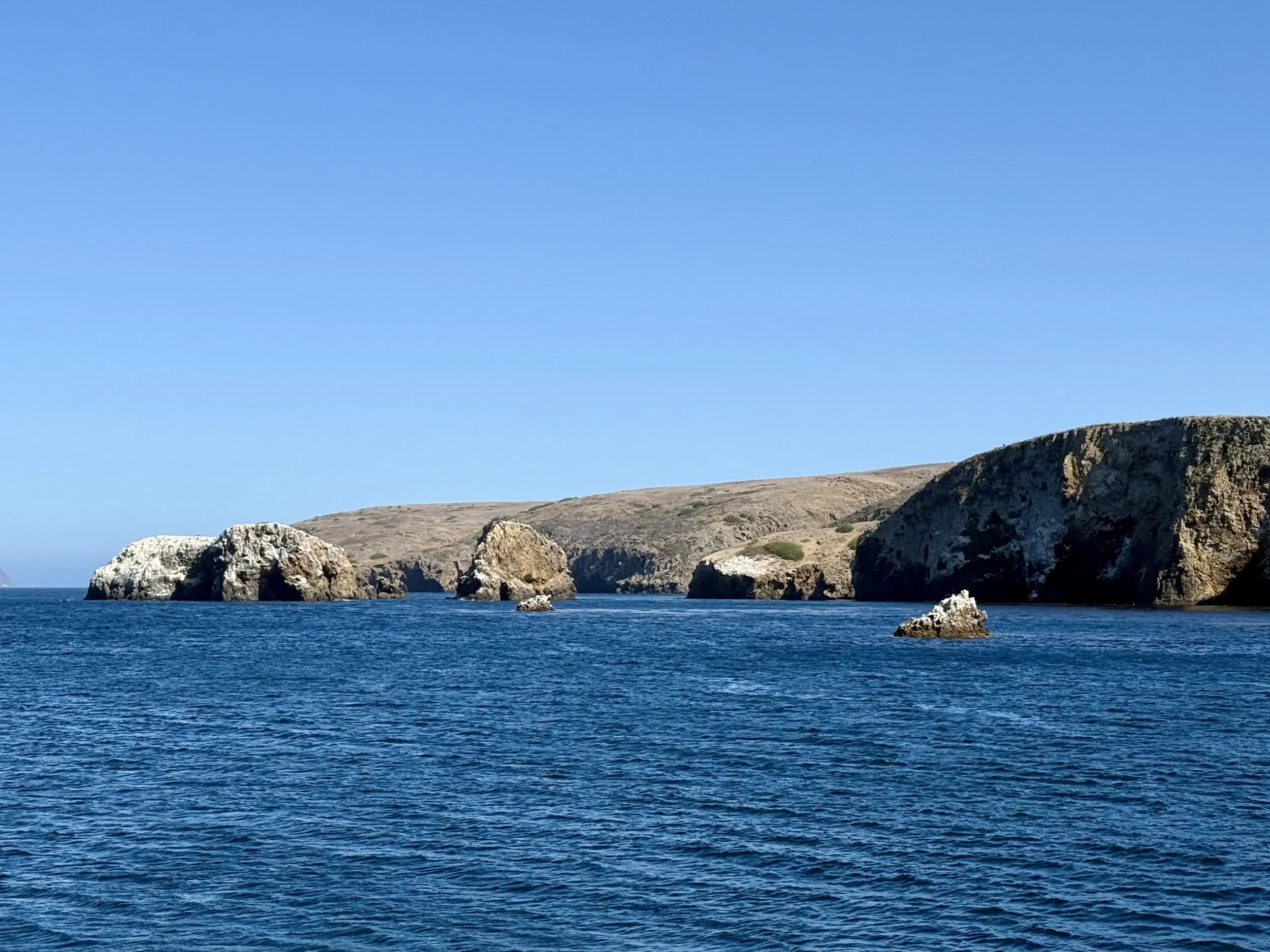
We took the Island Packers boat from Ventura to Scorpion Anchorage. Brown Pelicans and cormorants passed along the route, and Common Dolphins joined us on the crossing. Santa Cruz slowly rose from the Pacific ahead of us, its dry ridges and sea cliffs becoming clearer as we approached.
Santa Cruz Island
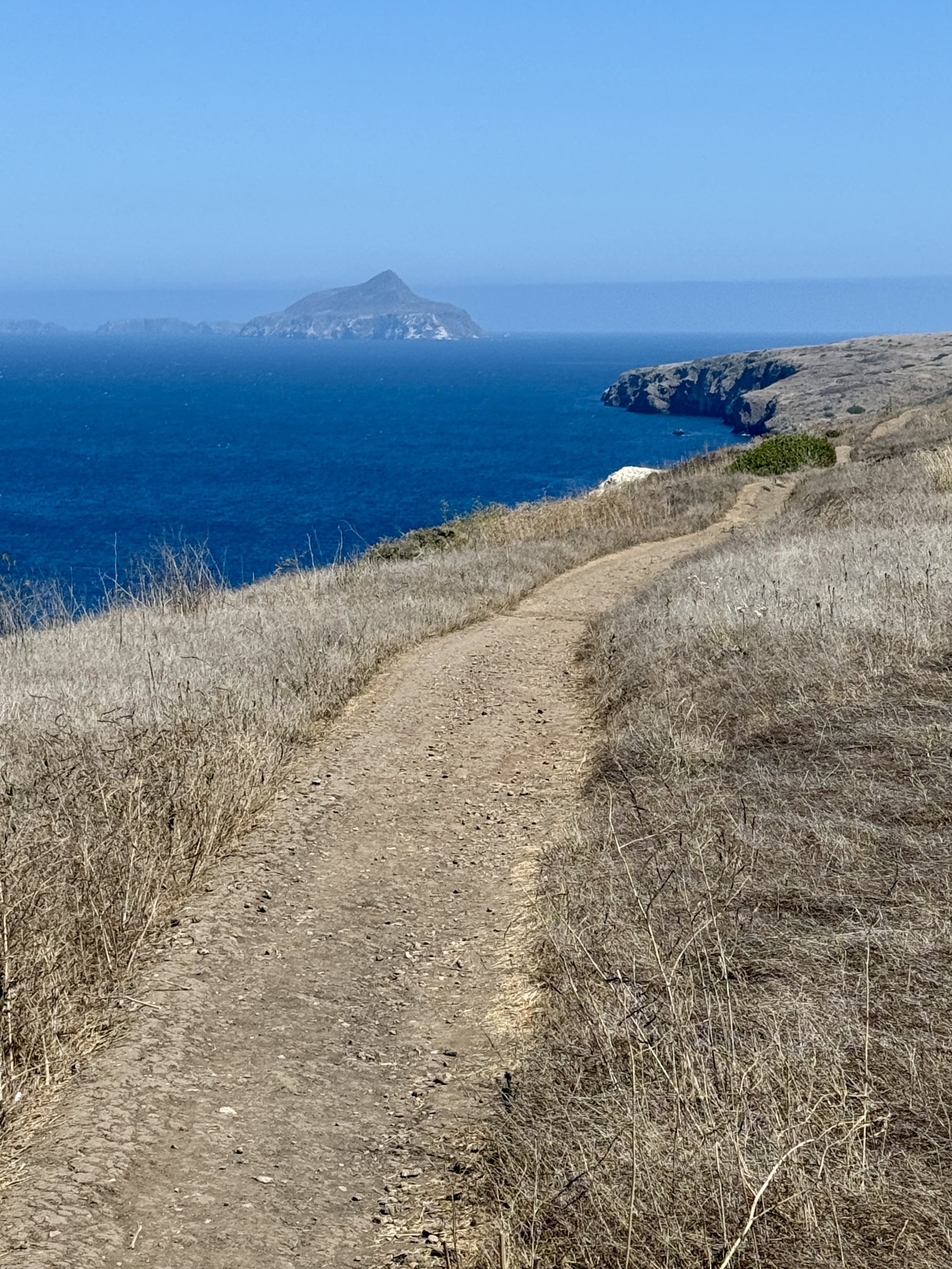
Santa Cruz is the largest of the Channel Islands, and the National Park Service manages its eastern end. From Scorpion Anchorage, trails climb through grassland, coastal scrub, and chaparral or follow the shoreline above rocky coves and sea caves.
The island feels much farther from Los Angeles than an hour-long boat ride should allow. Its isolation has also shaped wildlife found nowhere else, including the Island Scrub-Jay and the Santa Cruz Island Fox.
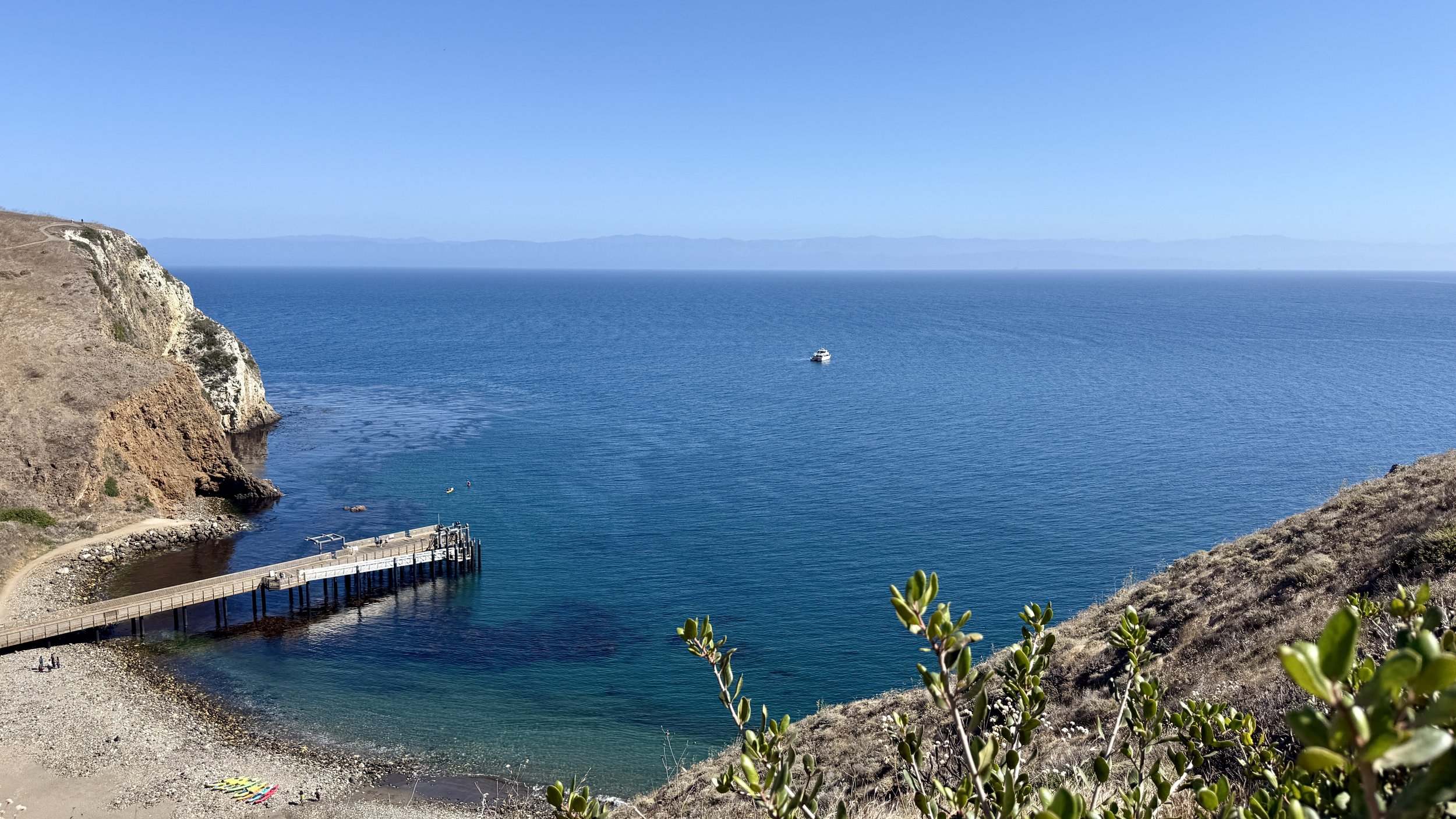
Walking from Scorpion Anchorage
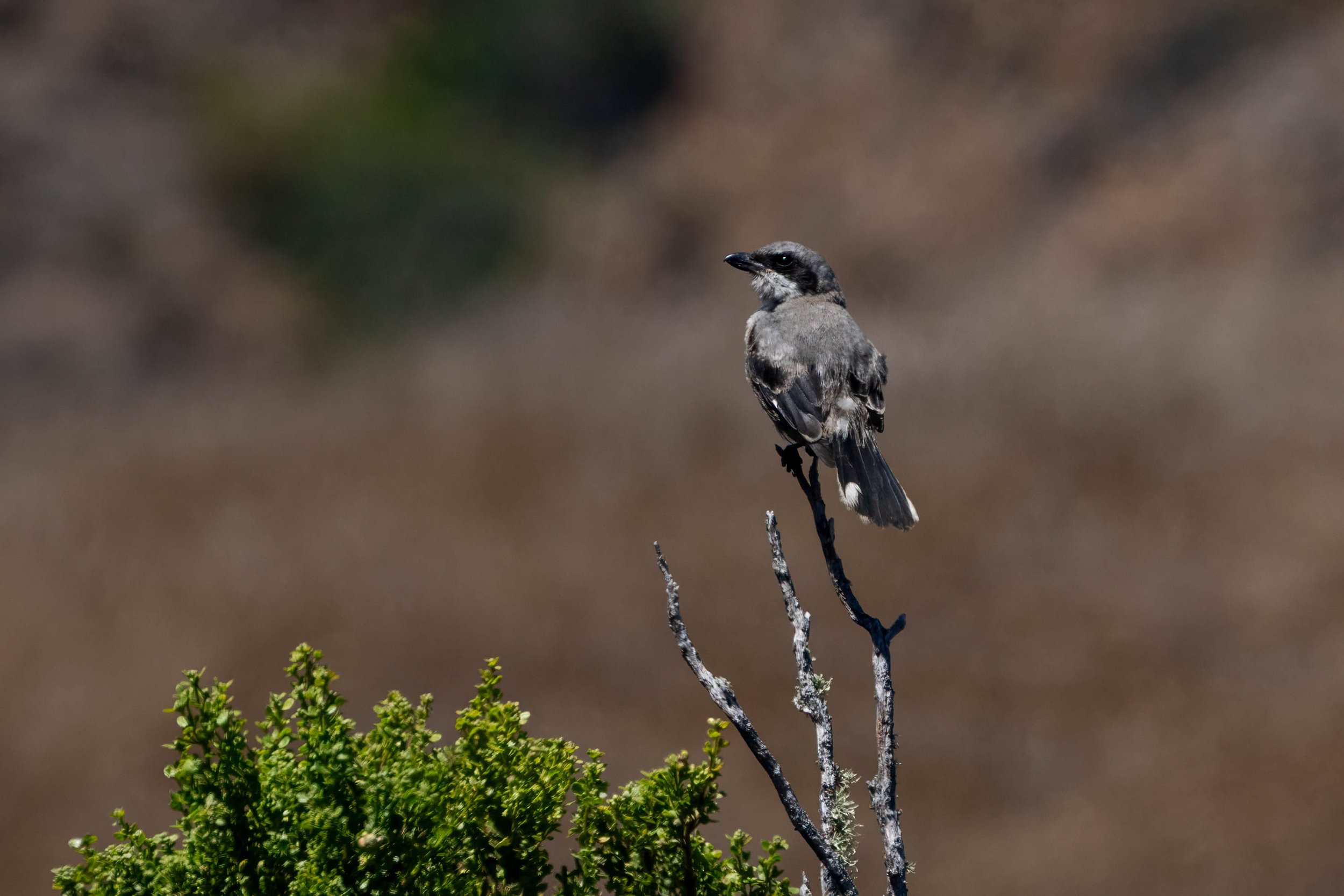
We followed Smugglers Road through open grassland, where the long sight lines kept us scanning fence lines and scattered shrubs. A Loggerhead Shrike perched upright above the trail, watching the ground for movement.
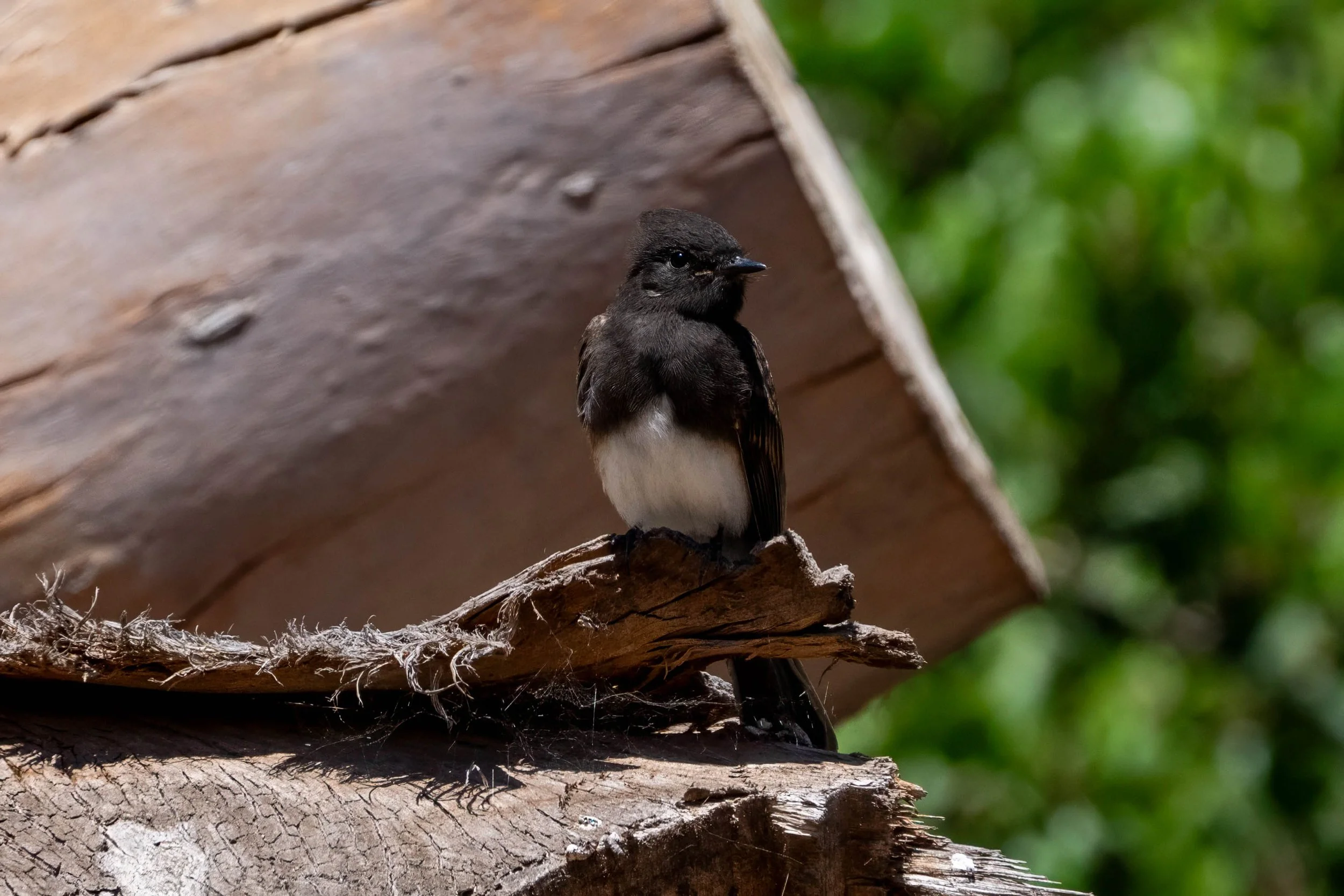
Upper Scorpion Canyon brought us into thicker scrub, the kind of habitat where Island Scrub-Jays can appear suddenly and vanish just as quickly. Around the campground and old ranch buildings, Black Phoebes flicked their tails from low perches.
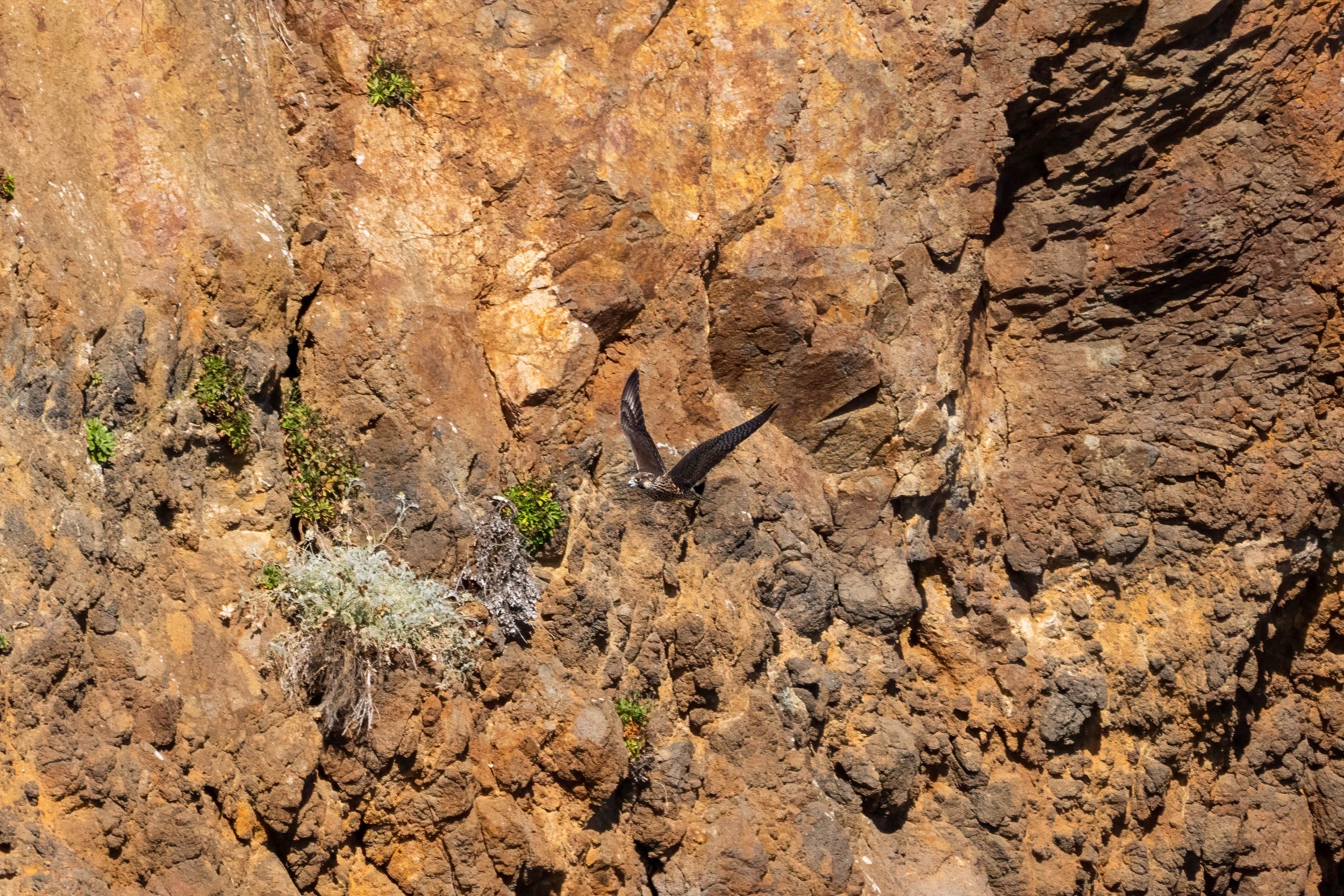
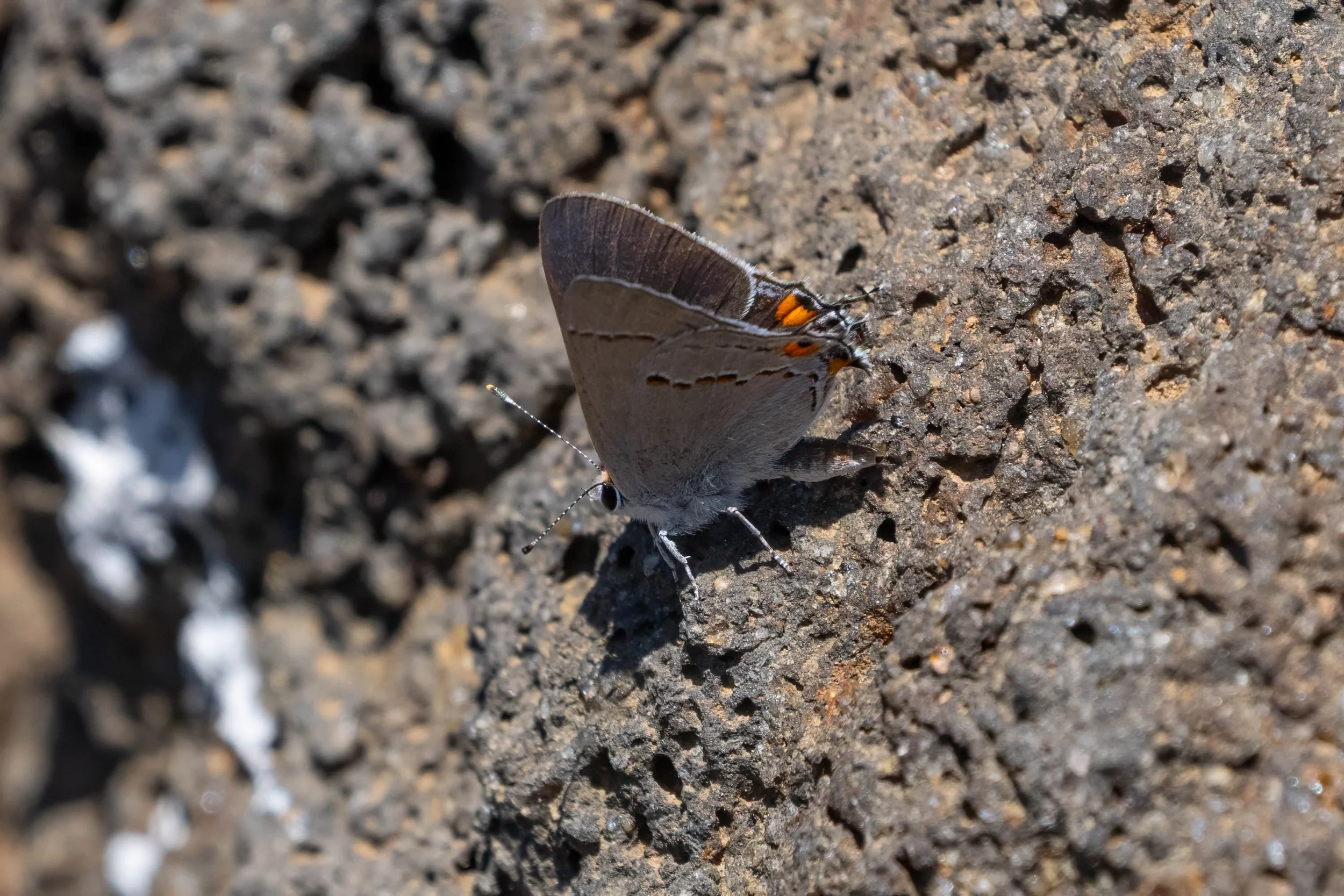
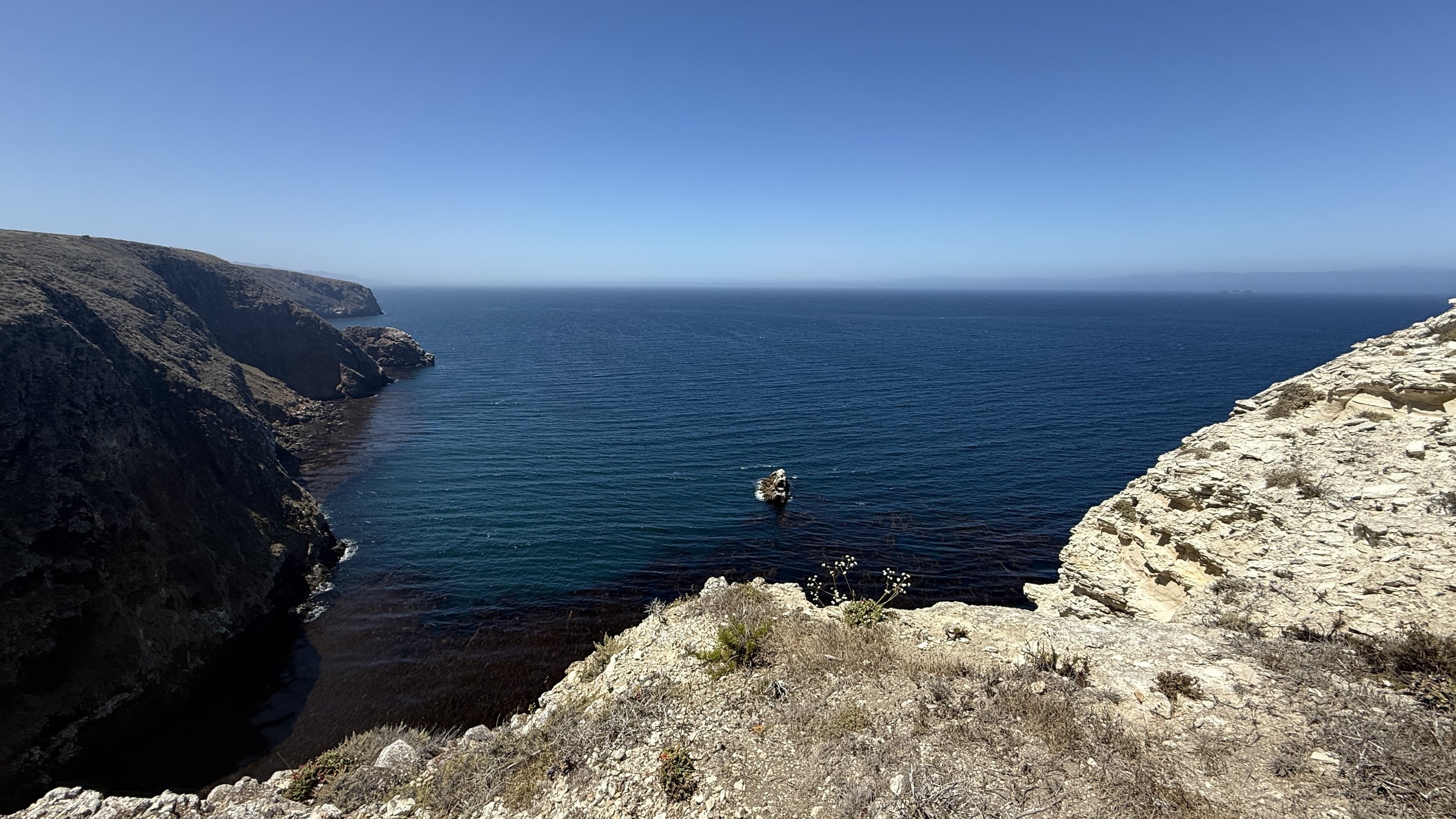
We also walked to Cavern Point, where the trail rises above the ocean and looks down along the cliffs and sea caves. We had already spotted a Peregrine Falcon from the boat as we approached the island. During our picnic, Brown Pelicans sailed past the bluff, and a small Gray Hairstreak butterfly lingered beside us.
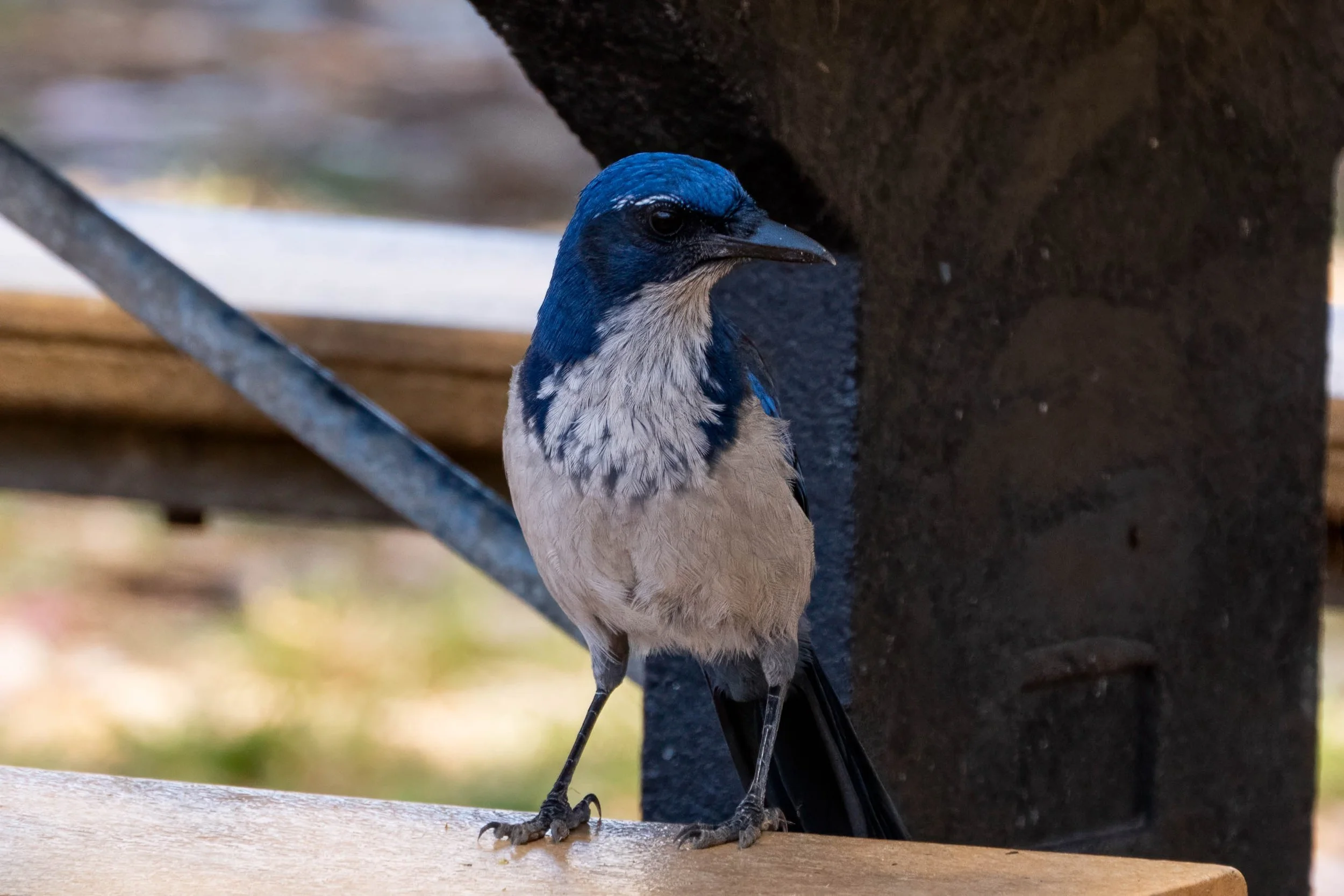
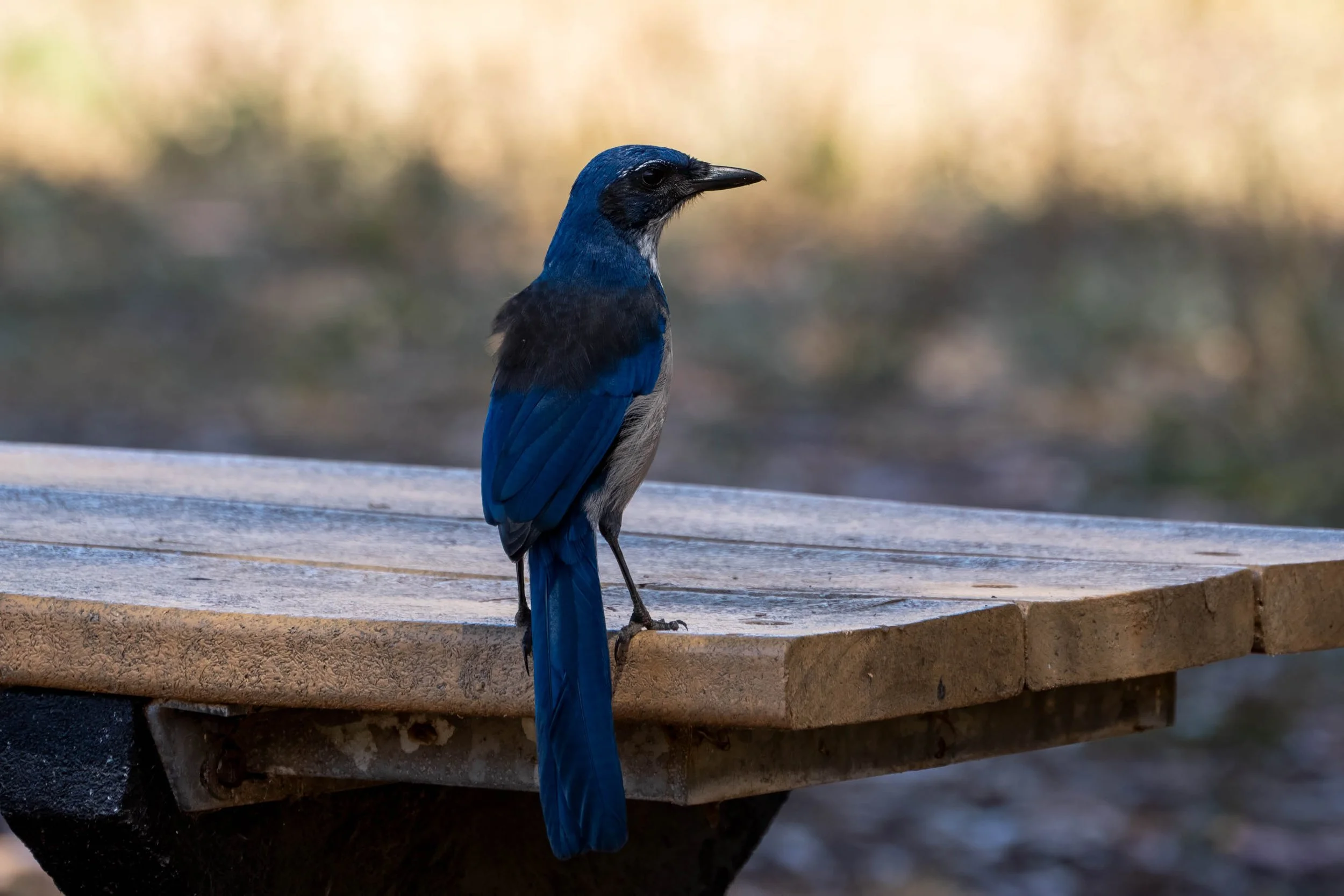
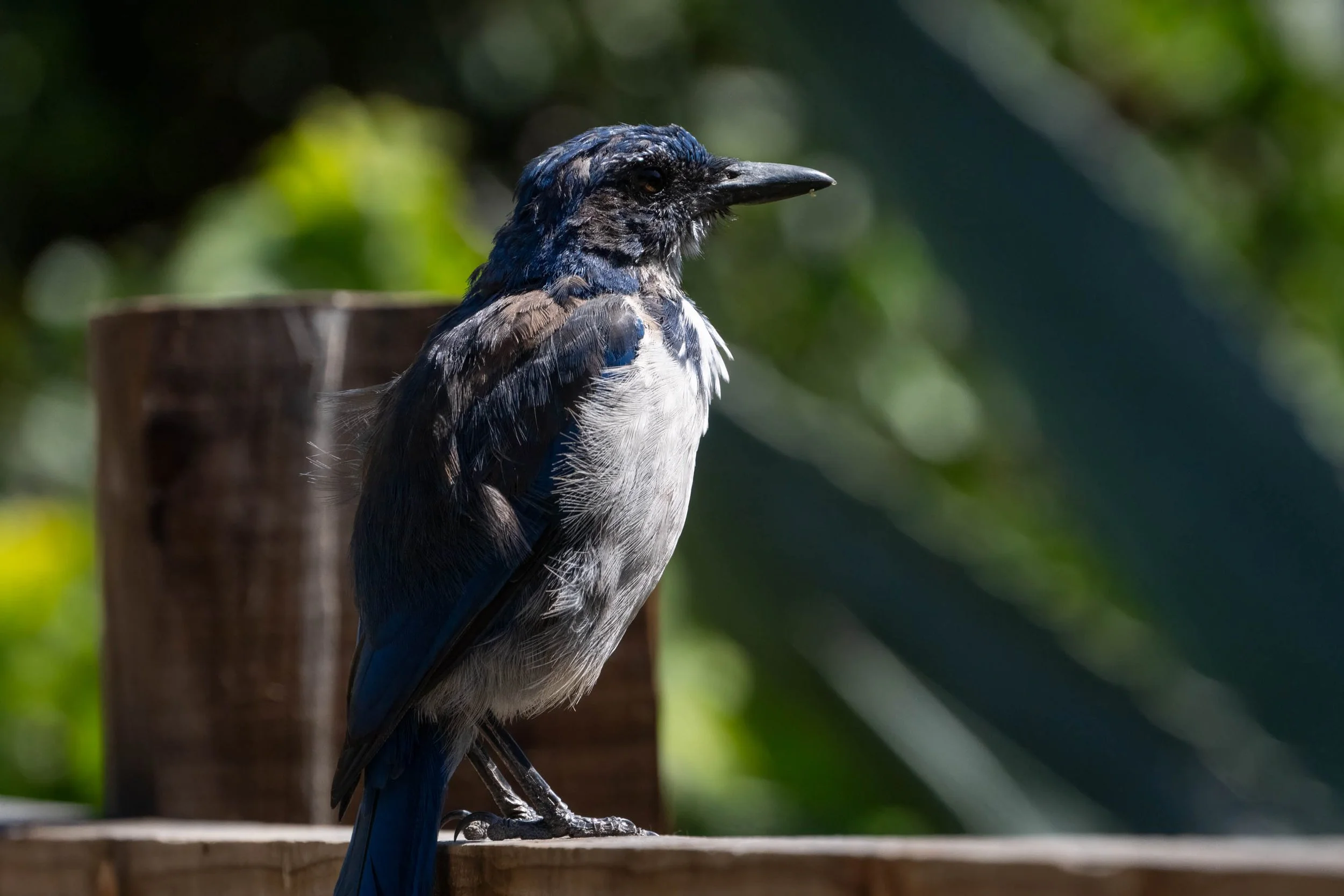
Island Scrub-Jays
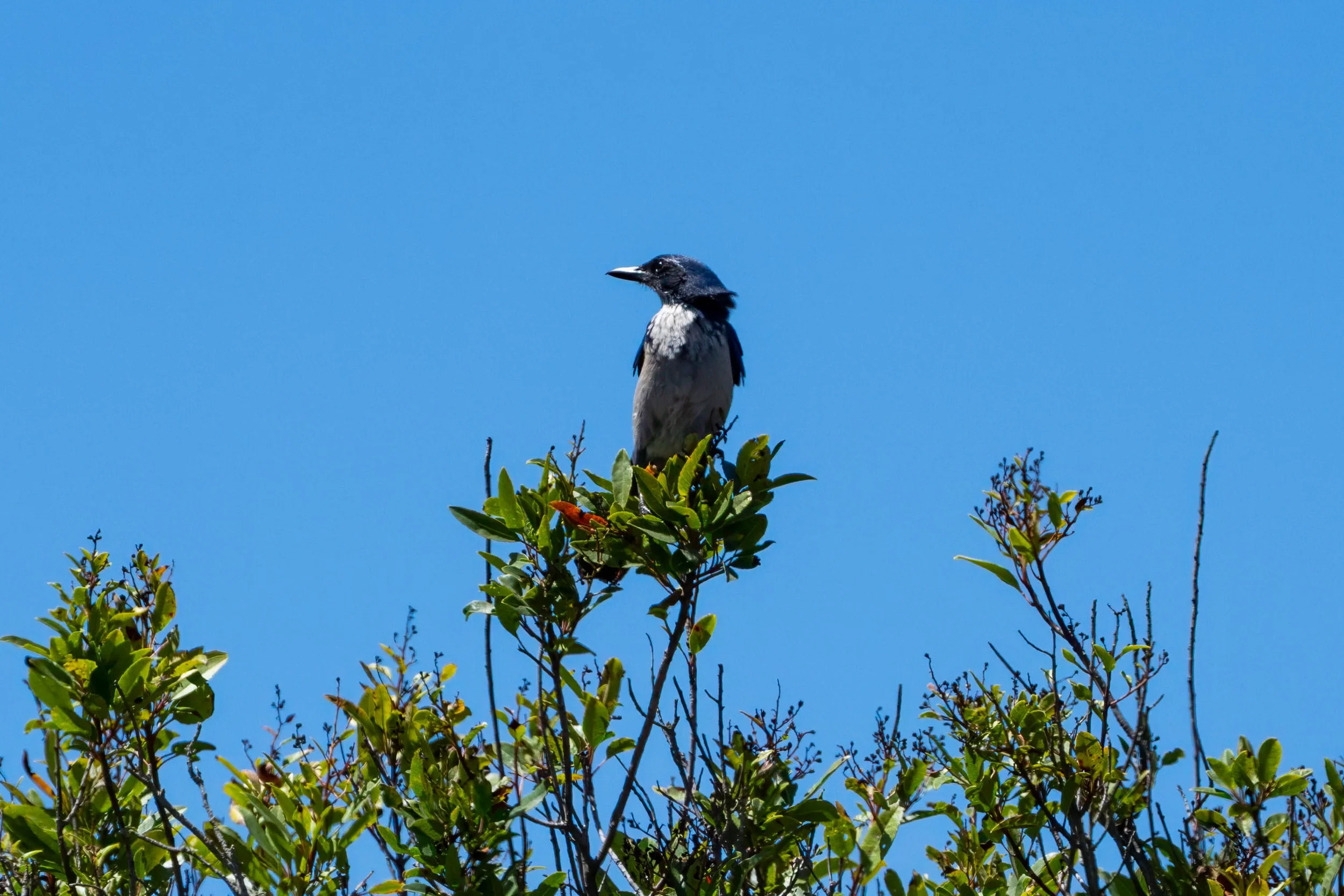
Island Scrub-Jays live only on Santa Cruz Island. They are larger and more heavily billed than the California Scrub-Jays we know from the mainland, with deep blue plumage that stands out against the dry chaparral.
They are bold and curious, but finding them still requires listening and watching the scrub. Their habit of caching acorns also helps disperse the island's native oaks. Seeing one feels inseparable from the place itself. There is nowhere else on Earth where the same bird can appear.
Island Foxes
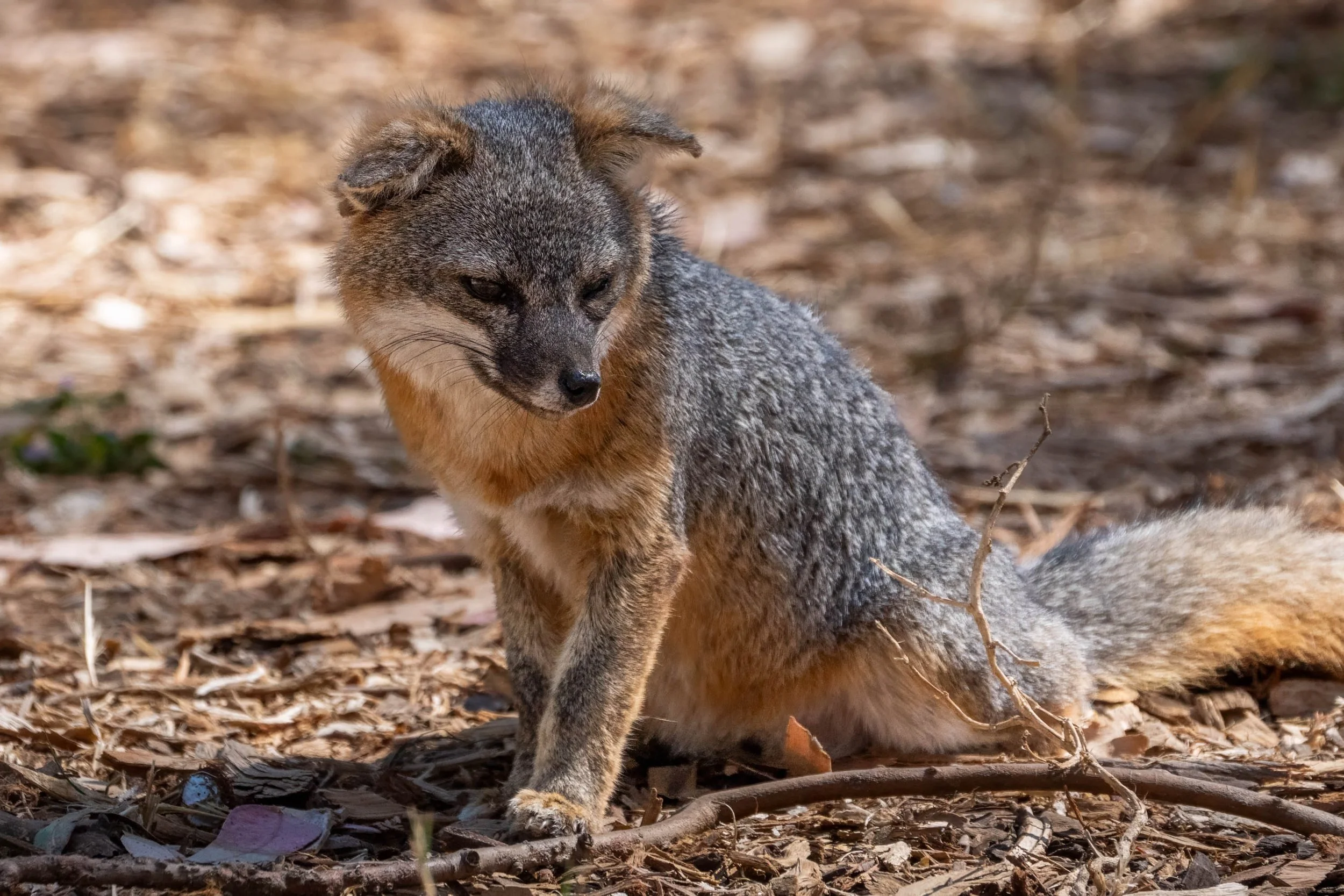
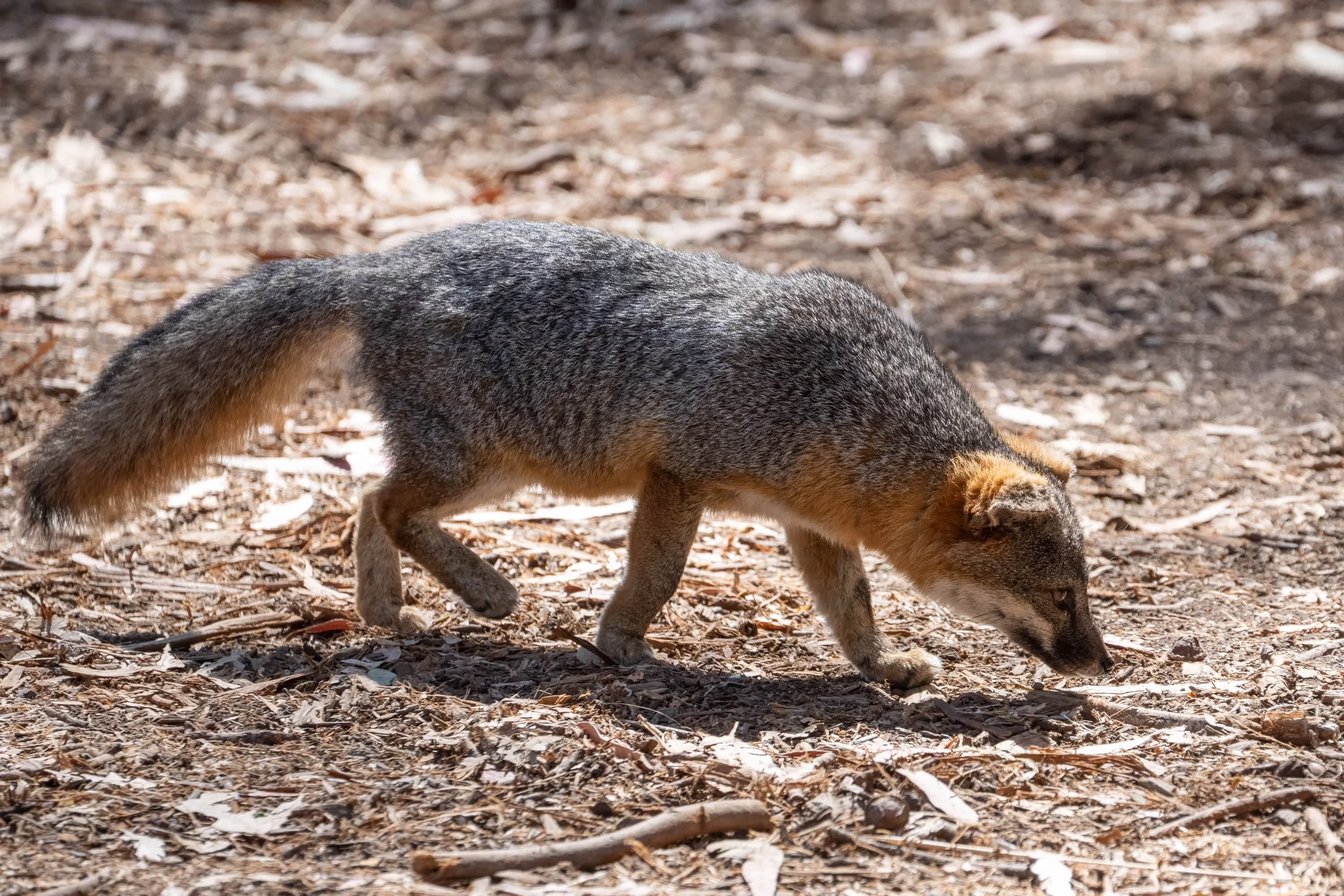
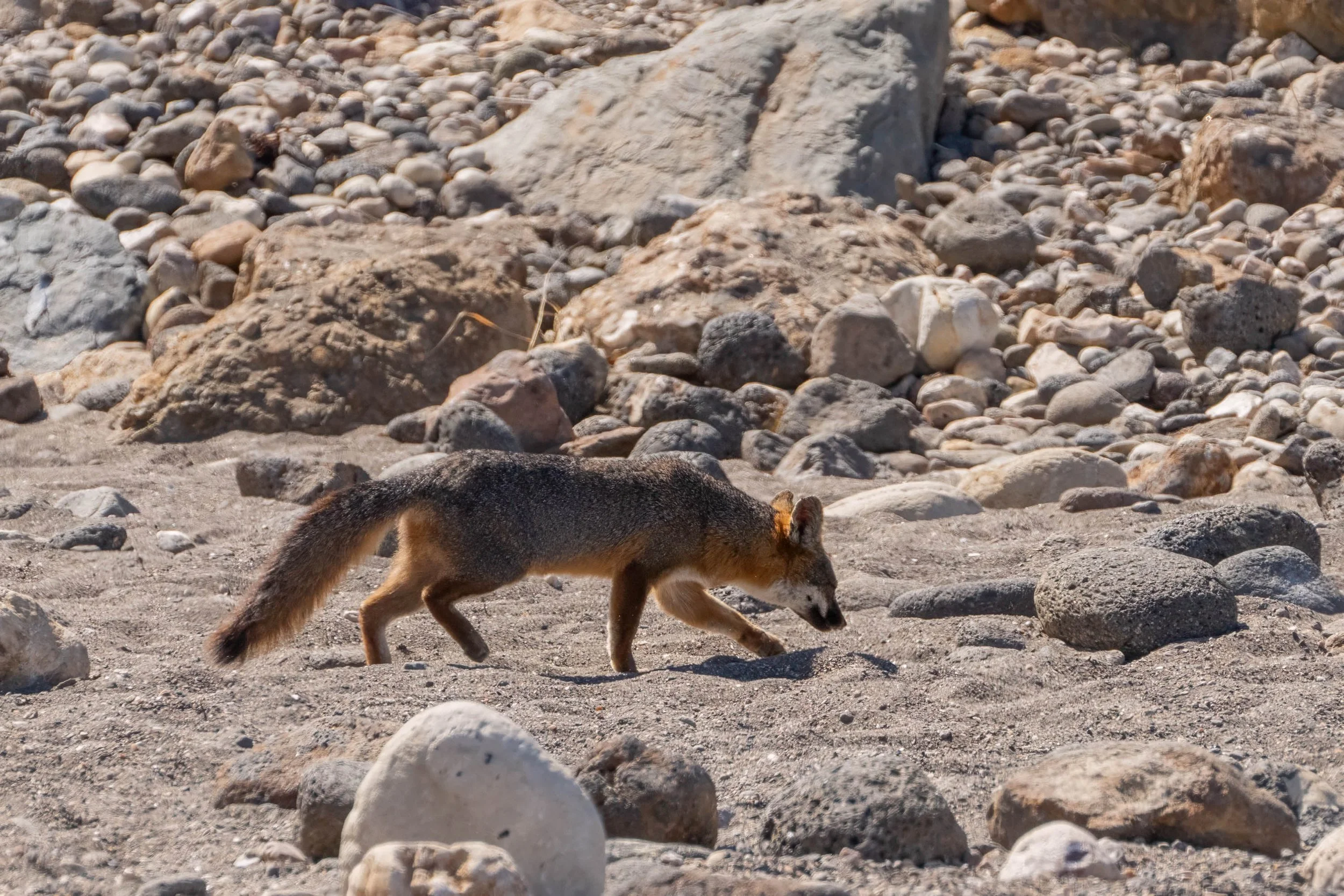
Our first Island Fox walked within a few feet of a picnic table where campers were eating a rather loud lunch. It was completely unbothered. Later, we watched more foxes strolling along the rocky shore among people on the beach.
Island Foxes are descendants of the mainland gray fox, but thousands of years of isolation have made them smaller and distinct. Each of the six Channel Islands with foxes has its own subspecies.
Their relaxed presence hides a remarkable recovery story. By the early 2000s, predation by Golden Eagles had pushed the Santa Cruz Island population close to extinction. Captive breeding, feral pig removal, eagle relocation, and the return of Bald Eagles helped the foxes recover. Now they are once again a regular part of a day on the island.
Native Plants
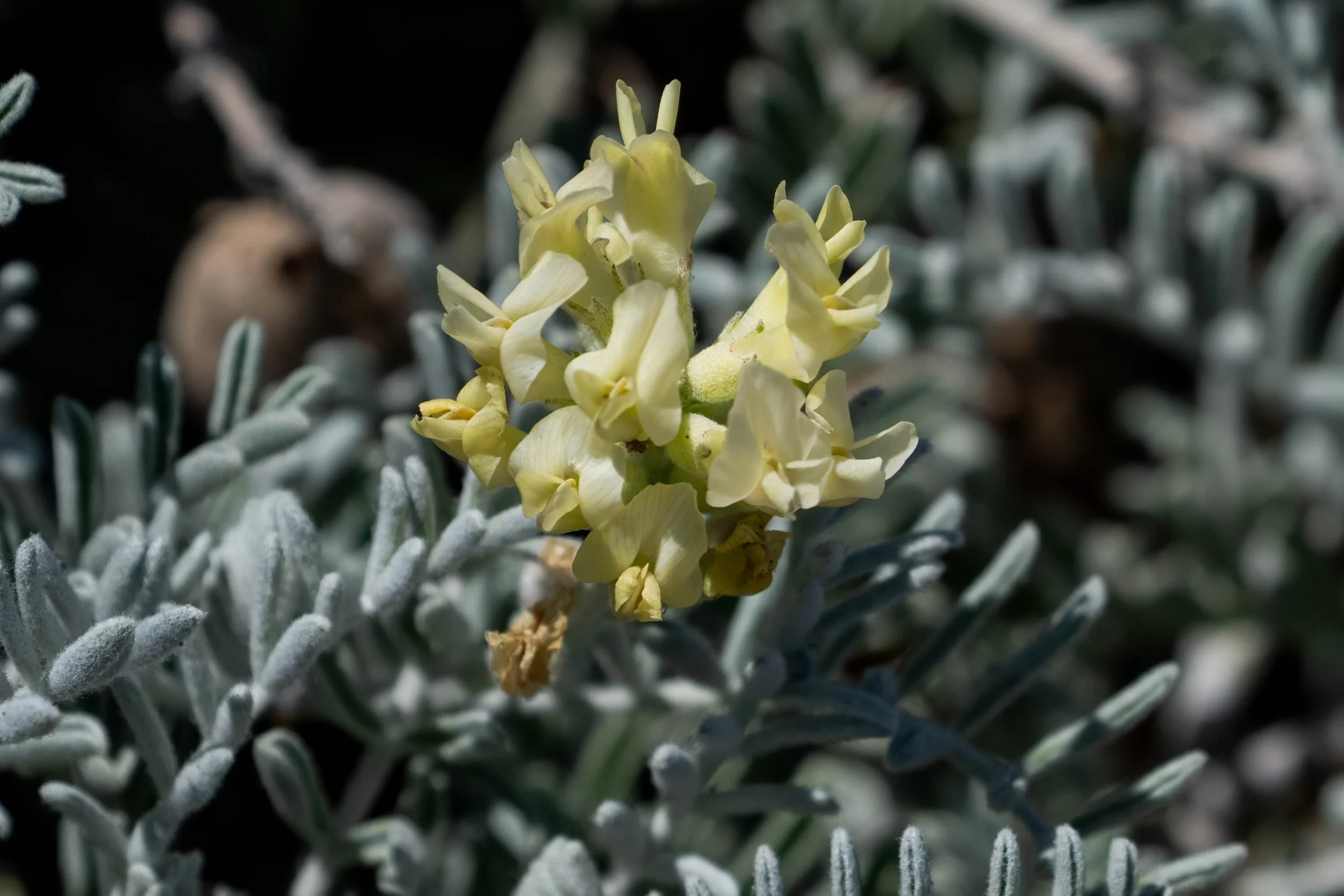
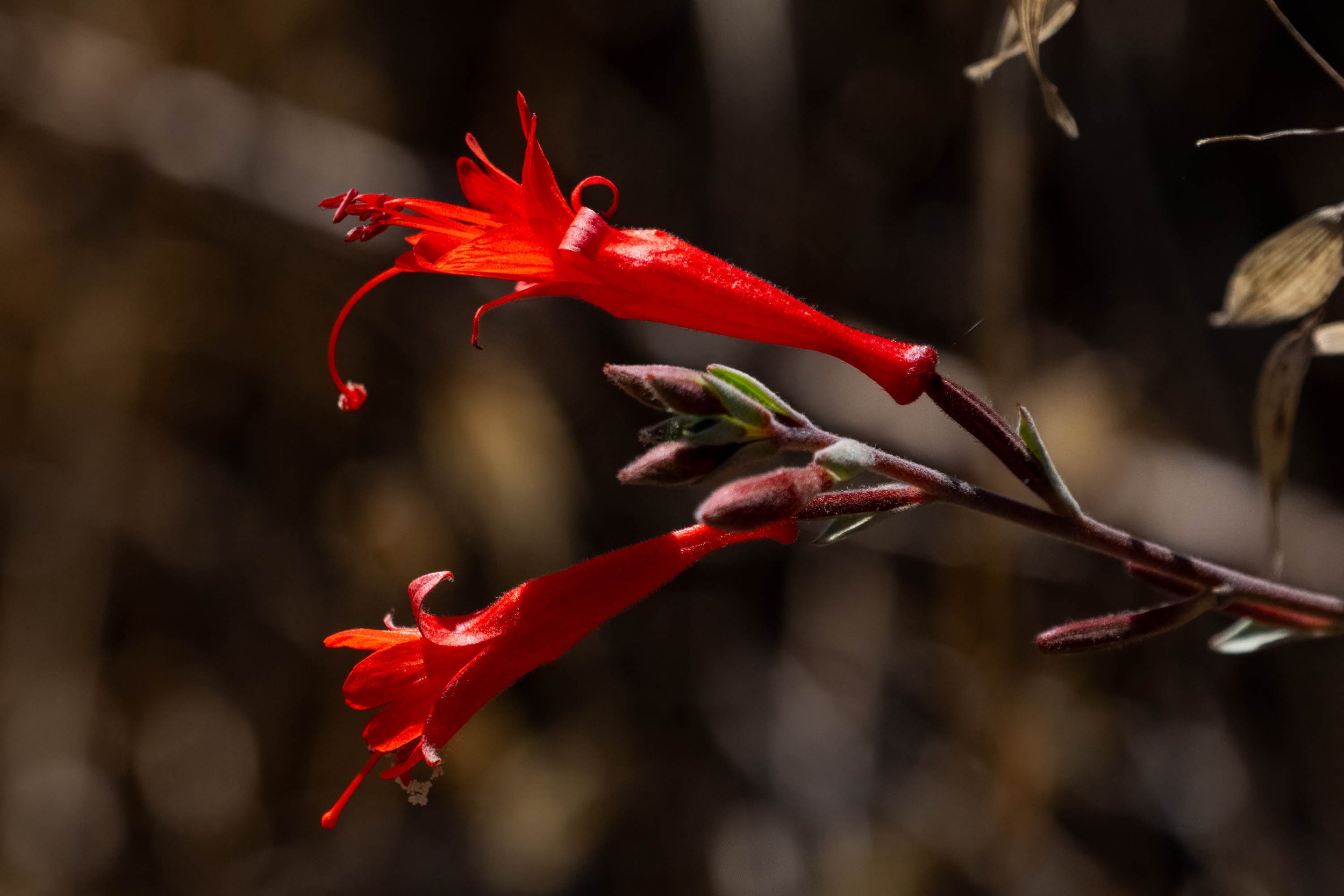
The island's plant life carries the same sense of isolation. Coastal scrub and chaparral recover across slopes once heavily affected by grazing animals. Depending on the season, the trails may pass Santa Cruz Island buckwheat and giant coreopsis, whose tall stems and yellow flowers can cover coastal hillsides in spring - but not in August. We also saw lots of Redflower Buckwheat, Coast Dudleya, San Miguel Island Milkvetch, and California Fuchsia.
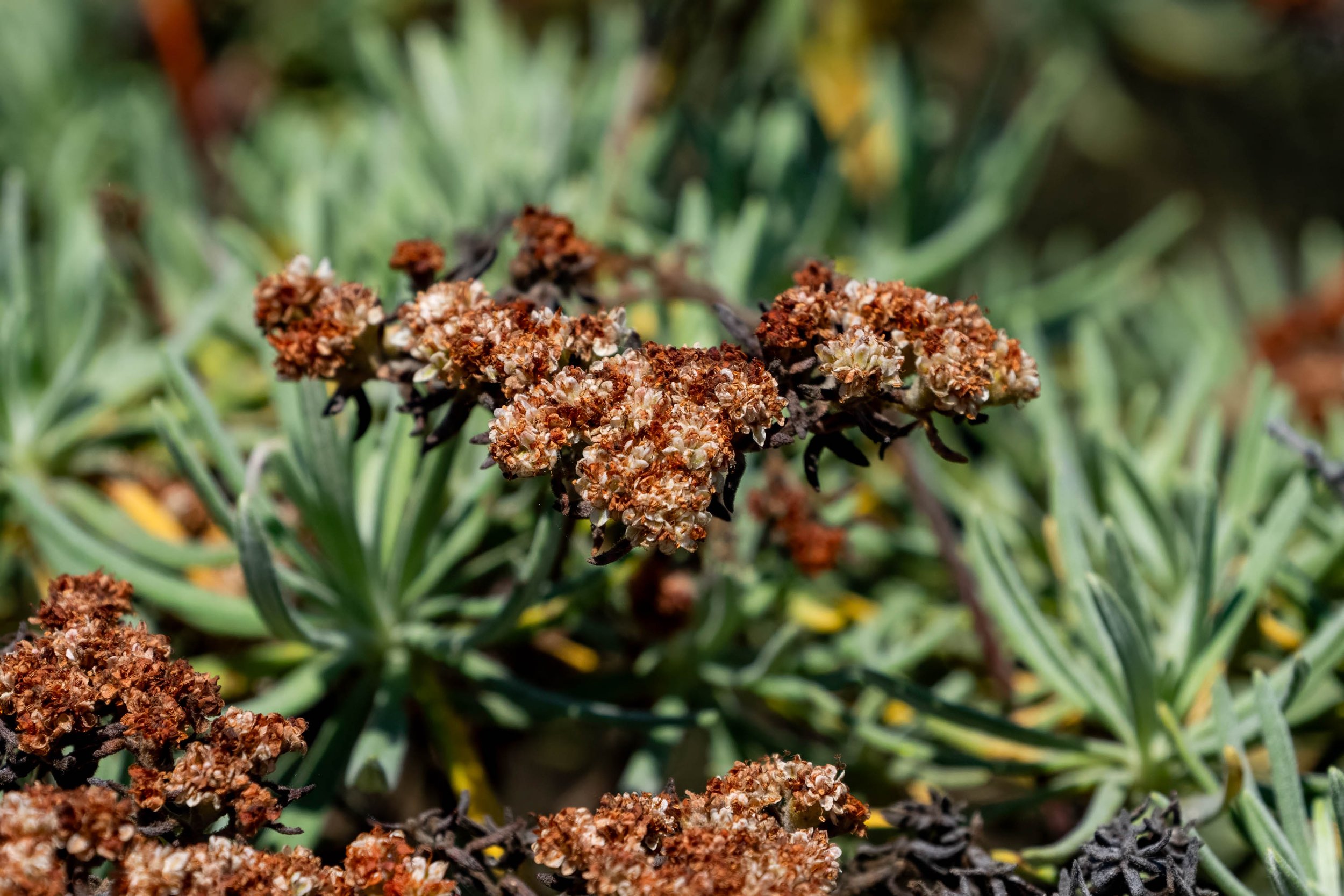
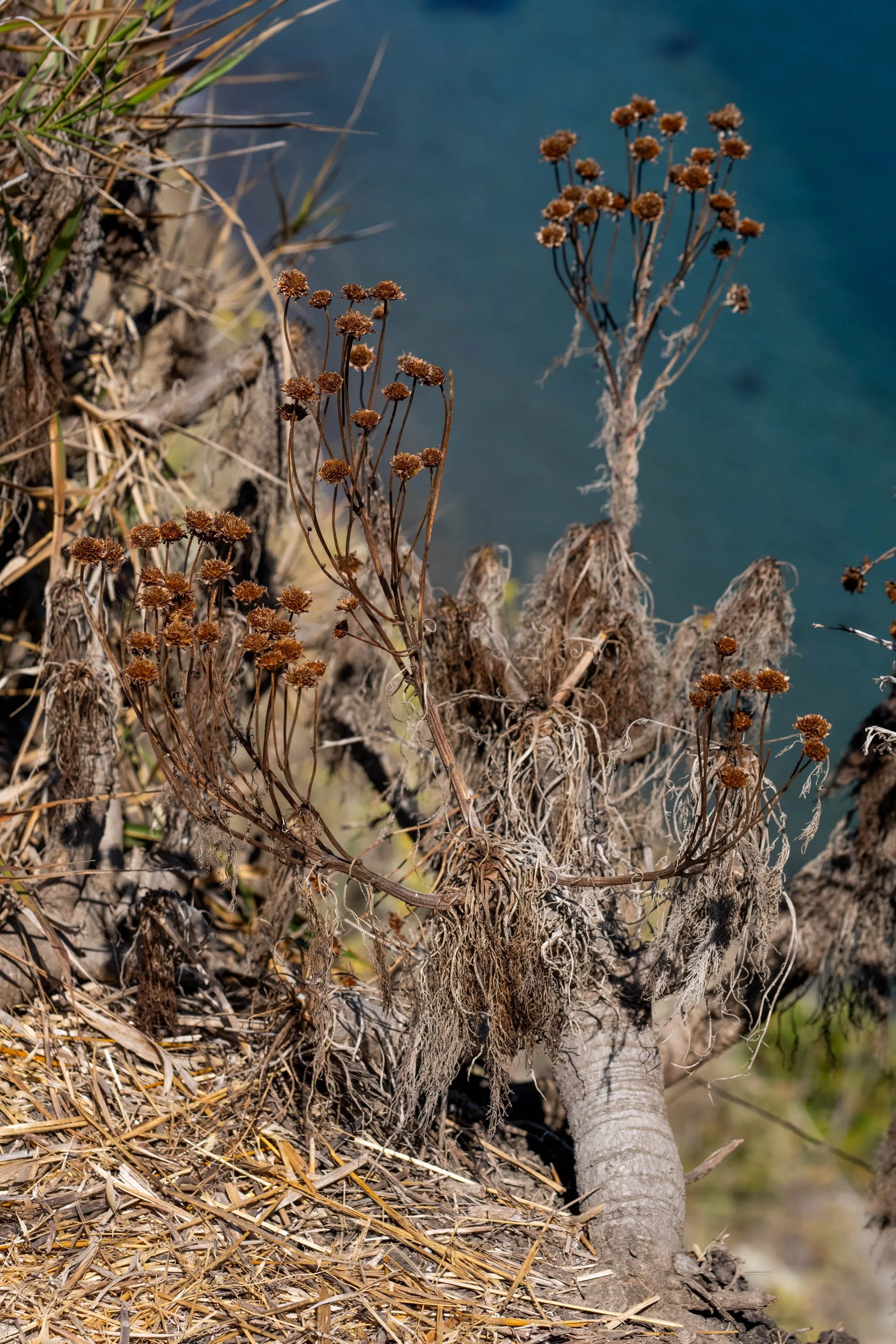
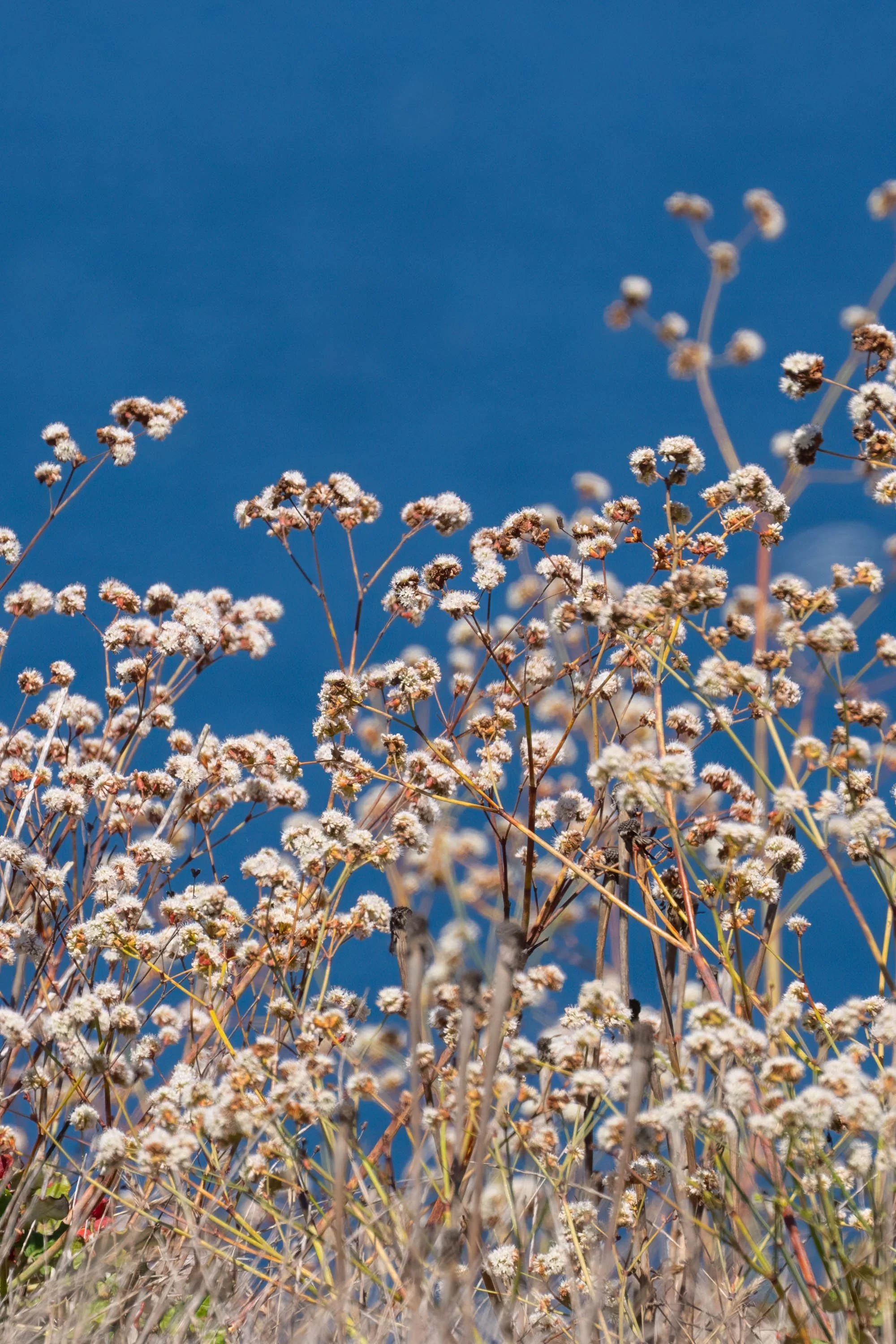
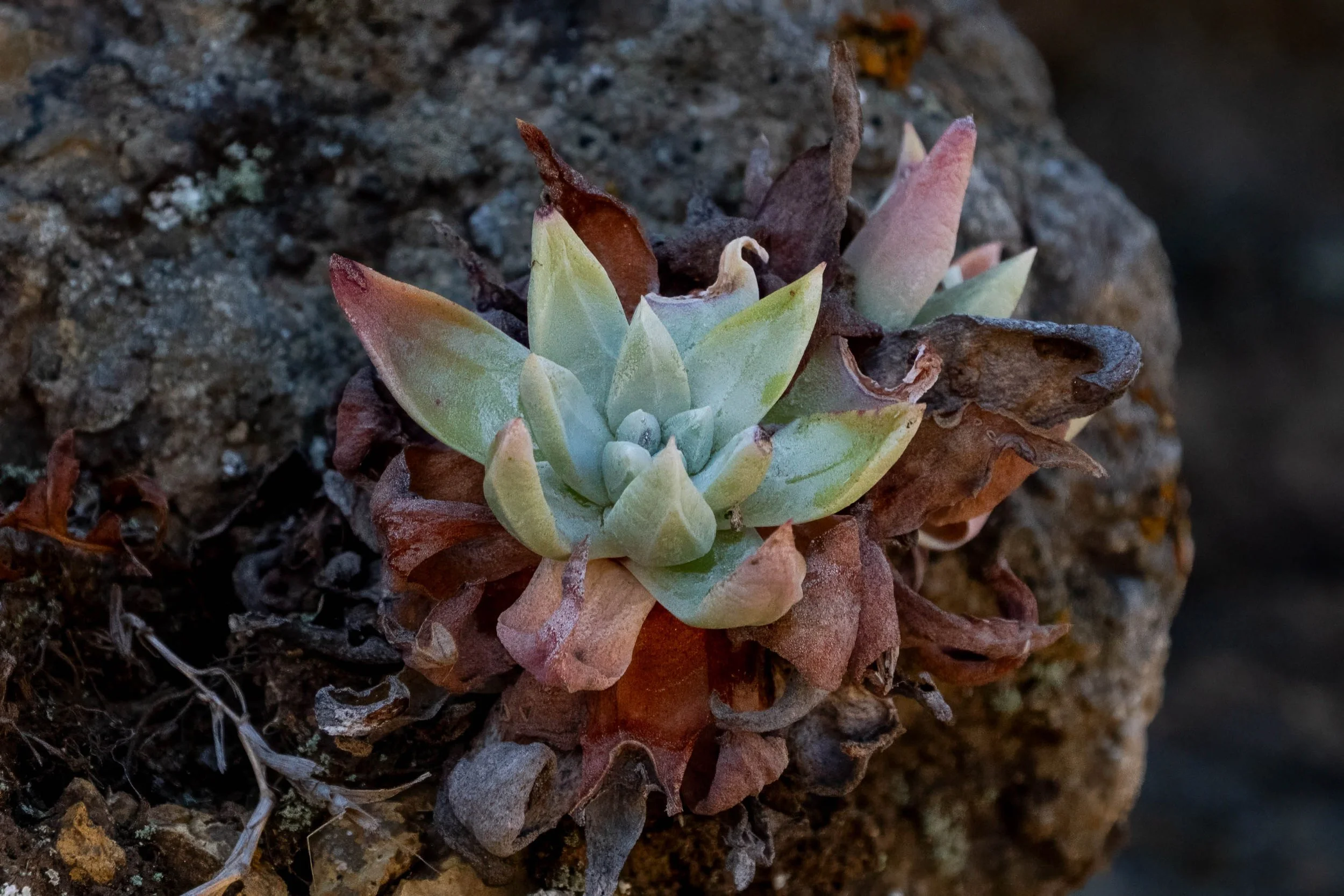
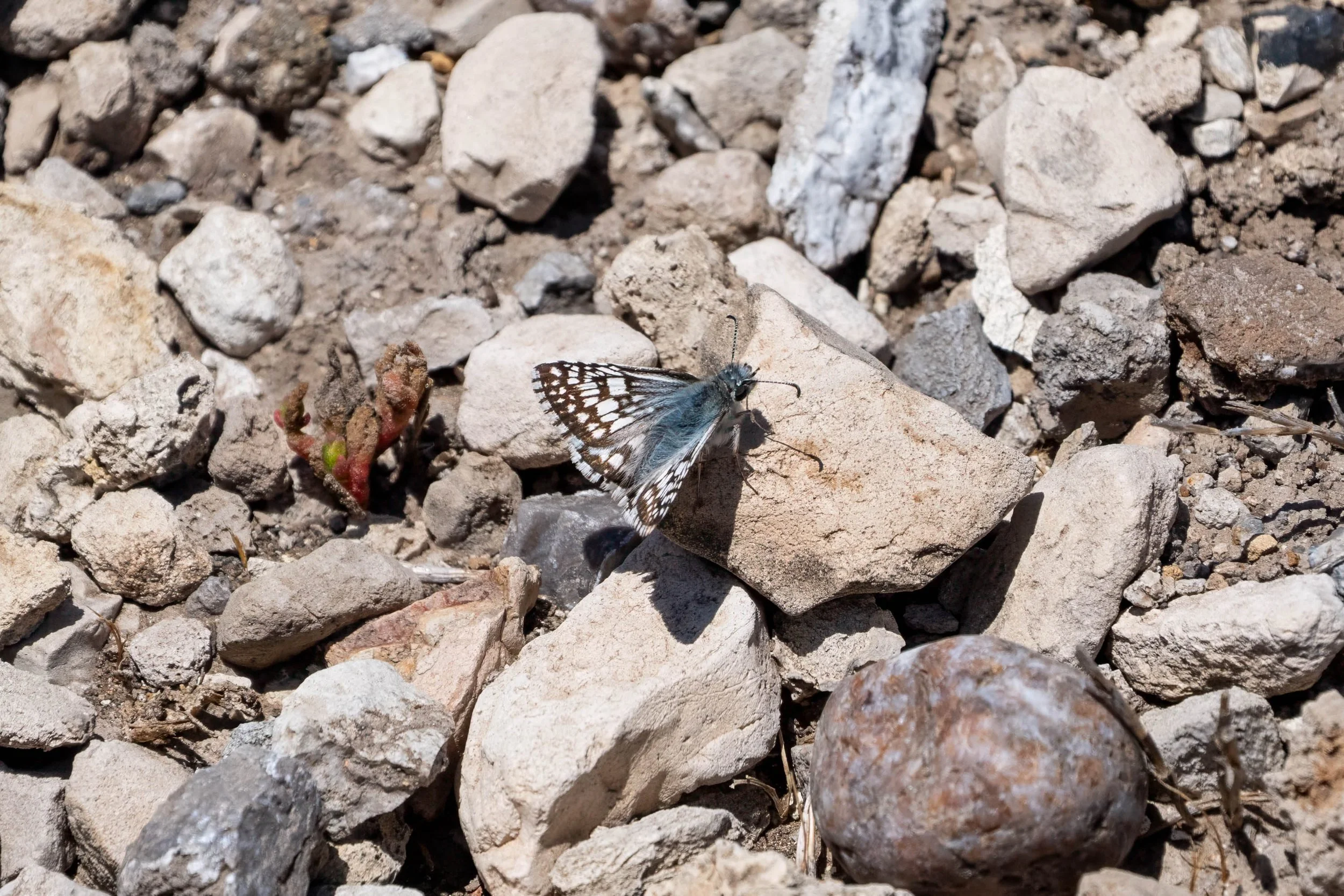
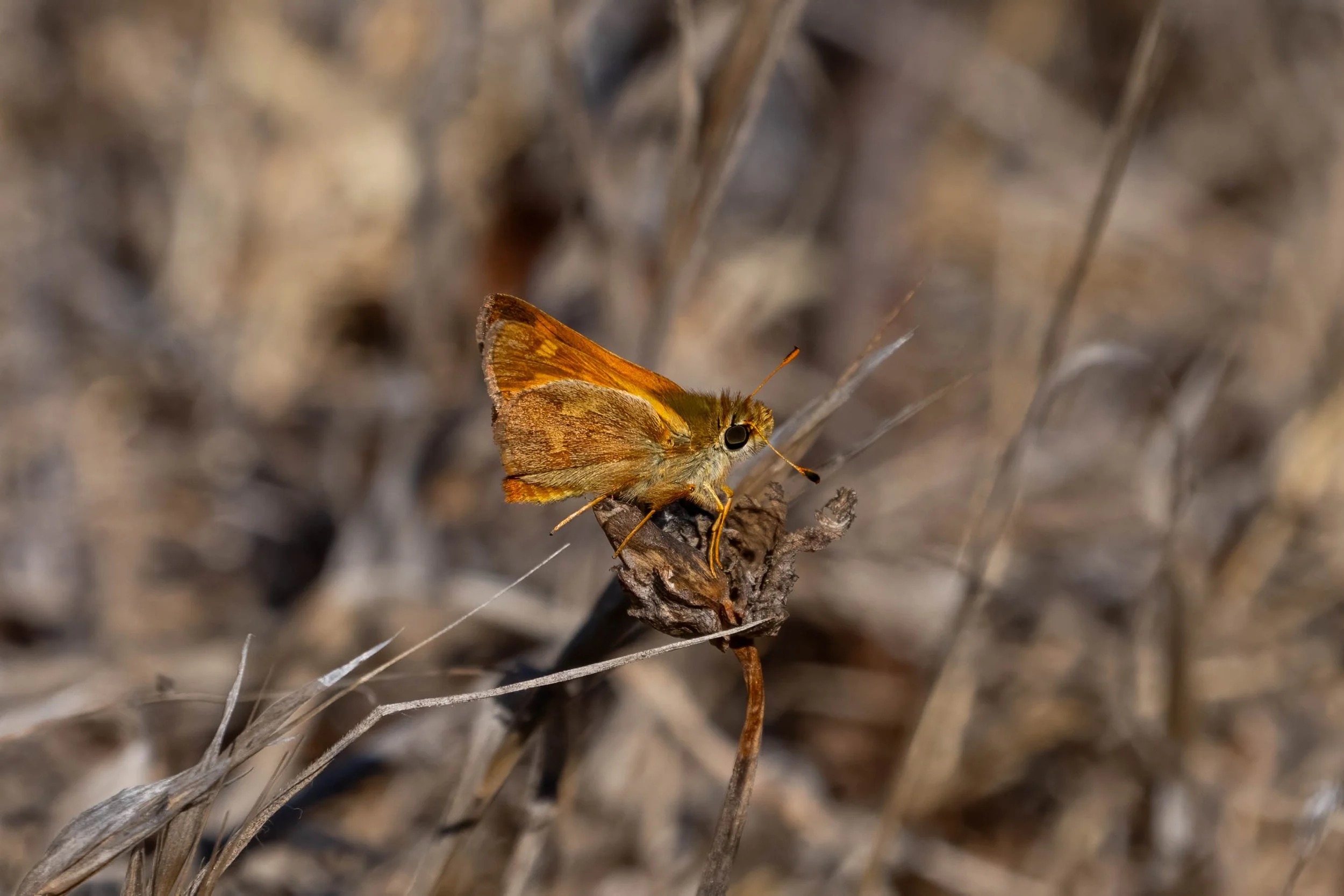
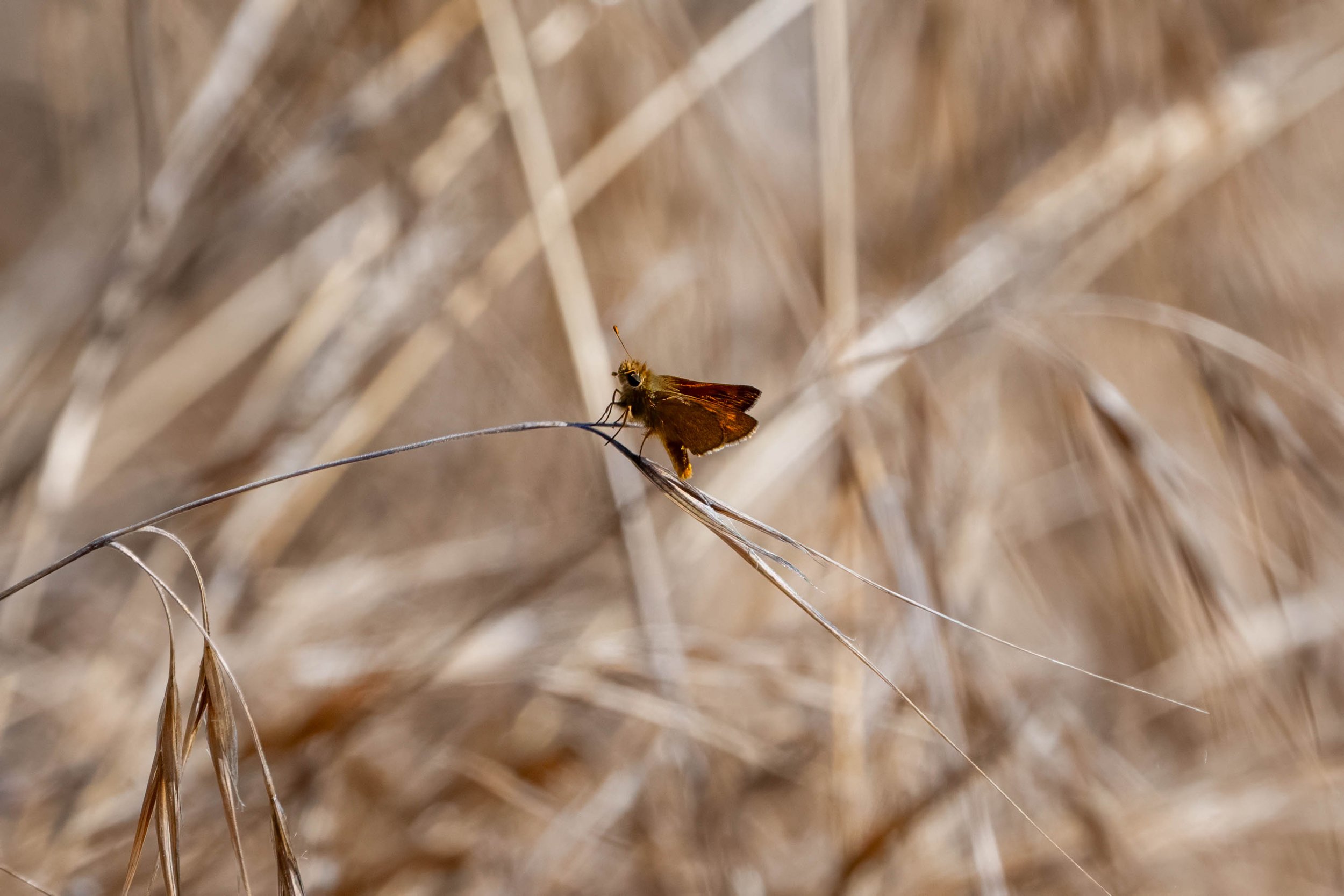
Along the way, we also saw a White Checkered-Skipper, a couple of very exciting Santa Cruz Island Skippers!
Santa Cruz Island gave us the feeling of going somewhere genuinely wild while still allowing us to return to Ventura before dinner. We spent our anniversary with Island Foxes wandering past, an Island Scrub-Jay moving through the chaparral, and pelicans gliding below the cliffs. Zoe got her medication and dinner on schedule when we arrived home.