
Brown Pelicans: A Coastal Icon
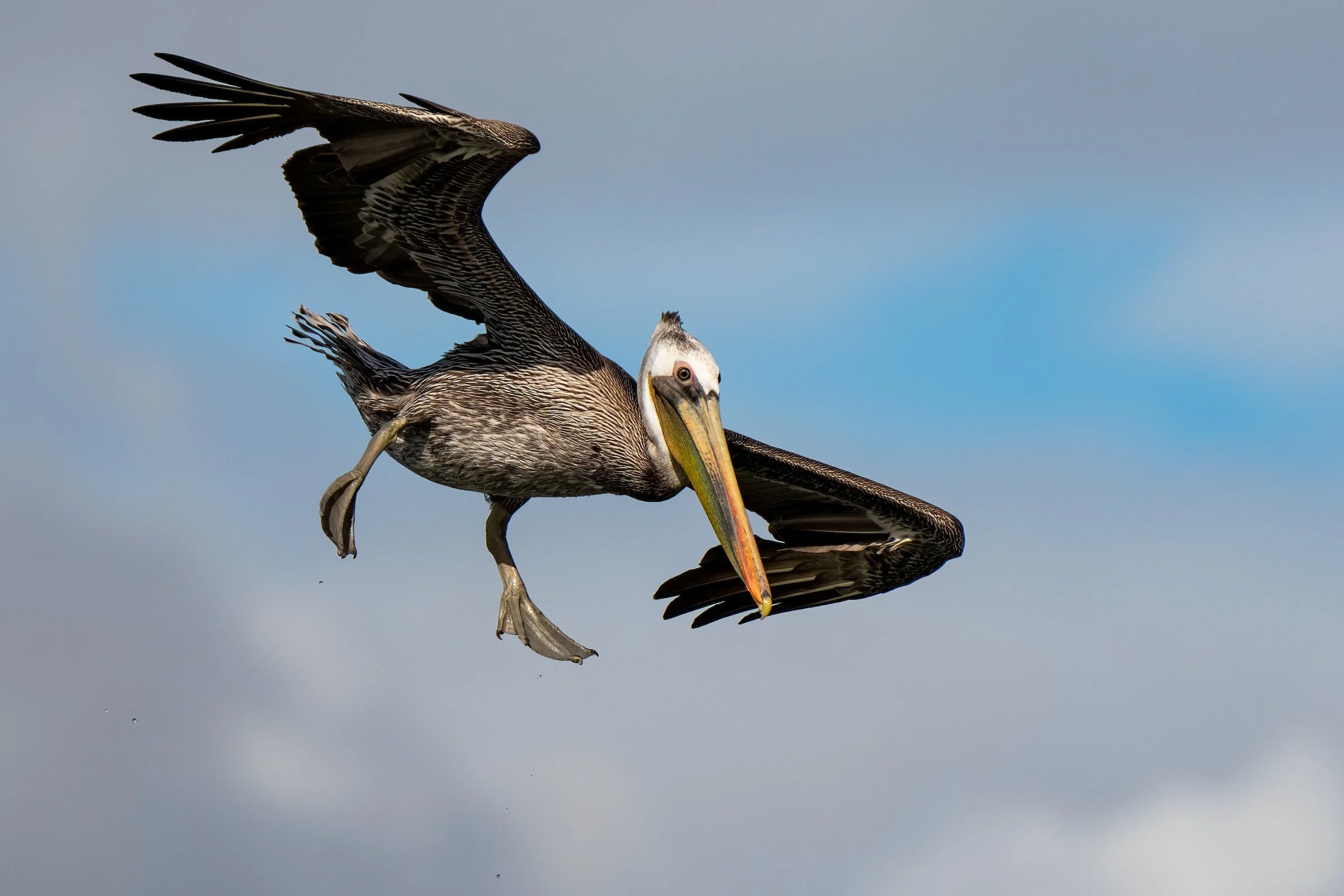
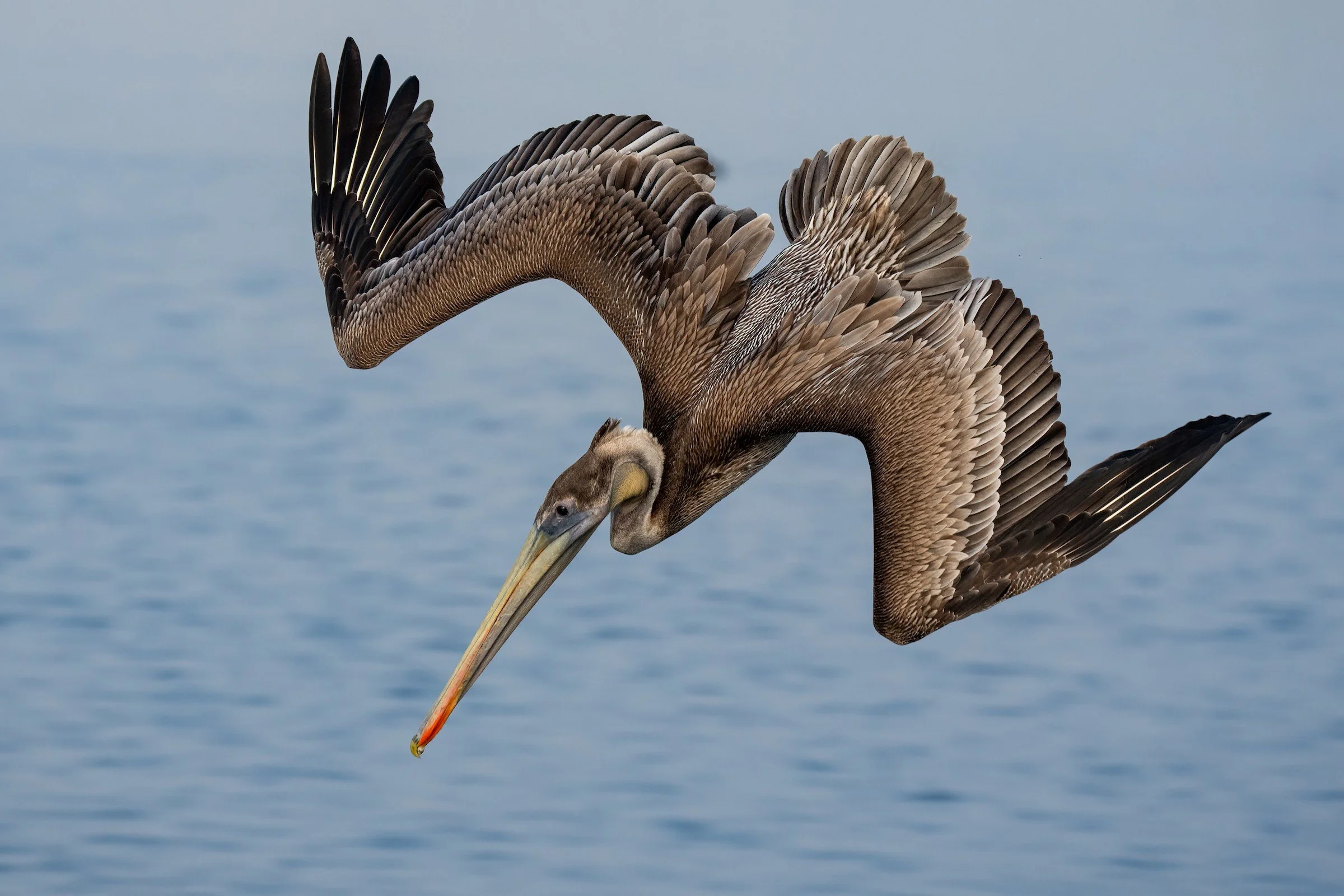
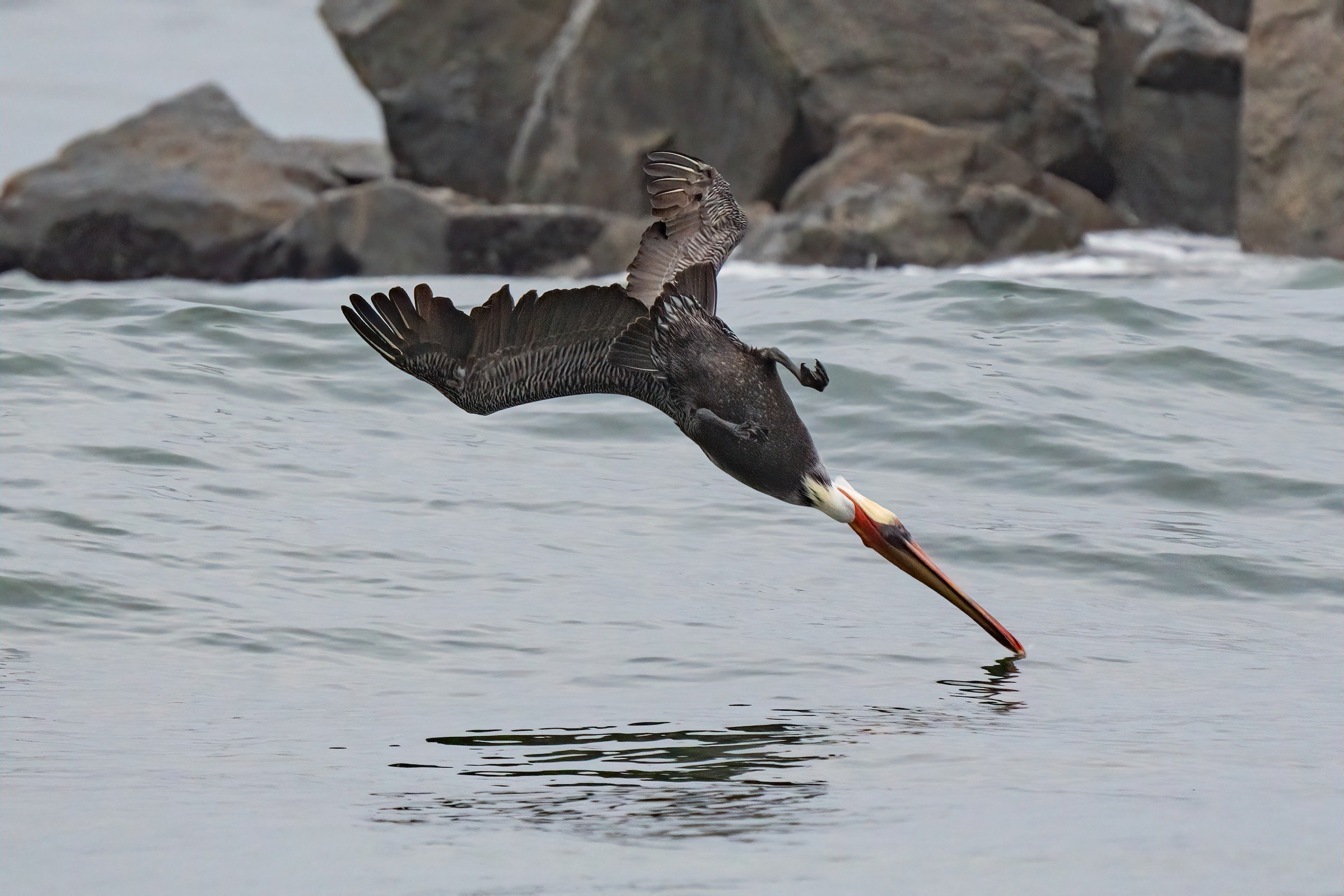
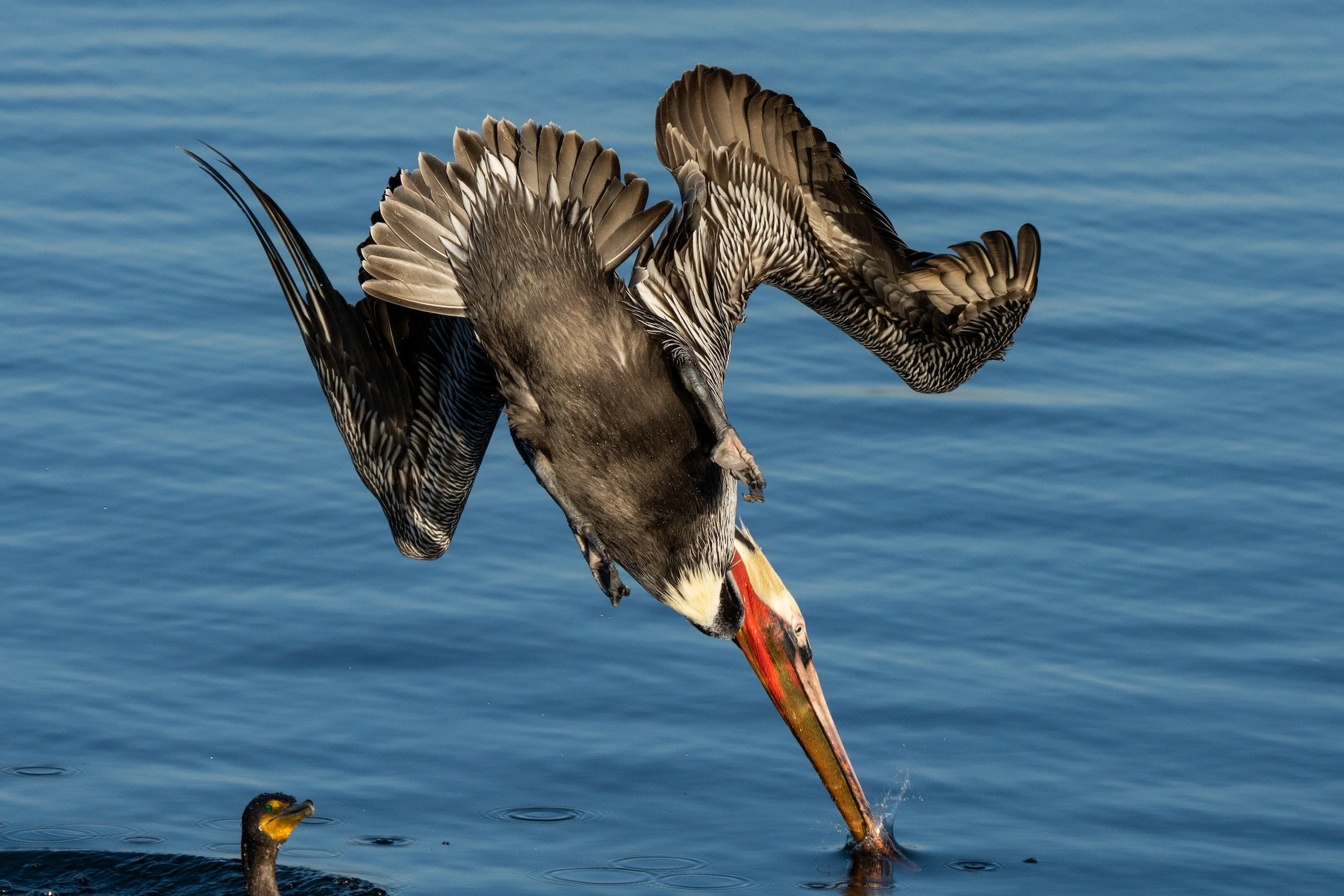
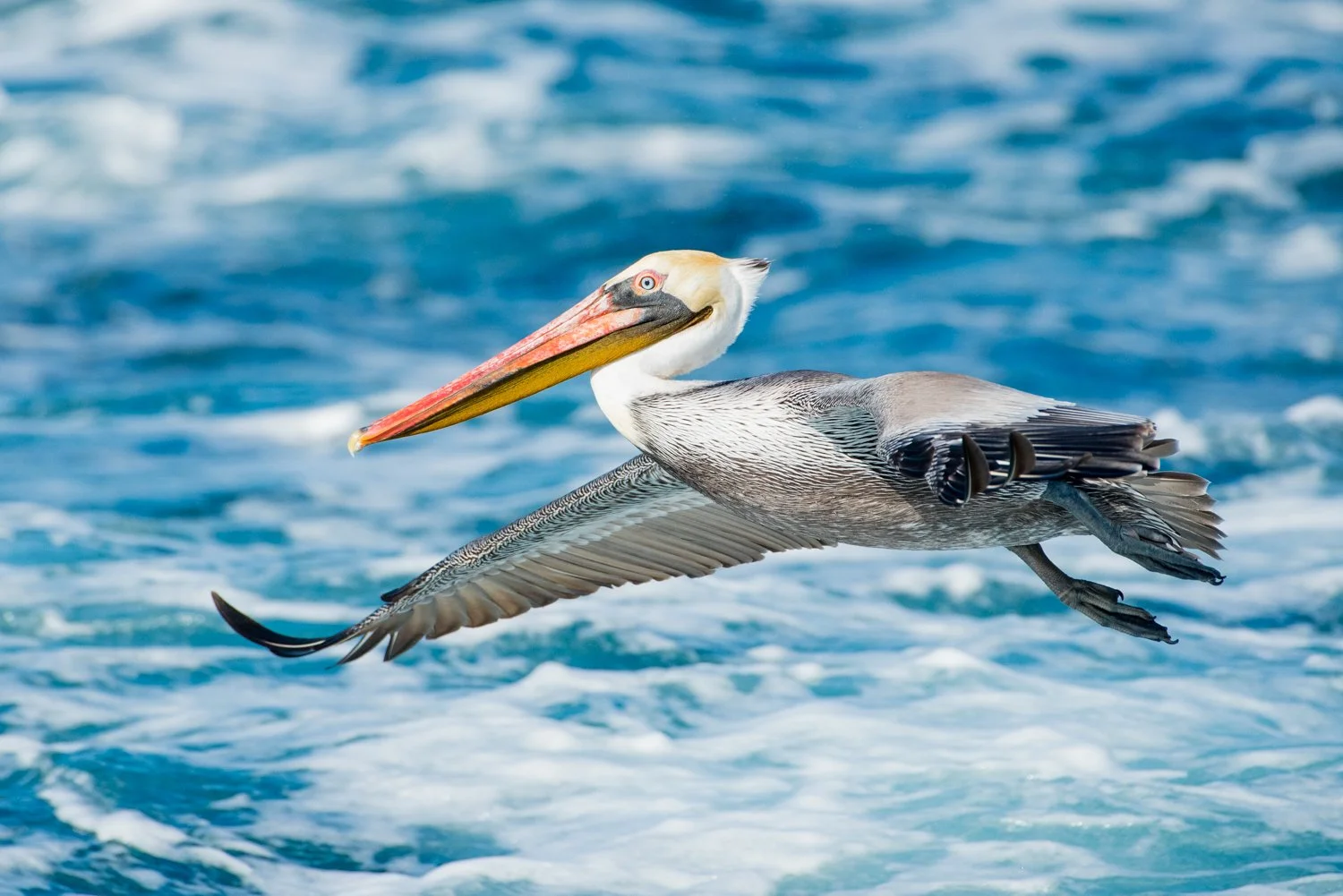
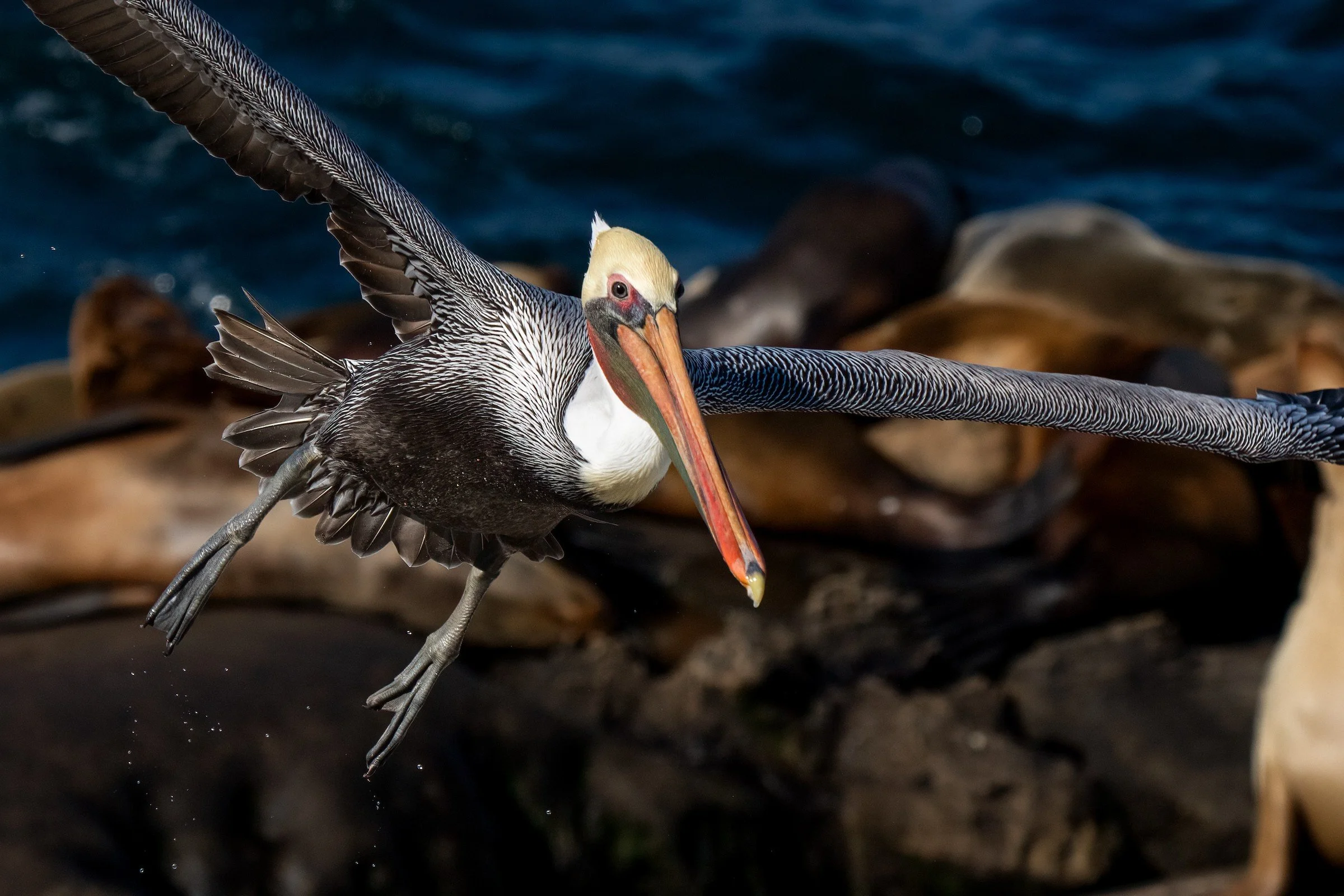
Few sights along the California coast are as immediately attention grabbing as a Brown Pelican dropping from the sky in a dive to get a fish snack. One moment it is a soaring silhouette, similar to a pterodactyl (I imagine) - the next, it is a precision-guided missile, folding its wings back, dropping its big feet and plunging headfirst into the Pacific with a confidence that makes you wonder how it all happens.
The Brown Pelican is the smallest of the world's eight pelican species, which is a relative term: it still stretches up to four and a half feet from bill tip to tail, with a wingspan that can reach seven feet. It is also, uniquely among pelicans, a plunge diver - willing to hurl itself from heights of sixty feet or more to catch a fish, relying on air sacs beneath its skin to cushion the impact. It’s truly amazing to see a bird of this size just plunge itself straight down into the water!
A Story of Comeback
To see a pelican cruising low over the surf today is to witness the success of one of conservation's most dramatic reversals. By the early 1970s, the Brown Pelican had nearly vanished from California. The culprit was DDT - the pesticide leached into the ocean, entered the fish these birds ate, and caused the birds eggshells to become so thin that nesting adults crushed them simply by sitting down to incubate.
At one point, the entire California breeding population produced fewer than a dozen surviving chicks in a single season. After DDT was banned in 1972 and the species was listed under the Endangered Species Act, the population began its slow climb back. By 2009, the Brown Pelican was removed from the endangered species list - a genuine conservation triumph.
When you see a pelican today, you're seeing a bird that almost wasn't here — which makes every sighting feel like something worth paying attention to.
The Pouch: More Than a Fishing Net
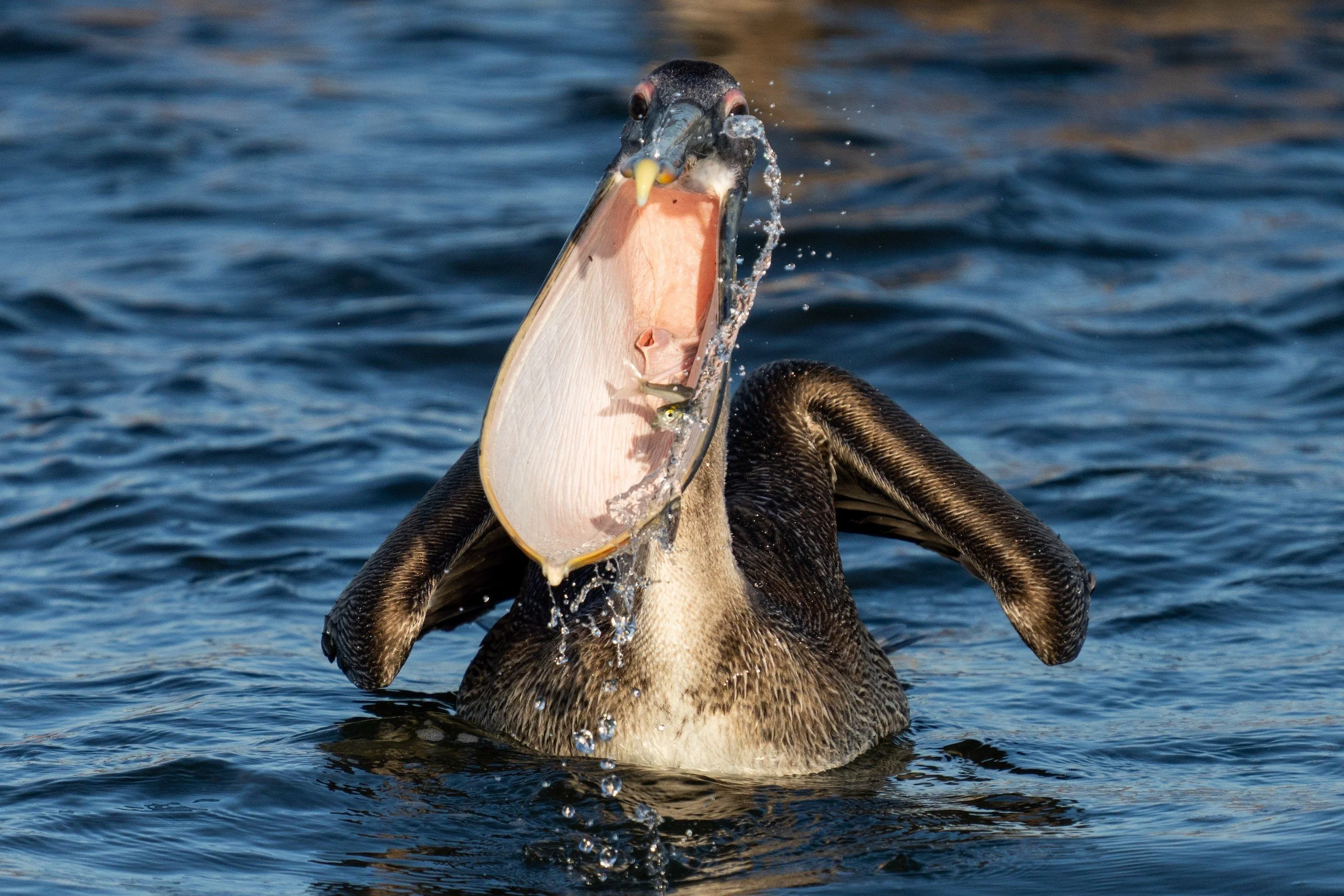
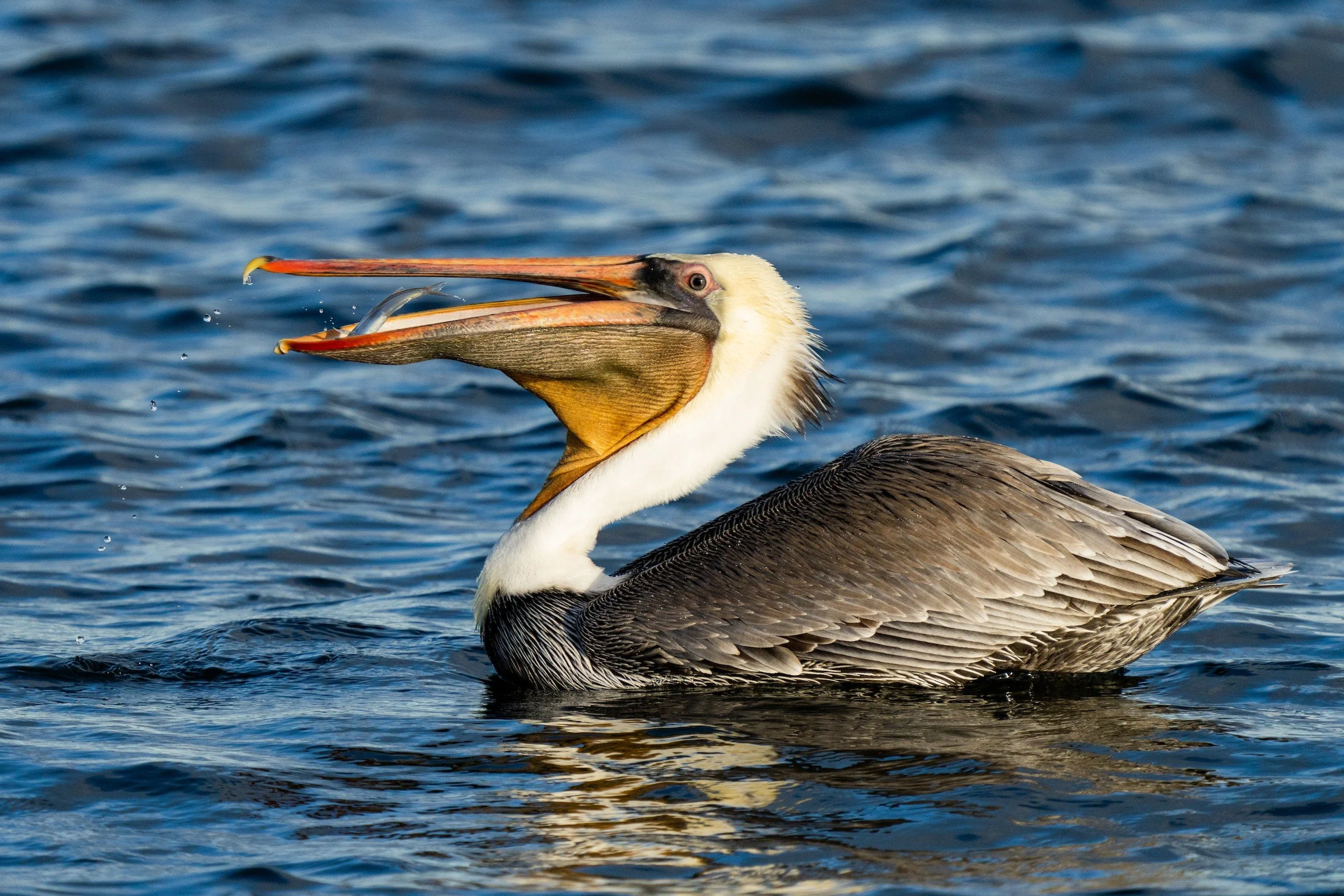
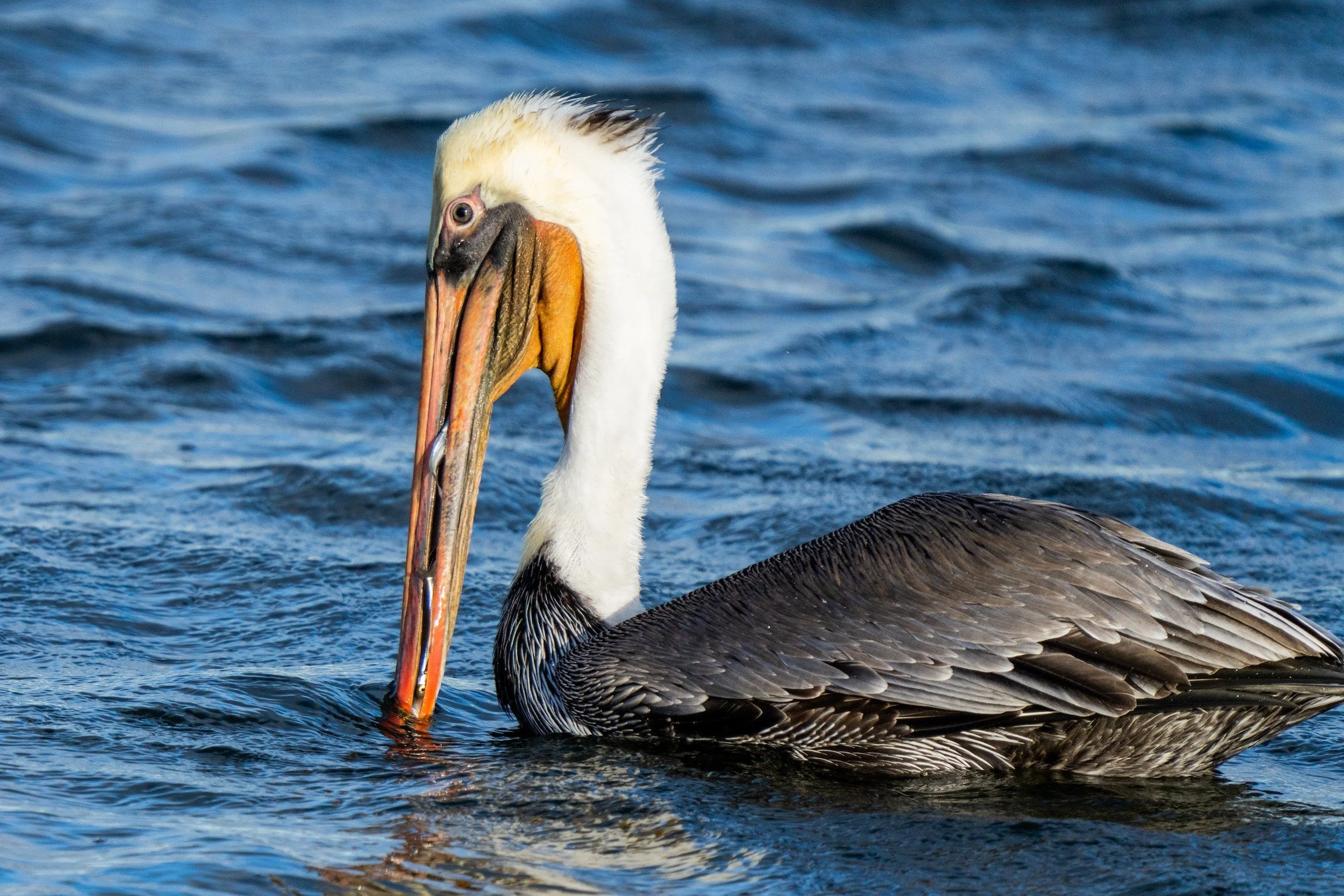
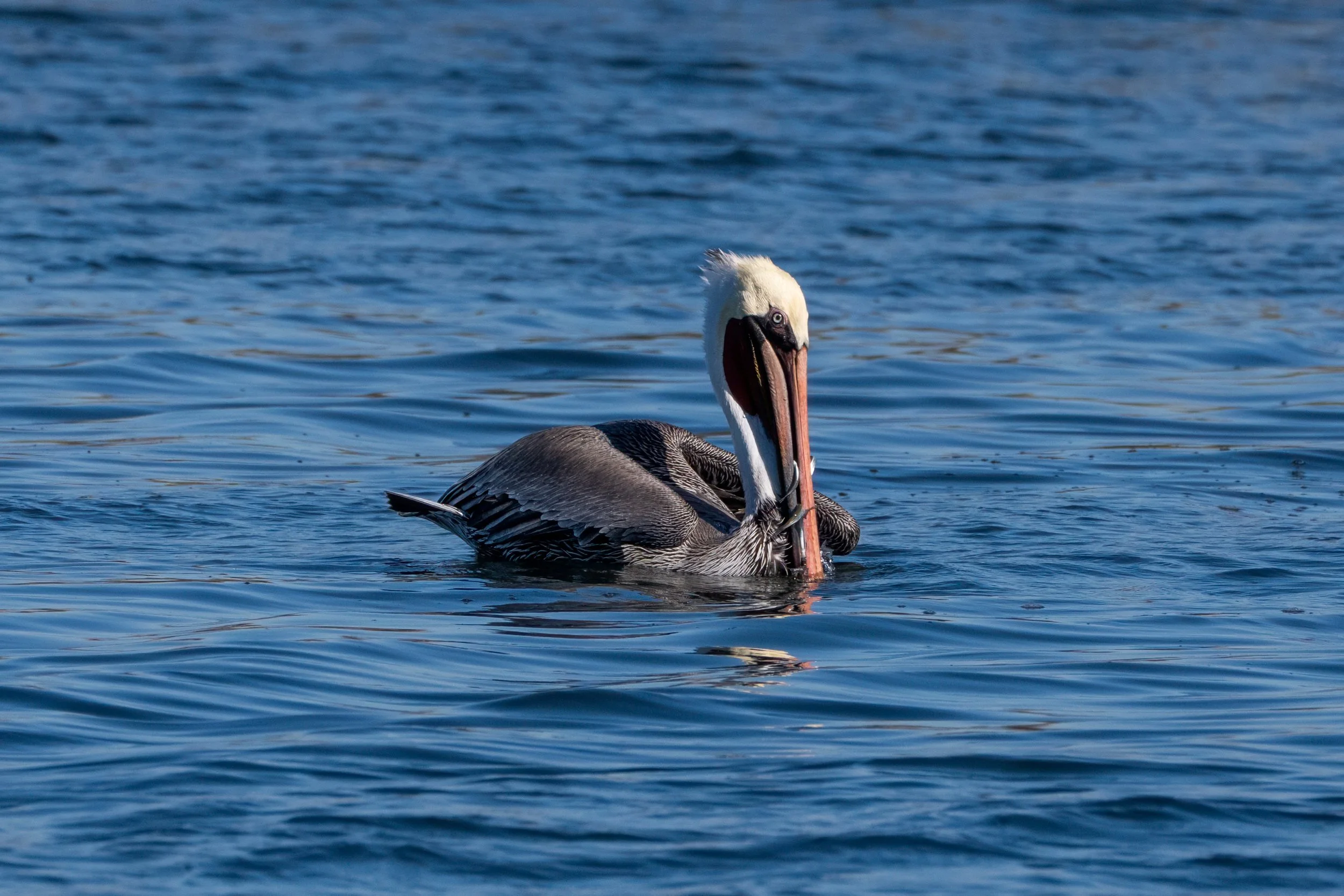
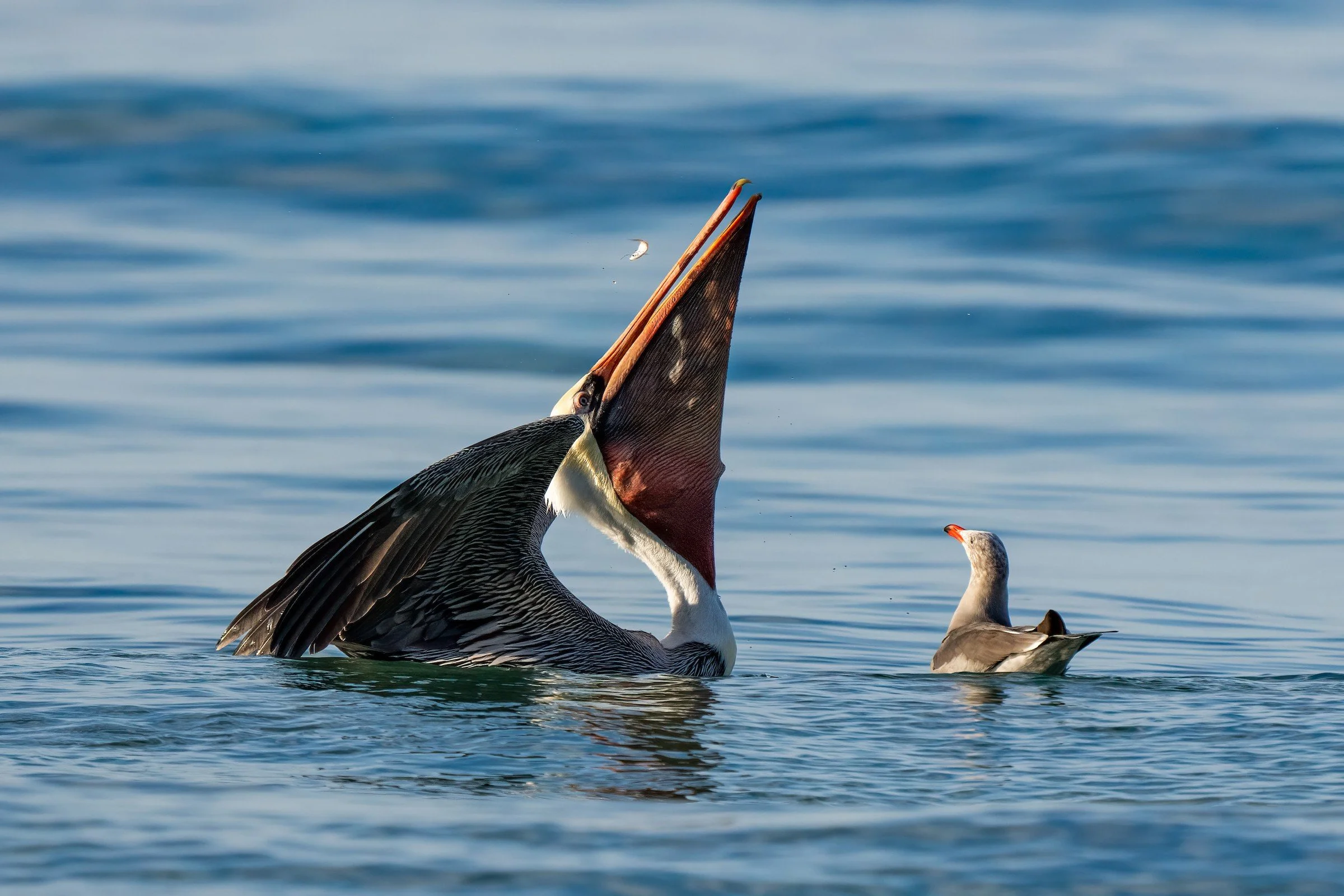
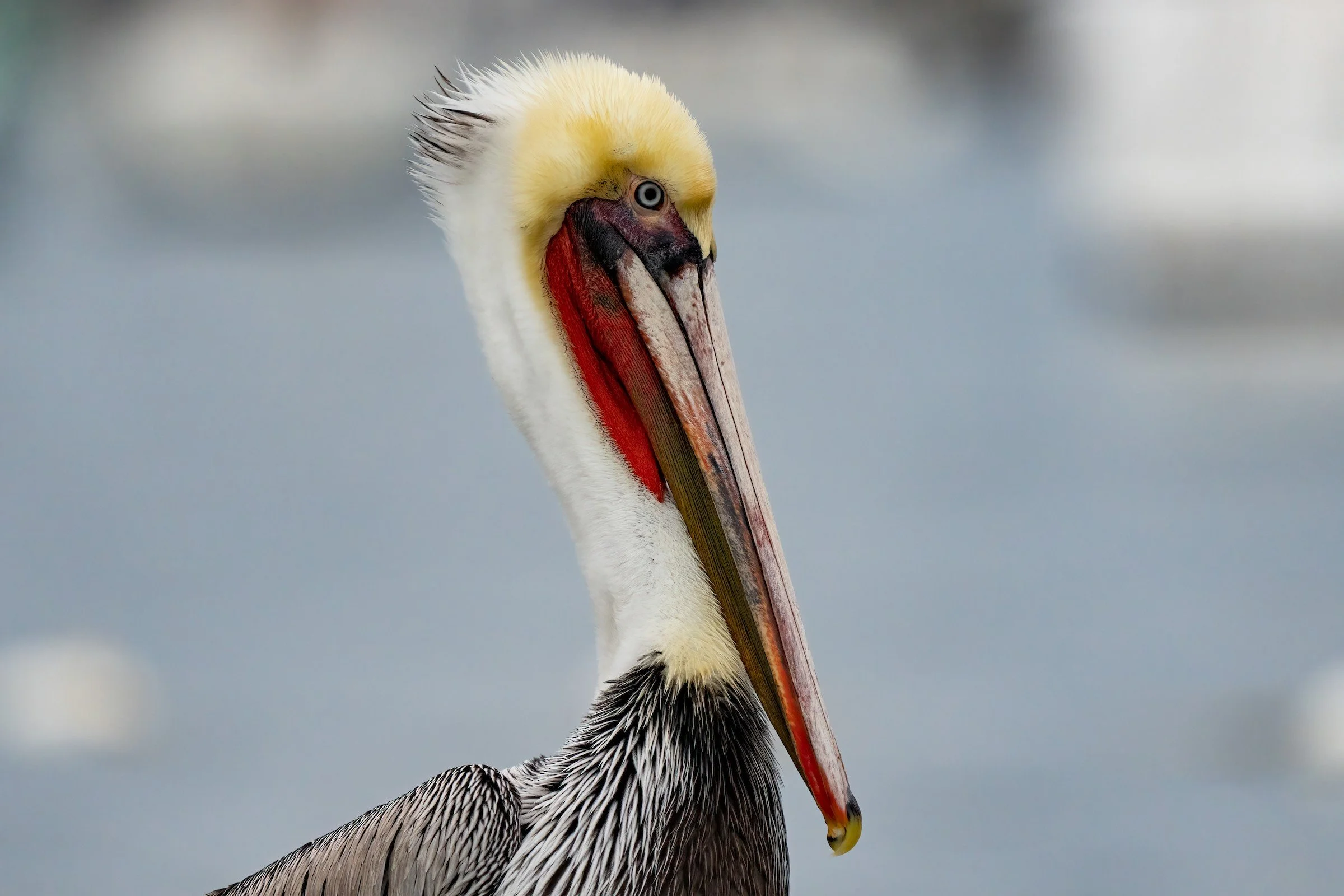
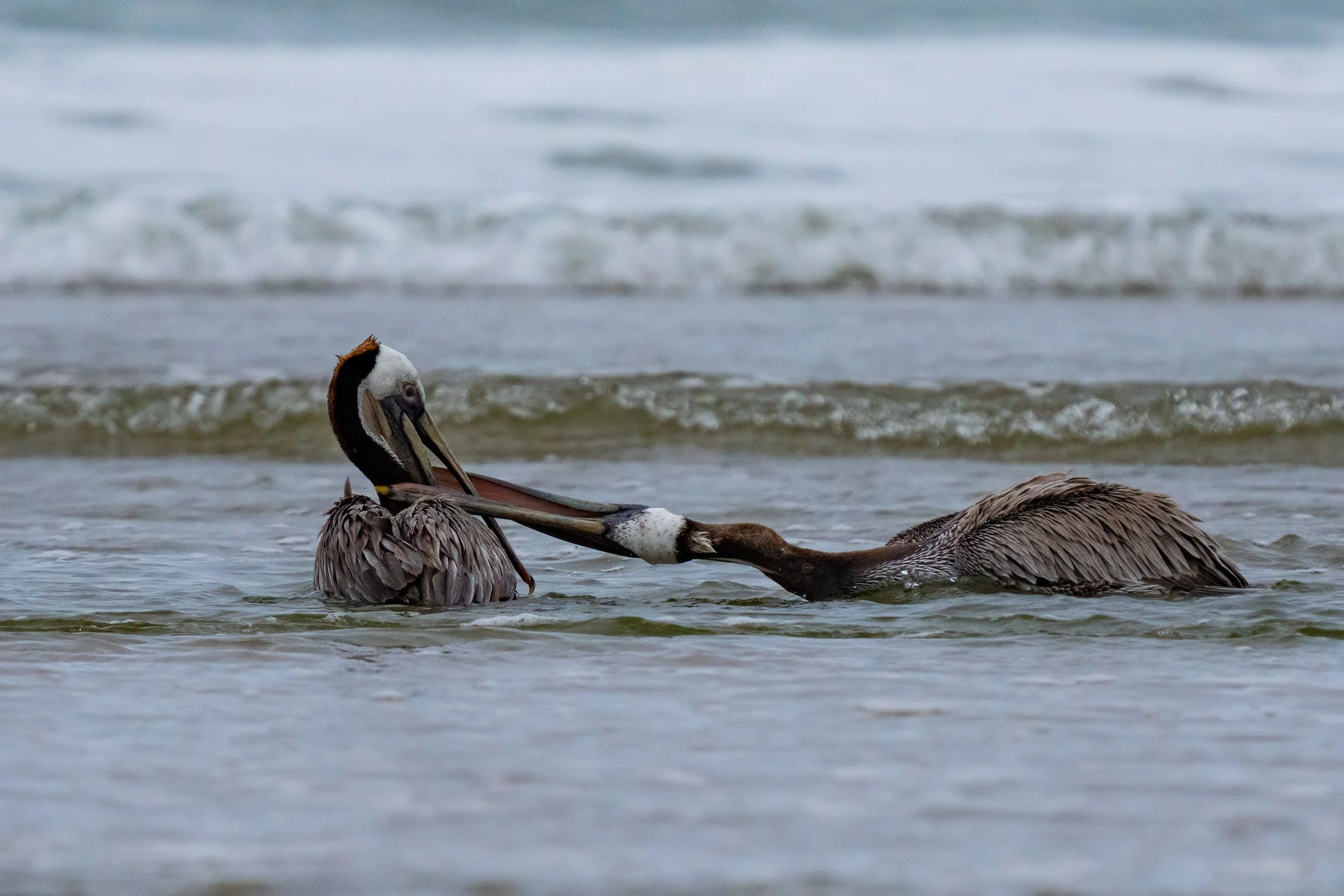
The Brown Pelican's most distinctive feature is its enormous gular pouch - that stretchy, elastic throat pouch can hold up to three gallons of water and fish. Contrary to popular belief, pelicans don't carry fish around in their pouches or store food there; the pouch is purely a fishing tool. After a dive, the bird surfaces, tilts its bill down to drain the water, then tosses its head back to swallow the remaining fish whole.
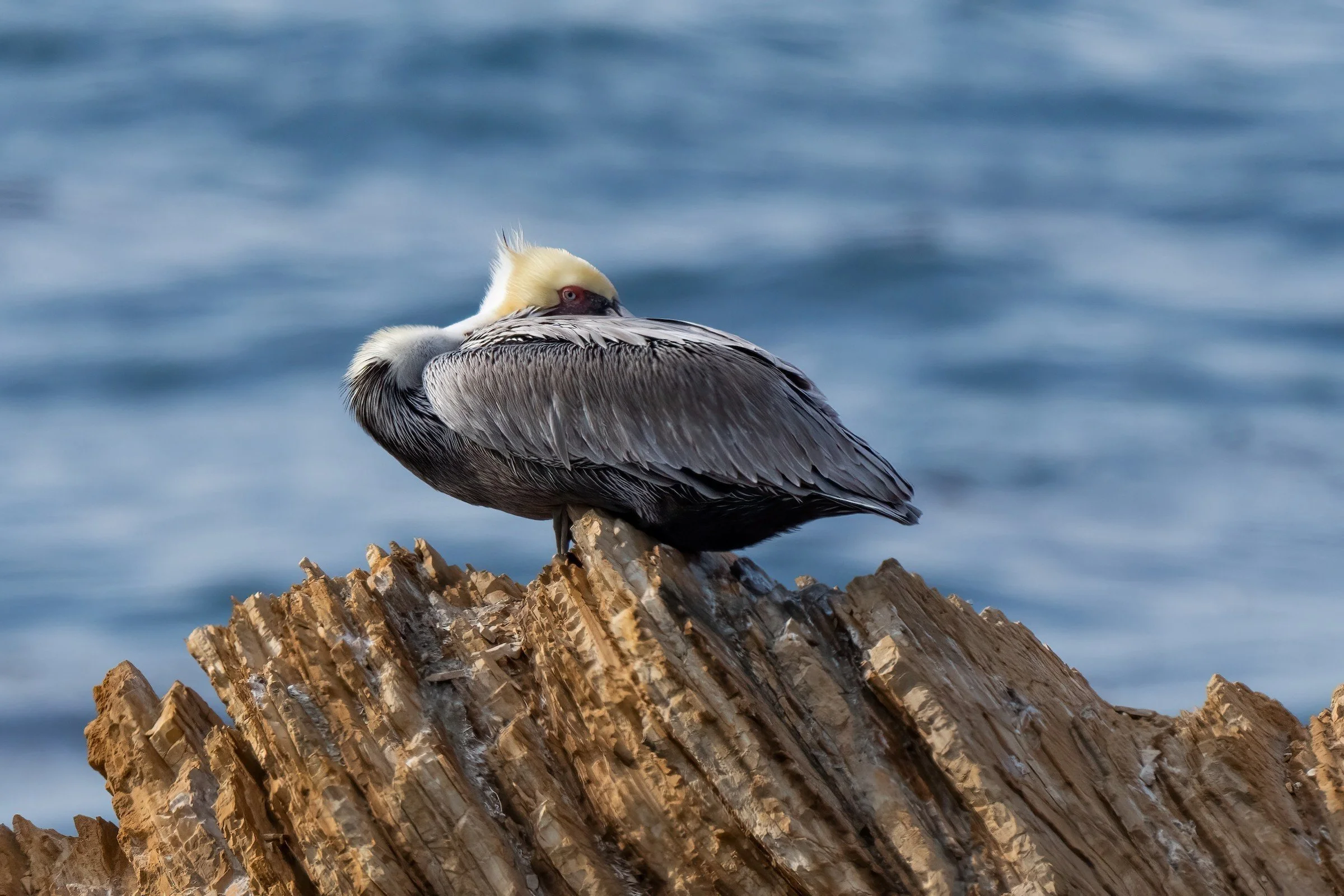
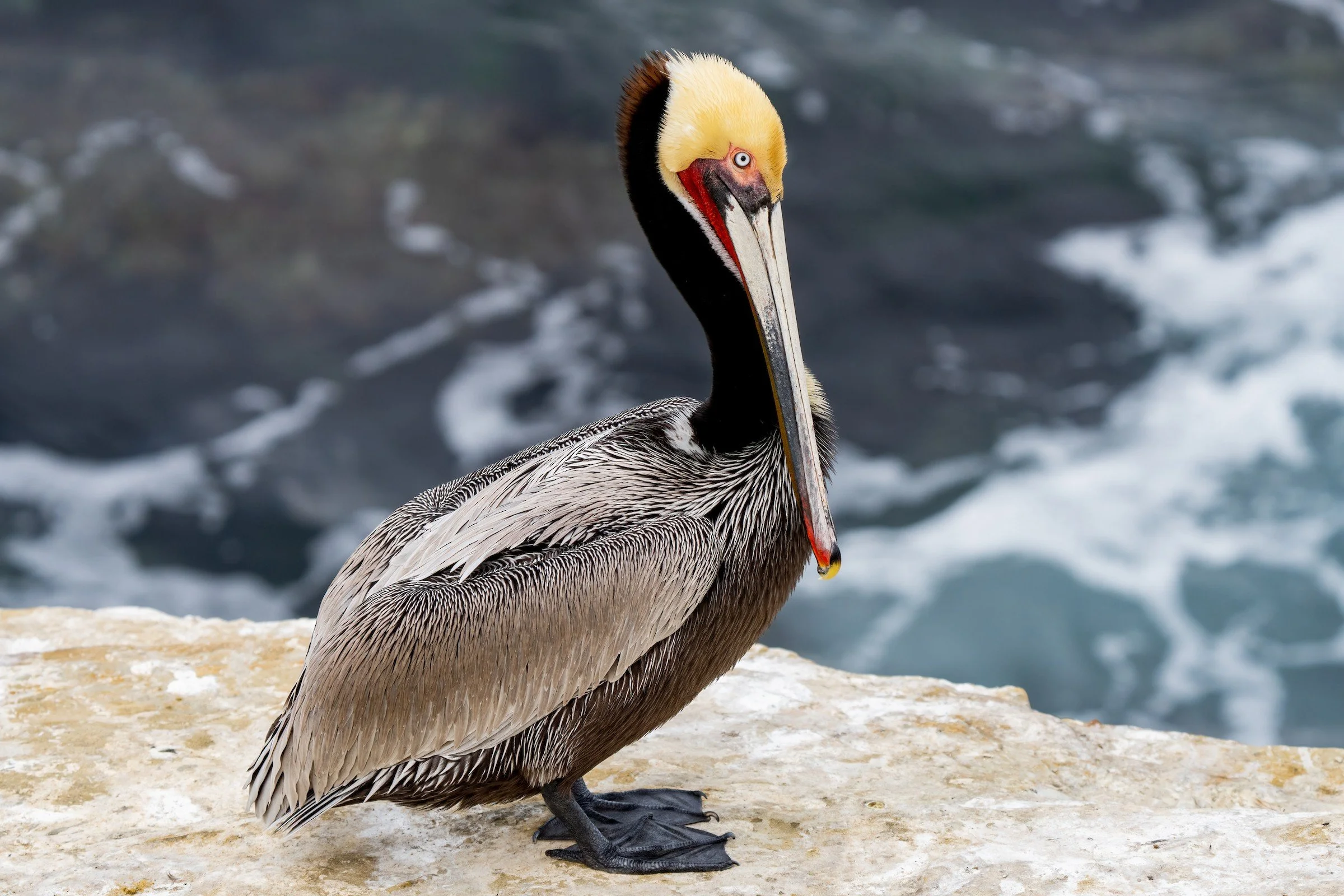
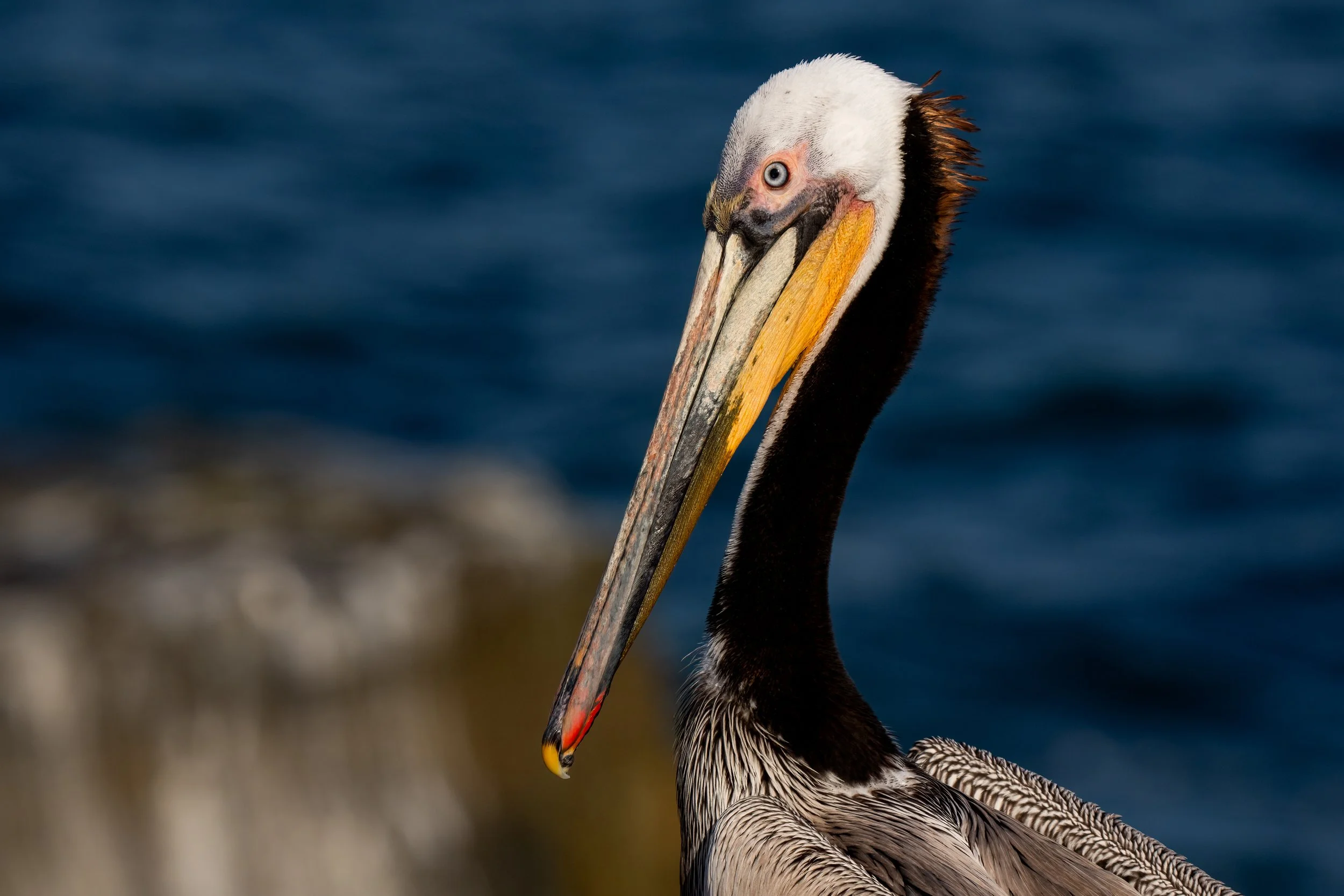
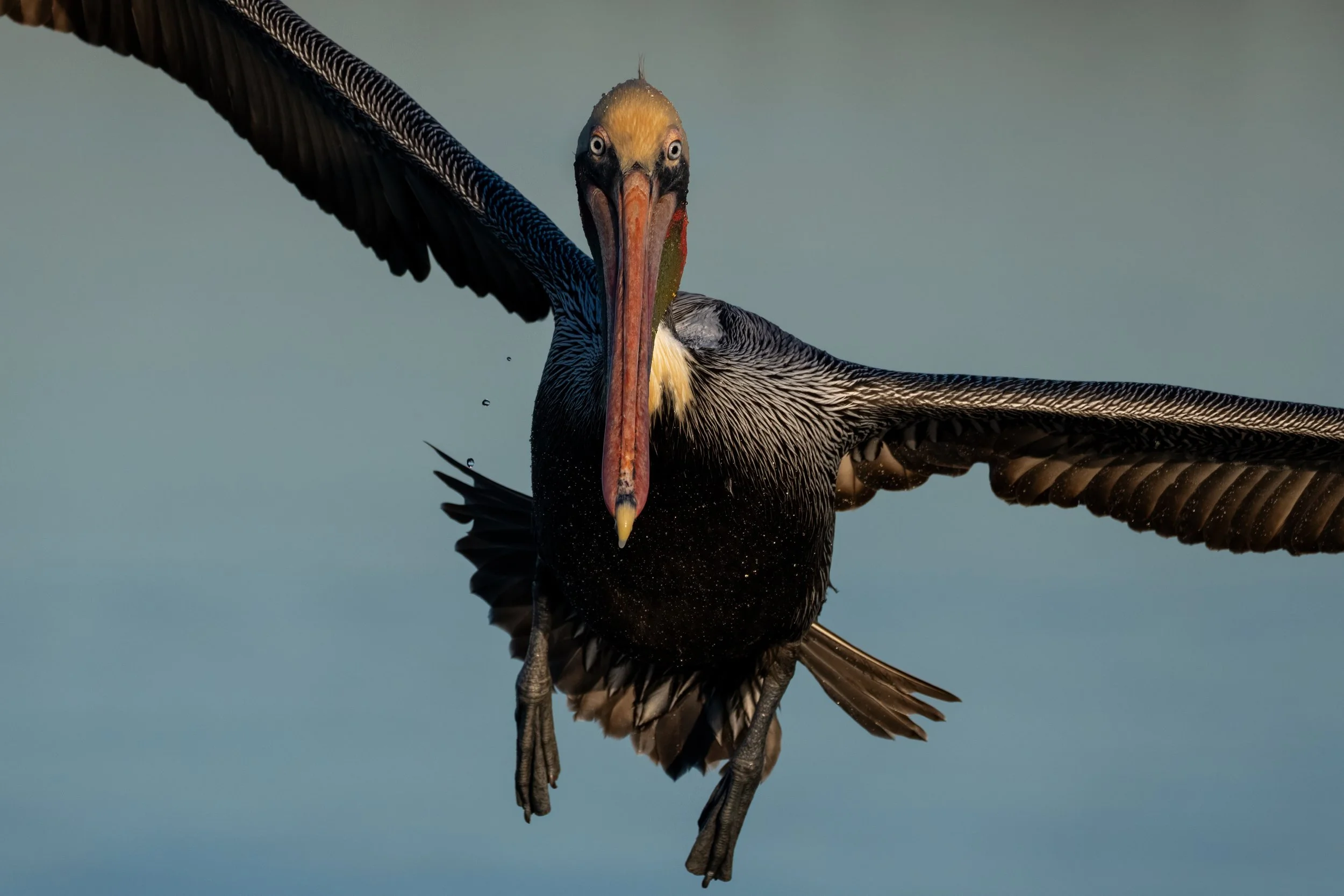
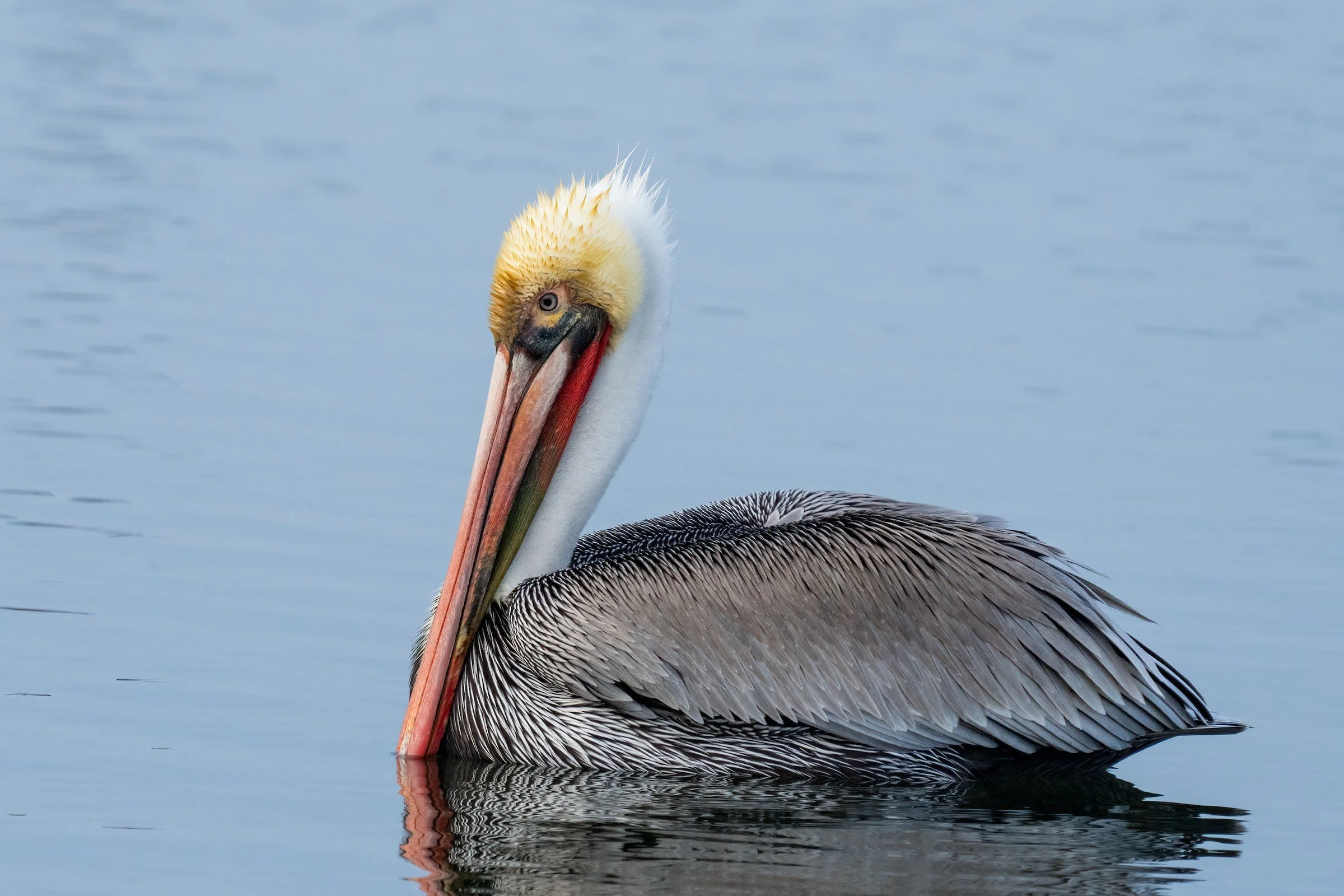
The pouch also plays a role in courtship and temperature regulation. During breeding season, the skin around the pouch changes to vivid colors — the pale yellow of the bill tip brightens, the pouch itself darkens to a deep reddish-brown, and a bright white stripe runs along the neck. Outside breeding season, these colors fade to a more muted palette of tan, gray, and dull yellow.
FUN FACTS
→ A pelican's pouch can hold about 3 gallons - roughly three times the capacity of its stomach.
→ Brown Pelicans are the only pelican species in the world that plunge-dive to catch fish.
→ Air sacs beneath the skin act as a built-in bubble wrap, absorbing the shock of high-speed water entry.
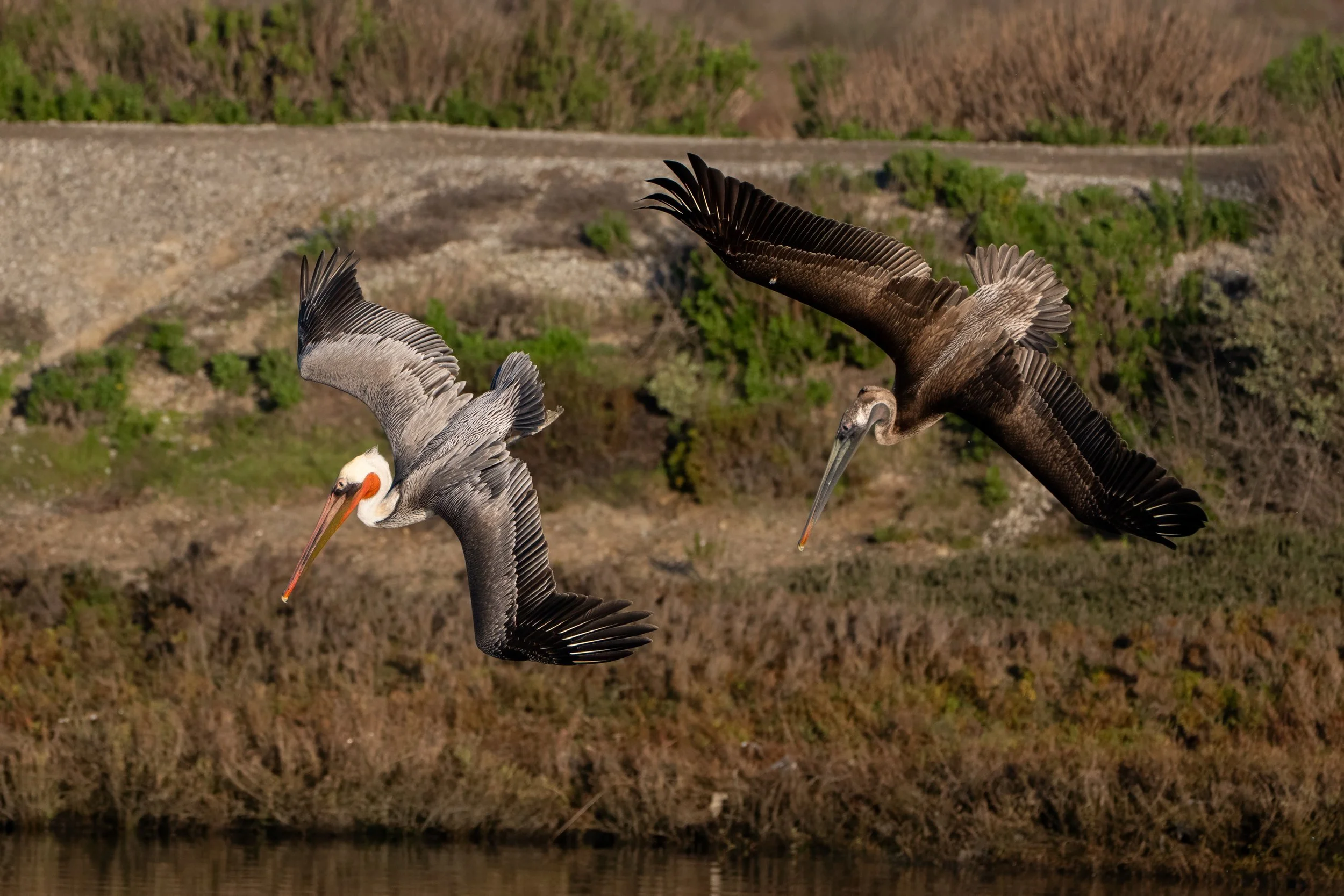
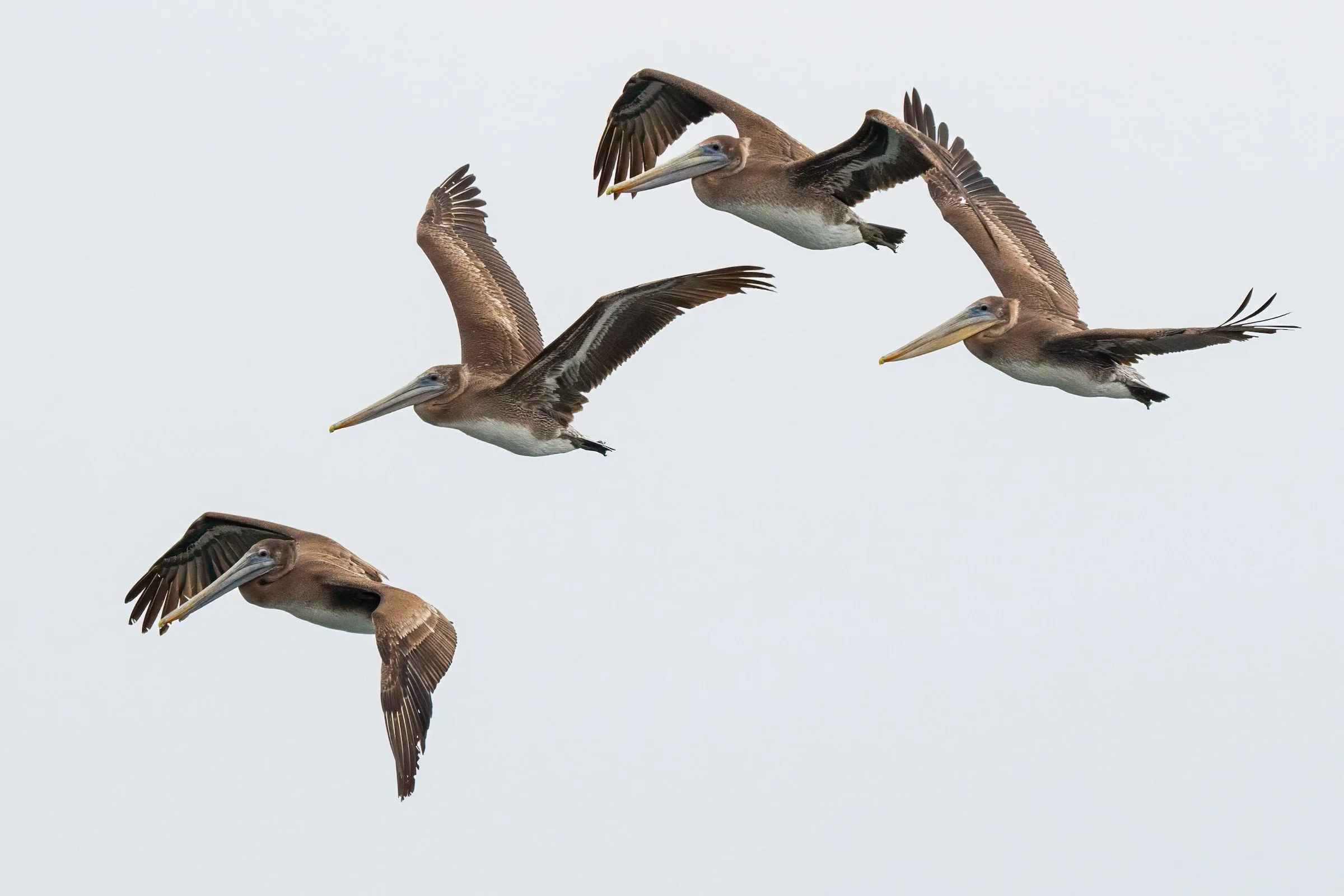
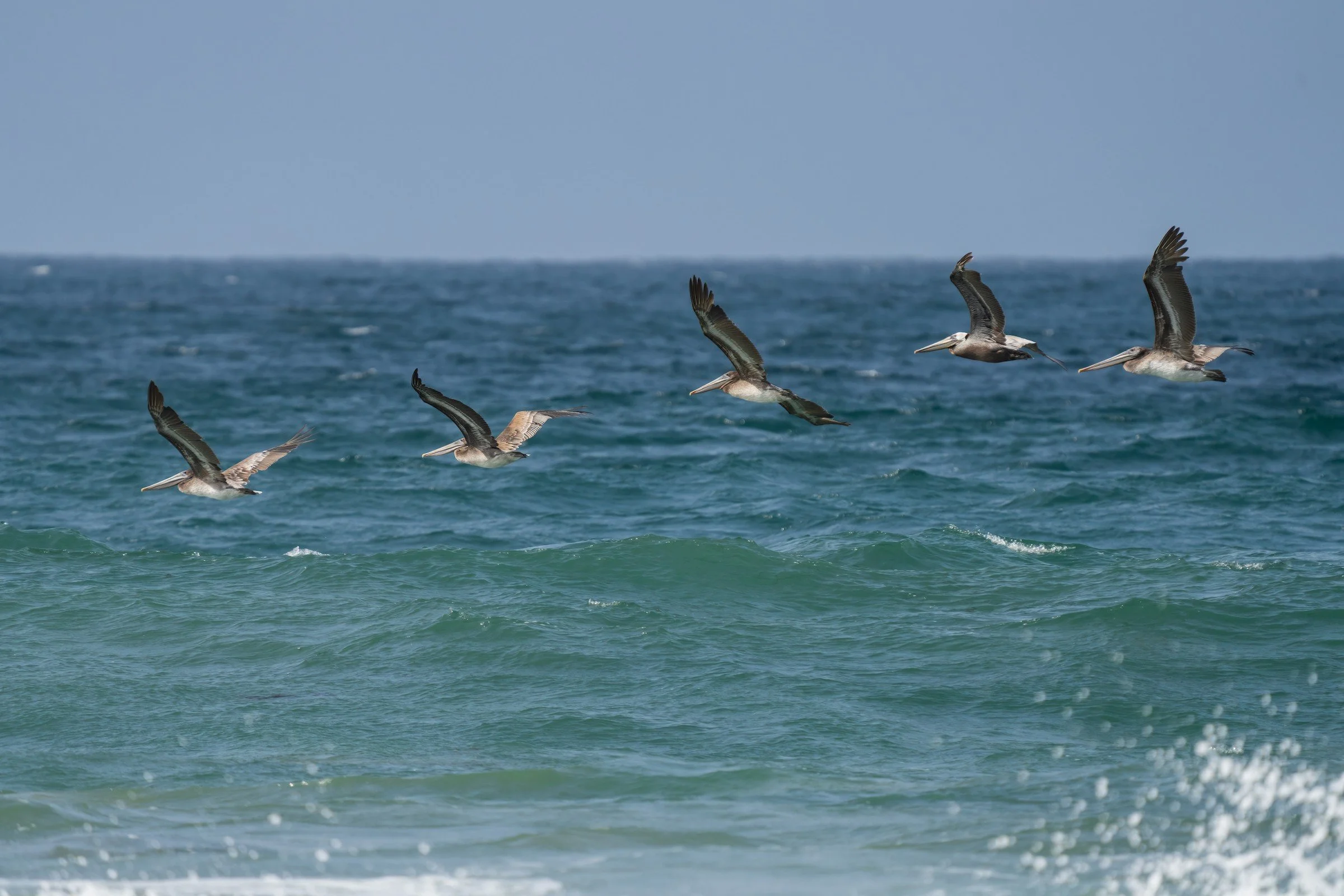
→ They often fly in formation - single-file lines soaring just inches above the wave tops - exploiting updrafts from breaking waves to travel great distances with almost no effort.
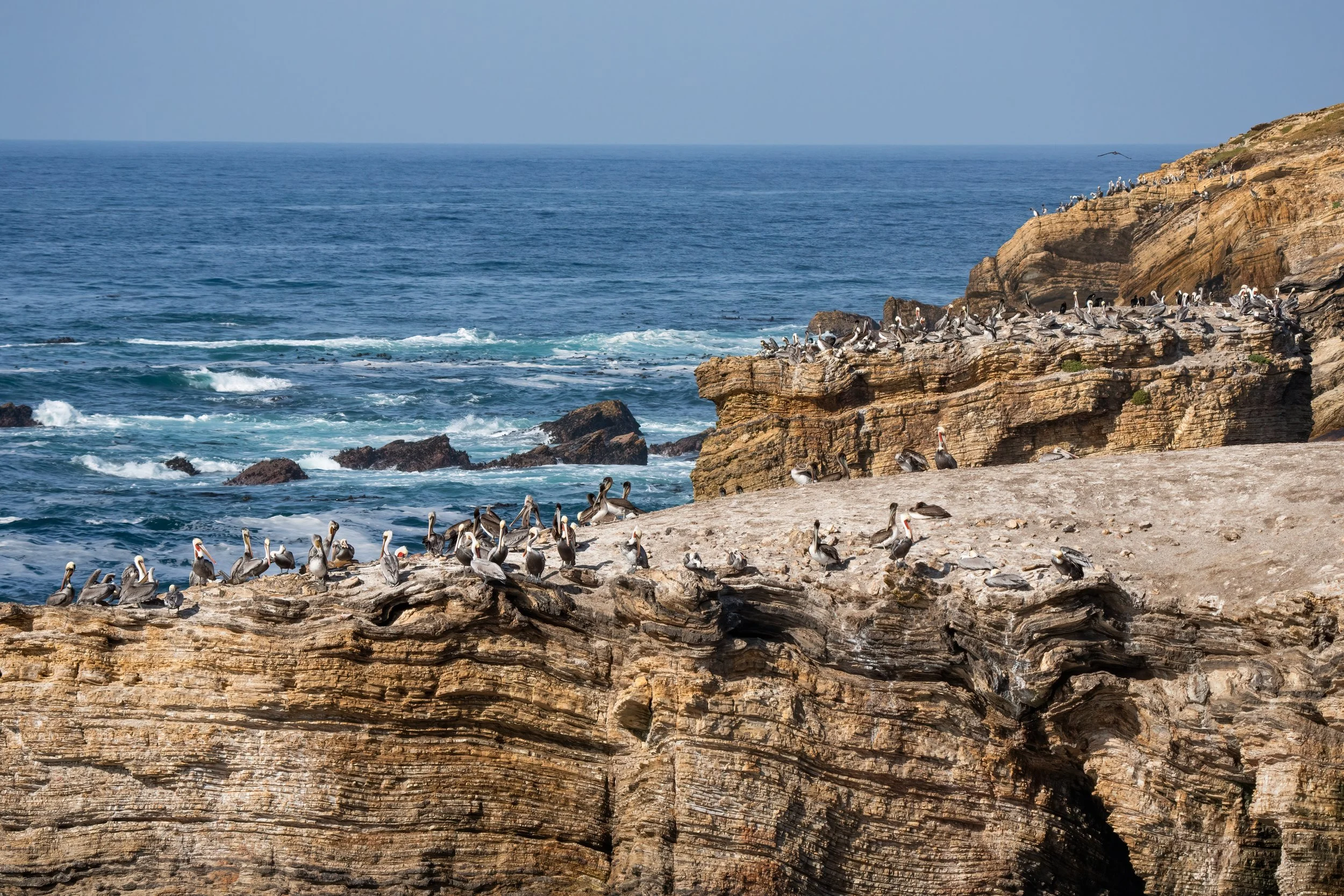
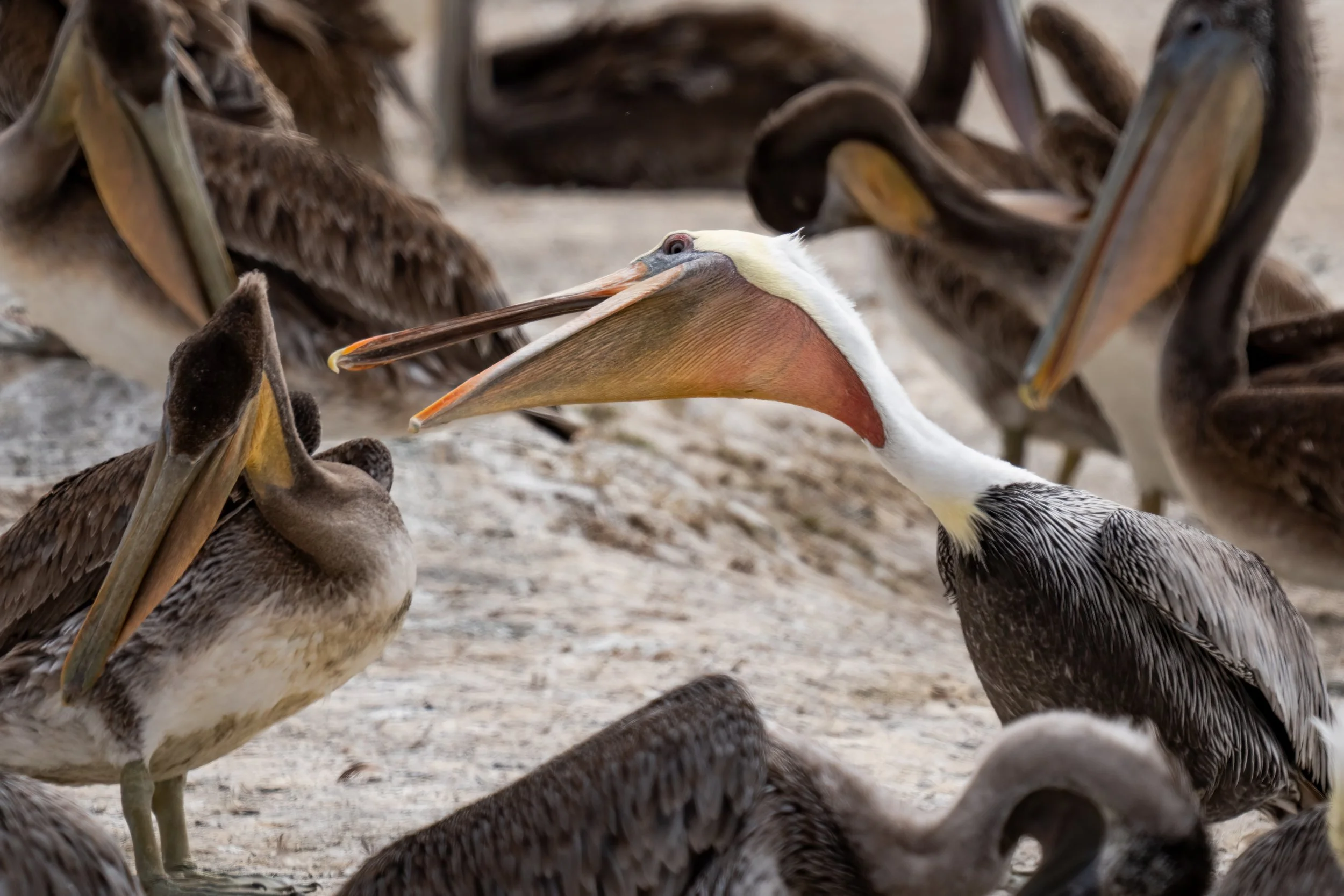
→ Pelicans are surprisingly social and nest in large colonies, often on isolated islands or protected coastal areas.
→ Young pelicans are born naked and helpless, and stand on their parents' feet to stay warm in their first days of life. I dream of seeing this someday!
→ The species is one of the oldest bird lineages still alive today. Dinosaurs, really!
A California Specialty
The Brown Pelicans we see along the California coast are a unique subspecies. One main difference sets them apart from the other subspecies. During breeding season, the throat pouch of a California Brown Pelican turns a vivid poppy red, while the Eastern subspecies goes dark greenish-black. The California subspecies also nests almost exclusively on the ground on rocky offshore islands, primarily on Anacapa and Santa Barbara Islands in the Channel Islands, with the bulk of the population nesting further south in Mexico. The pelicans gliding low over the surf here are their own distinct piece of the Pacific coast.
The Kids
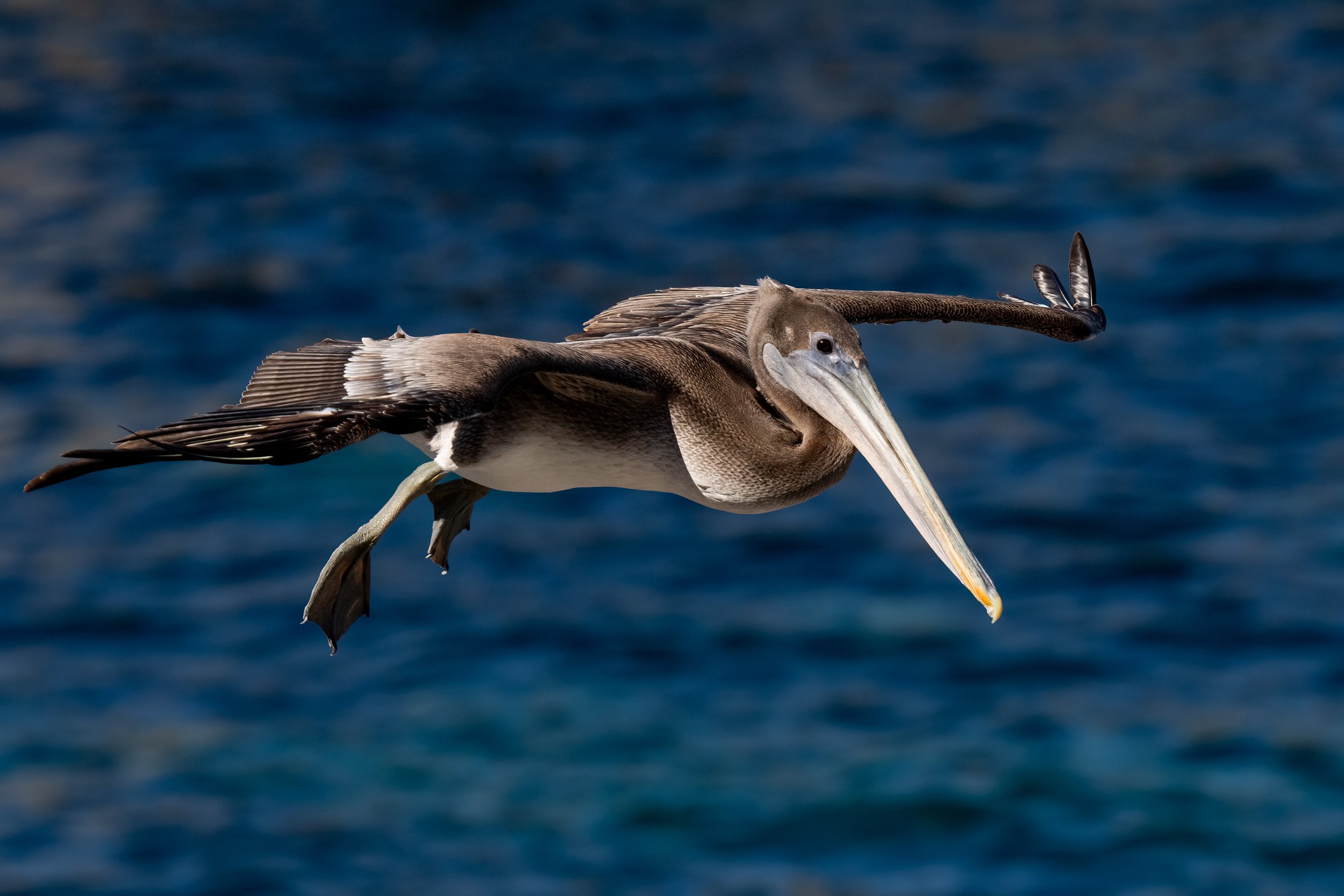
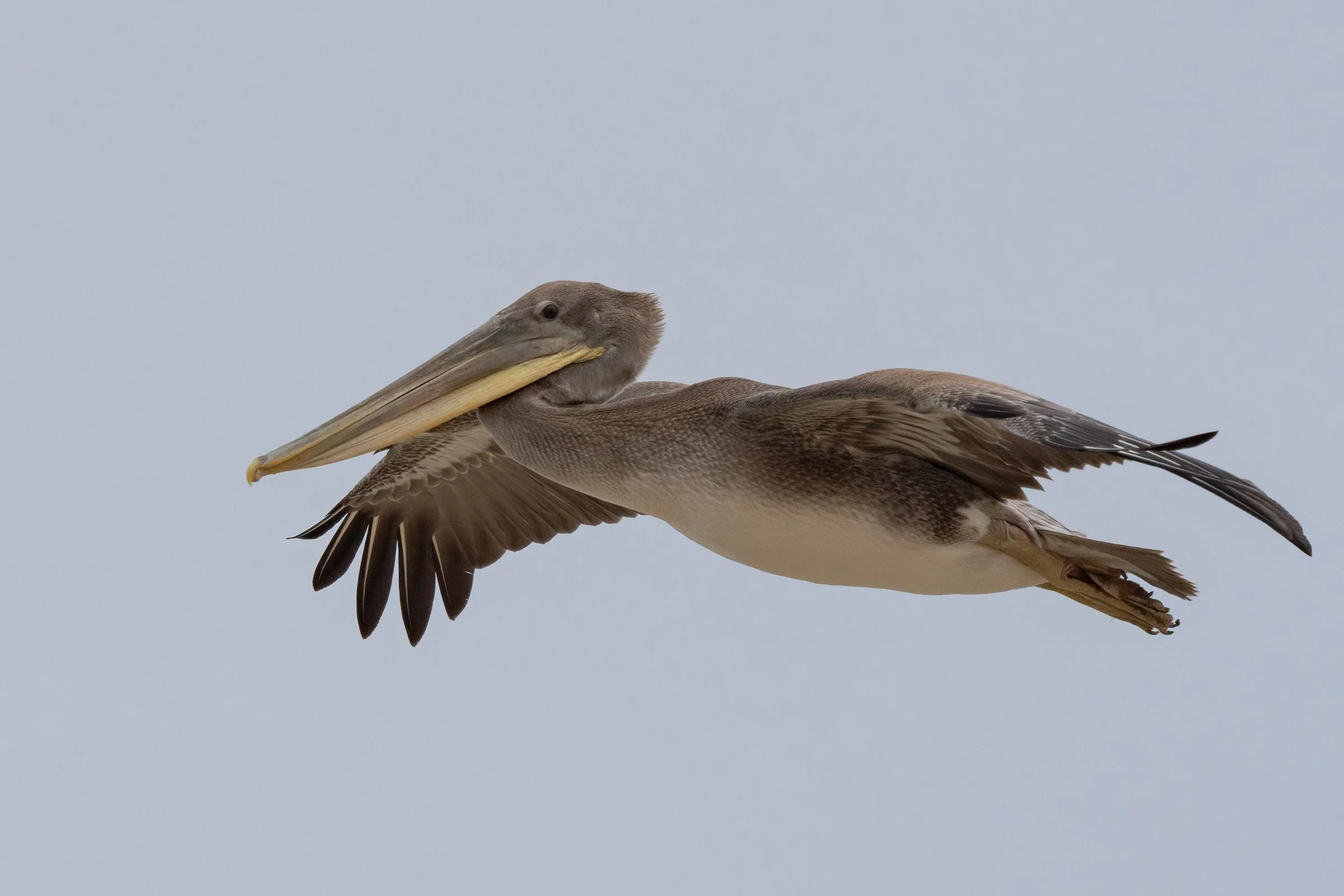
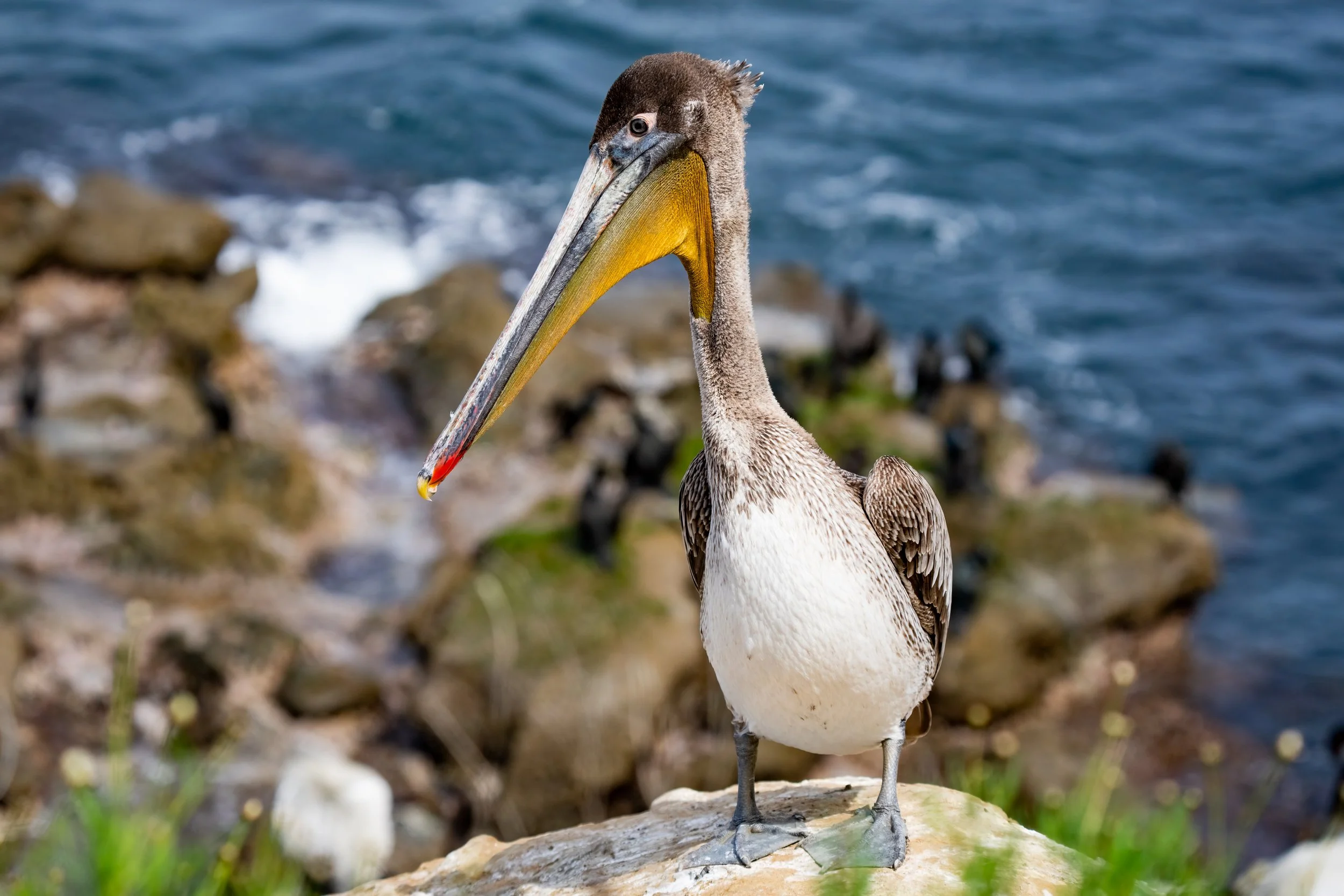
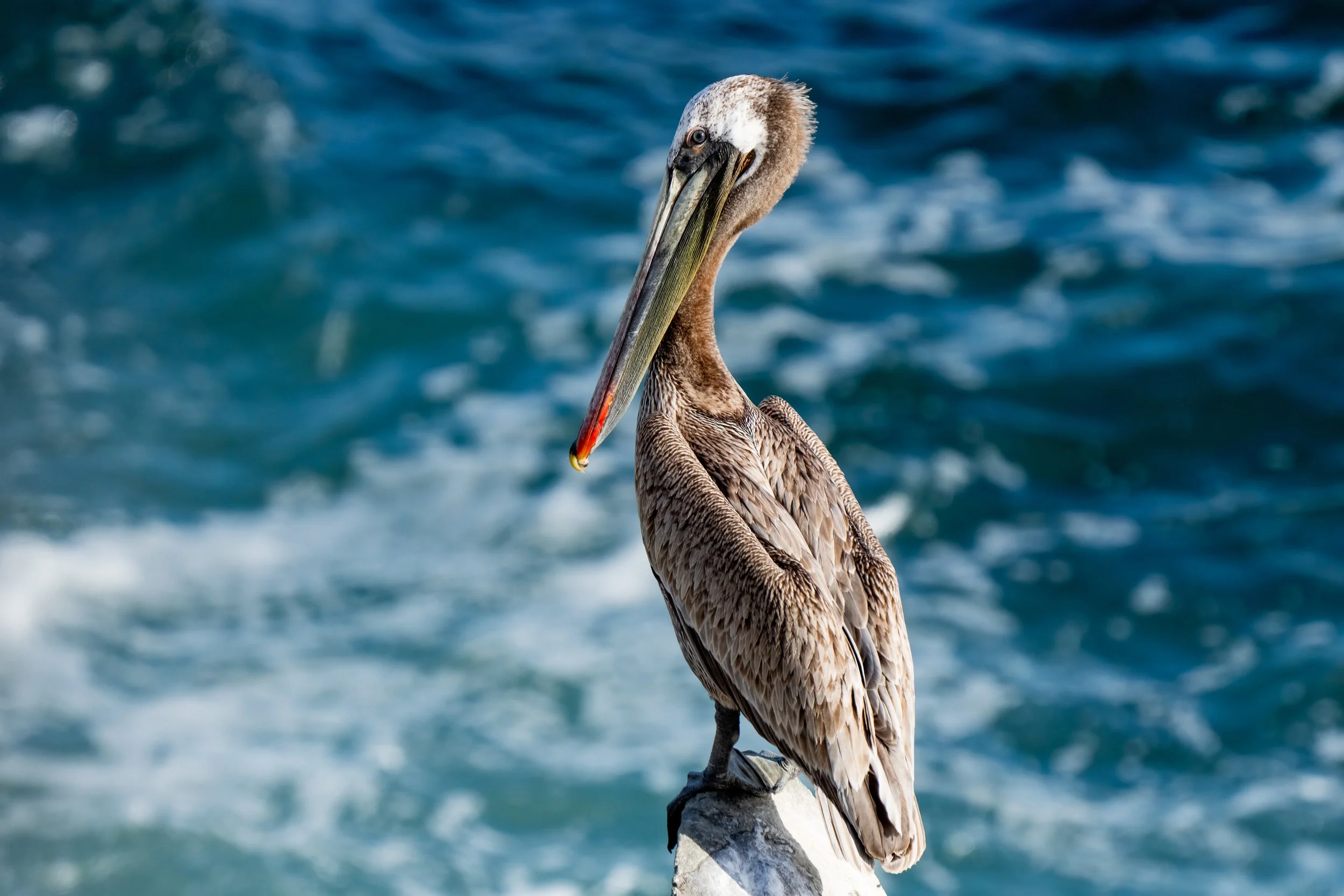
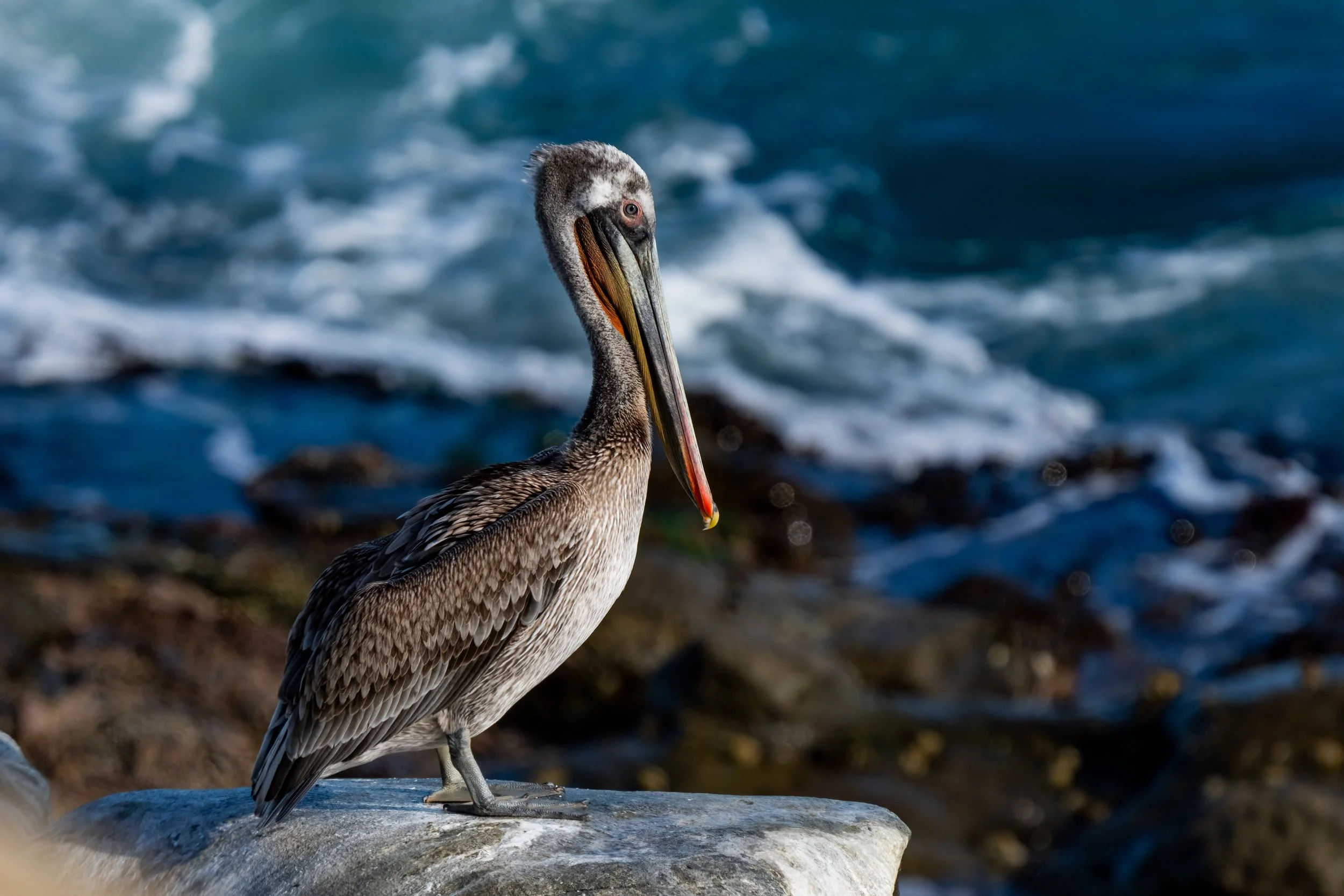
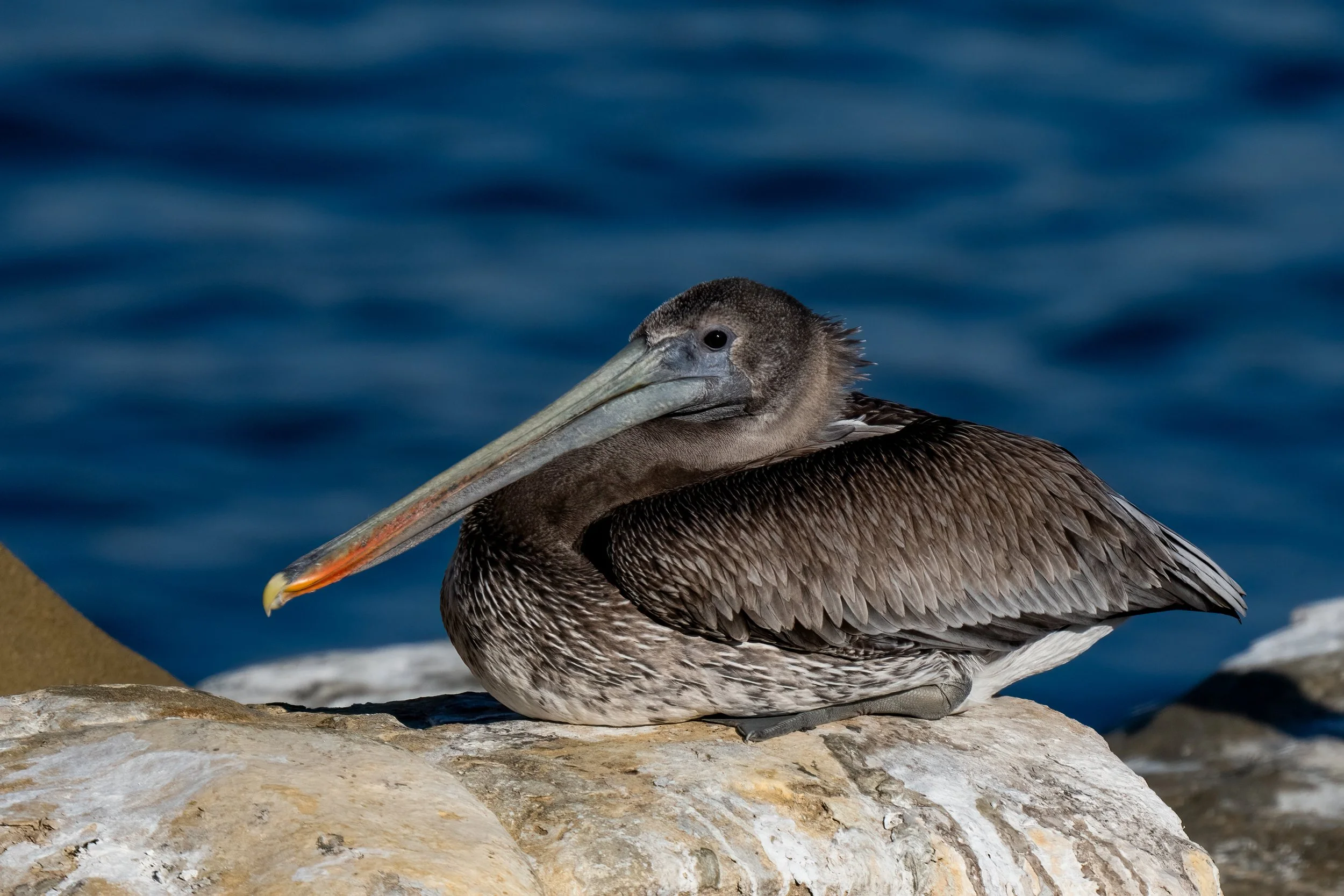
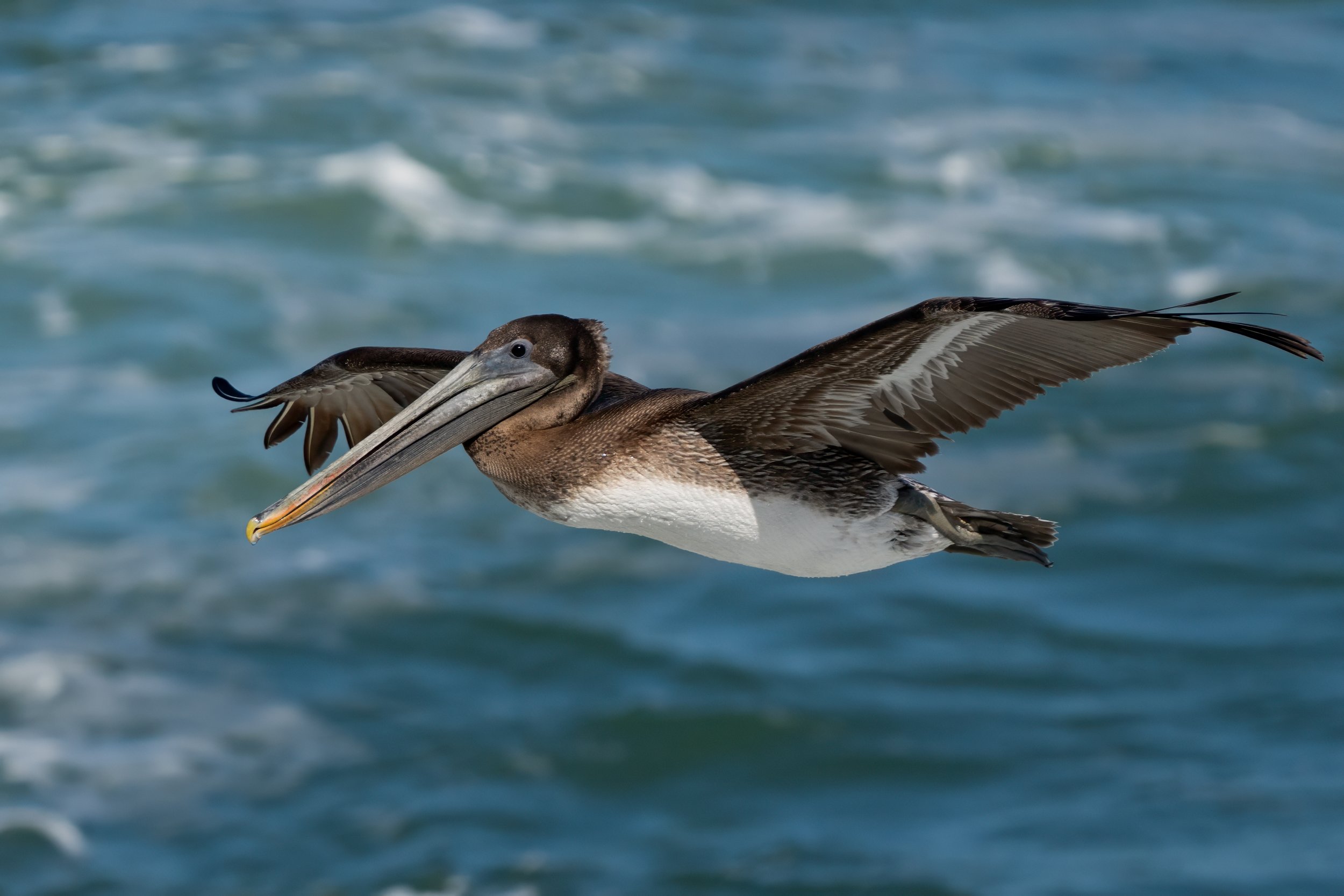
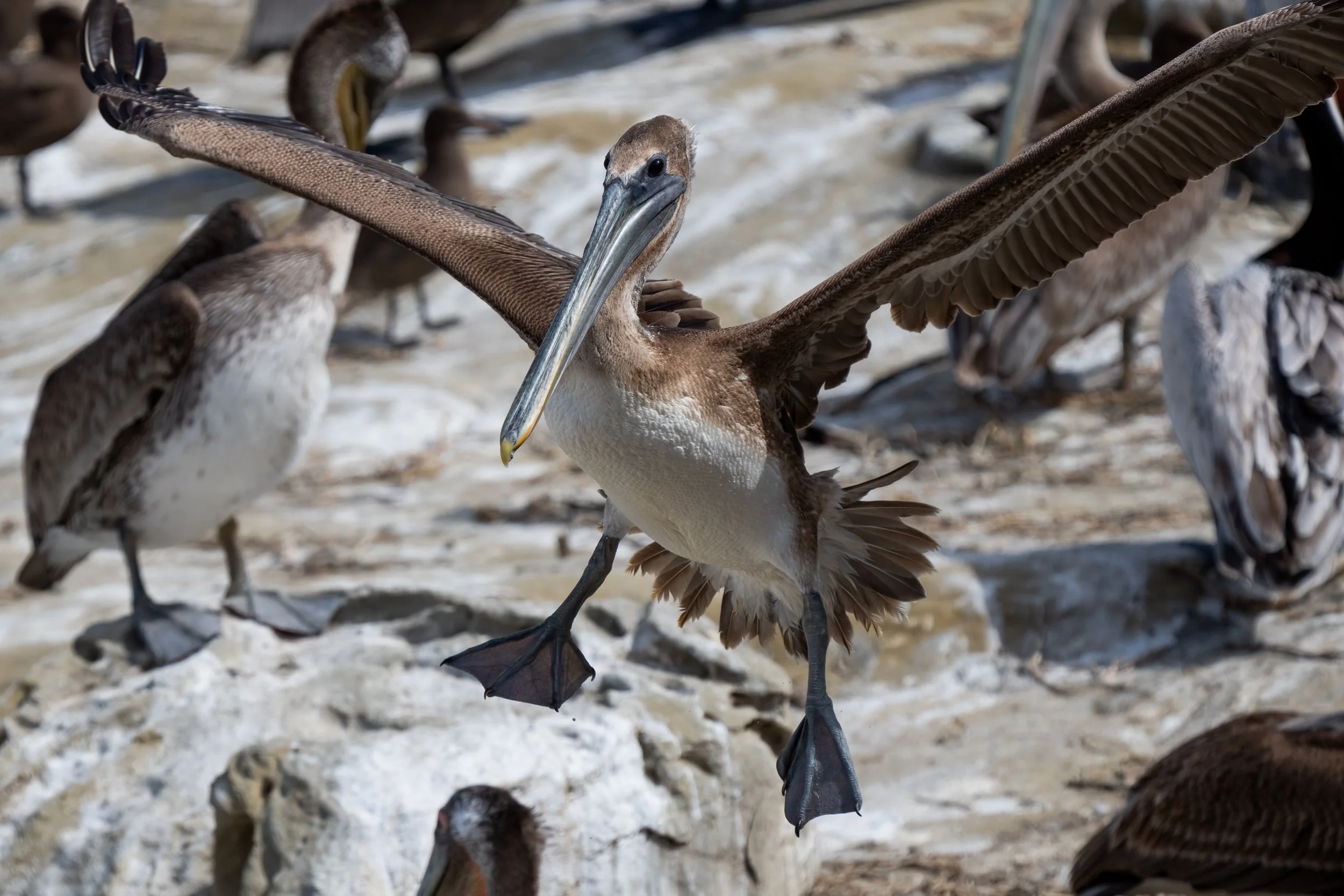
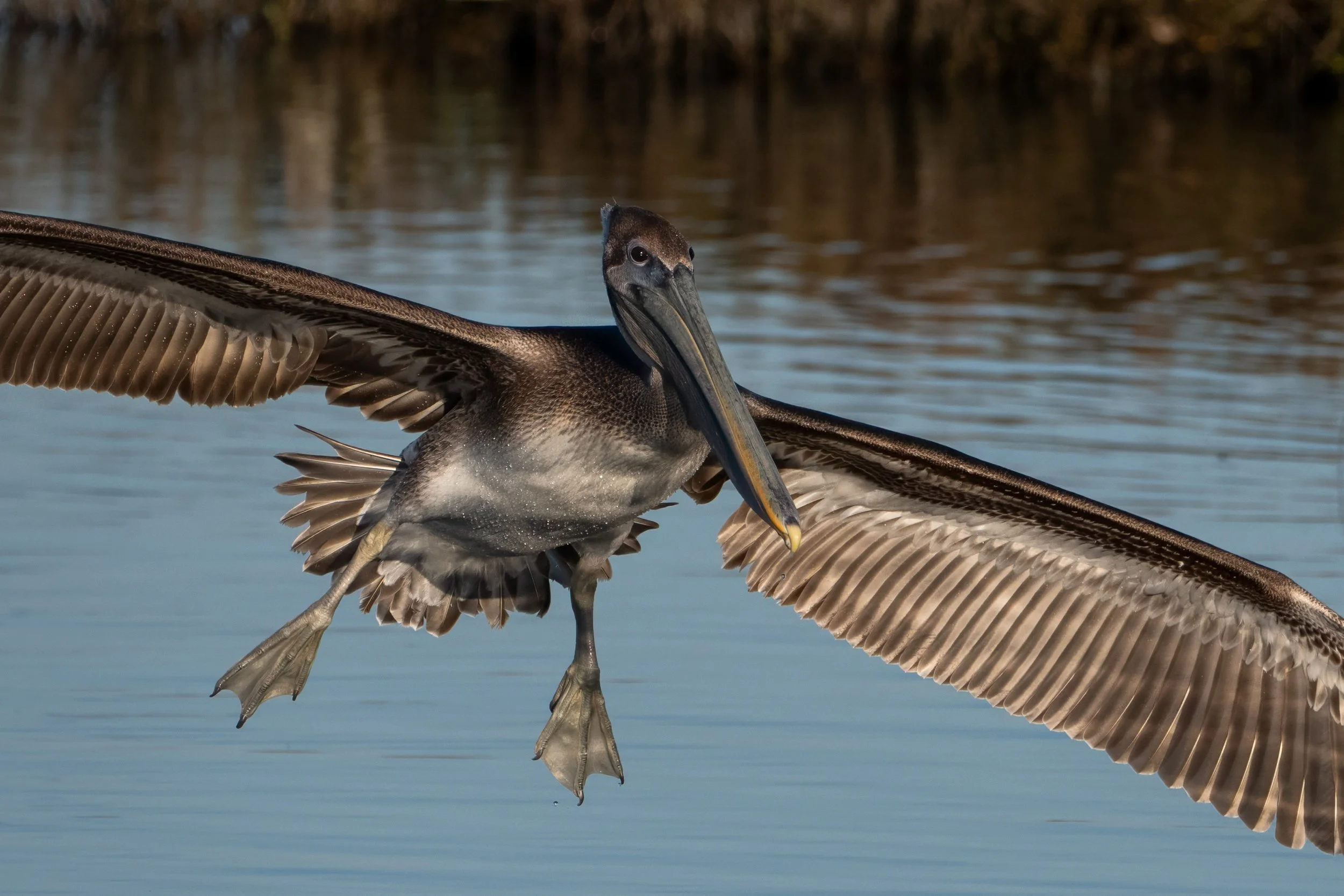
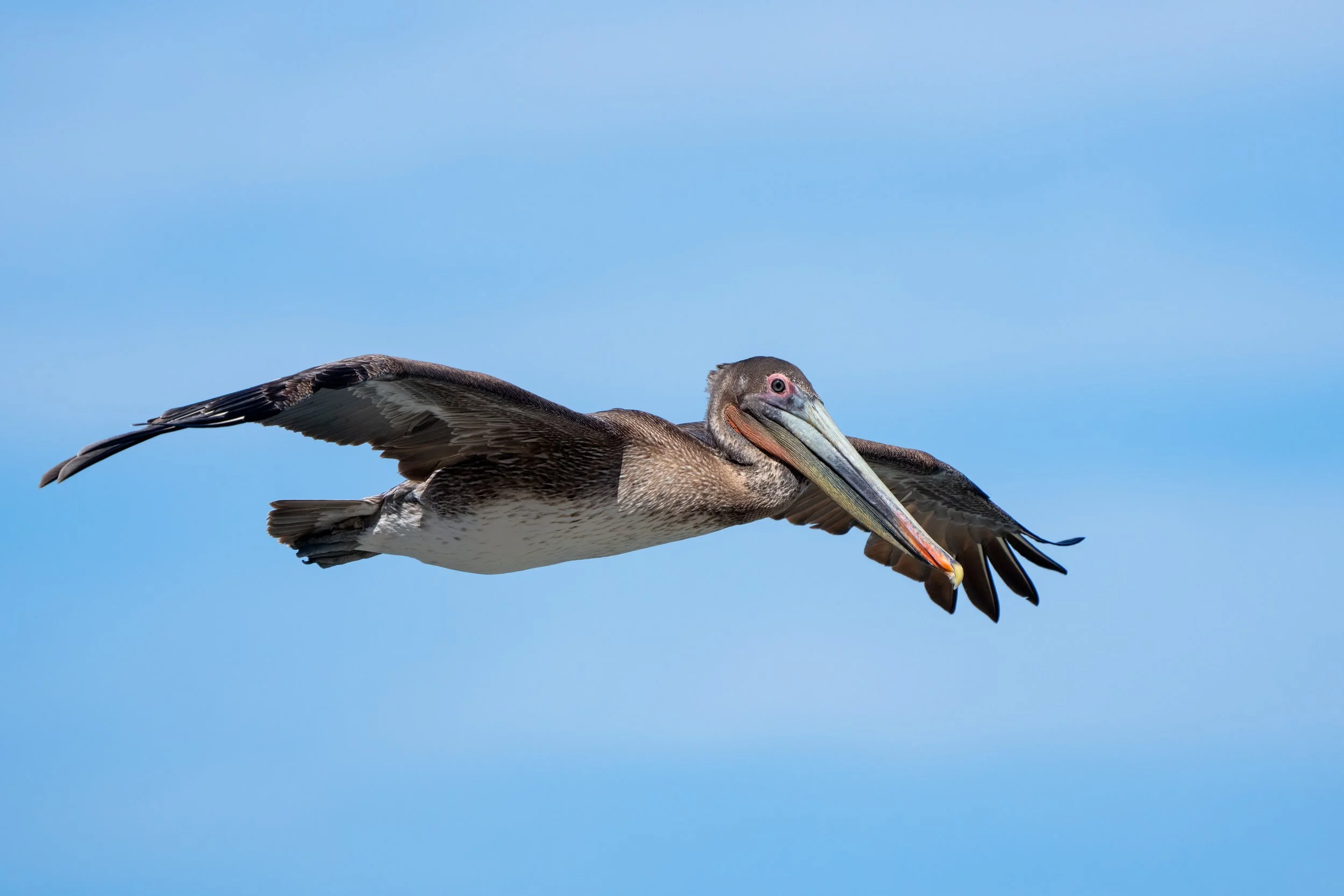
A juvenile Brown Pelican is a study in brown from head to tail, lacking the bold contrast of the adult, with a pale whitish belly and a dull, muted bill. They wear this understated plumage for a few years before the breeding colors of adulthood start coming in. They are my very favorite Brown Pelican to see, so soft looking and often silly!
A Presence Worth Protecting
The Brown Pelican was saved once. But the threats that face our coastal ecosystems - warming seas, shifting fish populations, plastic pollution, and habitat loss - mean that conservation still matters. When you see a Brown Pelican today, you're seeing proof that conservation can work and we all need to help these creatures and ecosystems continue to survive!