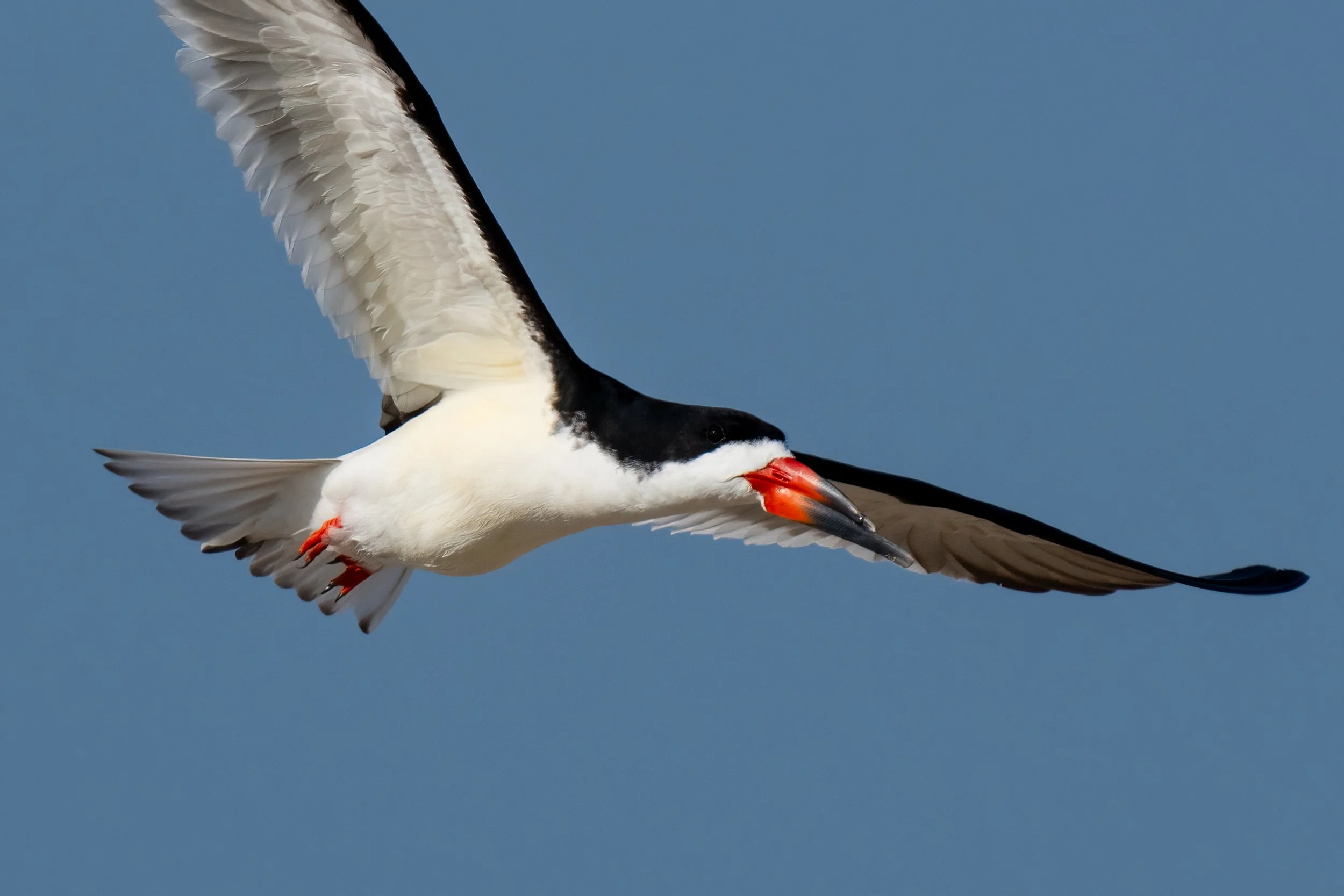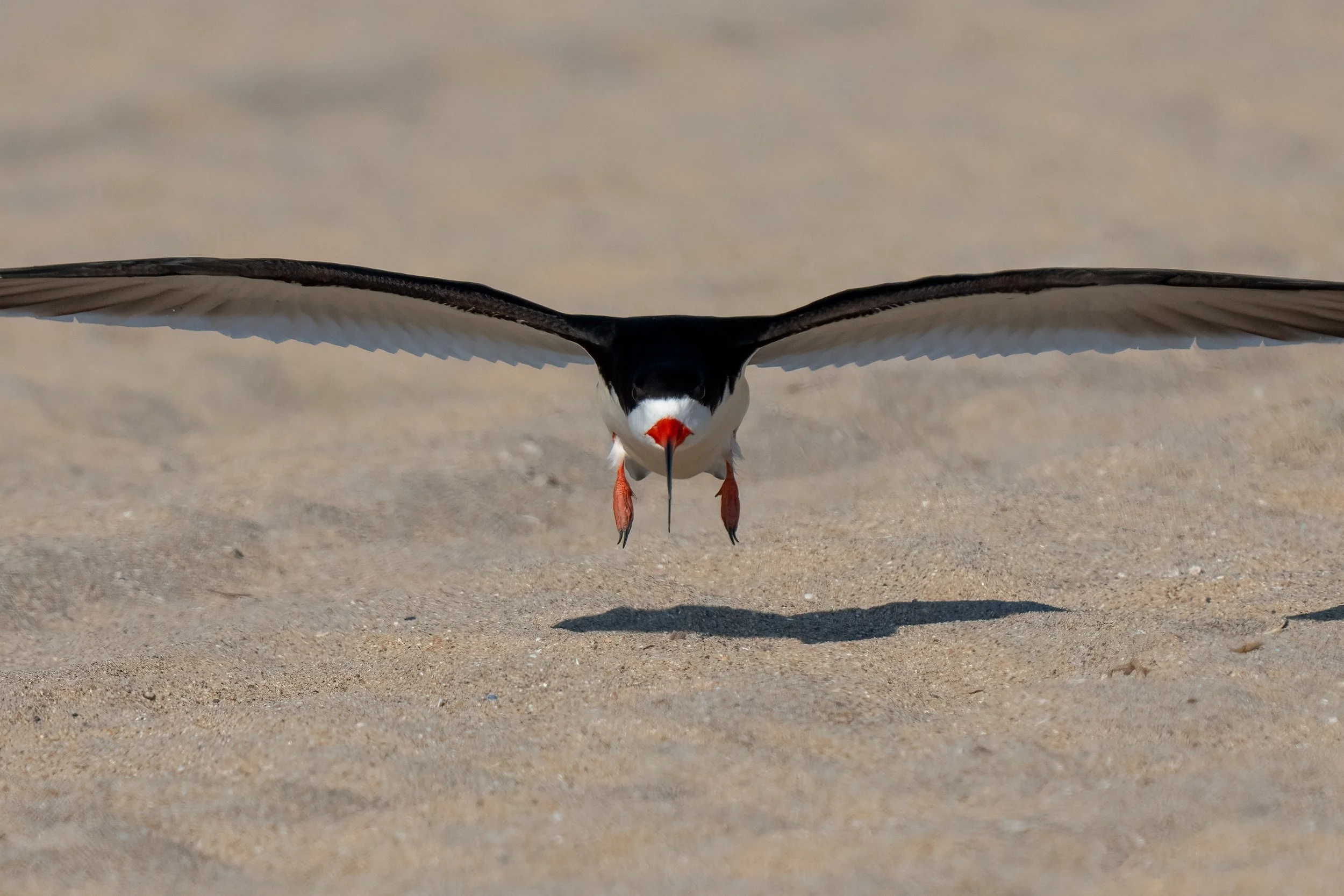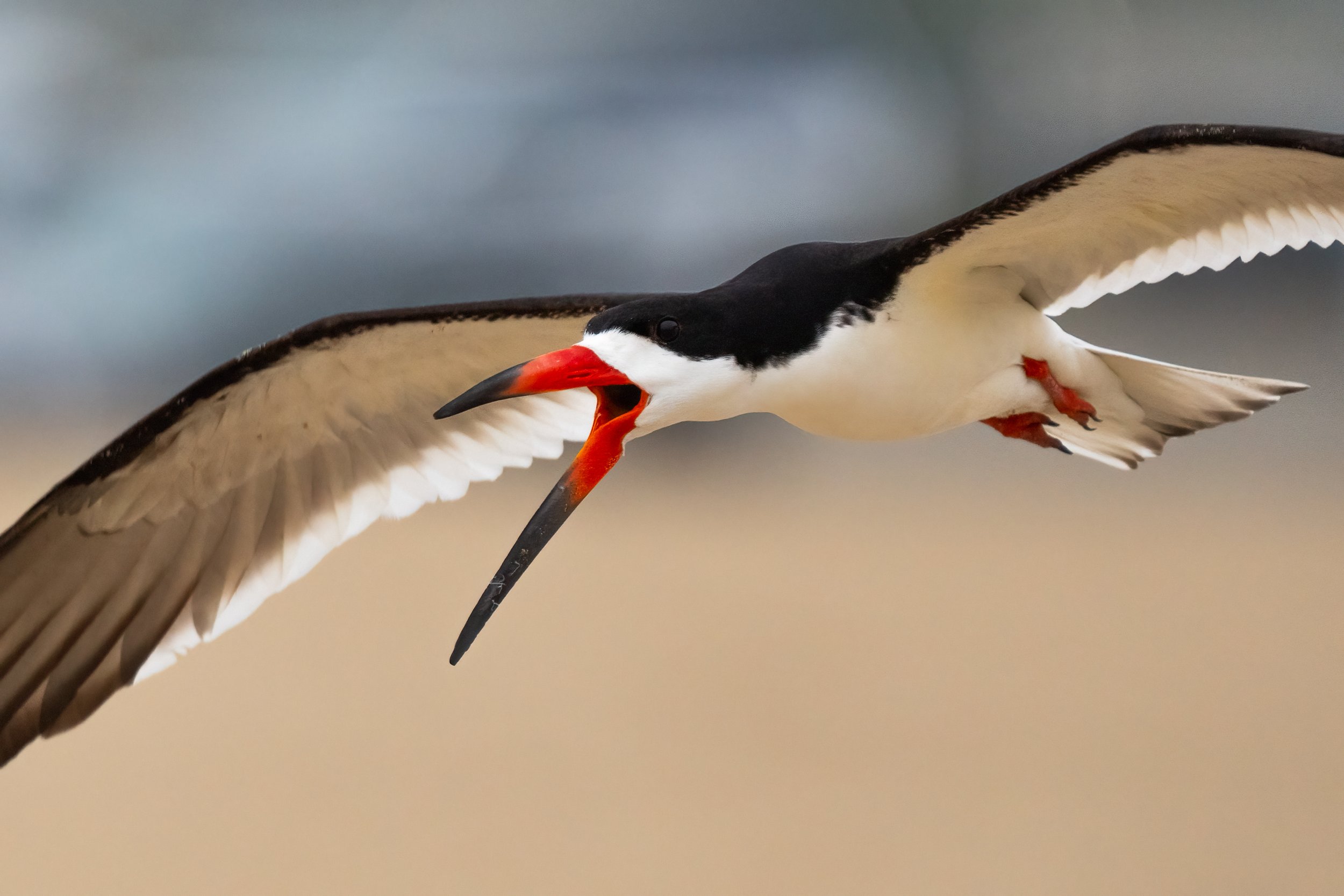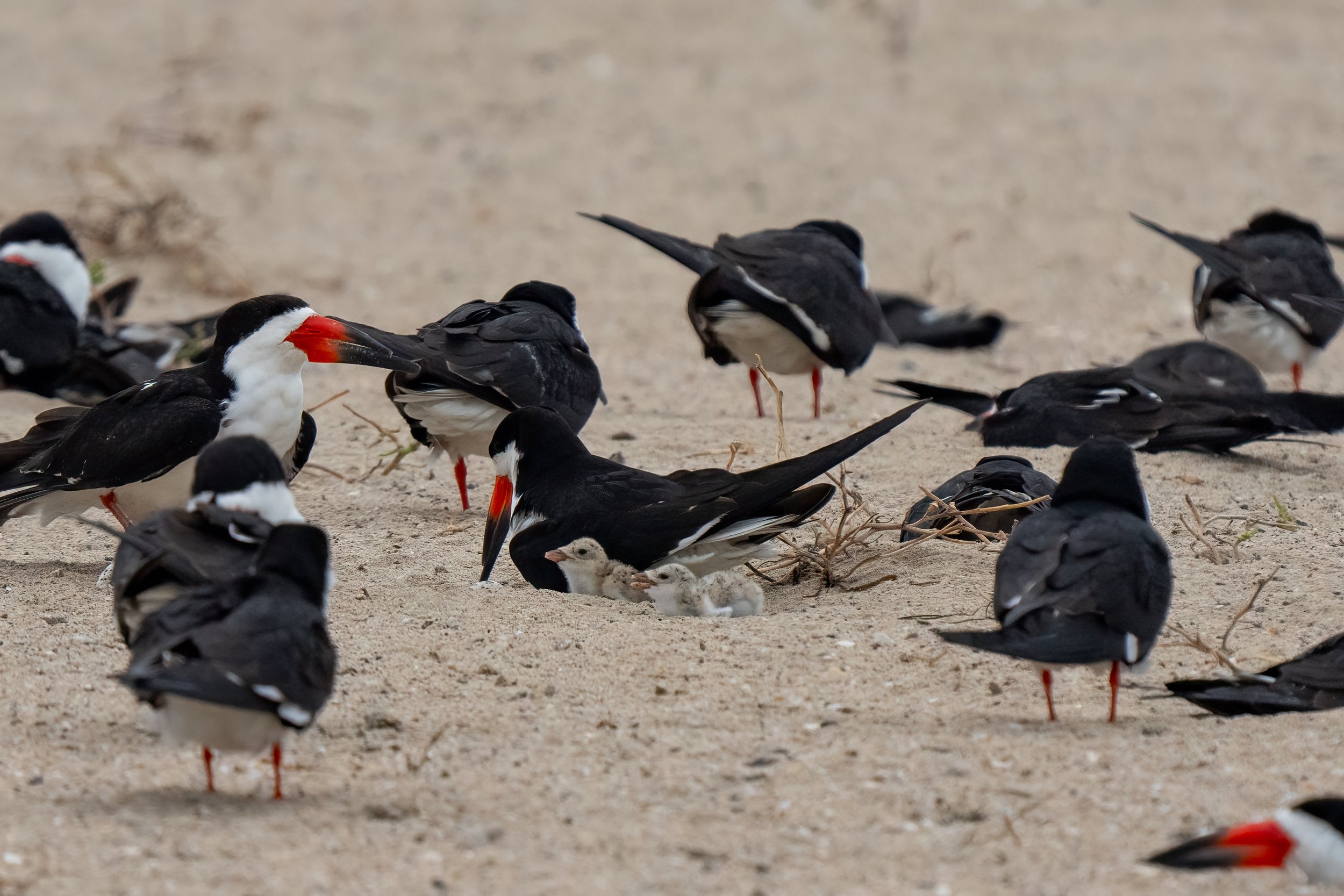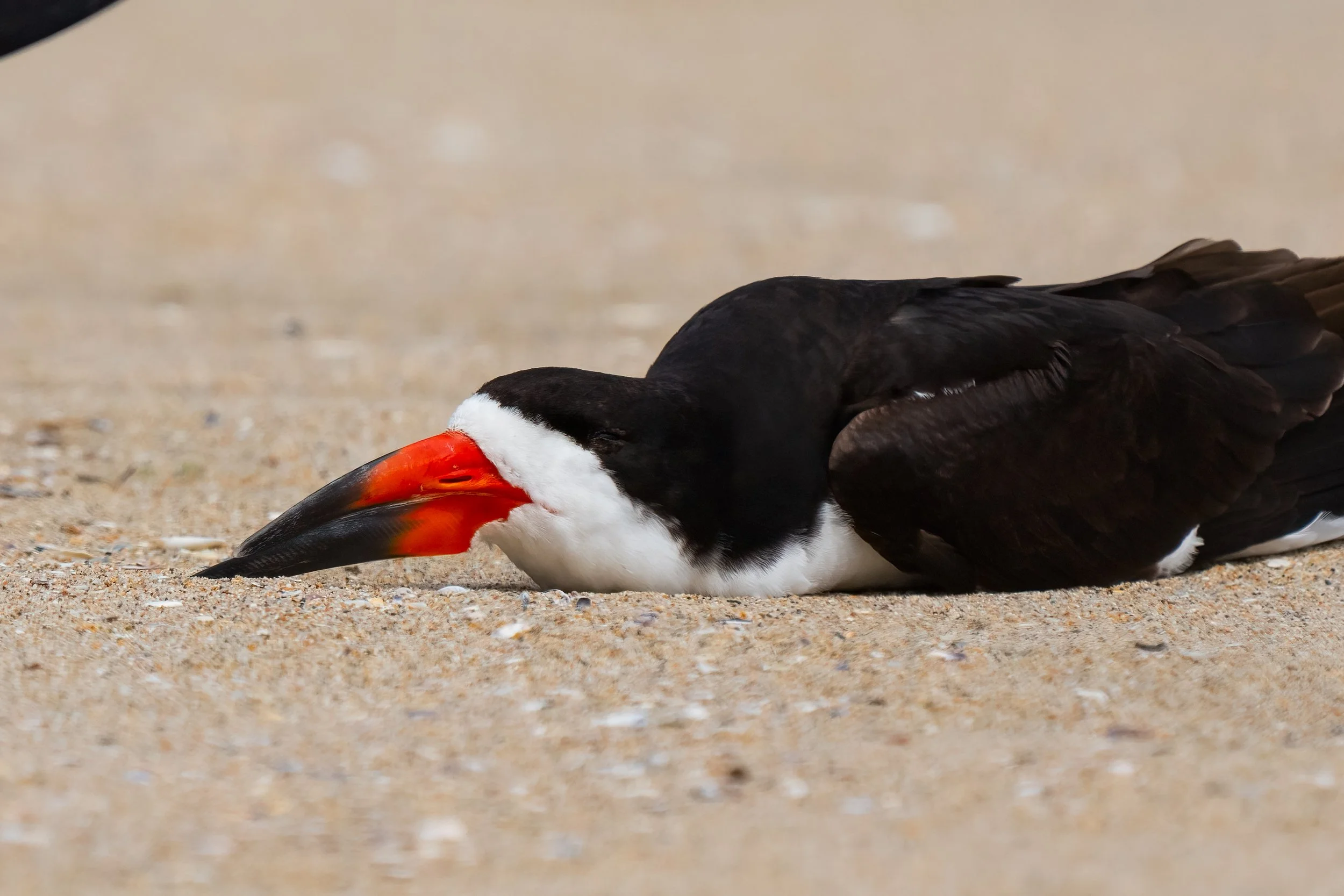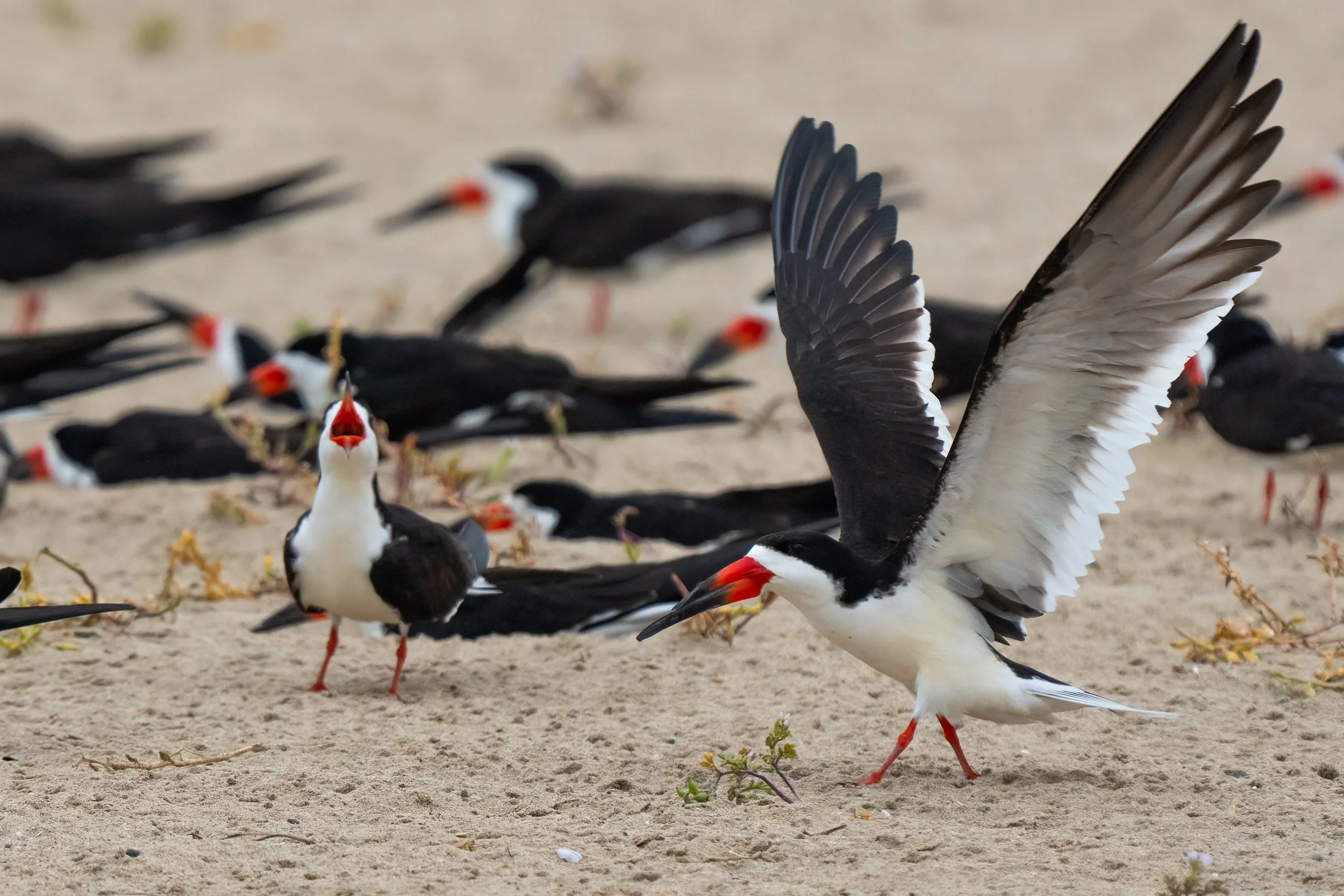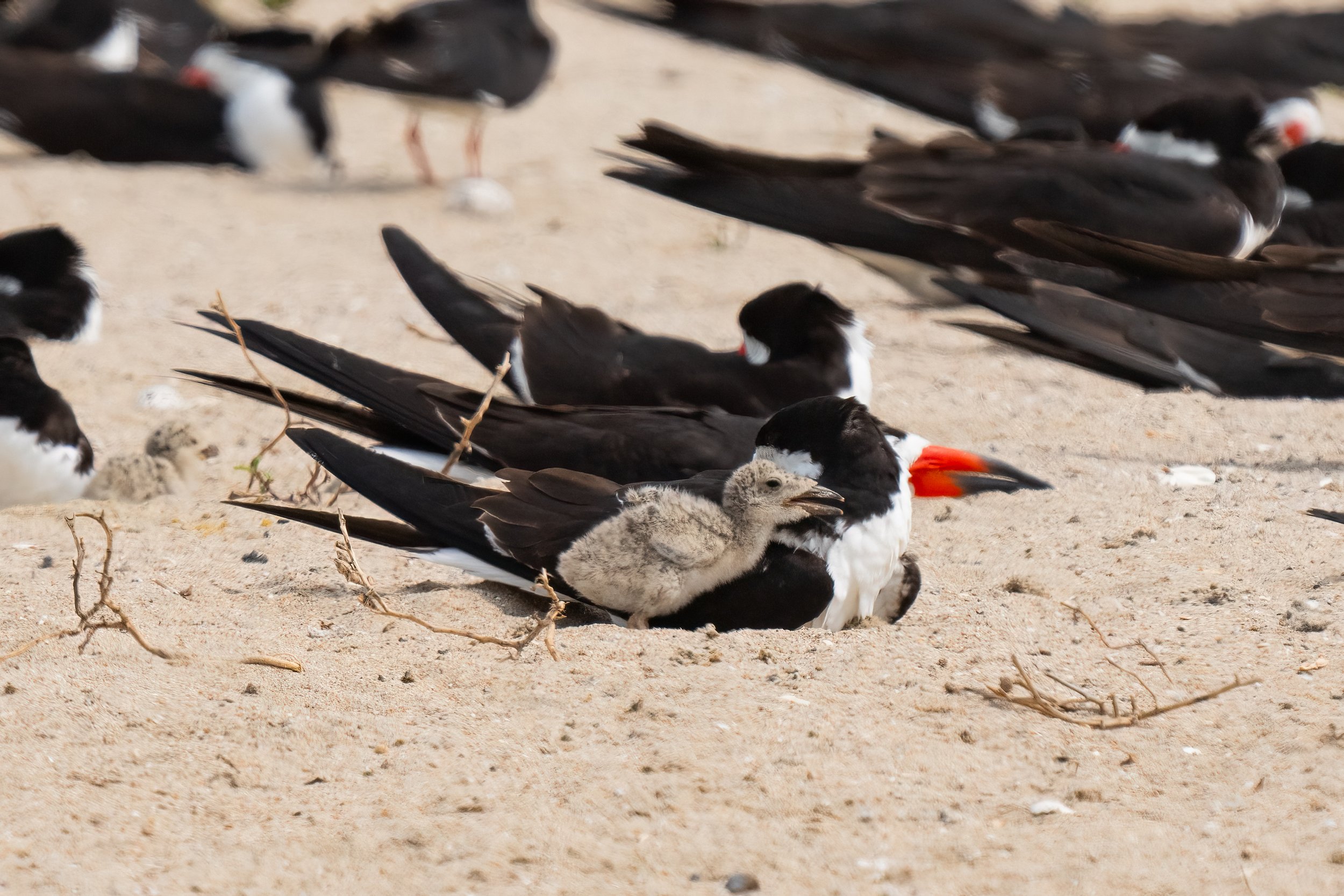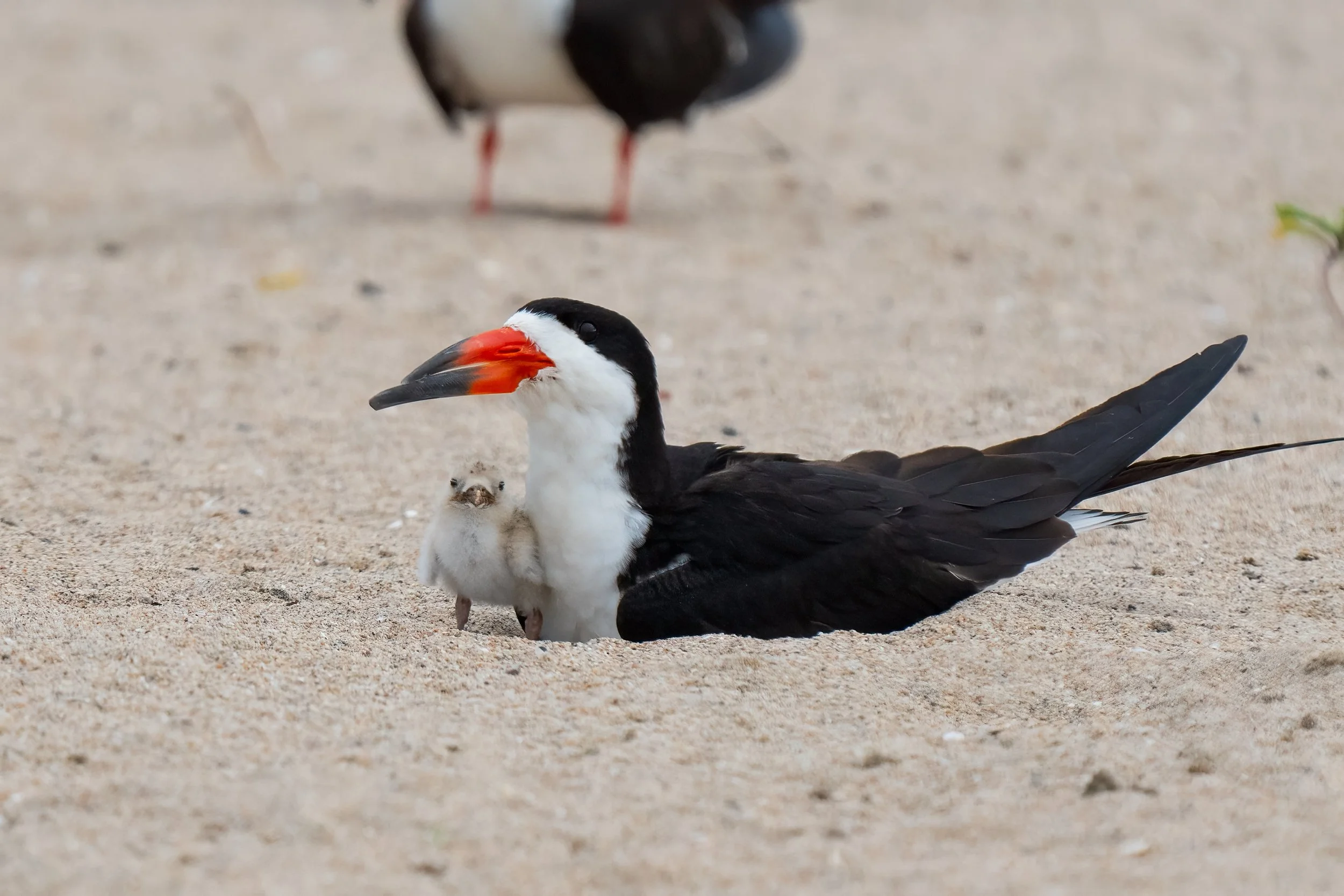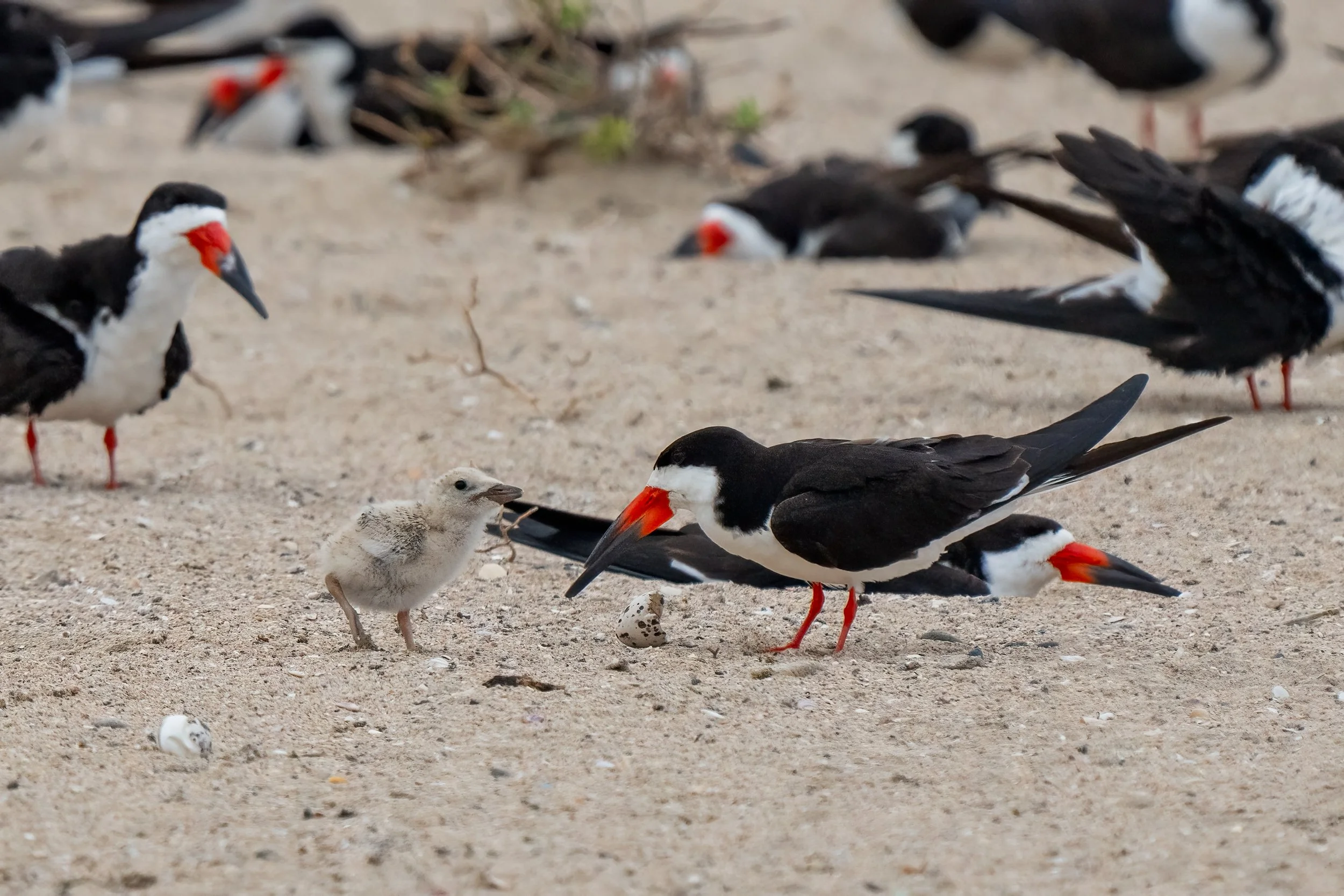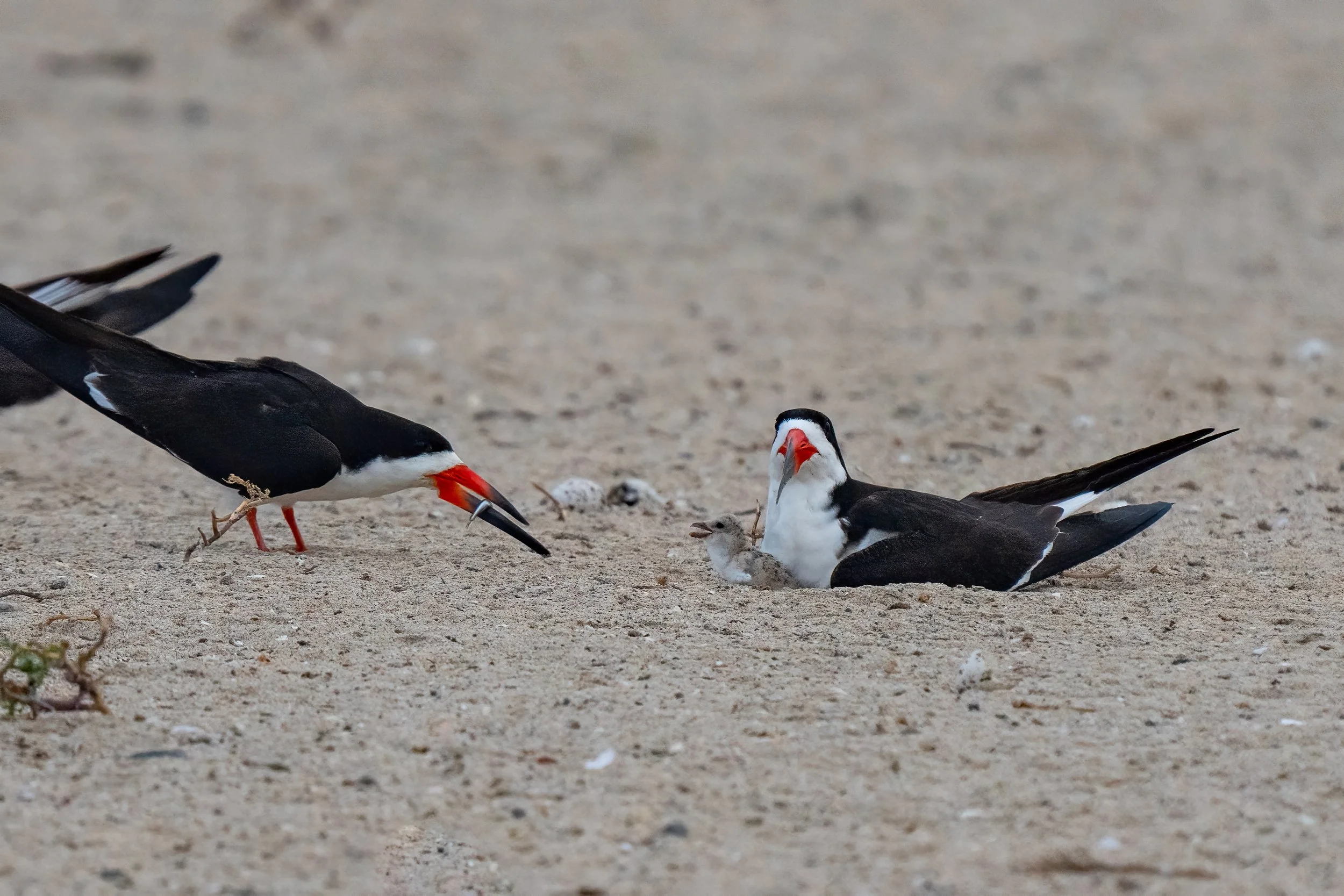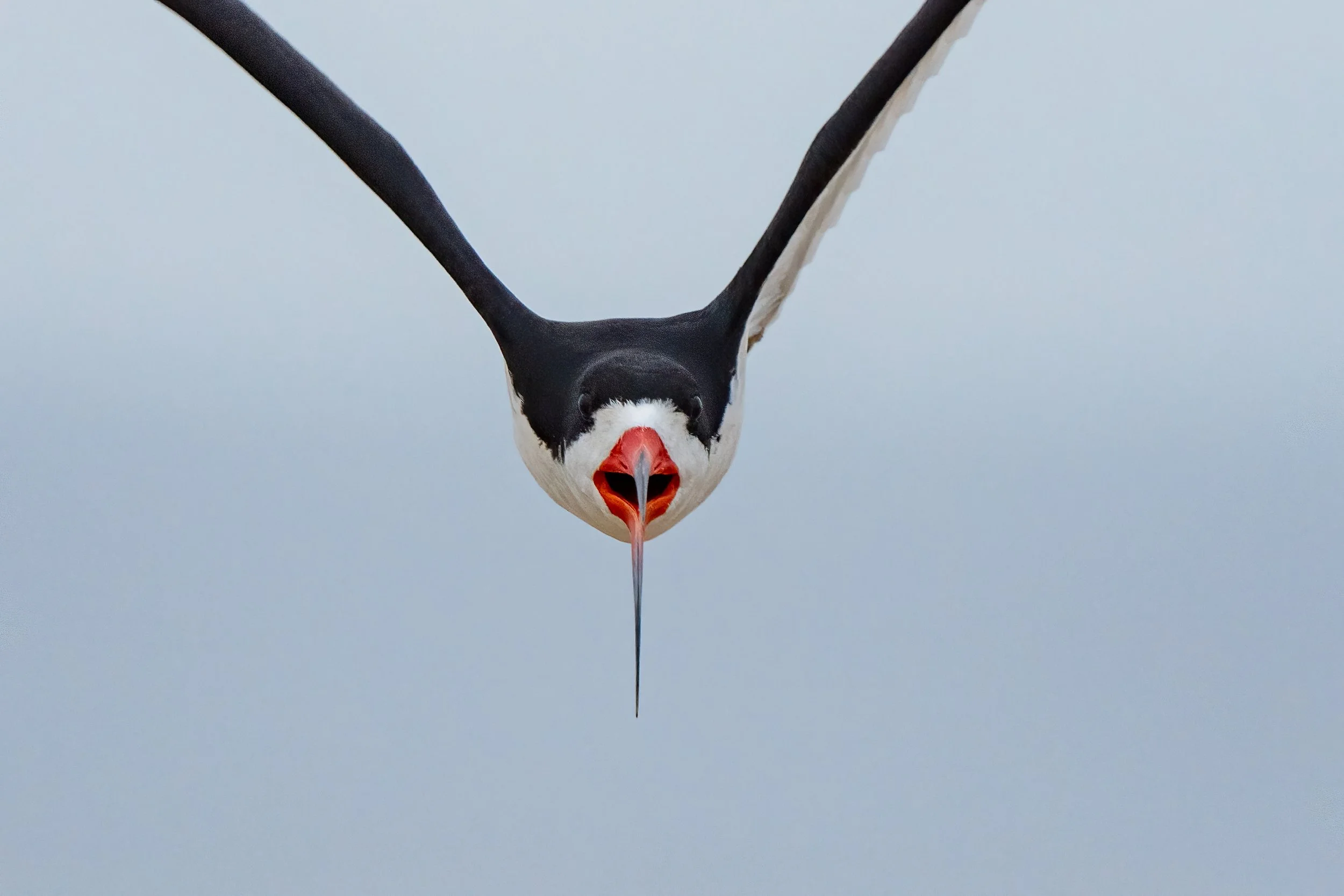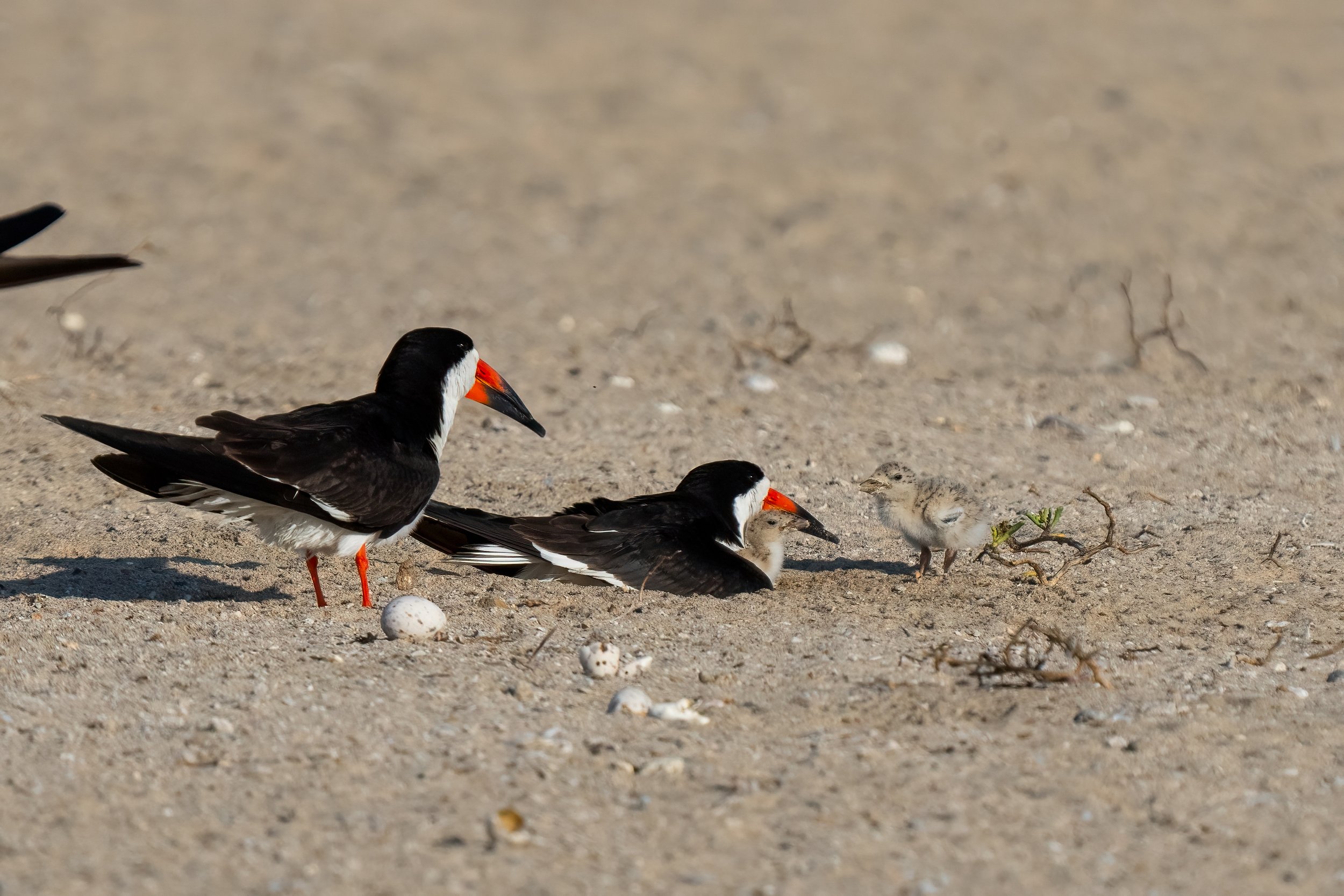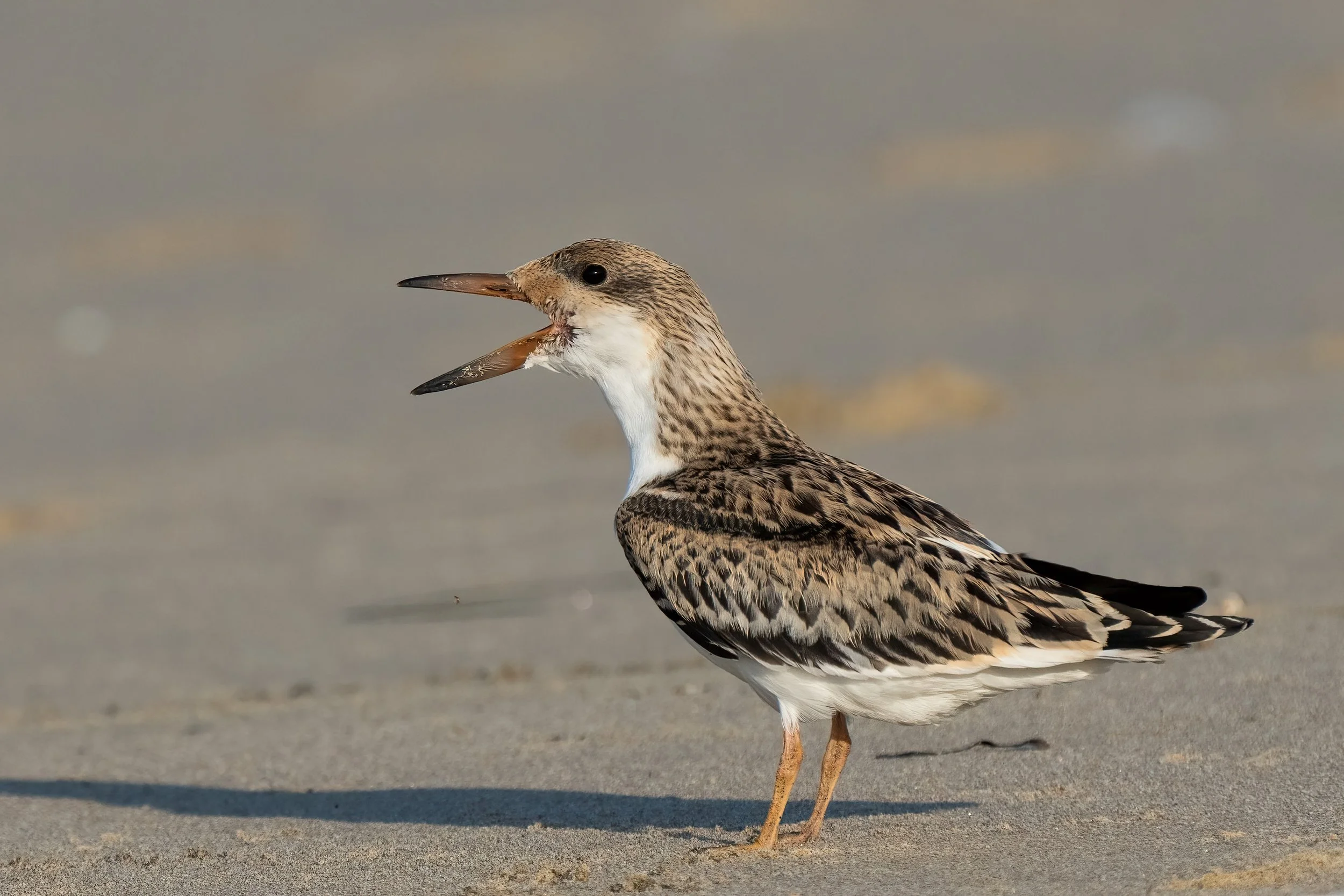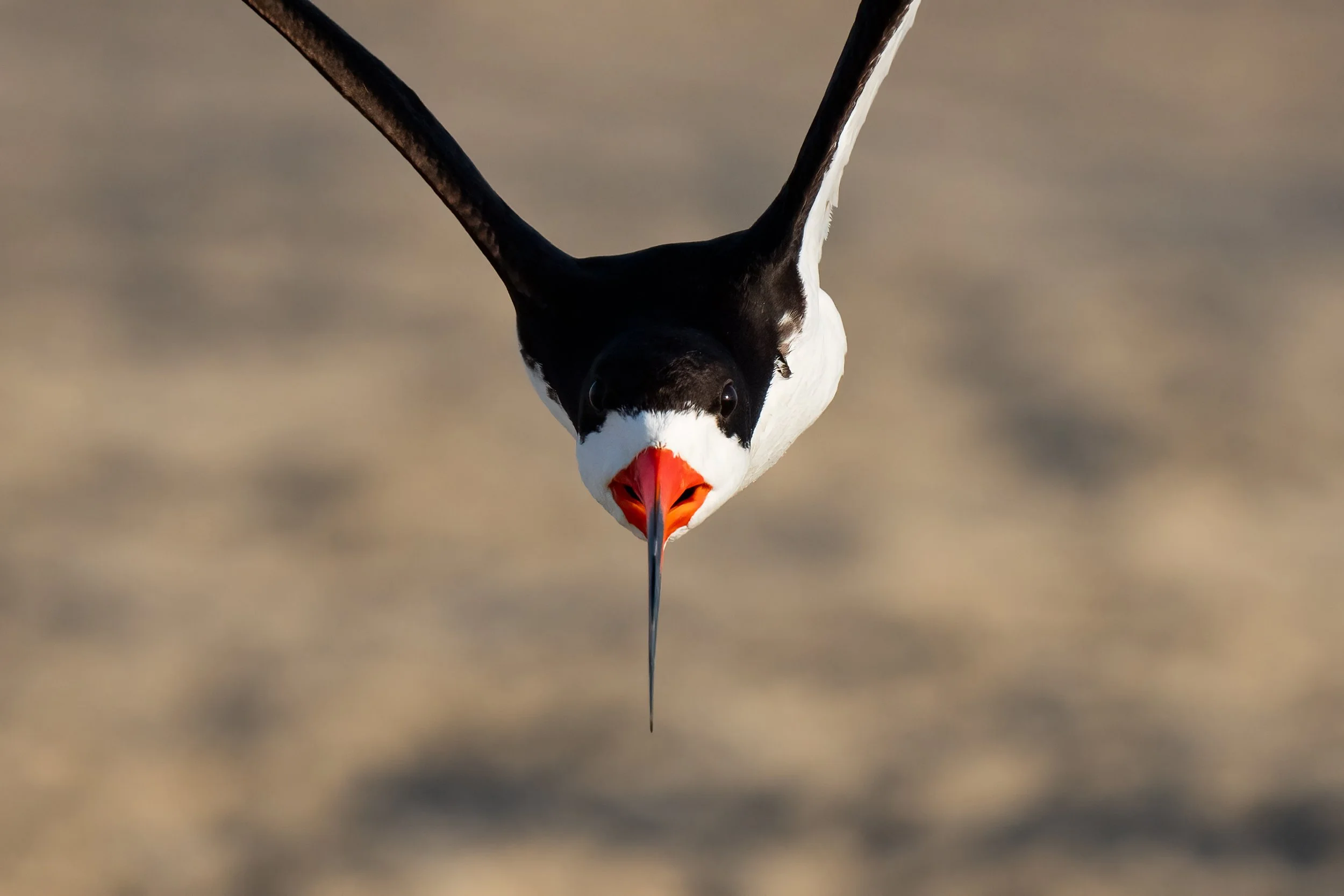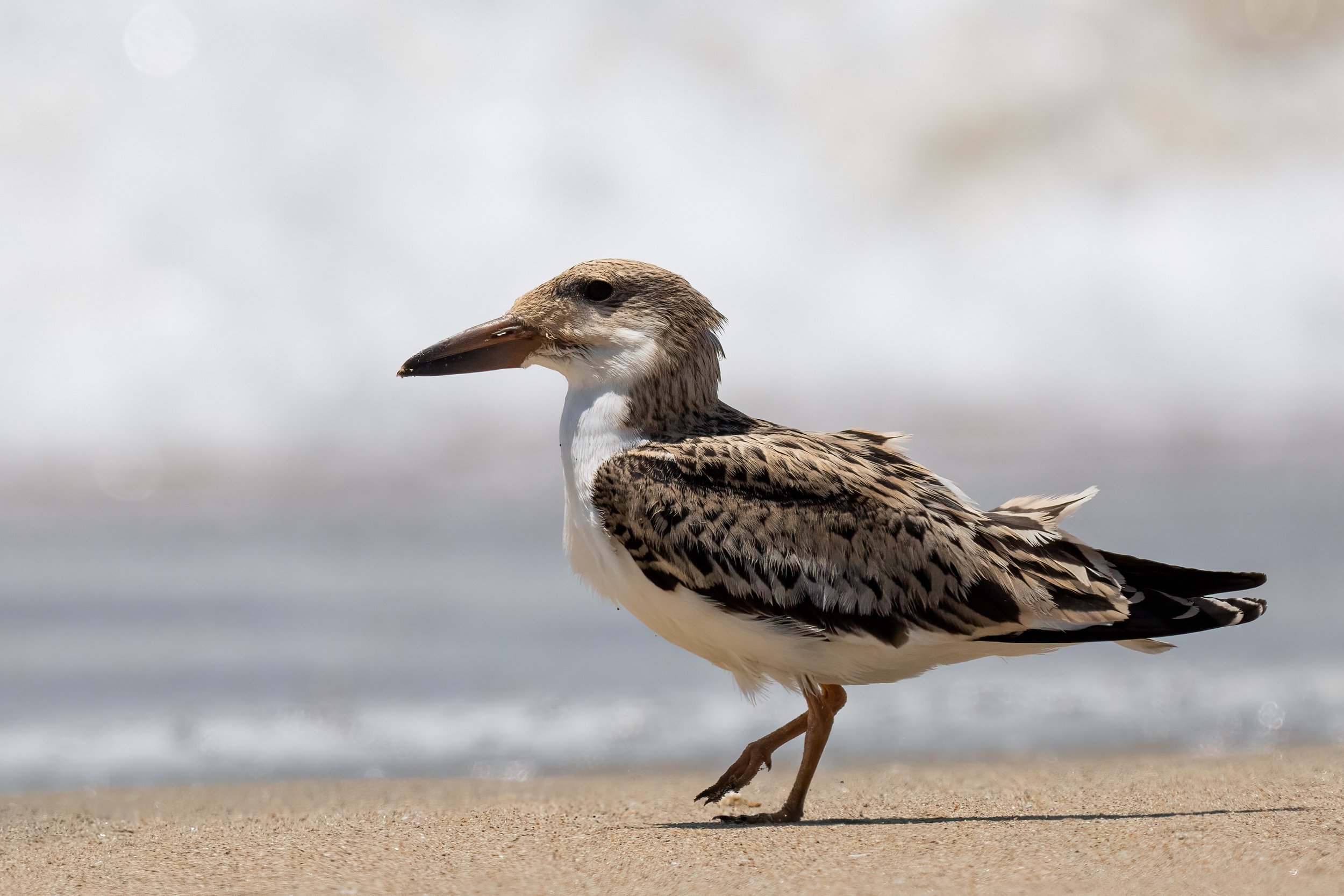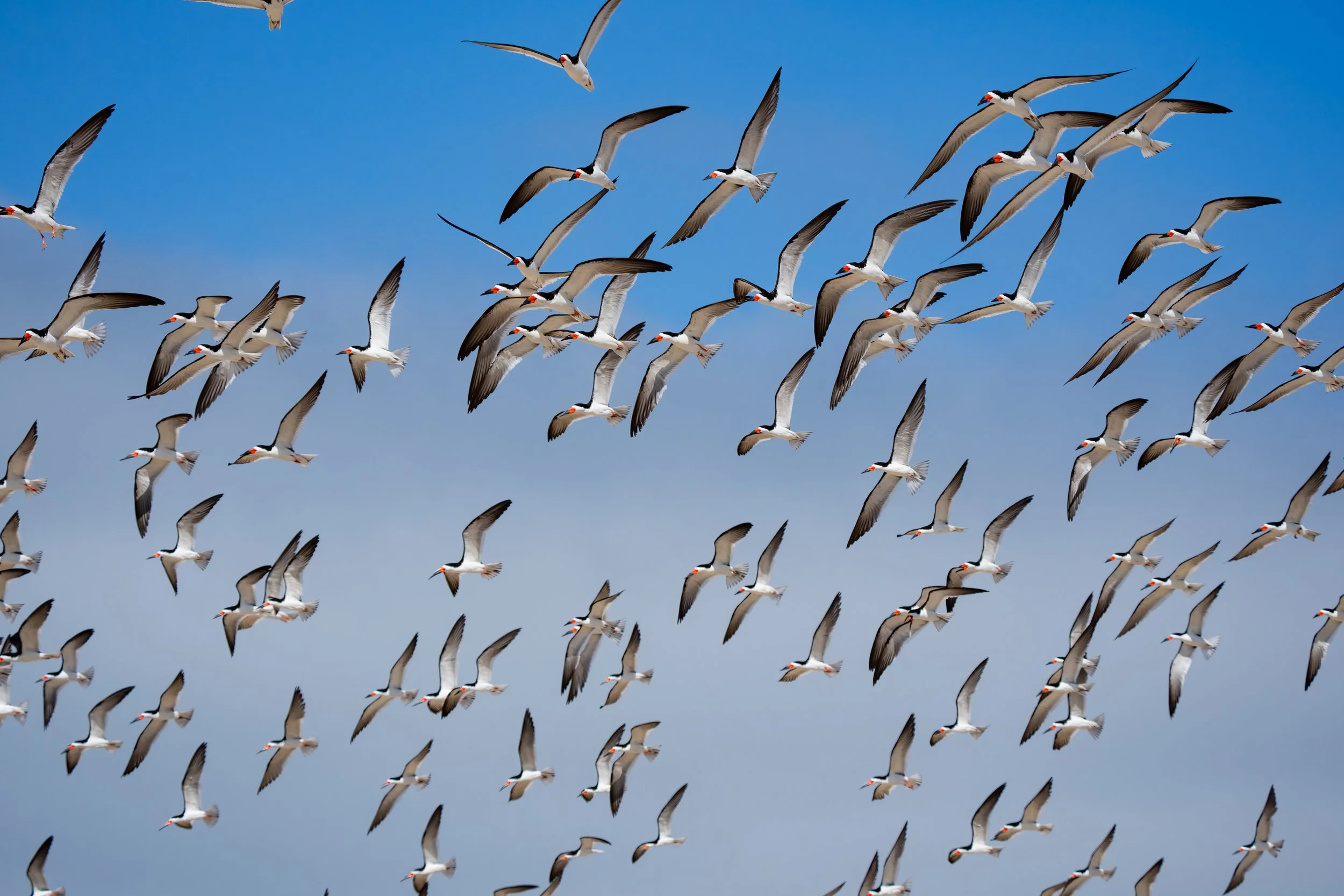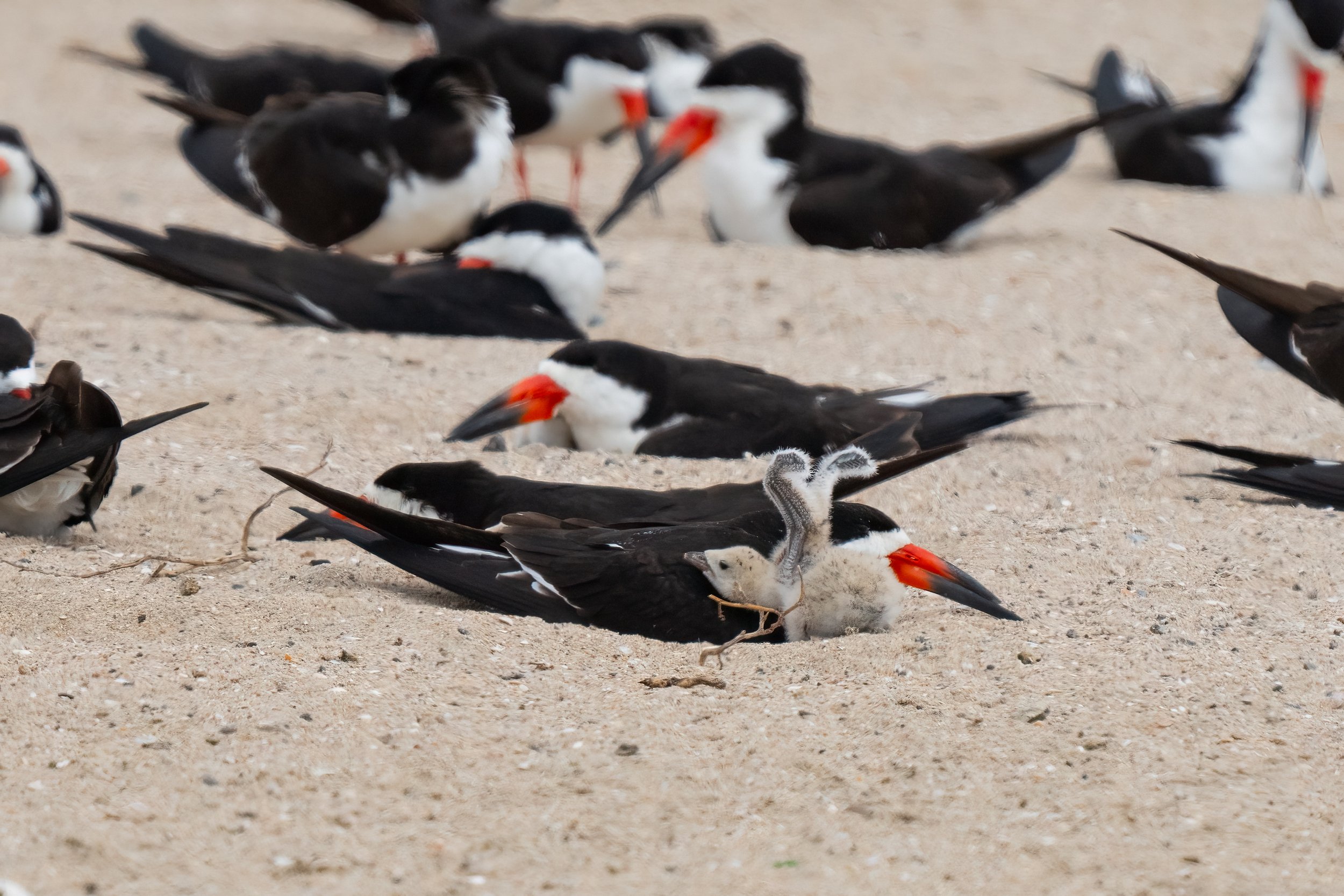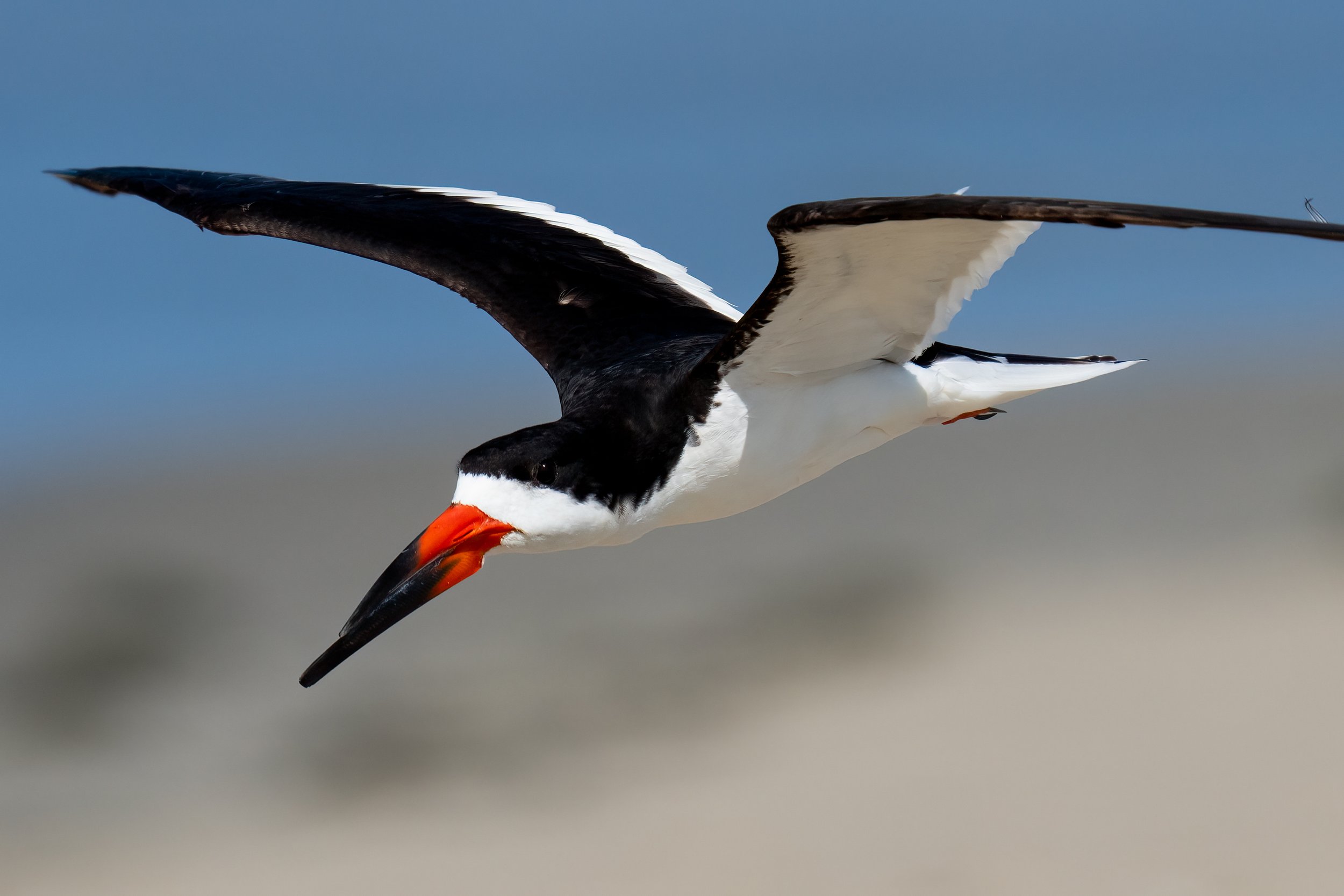
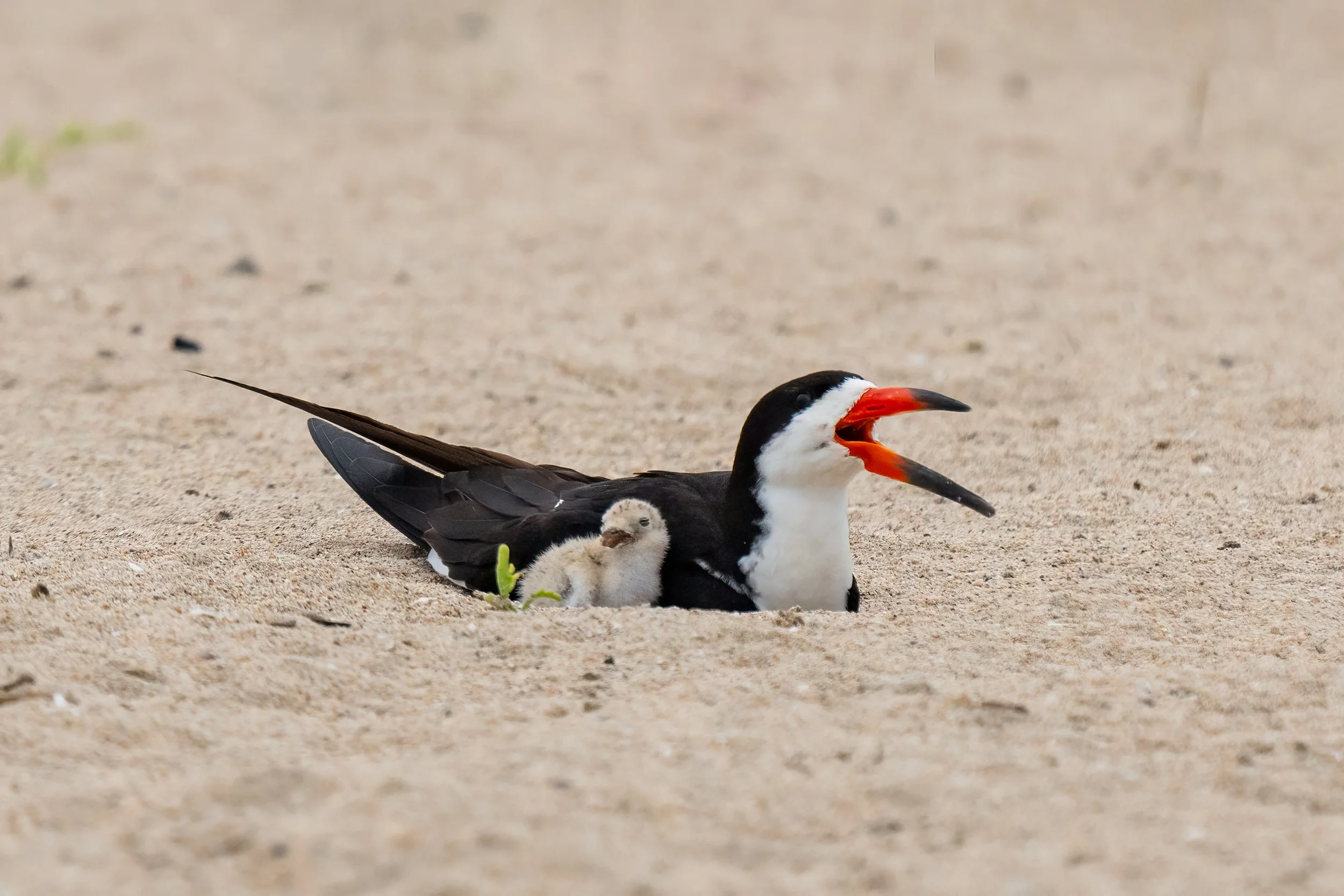
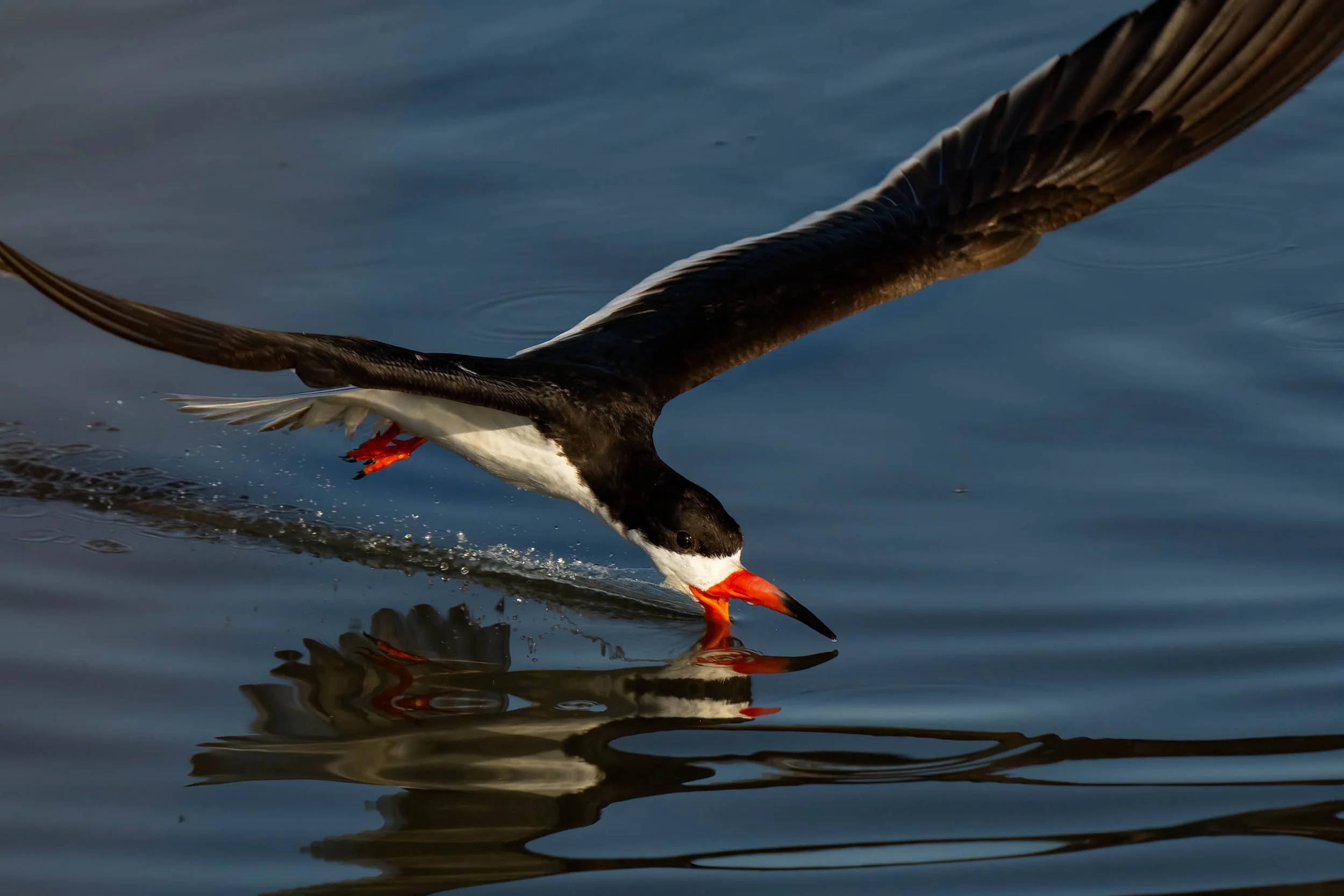
Black Skimmers have one of the strangest and most specialized bills of any North American bird. The lower mandible extends beyond the upper one, giving the bird a profile that looks almost unfinished. In flight, though, that bill makes perfect sense.
A feeding skimmer flies just above calm water with its lower mandible cutting through the surface. When the bill touches a fish, it snaps shut. The bird can feed by touch, often in low light, while its long wings carry it inches above the water. Even after years of watching them, I still stop when I see a line of skimmers working across a lagoon.
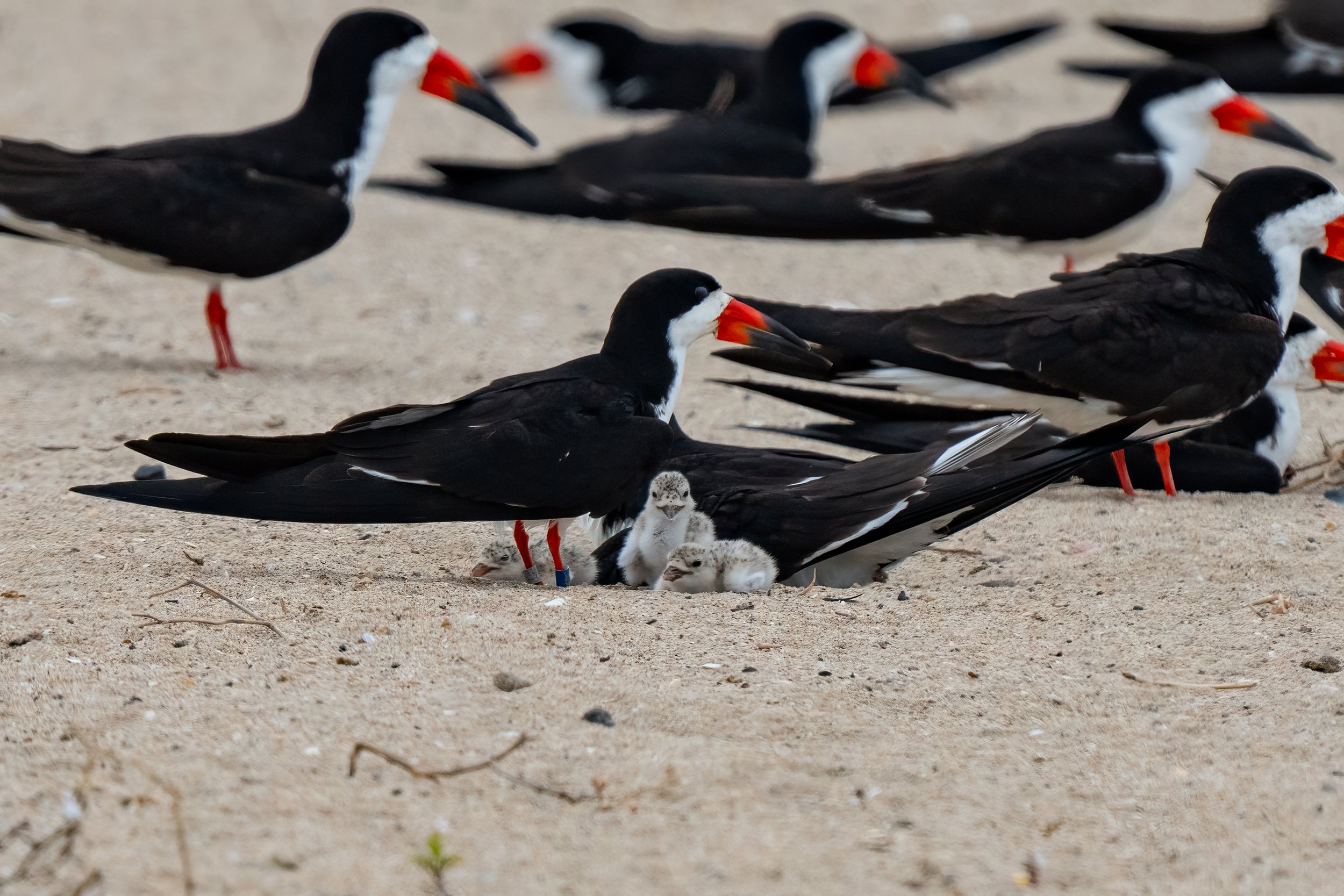
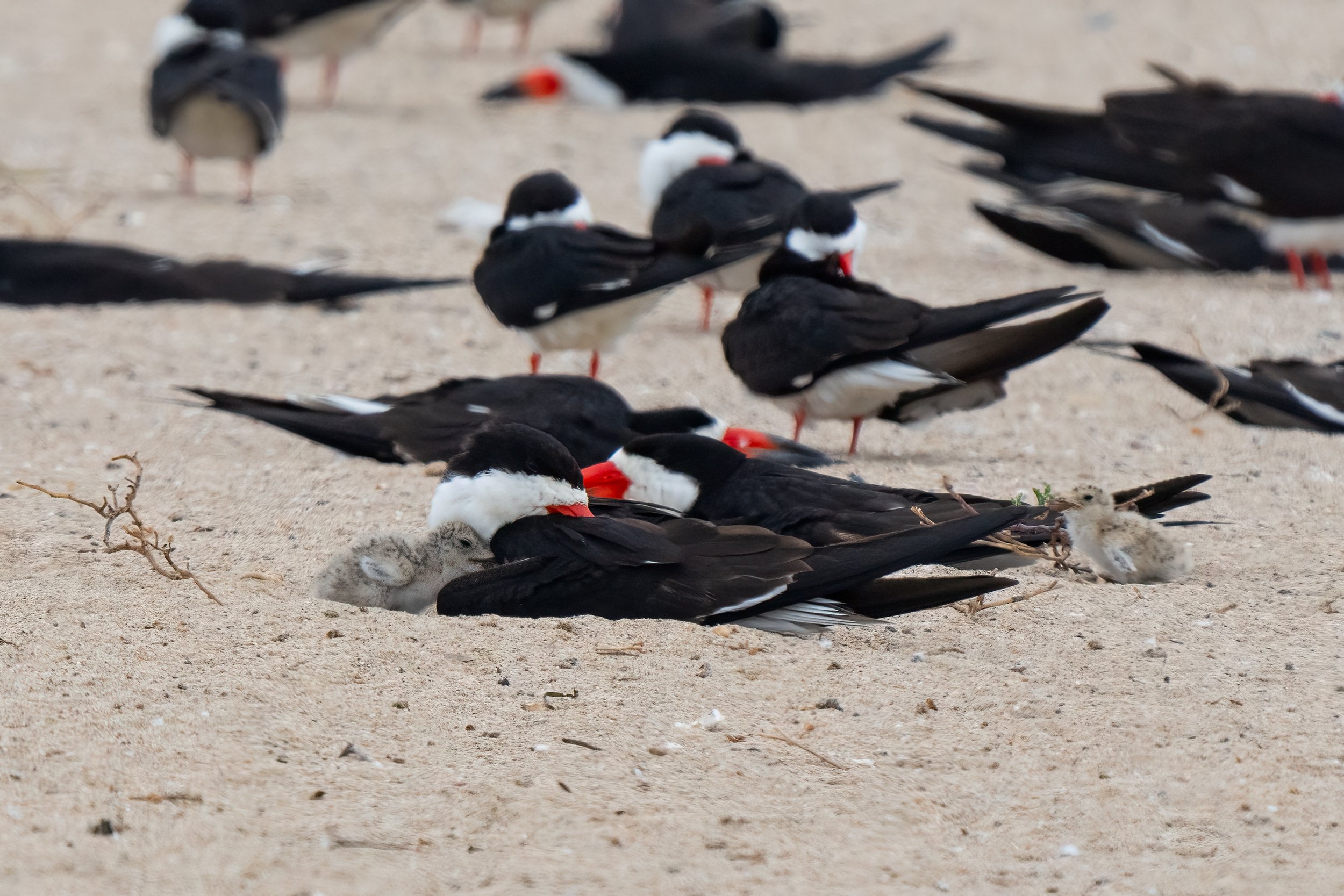
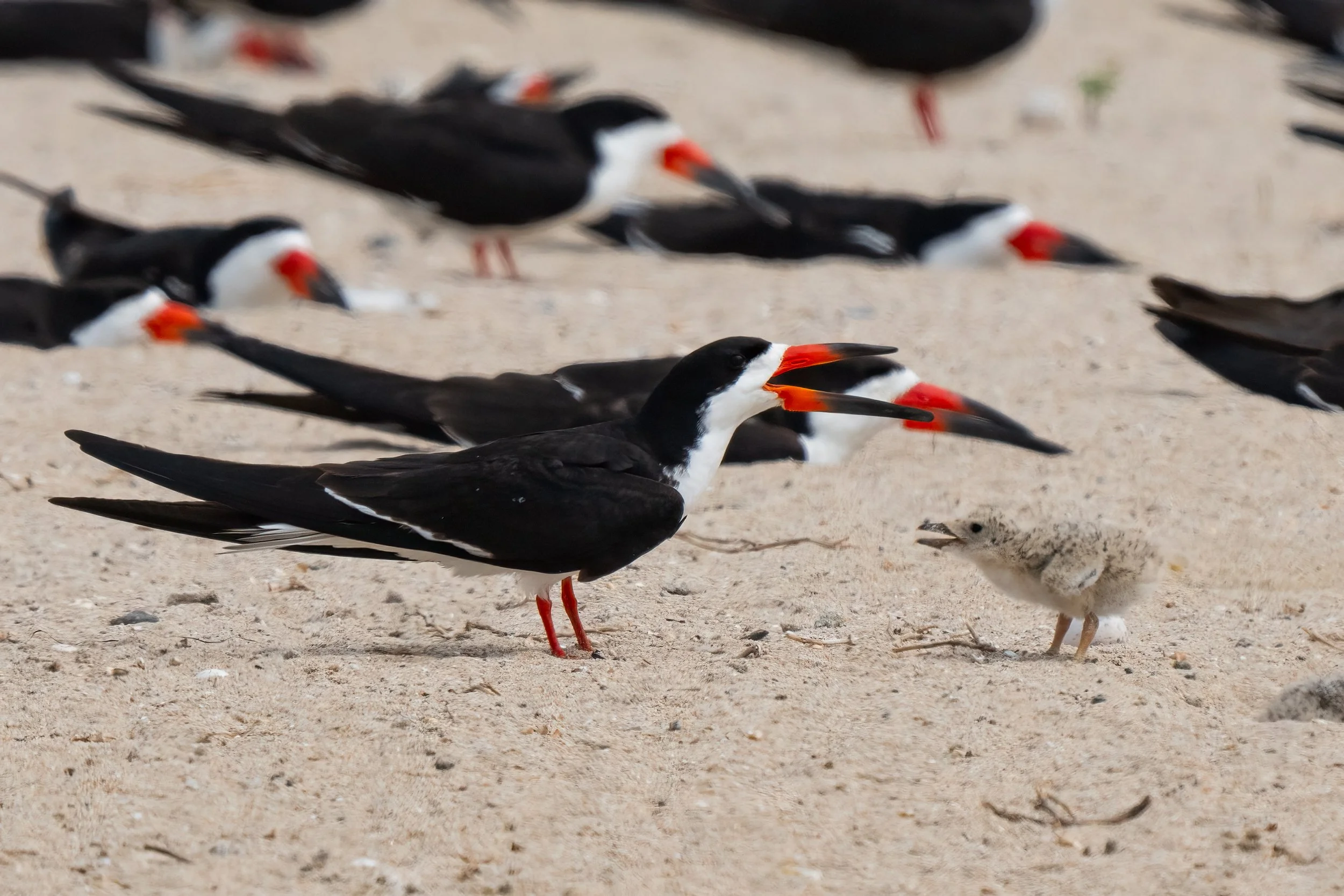
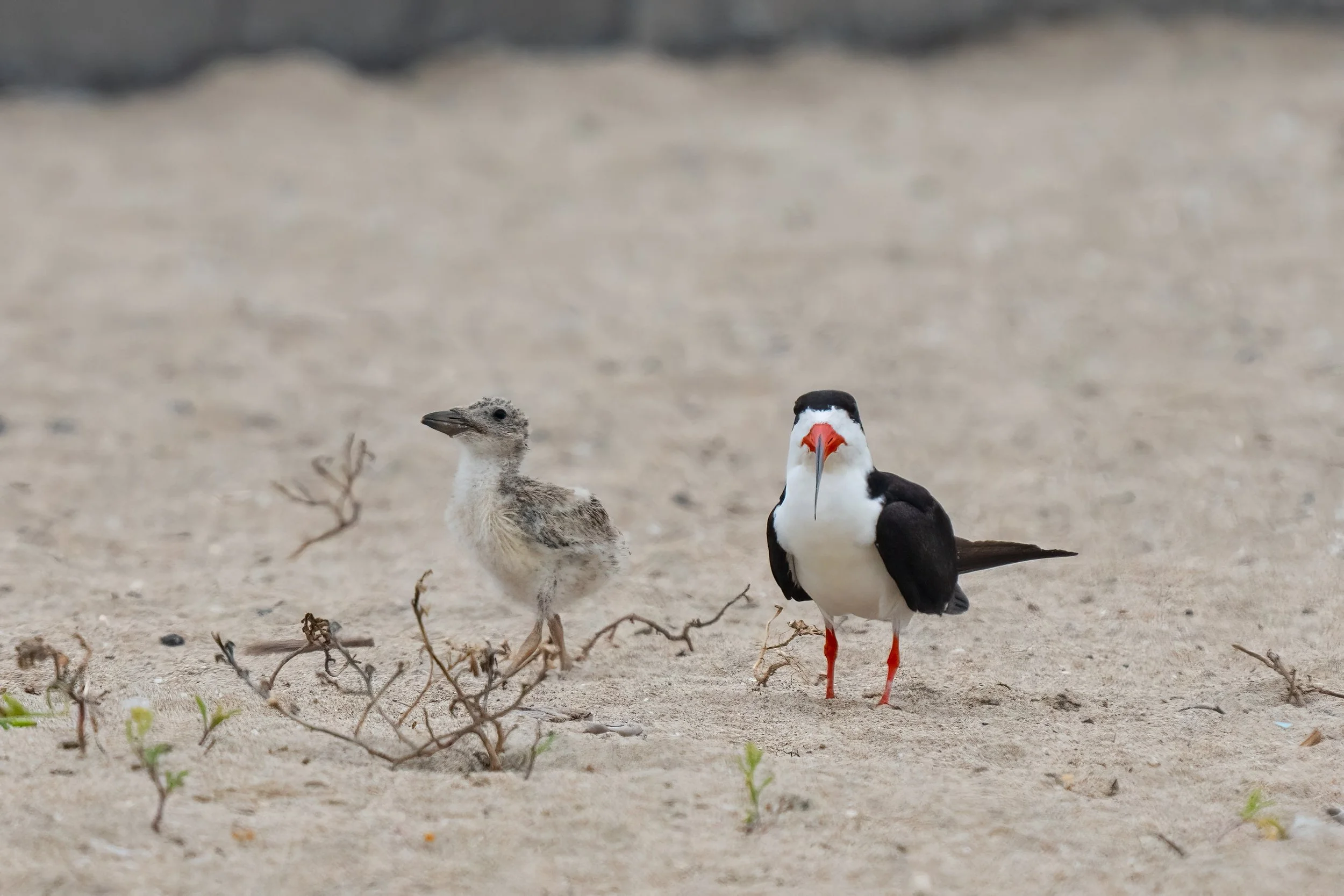
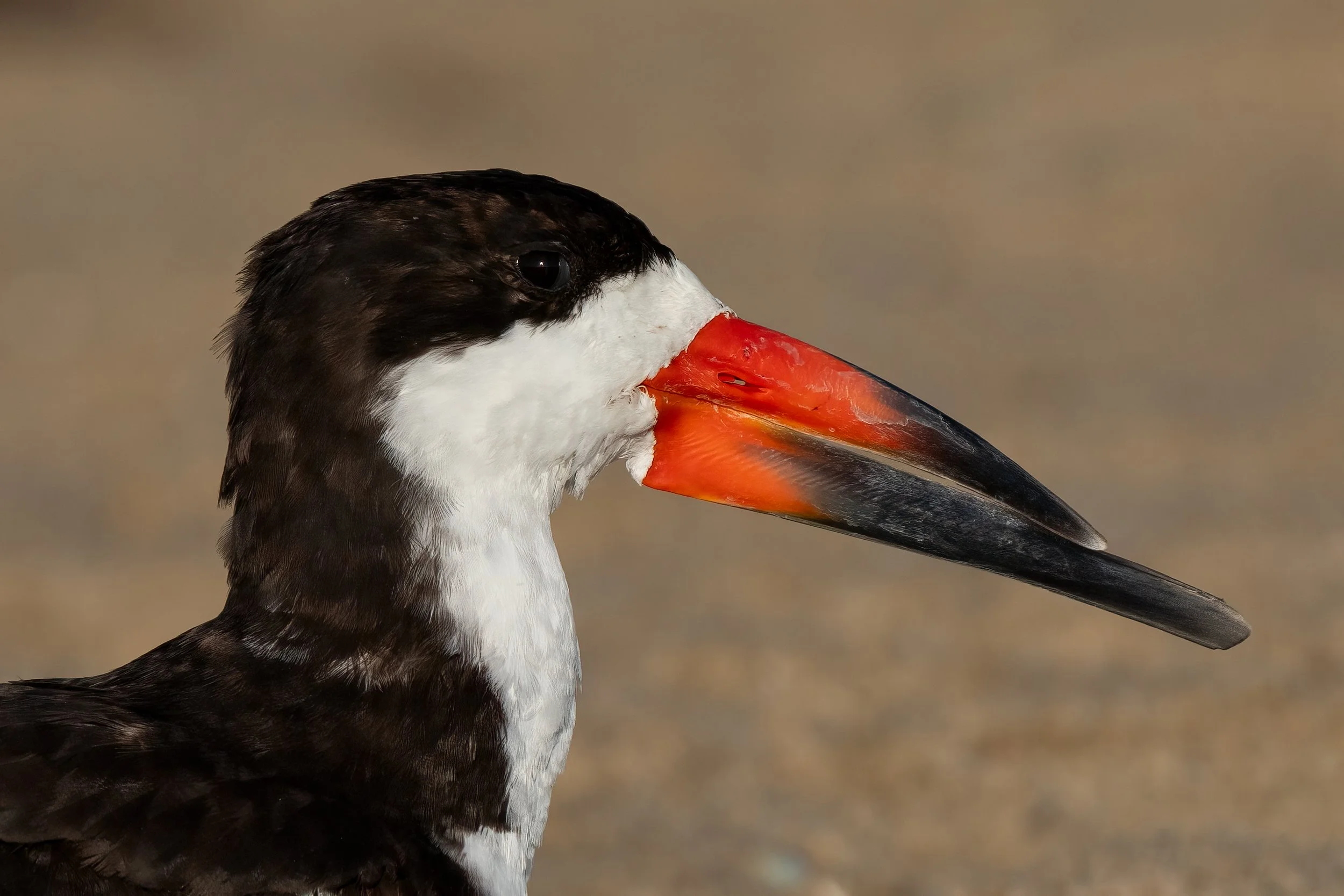
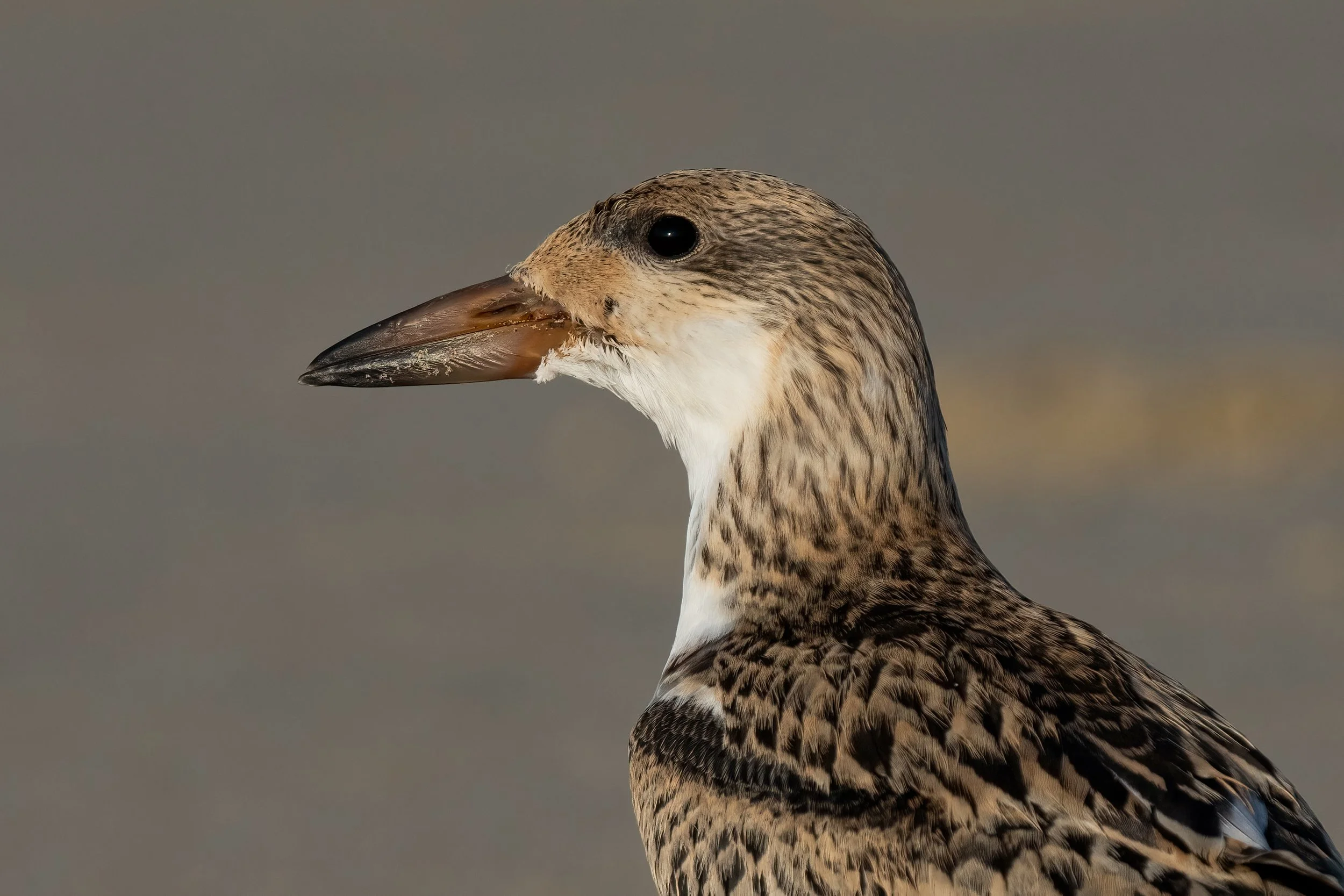
Adults are striking birds, black above and white below, with a red-orange bill tipped in black. Chicks look completely different. They hatch covered in mottled, sand-colored down, and their bills begin evenly matched. The longer lower mandible develops as they grow.
Nesting on an Open Beach
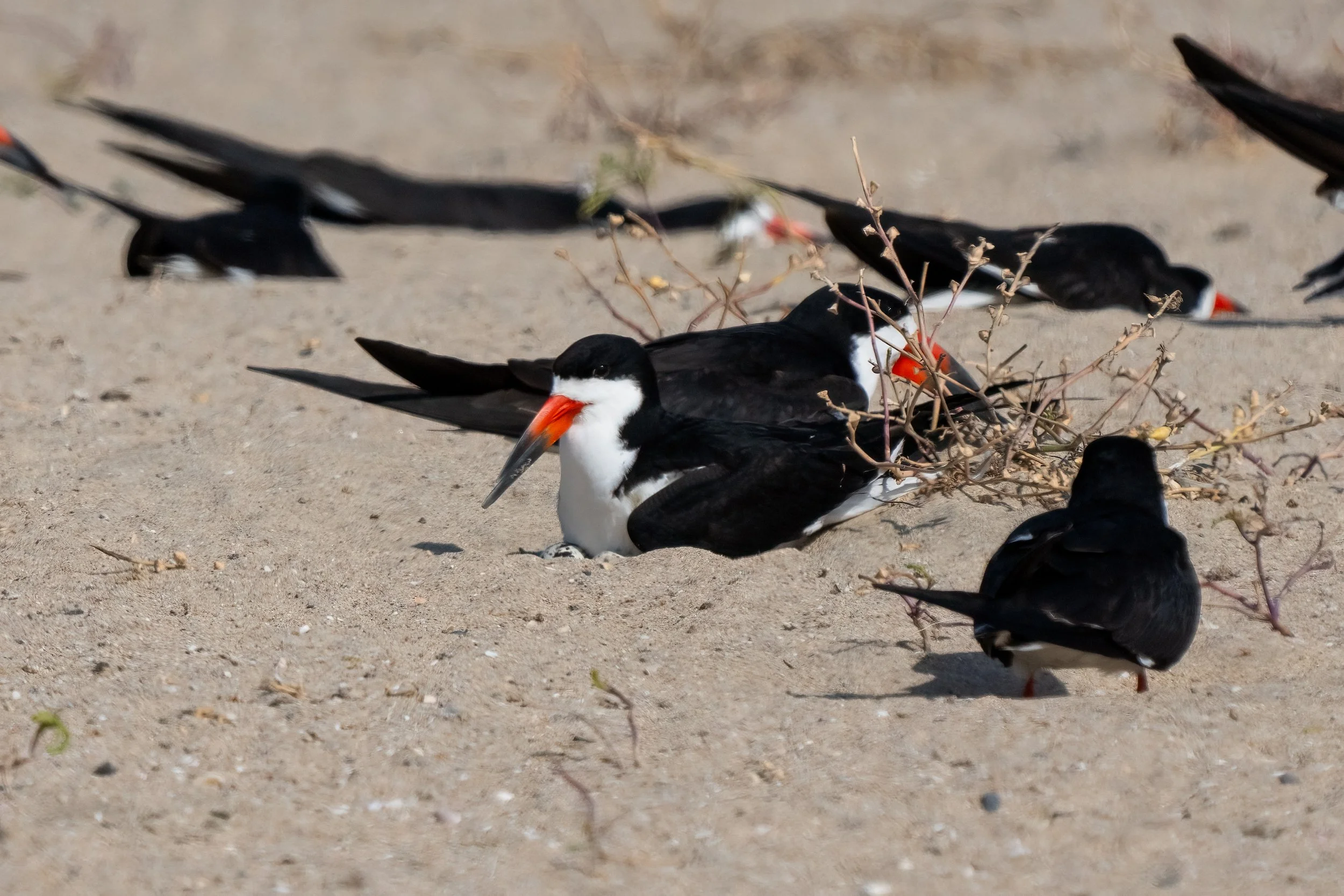
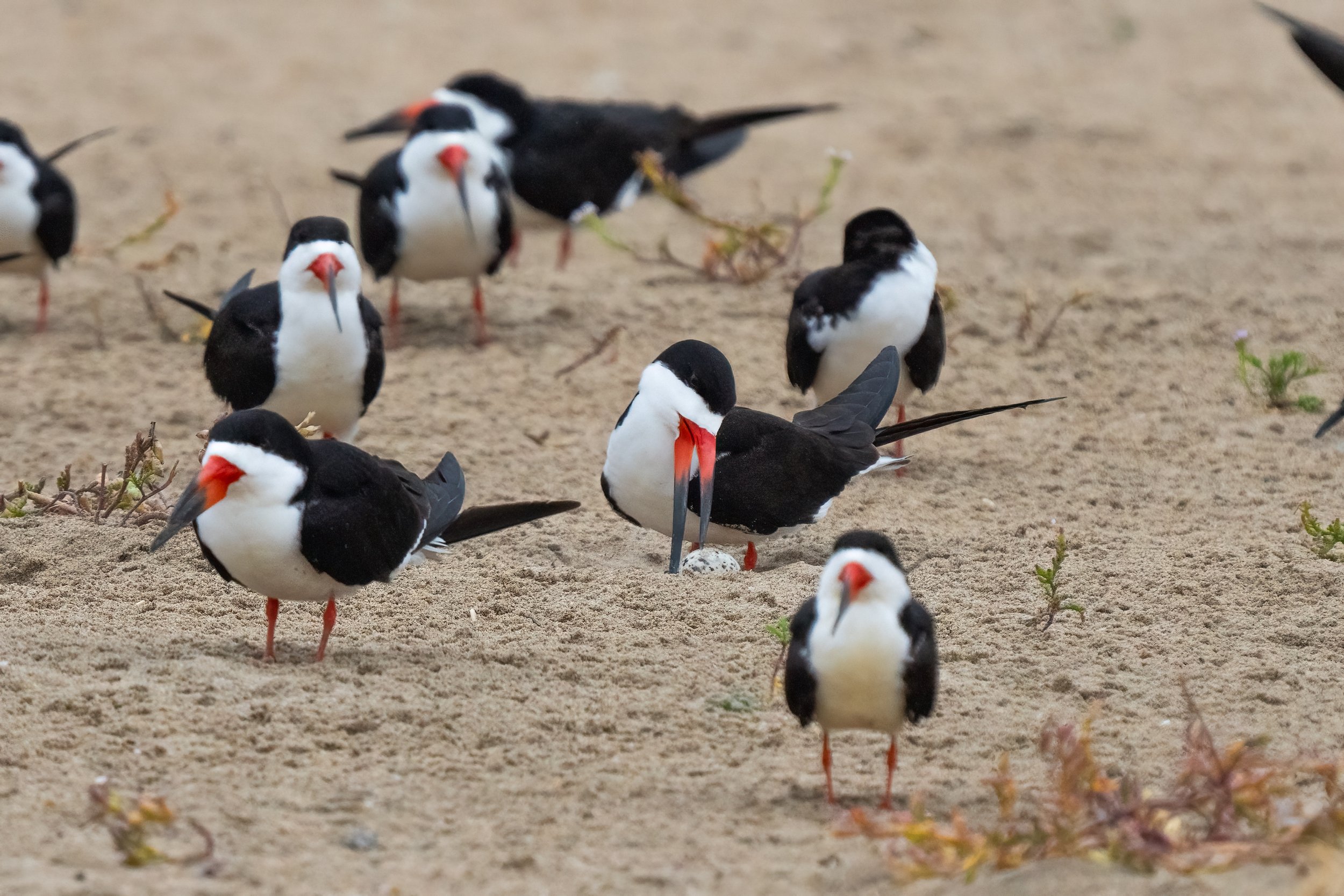
Black Skimmers nest together on bare sand, laying their eggs in shallow scrapes with little protection beyond camouflage and the vigilance of the colony. The same open beaches they need are busy with people, dogs, umbrellas, and summer recreation. A person walking through a colony can send adults into the air, leaving eggs or chicks exposed to heat and predators.
Fencing, signs, and volunteer monitoring give nesting birds room to settle and raise their young. Those boundaries can look simple from outside the colony, but they protect a remarkably vulnerable stretch of sand.
When They Chose My Local Beach
I had already spent time monitoring endangered shorebirds on my local beach, including Snowy Plovers and California Least Terns. I knew the wrack line, the open sand, and the usual rhythm of birds moving through. Then Black Skimmers began appearing, more than the usual few that would fly by on the coast.
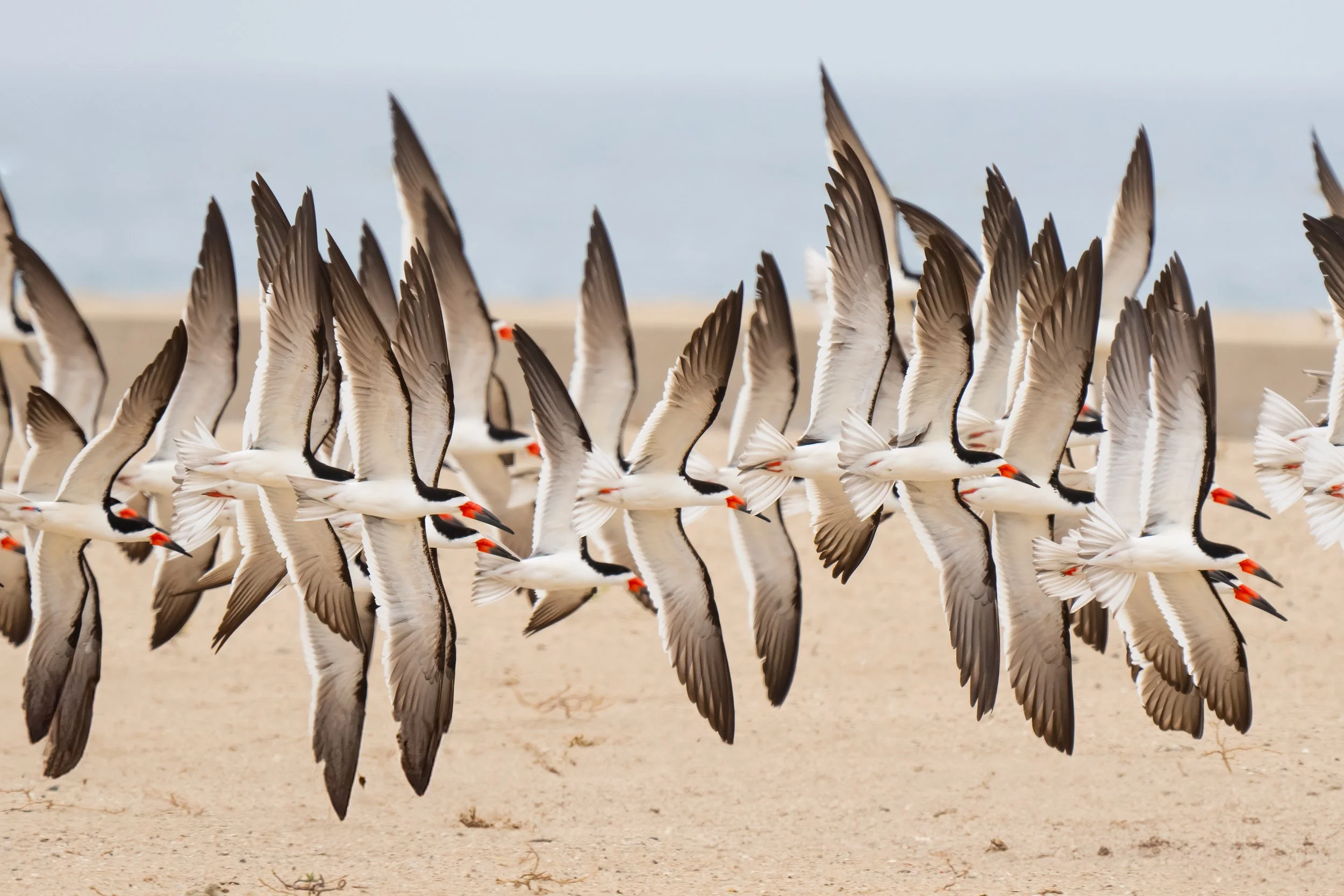
Eventually, they started landing on the sand. At first they walked along the beach and circled overhead in noisy groups. They kept returning, dropping low over the same section of sand. Pretty soon, there was an egg..
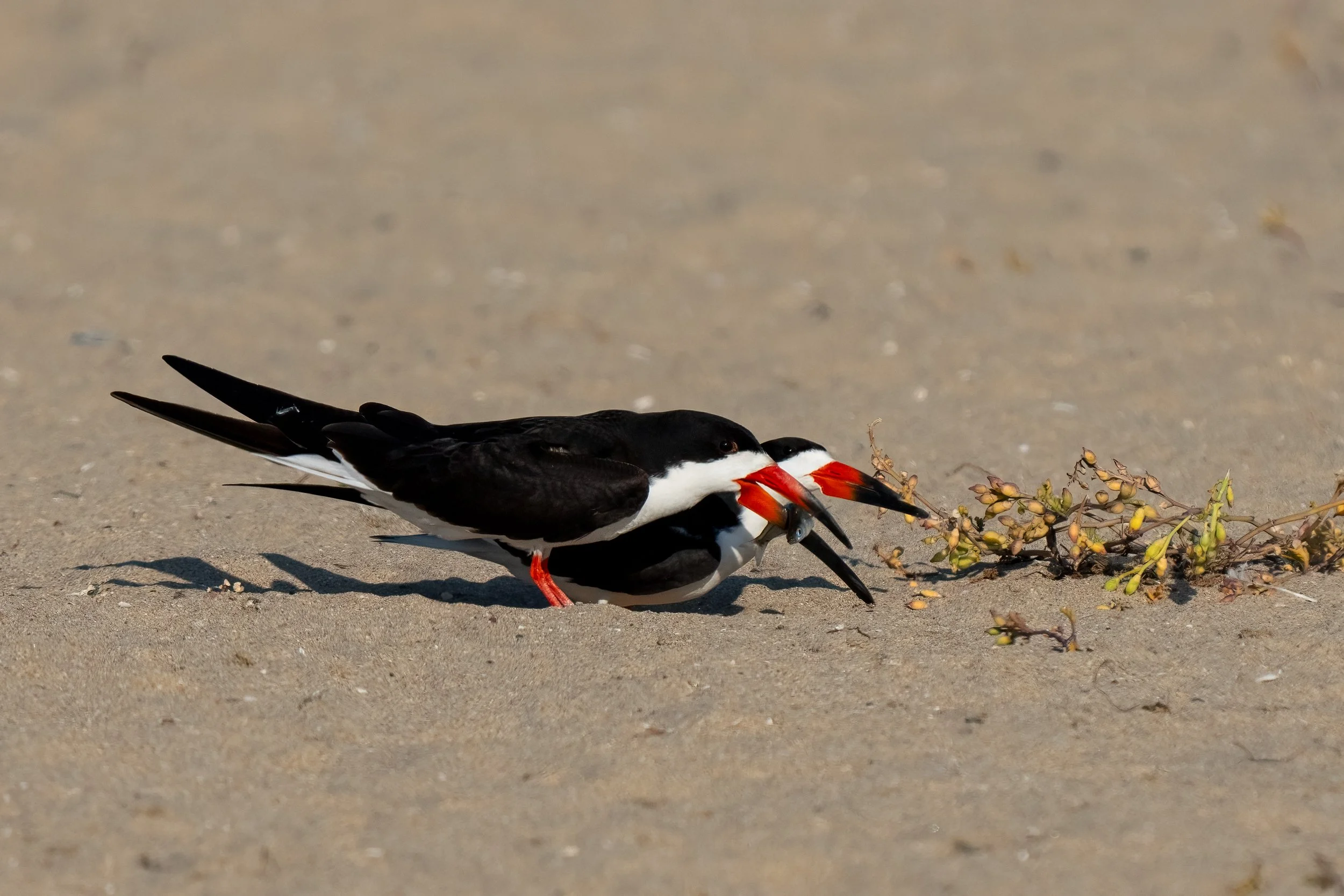
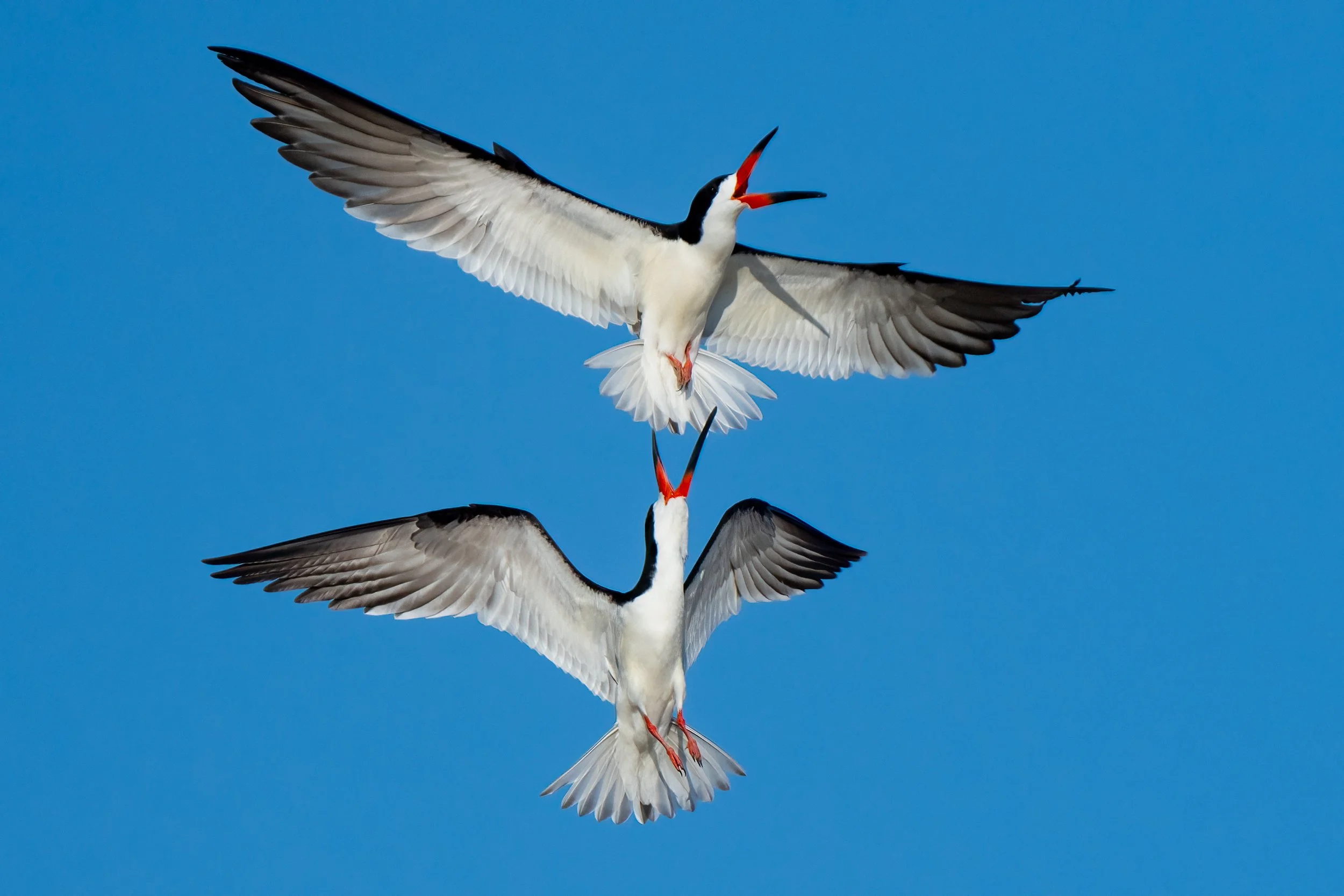
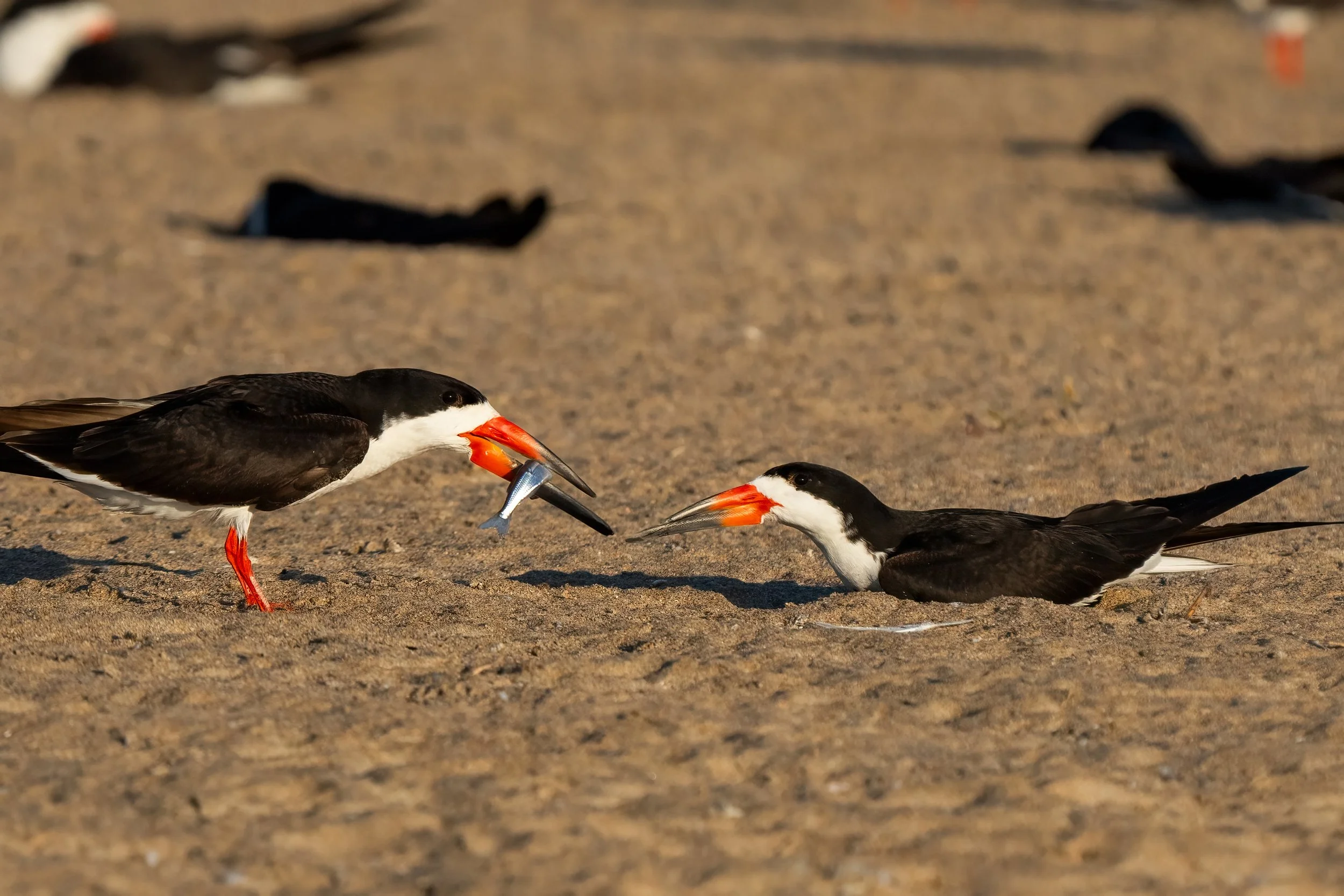
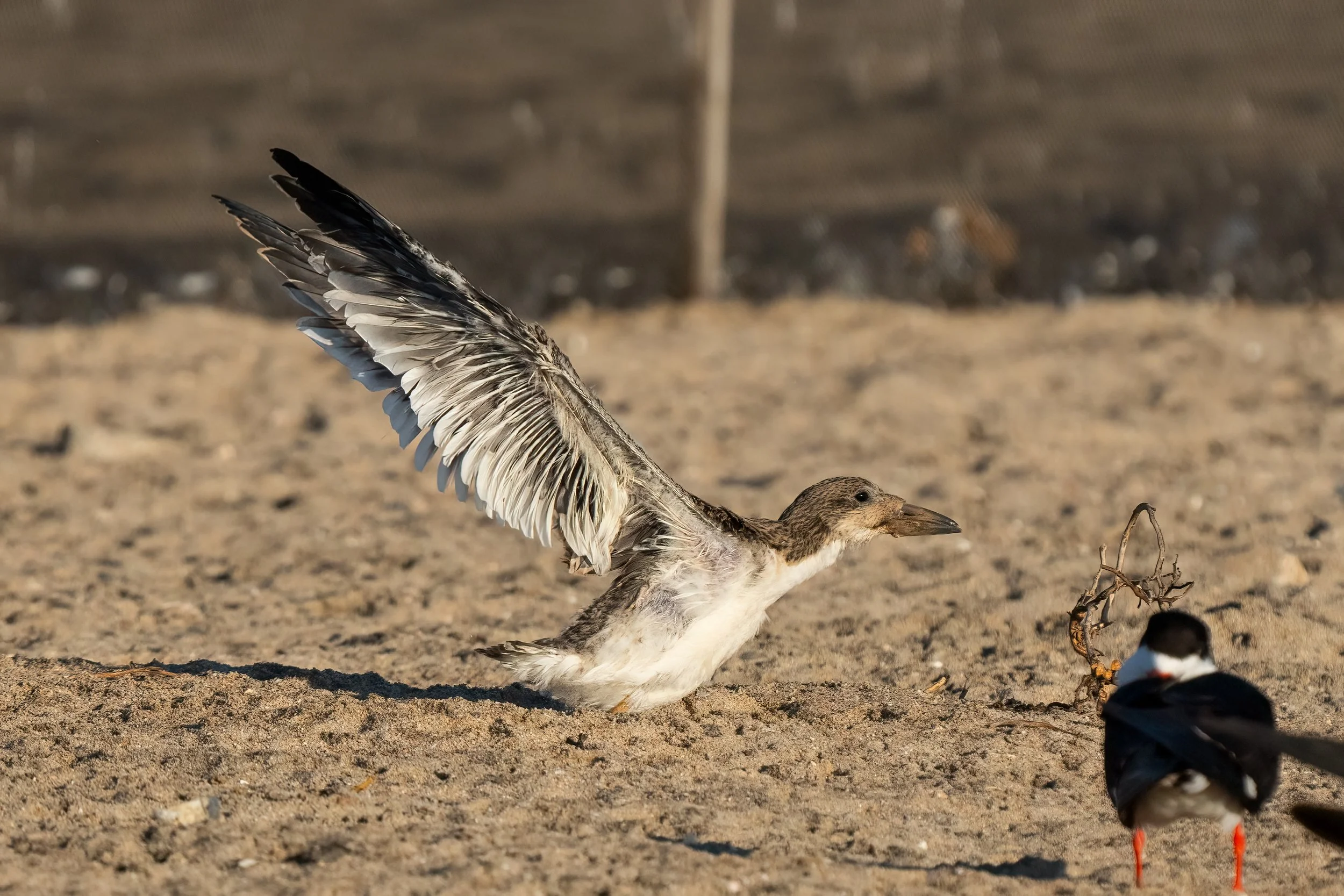
Over the following weeks, I watched one of my favorite birds move through an entire breeding season on a beach I walked regularly. There were courtship displays, eggs tucked into shallow scrapes, adults trading incubation duties, and tiny chicks disappearing into the sand whenever they settled down. Later, young skimmers lifted over the water on their first flights and stood on the beach begging for a meal.
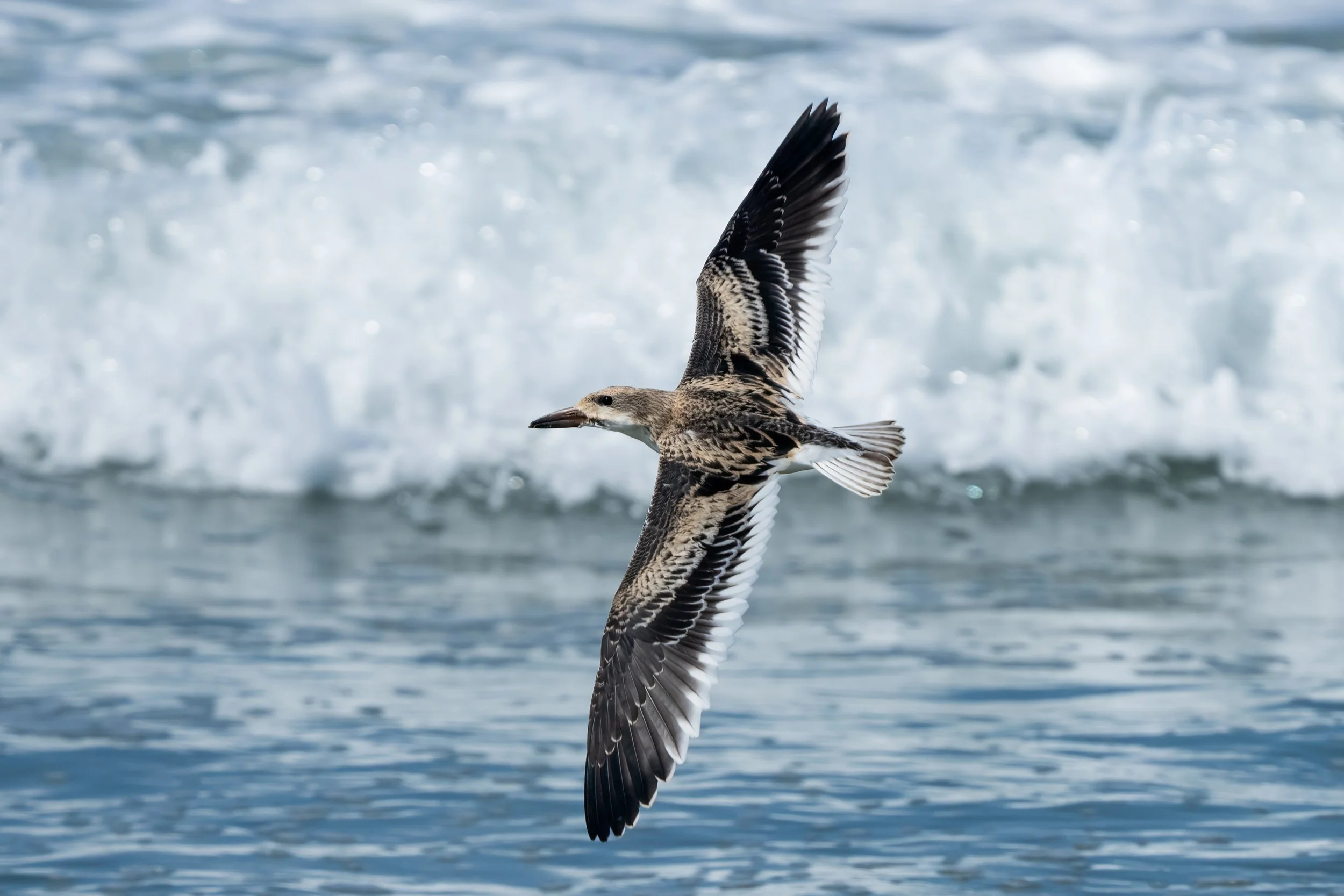
The colony was noisy, crowded, and sometimes chaotic. It was also one of the most memorable things I have witnessed while monitoring birds. I had known Black Skimmers simply as birds that passed over beaches and lagoons. Watching them choose this familiar patch of sand, hatch chicks there, and send fledglings out over the water changed the way I saw both the birds and the beach.